
Disclaimer: Any views expressed by individuals and organisations are their own and do not in any way represent the views of The Heritage Portal. If you find any mistakes or historical inaccuracies, please contact the editor.
Saaliegah Zardad writes in her capacity as a researcher and writer whose work focuses on heritage, cultural landscapes and post-apartheid spatial justice. Her research engages with heritage impact assessment processes and questions of intangible cultural heritage, living heritage, community meaning and public decision-making in relation to the Oude Molen Precinct and other redevelopment plans.
Whose heritage counts and who gets to decide
The ongoing redevelopment proposals for the Oude Molen Precinct in Cape Town have exposed a deeper fault line in South Africa’s heritage governance: the uneasy relationship between formal heritage impact assessment processes and the lived, intangible meanings communities attach to place. While statutory frameworks tend to privilege tangible fabric, architectural significance, and expert-led assessments, the Oude Molen case highlights how intangible cultural heritage and living heritage are frequently marginalised, contested or rendered invisible within decision-making processes. This article examines Oude Molen as a contemporary heritage battleground, asking what heritage protection and safeguarding means in practice in a post-apartheid context shaped by unequal power, memory and spatial injustice.
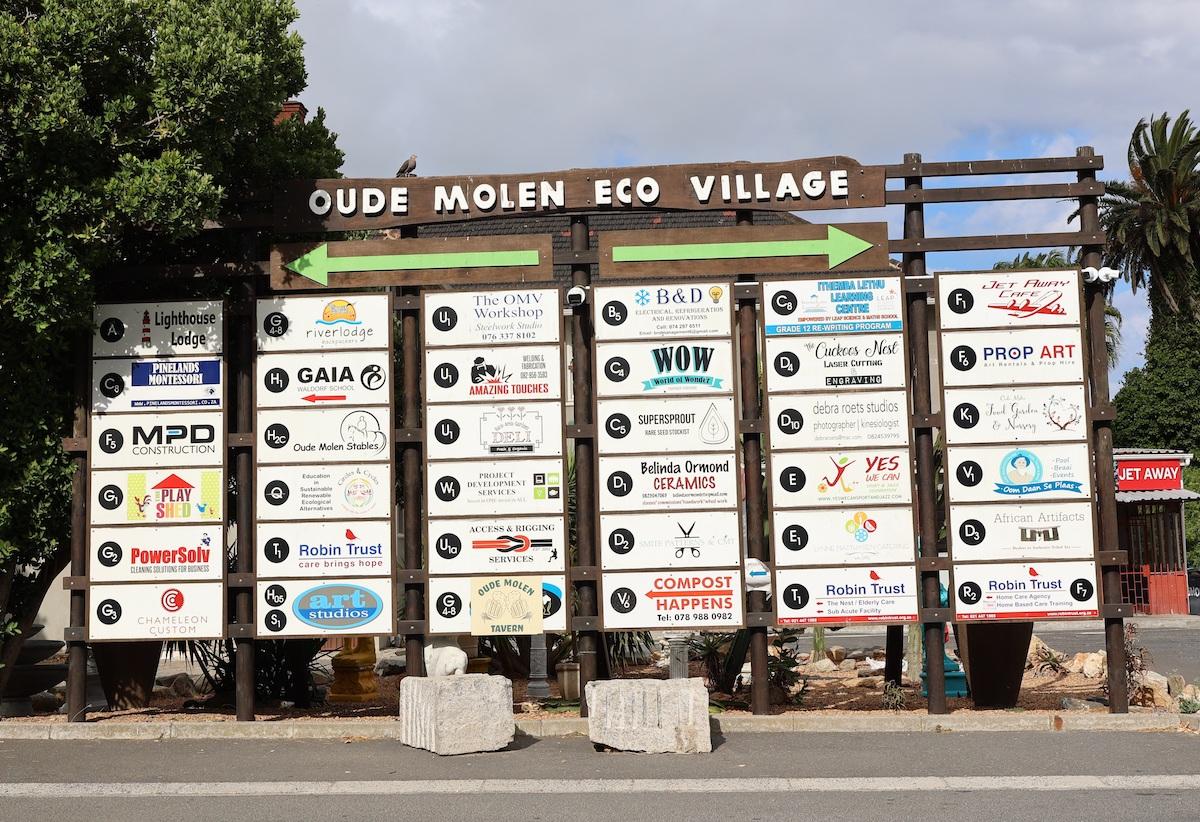
Oude Molen entrance indicating the inhabitants of various spaces at the Oude Molen Eco Village
Redevelopment Proposal at Oude Molen
As the Western Cape Government (WCG) advances its redevelopment plans for Oude Molen, a 44.03ha site nestled between Vincent Palloti Hospital, Valkenberg Hospital, Maitland Garden Village and Pinelands; a profound heritage dispute has erupted. It is a dispute not only about buildings, zoning or density but the very meaning of heritage in a democratic South Africa.
The fight over Oude Molen serves as a pivotal case for a broader inquiry: Who gets to define heritage in a post-apartheid South Africa and whose cultural continuity is recognised as worthy of protection and safeguarding?
At issue is the Revised Heritage Impact Assessment (HIA) submitted in November 2025, as part of the WCG’s proposal to redevelop the precinct with high-density mixed-use buildings, office and commercial activity with a 34% allocation for social housing. The land today hosts the Oude Molen Eco-Village, home to a unique community of First Nations practitioners, horse trainers, agro-ecologists, artisans, educators, healers and social development organisations represented collectively by the Oude Molen Eco-Village Tenants Association (OMEVTA).
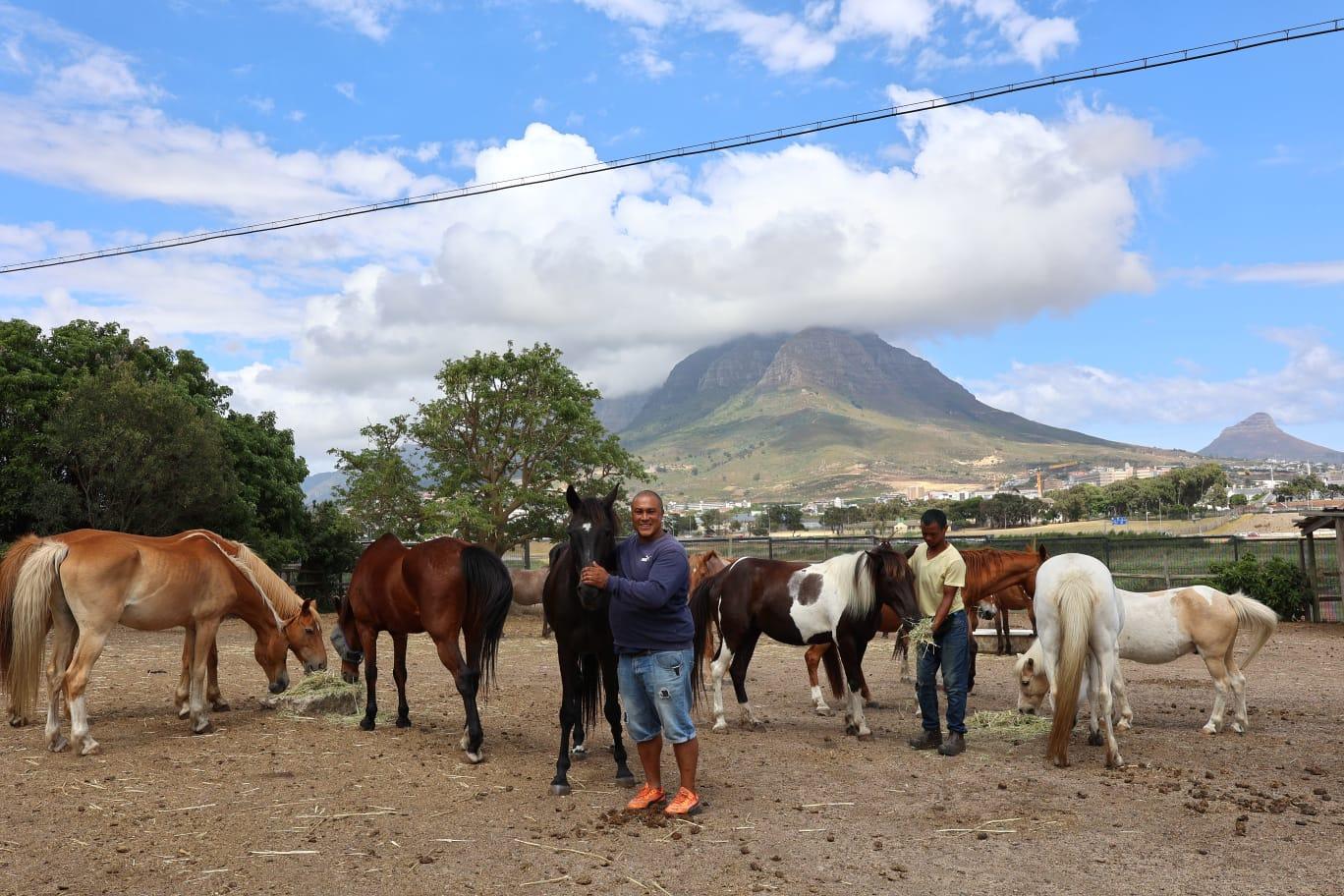
Kendré Allies - Owner of the Oude Molen Stables
These communities argue that the provincial government’s Revised HIA incorrectly claims there is no living heritage at Oude Molen which threatens to erase more than 30 years of cultural, ecological and community-based practice; along with older layers of significance embedded in the landscape. They argue that reliance on desktop research and limited archives risks mistaking silence for absence in landscapes shaped by dispossession.
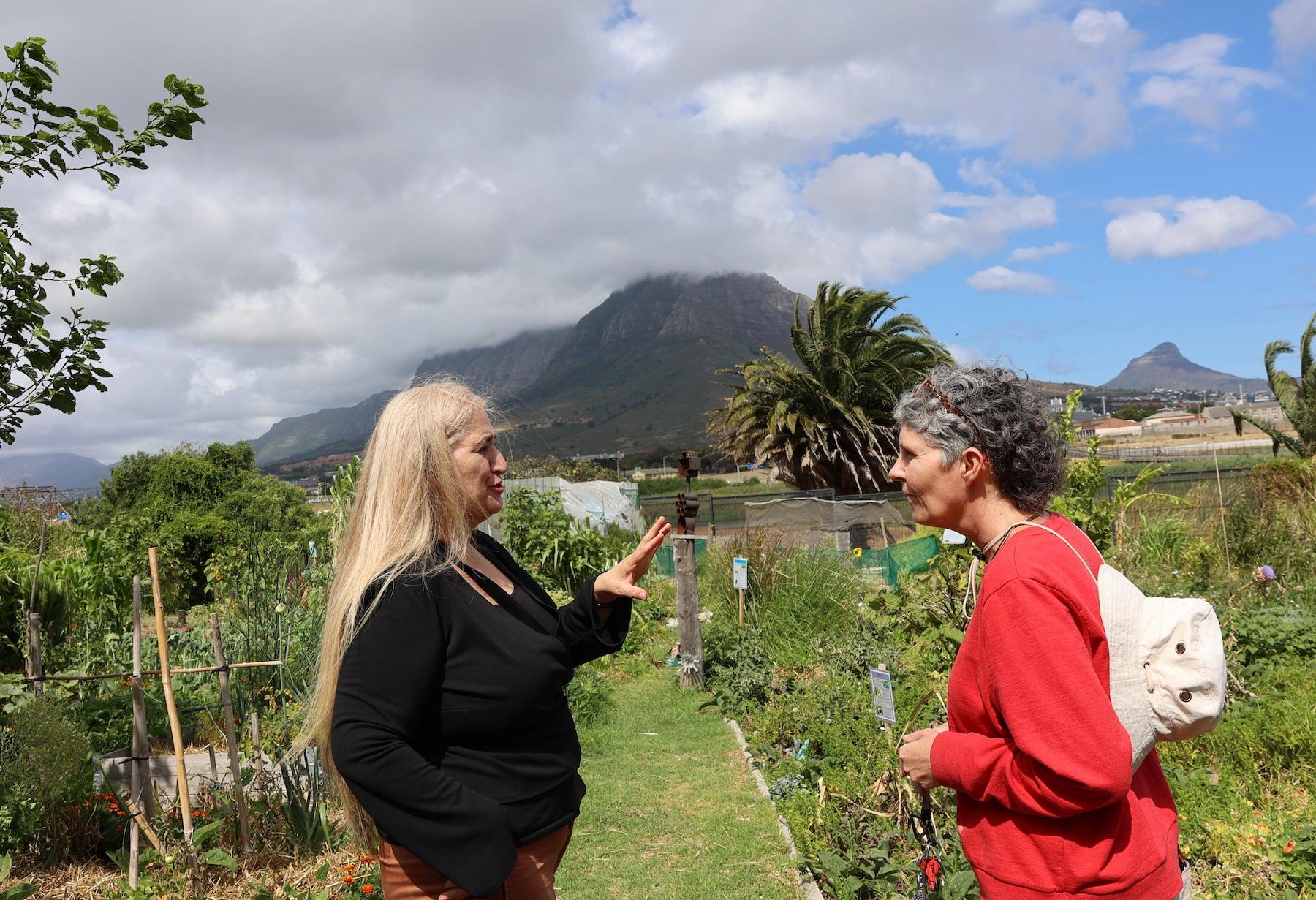
Kelly Mansfield Manager of the Oude Molen Organic Food Garden shares reflections on the lived and intangible cultural heritage of Oude Molen Eco Village with the author.
Definition One – Vertical vs. Horizontal Interpretation of the UNESCO Convention
The dispute at Oude Molen is not just political; it is conceptual and legal. At its core lies the interpretation of UNESCO’s 2003 Convention on intangible cultural heritage (ICH), particularly the phrase “transmitted from generation to generation”. This matters because the interpretation of transmission determines whose practices qualify as heritage.
The Revised HIA adopts a narrow, vertical interpretation, treating transmission as biological inheritance or long-established lineage supported by formal records. By contrast, UNESCO embraces a broader, horizontal interpretation not confined to biology. Here heritage can circulate across communities, peer networks, mentorships, apprenticeships and ongoing practice. Recognising this horizontal transmission is crucial at Oude Molen, where revivalist and living traditions from First Nations continuity and therapeutic practices to equestrian, agro-ecological and community-learning activities thrive across diverse groups. How this interpretation is applied will decide whether these dynamic practices are legally acknowledged or erased making ICH a central battleground in the site’s heritage dispute.
A broader, horizontal interpretation more accurately reflects UNESCO’s intent and one in which the lived heritage practices associated with the Oude Molen Eco-Village clearly fit.
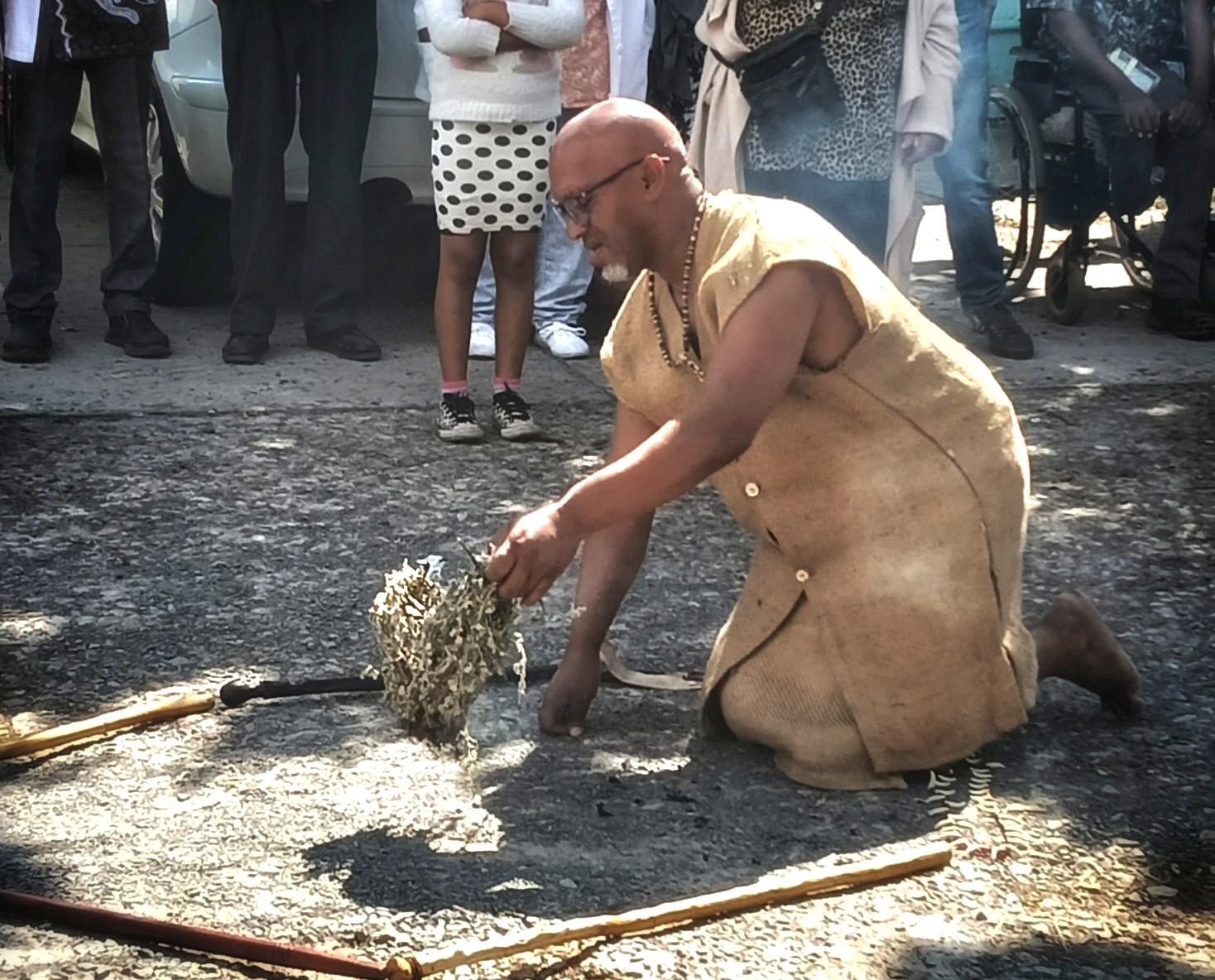
Ongoing indigenous cultural activity at Oude Molen illustrating the site’s living and intangible cultural heritage (Rod Solomons)
Understanding Place: Why Oude Molen Matters
The OMP, located within Cape Town’s Two Rivers Urban Park, is more than a parcel of land. Situated at the confluence of the Black and Liesbeeck Rivers, it is a layered cultural landscape where multiple, contested histories converge.
The area forms part of ancient Khoe and San grazing lands and movement routes, later overlaid by colonial agriculture shaped by racialised and unrecorded labour. Valkenberg Hospital, established in 1891, adds a further institutional layer reflecting a complex and racialised therapeutic history embedded in the landscape.
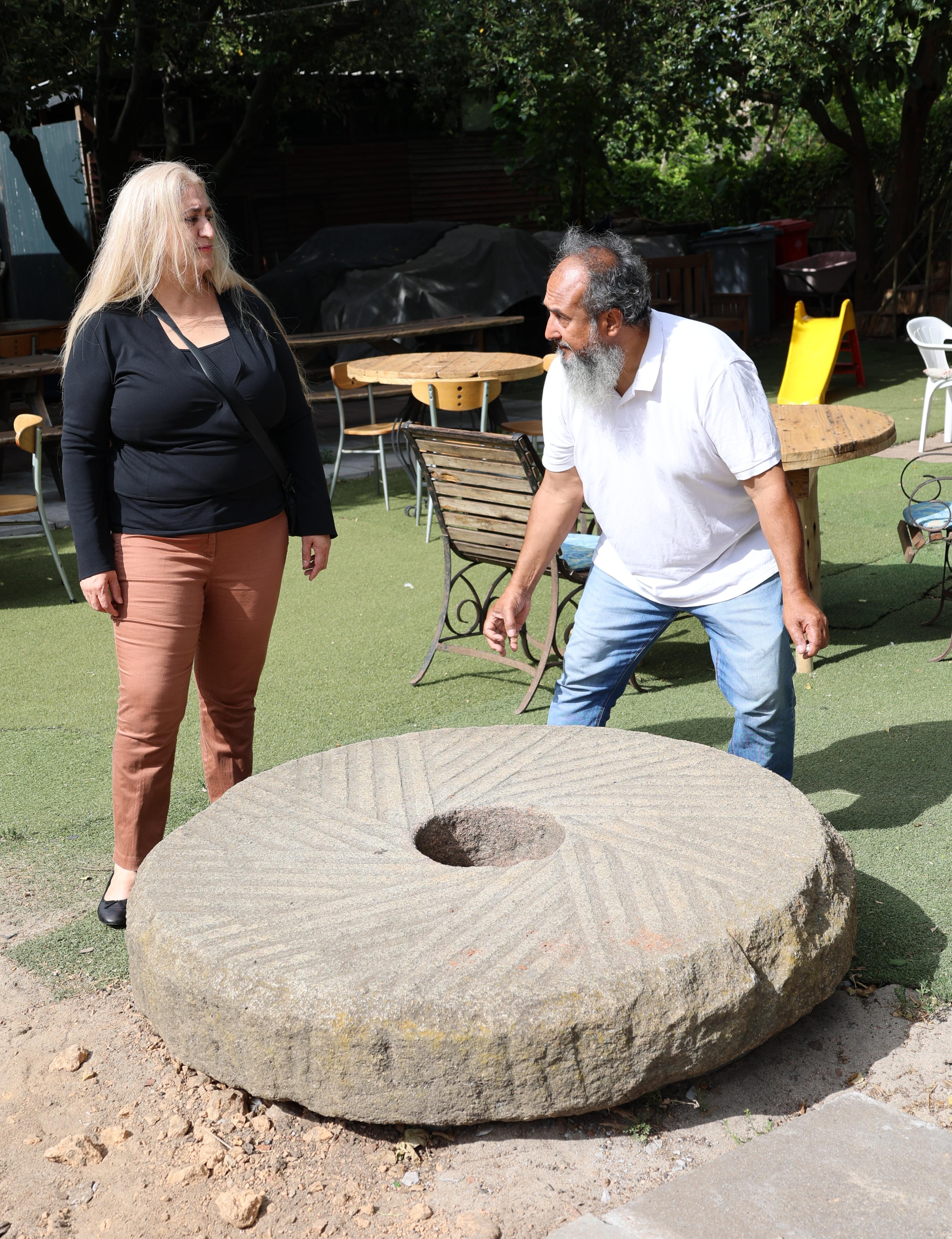
Faiez Evans Co-Chairperson of the OMEVTA explaining to the author that the fragment of an original millstone at Oude Molen, which was once central to early milling activity along the Liesbeek River. This surviving artefact bears witness to layers of colonial labour and land use that shaped the site.
Today, Oude Molen is home to the post-1994, community-generated heritage of the Oude Molen Eco-Village, whose agro-ecological, cultural and social practices constitute an active living heritage. This significance exists alongside a persistent archival silence, where the lives of the dispossessed were excluded from official records.
This silence is itself evidence of historical erasure, demanding recognition through oral history and community memory. Its fate is a litmus test for whether South Africa’s heritage framework can protect not just monumental history, but the full, living continuum of place.
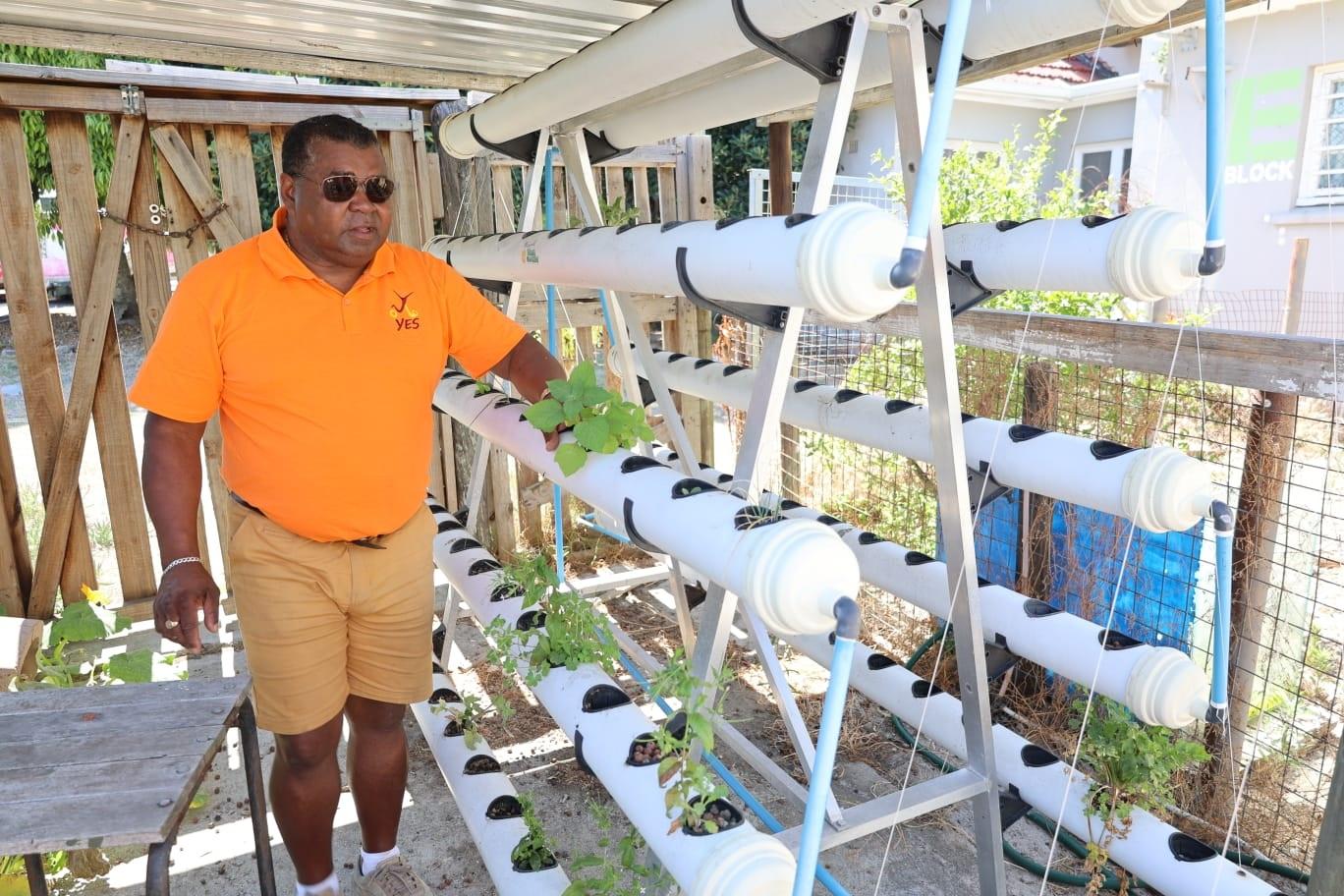
Advocate Rod Solomons Founder of Sports and Jazz Foundation in his organic herb and vegetable garden
The Valkenberg Continuity and Archival Silence
Valkenberg operated as a racially segregated psychiatric hospital. Patients’ agricultural and care labour shaped a landscape organised around healing, rehabilitation and land-based therapy. This logic continues today through the Eco-Village’s equine-assisted therapy, community health and agro-ecological practices, reflecting a continuity of purpose recognised by UNESCO and South African heritage law.
Valkenberg’s archives, however, largely erase the people who animated this landscape, reducing patients to diagnoses and administrative records. This silence reflects broader colonial and apartheid systems of exclusion. Heritage does not disappear because it was undocumented; it endures through practice, memory and use. Any heritage assessment that acknowledges the institution while ignoring lived experience remains incomplete.
Definition Two – Heritage Resources in South African Law (NHRA)
The NHRA adopts an intentionally expansive and integrated understanding of heritage resources that includes both tangible and intangible dimensions of cultural significance. Section 2 defines “cultural significance” to include social, spiritual, symbolic and associative value, while “living heritage” is expressly defined as the intangible aspects of inherited culture including cultural tradition, oral history, performance, ritual, popular memory, skills and techniques. The Act therefore does not confine heritage to physical fabric.
This approach is reinforced in Section 3, which defines the national estate to include not only places and structures, but also cultural landscapes and sites associated with oral traditions, living heritage and social practices, including those shaped by slavery, colonialism and apartheid. Section 3(3) makes clear that heritage value arises from social meaning, community association and patterns of history, rather than age or monumentality alone.
Implications for the Revised HIA
In my view, against this framework, the Revised HIA’s finding that Oude Molen has no living heritage constitutes a misapplication of the NHRA. By privileging age, built form and documentary archives over social value, oral tradition and ongoing practice, it narrows the Act’s deliberately broad conception of heritage and mistakes archival silence for absence.
The River Club litigation has reinforced that heritage impact assessments must meaningfully identify and engage with both tangible and intangible heritage, including living cultural practices and community meaning, through substantive public participation.
The Crux of the Dispute: What does “Generation to Generation” Mean?
The most contested issue for OMEVTA, in the Revised HIA, concerns UNESCO’s phrase “transmitted from generation to generation.”
The WCG’s consultants appear to apply a vertical, genealogical interpretation implying biological inheritance over long periods with 50 to 75 years often cited. Under this reading, many post-1994 practices at Oude Molen are dismissed as too recent.
OMEVTA, on the other hand, advances a horizontal, community-based interpretation consistent with UNESCO’s intent and practice. Under this model, “generation” refers to the active transmission of knowledge and practice between practitioners and learners across cohorts and communities rather than along biological lines.
This interpretation reflects how living heritage functions globally particularly within indigenous, African and post-colonial contexts.
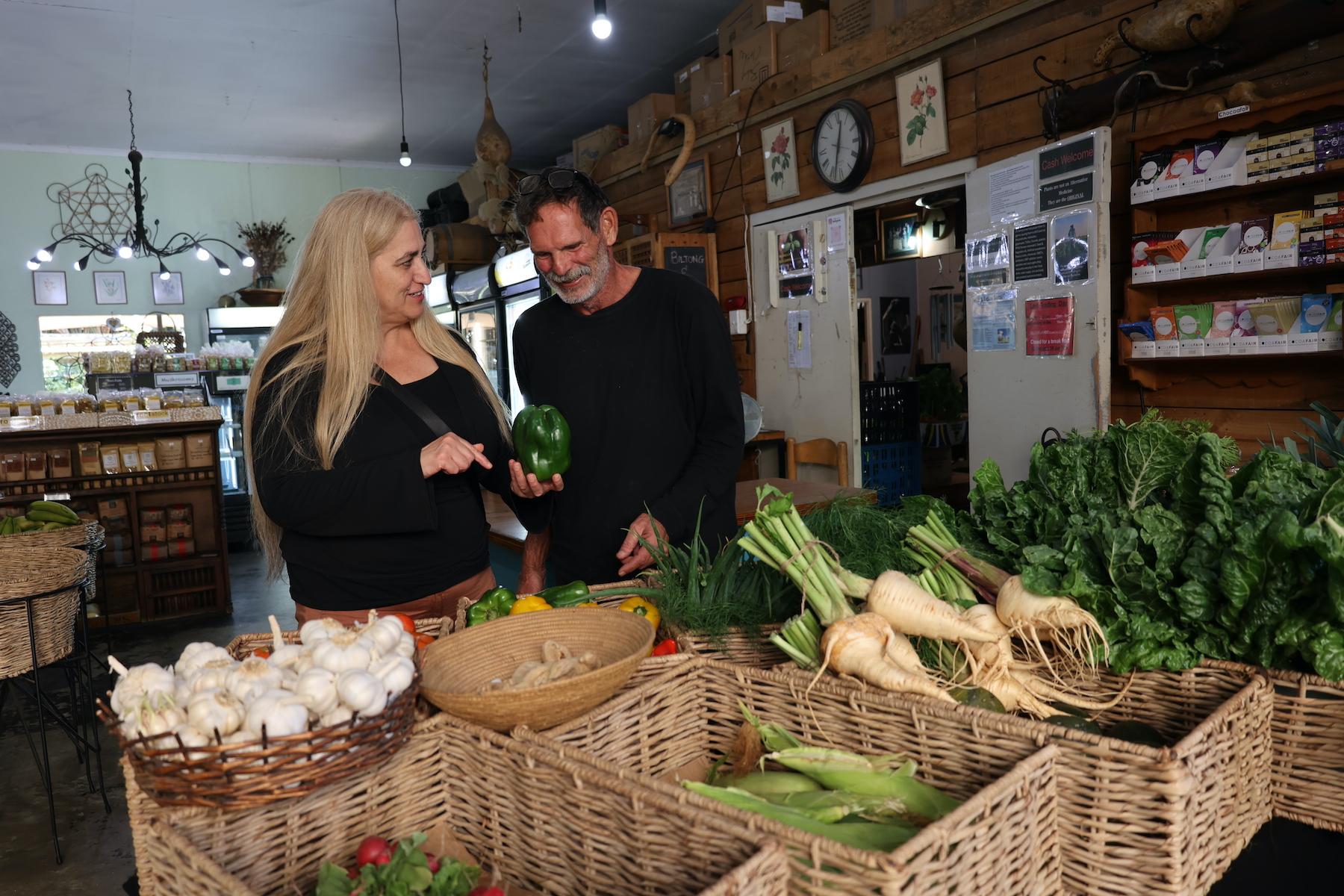
The author in conversation with Dan Neser, the Co-Chairperson of the OMEVTA
Why Oude Molen Qualifies as Intangible Cultural Heritage and Living Heritage
Despite the evidentiary shortcomings of the Revised HIA, Oude Molen embodies the core criteria for ICH. It demonstrates continuity in four key areas: its therapeutic landscape, pre-colonial and colonial Khoe and San practices, agricultural traditions and a persistent purpose of care and community learning.
Oude Molen is more than a historical site; it is a place alive with stories and traditions that continue to shape the community today. Its value lies in the ongoing practices, knowledge and care that give the place meaning.
Silent Removal in a Democratic Era
What is happening at Oude Molen unsettles me because it feels familiar. As a teenager I watched my family and neighbours live under the slow threat of removal. That same unease returns now. By claiming “no living heritage,” the WCG can make displacement seem inevitable, hiding injustice. Excluding communities from defining their own heritage turns redevelopment into a continuation of historical erasure, a form of silent removal that is a heritage and human rights issue.
Conclusion
The heritage dispute at Oude Molen transcends a simple contestation over land, evolving into a fundamental question about custodianship in post-1994 South Africa. In other words, can a living community, actively shaping its identity in the present, be recognised as the rightful guardian of its own heritage? This contribution challenges the limited, vertical interpretation of UNESCO's "transmission from generation to generation" which seeks heritage in documented, biological lineages. Instead, it demonstrates a living, horizontal transmission. At Oude Molen, heritage traditions include revivalist therapeutic practices and agro-ecology. Khoe and San cultural renewal are not archived artefacts but shared knowledge. Therefore, the precinct’s fate is a litmus test for the nation's heritage framework. If this dynamic, community-sustained continuity is not recognised as valid, the nation's heritage framework will fail to protect what is truly alive.
The question is whether South Africa will safeguard only brick and mortar monuments from the past or also the living culture being regenerated, right now, at places like Oude Molen.
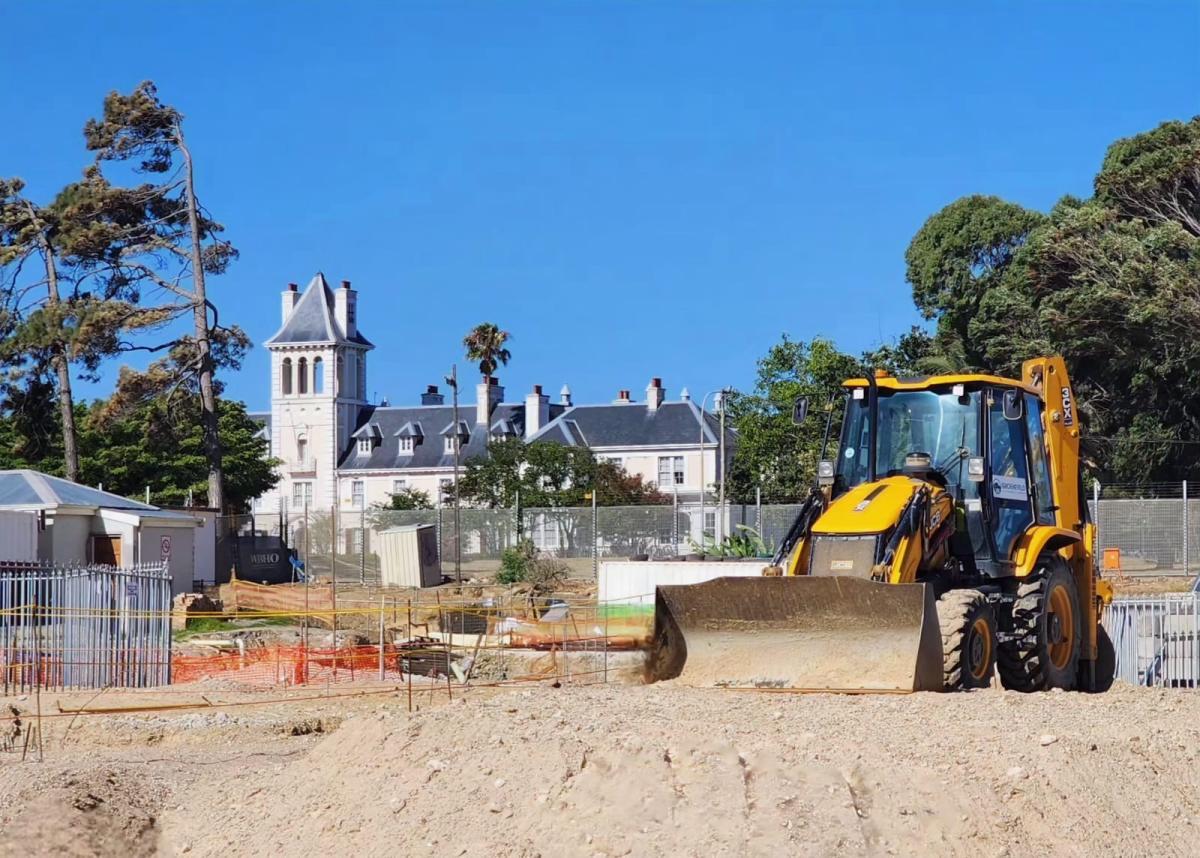
Main image: A new development takes shape next to Valkenberg Hospital, a site of deep historical significance.
Comments will load below. If for any reason none appear click here for some troubleshooting tips. If you would like to post a comment and need instructions click here.