
Since 1994, South Africa has embraced an inclusive and democratic definition of heritage, yet the protection of the built environment remains uneven. While legislation provides a progressive framework, its implementation is fragile: enforcement is weak, penalties are negligible, and development pressures frequently prevail over preservation. Against this backdrop, the most durable achievements have emerged from civil society. Across Johannesburg, Cape Town, Durban, Mpumalanga and many smaller towns, local heritage societies—supported by national coordinating bodies, online platforms, systems of public recognition and heritage tourism—have sustained heritage through research, community engagement, adaptive reuse, and visible initiatives such as blue plaques, awards, walks and neighbourhood celebrations. This article reflects on three decades of change, assesses the gains and shortcomings of the heritage movement, and sets out a practical road map for future activism. It argues that the future of heritage protection lies in partnerships—between citizens, municipalities and communities—where local activism remains the bedrock of national heritage cohesion.
How “Heritage” in South Africa Has Changed Since 1994
The most profound transformation since 1994 has been conceptual. Heritage is no longer defined narrowly as monumental architecture or colonial commemoration. The democratic transition produced a statutory and ethical reframing that recognises the plurality of South African histories.
The adoption of the National Heritage Resources Act (NHRA) marked a decisive break with the apartheid-era system. Heritage was expanded to include intangible practices, oral histories, landscapes, industrial sites, places of memory and the everyday environments of ordinary people. This was not merely symbolic: it redefined what counts as heritage in law.
The creation of the South African Heritage Resources Agency (SAHRA), alongside provincial and municipal heritage authorities, sought to decentralise decision-making and empower local governance. In principle, this shifted heritage away from a centrally controlled, Eurocentric model toward a more democratic and place-based system.
Heritage has become a public and political issue. From academic debate to street-level activism—most visibly during the Rhodes Must Fall and decolonisation debates—heritage has been contested, interrogated and reimagined. Monuments, memorials and public space are no longer neutral; they are arenas of negotiation about memory, power and belonging.
Post-1994 policy emphasises social value and living heritage alongside material fabric. Places such as Robben Island are protected not only for their structures but for their symbolic resonance. This has reshaped interpretation and management priorities across the sector.
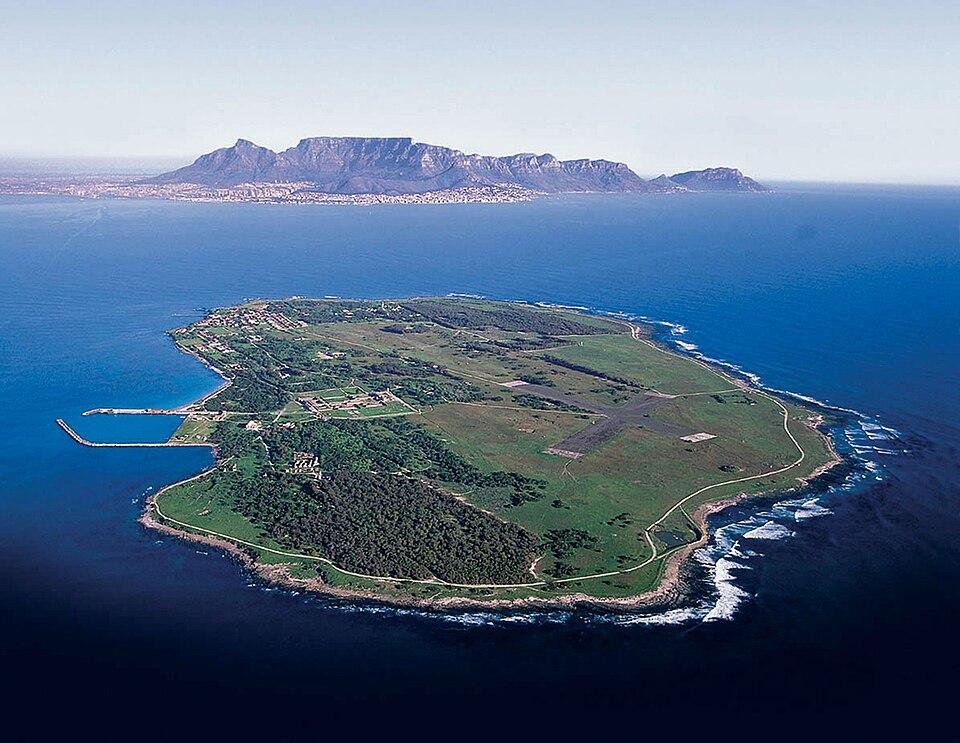
Robben Island (Wikipedia)
Digital Platforms and the Infrastructure of Civil Society
Alongside statutory reform, civil society has been strengthened by the growth of independent online platforms. Chief among these is The Heritage Portal, which has become an important part of South Africa’s contemporary heritage ecosystem.
Such platforms broaden access to research by publishing articles, site reports, archival discoveries and personal investigations. They encourage participation by both professionals and informed citizens, lowering barriers to entry and democratising heritage knowledge beyond the academy. Crucially, they also play an early-warning role by identifying heritage at risk, bringing threatened buildings and landscapes into public view before irreversible loss occurs.
The Heritage Portal further provides a practical national database of heritage practitioners, researchers and specialists, enabling communities and local societies to locate expertise and form collaborations. By documenting the work of local heritage organisations—plaques, walks, restorations and campaigns—digital platforms ensure that civil society effort is recorded, shared and amplified nationally.
Recognition, Awards and the Public Valuing of Heritage Achievement
An often-underestimated pillar of civil society heritage work is recognition. Awards and public acknowledgement sustain morale, set benchmarks and signal that heritage conservation is valued civic work.
At national level, the Heritage Association of South Africa (HASA) has played a significant role in formally recognising achievement. HASA Gold Medals honour individuals who have made outstanding lifetime contributions to heritage research, protection and advocacy. Gold Certificates recognise institutions preserving specific heritage places, while Certificates of Merit acknowledge notable conservation achievements by individuals, including private owners and professionals.
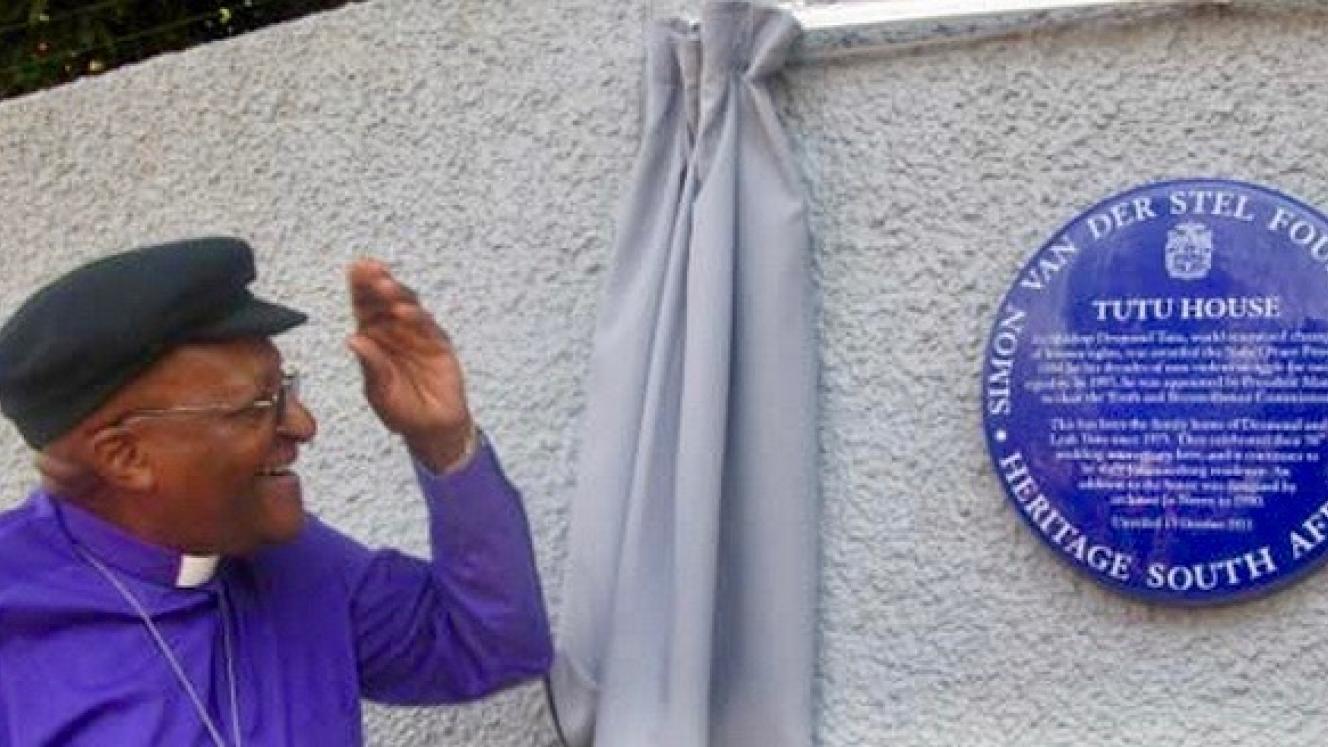
In the architectural field, the relaunch of the Herbert Prins Colosseum Award has reinforced standards of excellence in architectural heritage conservation and adaptive reuse. At city level, the Durban Art Deco Society continues to recognise exemplary restoration of Durban’s distinctive Art Deco architecture. Complementing these initiatives, the Blue Plaque programme has emerged as one of the most effective tools for public recognition, embedding heritage stories directly into everyday streetscapes.
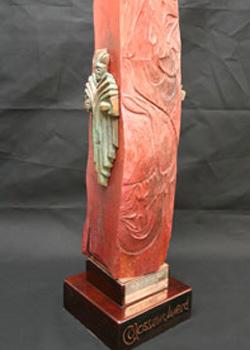
Colosseum Award designed by Cecil Skotnes
The Heritage Association of South Africa: A National Platform
The Heritage Association of South Africa occupies a pivotal position as the successor body to the Simon van der Stel Foundation and the only national umbrella organisation for civil society heritage bodies. It provides a platform through which local and regional heritage societies can share experience, raise concerns and build collective capacity.
A central feature of HASA’s work is its annual symposium, deliberately hosted in a different town or city each year. This model both showcases local heritage and brings national attention to places often overlooked. In recent years symposia have been held in Herbertsdale, Barberton, Tulbagh, Swellendam, Hartbeespoort, Rustenburg and Clarens, with the 2025 symposium hosted in Middelburg, Mpumalanga. These gatherings allow heritage practitioners and enthusiasts to exchange news, debate challenges and share practical solutions grounded in lived experience.
With a current membership of more than thirty affiliated societies, HASA demonstrates the vitality of grassroots heritage activism across South Africa. At the same time, it faces the ongoing challenge of placing this sole national civil society body on a sustainable financial footing so that its convening, advocacy and networking role can expand. After four years as Chair, I pass the baton to Andre Botha of Clarens with confidence that the association has the potential—working collectively—to achieve far more than any society could alone.
Key Challenges and Limitations
Despite progressive legislation and energetic activism, the heritage lobby continues to face persistent challenges: weak enforcement, under-resourced municipalities, fragmented governance, development pressure, skills shortages, politicisation of monuments and uneven public buy-in. These factors combine to make protection inconsistent and often reactive rather than preventative.
Is Built-Heritage Protection More Successful Than Pre-1994? Legally and conceptually: yes. Practically and evenly: only partially.
The post-1994 framework is more inclusive and participatory than its predecessor. Yet underfunding and uneven capacity mean that many heritage assets remain vulnerable. Protection has improved in selected sites and urban centres, but it is not uniformly stronger across the country.
A Road Map for Heritage Activism, 2025–2035
The founding National Trust ideal of the Simon van der Stel Foundation was bold but unrealised. Its enduring value lies in forcing a hard question: should nationally significant heritage assets remain in private hands, or be entrusted to quasi-public bodies acting in perpetuity for the public good? A contemporary response is likely to lie in hybrid custodianship models—conservation servitudes, co-management agreements and incentives for good stewardship—rather than a single institutional solution.
The most effective heritage protection occurs at local level. Local societies hold municipalities to account, alert provincial authorities when sites are threatened, and mobilise public opinion. Successful activism combines vigilance with persuasion and realistic visions for adaptive reuse. Smaller “friends” groups—such as those supporting cemeteries or single sites like Mostert’s Mill—have proven especially effective.
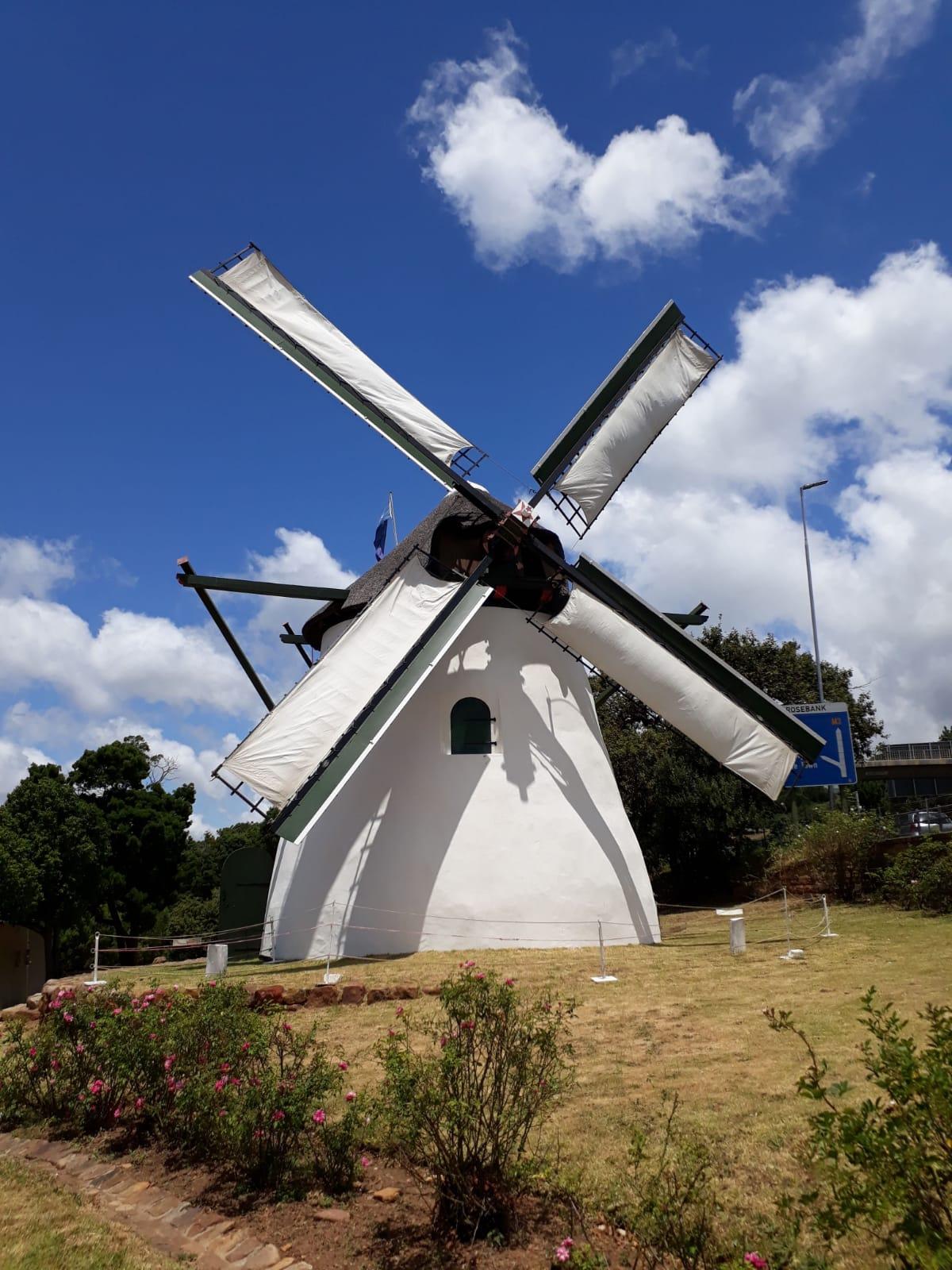
Mostert's Mill
Local societies must also form alliances: with genealogists, architects, military historians, museums and universities. Heritage protection is strongest when it is networked and interdisciplinary.
Heritage tourism offers a powerful means of foregrounding heritage. Well-trained guides, grounded in solid research, can transform buildings and landscapes into compelling public experiences. Walks, trails and tours generate pride, visibility and economic incentive, reinforcing conservation outcomes when responsibly managed.
Conclusion: Civil Society at the Frontline
Three decades after democracy, South Africa’s heritage framework is progressive but unevenly realised. The decisive factor remains civil society action: local vigilance, informed persuasion, credible reuse strategies, public recognition, digital visibility and experiential engagement through tourism.
Heritage survives when it is seen, used, valued and defended. The task ahead is practical and collective—to strengthen local societies, support the national platform provided by HASA, and ensure that when heritage is threatened, civil society is informed, organised and ready to act.
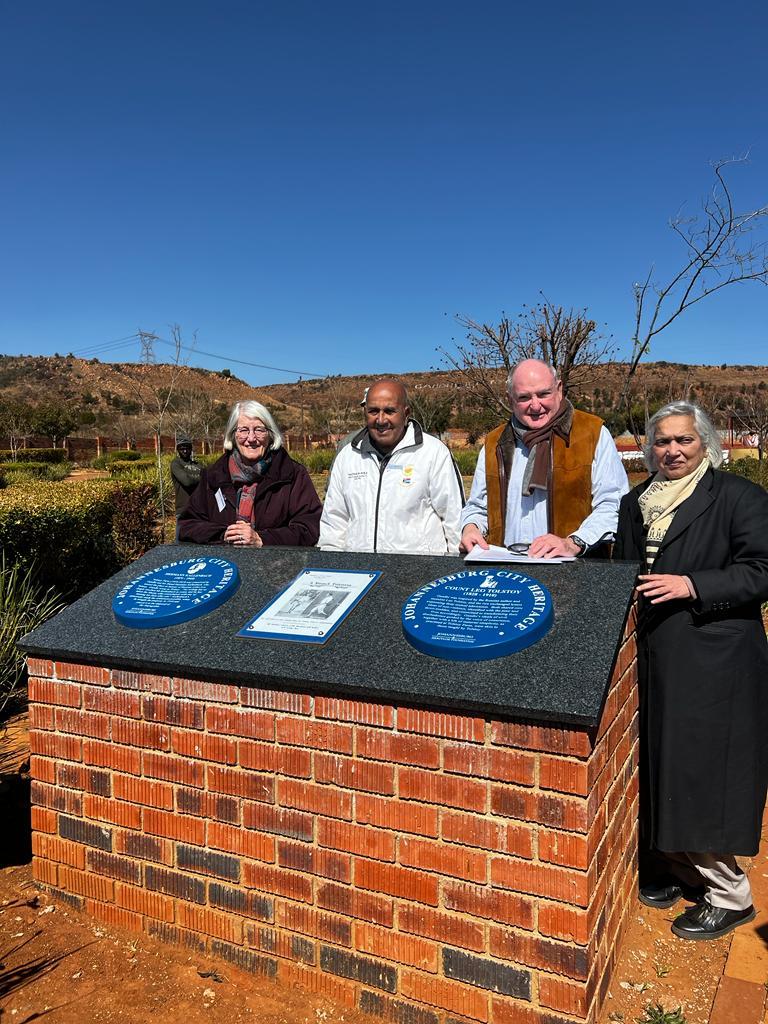
Kathy Munro (left) at the unveiling of the Tolstoy Farm blue plaque
Note: A version of this address was presented as a paper at the 2025 Middleburg, Mpumalanga, HASA symposium, October 2025
Kathy Munro is an Honorary Associate Professor in the School of Architecture and Planning at the University of the Witwatersrand. She enjoyed a long career as an academic and in management at Wits University. She trained as an economic historian. She is an enthusiastic book person and has built her own somewhat eclectic book collection over 40 years. Her interests cover Africana, Johannesburg history, history, art history, travel, business and banking histories. She researches and writes on historical architecture and heritage matters. She is a member of the Board of the Johannesburg Heritage Foundation and is a docent at the Wits Arts Museum. She is currently working on a couple of projects on Johannesburg architects and is researching South African architects, war cemeteries and memorials. Kathy is a member of the online book community the Library thing and recommends this cataloging website and worldwide network as a book lover's haven. She is also a previous Chairperson of HASA.