
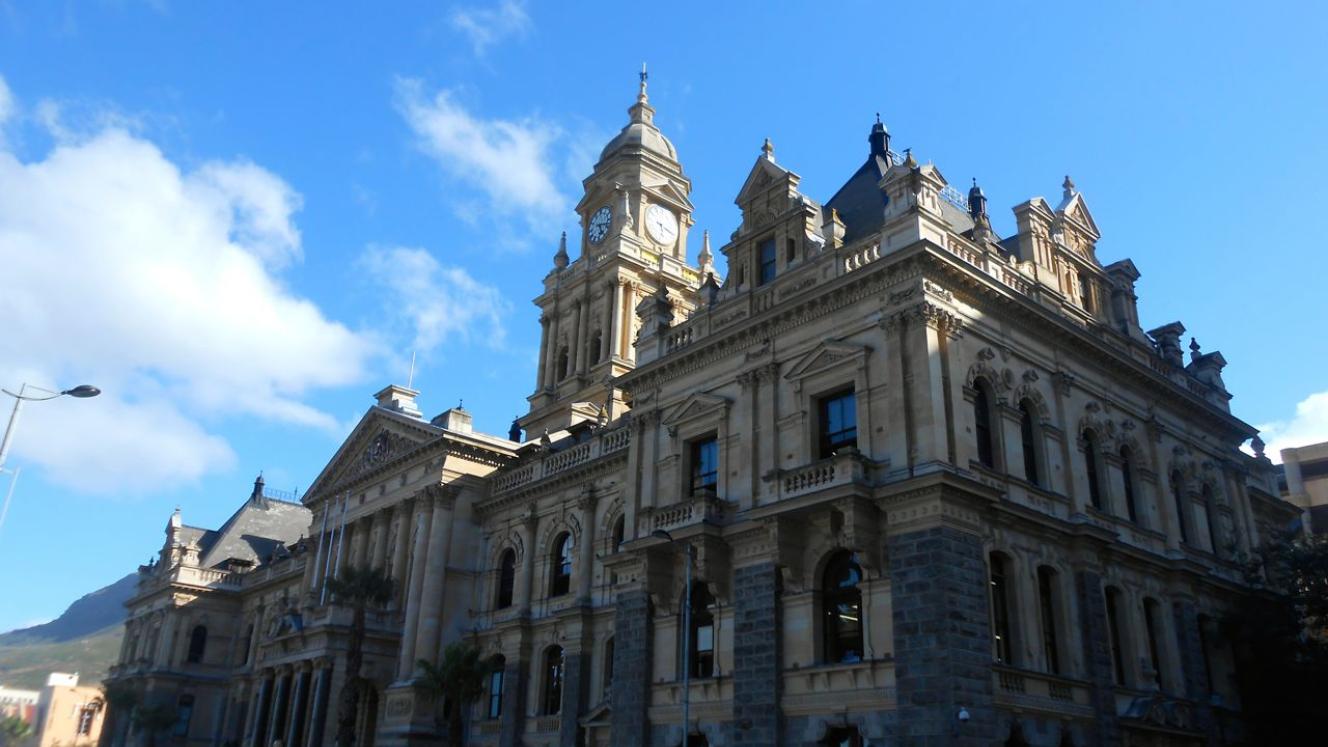
A City Hall concert and a community centre workshop expose the fault lines in who gets to experience and own the city's cultural soul.
Havana is in Cape Town - The Demography of a Concert Hall
On 29 January 2026, the Cape Town Philharmonic Orchestra (CPO) performed a programme including Gershwin’s Cuban Overture and Respighi. The music spoke of Afro-Cuban rhythms and Roman soundscapes. The audience, however, told a different story: approximately 98% white and 90% over 65. This pattern raises an uncomfortable question: when programming "global" heritage, who is the intended beneficiary?
This demographic reality frames a critical investigation into two models this February: the institutional presentation in the colonial-era City Hall and the community-based exchange in Athlone's Belthorne Recreation Centre.
City Hall: Monument, Museum or Market?
Cape Town City Hall’s architecture declares colonial authority. Its balcony witnessed Mandela's first free speech. Its stage hosts both the Western standard of the Philharmonic and the Cape Malay Choir competitions. It is, theoretically, everyone's hall.
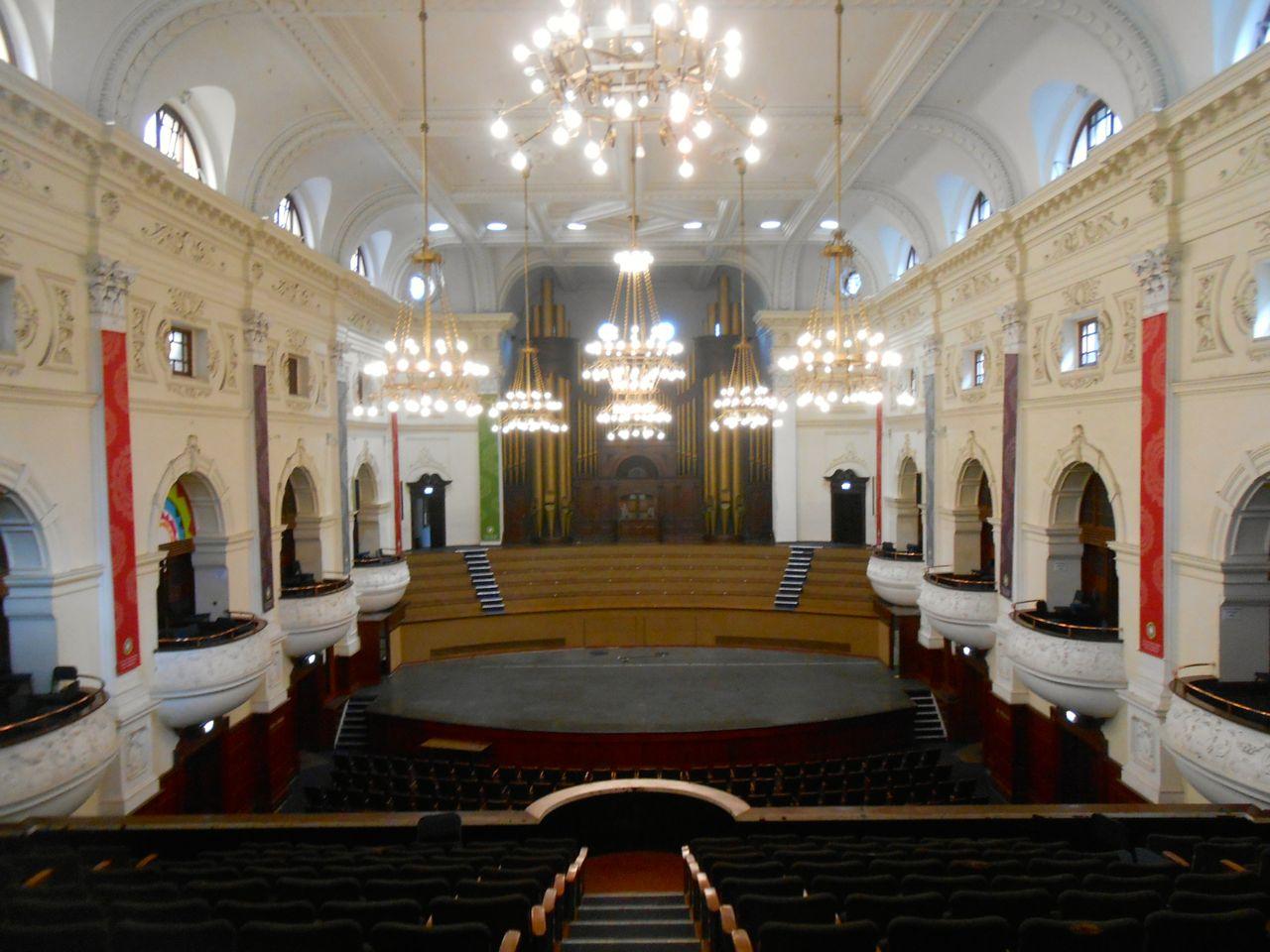
Inside Cape Town City Hall (The Heritage Portal)
Yet, its primary orchestral audience remains demographically narrow - a direct legacy of apartheid's spatial engineering. The hall's traditional subscriber base is still largely drawn from the affluent, historically white suburbs.
The reasons are a brutal tangle of legacy and logistics: ticket pricing (R200-R600) that excludes most; transport costs; programming perceived as "European" and marketing that targets existing subscribers. The geography of apartheid translates into practical barriers today from the Flats and townships to the city centre for an evening performance.
An institution's primary imperative: financial survival, often hinges on catering to this reliable base, creating a self-perpetuating cycle. This is not merely a failure of imagination, but often of survival. A full orchestra is among the most expensive art forms to maintain, creating immense pressure to secure a reliable financial base.
"Classical music is the core," states Adriaan Fuchs, the newly-appointed CPO CEO (FMR Interview: 1 February 2026). Whilst the CPO’s “outreach” is growing, the core programming first serves the audience that sustains it. But it also reduces a publicly significant venue to a de facto private club, where "outreach" is peripheral and the "core" audience is culturally homogeneous.
This tension reflects a global shift in defining heritage. UNESCO’s 2003 Convention for the Safeguarding of the Intangible Cultural Heritage (ICH) moved the focus from monumental artefacts to community-based living traditions, constantly recreated. South Africa’s 2025 ratification of this convention makes it a relevant new lens. Through it, the Afro-Cuban exchange in Athlone emerges not as a peripheral project, but as a central act of heritage safeguarding.
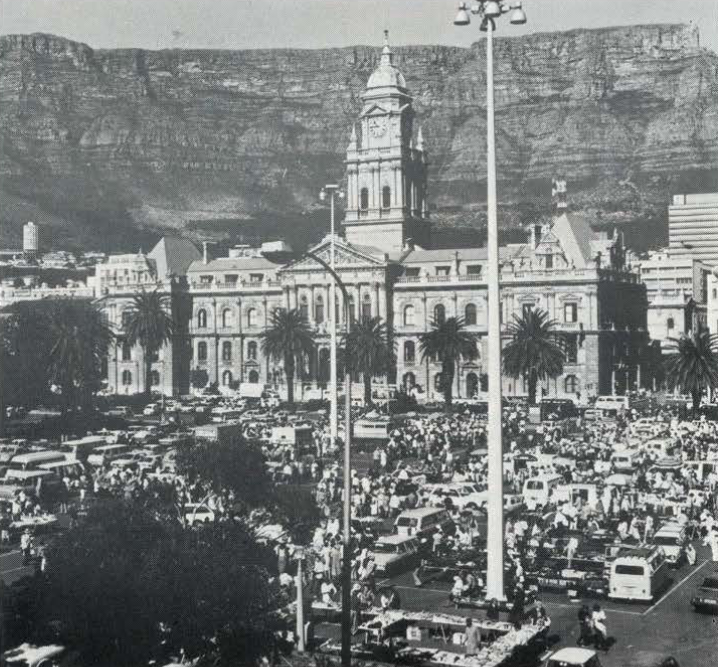
Old photo of Cape Town City Hall (Restorica)
The Documentary as a Blueprint: Casa de la Música
The path to a different model is vividly illustrated in the documentary Casa de la Música, produced by composer-filmmaker Jonathan De Vries and filmmaker Jack Lewis. The film follows the late Cape jazz pioneer Robbie Jansen to Cuba, not as a tourist but as a collaborator. The magic is not in the performance of finished pieces, but in the process: the improvisational dialogue between Cape jazz and son cubano, discovering a shared rhythmic language forged by the brutality and human suffering of the Middle Passage.
The film argues that heritage is not a curated artefact to be displayed, but a living practice to be engaged. This philosophy of collaborative, grounded creation is not limited to documentary; it is the same ethos that drives De Vries’s work as a composer, offering a potent model for institutional transformation.
Re-composition as Process: An Unfinished African Mass
De Vries’s practice exemplifies what might be termed 're-composition from within.' A powerful embodiment of this is his unfinished work on an African Mass for St George’s Cathedral; a site known as the "people's" cathedral. This mass is a project of collaborative re-authoring. The process itself is the point: Latin text negotiates with local languages; European choral traditions are infused with South African rhythms.
It poses a direct question to cultural institutions: what if the stage were treated not as a platform for finished treasures but as a site for collaborative work?
These dilemmas demonstrate that transforming the "who" in the audience is fundamentally linked to transforming the "what" and the "how" of creation itself. This artistic model stands in stark contrast to the "parallel stream" approach observed in the CPO offerings. It does not build a separate pipeline to feed an unchanged mainstage. It proposes that the mainstage itself must become a space for re-composition.
Athlone: The Community as Co-Author
This theoretical model became concrete from 6-8 February 2026, in Athlone. The TransAtlantic Jazz Exchange, hosting Afro-Cuban artist Melvis Santa, concluded with a free workshop and concert at the Belthorne Recreation Centre. To understand the significance of this location is to engage with a different kind of South African heritage. Athlone, a designated 'Coloured' area under apartheid, became a crucible of resistance. Its history is marked not by ornate balconies but by raw trauma, most notably the 1985 Trojan Horse Massacre, where police hidden in a railway truck ambushed and killed three young anti-apartheid protesters.
For a community shaped by such history, the question of what heritage is performed, and how, carries immediate weight.
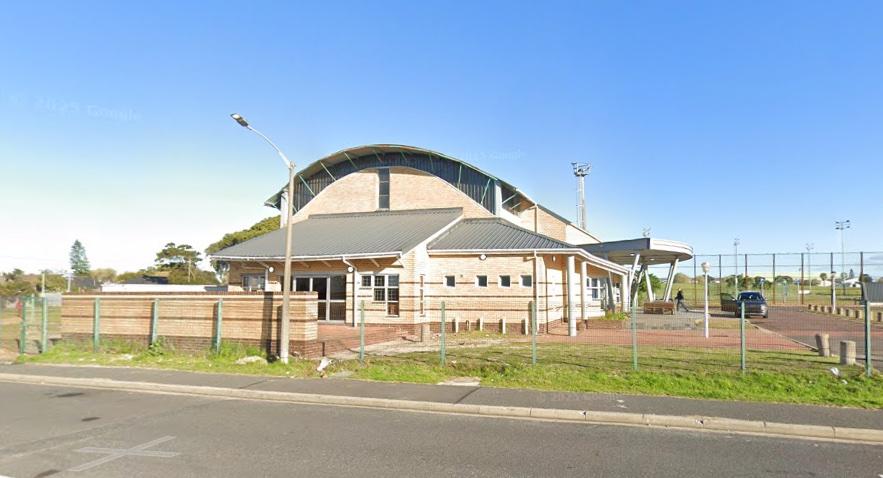
Belthorn Recreation Centre (Google Maps)
Contrasting Audience Models
A snapshot of how access, participation and heritage framing differ across Cape Town’s cultural spaces
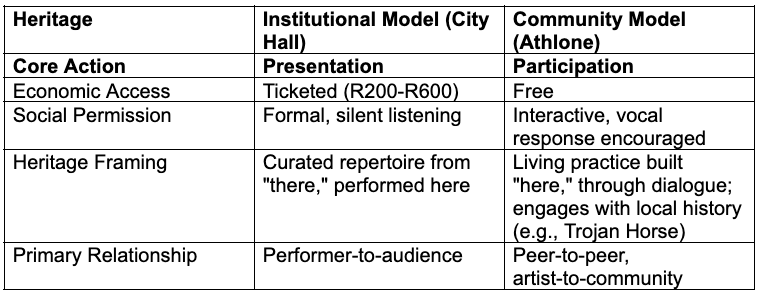
In Athlone, the Afro-Cuban sound is not an exotic import for appreciation; it is raw material for communal creation.
The Kingdom of Ubuntu
A more complex test of this tension is imminent. On 6 and 7 March, Artscape will host The Kingdom of Ubuntu, a large-scale "reimagined afro-epic." With tickets priced between R150 and R300, it is an institutional effort to present a reconfigured heritage. Its artistic intent directly engages with the UNESCO principle of living heritage. Yet, by staging it in the city's premier performing arts complex, it encounters the same structural dilemma: does transformative content alone recompose an audience, or must the institution's relationship with the city, its geography, pricing and “outreach”, be deliberately redesigned to match?
The Kingdom of Ubuntu offers a powerful artistic answer; whether it can also redraw the "audience map" remains its most consequential question.
The Orchestra's “Outreach” and The Persistent Divide
Initiated in 2003 as part of a Transformation Plan, the CPO's Outreach programme is an ambitious attempt to change the orchestral landscape. It is crucial to acknowledge the CPO's own efforts to bridge this divide. It runs commendable youth and education programmes like the Masidlale project, offering free music lessons. It also runs the premier youth ensembles where most members are from historically disadvantaged communities. The objective is to build a pipeline from ‘excluded communities’ towards the professional stage. As remarked by the former CEO, Louis Heyneman: “Our audience was far too white,” in Jan Sjostrom, 2011. As true then as it is today.
Yet, this very design reveals the persistent gap. While outreach beneficiaries are over 75% Black, the professional CPO's membership remains starkly unrepresentative. The pipeline, however robust at its source, appears to have a leak long before it reaches the main stage. To be fair, training a professional musician is a 10 to 15-year process. However, the Transformation Plan was launched in 2003, the orchestra's ongoing demographic disparity, 23 years later, poses an unavoidable question: does the plan patiently feed new talent into an old model, or will it finally drive a fundamental re-composition of the model itself?
The outreach work, however laudable, ultimately highlights the challenge: changing who is in the training room is not the same as changing who is on the professional stage, or who feels ownership of the heritage performed there.
Conclusion: The Composition of the Audience
The question is not about "diversity and inclusion" as an add-on. The fundamental question is about compositional intent. For the CPO, it must mean "composing" the audience with the same intentionality as programming a season. This means grappling directly with the apartheid geography that still defines access.
Does 'world-class' programming mean importing global masterworks, or being the primary platform for works forged from our specific soil and strife?
Productions like The Kingdom of Ubuntu represent a vital artistic step on this path, actively working to recompose the standard itself. Yet they also crystallise the enduring challenge: an innovative production in a central venue, does not automatically reconfigure its audience.
Re-authoring heritage must be matched by an equally deliberate act of re-imagining the community it seeks to serve.
This involves measuring success not only by box office revenue, but by the demographic and cultural shift in the room over time. It requires concrete, provocative choices: Could a block of City Hall tickets with dedicated transport be distributed via community organisations in Athlone and Khayelitsha? Could a percentage of the season be mandated for Southern African co-creations? What if CPO musicians undertook residencies in community centres as co-creators, not visiting performers?
The music in City Hall was expertly played. But as long as the audience reflecting the majority of Cape Town remains outside, the performance is not a triumph of shared culture. It is a beautifully rendered lament for a segregated past.
The challenge is no longer to ask if the doors are open, but who is already imagined inside when the programme is chosen. The ultimate test may be a mainstage season co-curated with community groups or a CPO ensemble-in-residence in Athlone, treating that space not as an outreach venue, but as a primary site for creative work. Until then, the celebrated rhythms of Havana will echo in a hall whose audience map still too closely resembles the apartheid city.
Saaliegah Zardad is a researcher and writer whose work focuses on heritage, cultural landscapes and post-apartheid spatial justice. Her research engages with heritage impact assessment processes and questions of intangible cultural heritage, living heritage, community meaning and public decision-making in relation to the Oude Molen Precinct and other redevelopment initiatives.