
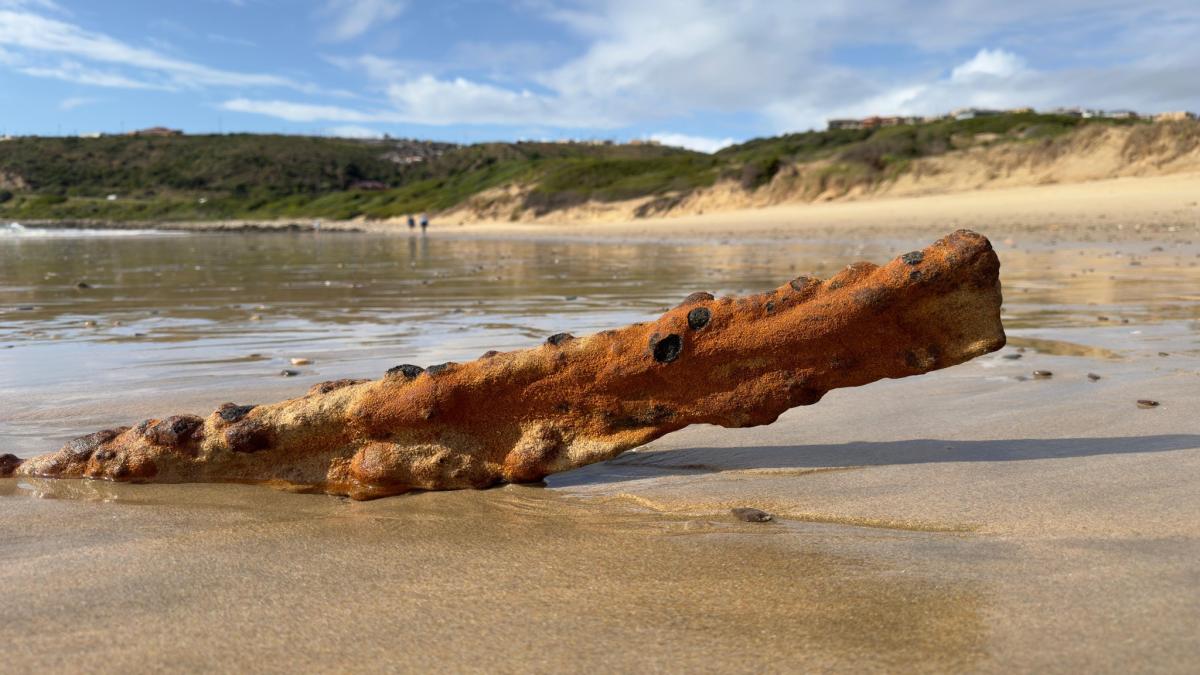
The South African Heritage Resources Agency were notified of potential illegal salvage activity being undertaken on a shipwreck site on Dias Beach in Mossel Bay. The site is thought to be that of the King Cenric, a Norwegian vessel that ran ashore in November 1903. The wreck lies in the shallows of the beach and washes open on a regular basis though the recent rough weather may have exposed more of the remains than usual.
All archaeological artefacts and sites in South Africa are protected under the National Heritage Resources Act (No. 25 of 1999). This protection extends to any shipwreck, or part thereof, that is more than 60 years old, as well as any associated archaeological material. The law of salvage does not apply to historical shipwrecks in South African waters. Under the Act, such wrecks are classified as archaeological material and are therefore the property of the State. As a result, it is illegal to damage, destroy, disturb, or remove any part of a protected shipwreck or its associated material without a valid permit issued by the South African Heritage Resources Agency (SAHRA).
Following reports of illegal activity, several individuals were arrested, and the matter is now the subject of an ongoing police investigation. Further surveys are being undertaken on behalf of SAHRA to determine the extent of the damage.
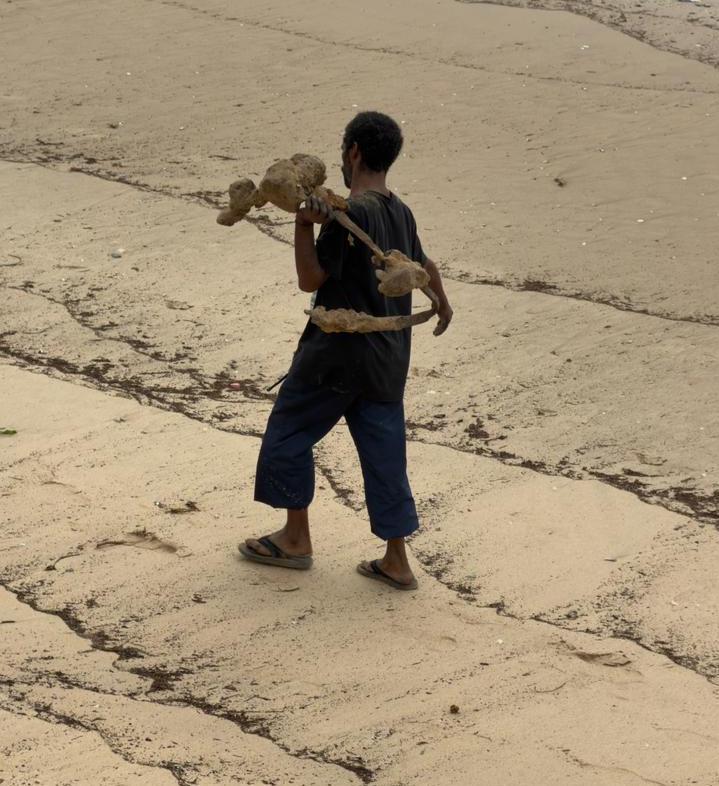
Thank you DRONE FANATICS SA for the images and for reporting the matter so promptly.
The severe coastal erosion caused by recent weather conditions has uncovered two historical wrecks that we currently know of, leaving them vulnerable to illegal salvage operations.
Please be vigilant when walking the beaches, as there is a possibility that other historically significant finds may have been uncovered / washed up.
Please report any finds or suspected illegal salvage activity to us or to your local museum.
SAHRA Maritime and Underwater Cultural Heritage