
Disclaimer: Any views expressed by individuals and organisations are their own and do not in any way represent the views of The Heritage Portal. If you find any mistakes or historical inaccuracies, please contact the editor.
In the article below, Oscar Norwich, Johannesburg historian and collector, explores a few early gaols in Johannesburg and then reveals the history behind the Johannesburg Fort. The piece first appeared in the 1983 edition of the old Johannesburg Historical Foundation's journal 'Between the Chains'. Thank you to the Norwich family for their kind permission to publish this article. The Old Fort forms part of the Constitution Hill complex today.
Johannesburg's first gaol was situated opposite the early Height Hotel in Commissioner Street. It was hastily and primitively constructed, consisting of a three-roomed prison supported by wooden and mud poles with walls of brick and a thatched roof. In the beginning it served as a hospital as well and the prisoners looked after the sick.
Dr. Hans Sauer, Johannesburg's earliest District Surgeon, in his book Ex Africa, 1937, describes a major surgical operation performed by himself with Colonel Ignatius Ferreira (of Ferreira's Camp fame) administering a chloroform anaesthetic under Sauer's supervision. The patient was involved in a wagon accident, having sustained severe injuries to his shoulder. Dr. Sauer reports that because it was a long-standing injury, mortification had set in and he had to amputate the whole arm including the scapula (shoulder blade). Apparently the operation was entirely successful and the patient was discharged from the hospital six weeks later minus an arm and a shoulder blade but otherwise well.
Another interesting reference to this first Johannesburg gaol is an artistically executed drawing of its demolition dated 11th January 1888, by Johannesburg's well-known pioneer artist, Ida Mae Stone. She and her husband, Harry Clayton, executed an album of historic drawings of very early Johannesburg, which was reproduced in 1976 in a volume entitled Sketches, edited by Anna H. Smith.
Johannesburg's next gaol was built on the site of the present Drill Hall at the bottom of Twist Street, according to L.E. Neame, in his book City Built on Gold. In 1892, however, President Kruger built a much-needed new gaol for the six-year old Johannesburg.
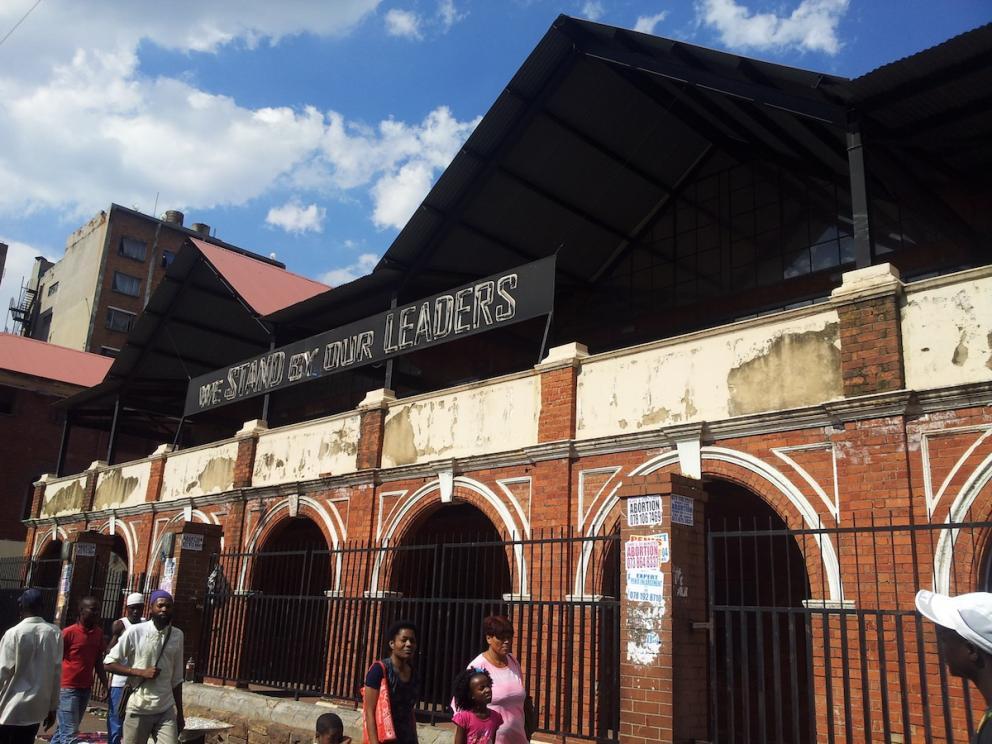
Drill Hall, Johannesburg
A site was chosen on Government ground at the top of Hospital Hill, which was then, apart from a small hospital, a quiet and purely residential part of the town. The new gaol on Hospital Hill was opened in 1893 in the presence of W.H. Wolmarans, Inspector General of Prisons. The old gaol in Twist Street was to be used for African prisoners and the white prisoners would be housed in this newer building. In April 1894, however, the Twist Street gaol was converted into a police station specially staffed for the protection of the rapidly growing Doornfontein, the first fashionable and growing suburb of Johannesburg. The African prisoners would then also be transferred to the Hospital Hill prison.
In April 1895, the Government began to build a high wall round the gaol, 250 x 250 yards, the gaoler's name was Menton and the prison nicknamed Mentonville. The author, in his collection of photographs of old Johannesburg, has one, illustrated here captioned "Johannesburg from Hospital Hill", c. 1889/1900. It shows early Johannesburg looking south, the grassed edge of the Fort in the right foreground and within a walled enclosure a number of corrugated barrack-like structures stated to have housed 200 mounted police.
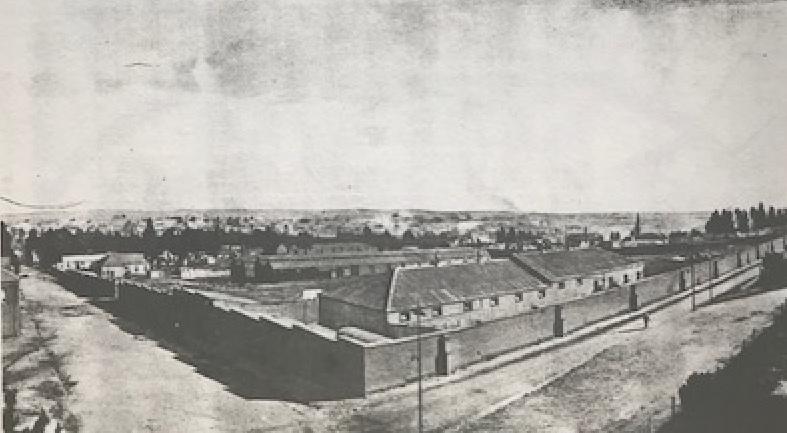
Johannesburg from Hospital Hill
The area is the site which was to become the South African Institute for Medical Research, the original Medical School of the University of the Witwatersrand in Hospital Street and adjacent to the building's northern aspect, the Non-European Hospital, a branch of the then first Johannesburg Hospital. The Medical School had its foundation stone laid in 1920, and flourished thereafter into a major teaching centre for many years. It is still extant but has been superseded by a second Medical School in the adjacent Esselen Street, and now more recently, the Esselen Street School has moved to its third site on the Parktown Ridge in 1983, adjacent to the new Johannesburg Hospital, also usurping the Parktown Ridge.
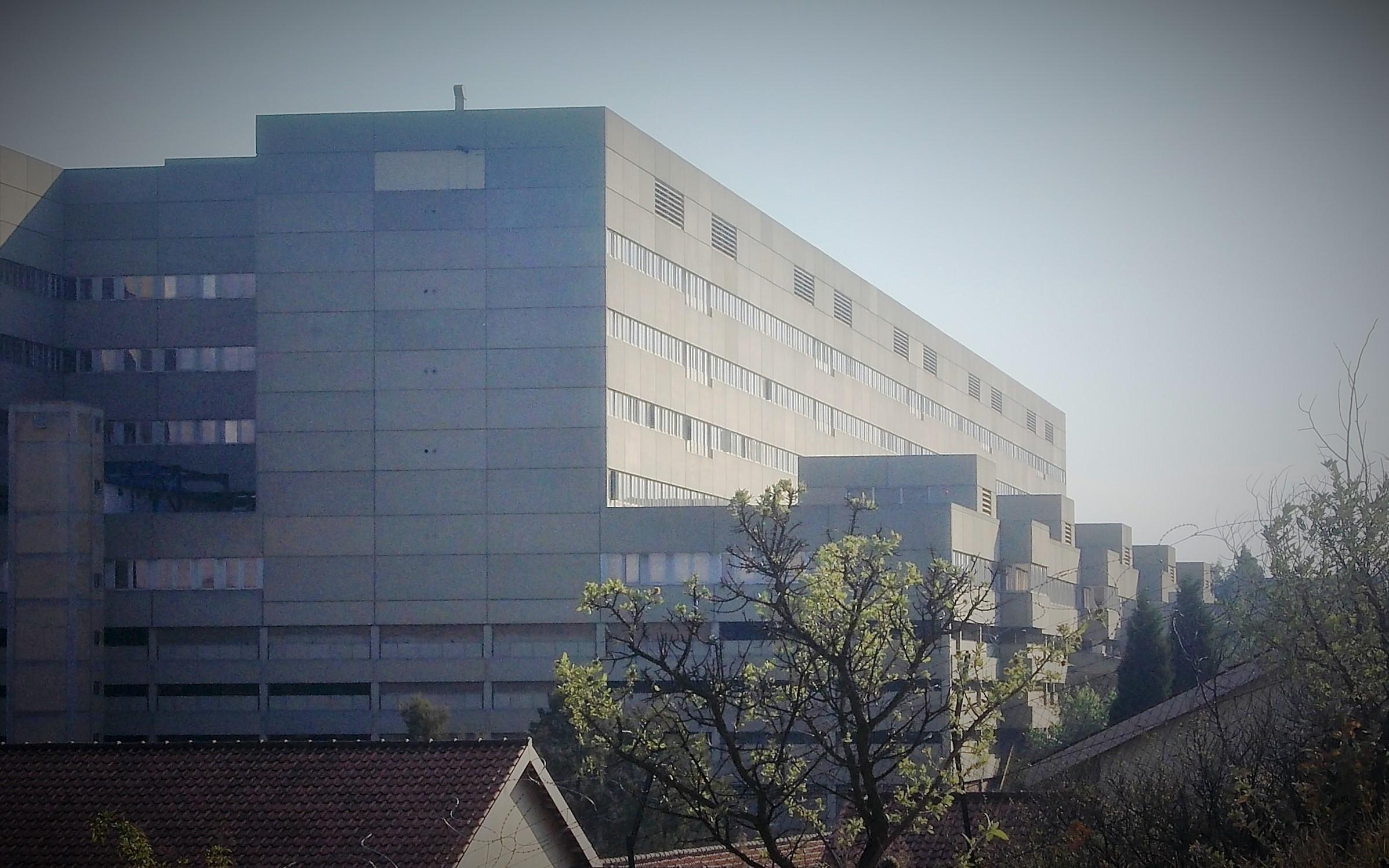
Johannesburg Hospital on the Parktown Ridge (now Charlotte Maxeke Hospital)
It is interesting to trace the history of the Fort, which appeared subsequent to the building of the aforementioned high-walled enclosure housing the barracks. After the Jameson Raid, which commenced on the last day of 1895, a period of serious reaction started in the minds of the Z.A.R. authorities regarding the defence of the Transvaal Republic. It was felt highly desirable and urgent to reinforce the military defences and also to introduce compulsory military service for all burghers, making them fit and able for military preparedness. It was also revealed, on investigation, that men were insufficiently equipped. This prompted the military authorities to decide to build suitable forts in Pretoria and Johannesburg for the State Artillery and for other purposes. We are here concerned only with the Johannesburg Fort.
In 1896 it was reported by Captain C. Delme Ratcliffe in the Rand Club, Johannesburg, that the Z.A.R. was making numerous military preparations and that he (Ratcliffe) had ascertained that up to the present it had 15,000 spare rifles, 20 million rounds of S.A. ammunition and 35 field guns of various sizes (extracted from Government military archives). This report was sent to the British Military Intelligence Service in Cape Town, who at that period showed particularly keen interest in the implementation of the Transvaal armament programme after the Jameson Raid. This report was restricted not only to the British Military Intelligence but in June of that year, the German Consul-General in Pretoria, Mr. von Herff, reported to the German Minister of Foreign Affairs that the Transvaal Government was building the forts in haste, that ammunition was being bought in Germany and that the Z.A.R. was going full steam ahead regarding the building of the Johannesburg Fort. In 1896, Major E.A. Altham, Assistant Secretary to the British Commander-in-Chief of the Cape Colony in Johannesburg, Paardekraal and Pretoria, was deputed to undertake some intelligence investigation in detail.
In January 1897, he reported that "While at Johannesburg I could obtain no exact information as to the Forts. I rode to the gaol on Hospital Hill and found the convicts excavating the ground in front but the work was not sufficiently advanced to determine its nature and one of the guards ordered me out. Behind the gaol, on the southern slope of Hospital Hill, that is, facing the town, a brick wall 10ft. high is being built enclosing a space yards. Within this are the old barracks occupied at present by 200 mounted police. These barracks are rough corrugated iron and have only mud floors, but fresh barracks are to be built. I could see no sign of any guns in the barracks. I have since been told that excavations on the northern slope of Hospital Hill and in front of the gaol are the beginning of a small fort."
In this report mention is made of a 10ft. high wall enclosing a space 250 x 250 yards, already referred to earlier in this article, and occupied by 200 mounted police. To confirm the existence of this walled-in area the author has another photograph (from the Government archives) now showing the enclosed area in early Johannesburg from the south to the north. This confirms Major Altham's report previously mentioned. This is rather an interesting photograph showing an elongated mound in the background of the Fort itself and in front of it the barrack buildings within this rectangular walled-off area. In the foreground are a number of fine old mansions within wooded surroundings.
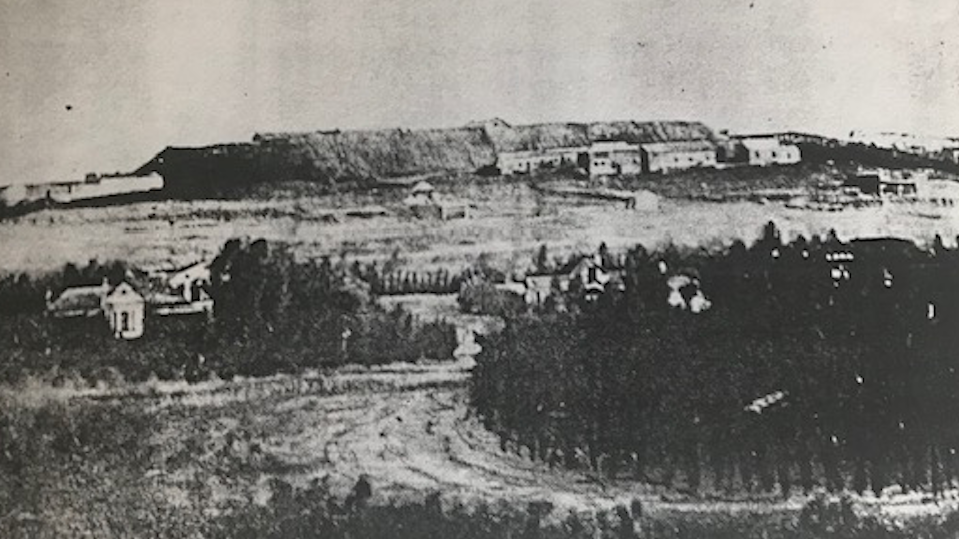
The Fort in the background with mansions below
One of these mansions may possibly be the original home of Theodore Reunert, Johannesburg's early and well-known pioneer, who is known to have built his original home "Little Swallow", in the early 1890's at the foot of Hospital Hill, but with the developing Fort and its accompanying gun emplacements, he felt somewhat insecure here and then built his second residence further to the east out of the line of fire, which he named "Windybrow", at the corner of Nugget and Pietersen Streets in Lower Berea, bordering on Upper Doornfontein.
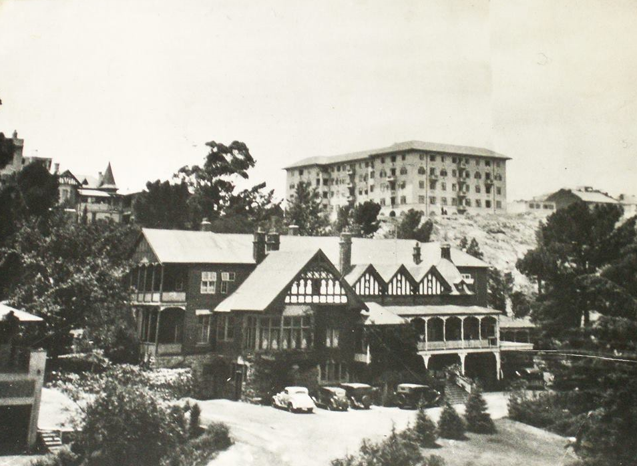
Windybrow in the 1930s
In July 1897, a British agent, W. Conyngham Greene, reported to the British High Commissioner, Sir A. Milner, about unrest in Johannesburg. The same British agent in February 1898 stated that "turning to the question of the forts which have been constructed at Pretoria and Johannesburg, we have the statement of the President himself, when speaking during his recent tour, that these had cost £1½ to £2 million sterling. We therefore find that the Government, not satisfied with this colossal expenditure on the importation of military material which has been doubling in value year by year, is now proposing to embark on still larger schemes."
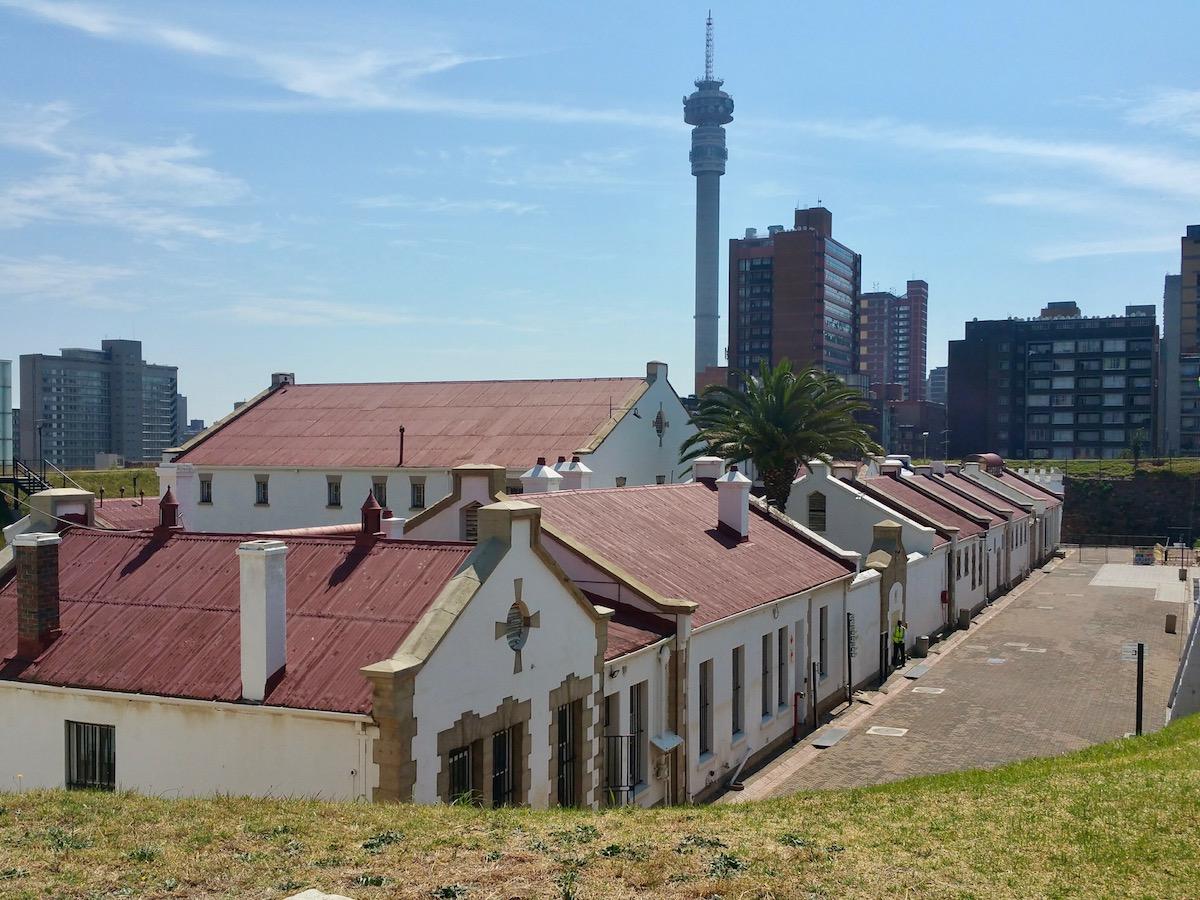
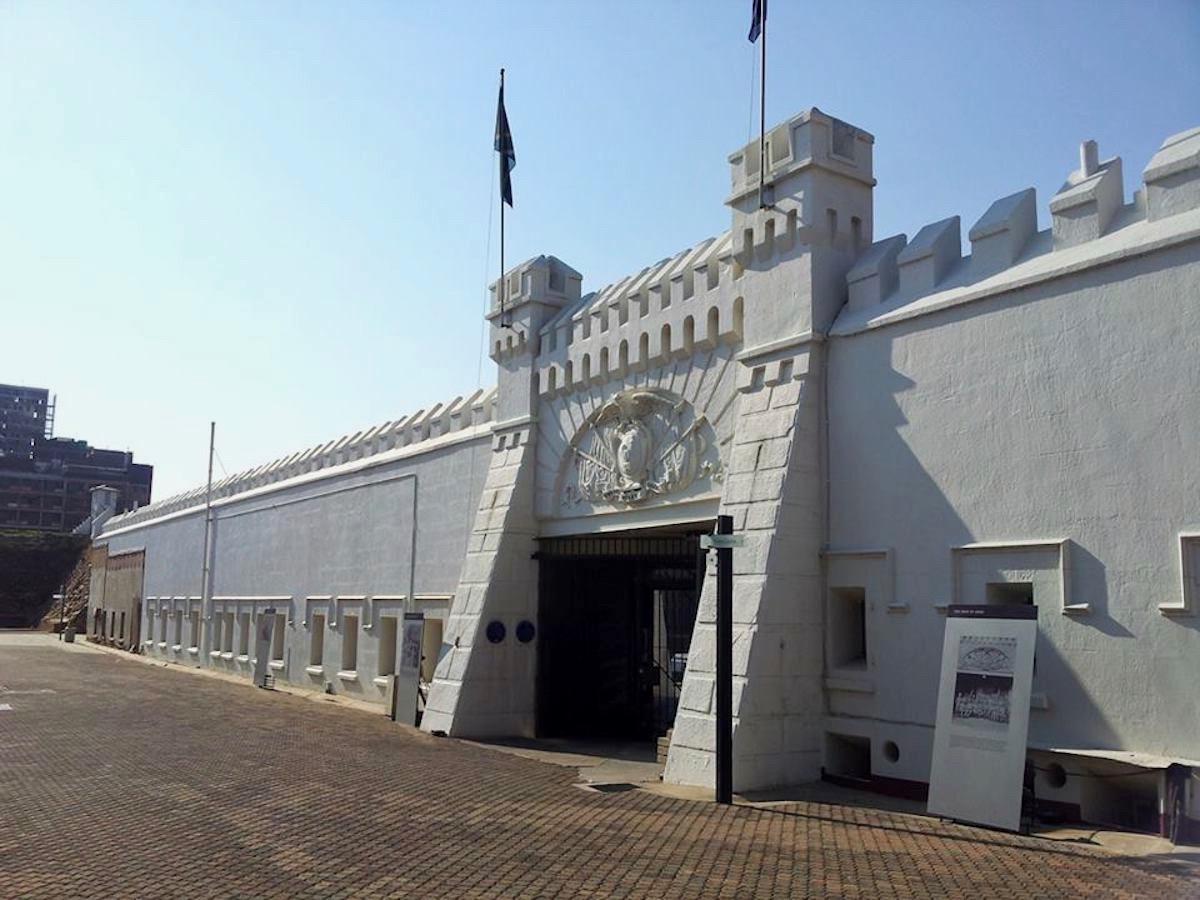
A more recent shot of the Old Fort (The Heritage Portal)
All the abovementioned historical and military facts and dates relating to the Johannesburg Fort were obtained with kind permission from Dr. Jan Ploeger, the historian and writer who wrote an article "The Reaction to the Jameson Raid — the building of the Fort in Johannesburg". This article is well documented from the Transvaal Archives in Pretoria, and which appeared in the quarterly journal Militaria of 1972. Dr. Ploeger, in the article, sketches some detailed aspects of the Jameson Raid as a prelude to the Johannesburg uprising and the related counter-measures taken in Johannesburg and Pretoria. He describes certain aspects of unrest, such as the establishing of anti-Government orientated corps, consisting of foreigners. Attention is also directed to the progress of the insurrection movement in Johannesburg and to its final collapse. Primary stress is laid on military and semi-military activities at that time.
Commandant A. Schiel, who at the time was Head of the Department of Prisons of the Z.A.R., played a major part in the building of this Fort in Johannesburg. He drew the plans of the contemplated fort. He was assisted by S. Wierda, Chief of Public Works to the Z.A.R. (also well known for his other historical landmarks in Pretoria — the Palace of Justice and Raadsaal as well as the Rissik Street Post Office in Johannesburg).
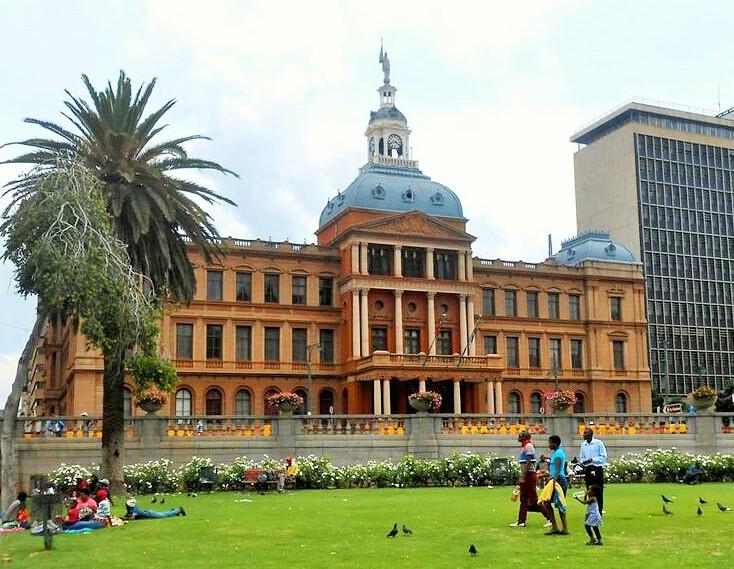
Raadsaal (The Heritage Portal)
An interesting feature on the inside of the entrance is an old Republican Coat of Arms sculptured above the gateway, which was created by South Africa's renowned historical sculptor, Anton van Wouw. In the stone let into the wall on the inside it is recorded that the Fort was built during the years 1896-1899, under the supervision of Commandant A. Schiel and the Engineer G.H. van Winsen.
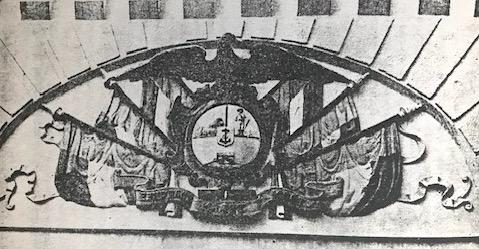
Old Republican Coat of Arms
This Fort, with its embellishments, is now a declared heritage site. From a military historical point of view, the Johannesburg Fort had no further part to play during the Second Anglo-Boer War of 1899-1902. It did, however, revert to its use as a gaol.
About the author: Dr. Oscar Norwich was a medical doctor and passionate collector who focused on African maps and Johannesburg history. As founder of the Johannesburg Historical Foundation, he led city tours and tirelessly sought rare historical items related to Johannesburg. In 1986, he published a large folio-sized book of his Johannesburg postcard collection to commemorate the city's centenary. Norwich also authored several books on African and Southern African maps. His significant map collection was eventually acquired by Stanford University in the USA, though it remains accessible to scholars online.
Comments will load below. If for any reason none appear click here for some troubleshooting tips. If you would like to post a comment and need instructions click here.