
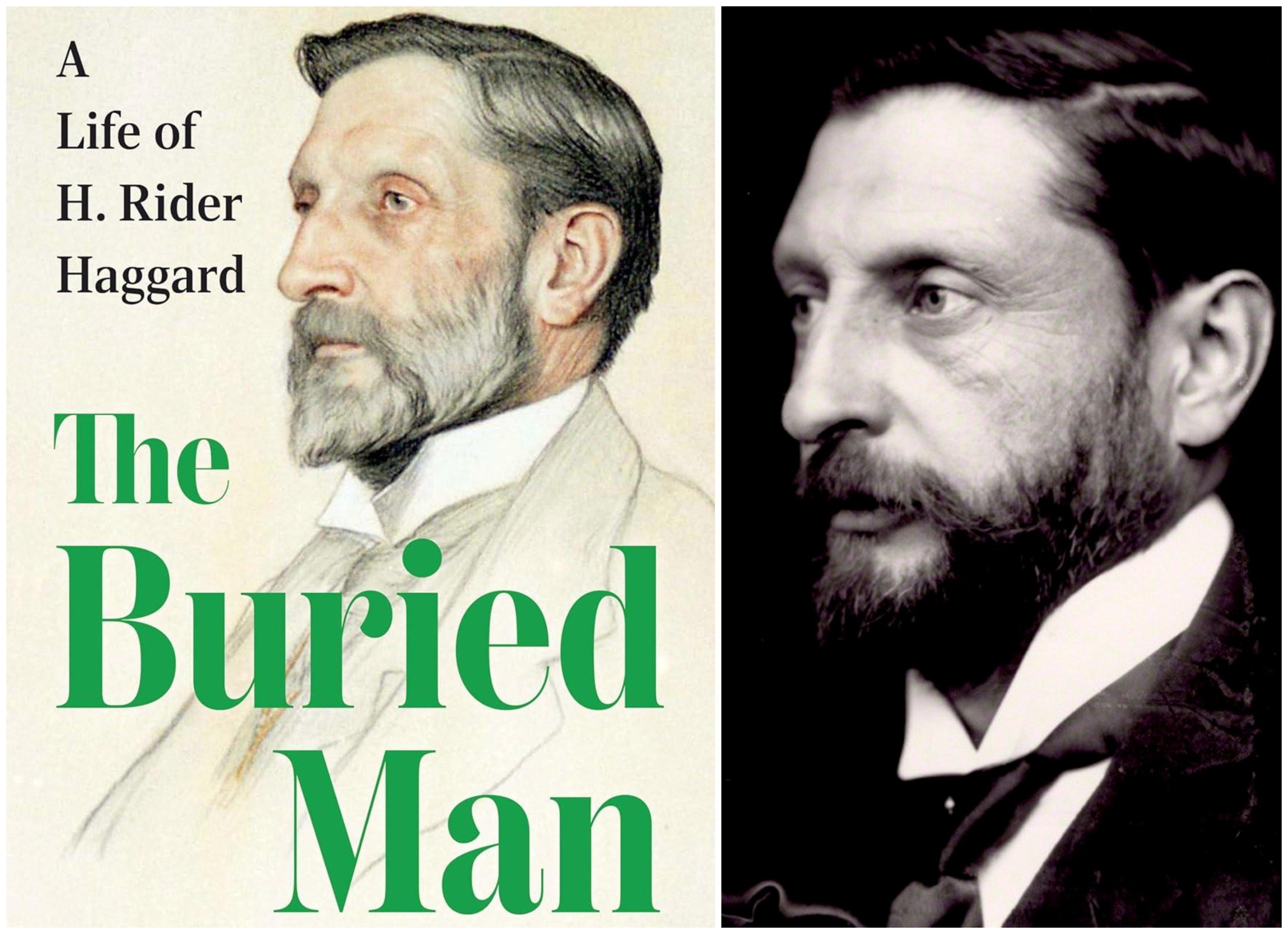
Stephen Coan’s The Buried Man can only be described as magisterial. It is the culmination of decades of patient, methodical, and deeply informed scholarship. Coan has lived with, traced, and tracked H. Rider Haggard for much of his adult life, and this monumental volume represents the distillation of that long engagement. It is unlikely to be surpassed for a very long time. This is, quite simply, the definitive biography.
The title derives from Graham Greene, who admired Haggard and referred to him as “the buried man.” Coan takes the phrase seriously. He excavates deeply and responsibly: sustained archival research; a comprehensive reading of Haggard’s prodigious output; close engagement with earlier biographies; the pursuit of family papers; a pilgrimage to Haggard’s Norfolk; and careful attention to diaries and correspondence. The result is not merely a life narrated, but a life unearthed.
Haggard’s beginnings were unpromising, yet the opportunity to come to South Africa altered the trajectory of his life. From 1875 to 1881 he lived through a period of intense political and cultural upheaval that encompassed the Anglo-Zulu War, the annexation of the Transvaal in 1877, and the chain of events leading to the First Anglo-Boer War. Befriended early by Sir Theophilus Shepstone, Haggard was exposed at close quarters to colonial administration, African polities, and the lived realities of empire.
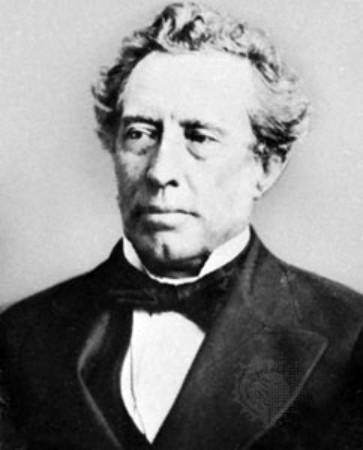
Theophilus Shepstone (Wikipedia)
Coan shows convincingly that Haggard was a keen observer and a ready learner, unusually receptive to Zulu culture and increasingly sympathetic to the erosion of indigenous African social systems and ways of life. These experiences were later distilled into fiction of extraordinary imaginative power. King Solomon’s Mines (1885), followed by Alan Quatermain (1887), transformed his fortunes. They became bestsellers, especially beloved by boys hungry for adventure, and they remain in print today.
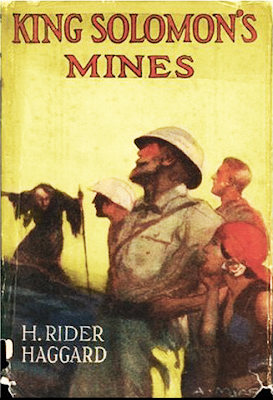
Book Cover
Haggard was astonishingly prolific. He wrote some seventy books: forty-eight adventure stories, twelve contemporary novels, ten works of non-fiction, and an autobiography published posthumously in 1926. In many ways he wrote himself into his fiction—Haggard was Alan Quatermain. When I once asked my husband why Haggard had been one of his favourite childhood authors, his answer was immediate: Haggard fired the imagination. Readers—particularly young readers—could write themselves into the story.
Haggard was emphatically a man of and for his time. Because he was physically present in South Africa at moments of acute political tension, he grasped the three-way conflict between British imperial ambition, the survival of indigenous African societies (particularly the Zulu), and the fierce claims to independence by the Boer republics. His Africa was a place of adventure, danger, romance, mystery, game hunting, lost civilizations, and powerful heroes and heroines. His imagination was formidable—sometimes excessive—but grounded in experience.
From today’s vantage point, elements of his work attract criticism. The conventional racism of the era and a broadly imperial outlook cannot be ignored. Coan does not evade this. Instead, he argues persuasively that Haggard’s books provide a unique window onto the late Victorian imagination, drawing on deep wells of unconscious desire, fear, and fantasy. Notably, Haggard created unusually strong female characters; Olive Schreiner even wondered whether “H. Rider Haggard” might be a pseudonym for a woman writer. Coan also makes clear that, while Haggard often took the establishment line on imperial governance, he was untypically sympathetic—indeed empathetic—to indigenous Africans, especially the Zulu. That sympathy had long afterlives. My husband, who grew up in Durban and spoke elementary Zulu, has often remarked that Haggard’s writing tuned him—decades later—to a more humane understanding of Zulu men who worked for his family.
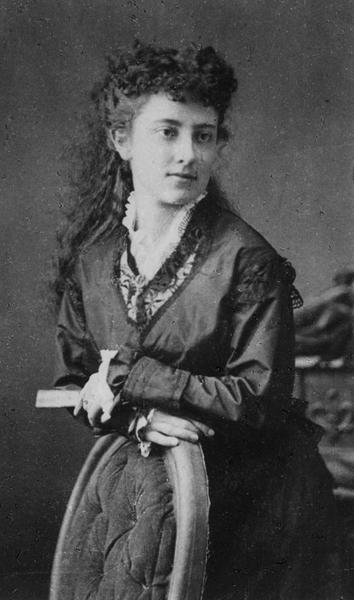
Olive Schreiner (Wikipedia)
Although Africa shaped him profoundly, Haggard’s first love remained Norfolk. He was a committed and capable farmer, deeply interested in land ownership, allotments, smallholdings, and agricultural reform. My own discovery of Haggard came initially through these writings. As a student in the United Kingdom researching rural housing for farm labourers and the evolution of standards and expectations over time, I found Haggard’s commentary on farm life authentic, practical, and solution-oriented. I loved his books and style in his studies of rural England and rural Denmark, where his prose combines close observation with a genuine concern for viable solutions. Through Haggard I was led outward to other writers who captured a changing England with comparable honesty and precision—Winifred Foley, George Ewart Evans, and Flora Thompson among them. Only much later did I come to Haggard’s novels themselves and to a fuller appreciation of their imaginative reach.
Another strand of later interest was the lifelong friendship between Haggard and Rudyard Kipling, grounded in literary kinship and shared Southern African experience. It is tempting to ponder which of the two has proved the more enduring. I find the question difficult to answer. Haggard’s legacy can be traced through popular culture and cinema—by long, indirect routes to Raiders of the Lost Ark and the figure of Harrison Ford as the archetypal adventurous hero. Kipling, by contrast, remains firmly embedded in childhood reading through The Jungle Books. Both fed the imagination, and both continue to do so.
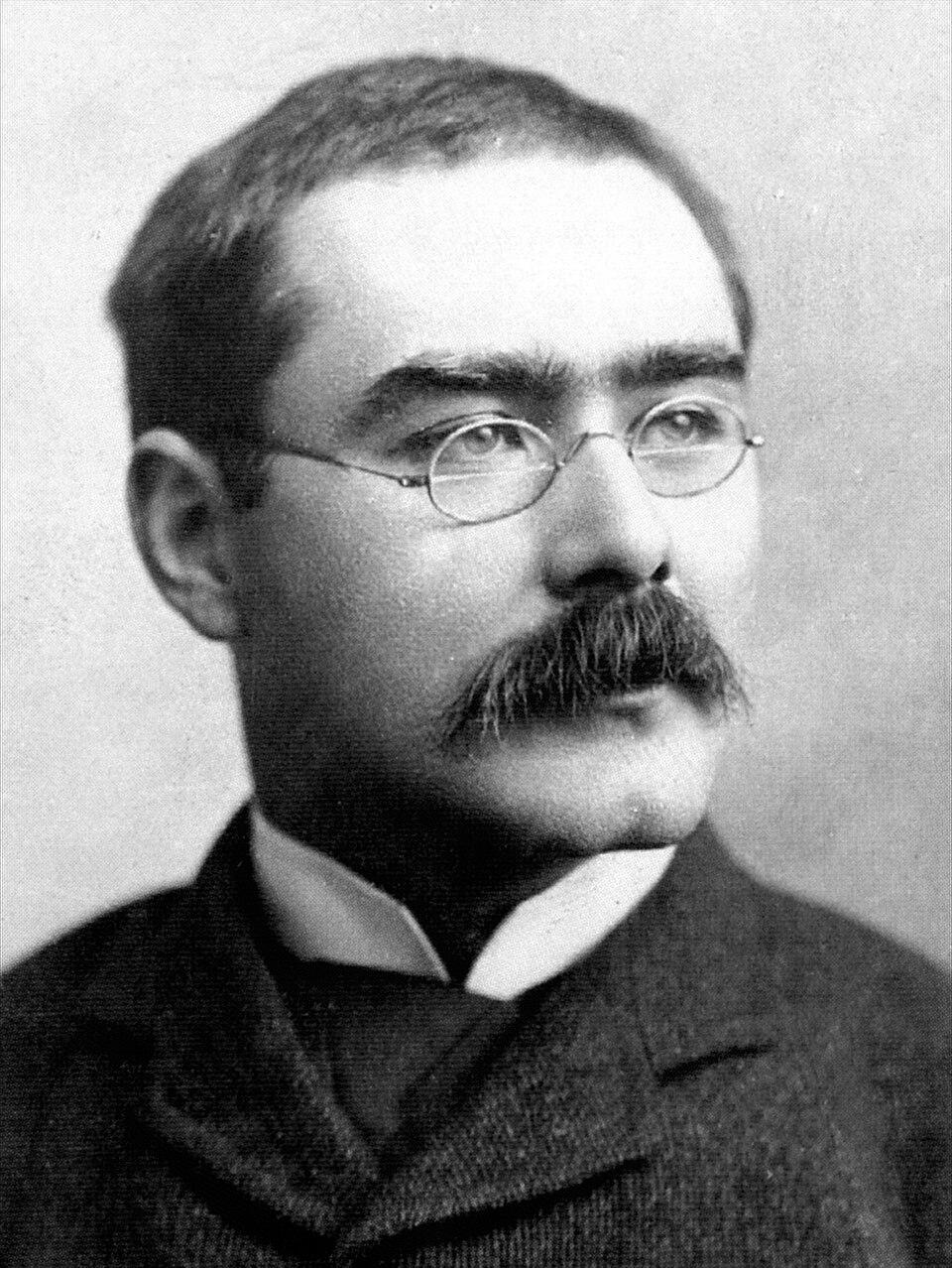
Rudyard Kipling (Wikipedia)
Haggard’s novels also lent themselves readily to early cinematic adaptation. I. W. Schlesinger, through African Film Productions and the Killarney Film Studios, embarked on ambitious screen versions of King Solomon’s Mines and Alan Quatermain. Undertaken at enormous cost and conceived on a scale comparable to Italian spectacles and later Hollywood epics, these productions are examined in detail by Ted Botha in Hollywood on the Veld. The film of King Solomon’s Mines premiered at Johannesburg’s Empire Theatre on Christmas Day 1918, and Coan argues persuasively that its screenplay was the most faithful cinematic rendering of Haggard’s novel.
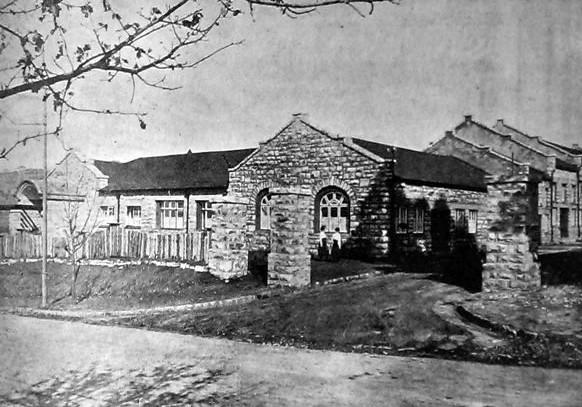
Killarney Film Studios
Haggard’s literary reputation has risen and fallen over time. Yet a century after his death he is plainly worthy of reassessment. Coan’s biography is exemplary in reminding us to review and re-evaluate a life and its work within the constraints, mores, and moral standards of its own time. Haggard remains of enduring interest not only because several of his books became classics and were widely read across generations, but also because his writing fired the imaginations of many young men who later fought for an imperial vision during the Anglo-Boer War. That influence—problematic as it may be today—forms part of the historical record and deserves to be understood rather than ignored.
Do I have criticisms of Coan’s biography? Perhaps only one—and it is a modest one. I would have welcomed a little more sustained comparative literary analysis, setting Haggard alongside contemporaries such as Kipling or Arnold Bennett. But this may be an unfair expectation. Coan set out to write a full, deeply contextualised, and sympathetic life, and in that aim he has succeeded magnificently.
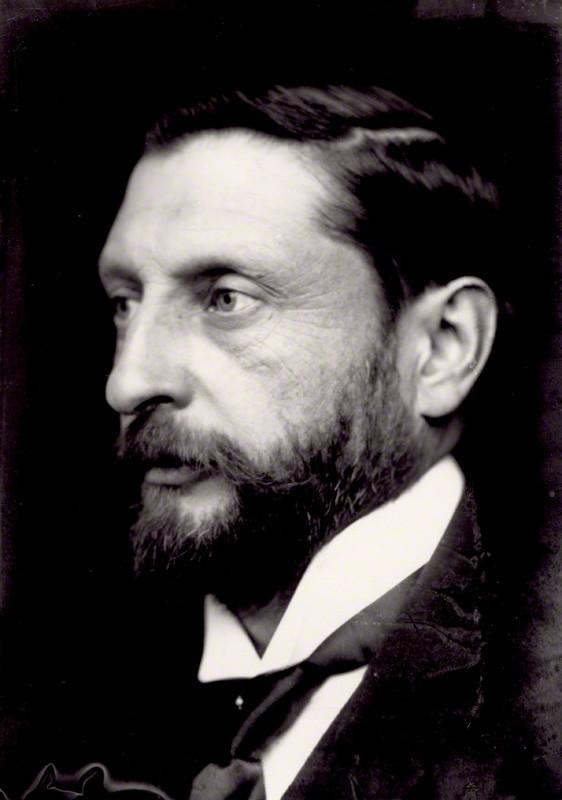
Henry Rider Haggard
Coan’s earlier editorial work—Diary of an African Journey: The Return of Rider Haggard, drawn from Haggard’s 1914 Southern African tour while serving on the Dominions Royal Commission—already demonstrated his care and insight. The Buried Man confirms it beyond doubt. Haggard emerges here as a complex figure: energetic and curious on the surface, yet marked by grief, fatalism, and melancholia beneath. Coan does not simplify him; he restores his full human density.
My husband and I have read this biography with pleasure and close attention. We are agreed in our judgement: this is a life exceptionally well told. Stephen Coan has not merely added another book to the shelf; he has produced the work against which all future studies of Rider Haggard will be measured.
This book will reward general readers, literary scholars, historians of empire, South Africanists, and anyone interested in how imaginative literature, lived experience, and historical circumstance intertwine to shape a life—and its long afterlives.
Kathy Munro is an Honorary Associate Professor in the School of Architecture and Planning at the University of the Witwatersrand. She enjoyed a long career as an academic and in management at Wits University. She trained as an economic historian. She is an enthusiastic book person and has built her own somewhat eclectic book collection over 40 years. Her interests cover Africana, Johannesburg history, history, art history, travel, business and banking histories. She researches and writes on historical architecture and heritage matters. She is a member of the Board of the Johannesburg Heritage Foundation and is a docent at the Wits Arts Museum. She is currently working on a couple of projects on Johannesburg architects and is researching South African architects, war cemeteries and memorials. Kathy is a member of the online book community the Library thing and recommends this cataloging website and worldwide network as a book lover's haven. She is also a previous Chairperson of HASA.