
Disclaimer: Any views expressed by individuals and organisations are their own and do not in any way represent the views of The Heritage Portal. If you find any mistakes or historical inaccuracies, please contact the editor.
As several readers may know, my day job is looking after Chedworth Roman Villa in the Cotswolds. Chedworth sits comfortably within a region that supported some of the most prosperous rural estates in Britannia. Yet the world that sustained and shaped the villa extended far beyond the Coln valley. From the legionary fortresses of Wales to the frontier installations of the Tyne valley, from the sacred waters of Aquae Sulis to the first capital at Camulodunum, Britannia was a complex and varied province.
I have selected the ten sites below to represent the full range of Roman life here: military, urban, domestic, religious and administrative. Each tells a part of the story that we see only partially at Chedworth.
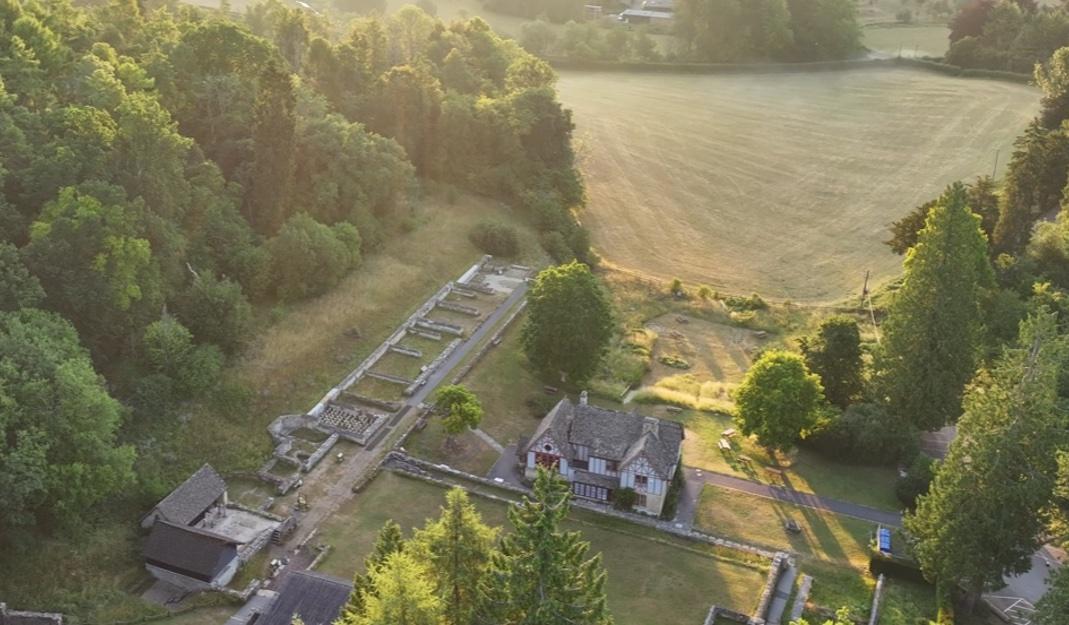
Chedworth Roman Villa from above (National Trust)
1. Bath (Aquae Sulis), Somerset
Aquae Sulis was built around a thermal spring whose presiding deity, the local goddess Sulis, the Romans absorbed into their own cult of Minerva. The resulting sanctuary drew visitors from across the province and beyond. The collection of curse tablets recovered from the Sacred Spring are small lead scrolls on which worshippers inscribed personal appeals to the goddess, frequently concerning theft or injustice. They give Roman Britain an unusually direct human voice.
For Chedworth visitors, the journey to Aquae Sulis was entirely manageable, and it is reasonable to suppose that the inhabitants of this villa made it on occasion.
Must-see: The curse tablets and the gilded bronze head of Sulis Minerva in the museum collection.
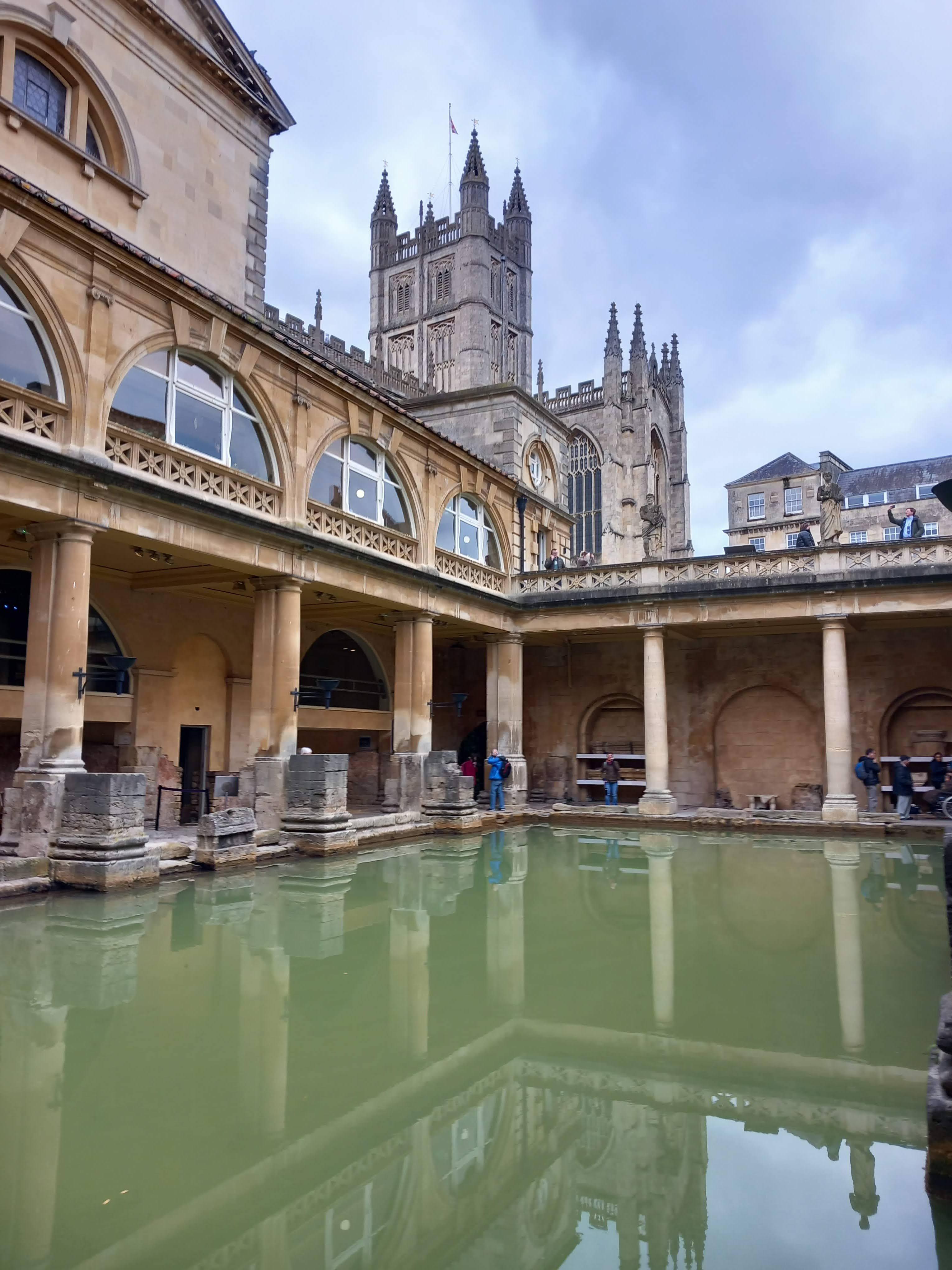
Roman Baths (The Heritage Portal)
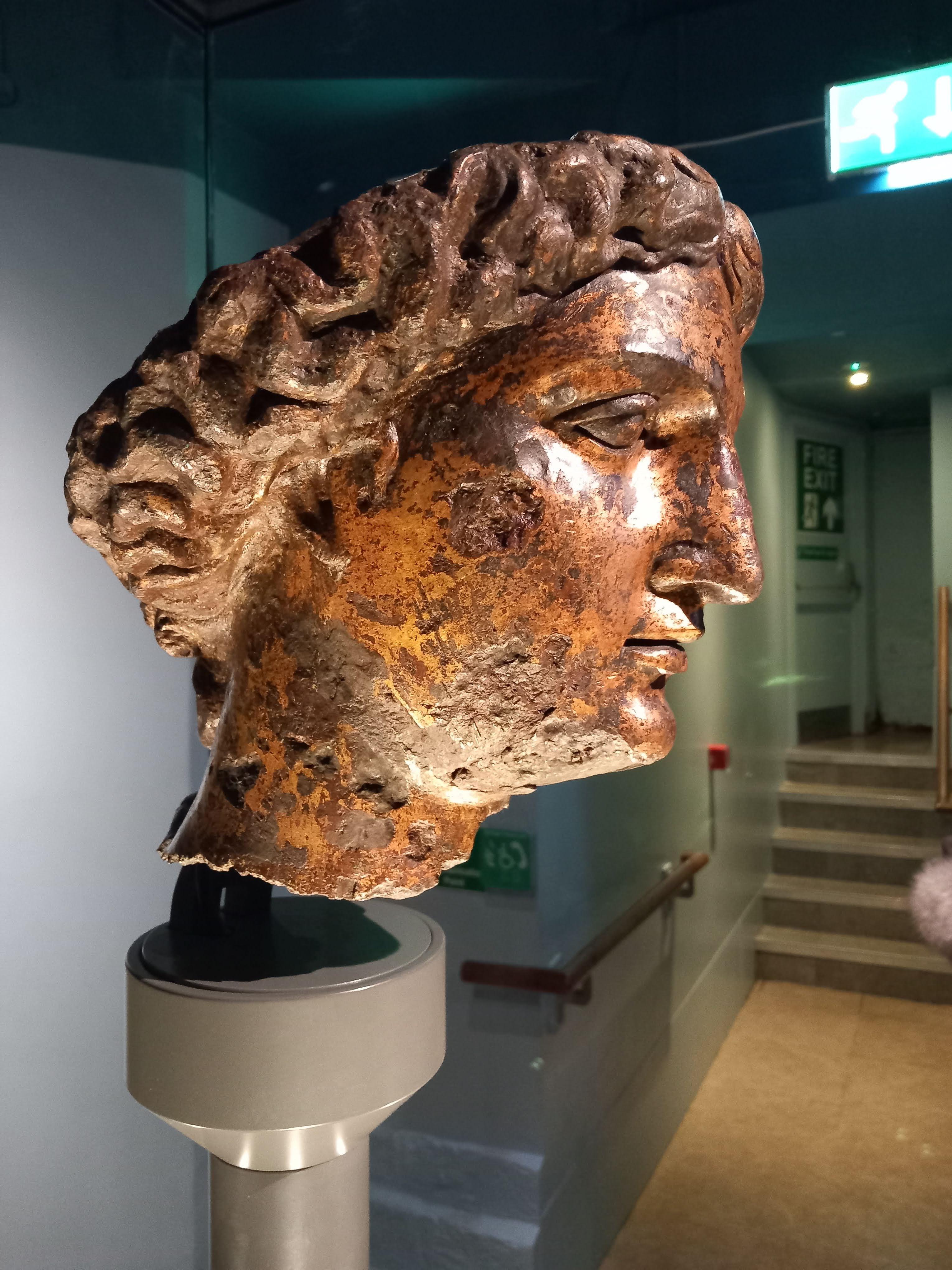
Bronze head of Sulis Minerva (The Heritage Portal)
2. Fishbourne Roman Palace, West Sussex
Fishbourne is the largest Roman residential complex ever found in Britain, and it reframes what we mean when we use the word villa. Built in the decades immediately following the Claudian invasion, it has been associated by many archaeologists with Tiberius Claudius Cogidubnus, a local ruler who allied himself with Rome and was rewarded accordingly. If that identification is correct, the building reflects a level of imperial favour that was exceptional in the early province. The layout follows a formal Mediterranean pattern, organised around a colonnaded garden and built with imported materials and craftsmen.
Fishbourne offers some of the most vivid evidence we have for how quickly some members of the native elite appear to have embraced Roman culture. The north wing mosaics, including the well known Cupid on a Dolphin panel, are among the earliest and most accomplished examples of the form in the province. Visitors familiar with the mosaics at Chedworth will find much to compare here, though Fishbourne's floors are considerably earlier in date.
Must-see: The in-situ mosaic floors of the north wing and the partially reconstructed formal garden, the only example of its kind in Britain.
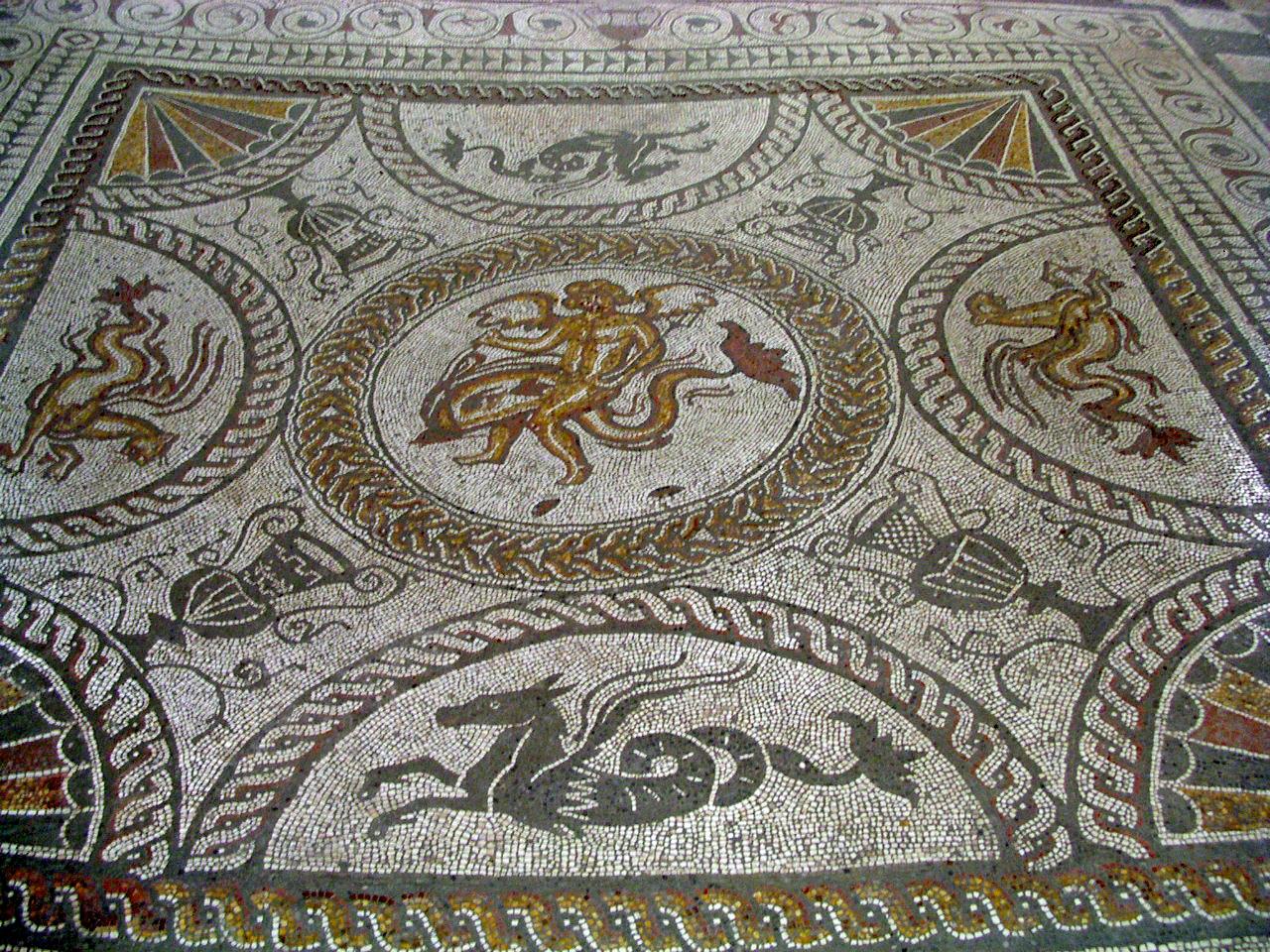
Dolphin Mosaic at Fishbourne (Wikipedia)
3. Caerleon (Isca Augusta), Newport, Wales
Caerleon was the permanent base of the Second Augustan Legion and one of only three legionary fortresses established in Britain. Where most of the sites on this list reflect the civilian face of the province, Caerleon is an unambiguously military landscape, and it offers a useful corrective to any sense that Roman Britain was primarily a story of prosperous villas and busy market towns. The security that allowed communities like the ones in the Coln valley to flourish was underwritten by precisely this kind of permanent, heavily resourced military presence.
The amphitheatre, located outside the fortress walls, is among the best preserved in Britain and could accommodate an estimated 5,000 to 6,000 spectators. The Roman Legionary Museum holds an impressive collection of finds from the site.
Must-see: The amphitheatre and the only visible legionary barracks in Europe.
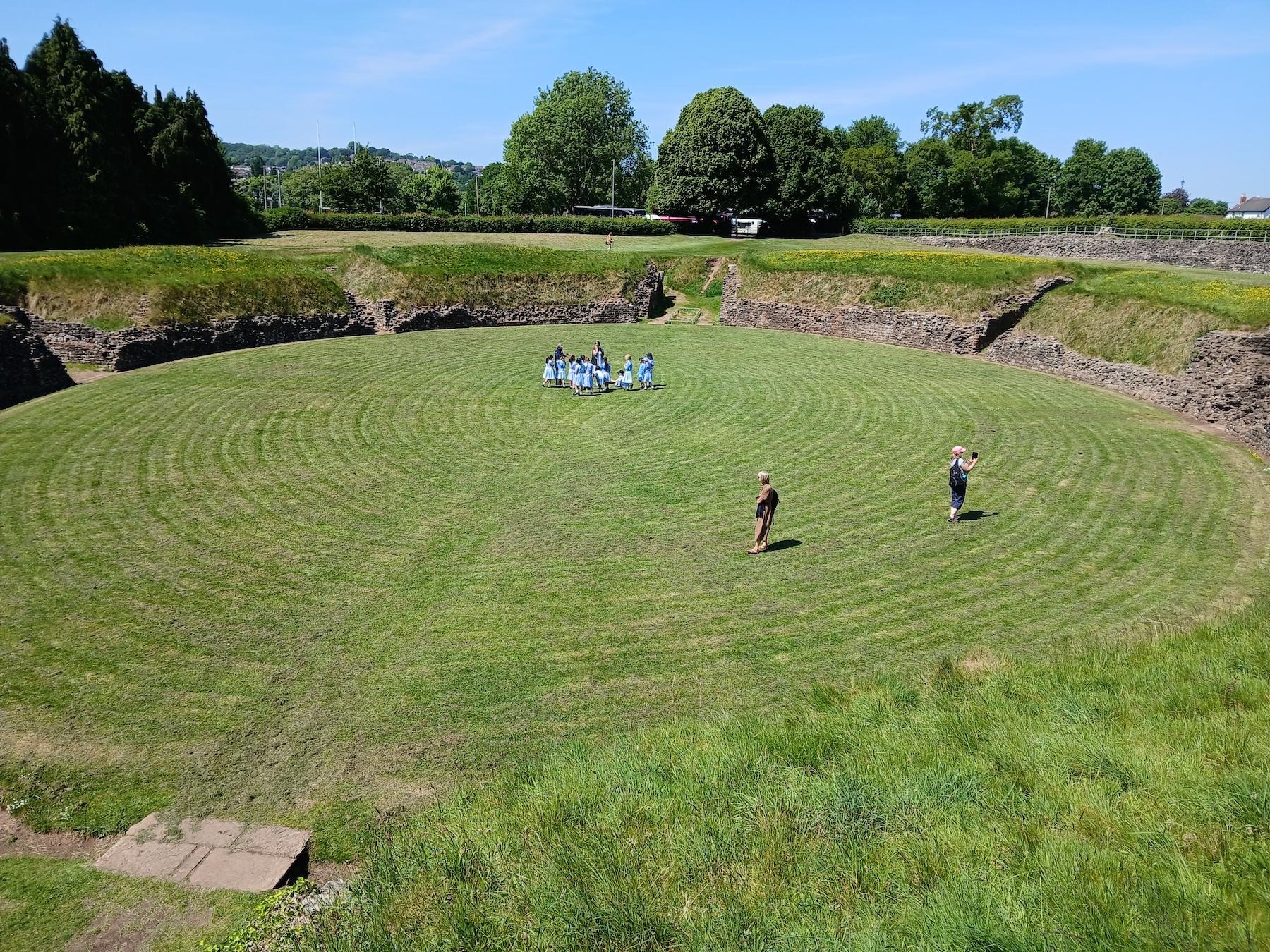
Amphitheatre at Caerleon (The Heritage Portal)
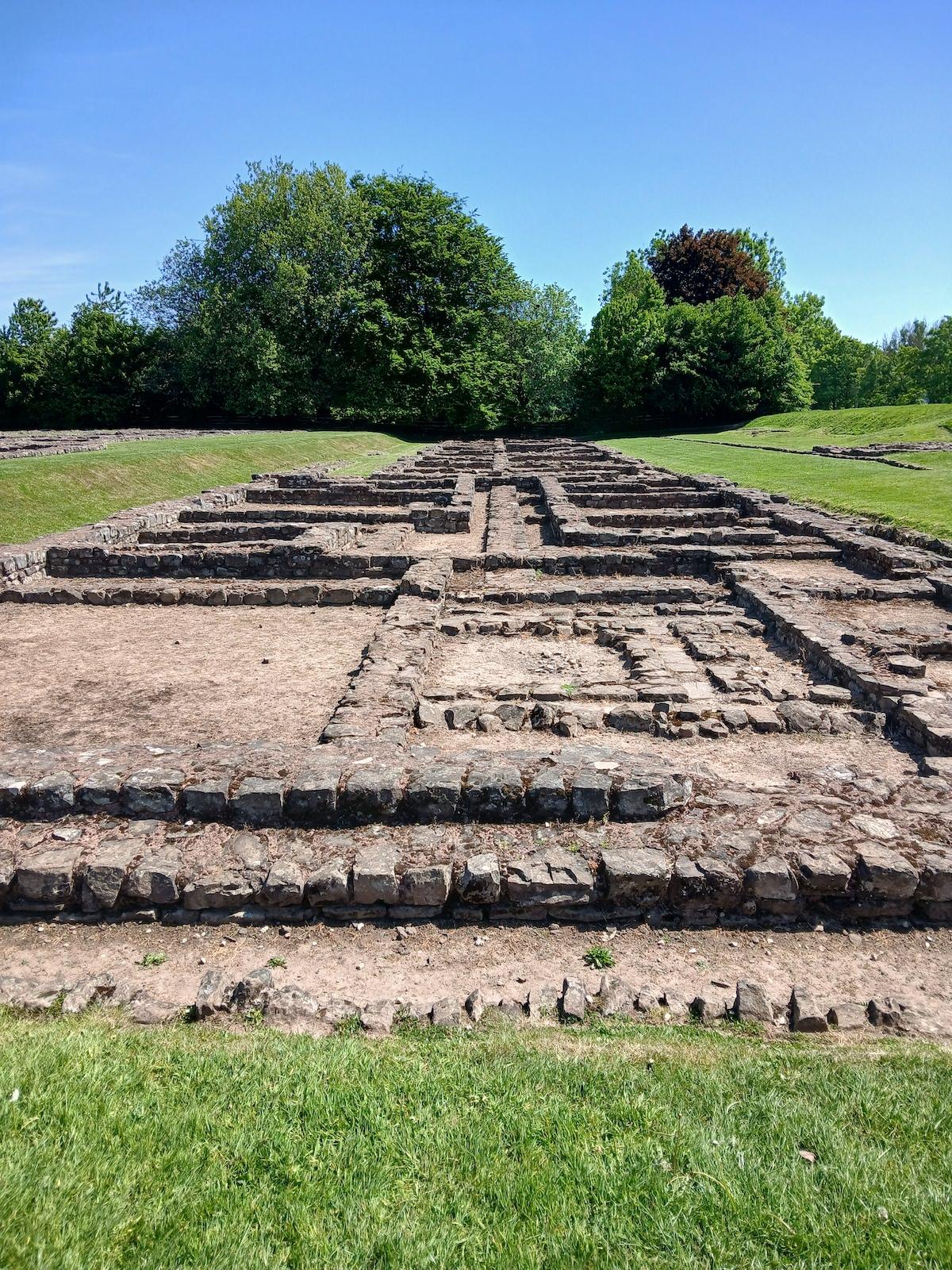
Ruins of the Barracks at Caerleon (The Heritage Portal)
4. Wroxeter (Viroconium Cornoviorum), Shropshire
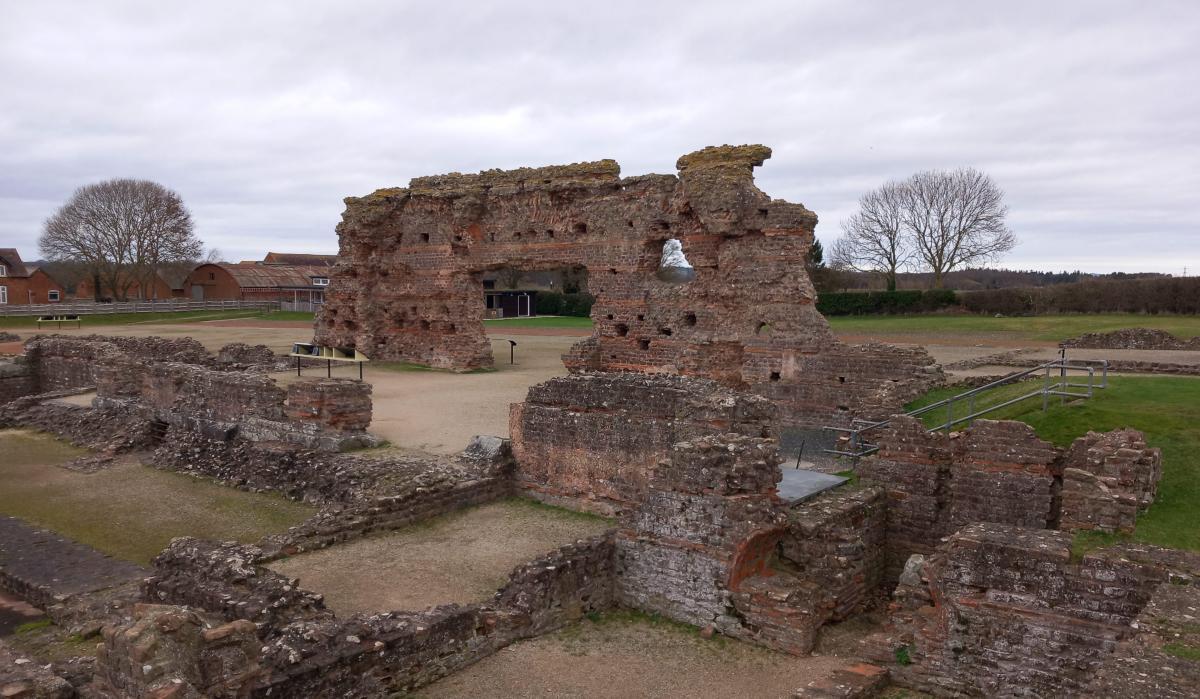
Wroxeter was, by most estimates, the fourth largest town in Roman Britain, and it has the considerable advantage for the modern visitor of lying largely unencumbered by later development. What you see at Wroxeter is essentially the footprint of a Roman city preserved in open farmland, which gives it a quality quite different from urban sites where the archaeology has to be extracted from beneath medieval and modern layers.
The centrepiece is the section of the municipal baths wall known as the 'Old Work', which stands to a considerable height and remains the largest freestanding Roman ruin in Britain outside of Hadrian's Wall. It requires no great effort of imagination to understand the scale of civic ambition it represents. The on-site museum provides excellent contextual material on the town's development from an earlier military base into a thriving civilian centre.
Must-see: The 'Old Work', and the view across the site which gives a genuine sense of the scale of a Roman regional capital.

The 'Old Work' (The Heritage Portal)
5. Verulamium, Hertfordshire
Verulamium, on the western edge of modern St Albans, was one of the most significant towns in Roman Britain and one of a small number to have been granted the status of a municipium, which afforded its inhabitants a degree of self-governance and legal privilege. It sat on Watling Street, one of the principal arteries of the province, and its prosperity is reflected in the quality of the archaeological record.
Much of the Roman town lies beneath a public park, and significant stretches of the town wall remain visible. The Verulamium Museum holds one of the finest collections of Roman material in the country, including some exceptionally well preserved mosaic floors and rare examples of painted wall plaster. For those interested in urban domestic life, the painted plaster alone justifies the visit.
It is also worth noting that Verulamium was among the towns destroyed during the Boudiccan revolt of AD 60 or 61, and the archaeological evidence for that event, a distinct destruction horizon in the stratigraphy, gives the site an additional historical resonance.
Must-see: The mosaic floors and painted wall plaster in the Verulamium Museum.
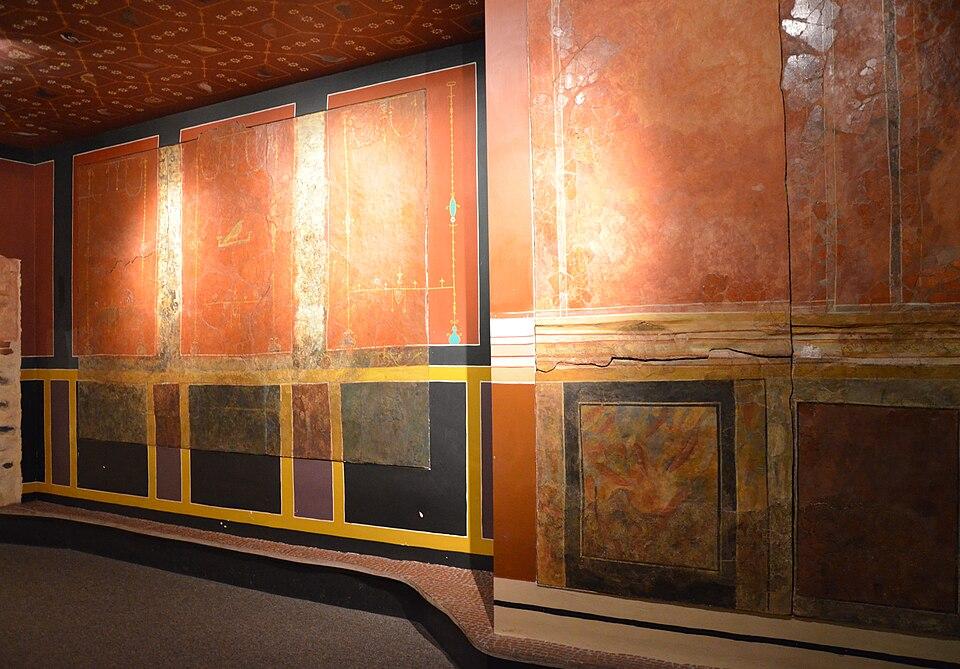
Wall plaster in the Verulamium Museum (Wikipedia)
6. Lullingstone Roman Villa, Kent
Lullingstone is a site that repays careful attention. Smaller than Chedworth and less immediately dramatic, it nonetheless has one of the most complex and layered histories of any villa in Britain. Occupied from the late 1st century through to the early 5th century, it passed through several distinct phases, each leaving its mark on the archaeology.
Two aspects make Lullingstone particularly significant. The first is a deep basement room beneath the main building which contained two marble portrait busts, believed by some archaeologists to represent earlier owners of the estate. Their deliberate burial suggests a form of ancestor veneration that sits interestingly alongside the Roman religious practices visible elsewhere on the site. The second is the evidence for a Christian house church in the upper rooms, including wall paintings featuring the Chi-Rho symbol and figures in the Orans prayer position. These are among the earliest physical evidence for Christianity in Roman Britain. The possibility that the basement room interpreted as a shrine and the house church above it were in use simultaneously remains a subject of discussion among archaeologists.
Must-see: The reconstructed wall paintings are now displayed in the British Museum's Roman Britain gallery, making a visit to Lullingstone well worth combining with a trip to London.
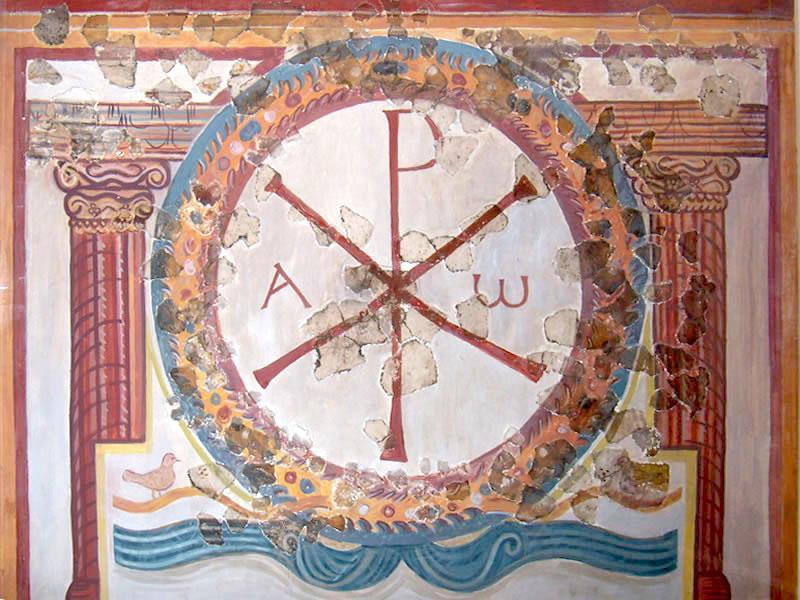
Wall paintings featuring the Chi-Rho symbol (Wikipedia)
7. Hadrian's Wall, Northumberland (Housesteads Fort, Vercovicium)
Hadrian's Wall is the most substantial surviving monument of the Roman occupation of Britain, and Housesteads is generally considered the most complete and rewarding of the forts along its length. Built on the dramatic escarpment of the Whin Sill, the fort follows the standard rectangular plan of a Roman auxiliary installation, with barracks, granaries, a hospital, a commanding officer's house and a headquarters building all visible within its walls.
The Wall itself requires a moment of reflection. Begun under Hadrian around AD 122 and stretching approximately 73 miles from the Solway Firth to the River Tyne, it represents an extraordinary investment of military resource and engineering. Whether its primary function was defensive, as a means of controlling movement and trade, or as a statement of imperial power is a question that continues to generate discussion among archaeologists and historians. Probably it was all of these things to varying degrees at different points in its history.
For visitors more familiar with the domestic and religious archaeology of villa sites, Housesteads offers a salutary reminder of the military infrastructure that underpinned civilian life across the province.
Must-see: The communal latrines in the southeast corner of the fort, which preserve a sophisticated stone drainage system, and the view north from the Wall itself.
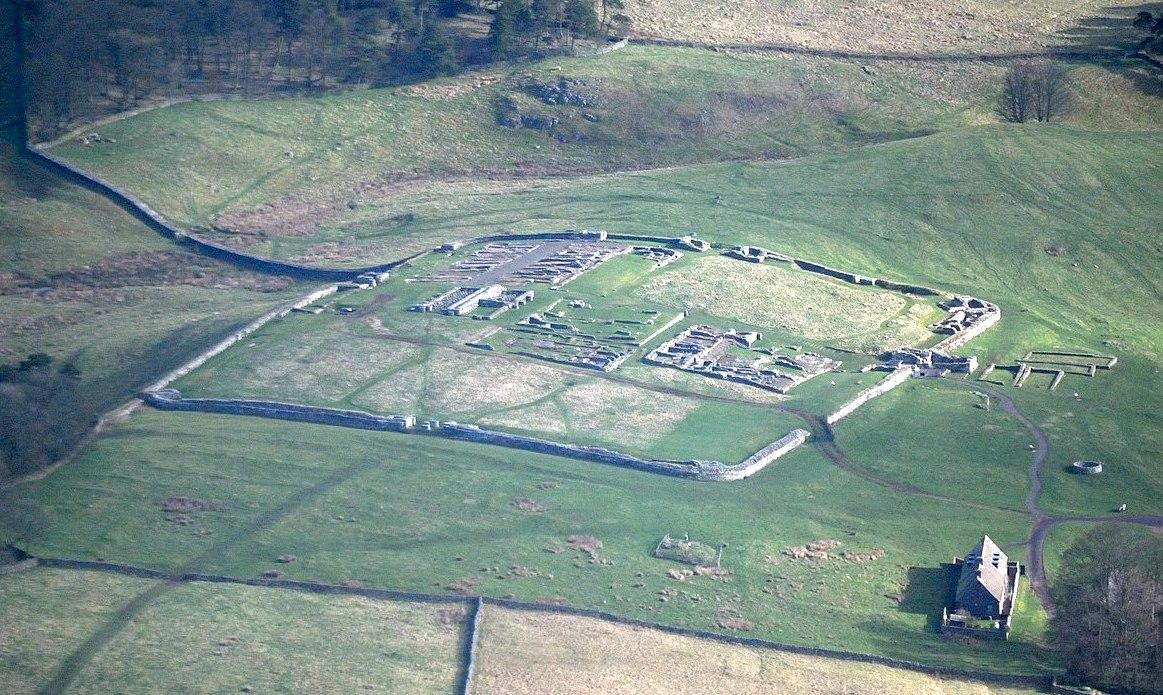
Housesteads Roman Fort (Wikipedia)
8. Vindolanda, Northumberland
Vindolanda sits just south of Hadrian's Wall and predates it, having been established as a fort on the Stanegate road in the late 1st century. It warrants a separate entry from Housesteads because what has been recovered here is qualitatively different from anything else in Roman Britain. The waterlogged anaerobic conditions of the site have preserved organic materials that would normally perish entirely: leather shoes, textiles, wooden objects and, most significantly, a large collection of thin writing tablets.
The tablets, of which over 1,700 have now been recovered, are the oldest known surviving handwritten documents in Britain. They record the daily life of the garrison and its associated community with an immediacy that no other source can match. Among them is a letter from Claudia Severa to Sulpicia Lepidina, inviting her to a birthday celebration, which is considered among the earliest known examples of writing in Latin by a woman. There are requests for supplies, complaints about the local conditions, and a reference to the Brittunculi, a dismissive term apparently used by the garrison for the local population, which offers a perhaps uncomfortable insight into the attitudes of the occupying force.
Excavations at Vindolanda are ongoing, and new material continues to be recovered each season.
Must-see: The writing tablets in the on-site museum, and the active excavation site itself.
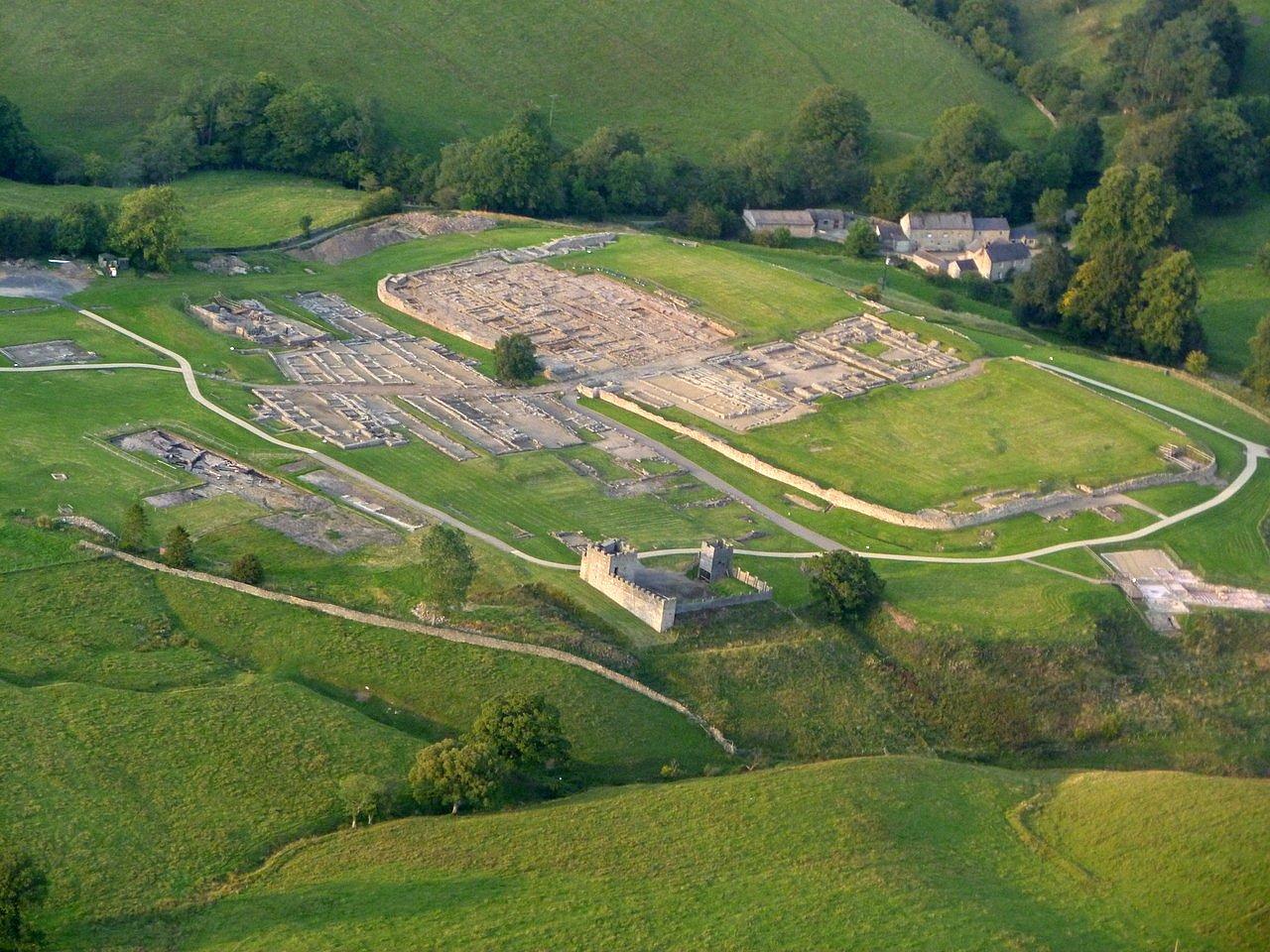
Vindolanda from the air (Wikipedia)
9. Colchester (Camulodunum), Essex
Colchester has a strong claim to being the most historically layered Roman town in Britain. It served as the first capital of the new province following the Claudian invasion of AD 43, and the archaeological record reflects that early and intensive investment. The town was the site of a substantial legionary fortress before being refounded as a colonia, a settlement for retired Roman soldiers, which gave its inhabitants full Roman citizenship and a degree of civic prestige that few other British towns could match.
The Temple of Claudius, built to promote the imperial cult, was one of the most ambitious Roman buildings in the province. Its massive vaulted substructure survives beneath the Norman castle and can be visited, giving a tangible sense of the scale of the original structure. The town was destroyed during the Boudiccan revolt of AD 60 or 61, and a distinct destruction horizon in the archaeological record provides one of the most precisely datable events in the archaeology of Roman Britain. The subsequent rebuilding included some of the earliest stone town walls in the province, significant sections of which survive today.
The Castle Museum holds what is widely regarded as one of the finest collections of Roman material in the country, including the celebrated Colchester Sphinx.
Must-see: The vaulted substructure of the Temple of Claudius beneath the castle, and the Roman collection in the Castle Museum.
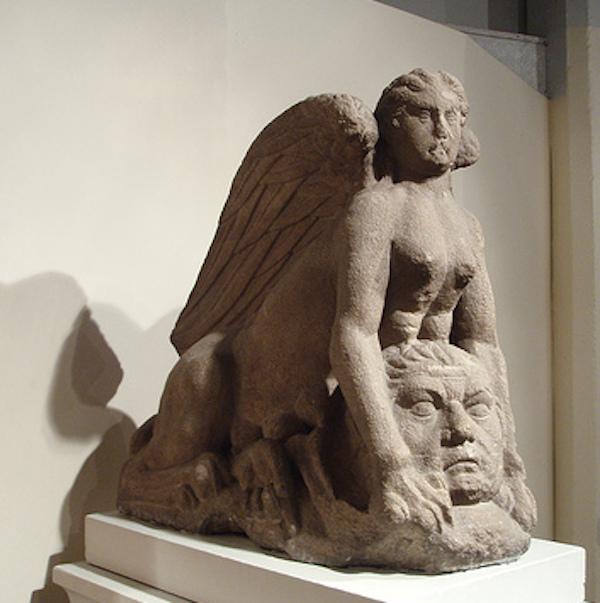
Colchester Sphinx (Wikipedia)
10. Wallsend (Segedunum) and the Roman Army Museum, Northumberland and Tyne & Wear
It seems fitting to end this tour at the eastern terminus of Hadrian's Wall. Segedunum at Wallsend is the most extensively excavated fort on the Wall, and its entire footprint is laid out for visitors in a way that makes the internal organisation of a Roman military installation unusually legible. The reconstructed bathhouse, based directly on archaeological evidence from the site, gives a vivid sense of the facilities available to the garrison.
The Roman Army Museum at Carvoran, further west along the Wall, deserves mention alongside Segedunum as a companion destination. Its interpretation focuses on the soldiers themselves, their origins, beliefs and daily routines, and it addresses a question that the stones alone cannot easily answer: who exactly were the people who garrisoned this frontier? The answer, as the museum makes clear, is that they came from across the empire, from the Rhineland, the Balkans, North Africa and the Middle East, giving the Wall community a diversity that is easy to underestimate.
Together, Segedunum and the Roman Army Museum bring the military story of Roman Britain to a satisfying conclusion, and they serve as a reminder that the province we have been exploring was always part of a much wider Roman world.
Must-see: The reconstructed bathhouse at Segedunum and the soldier interpretation galleries at the Roman Army Museum.
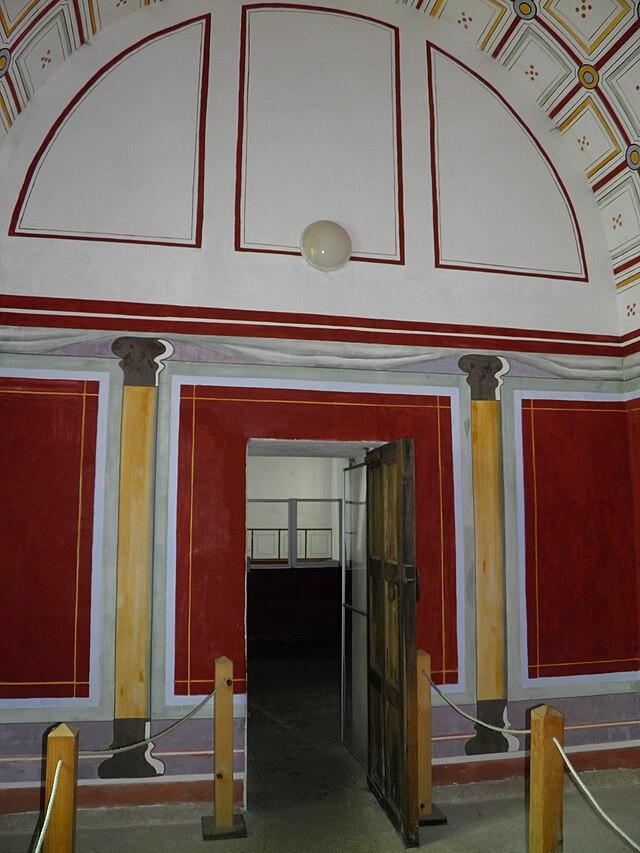
Reconstructed Roman Bath House (Wikipedia)
Honourable Mentions
No list of this kind can be comprehensive, and five sites in particular deserve acknowledgement. Cirencester (Corinium), just ten miles from Chedworth, was the second largest town in Roman Britain and the Corinium Museum holds one of the finest collections of Romano-British mosaics and sculpture in the country. Bignor Roman Villa in West Sussex is often overshadowed by its near neighbour Fishbourne but contains mosaics of exceptional quality, including panels depicting Venus and a celebrated gladiator frieze. Richborough Fort (Rutupiae) in Kent marks what is believed by many archaeologists to have been the principal landing point of the Claudian invasion in AD 43, and the remains of a monumental arch that once marked the formal entrance to the province give the site a particular historical resonance. The Dover Roman Painted House contains the most extensive in-situ Roman wall plaster north of the Alps, and for anyone with an interest in interior decoration and domestic aesthetics it is not to be missed. Finally, the London Mithraeum in the City of London offers an immersive and thoughtfully presented encounter with one of the mystery cults that competed with Christianity in the late empire, and pairs well with a visit to the Roman Britain gallery at the British Museum where the Lullingstone wall paintings are displayed.
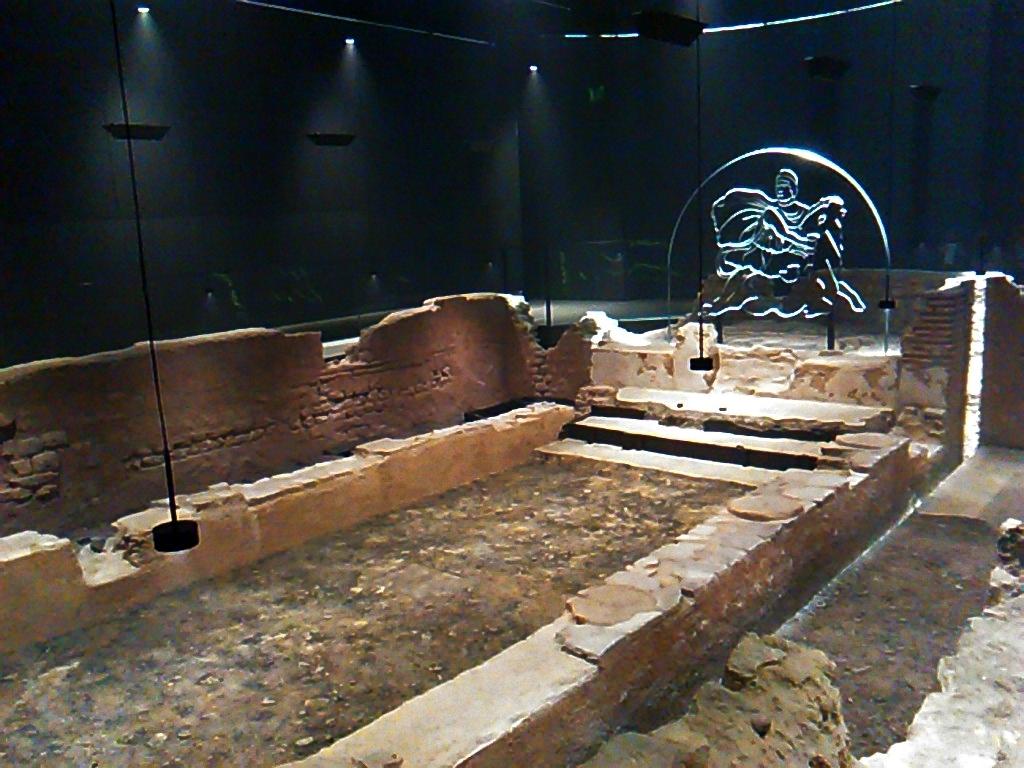
London Mithraeum (Wikipedia)
James Ball is the founder and editor of The Heritage Portal. He spends his days bringing history alive at Chedworth Roman Villa.
Comments will load below. If for any reason none appear click here for some troubleshooting tips. If you would like to post a comment and need instructions click here.