
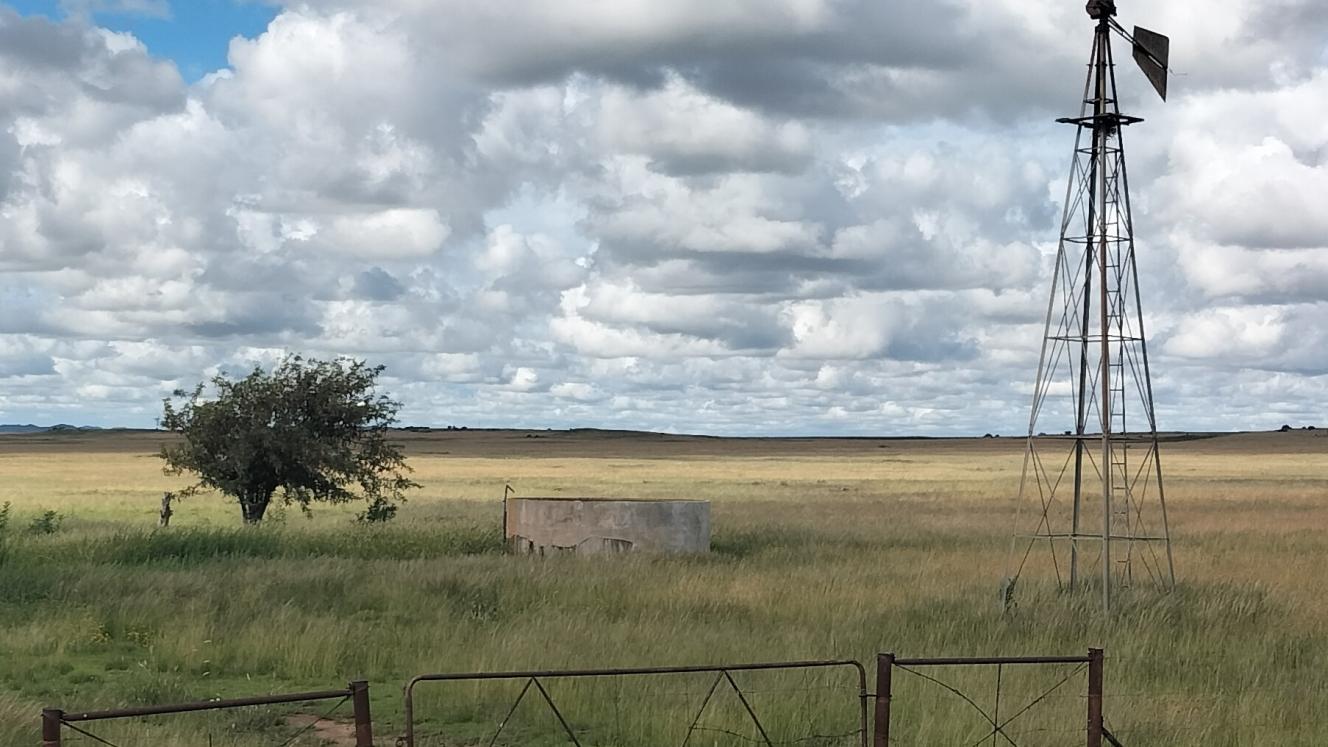
Steel windmills – colloquially known as windpumps – stand scattered on South Africa’s rural landscape.
Windpumps have become prominent features of the South African landscape, following their pivotal role in the country's development and the survival of rural communities (Walton, 1998). Their primary role is to pump underground water to the surface in regions where surface water is scarce.
They are found in their greatest numbers across the arid Karoo, the Free State, and parts of the Northern Cape. These metal structures played a decisive role in making large areas of the country habitable and farmable by providing a dependable supply of groundwater, at least those that survived.
By harnessing the wind to lift groundwater, farmers could sustain livestock, establish permanent homesteads, and expand agriculture into areas previously considered uninhabitable. In this way, steel windpumps reshaped settlement patterns and directly influenced the economic development of South Africa’s interior.
On a recent Northern Cape and Free State Road trip, I became obsessed with windpumps that have fallen into disuse – pumps that have not been maintained and therefore are no longer functional. Although fully functional pumps were mostly observed, the occasional perished sentinels spotted on our road trip spoke to me – they all fall into the category of industrial archaeology.
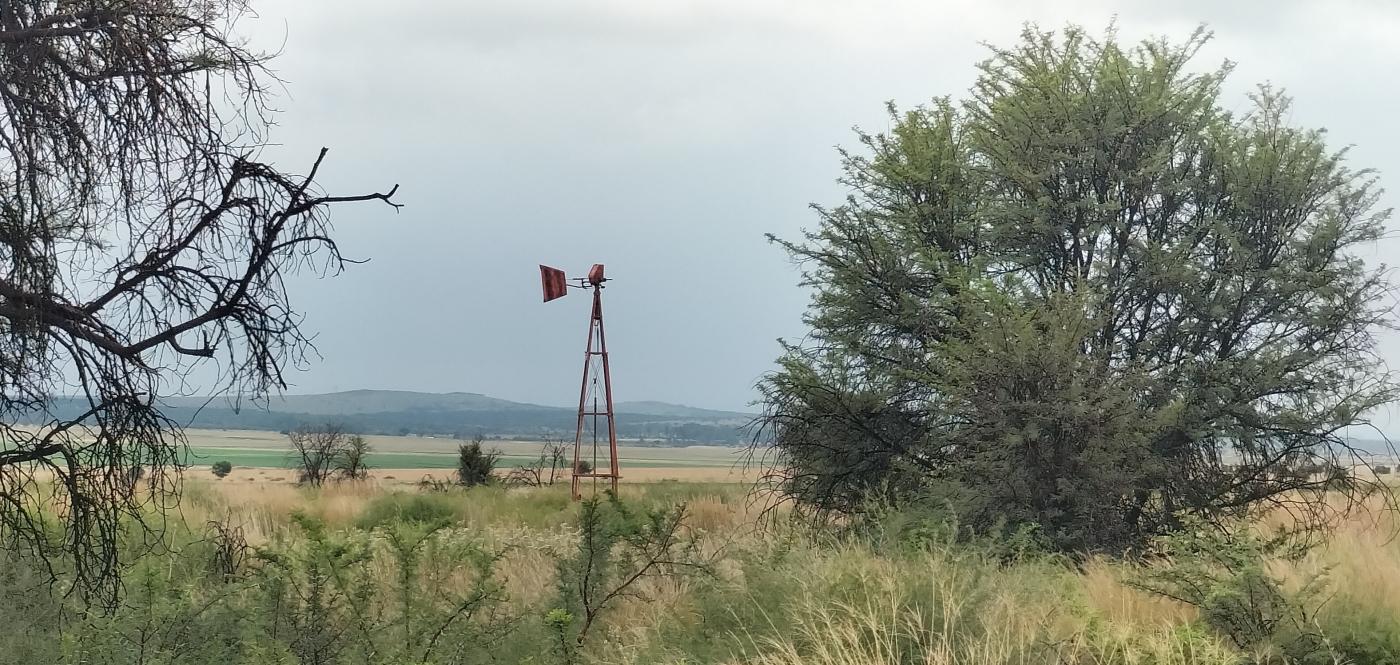
A forlorn sentinel standing in the veld near Vereeniging. The frame seems to have been repainted at some point.
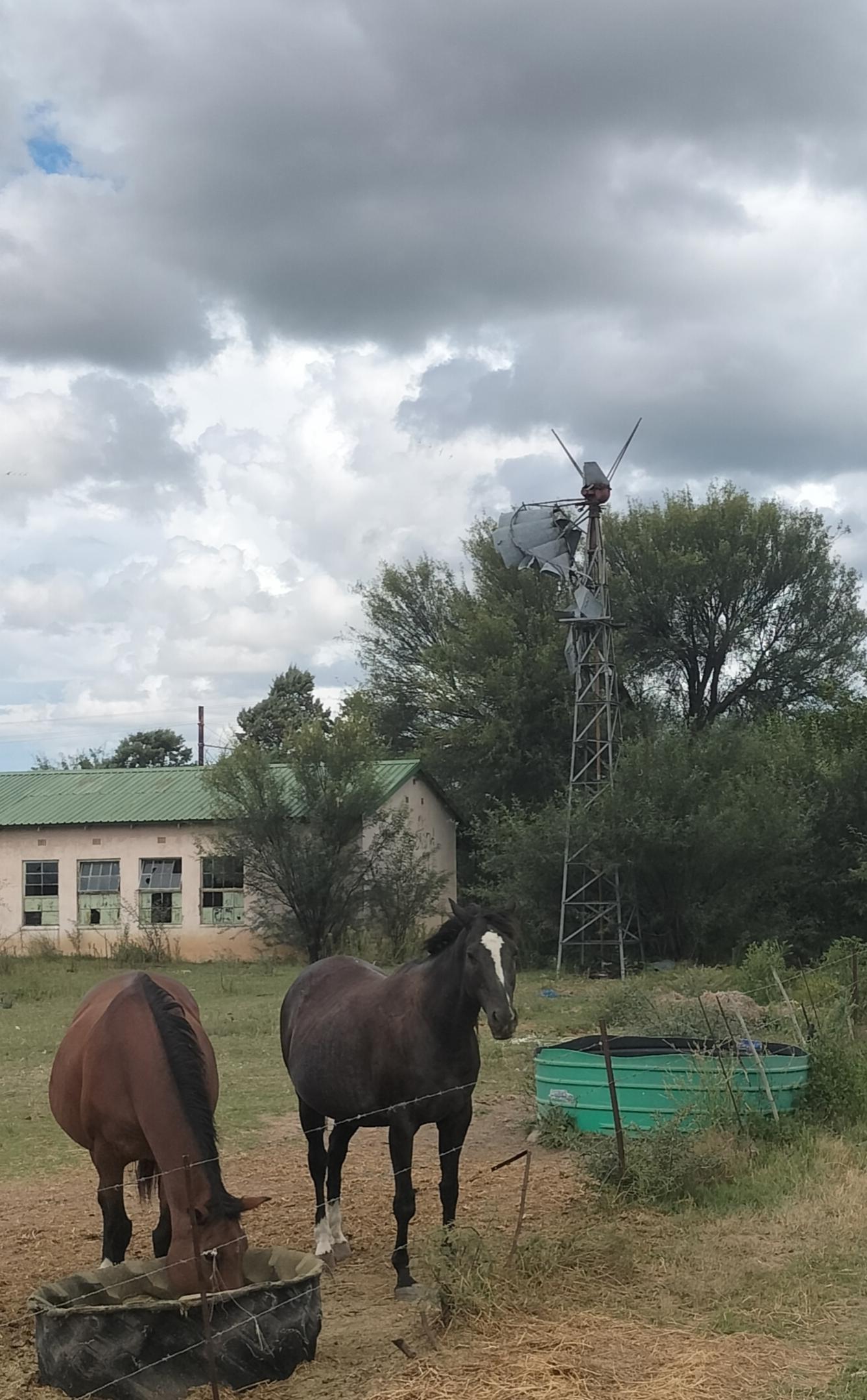
The school has fallen into disuse, and so has the windpump – Near Bloemhof
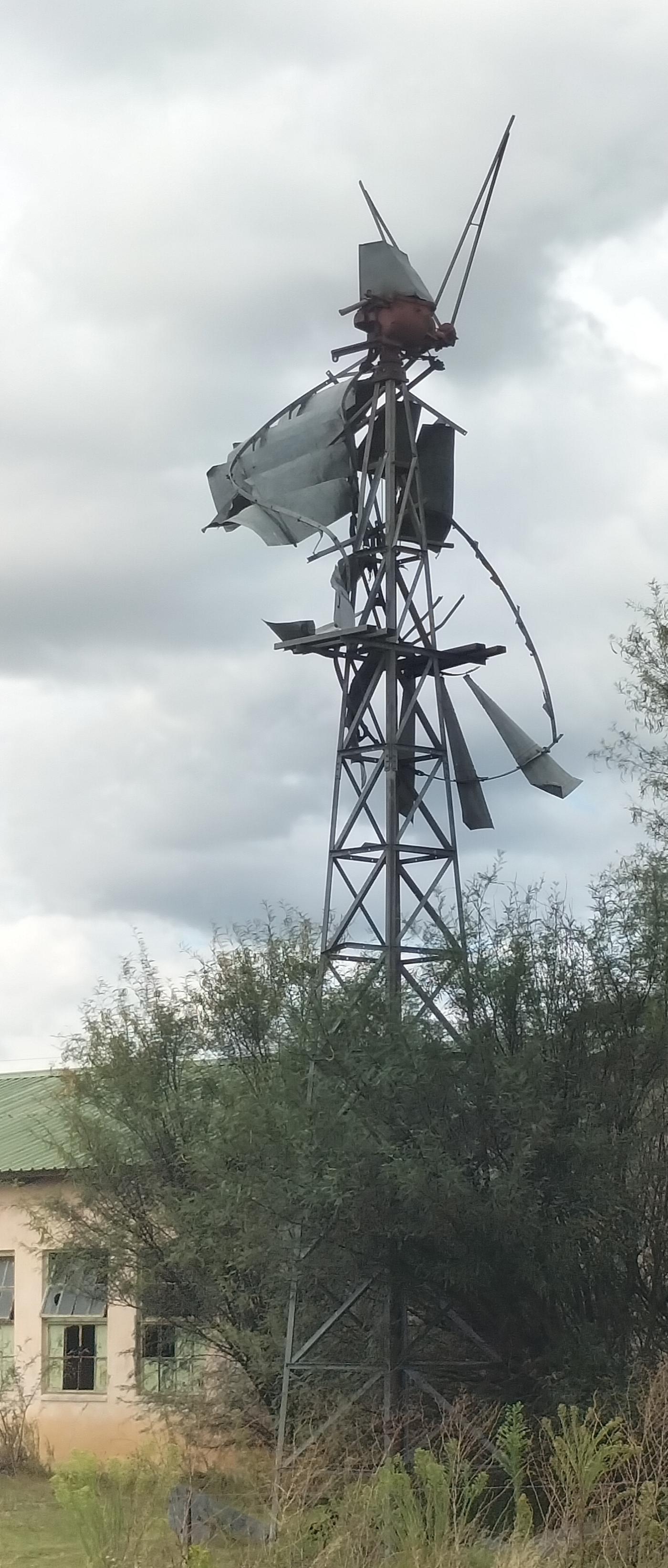
A close-up of the same windpump above
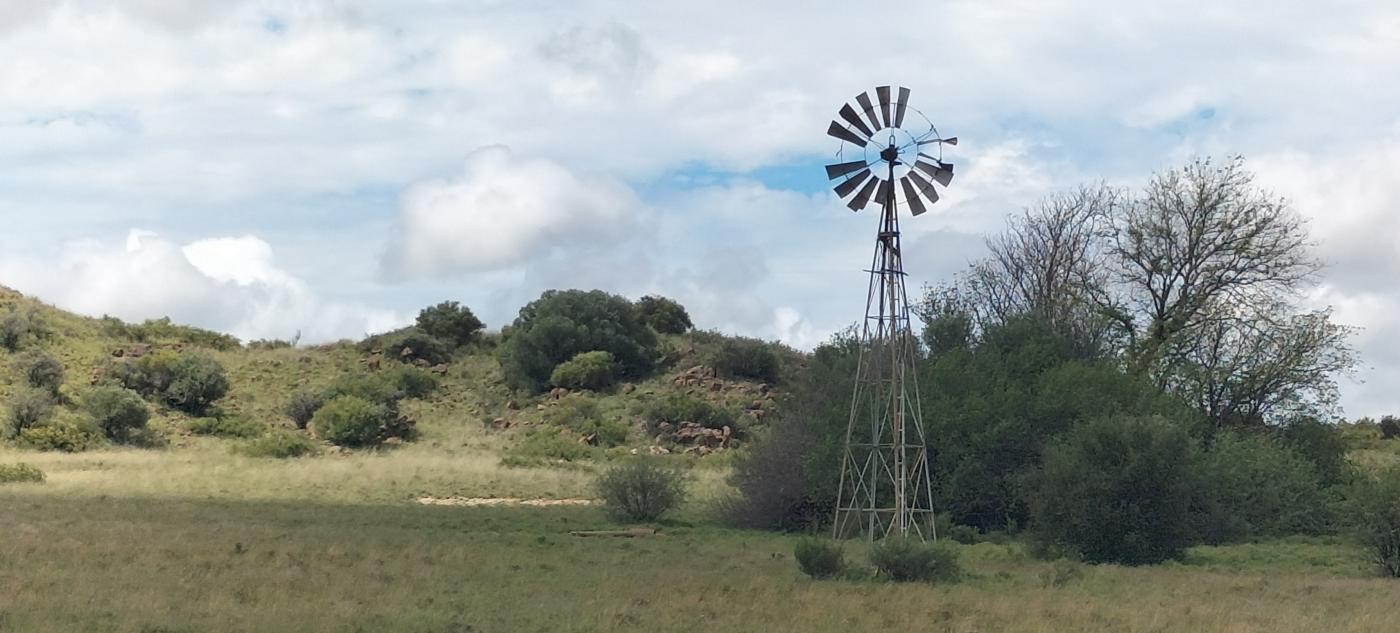
A windpump with a story. The location of a windpump is taken for granted, yet much effort has gone into finding the optimal spot to start drilling for water.
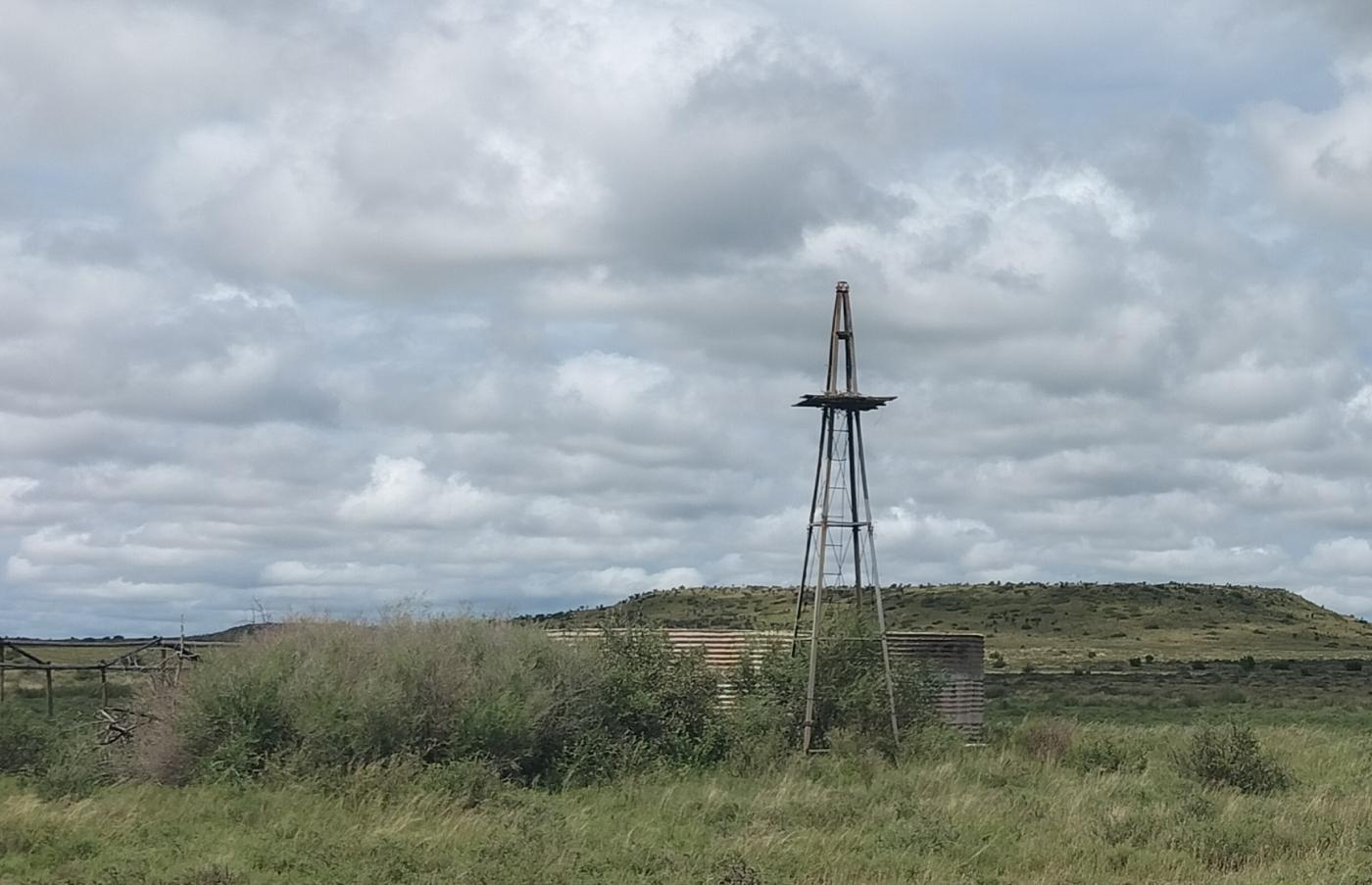
The blades are long gone, with birds using the small platform as a nesting opportunity. The corrugated dam also no longer has a role to fulfil – near Jacobsdal
Industrial archaeology
Attributed to Britain’s Michael Rix in 1995, industrial archaeology is defined as the systematic, interdisciplinary study of standing sites, structures, machinery, and landscapes - primarily since the 18th-century Industrial Revolution - that documents and preserves this material evidence.
This article seeks to combine contemporary photographs, all captured in early 2026, with antique photographs of windpumps from a Stewarts and Lloyds Corporate Photographic Album, dating from between early 1900 and 1920. This album was kindly donated to the Hardijzer Photographic Research Collection (HPRC) by William Martinson to assist with ongoing photographic research. This is the first article relying on the vast photographic content of this unique antique photo album.
In conducting my research for this article, I was surprised to see that a book has been published on the topic by James Walton (Windpumps in South Africa, 1998). A copy of this rare book was duly purchased, which assisted in the construction of this article.
It is acknowledged that there were many more windpump manufacturers. Although no specific attempt is made to identify the manufacturer of the perished windpumps, many of the perished windpumps that could be identified were Climax or S & L (Stewarts and Lloyds) windpumps. The focus in this article is therefore placed on the Climax windpump purely to align with the Stewarts and Lloyds Corporate Photo Album from which some photographs are shared.
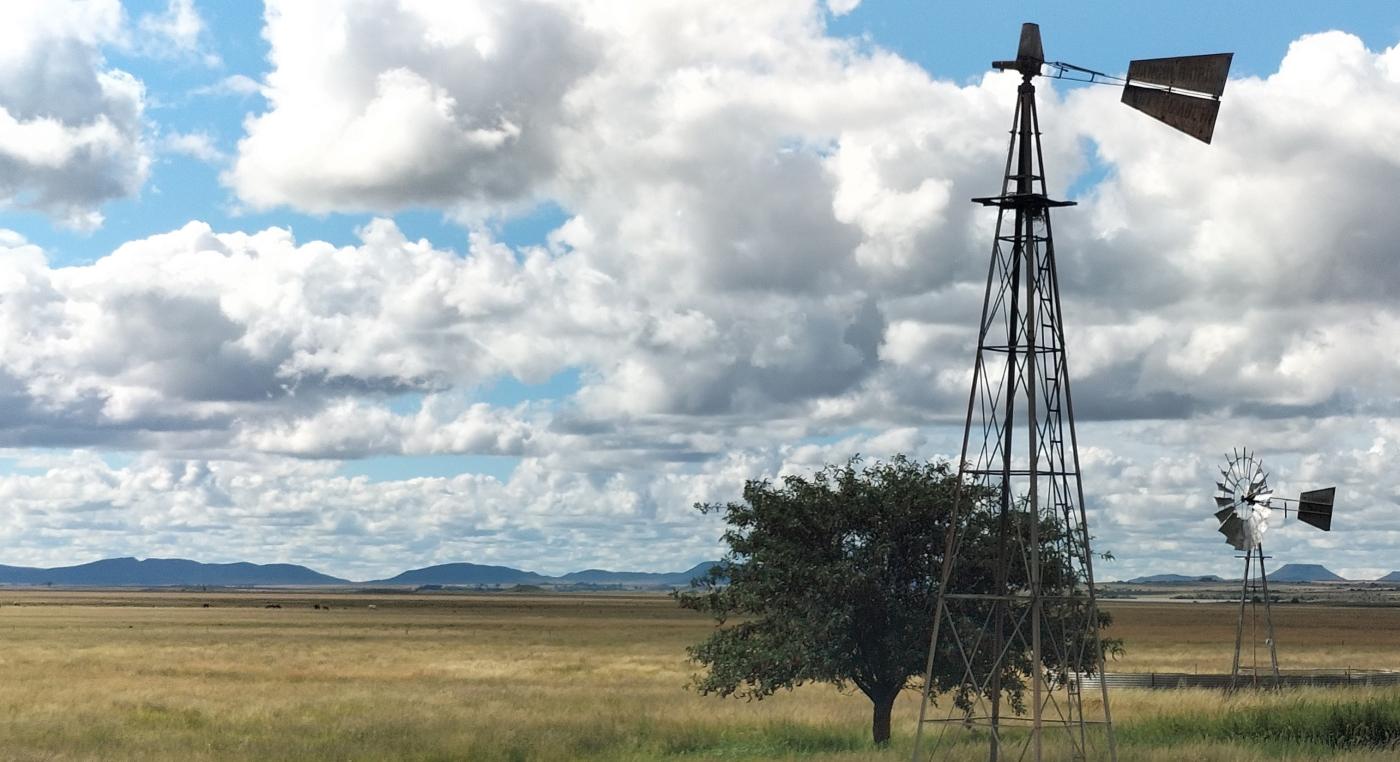
Out with the old, in with the new. An intriguing image. Why have a new windpump and dam been built next to an old structure? Is it too expensive to restore an old windpump or cement dam, or did the first drilled water hole a few meters away dry up?
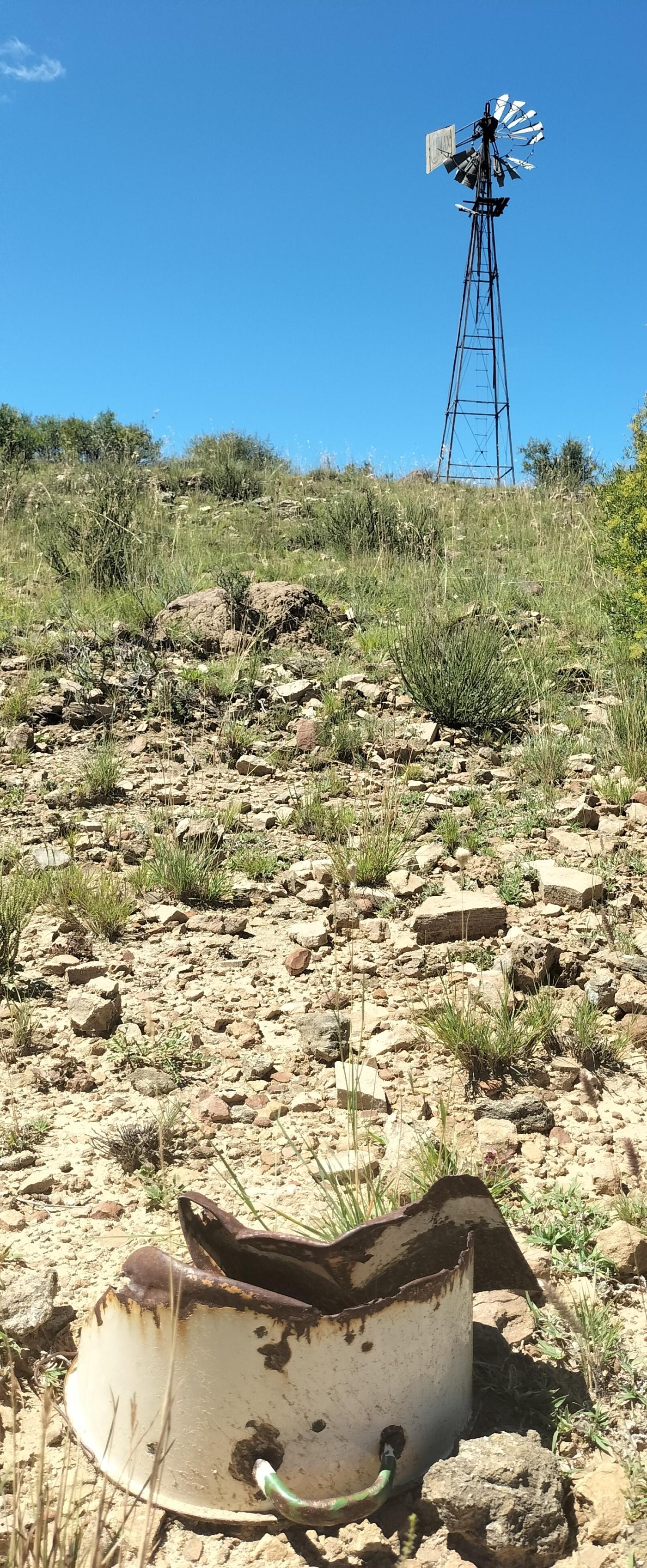
Two perishing steel items – both related to water – Near Bethulie
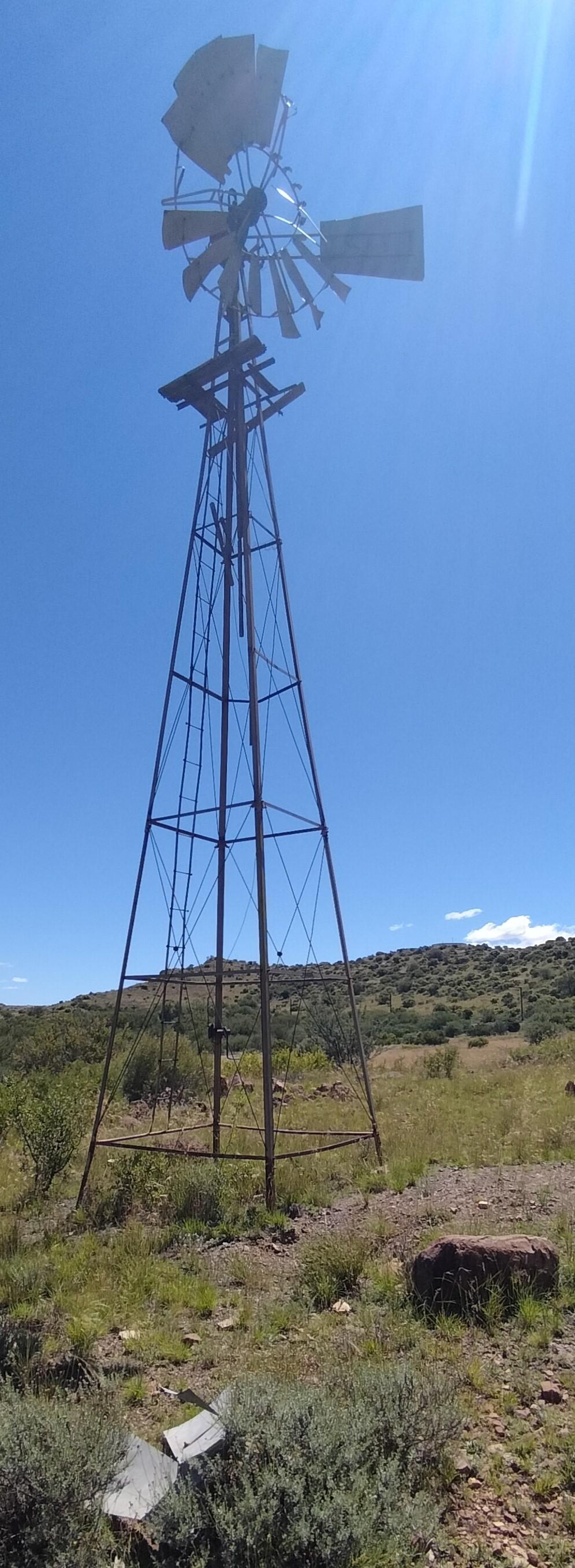
Withering in the sun – a perishing Climax windpump near Bethulie with blades on the ground
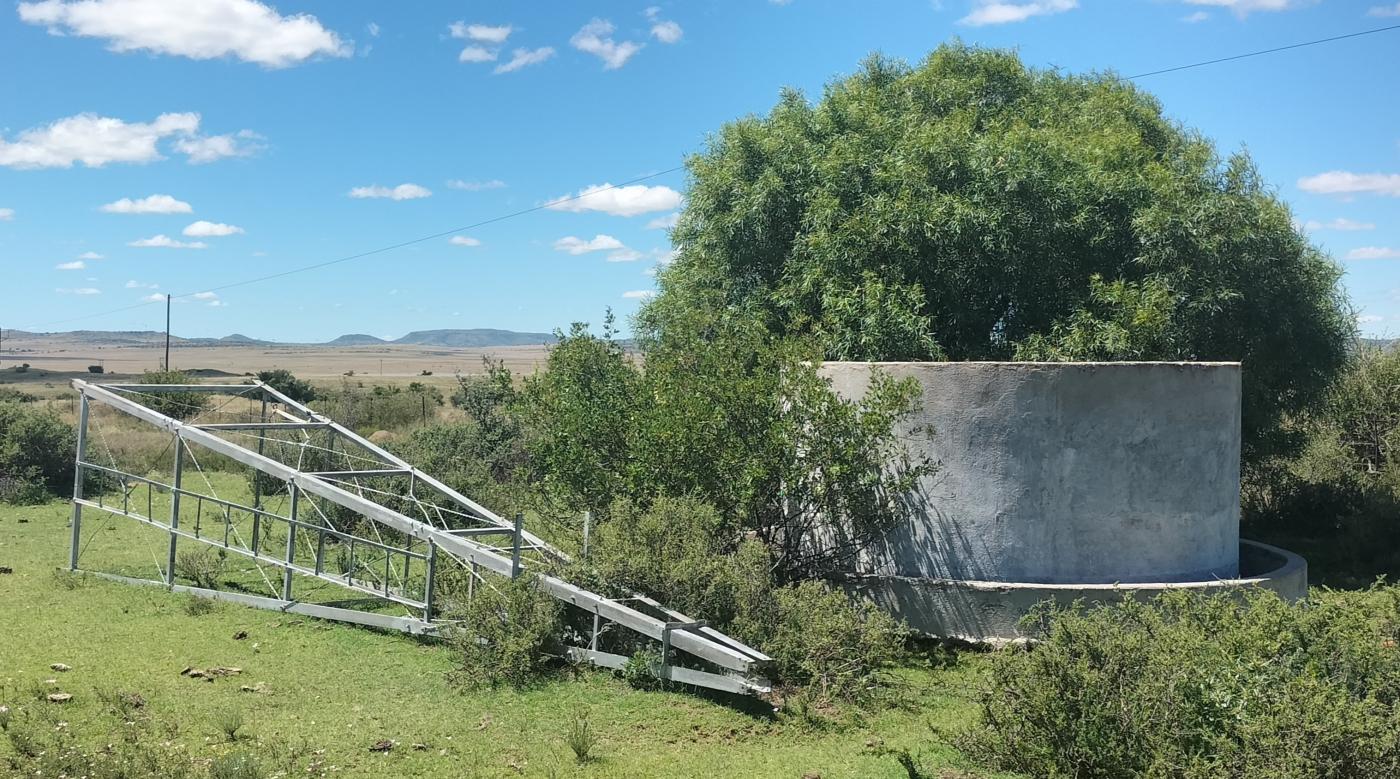
This windpump structure was cut from its cemented base. Why? The cement dam, which seems relatively new, is in good condition - Near Bethulie.
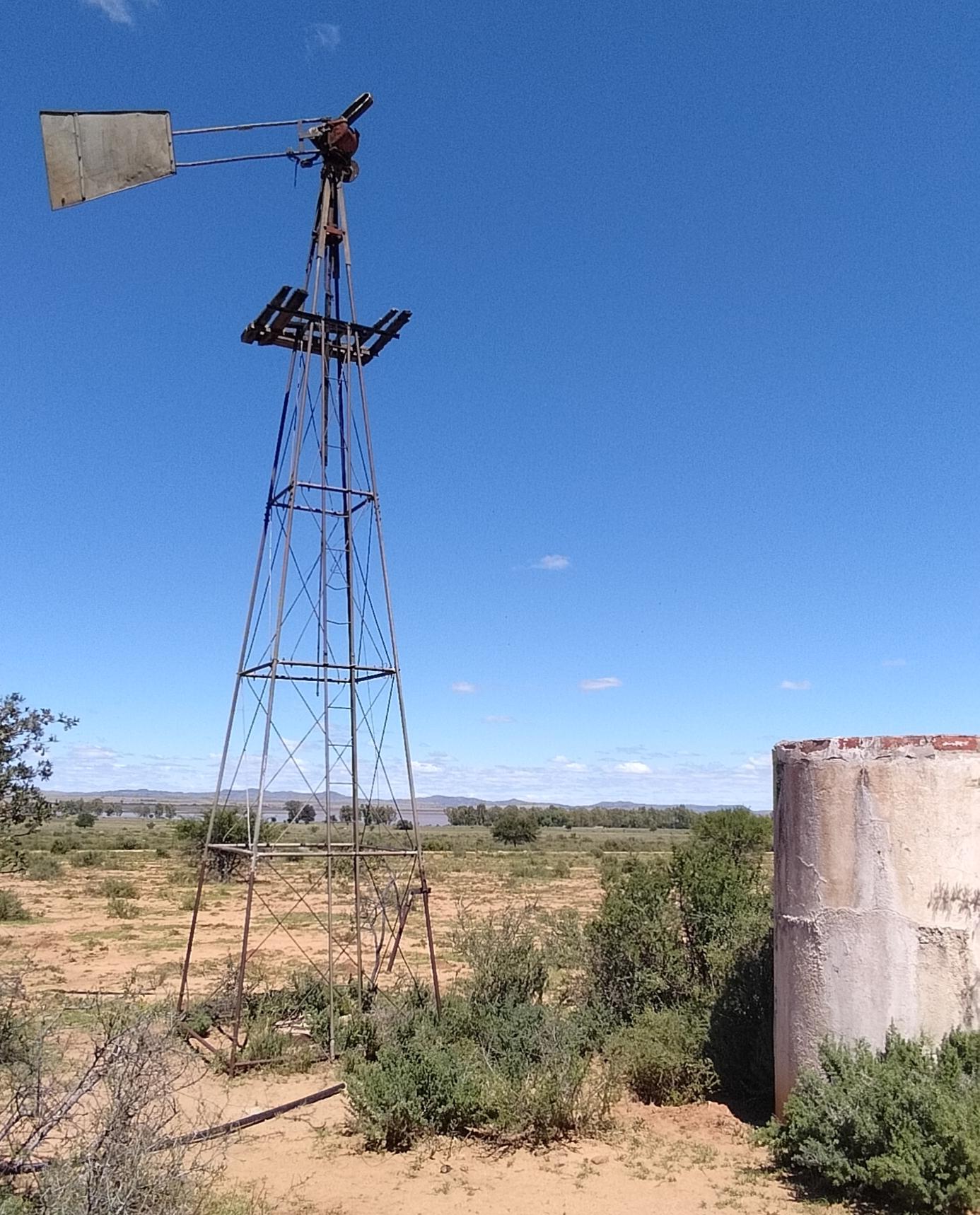
A perishing Climax windpump with the Gariep dam visible in the distance
Historical overview
Introduced during the nineteenth century (the earliest recorded windpump stood in Saldanha Bay in 1848), early windpumps were initially imported and often constructed from wood. As technology advanced, all-steel windpumps proved far more durable and better suited to South Africa’s harsh climate. Steel resisted termites, rot, and extreme temperature changes, allowing windpumps to operate reliably for decades with minimal maintenance. By the late nineteenth and early twentieth centuries, steel windpumps had become the standard solution for pumping water from deep boreholes.
Until World War II, the South African market was dominated by American brands, which supplied 80% of all units.
South Africa, however, soon developed its own strong manufacturing tradition.
Although historically the majority of these mills had their work cut out for them, pumping underground water, they were also used for grinding corn or charging batteries for the farmstead.
The most widely distributed and one that has maintained its popularity for the longest in South Africa is the Climax windpump.
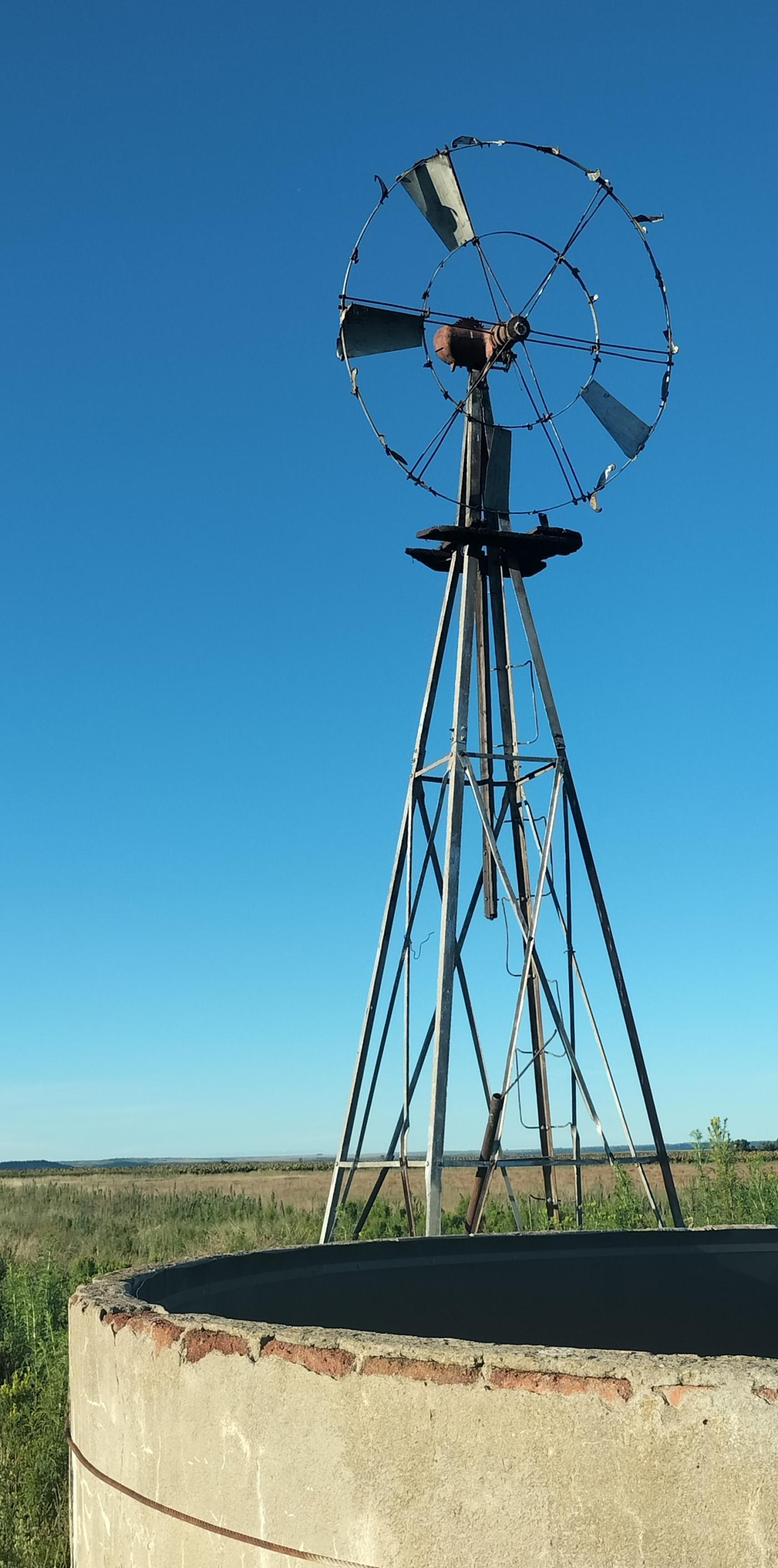
An unusual looking windpump near Senekal. Although the windpump is no longer functional, the cement dam held some water – probably from recent rains in the area.
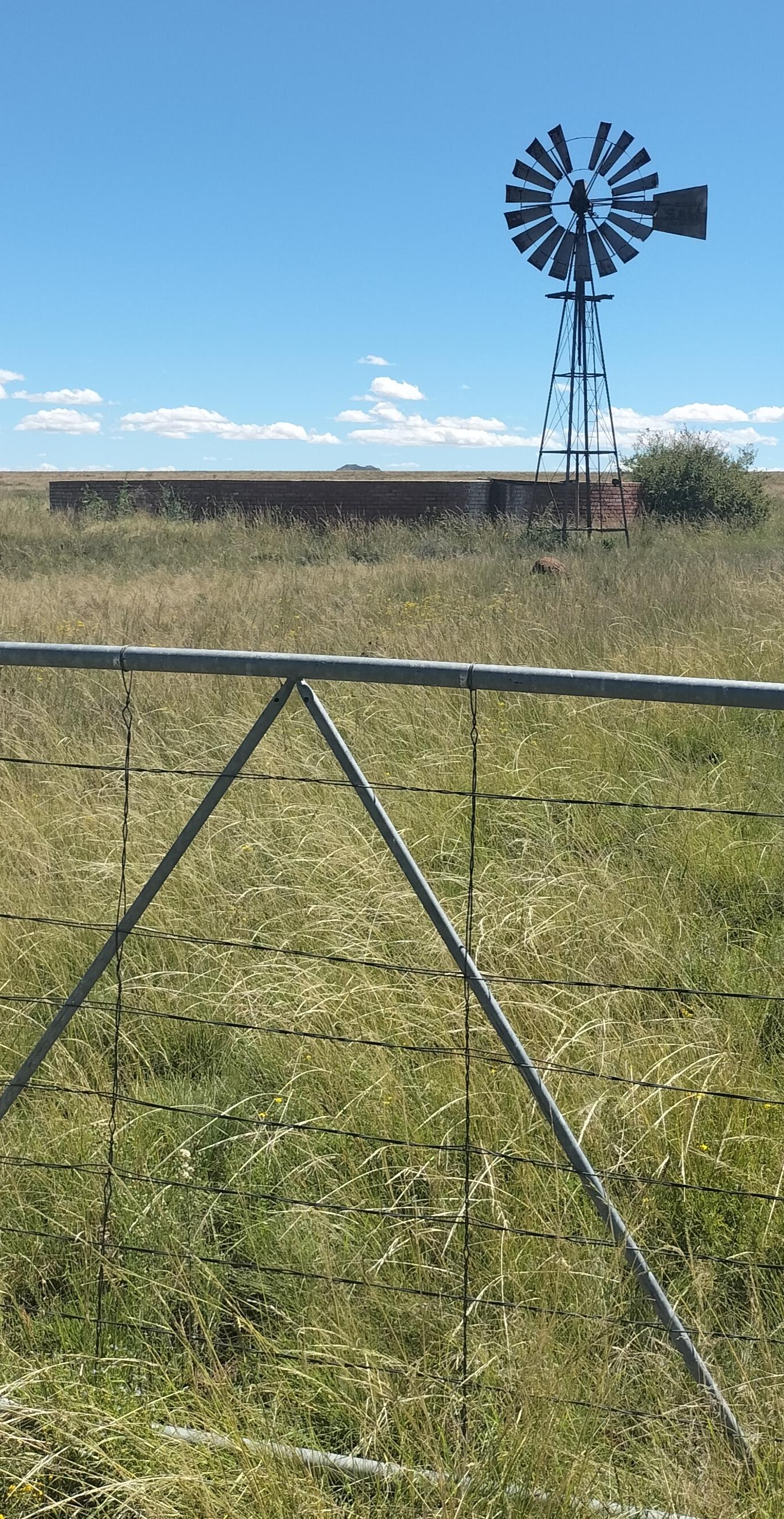
A windpump between Smithfield and Bloemfontein. Although it will still work with one blade missing, if not maintained, it will soon fall into disuse.
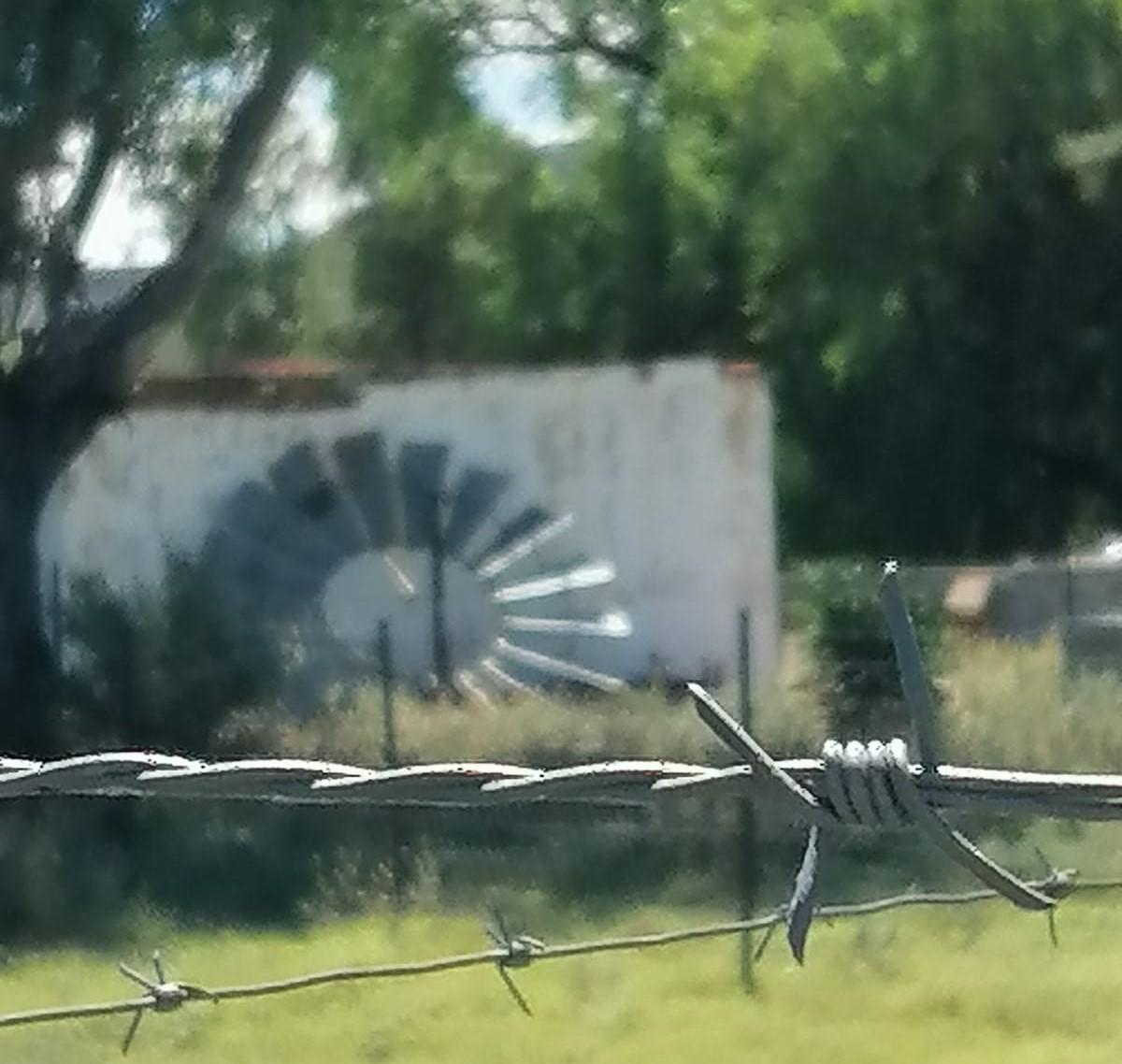
Blades behind barbed wire fencing near Bethulie. Does the bladeless structure to which these blades belong stand nearby? Photograph by Leslie Bennett.
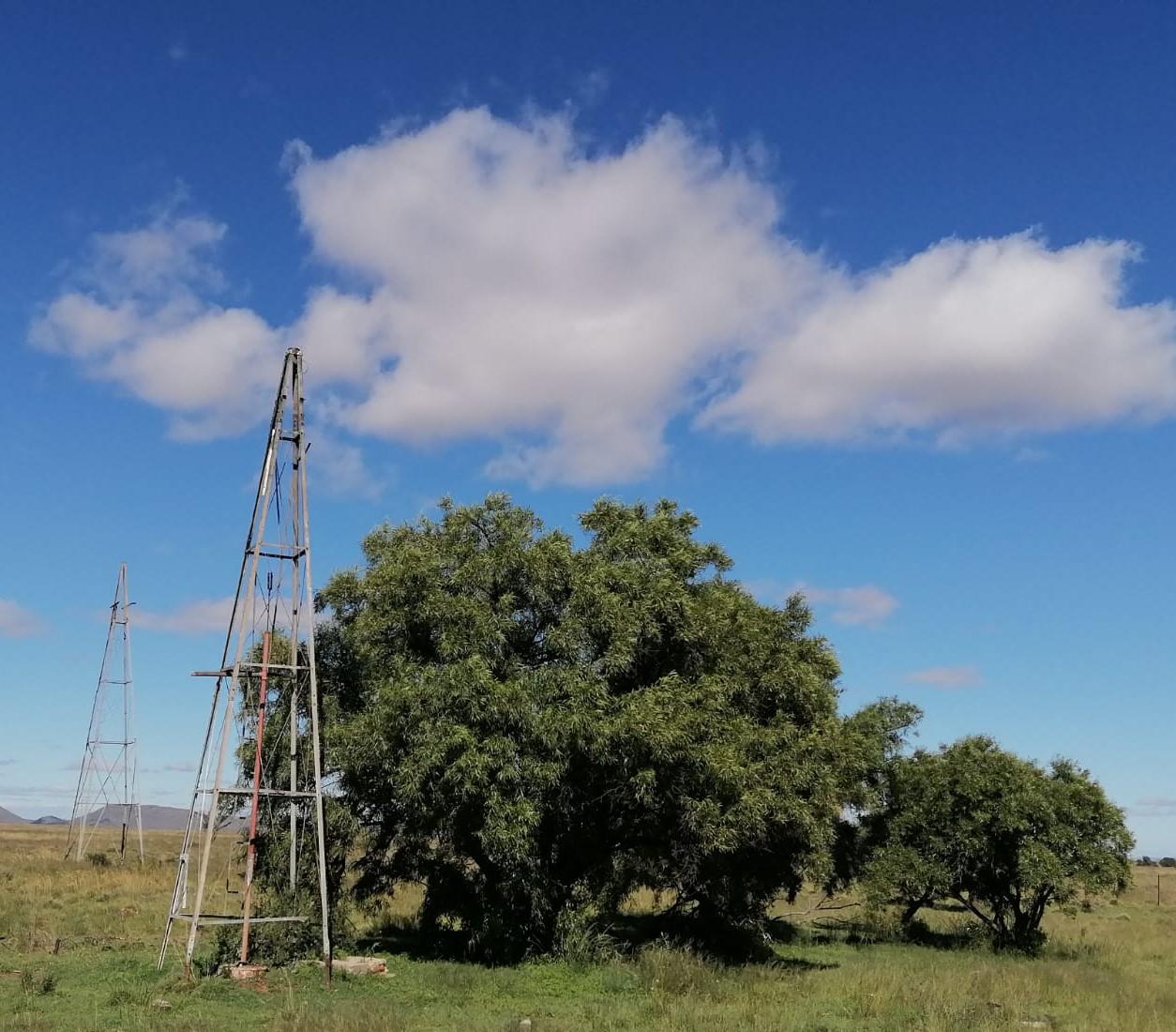
Two steel sentinels that have fallen into disuse standing next to each other. Only the foundations of the farmhouse it used to serve remain – near Gariep.
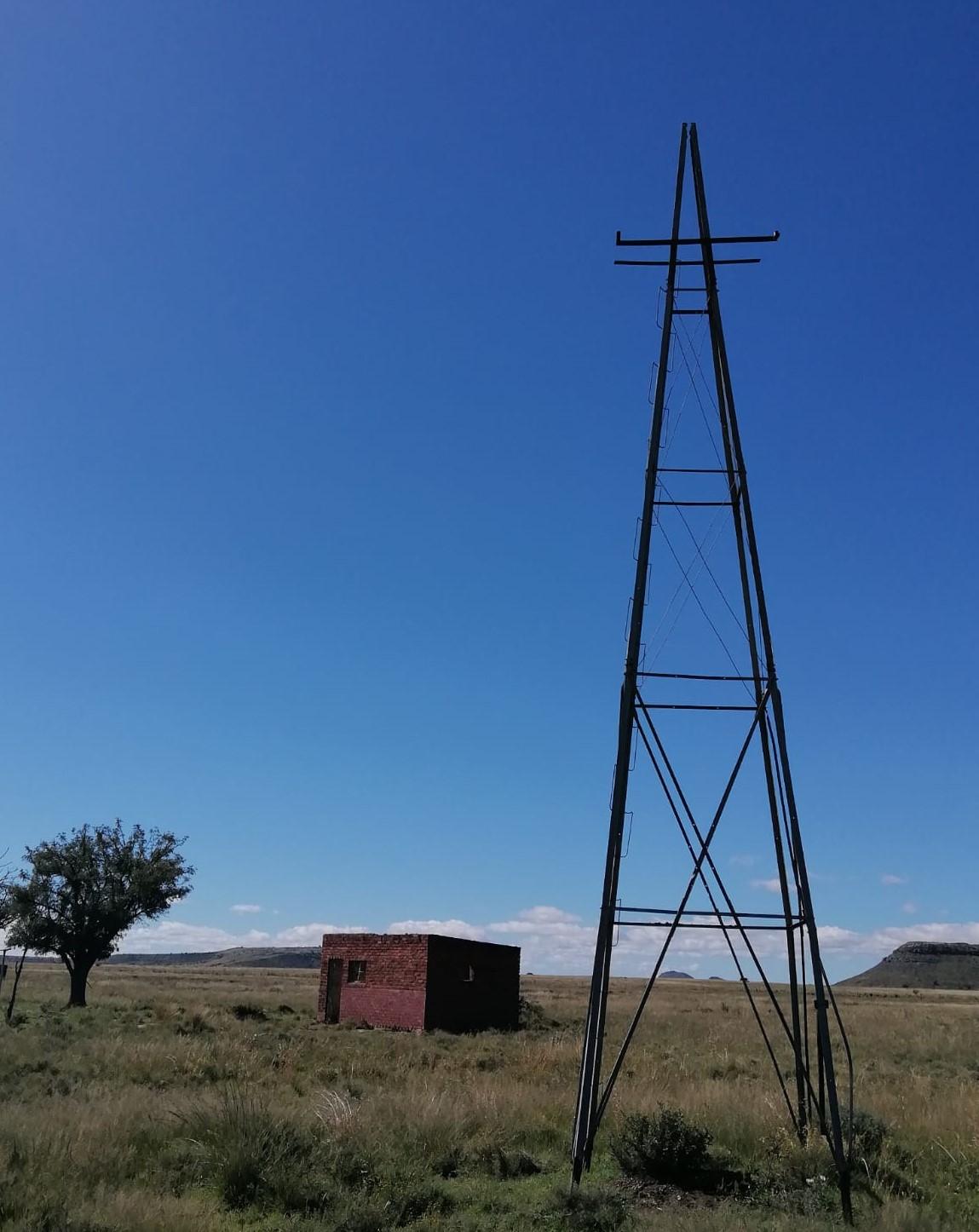
Blades long gone. Forlorn in the veldt – near Gariep
Manufacturing and distribution
Climax pumps were first manufactured by Thomas & Son of Worcester, England, and were exported to South Africa from the early 1900s. Stewarts and Lloyds became agents for Climax windpumps shortly after the First World War (Walton, 1998). This is potentially contradicted by the Stewarts & Lloyds Corporate Photo Album, where the company proudly displays the Climax windpumps at national shows as early as 1909.
At the beginning of the Second World War, when it was no longer possible to import windpumps, it was arranged that Stewarts and Lloyds could make Climax windpumps under licence from Thomas and Son at their Tosa works in Vereeniging, where the first windpump was manufactured in 1942 (Walton, 1998).
Cultural icons
Beyond their practical function, steel windpumps have become cultural icons. Their rhythmic turning blades, creaking gears, and tall lattice towers are deeply associated with rural life and the open spaces of the South African veld.
Today, although electric and solar pumps are increasingly common, steel windpumps remain symbols of resilience, ingenuity, and self-sufficiency - quiet reminders of how wind and water once shaped the country’s rural history.
This photographic portfolio only skims the surface of windpumps no longer fulfilling their function, in that only those visible from the road were photographed. There will be many more photographic gems along similar lines, standing hidden in the farmlands.
Where there is a windpump, there is a borehole. The windpump is the visible remainder of the human efforts and machinery that went into drilling the holes for these windpumps - a totally separate ‘culture’. The drilling equipment inevitably forms part of the windpump erection.
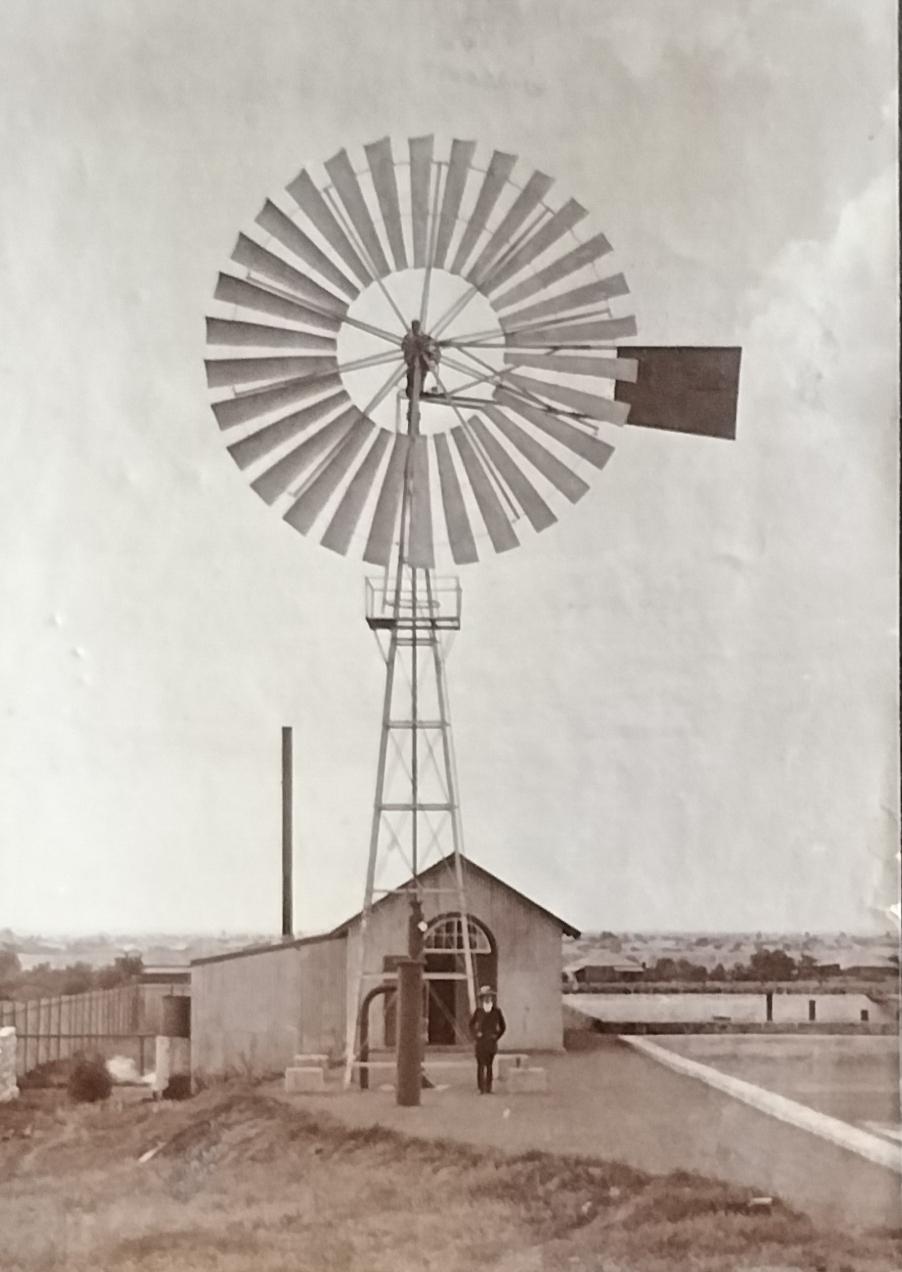
Stewarts and Lloyds pump at Kimberley Water Works,1911
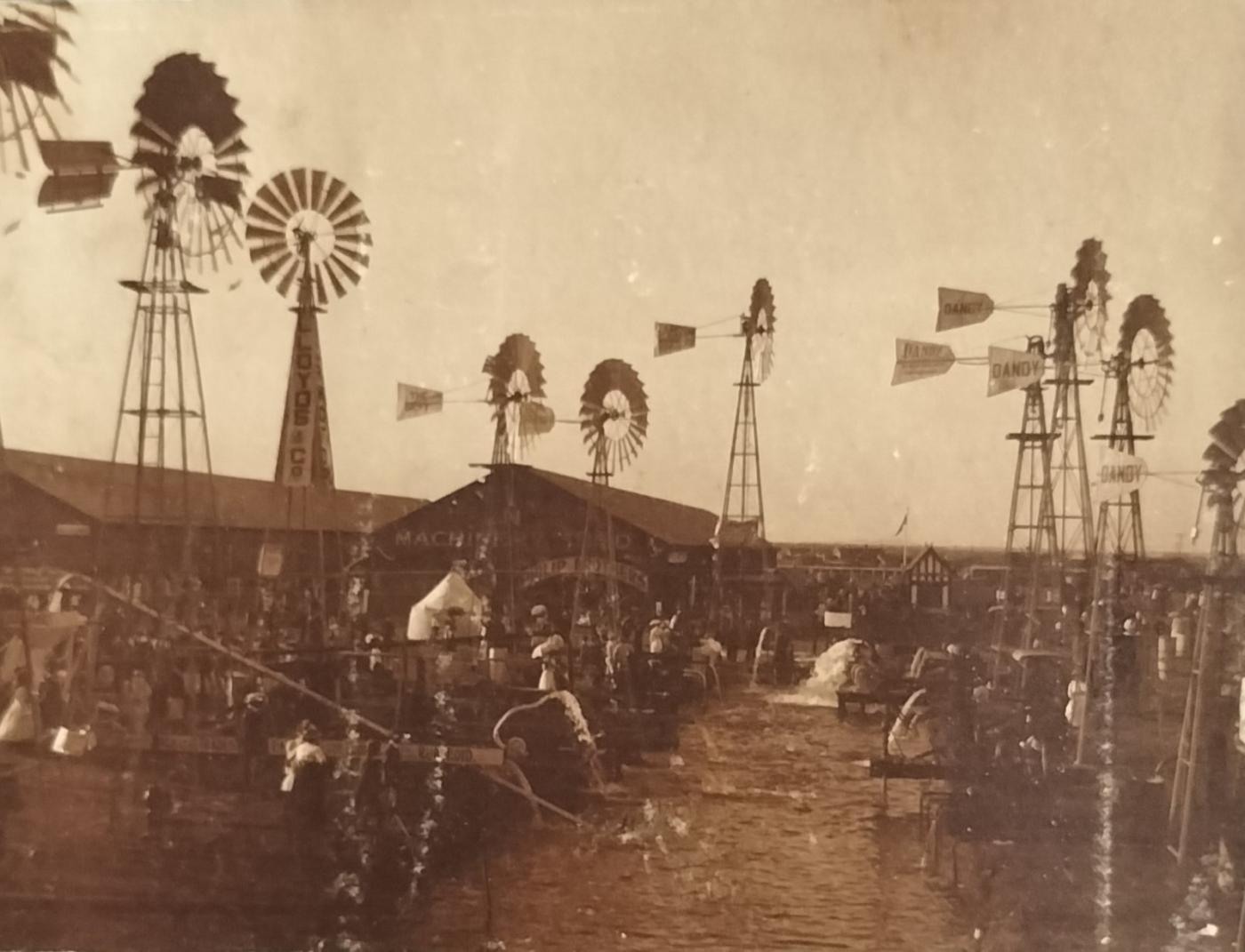
Snapshot from the Stuarts and Lloyds Corporate Photographic Album of a number of windpumps at an unknown show.
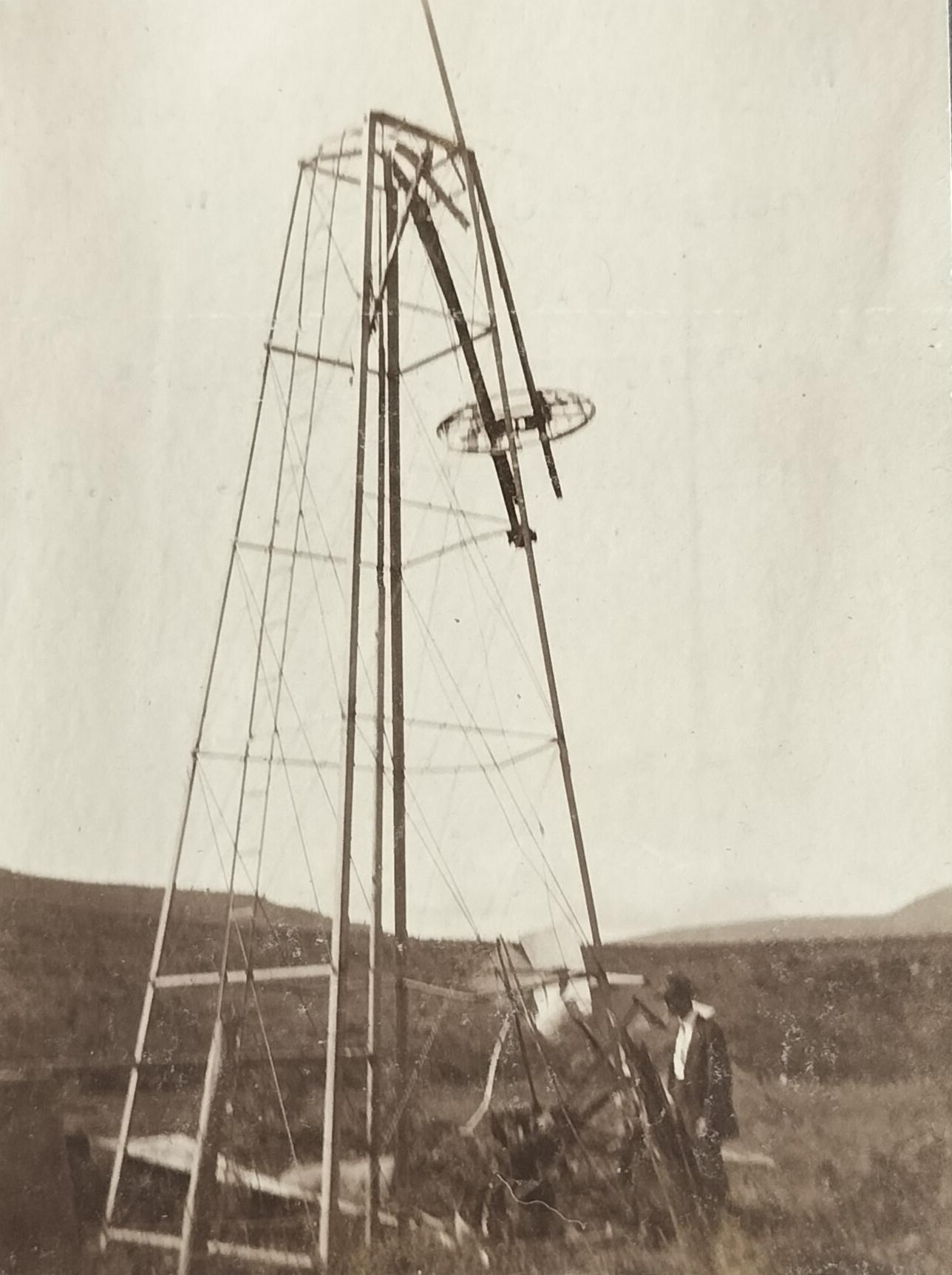
“The superiority of our competitors' mills” – Photograph in the Stewarts & Lloyds Corporate Photographic Album. This collapsed Samson Tower stood in Somerset East.
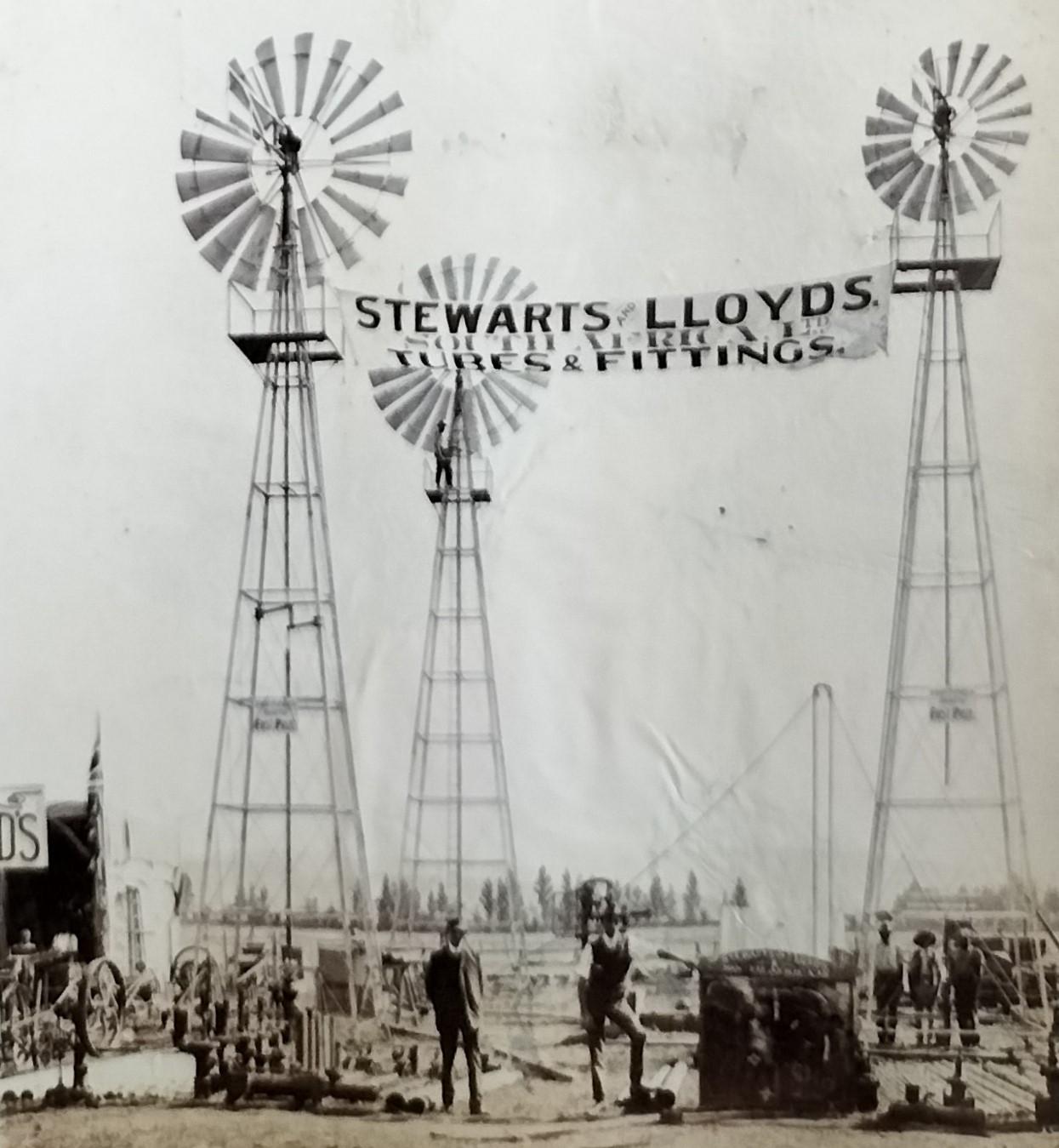
Stewarts & Lloyds windpumps exhibited at the 1909 Pretoria agricultural show
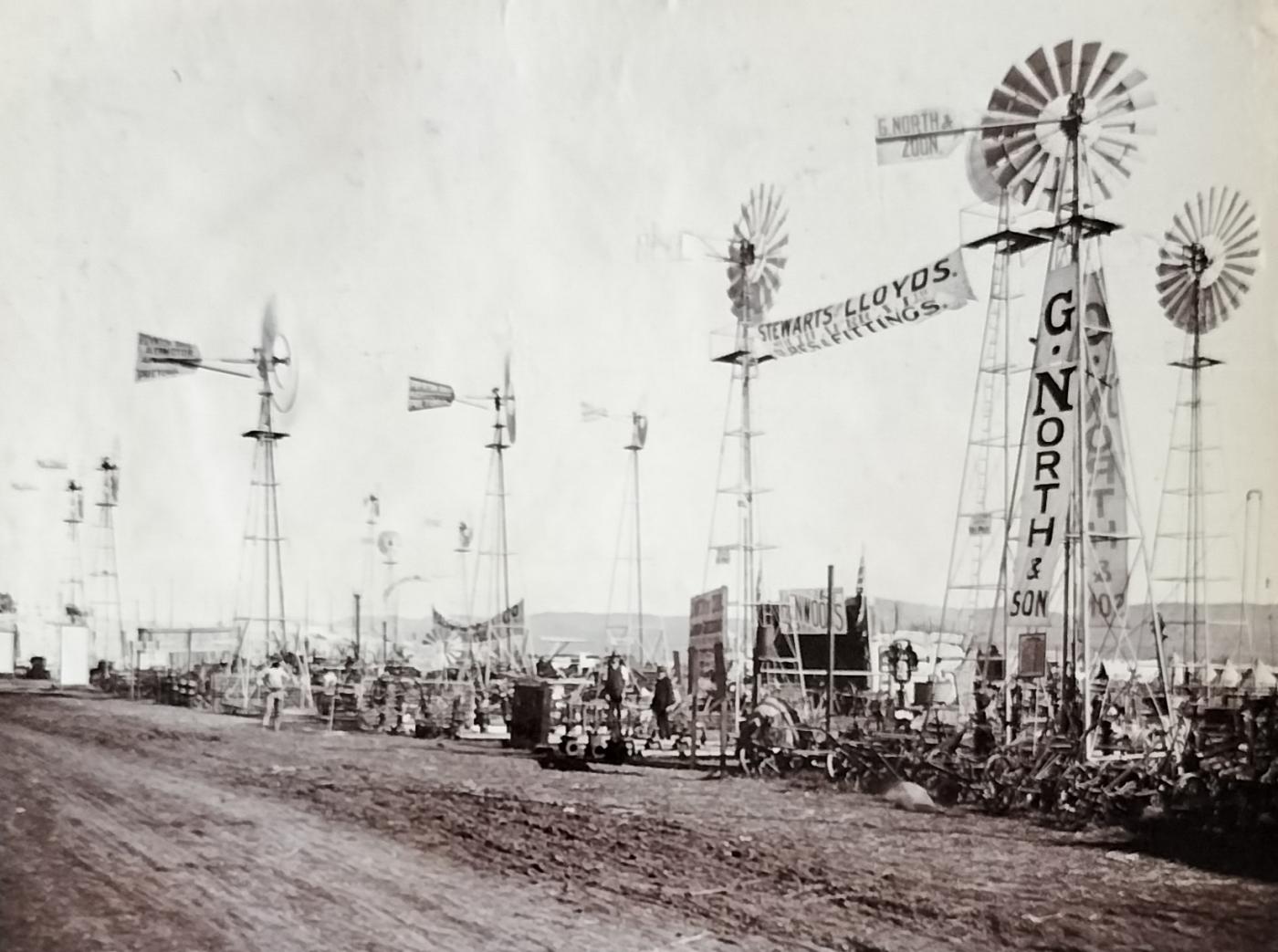
Stewarts & Lloyds windpumps exhibited at the 1909 Pretoria agricultural show
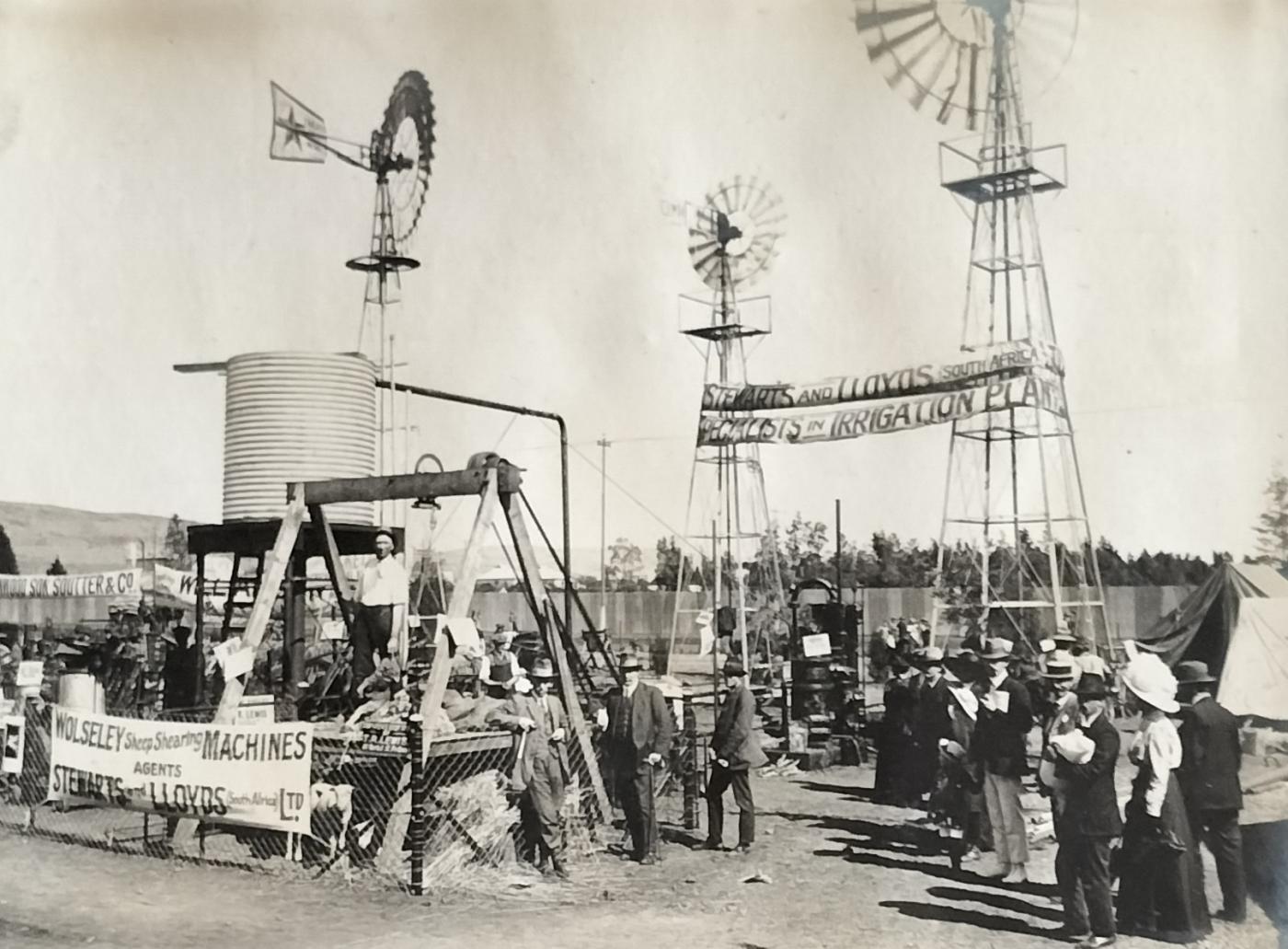
Stewarts & Lloyds windpumps exhibited at the 1913 Pretoria agricultural show
As a stadsjapie (a city dweller), I was intrigued to see the number of windpumps with smaller solar panels installed under or nearby the windpump. This, I soon found, is often part of a hybrid water pumping system designed to solve the limitations of relying on wind alone.
Often, the old windpump is not removed because it remains a functional piece of the infrastructure—even if it is no longer the primary pumper. It serves as an emotional landmark, potential backup, or lightning conductor. In a South African context, a cynical thought that crossed my mind is whether these windpumps have become potential targets for criminal recyclers – I cringe at the thought.
Paging through a recently reprinted book on the Free State Town Philippolis by Friis (2024), the author captured another beautiful example of a windpump that has fallen into disuse alongside a photograph of what the windpump (and the farmhouse next to it) looked like a few years prior. This image itself suggests that the occupants of the house departed, after which the windpump no longer had a role to fulfil.
When a windpump is no longer in service, it usually transitions from a functional machine into a historic landmark, a ruin, or a complex recycling challenge.
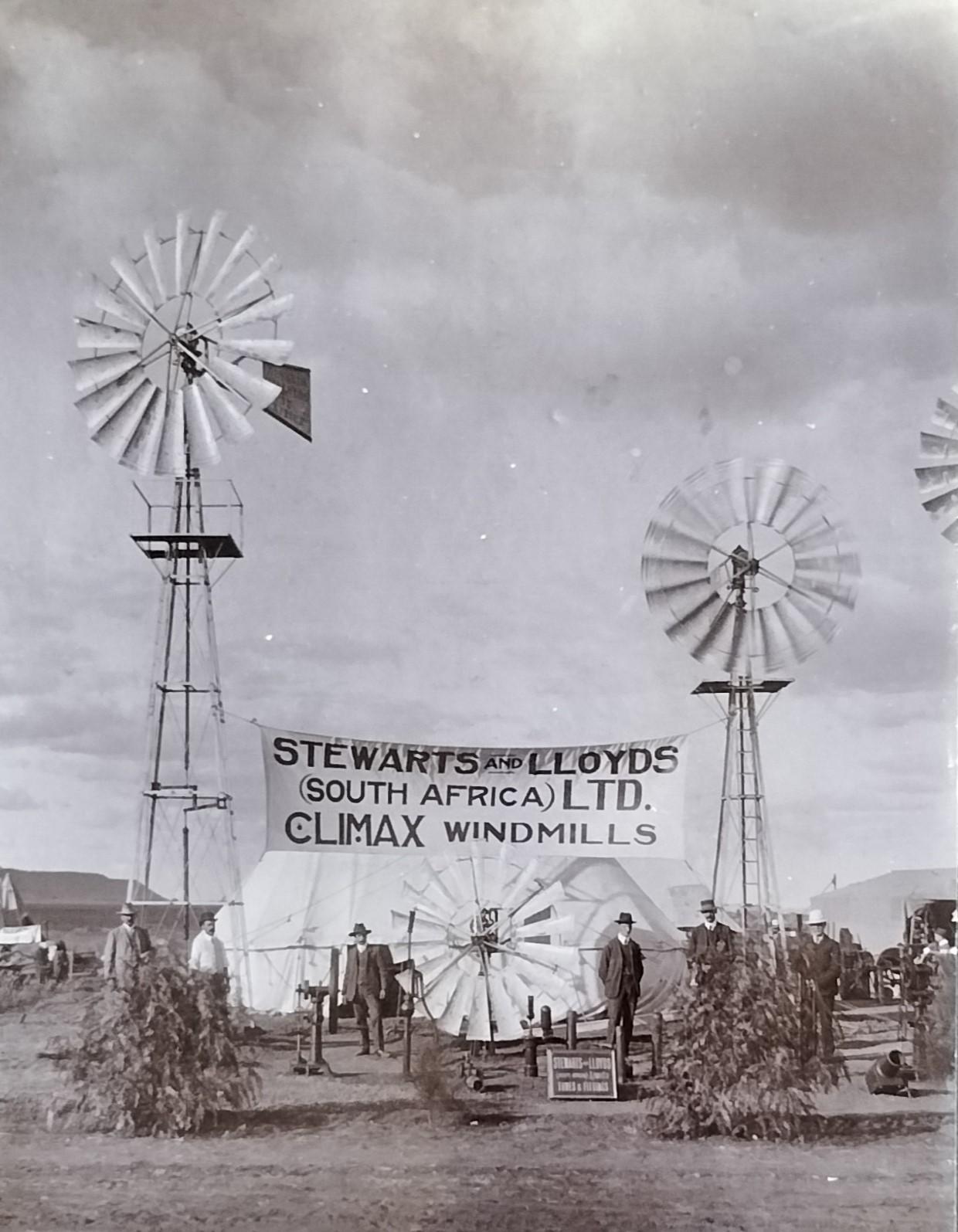
Stewarts & Lloyds windpumps exhibited at the 1909 Bloemfontein agricultural show
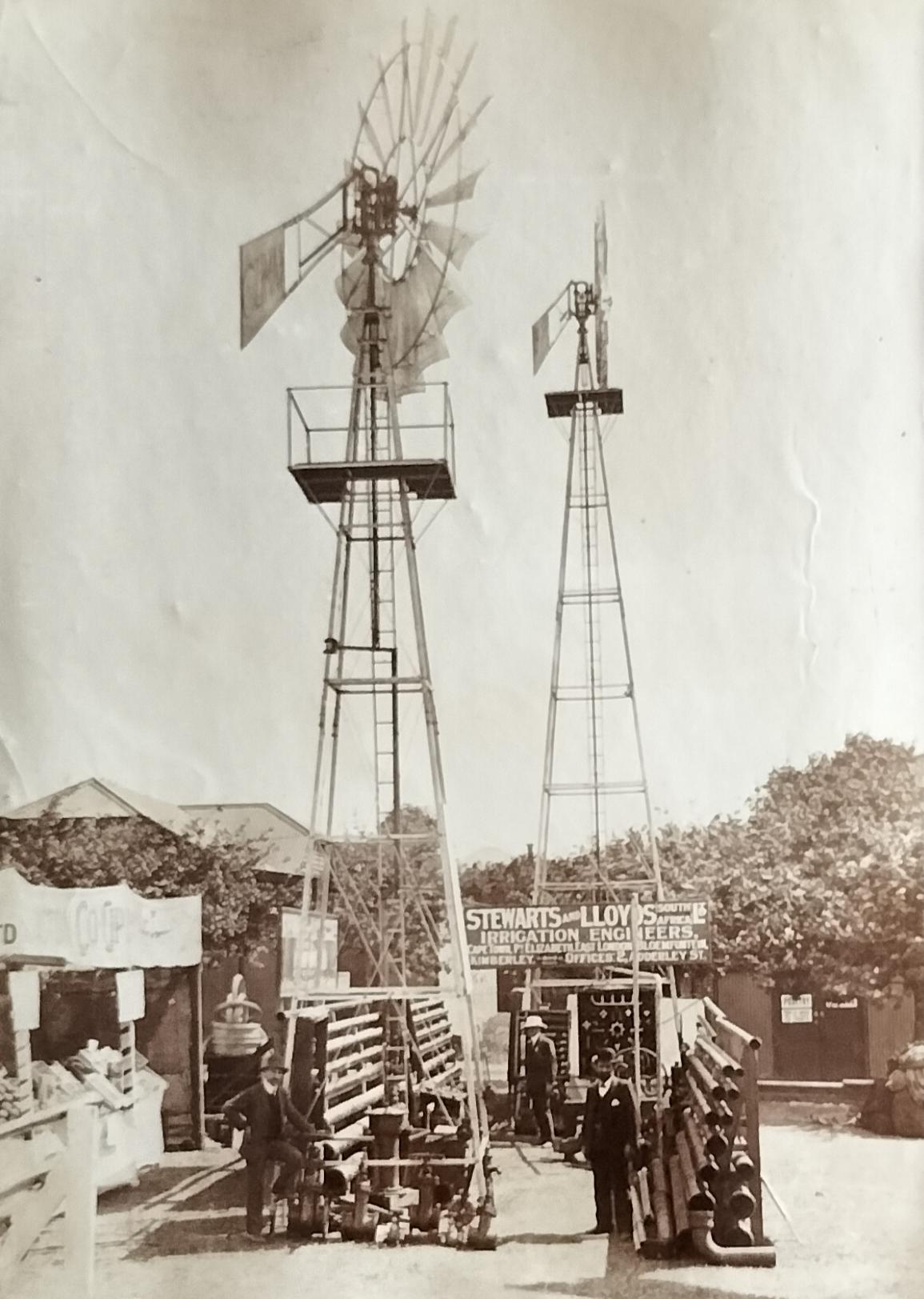
Stewarts & Lloyds windpumps exhibited at the 1910 Cape Town “Rosebank” show
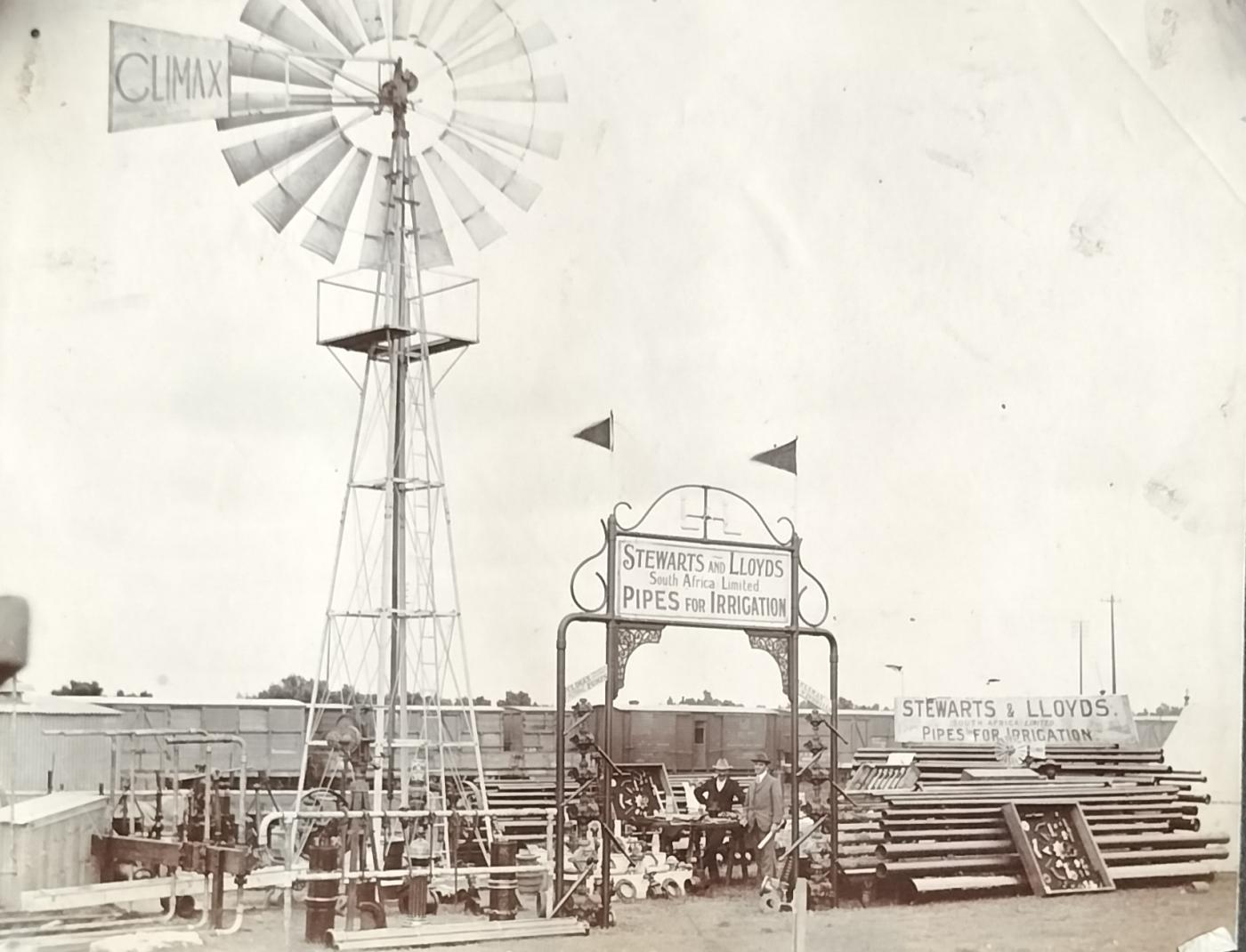
Stewarts & Lloyds windpumps exhibited at the 1910 Port Elizabeth agricultural show
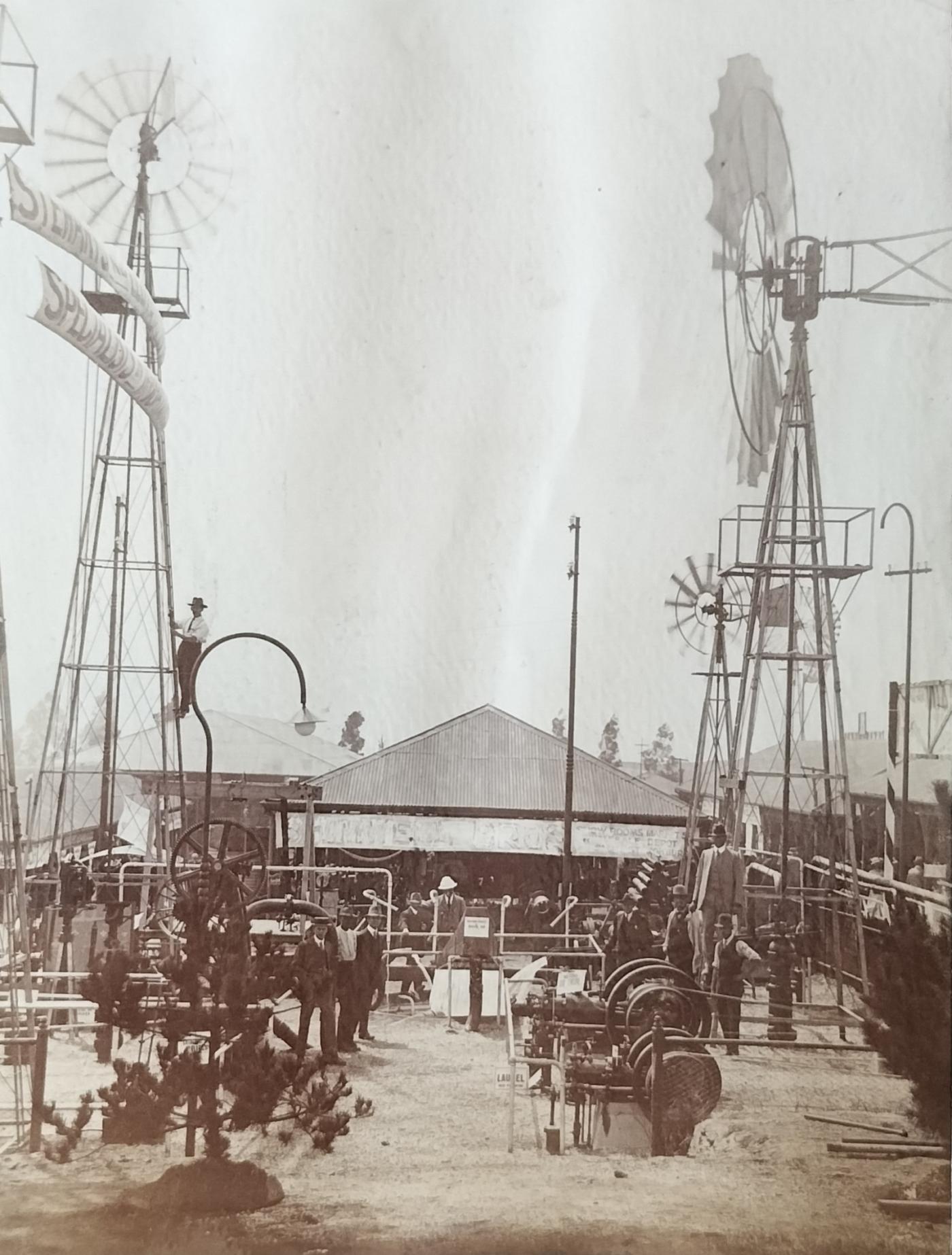
Stewarts & Lloyds windpumps exhibited at the 1913 Johannesburg show
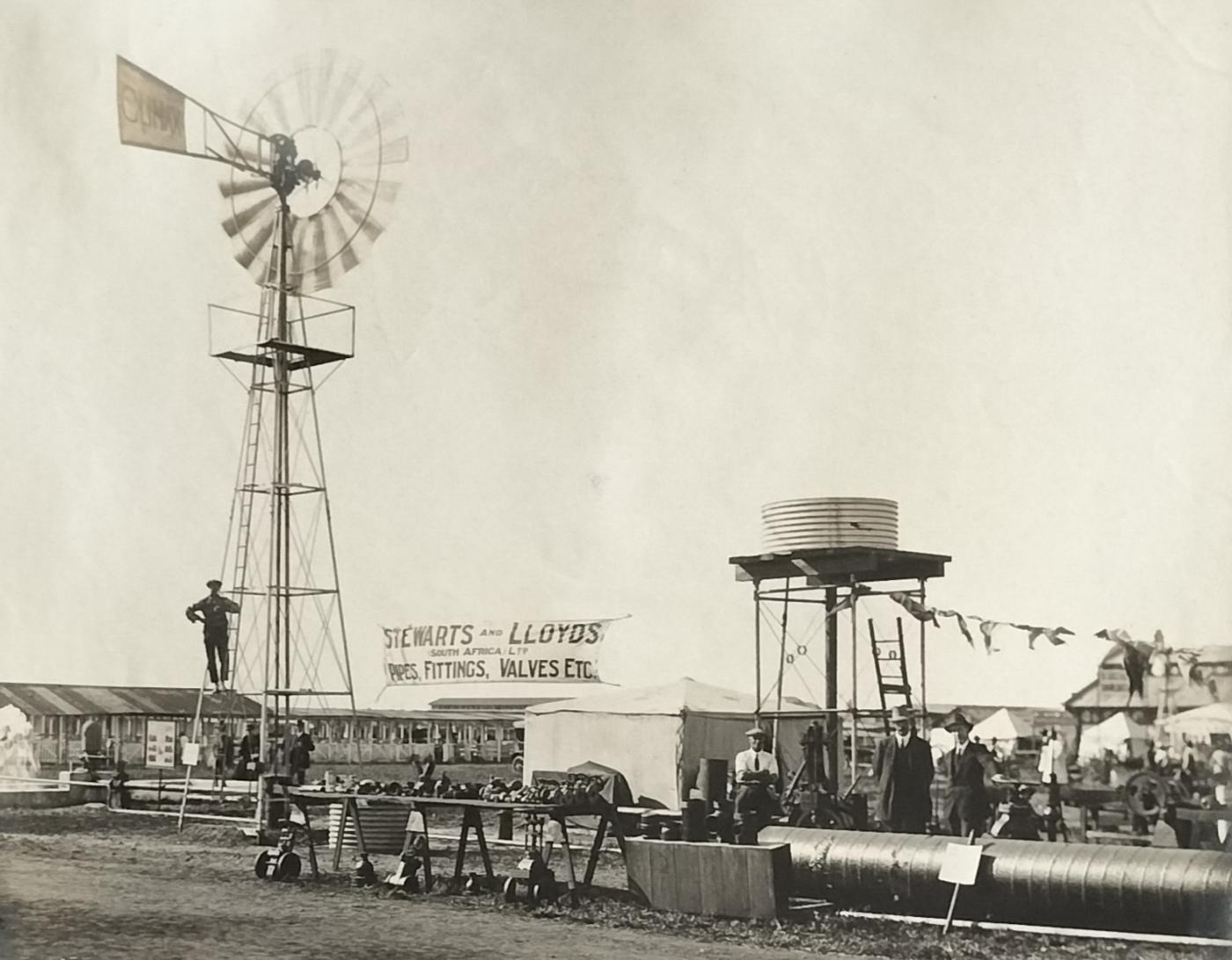
Stewarts & Lloyds windpumps exhibited at the 1920 Durban show
Preservation and legacy
Seen in this light, the question of preservation becomes inseparable from how these iron sentinels are understood today. Historic windpumps are not merely relics of redundant technology; they are enduring markers of engineering ingenuity and rural adaptation, deeply embedded in the cultural and agricultural landscapes they once sustained. Whether still standing as functional hybrids, silent backups, or rusting landmarks, they continue to tell stories of labour, resourcefulness, and sustainable interaction with the environment. Preserving them may take many forms—from careful maintenance and adaptive reuse to systematic photographic and archaeological recording where restoration is no longer feasible—but each approach recognises their value as educational and historical resources. Even in decline, these structures remain eloquent witnesses to a pre-modern energy culture, deserving of attention before weather, neglect, or reclamation erases their presence from the veld.
A practical example of preservation in action
South Africa has one of only two windpump museums in the world. The Fred Turner Museum is in Loeriesfontein, where the technical evolution of the iron sentinels is preserved.
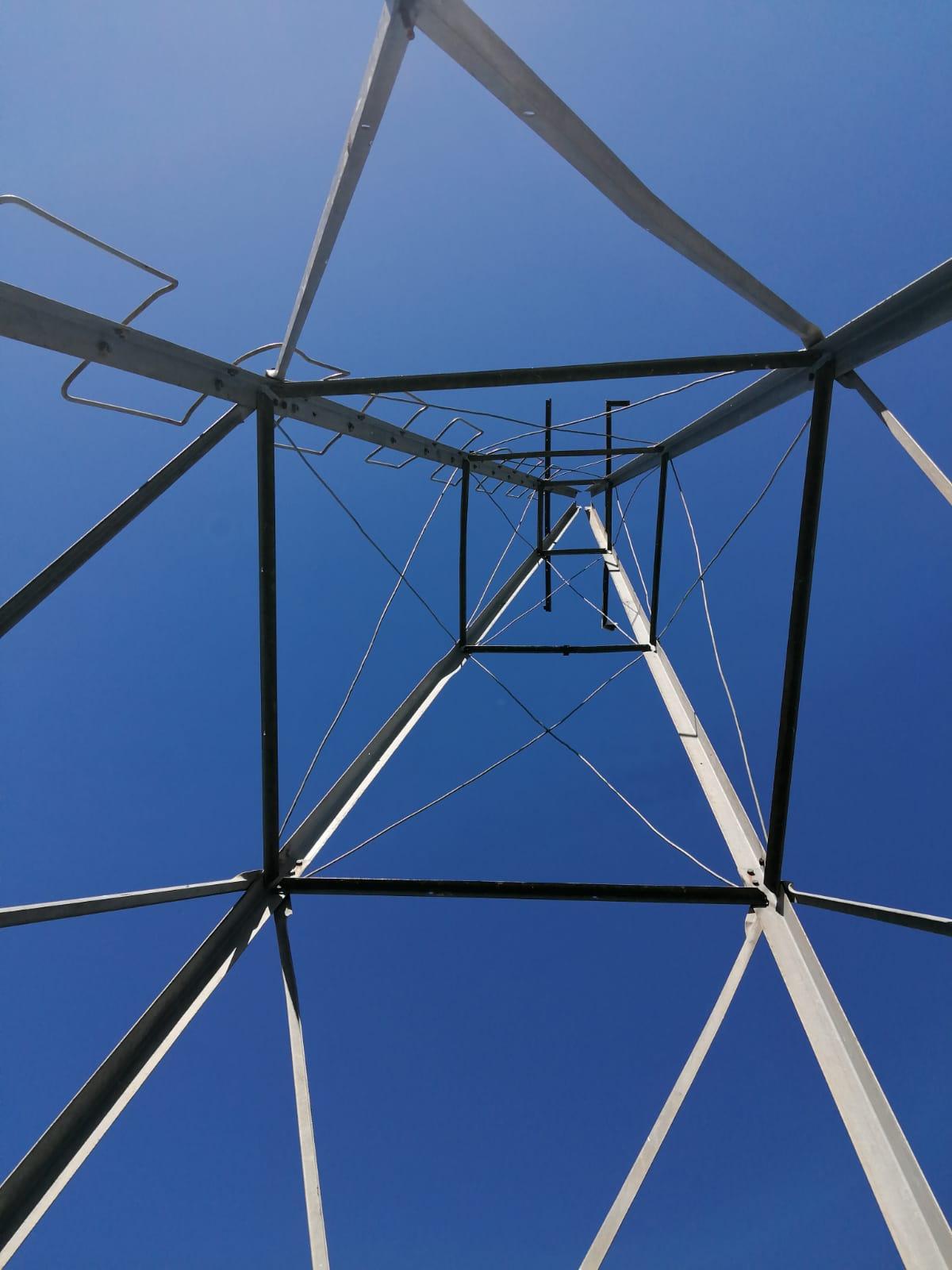
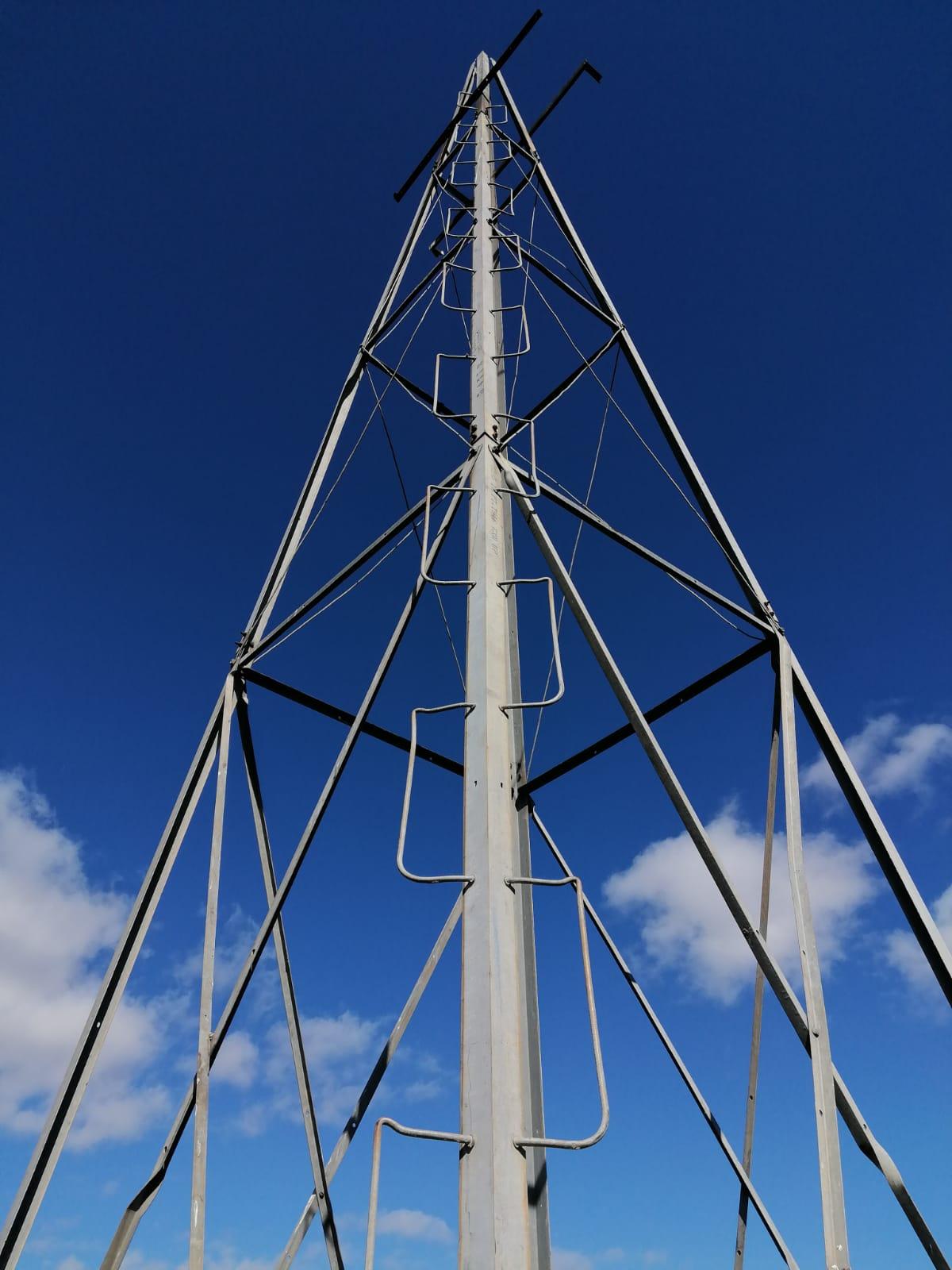
Abstracts of bladeless windpump structures
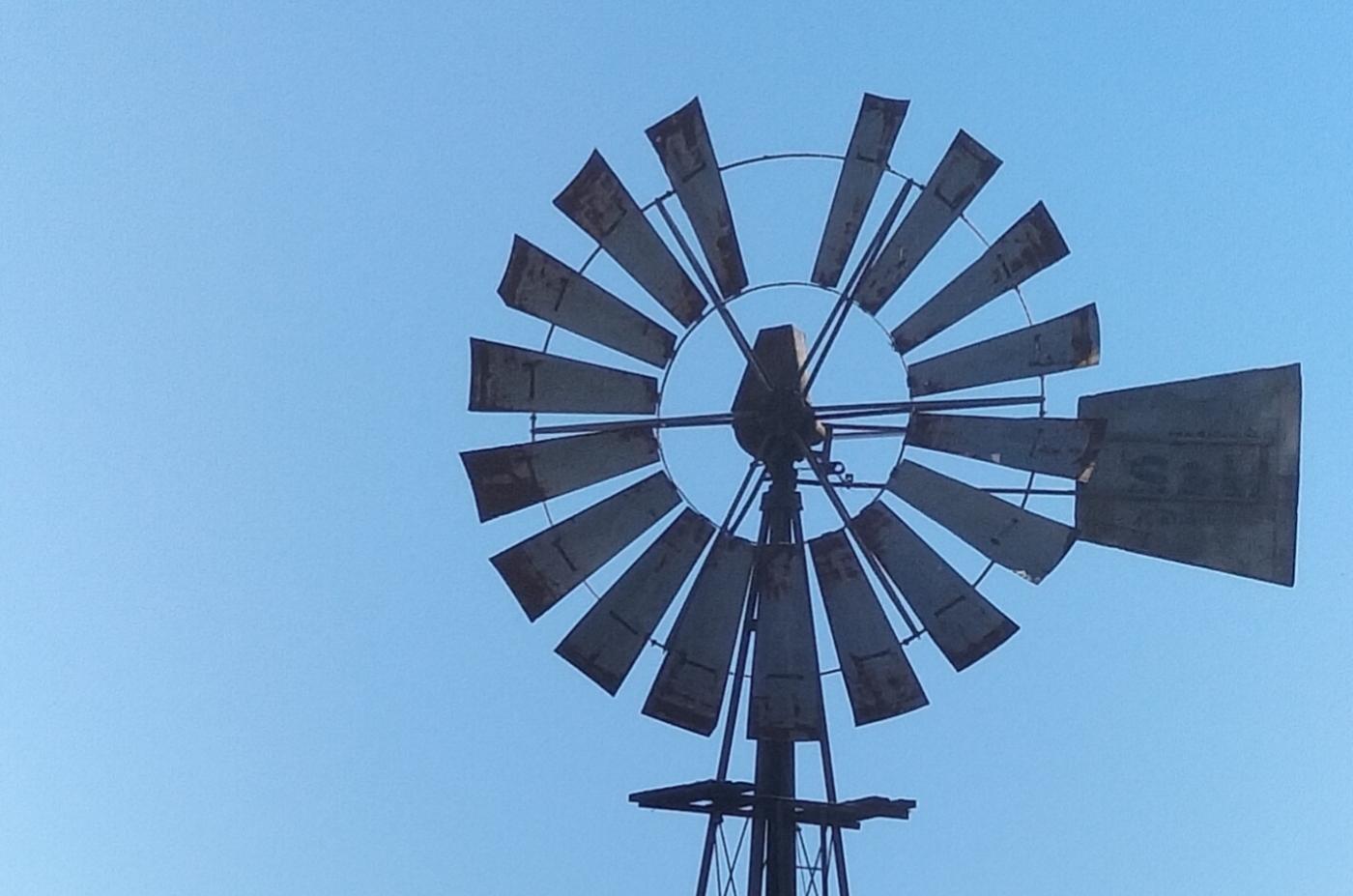

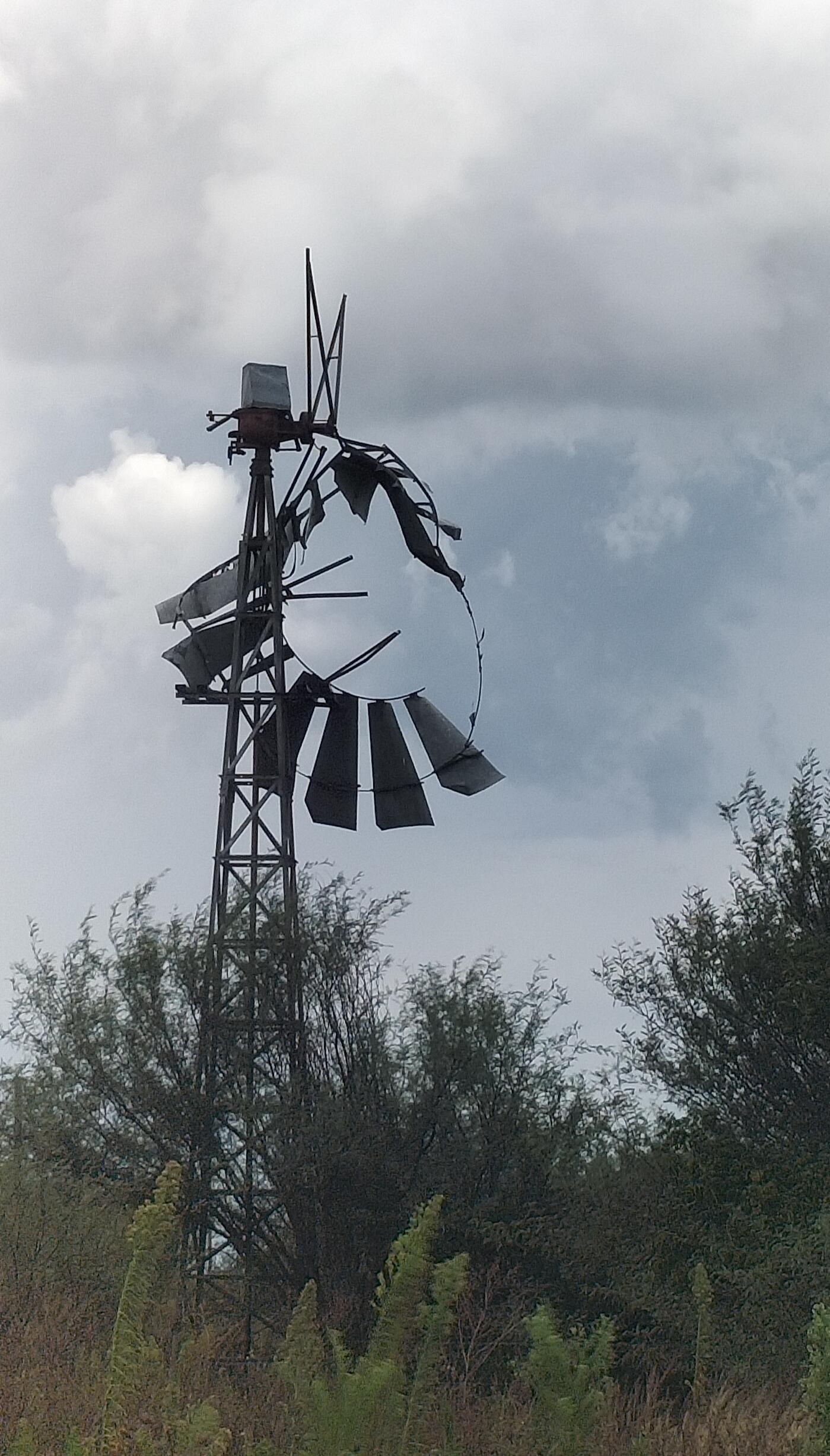
Abstract close-ups of windpump blades showing various stages of decay
About the author: Carol is passionate about South African Photographica – anything and everything to do with the history of photography. He not only collects anything relating to photography, but also extensively conducts research in this field. He has published a variety of articles on this topic and assisted a publisher and fellow researchers in the field. Of particular interest to Carol are historical South African photographs. He is conducting research on South African based photographers from before 1910. Carol has one of the largest private photographic collections in South Africa.
Sources
- Du Toit, J. (2022) Catch the wind – the meditative magic of a Karoo windpump (https://www.dailymaverick.co.za/article)
- Fred Turner Museum - Loeriesfontein (museumexplorer.co.za/fred-turner-museum) (extracted 10 March 2026)
- Friis, J. (2024). Philippolis – Die oudste nedersetting in die Vrystaat. Self-published
- Grobler, L. (unknown). Reshaping remembrance – The Windpump (https://rozenbergquarterly.com). Extracted 19 February 2026.
- Marais, C. (2023). Windpump safari in the Karoo highlands.(dailymaverick.co.za/article/2023-06-21)
- Walton, J. & Pretorius, A. (1998). Windpumps of South Africa. Human & Rousseau. Cape Town
- Wikipedia (extracted 6 February 2026). Industrial Archaeology. (www.wikpedia.org)