
The use or reproduction of images from this article for heritage purposes on social media platforms is welcomed, provided that the source is duly acknowledged, namely The Heritage Portal and the Hardijzer Photographic Research Collection.
As a psychologist, I remain intrigued by our visual curiosity: what we notice, what we overlook, and how we interpret visual stimuli contained in photographs.
When we assess a photograph, the brain instinctively searches for patterns, symmetry, and colour in an effort to make sense of the visual information before us. Much like an inkblot test used in psychological assessments, the same photograph can evoke very different interpretations. Each viewer may construct a different story, shaped not only by personal life history but also by individual interests and areas of attention.
Although I always aim to provide as detailed a description as possible on the photographs included in my articles, I occasionally miss certain features within an image, even when they are clearly visible.
My most recent article, published in July 2026 (click here to view), focused on the interior of a Victorian house situated on the corner of Belgrave and St. Matthews Road in East London. The interior was captured in photographs by an amateur female photographer.
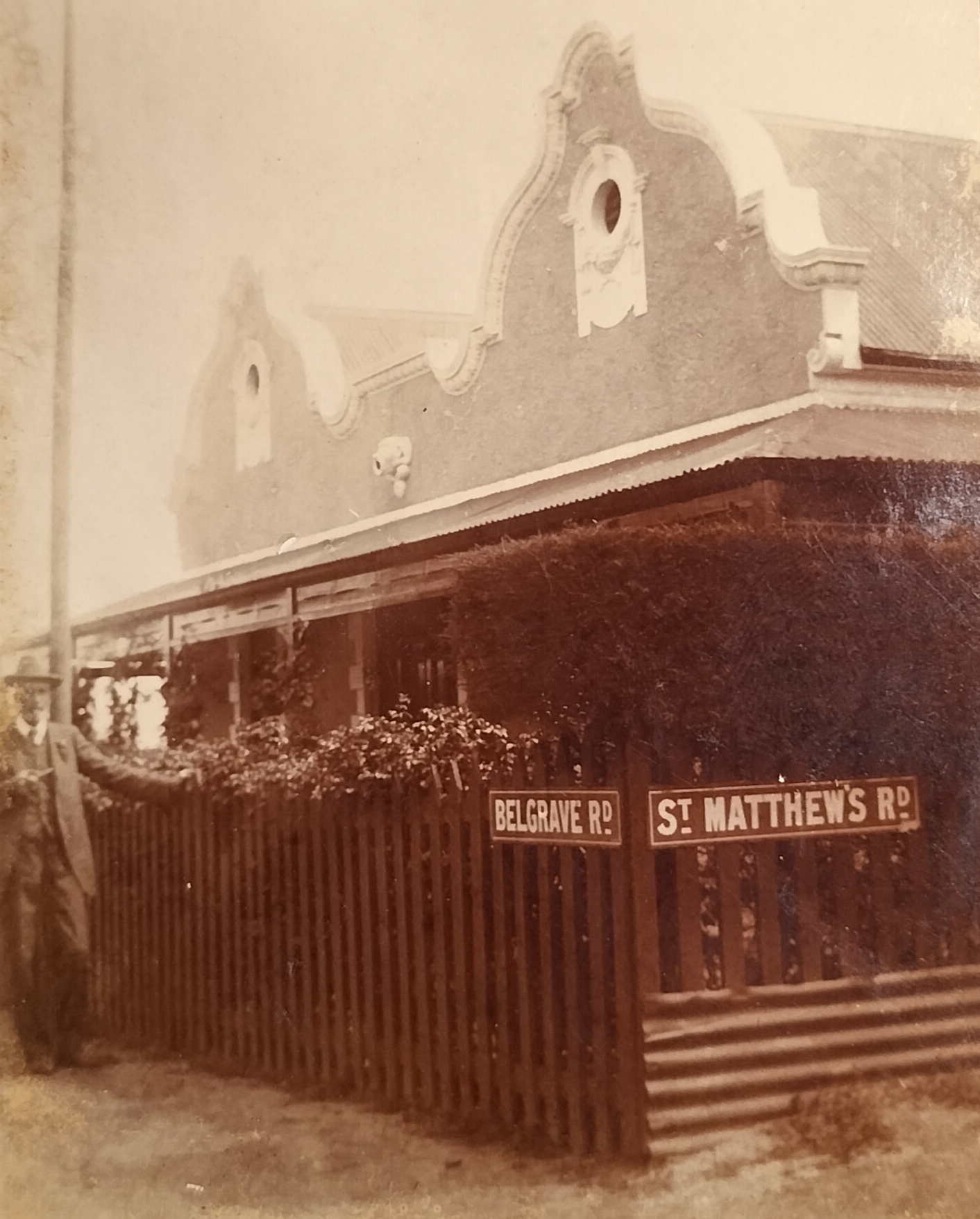
The very first photograph (circa 1910) contained in the article shows a street view of the exterior of the house. Present in this image is an unusual architectural feature not often seen in South Africa – This was not even spotted by me.
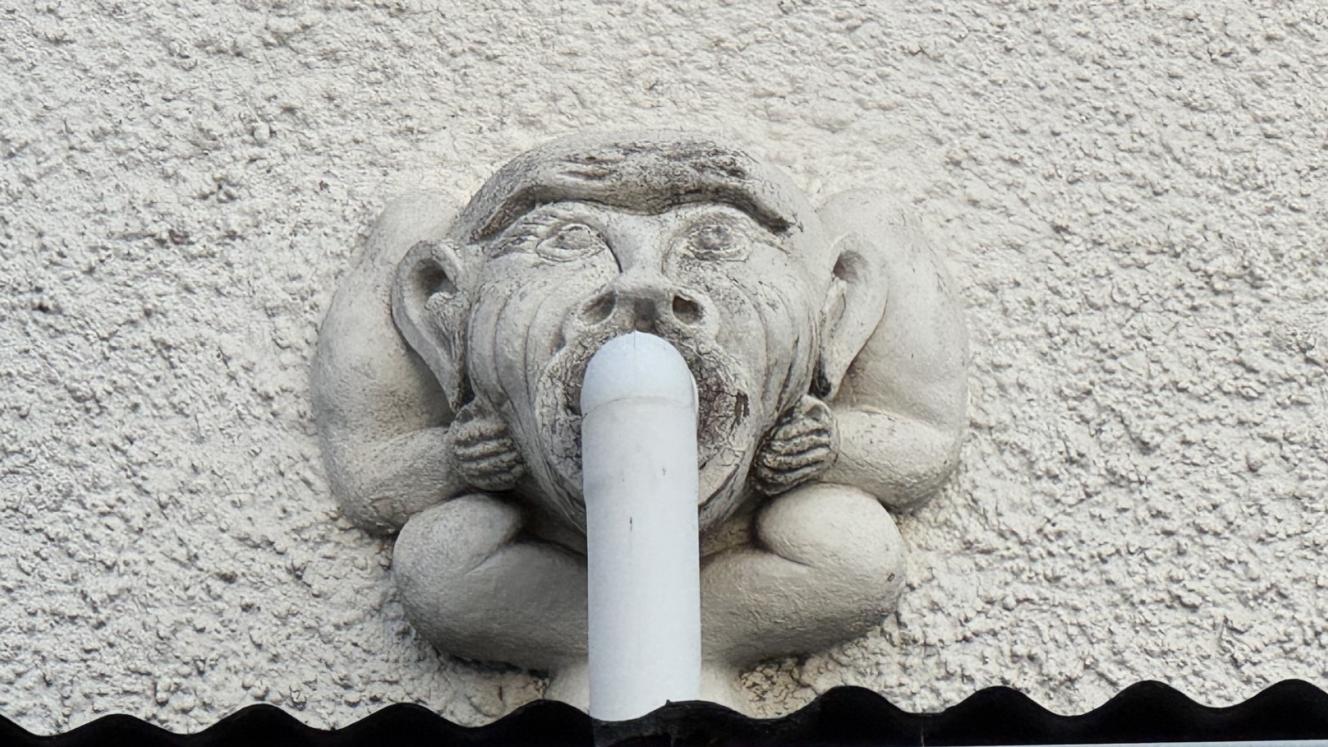
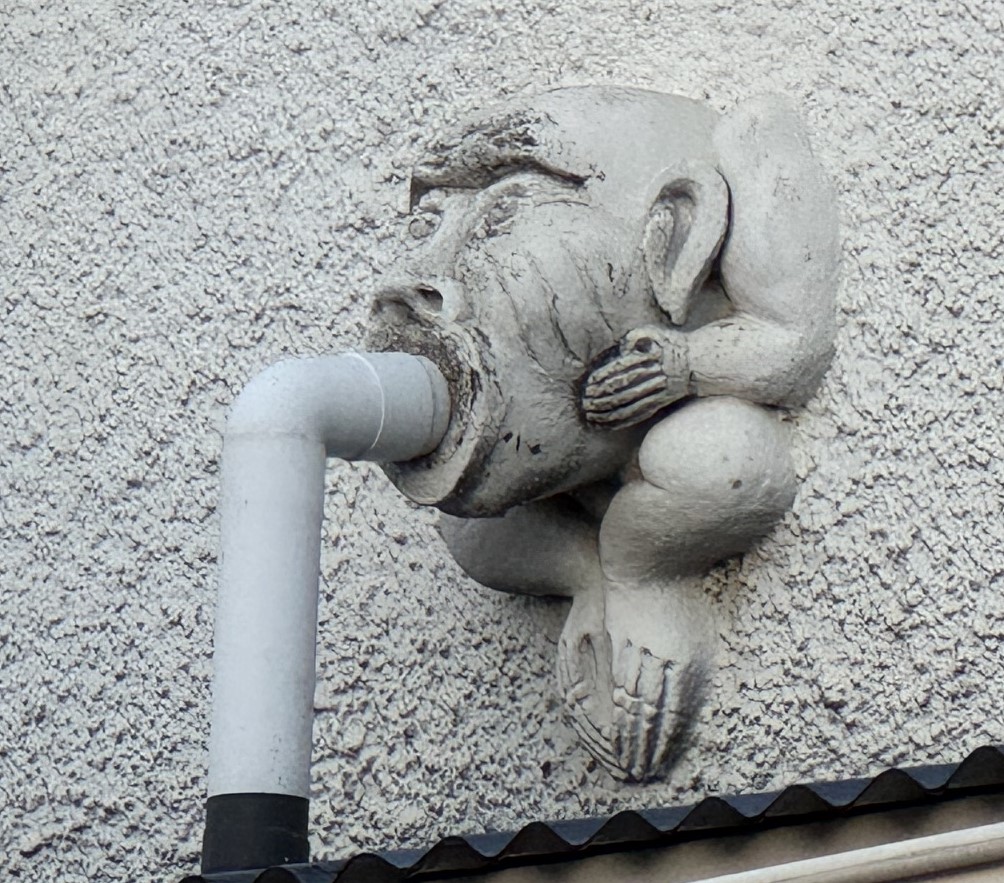
It clearly shows a gargoyle in the form of a some sort of creatures’ head. This important aspect was pointed out to me by William Martinson, an architect and fellow heritage enthusiast.
A gargoyle is a carved stone waterspout that projects from a roof gutter, directing rainwater away from a building’s masonry walls. Gargoyles are often grotesque in appearance and may be shaped to resemble strange or frightening animals, mythical creatures, or human faces, with the water typically exiting through the open mouth.
True functional gargoyles peaked during the European Medieval and Gothic eras and are commonly found on cathedrals and churches. By the time major permanent residential suburbs were established in South Africa during the 19th and 20th centuries, modern downpipes and gutters had long replaced gargoyles globally. They are therefore not a common feature is South African architecture.
The name gargoyle originates from the French word gargouille, meaning throat.
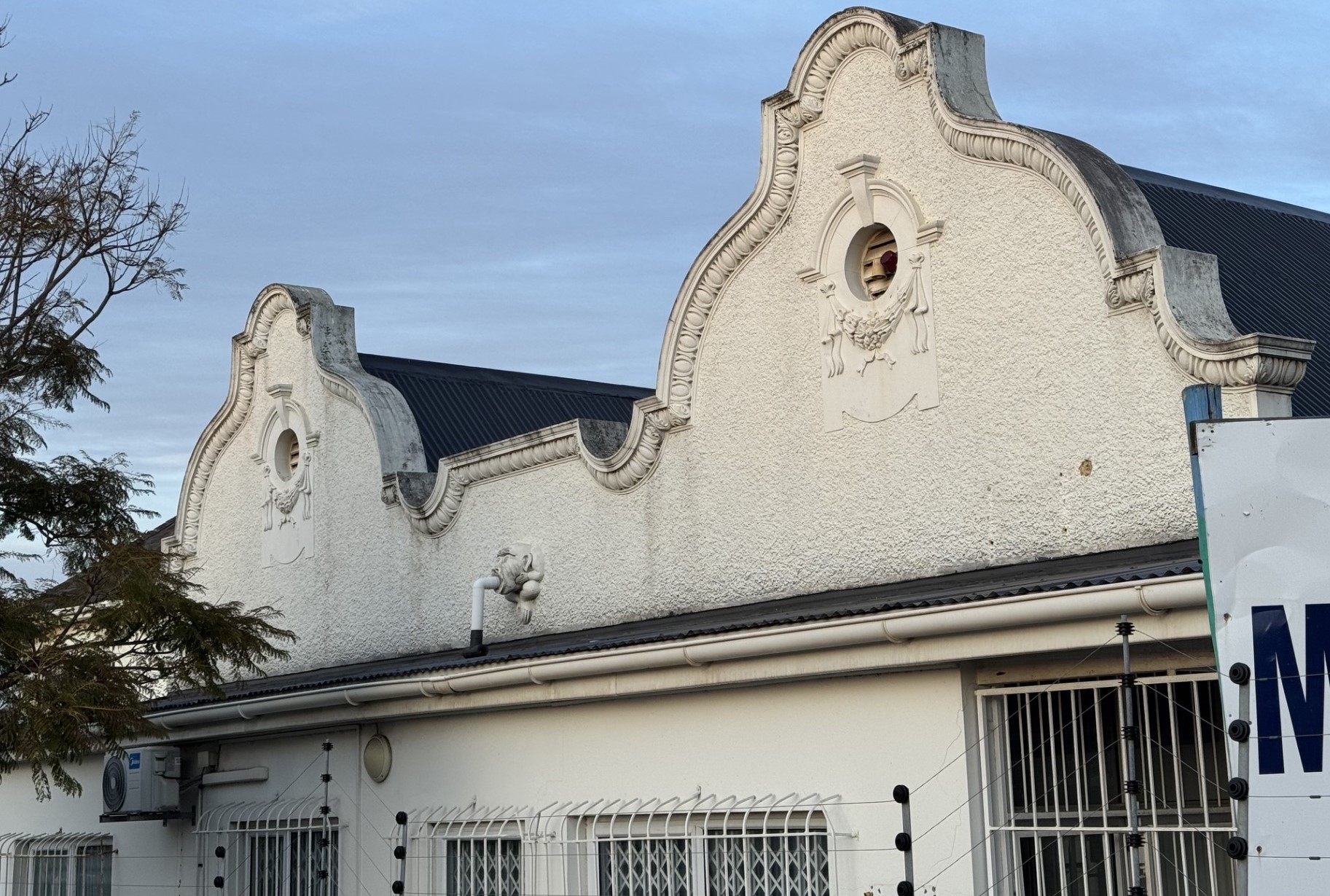
In his feedback on the article, Martinson (2026) provided additional information, along with contemporary photographs he had taken of the same house and gargoyle. He confirmed that the house still exists as a single-storey building on the southwest corner.
The Watson’s Urban Trail (provided by Martinson, 2026) reflects on the gargoyle as follows: “In the centre above the lean-to roof, is a weird figure with a large face. He is a gargoyle and he spews forth the rainwater from the central valley gutter”.
Occupants of the house
Martinson (2026) notes that title-deed records dating from 1899 indicate that the owner of the house on erf 13770 was a person named John Brown. Exactly which Brown this may have been remains uncertain, as the second name on the document, ending with “ent” has been obscured by an inkblot. Could this be Clement? No link could be made to a John Clement Brown yet.
The possible property owner was initially thought to have been John Brown (1844–1905), a prominent civil engineer who arrived in South Africa from the United Kingdom in 1873. However, it seems improbable that he occupied the house when the photographs were taken, as they date from after his death. He also did not seem to have a second name. This possibility is also further weakened by the fact that his wife predeceased him in 1881. There is a remote possibility that the house then may have belonged to one of his six children instead (two daughters and four sons) – (Familysearch.org), but none of his sons carried the initials JC.
Another name that appears on the 1929 title-deed document for erf 13771 is Alexander D. D. Brown, a specialist agricultural official and public servant in South Africa during the early 20th century. While based in East London, he served as manager of the cotton experiment station under the Cape Colony’s Department of Agriculture (Google AI). It is not known whether there is a link between the two erf numbers or the fact that both involved Brown’s.
All the above is to find a link back to our female photographers’ name – who still remains elusive – for now.
About the author: Carol is passionate about South African Photographica – anything and everything to do with the history of photography. He not only collects anything relating to photography, but also extensively conducts research in this field. He has published a variety of articles on this topic and assisted a publisher and fellow researchers in the field. Of particular interest to Carol are historical South African photographs. He is conducting research on South African based photographers from before 1910. Carol has one of the largest private photographic collections in South Africa.
Sources
- Alexander DD Brown (Google AI)
- Hardijzer Photographic Research collection
- Martinson, W. (2026). Personal email communication between William Martinson & Carol Hardijzer between the period 16 and 21 July 2026
- Martinson, W. (2026). Contemporary photographs of the property on the corner of Belgrave and St. Matthews Roads in East London
- Familysearch.org (John Brown – born 1844 – died 1905 – Record G1SQ-3YC)
- Watson, J.H. (1989). The Urban Trail – A Walk Through The Urban Heritage of East London's Central Business District and Older Suburbs. Heritage Committee ISAA and B-KIA