Diligently photographed - An East London Victorian Corner House

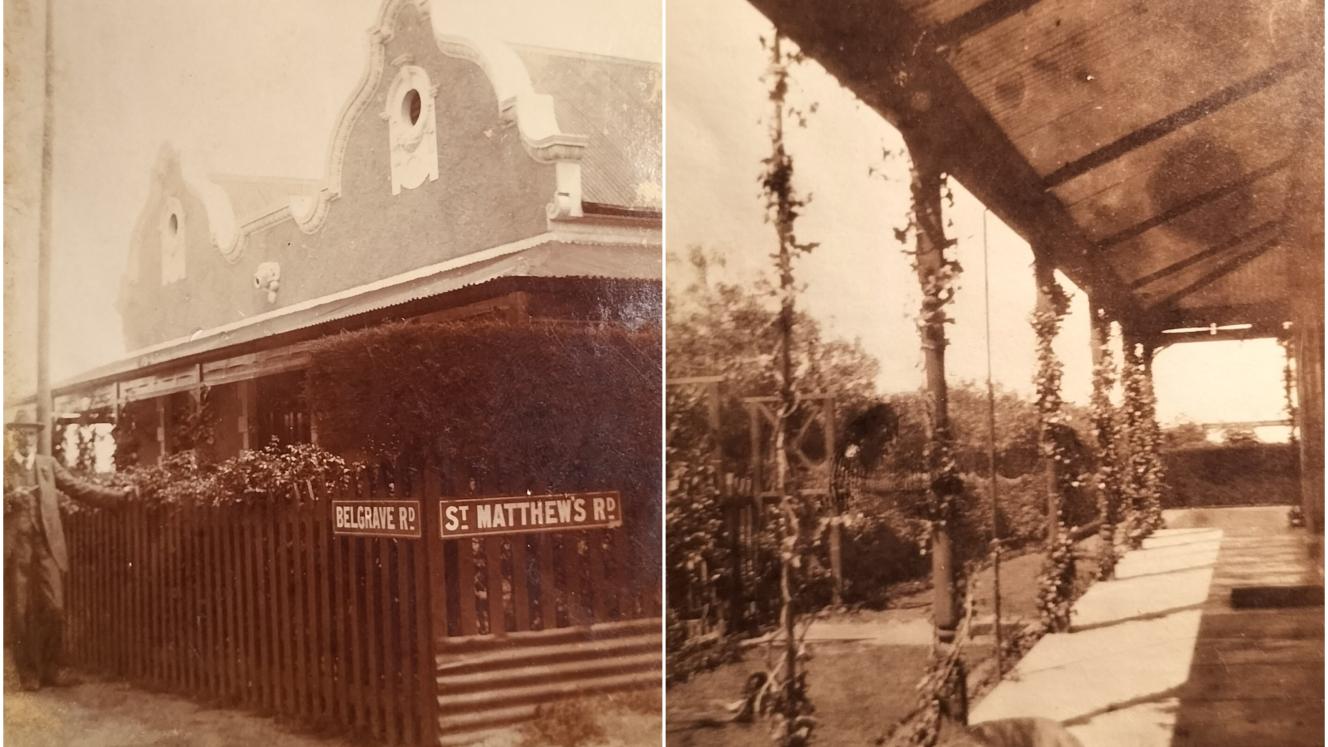
The corner house on Belgrave and St. Matthews Roads in East London

Once a house of late Victorian, early Edwardian architecture stood on the corner of St. Matthews and Belgrave Roads – but where?

This house, with its gables and bay window, captures the architectural essence of the era, where deep, wrap-around verandas were essential for the South African climate.

This is the only provenance we have on a photograph album dating from the mid to late 1910s, filled to the brim, containing photographs of the interior of the house and its’ early occupants - nothing else.

Google Maps soon confirmed that this house, today a double storey unit, was based in East London (KuGompo City today), Belgravia. The current building standing on the premises shows no remanence to the original house built some 120 years ago.
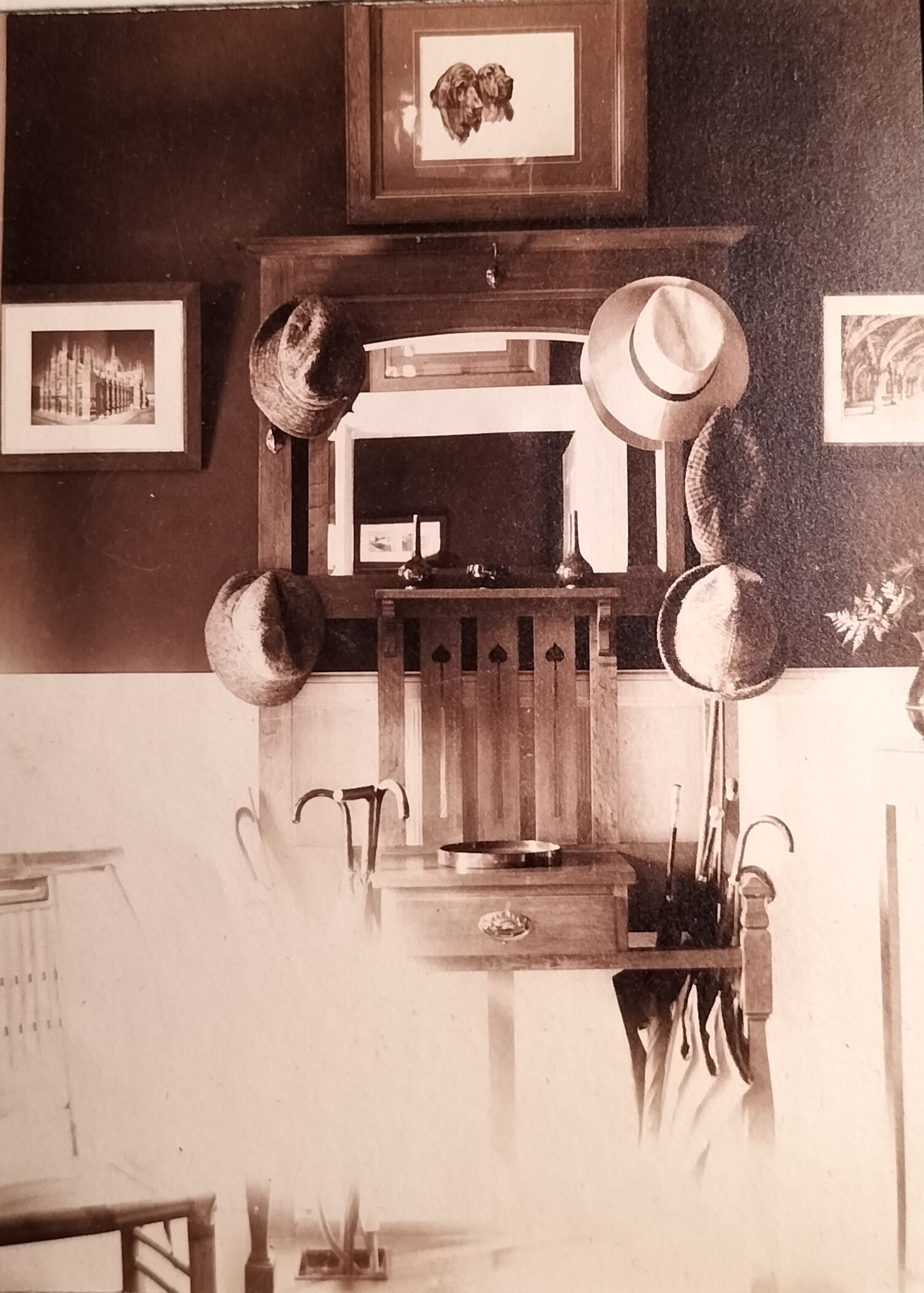
A slightly overexposed photograph showing a chair and hall stand at the entrance hall with hats, walking sticks and umbrellas. Note the framed pictures of church structures as well as dogs.
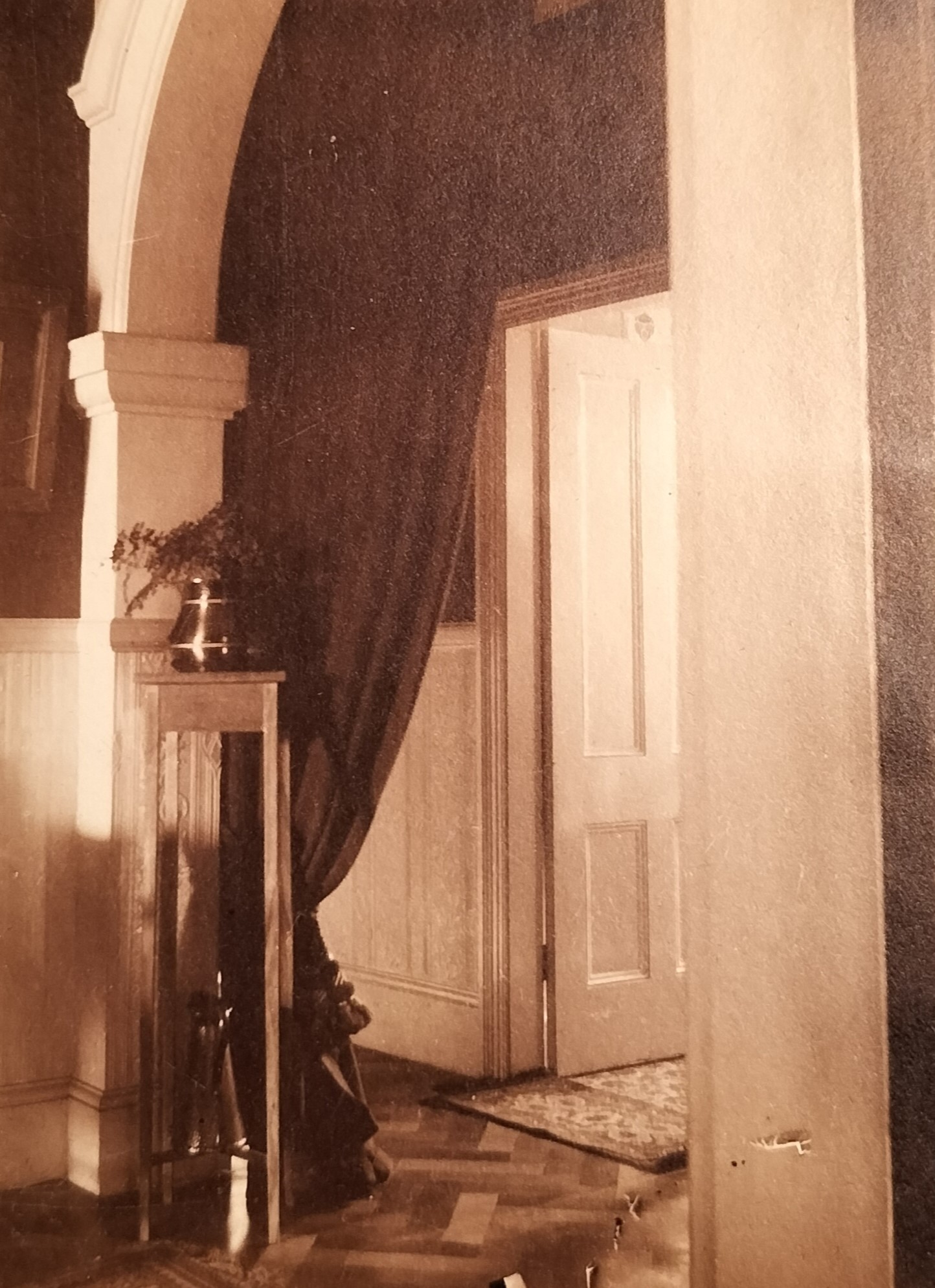
Still in the entrance hall leading into the main house. Note the parquet wooden flooring. The unusual positioning of the curtain in the arch was probably intended to reduce any draft during colder months.
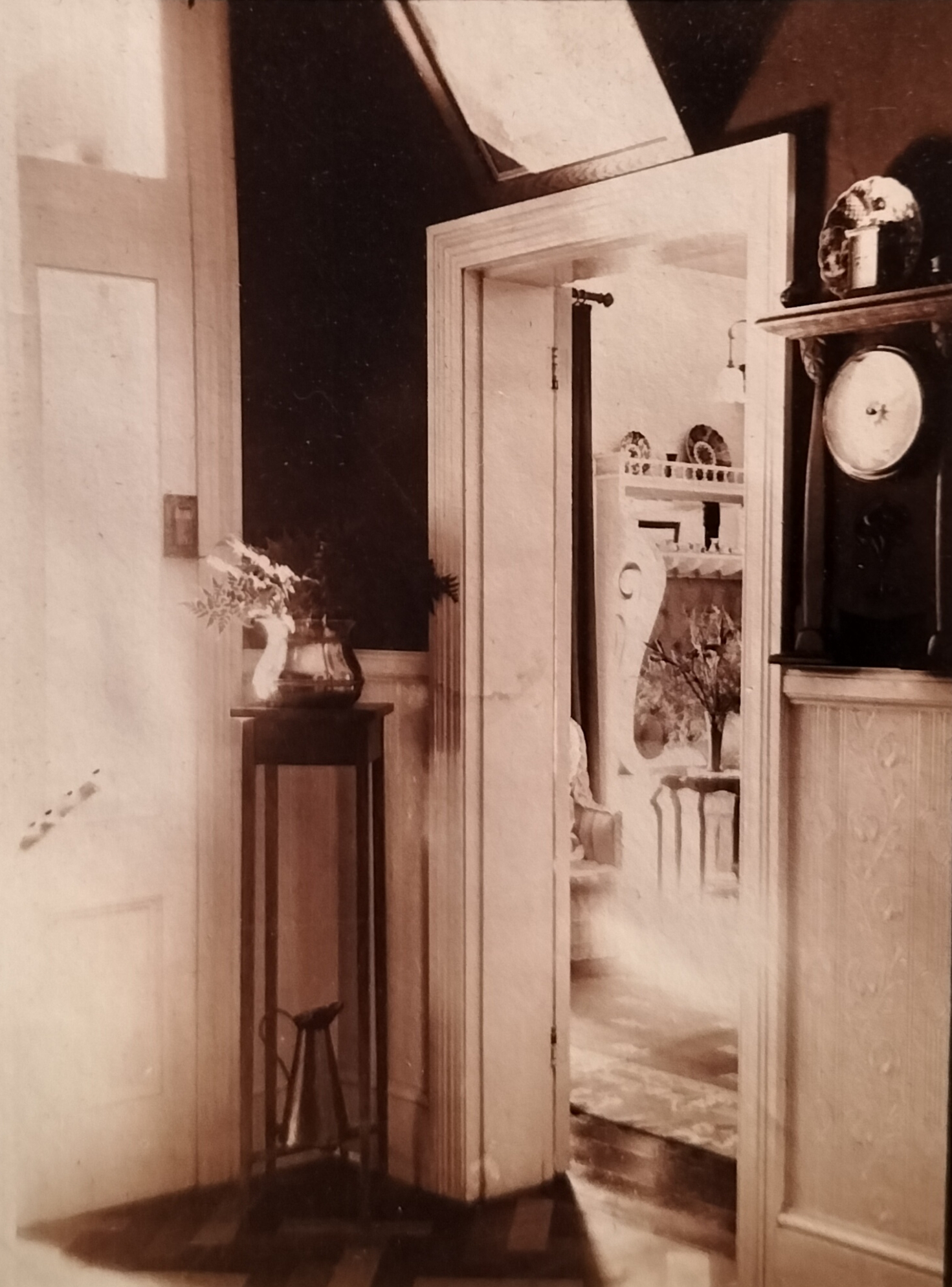
Looking into the music room from the entrance hall with the front door and a clock or thermometer visible. At the back, a bench can be seen which is more visible in another photograph further down.
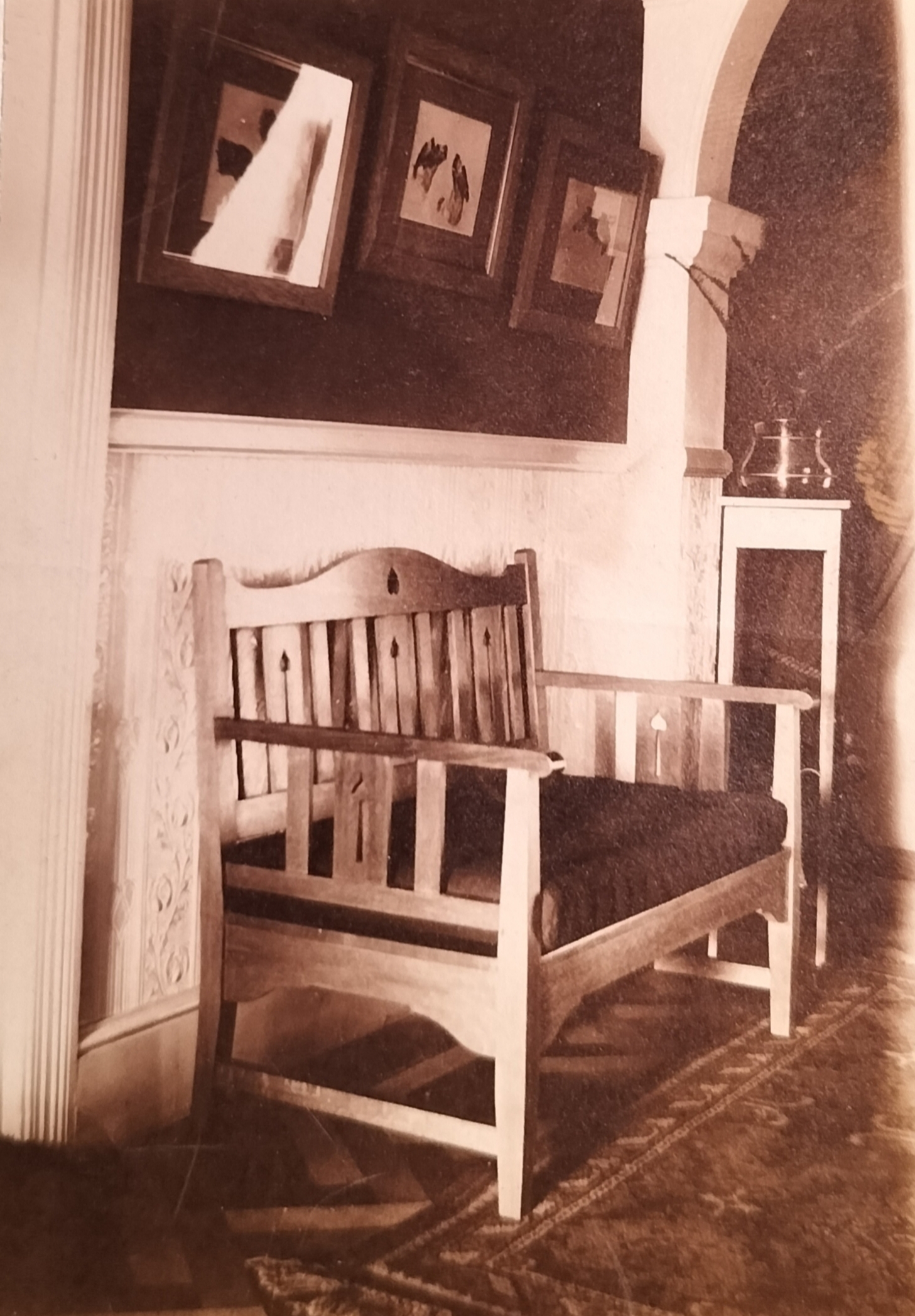
A wooden bench with three framed prints featuring dogs. This bench in all probability stands across from the hallstand seen in an image above. Note the Persian carpet on the parquet flooring.
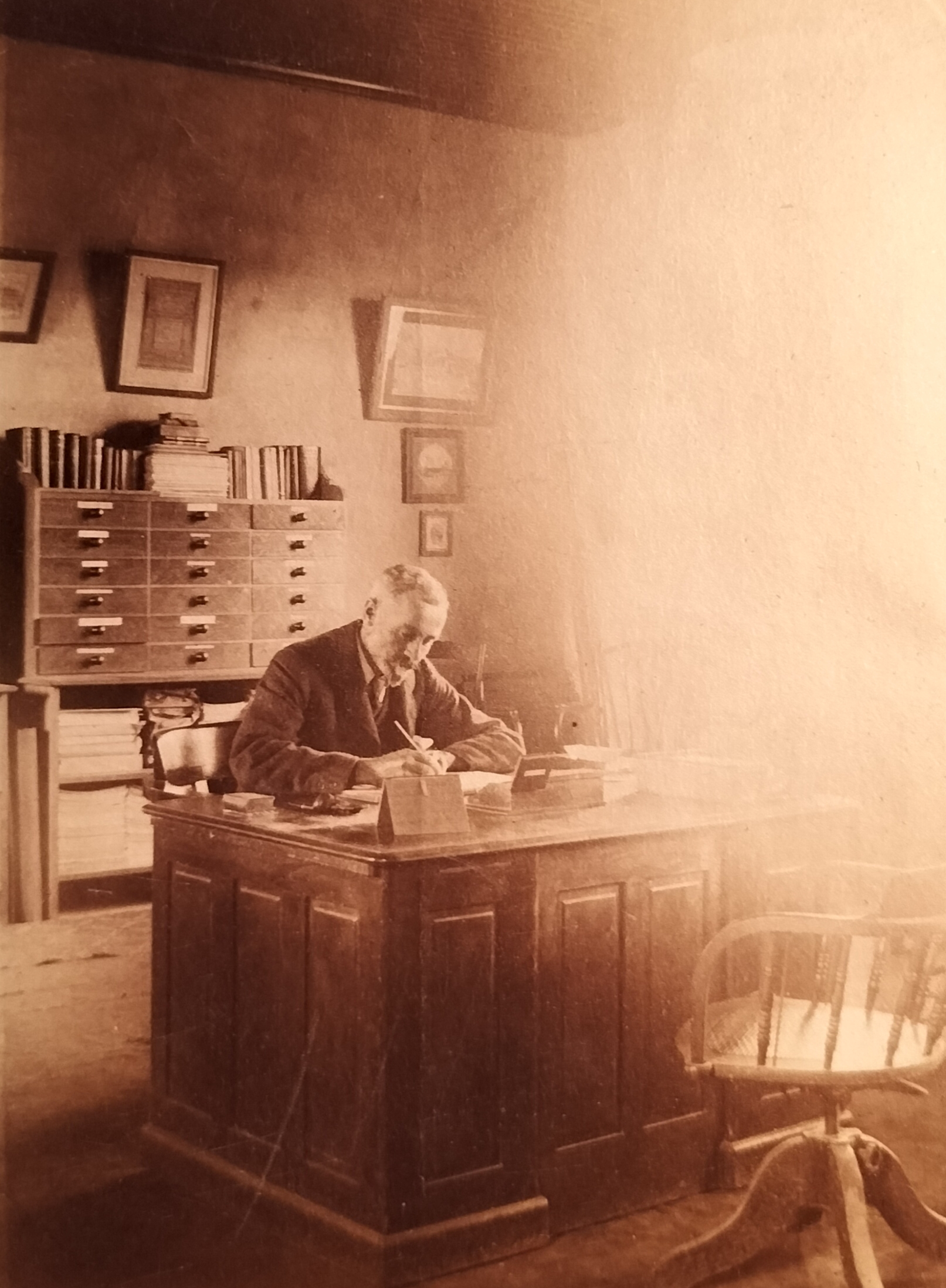
The male occupant of the house in his study with a unique filing system behind him. The light flooding into the study, blurring a third of the photograph, provides for an unintended special effect.
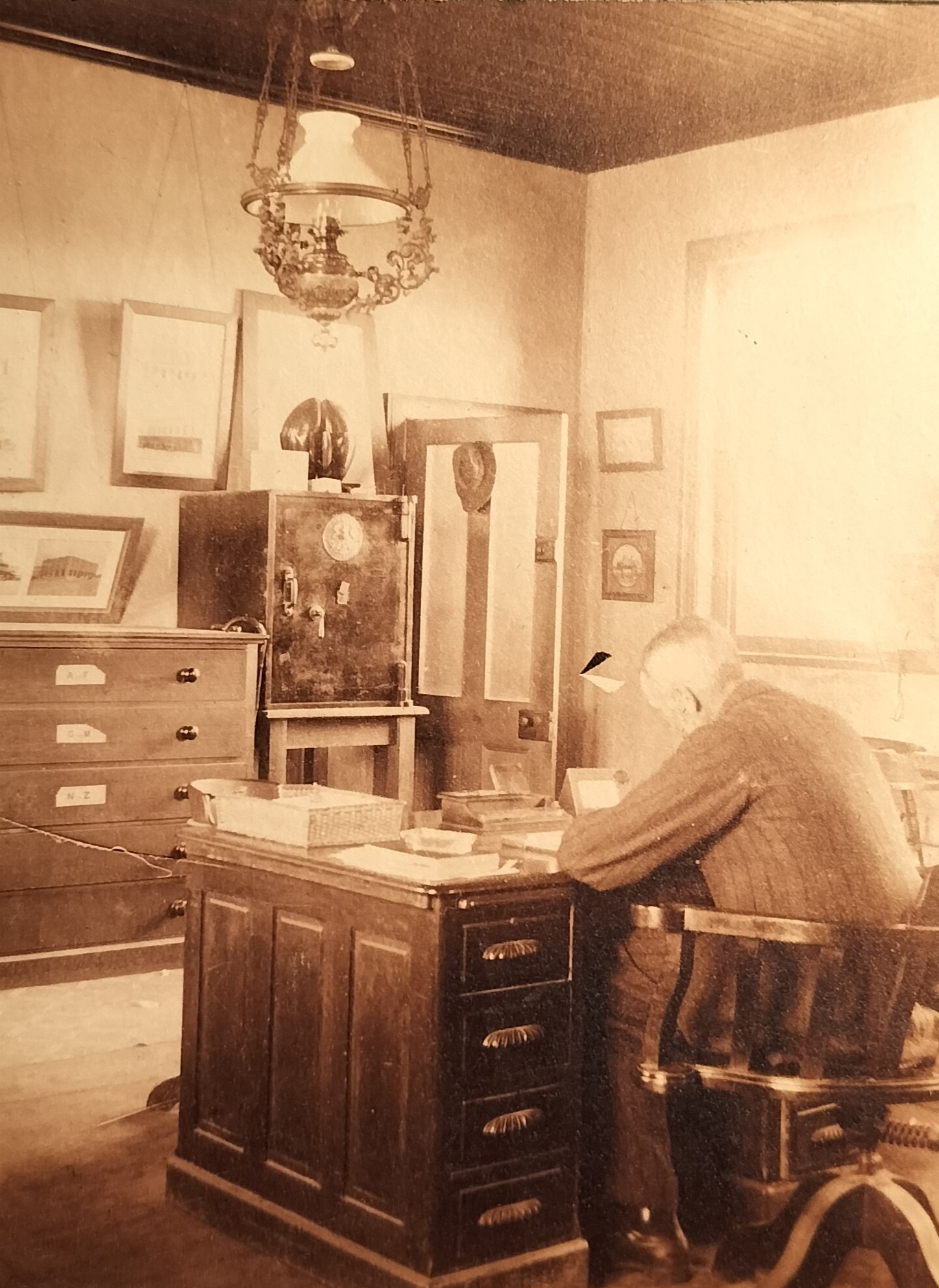
Another photograph of the male occupant in his study. The set of drawers suggests that he may have been an architect. This hypothesis is further supported by the two framed photographs of buildings hanging on the left. Note the Coco de Mer palm nut (Lodoicea maldivica) standing on top of the safe. There are also two walking canes visible between the set of drawers and the safe.

Larger East London homes were established in residential suburbs like Belgravia and Southernwood by the early 20th century.

The house, and its occupants, were proudly and meticulously photographed by the early female occupant. How do we know this? She was caught in the act doing so!

There she stood in her corseted dress and laced cuffs in the bedroom, clearly in deep concentration, operating her Kodak camera mounted on a tripod, and in doing so inadvertently capturing her own reflection in the mirror.

The camera used seems to be a Kodak Folding Pocket Camera manufactured between 1905 and 1915. In this image, she is clearly relying on a shutter release cable (in her left hand) whilst seemingly holding a timer in her right hand.
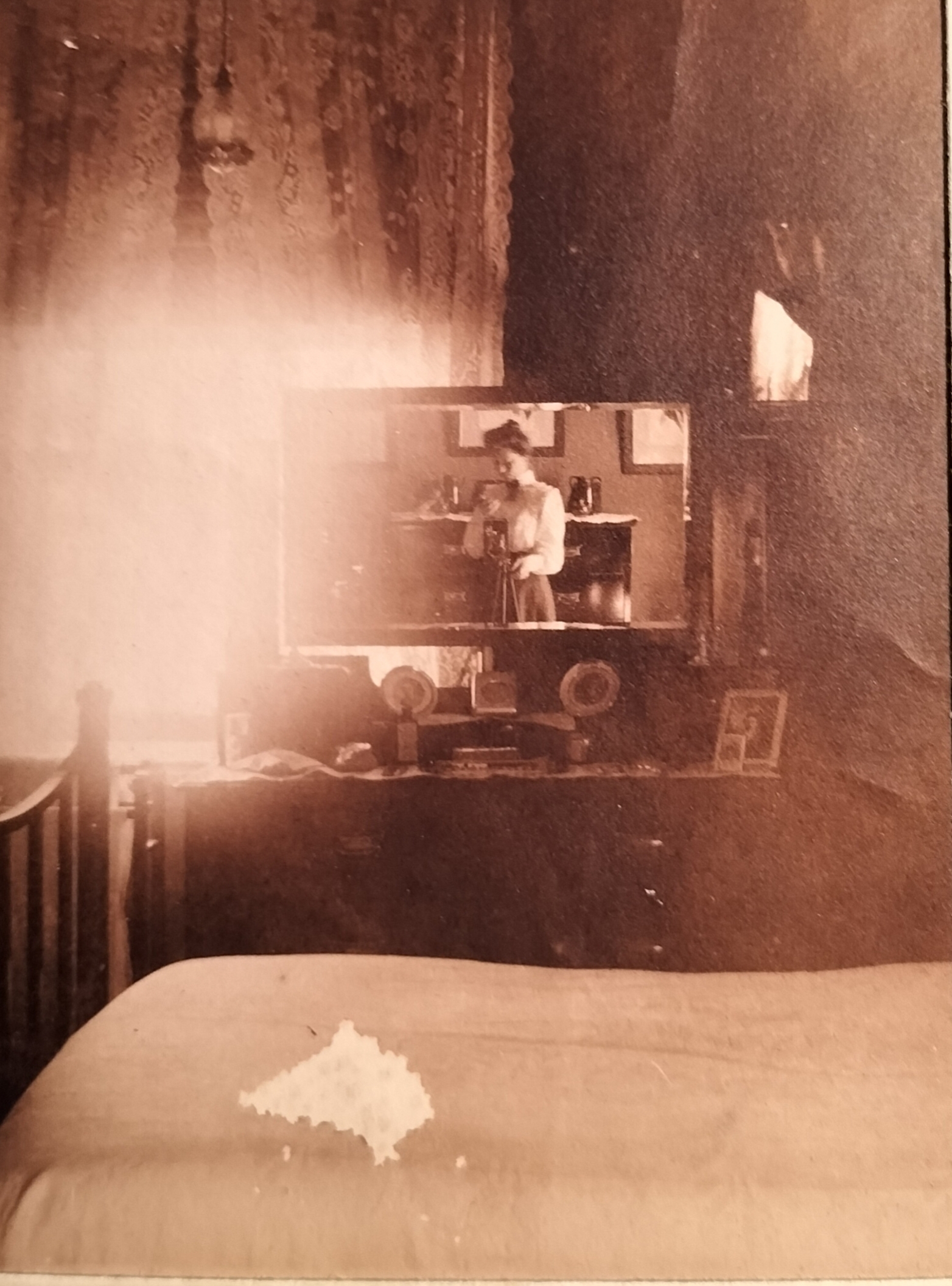
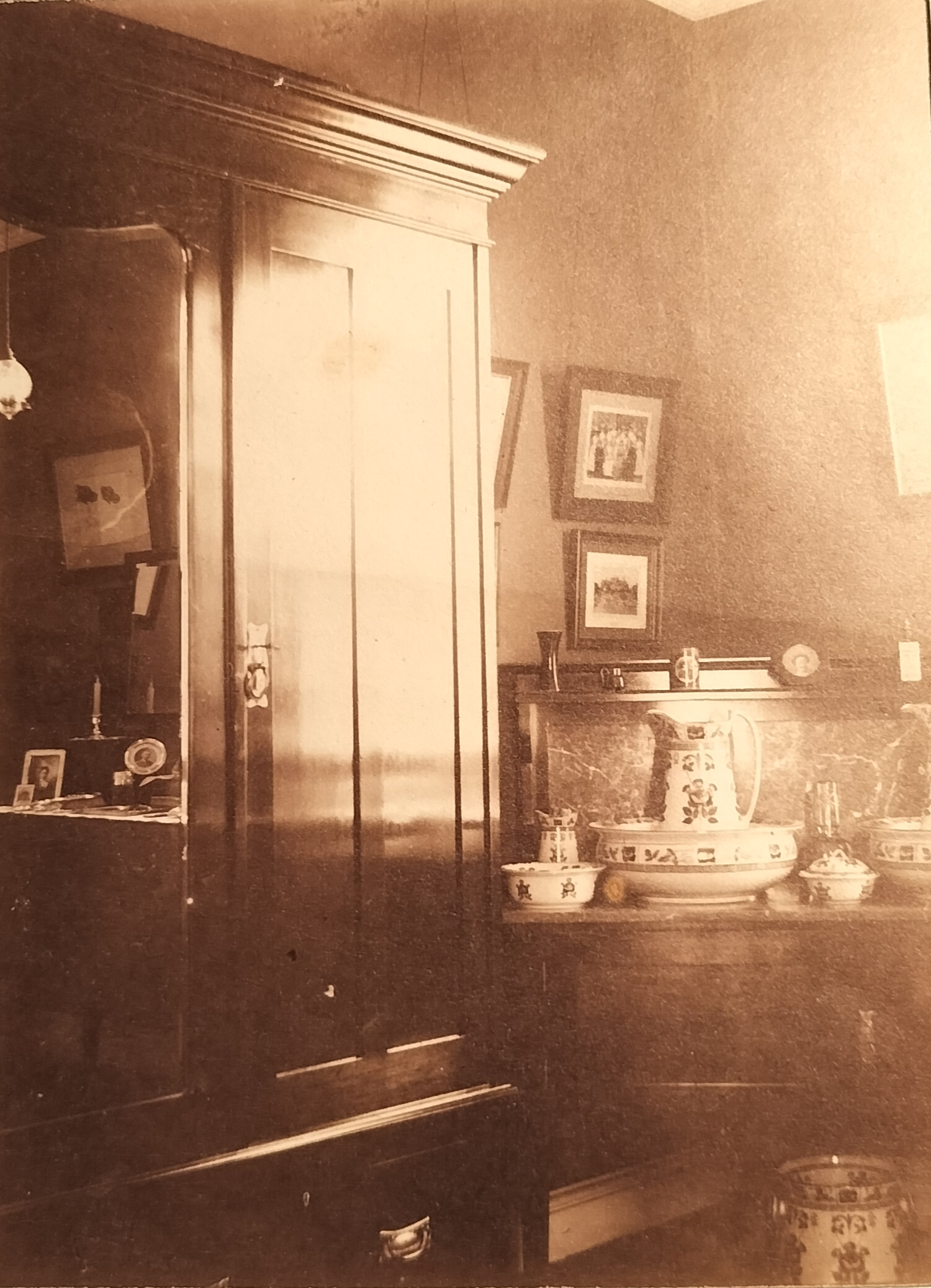
In the main bedroom. Here the female photographer inadvertently captured herself in action. The sideboard in the room also holds a number of family photographs. Although the white spot on the bed seems like a damaged photograph, it is actually a handcrafted piece of material.
The opposite side of the room with the washstand as well as large wooden cabinet. Note the family photographs as well as dog picture reflecting in the mirror
The opposite side of the room with the washstand as well as large wooden cabinet. Note the family photographs as well as dog picture reflecting in the mirror.
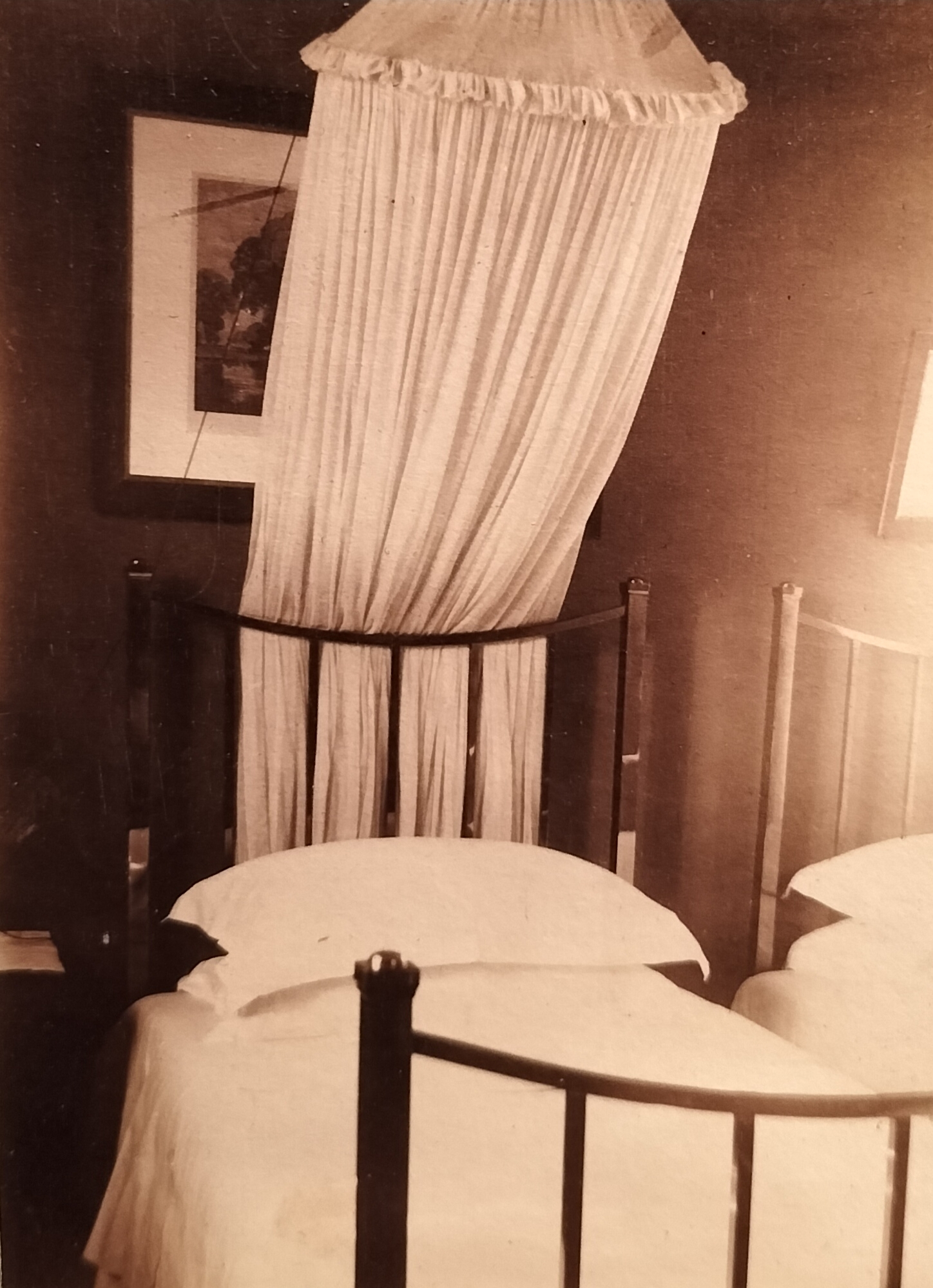
The second bedroom with two single steel-framed beds. Mosquito netting was clearly an important necessity.

George Eastman would have been proud. In the earlier years of photography, the art form remained a male dominated activity. Within the expanding market of photography, Eastman Kodak needed a human figure to embody the promise of easy, pleasurable picture taking, resulting in the marketing focus on The Kodak Girl who was later portrayed in advertising campaigns as the lady in the striped dress.

The Kodak Girl appeared as early as the 1890s in American and European advertising (and later in South Africa) as a young, stylish woman whose portable camera signalled both technological modernity and social freedom. In early campaigns, she often moved through outdoor or travel settings like parks, beaches, world’s fairs, alone or with other women, rarely accompanied by men, which aligned her with the “New Woman” who was mobile, independent, and leisure oriented (Mitra, 2026).

The figure of the Kodak Girl represented several things. She made cameras seem unintimidating by suggesting that photography required no special strength, technical mastery, or masculine expertise. Her youth and femininity softened the face of a powerful corporation (Kodak), turning a global manufacturing and distribution machine into something intimate and friendly (Mitra, 2026).
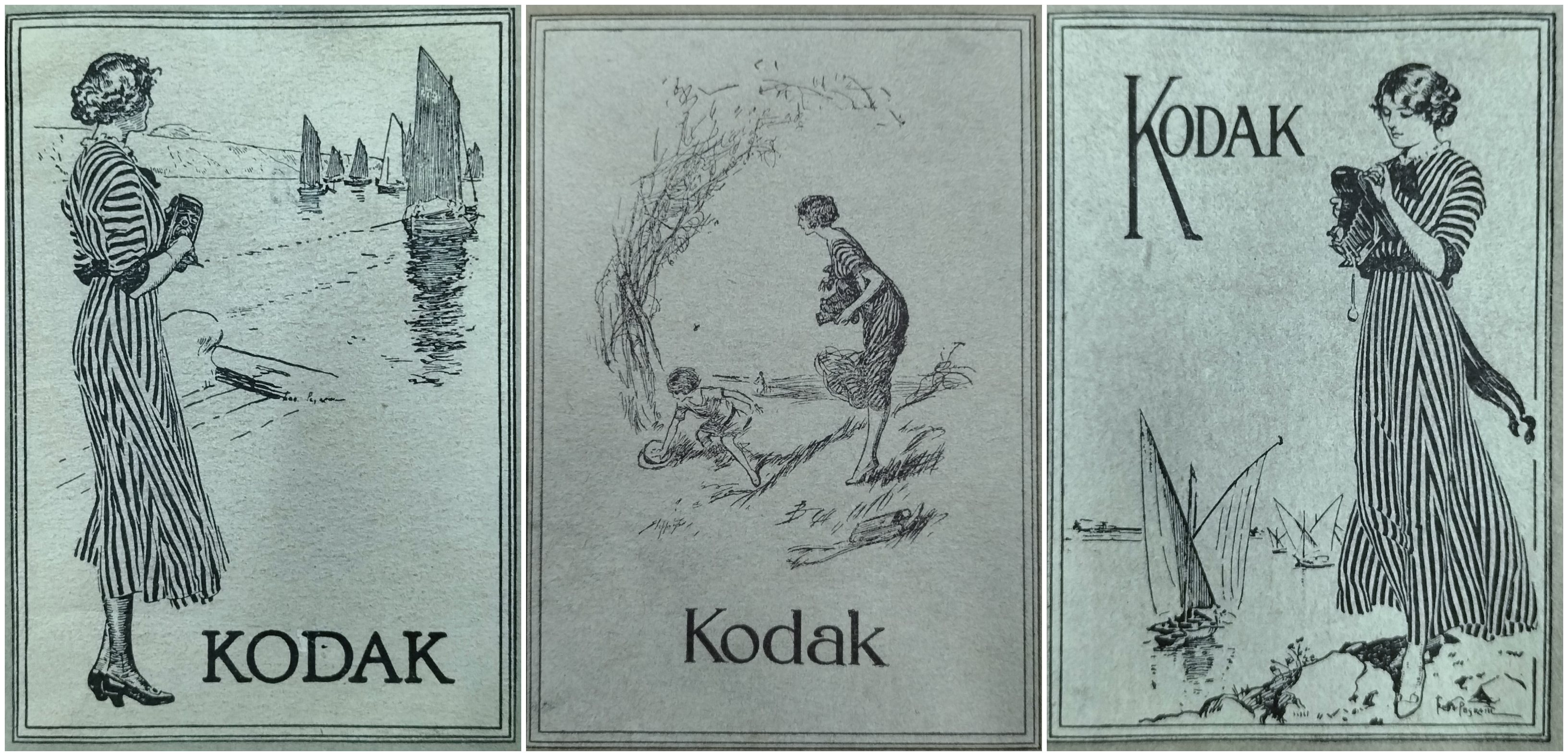
Photographic sleeves showing the lady in the striped dress, a popular Kodak advertising campaign aimed at the female photograph. These sleeves, containing the original as well as negative film, were typically presented by chemists where the amateur photographer could hand in their film for development.
Photographic sleeves showing the lady in the striped dress, a popular Kodak advertising campaign aimed at the female photographer. These sleeves, containing the original as well as negative film, were typically presented by chemists where the amateur photographer could hand in their film for development.

Back to the photo album. A number of questions remain unanswered – at least for now. 

Who were the owners of the house at the time? This could potentially be determined by tracing the original title deeds. 

What was the occupation of the male resident? Given some of the photographs captured in his study, there are hints that he may have been an architect.

Another burning question is, who developed the film? Was it her or her husband, or was the film developed at a chemist or Kodak outlet?
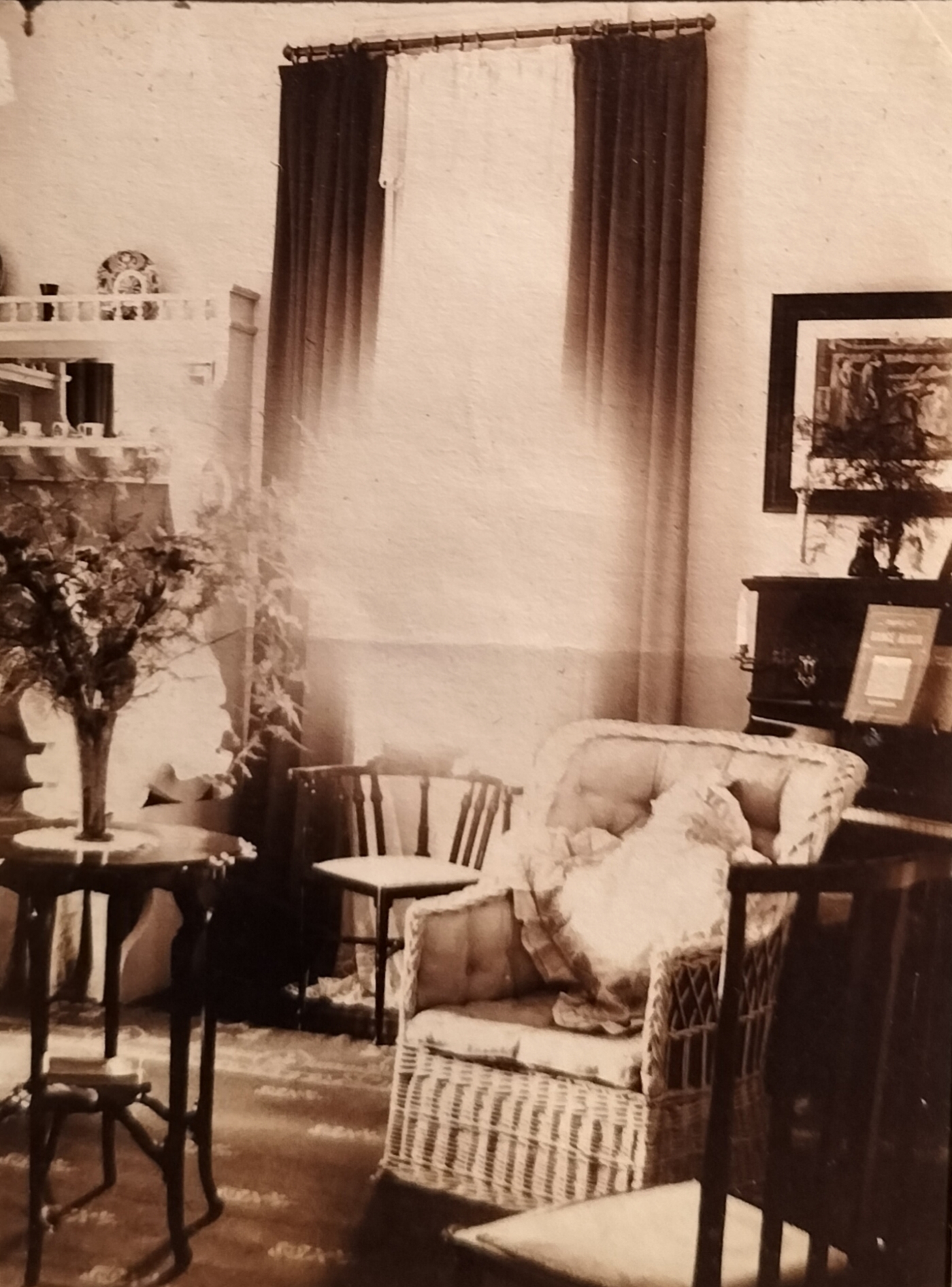
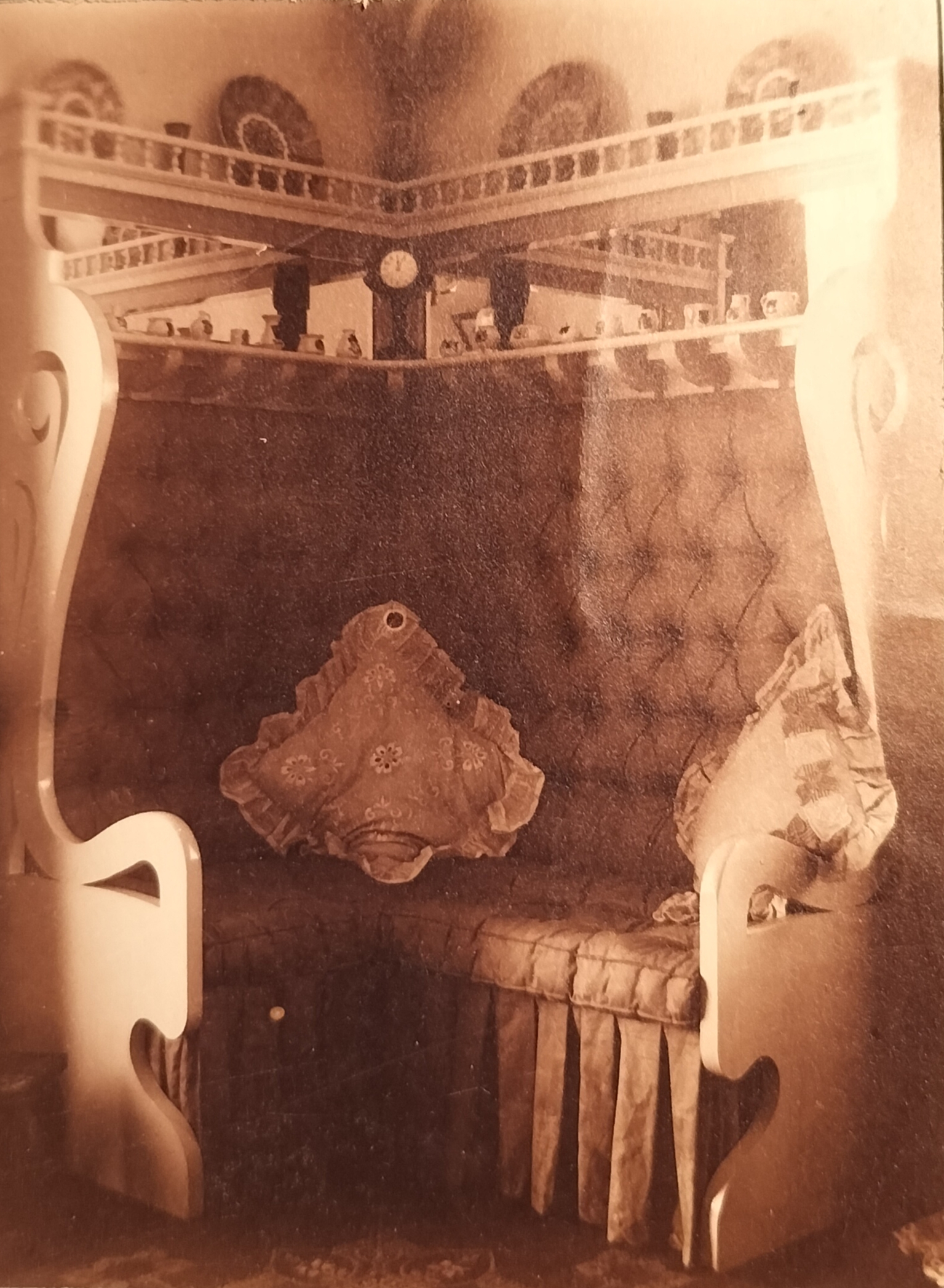
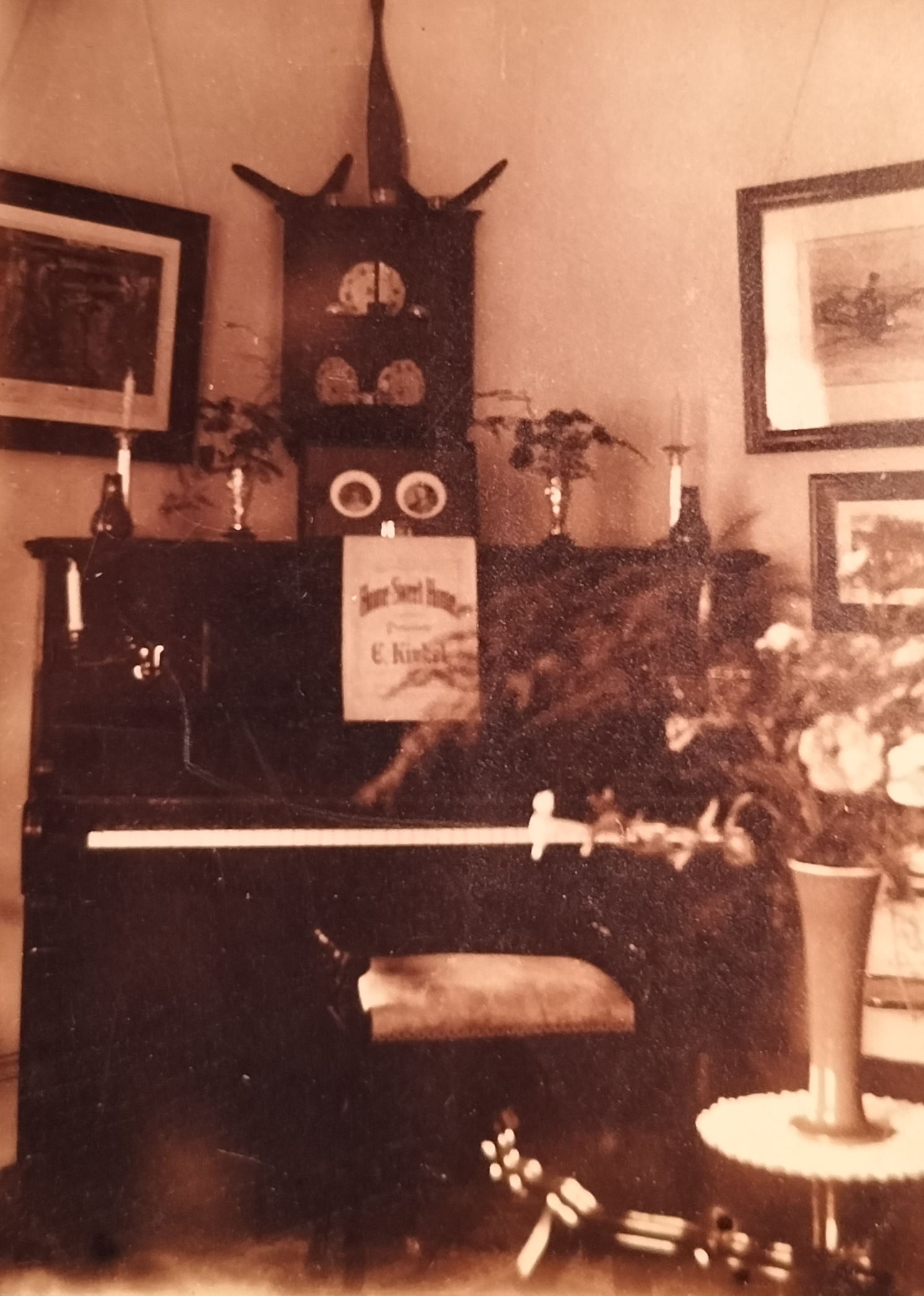
In the music room, with the piano on the right and the lover’s bench” on the left. The music sheet on the piano is different from the music sheet in another photograph below.
Unique “lover’s bench” which was visible in an earlier photograph. The little clock in the center indicates that the photograph was captured shortly after 12h00 midday.
“Home Sweet Home” music sheet on the piano. Note the candles on either side of the piano. On top of the piano seems to be photographs of the couple who occupied the house.
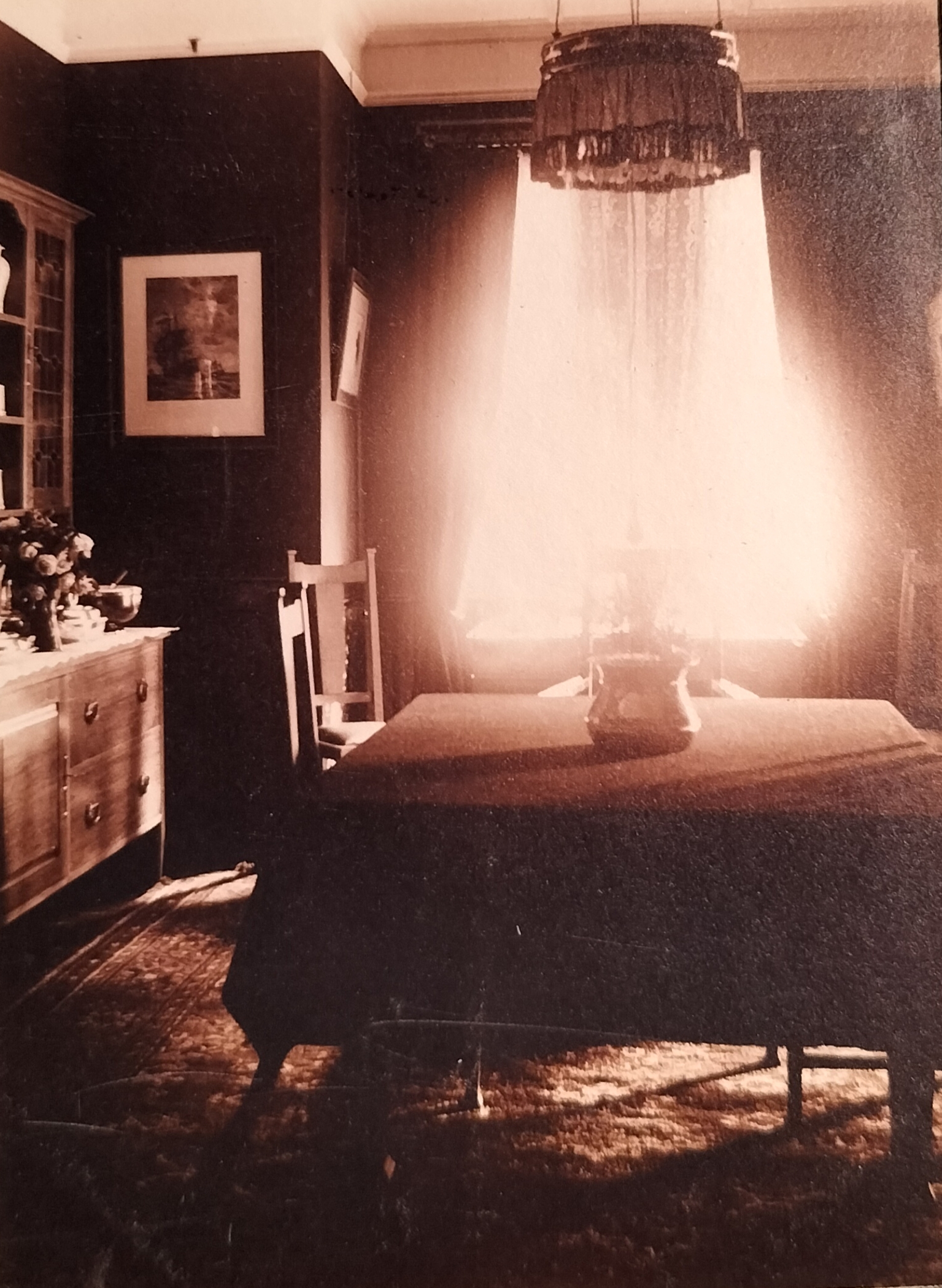
Dining room with its thick Persian carpet. The sideboard on the left was photographed separately later. The photographer also had a love for flowers and plants in the house in that they appear in almost all the photographs.
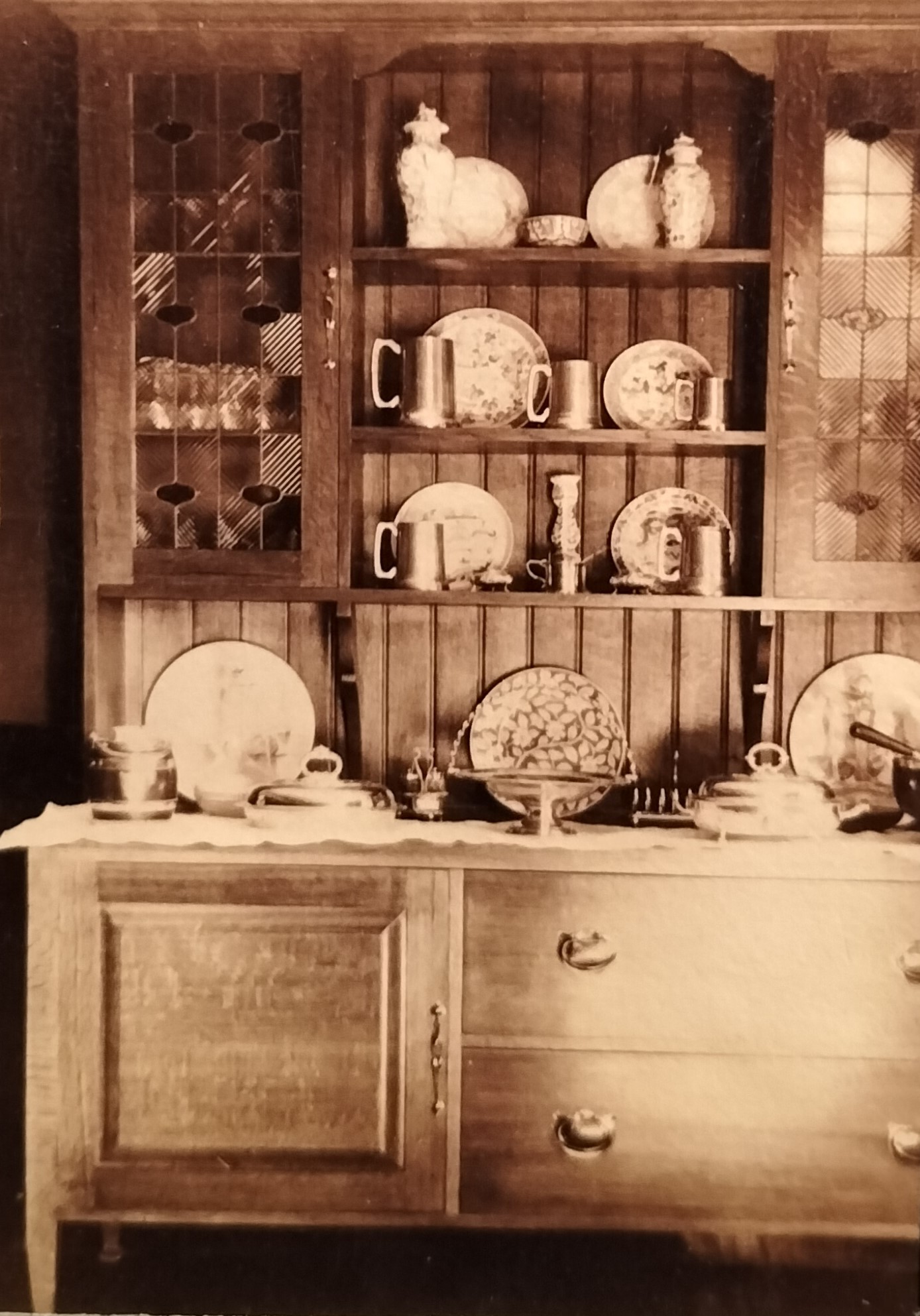
The sideboard in the dining room with stained glass doors
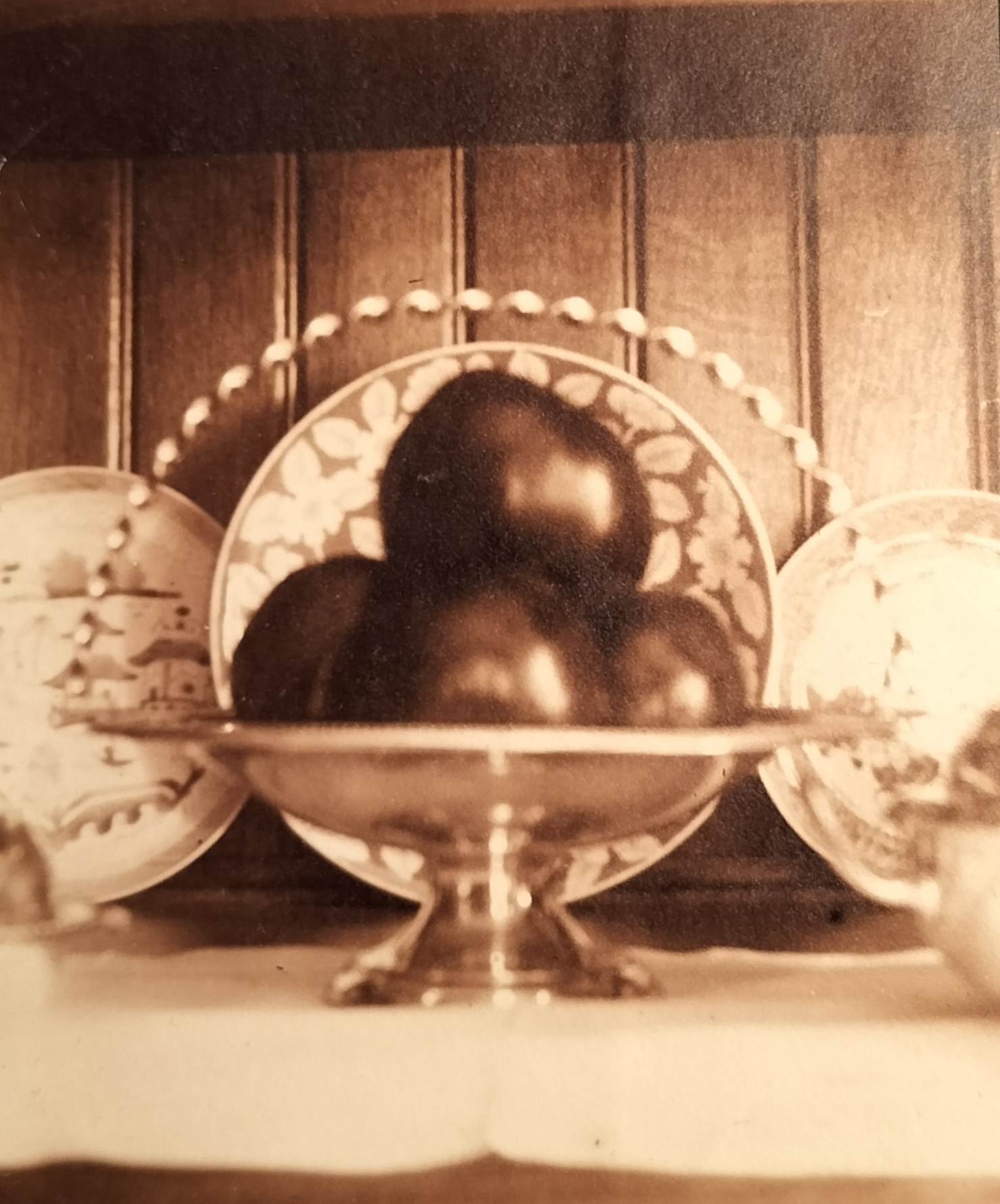
An out of focus abstract of some unknown fruits in the fruit bowl. Note that in the image above that the bowl on which the fruit was placed is empty.
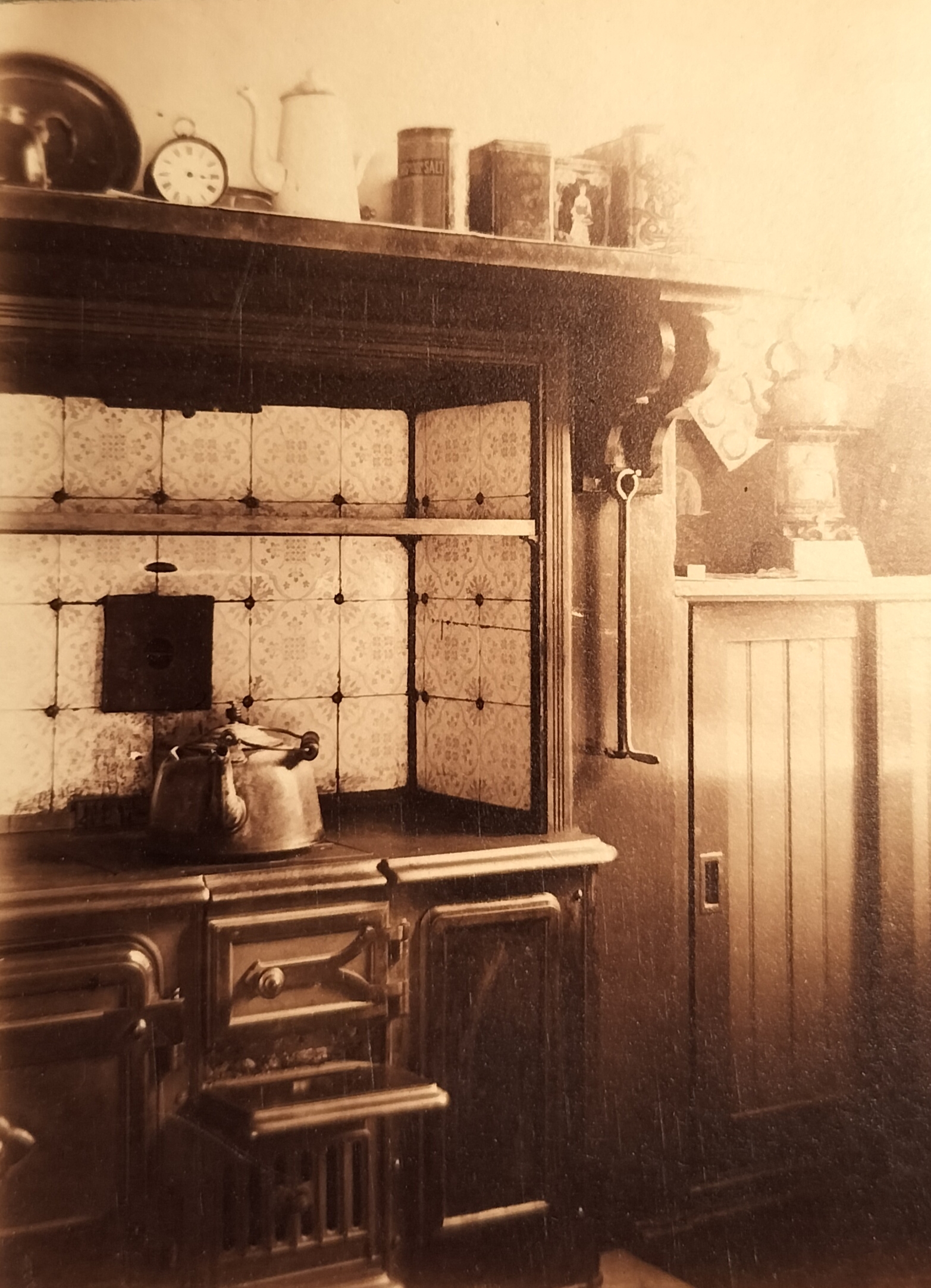
In the kitchen with its large coal stove with a heavy kettle ready to brew the next cup of tea
Another corner of the kitchen showing a variety of plate lids. Although heavily blurred due to the harsh light, the item standing on the left is a Victorian knife cleaner – this in itself is indicative that it was a well-to-do family who stayed in the house.


It was a fairly uncommon approach to photograph the interior of a home in the early 20th century, which makes photographic finds such as these unique. These images provide a sense as to how the owner’s chose to decorate their homes and what type of furniture or luxuries they could afford.

The female photographer did not merely take "snaps." To her, the house was her pride and joy, a visual testament of her place in the world – one which she documented with the precision of an architect. Although many of her photographs turned out to be overwhelmed by sun light entering the house, we still get the essence of what the interior of the house looked like.

She probably found a strange, quiet thrill in capturing the stillness of the dust motes dancing in the light, fixing the fleeting domesticity of their living arrangements on film.

First the exterior of the house was photographed before she began systematically photographing the interior, starting at the entrance hall working her way through the house with its multiple rooms.
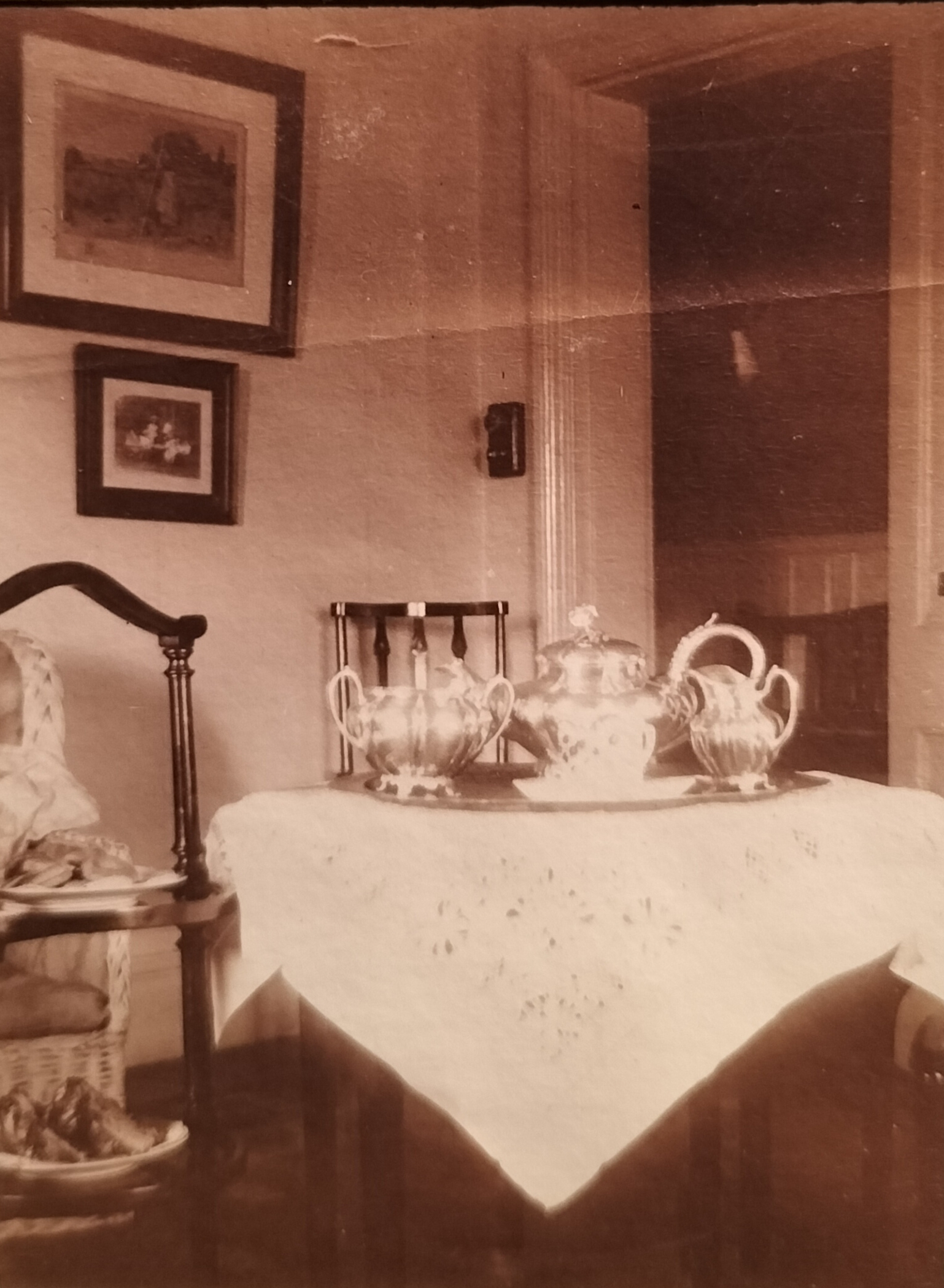
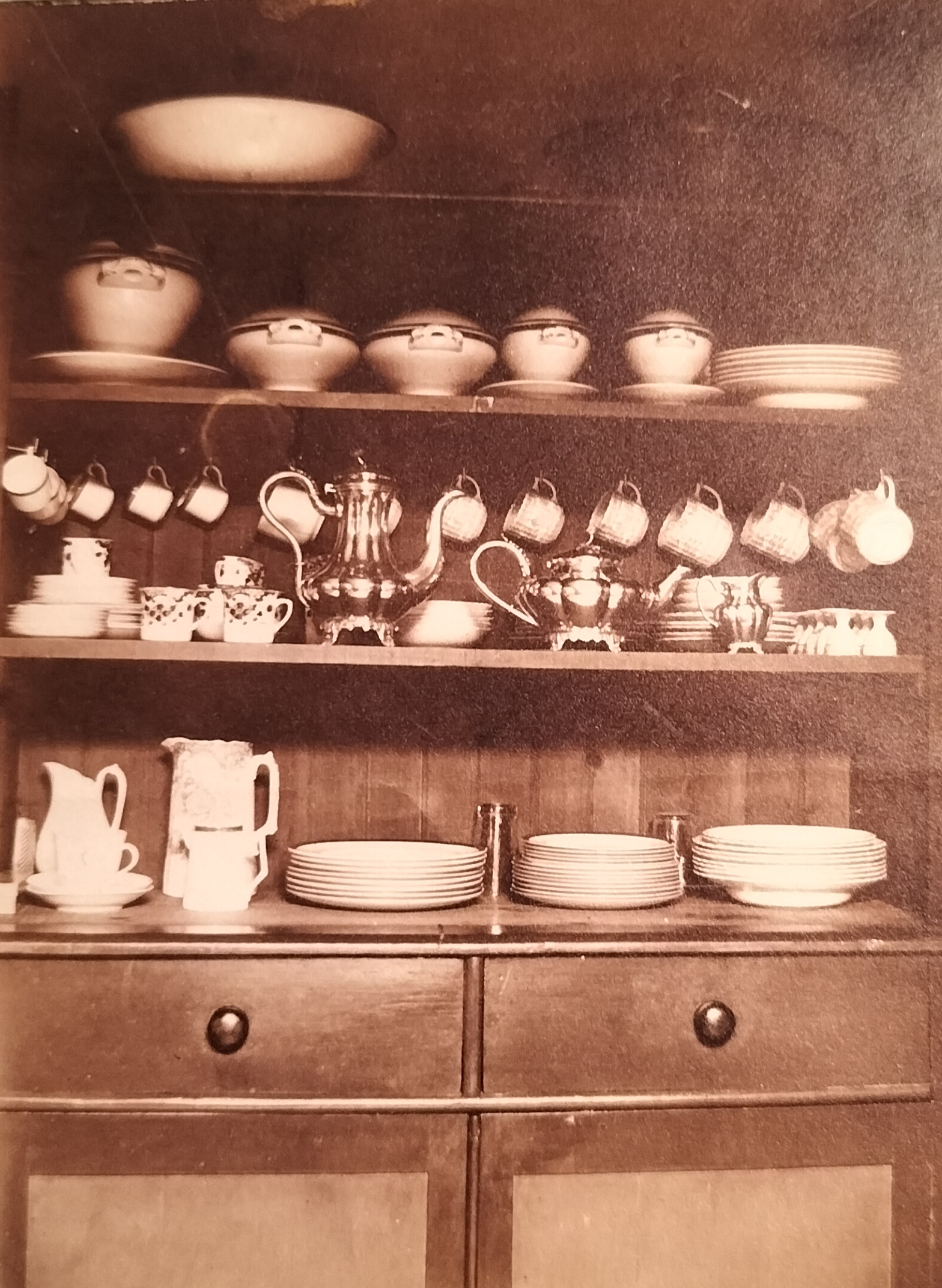
Tea corner in the house with all its silverware and tea caddy showing two plates with various titbits
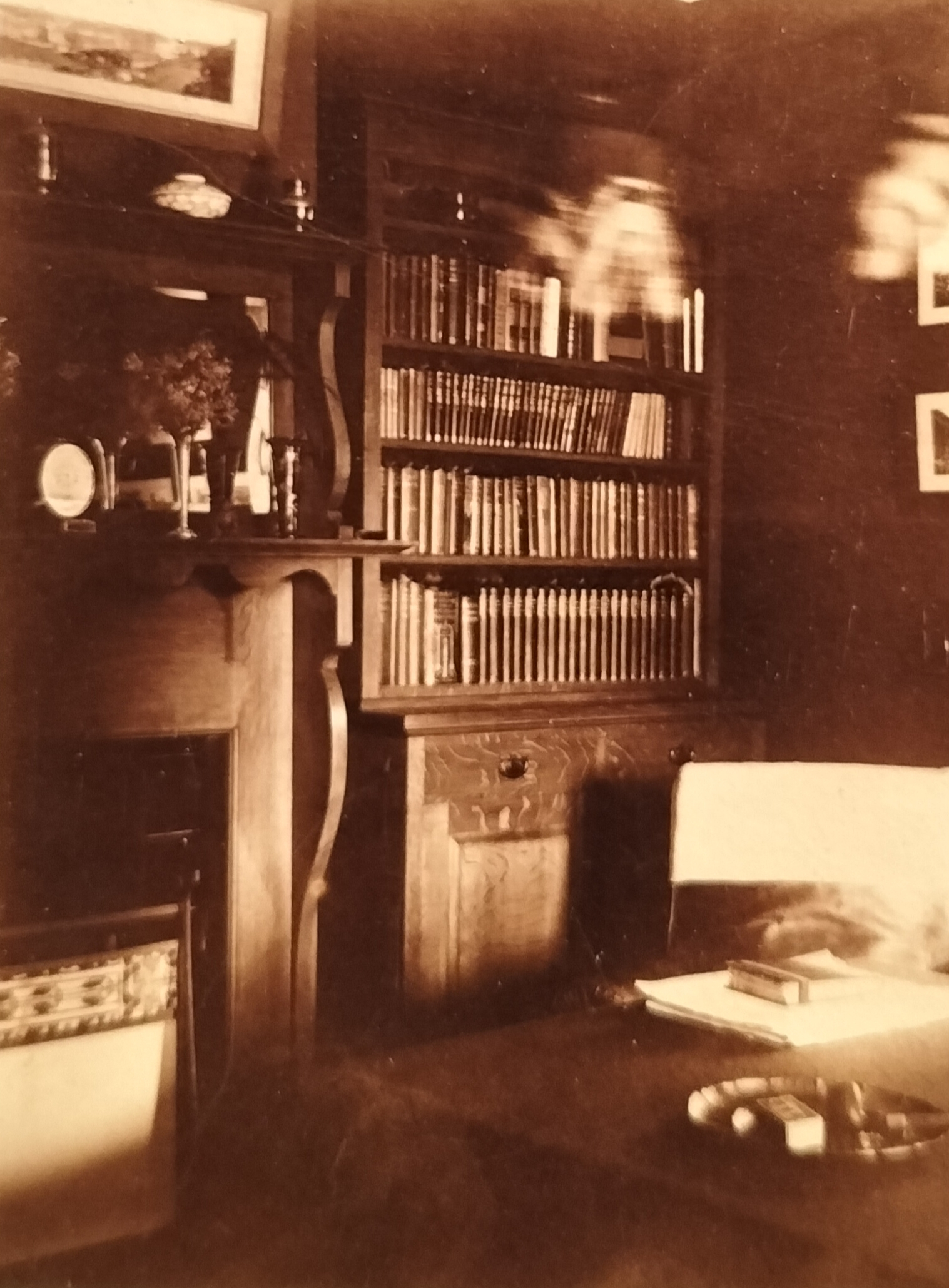
In the lounge with its elaborate wooden fireplace surround. Note the pipe on the desk as well as the unusual panoramic photograph on the left. This photograph in all probability is of East London. The ceiling lamp is assumingly blurred due to movement caused by wind.
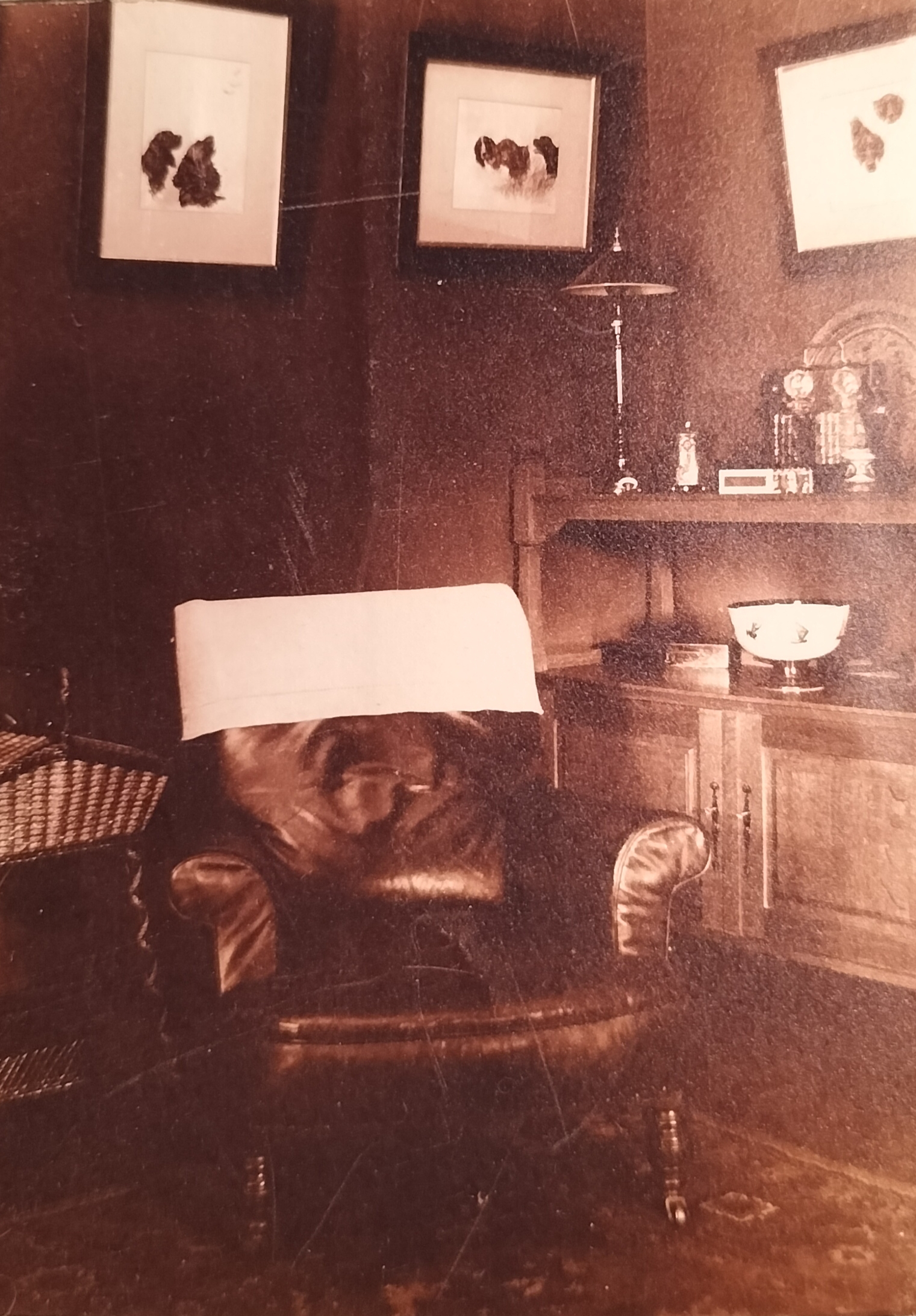
The reading chair in the corner of the lounge. Note the sewing basket as well as the framed dog pictures on the wall.
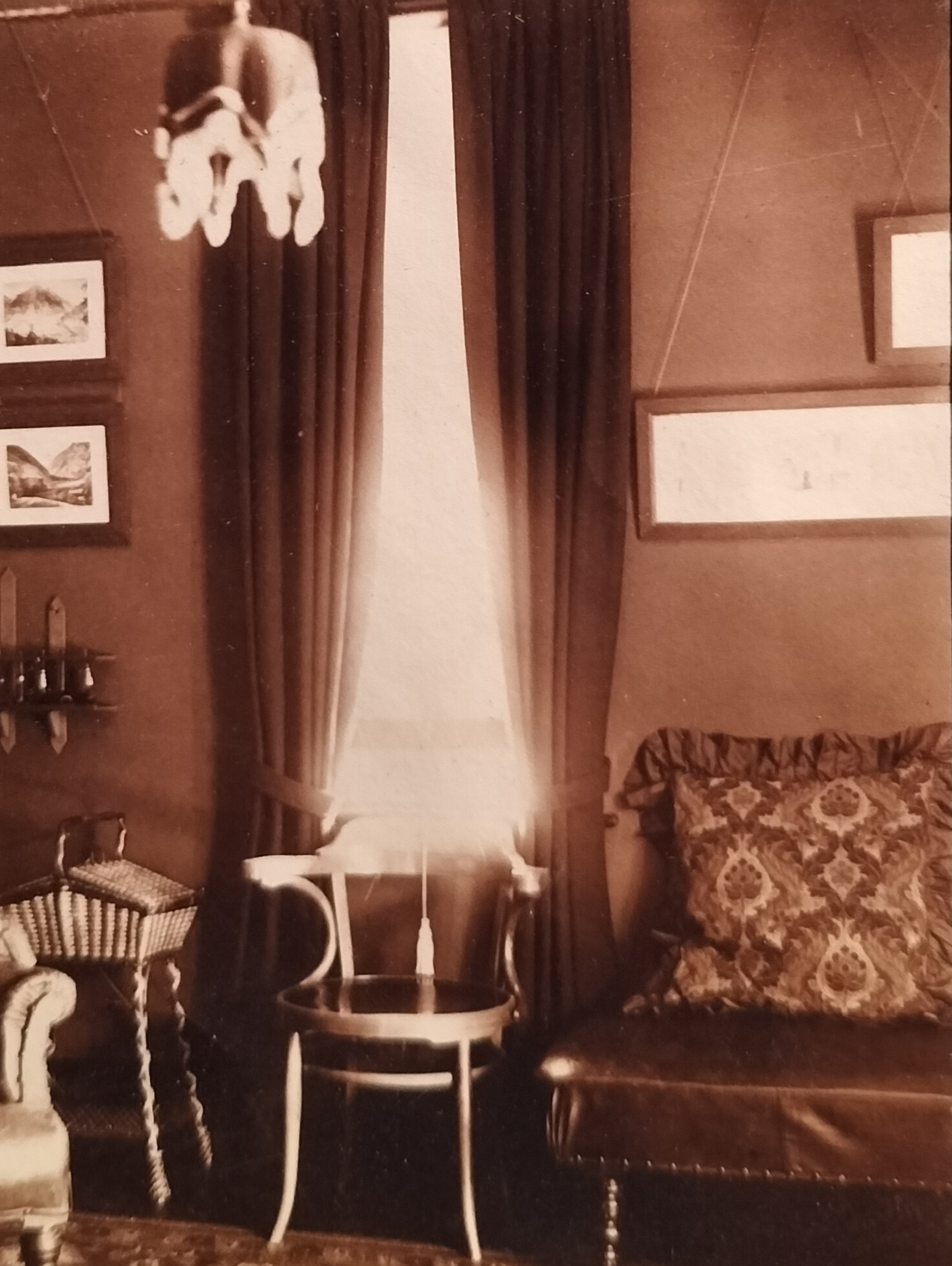
 Opposite corner of the lounge. Note the manner in which photo or picture frames were hung in the earlier years. The long landscape frame in all probably holds another panoramic photograph
 Opposite corner of the lounge. Note the manner in which photo or picture frames were hung in the earlier years. The long landscape frame in all probably holds another panoramic photograph.
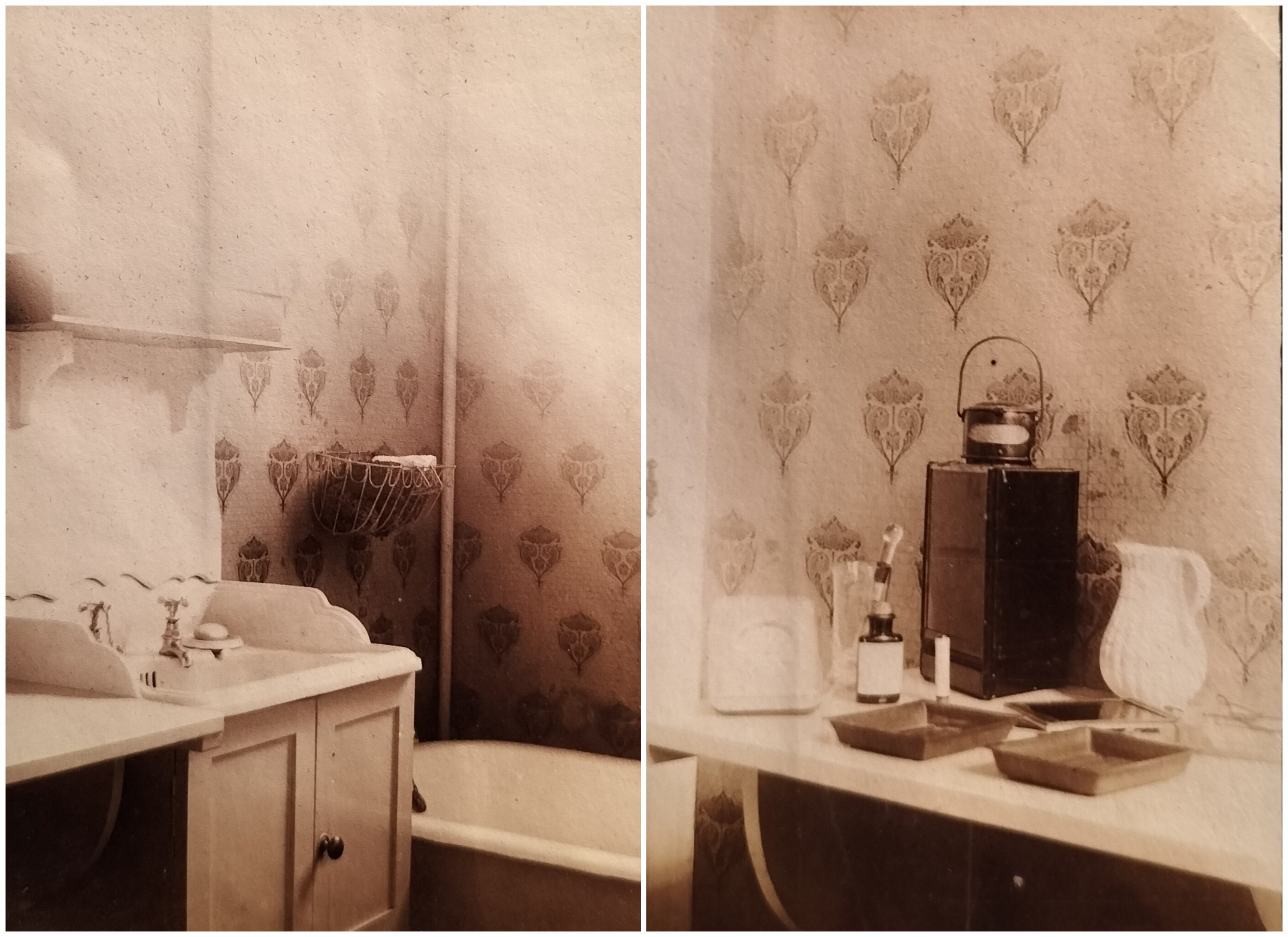
In the bathroom which seems to have been fitted with wallpaper

She must have spent time adjusting and positioning items before capturing each image. The photographs were not captured in a single day in that a change of music sheets on the piano can be seen from one photograph to the next.

Her husband also had to be captured in his study whilst at work. Her challenge throughout was not only the light beaming in from the windows, but also the wooden furniture—dark, deep, and prone to swallowing light. She no doubt, positioned her tripod with agonizing care for each “shot,” ensuring the lens caught the essence of the place she called home.

The couple that resided in the house, were grandparents – this can be seen in an image of the couple posing with their daughter and son-in-law. Later images show a child’s pram and a child on a rocking horse.

Yet the key question remains - Who was the photographer?
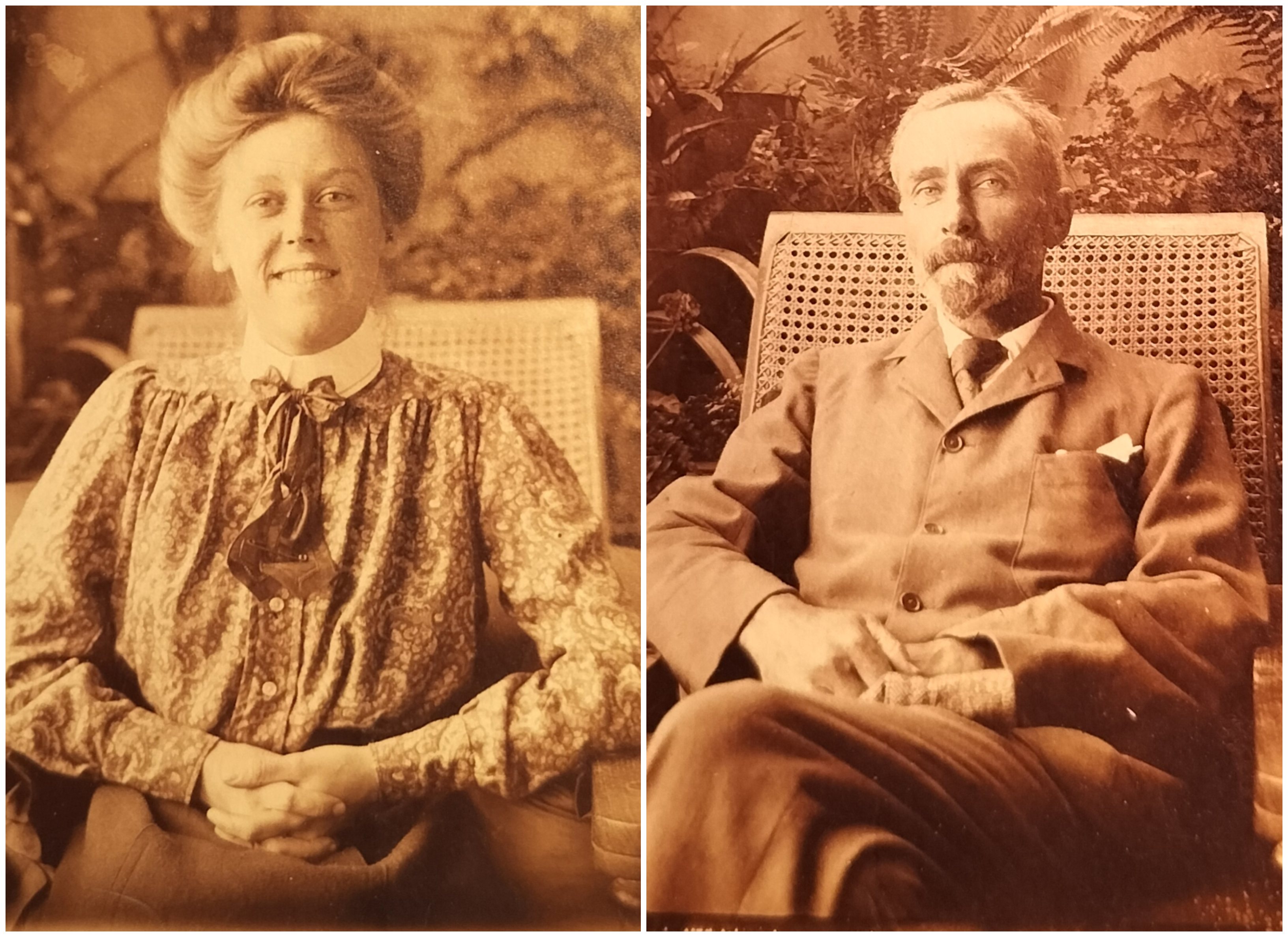
Unknown female sitter who is thought to be the photographer of the photographs included in this article and her husband who is thought to have been an architect.
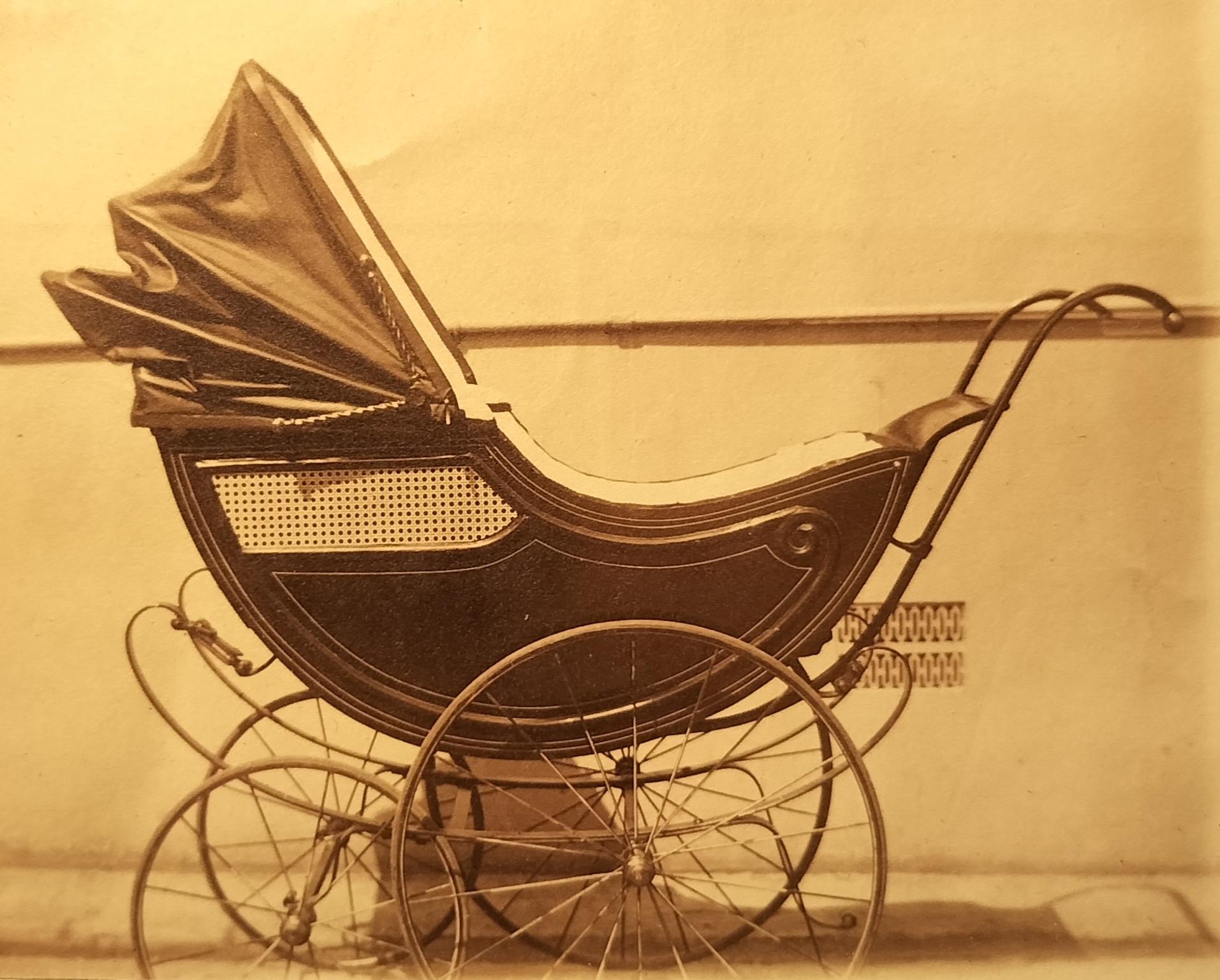
A pram that probably belonged to the grandchild of the occupants
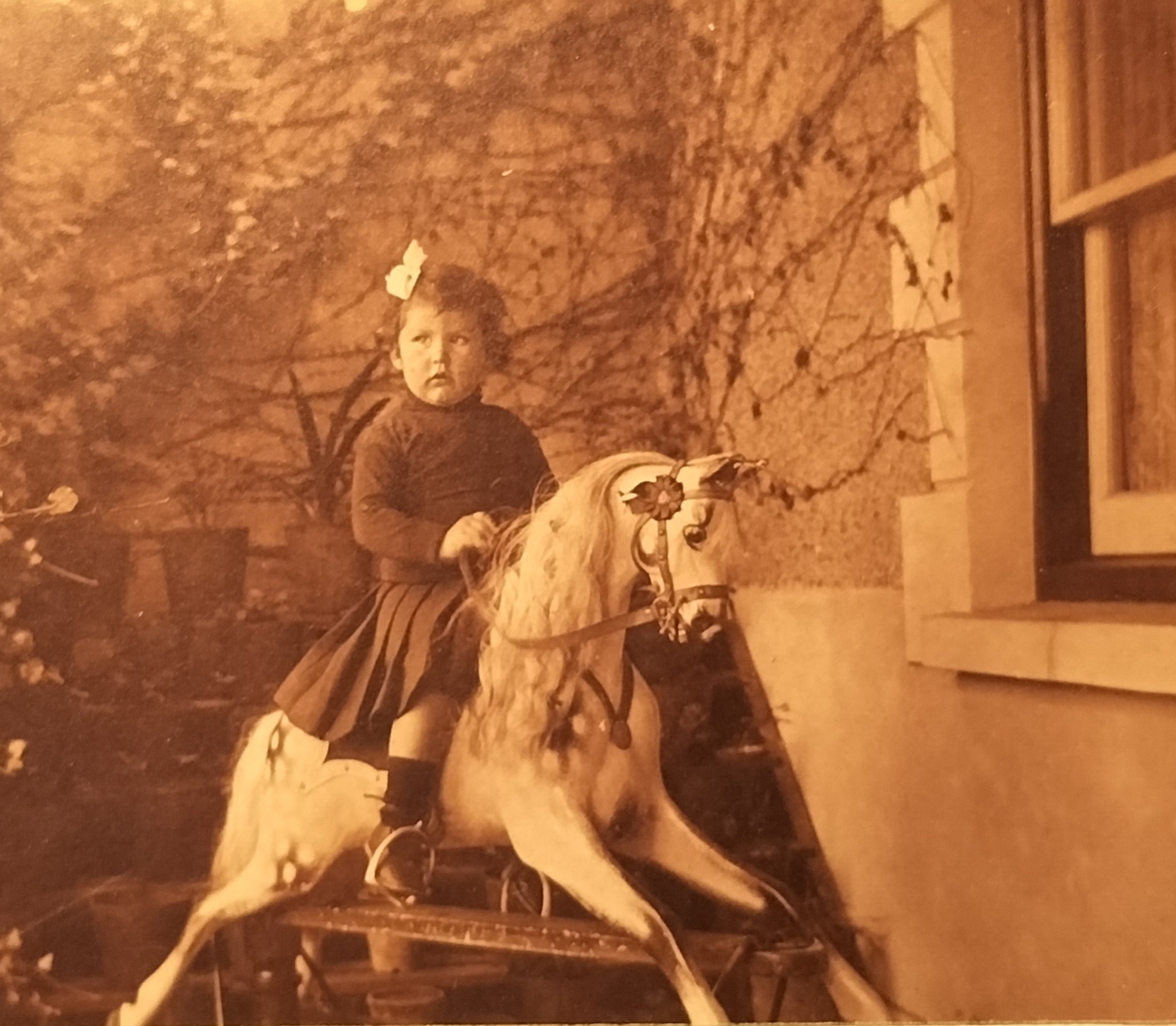
A grandchild on a rocking horse in the back garden
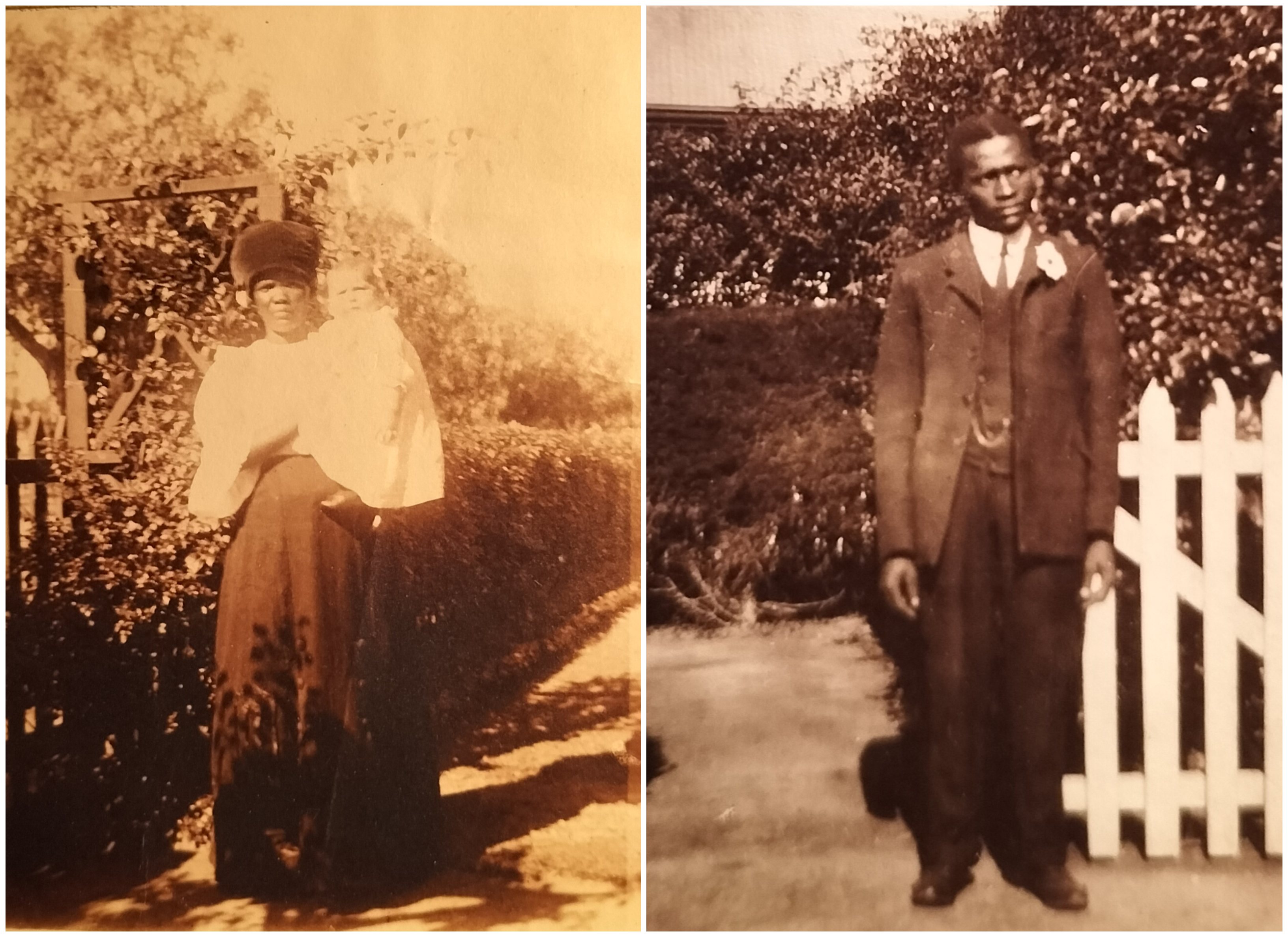
The family was clearly colonial in their ways in that they had domestic servants in their employ. On the left is the nanny holding a grandchild of the occupants of the property. The smartly dressed fellow was clearly not happy standing in front of the camera.

Main image left: The corner house on Belgrave and St. Matthews Roads in East London. It was the interior of this house that was diligently recorded by the female occupant (or her daughter) during the mid-1910s. Note the unknown male occupant on the left looking at the photographer. 

Main image right: Part of the veranda with the pet dog looking on. The poles seem to be made of cast-iron. The family clearly were dog-lovers in that a number of picture portraits featuring dogs are seen hanging in the house.

About the author: Carol is passionate about South African Photographica – anything and everything to do with the history of photography. He not only collects anything relating to photography, but also extensively conducts research in this field. He has published a variety of articles on this topic and assisted a publisher and fellow researchers in the field. Of particular interest to Carol are historical South African photographs. He is conducting research on South African based photographers from before 1910. Carol has one of the largest private photographic collections in South Africa. 

Sources

  1. Hardijzer Photographic Research Collection – Photo album curated in the research collection
  2. Mitra, A. (2026). The rise and brief history of the kodak girl (extracted June 2026 -www.museocamera.org)