
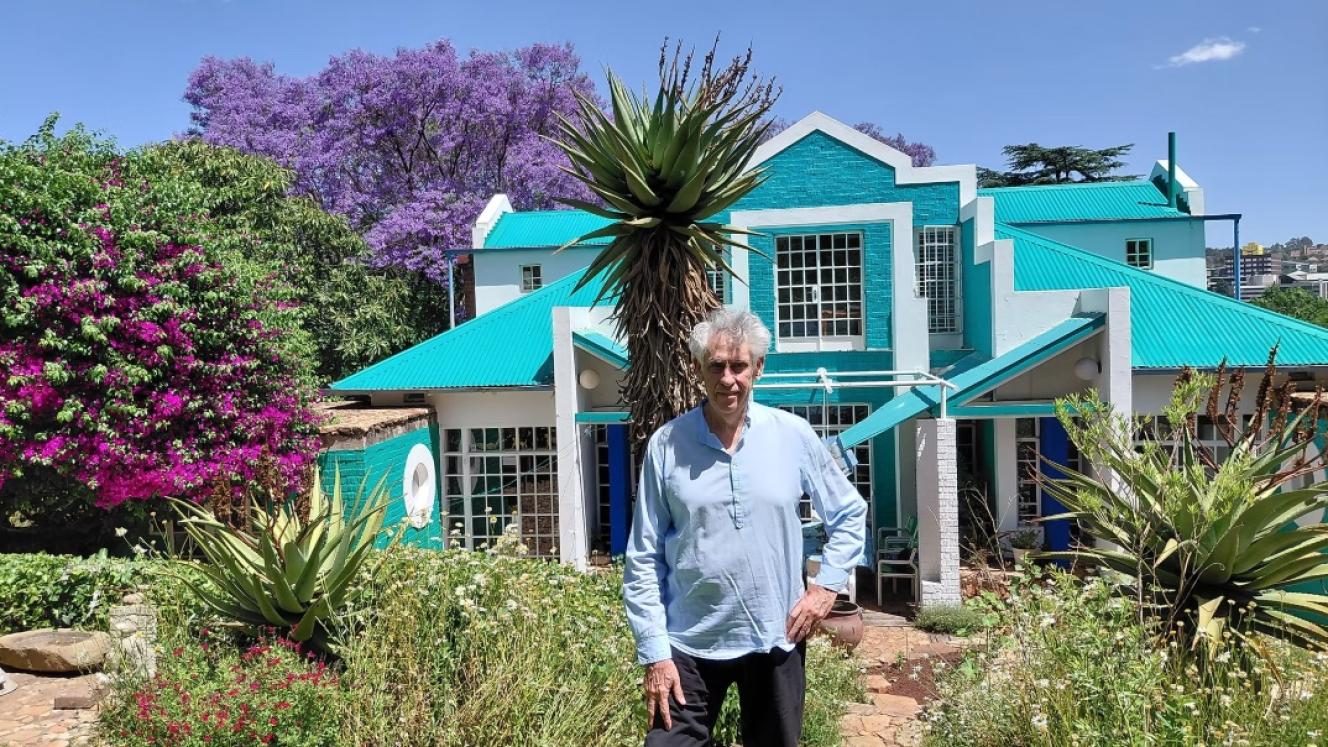
In the article below, journalist Lucille Davie profiles architect Peter Rich, whose decade of research into Ndebele place-making shaped a career of museums, community centres and homes across Africa and beyond. From the Mapungubwe Interpretation Centre to the Alexandra Heritage Centre, she traces how his buildings grow out of the communities they serve. Click here to view more of Davie's work.
"An artist, a dreamer and a clown" is the title of the first chapter of the book The architecture of Peter Rich, conversations with Africa, by Jonathan Noble.
Peter Rich, a Wits University alumnus, is an artist and dreamer, but if he was a clown at school, he certainly hasn’t been a clown since those schooldays but rather South Africa’s and one of the world’s most respected architects, with dozens of awards and accolades to his name.
“I have been awarded the Fellow of the American Institute of Architects and international Royal Institute of British Architects for bringing world attention to the genius of Africa, past, present and future, through both my research and practice,” he explains.
His buildings cover the full range – museums and cultural centres, community centres, social housing, stunning homes, and bush lodges in South Africa and Ethiopia, all sensitive to their environment and with the aim of respecting traditional African place-making norms, using sustainable materials and serving to uplift local communities. Place making respects the sense of space the community uses.
“I have been embraced as a culturally sensitive architect by communities I have worked with,” he says.
Awards
The awards he has received attest to that: the South Africa Institute of Architects (SAIA) Gold Medal (awarded in 2010), and 16 SAIA Awards of Merit; a fellow of the Sidney Sussex college in Cambridge; International Fellow of the Royal Institute of British Architects; an Honorary Fellow of the American Institute of Architects; and an Honorary Life Member of the Gauteng Institute of Architects.
“He is a brilliant designer and we love the house and would not have it any other way,” says architect Henry Paine, of his Rich-designed home near George, adding, “he is an extraordinary man”.
Rich, a youthful 81-year-old, credits his inspiration and creative spirit to acclaimed Portuguese/Mozambique architect Pancho Guedes, who encouraged Rich’s research into the Ndebele of the highveld.
“Everyone went 300% beyond their known capacities, inspired by this great man, who introduced me to the art and architecture of Africa,” explains Rich. Guedes was described by some as the most creative person they had ever met. He was head of architecture at Wits for 15 years.
“I didn’t go to Rome to study architecture, I went to study it from the Ndebele matriarchs,” says Rich.
He spent a decade studying them, and completed his master’s thesis on them. “I did seminal research in the 1970s on the Ndebele place-making prior to the smashing of their traditional culture by the iniquities of apartheid.”
Pride of the Ndebele exhibition
Rich curated the Pride of the Ndebele exhibition at the South African National Gallery in 1994, which told the story of the importance of the Ndebele in all their art forms, including their ritual space and how materials are used. “This was the first time their story had been told.”
This exhibition was then taken to New Zealand in 1997, the first exhibition of African art in Oceania. Encouraged by Guedes, Rich learnt the multifaceted skills of being curator, art collector, architect, and artist, “because he believed as a creative being you needed to have multiple layers to what you did, not just focus on one, because the one informed the other,” says Rich. This is evident in his own home in Parktown, which combines the colours and angular shapes of Ndebele architecture with art and artefacts from around Africa.
Guedes invited Rich to join the Wits architecture department, where Rich taught architecture theory and design for 30 years before leaving to start his own practice. Former students bump into him around Joburg and elsewhere all the time and treat him with reverence. Intern architects approach him to do their inhouse training with him.

Guedes was an artist and sculptor besides an architect, and art is integral to Rich’s architecture. After visiting a site, he conceptualises the future building in detailed art form before going into his studio to work on the plan of the building. “When you draw, you can go places you’ve never been,” says Rich.
Mapungubwe Interpretation Centre
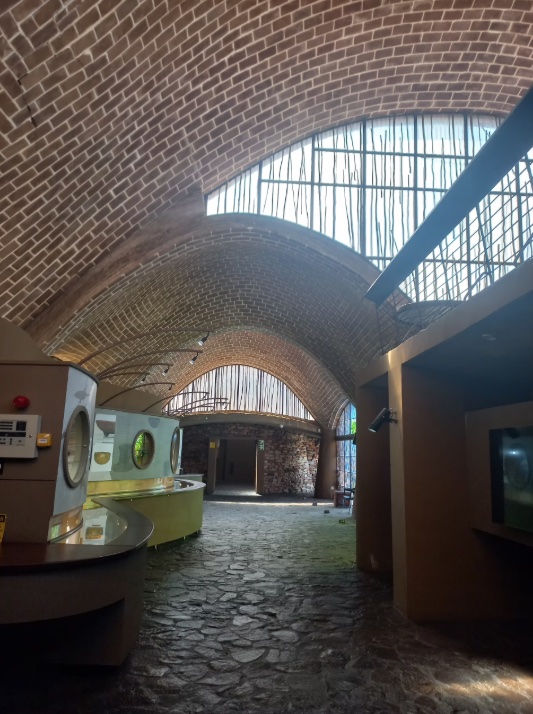
The building that catapulted him onto the world architecture stage was the Mapungubwe Interpretation Centre in Limpopo, for which he won the World Building of the Year award in 2009. “I was not known until that happened. That award was seminal,” he says. The building consists of curved timbrel vaults made by locally trained workers from low-grade earth tiles with a hand press. It is a memorial to the 13th century society that lived around and on top of the Mapungubwe hill, on top of which the gold rhino was found. It was shortlisted for the prestigious Aga Khan Architecture Award in 2013, while it won "Special Solution with Brick" category at the Wienerberger Brick Award in 2012.
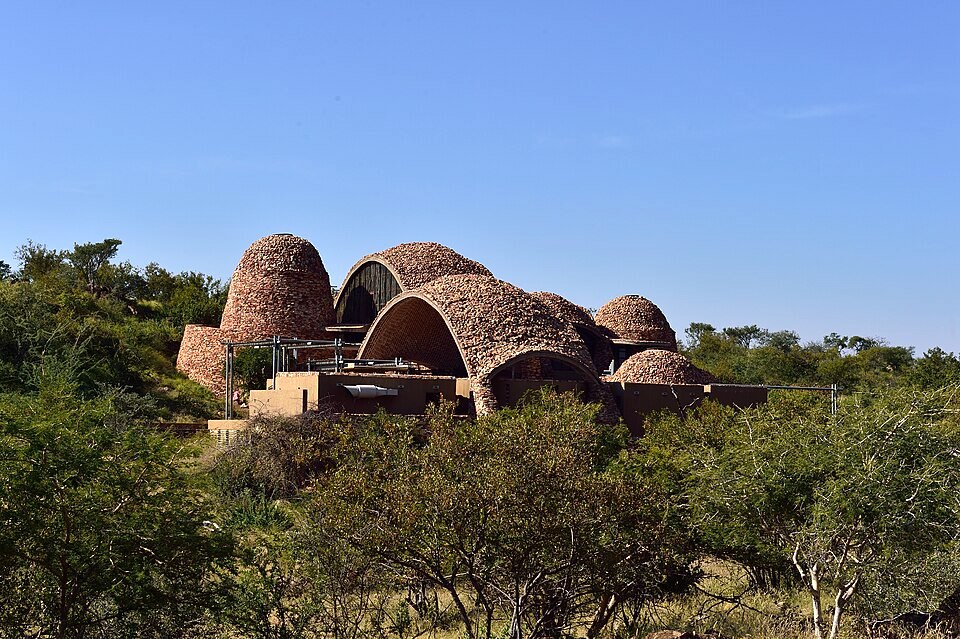
Mapungubwe also won the Built Environment category at the 2010 Earth Awards, which inspired then Prince Charles to ask Rich to build a vaulted Earth Pavilion on the lawn of Lancaster House on the Mall in London. That same style is replicated in the Kigali cricket stadium in Rwanda, and led to the construction of hotels and residential buildings in China, an office interior in Chicago, and being appointed as advisor to the city of Kigali.
In 2018 and in 2025 he was invited as the curators’ choice to exhibit 18 enlarged African drawings of his buildings at the Venice Biennale. The same exhibition drawings have been exhibited several times in India.
In Africa he won the international bids for the thematic master plan for the 3,500-year-old city in northern Tigray in Ethiopia called Aksum, and the Laetoli Footprint Museum and Science Centre in the Ngorogoro Conservancy in Tanzania, a presidential project but a change of presidents meant it wasn’t realised.
Projects
His favourite building is the Alexandra Heritage Centre in the township north-east of Johannesburg. Here he engaged the community, and measured the entire heritage precinct. Construction started in 2001 with the Alexandra Renewal Project, but, although complete, due to numerous bureaucratic delays, it is not occupied or used by the community.
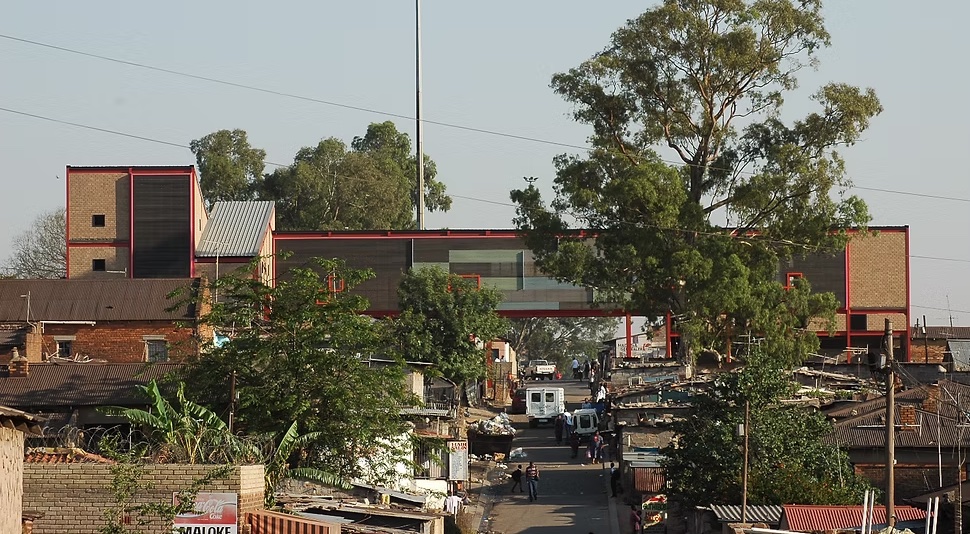
His modus operandi was the same as the Ndebele project - go into the community, find out what is important to them, and build a community centre that caters for their needs. Its outstanding features include patterned stained-glass windows, mosaic pavements and stone walls.
During the apartheid era, in the 1980s and early 90s, Rich succeeded in completing three projects bettering the life of the underprivileged in a rural and urban context. These are the Elim Shopping complex in Limpopo, designed for a black client. This was where Rich cut his teeth on community engagement despite the restrictions of the regime. “Rich’s vision for Elim was not merely to provide retail opportunities, but to engage the social life of this vibrant yet neglected rural town,” writes Noble.
The others were the Tembisa Clinic in Tembisa township; and the Riverlea Church Hall in Johannesburg.
“Post democracy, I did the same with three rural and five urban projects to demonstrate this.” Among them are: the Bopitikelo Community and Cultural centre in Molatedi Village, North West; the Makuleke Cultural Project, Limpopo; the Ubuhle Buyeze Children’s facility in the Thulu Mntwana informal settlement in Gauteng; the Riverpark Housing Project in Alexandra township; and the Mphebatho Museum in Moruleng in North West.
“I wanted to create a better environment for first generation urban Africans who have never lived in anything other than a single storey in a courtyard, and show that you can create a better environment,” he explains. “It was a body of work searching for a contemporary architecture that is relevant and appropriate. My core African place-making research was applied in these projects.”
Another significant project is the Motlhotlo Resettlement Programme in Mokopane, Limpopo, where houses, a community centre and a creche were built for 64 families. Instead of designing a traditional community hall that works for large gatherings only, Rich’s design catered for the needs of youth, women and elderly needs in spaces that allow smaller groups to use interlinked rooms around a central courtyard.
“The entrance canopy celebrates the distant mountains and sky, while generously receiving community members,” he explains.
“Radiating landscaping, including paving, lawns and benches unify the community centre, with only established indigenous trees needing to be planted to complete the facility that provides further meeting spaces as part of the public realm.”
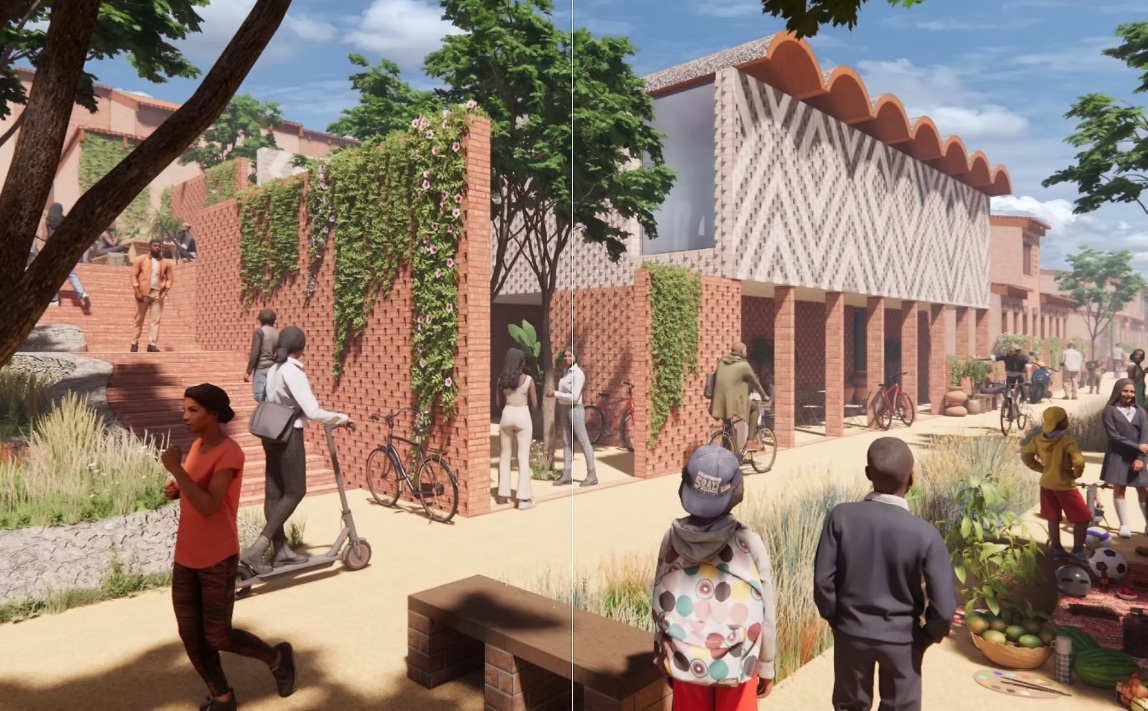
In Rwanda he applied the same principles of space and communities with a project begun during Covid19. The Green City in Kigale takes cognisance of being sustainable in several ways, especially considering it is close to the rift valley with earthquake threats and storms every afternoon. After walking the streets and observing what ordinary people do, their culture and aspirations, together with Tim Hall of Light Earth Design (of which Rich is also a member), and in collaboration with UK-based architectural firm Fielden Clegg Bradley Studio, he contributed to a housing complex of eight neighbourhoods, catering for 24 000 people in two- and three-storey apartments, with common areas of engagement.
The complex has sadly not been built for political reasons, but it offers a way of living in which residents can relate easily to neighbours, even within a dense housing arrangement.
A new mentor
When Guedes died in 2015 Rich found a new mentor in Indian architect Balkrishna Doshi, winner of the prestigious Pritzker Award, among many other awards. That introduced him to India, where he has served on advisory panels and is now on advisory boards of new schools of architecture in India, in addition to being an international juror for the awards of excellence in China and India.
Rich gives lectures and master classes in India now, and has recently been appointed the lead architect in educational, leisure and hospitality projects there. He is considered a guru among the architectural fraternity in India.
There is another side to Rich – at school he excelled at the 400-metre hurdles, which won him a place in the Transvaal provincial team in 1961, then the South African Senior Athletics Touring Team in 1966. At university his speed qualified him for entry to the Olympics in Tokyo in 1964 and Mexico in 1968 – he was ranked the 6th fastest hurdler in the world - but he supported the anti-apartheid sports boycott and so didn’t get to test himself on the world’s premium sports stage. “I trained three hours a day, seven days a week for 12 years,” he recalls of his years at high school and Wits. A national hurdles champion five times, he was awarded Springbok colours in 1966, 1968 and 1970.
At 81, he keeps himself fit with daily exercises and walking the 96 stone steps up his lush, terraced garden to relish the view from the top of the Parktown ridge. This keeps him vital, ready to embrace new projects, and nourish his friendships around the world.
Lucille Davie has for many years written about South Africa's people and places, as well as the country's history and heritage. Take a look at lucilledavie.co.za