
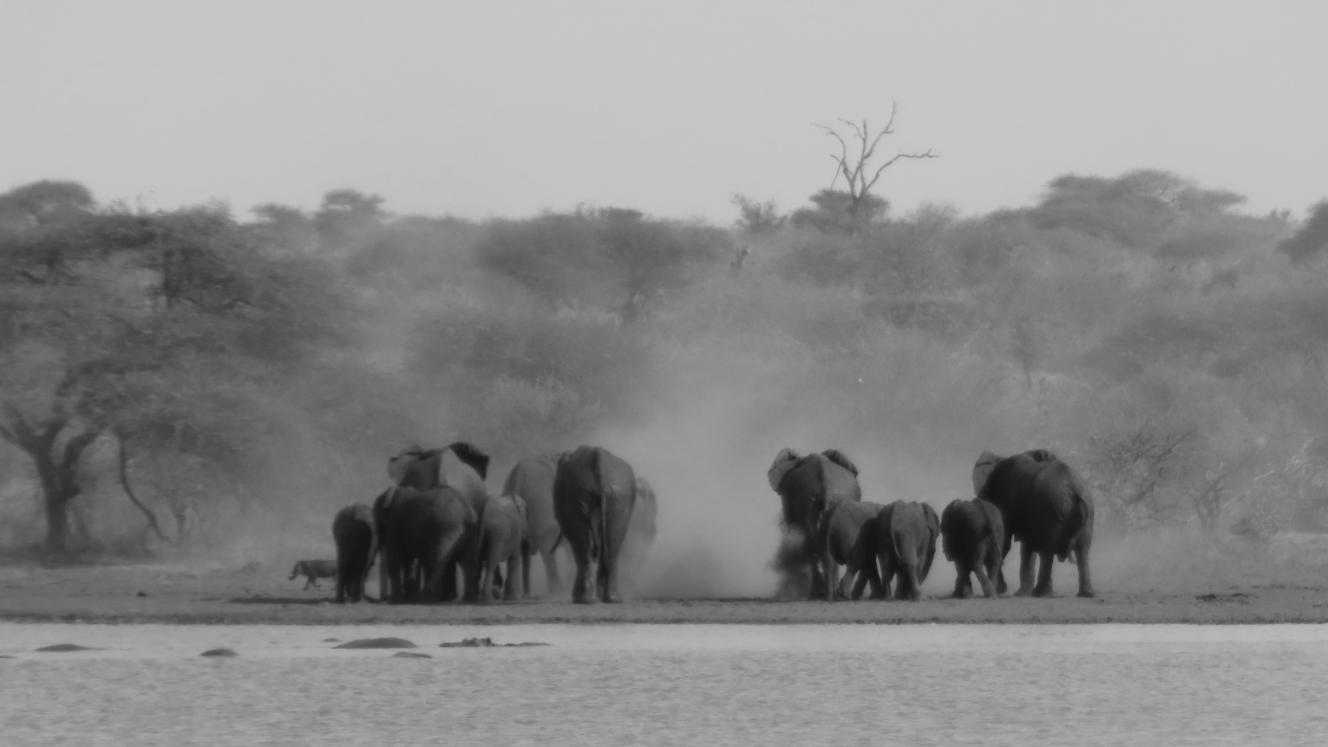
In 1926, the Kruger National Park was formally established. As we celebrate its centenary, it is worth revisiting the circumstances that brought it into being. Today, the Park is one of South Africa’s most recognisable national icons, internationally renowned as a wildlife destination, a major generator of tourism revenue, a leader in conservation science and management, and a pioneer of Transfrontier Conservation Areas (TFCAs). More recently, it has also become increasingly recognised for innovative approaches to conservation that seek to involve and benefit the African communities living on its boundaries and within the greater Park landscape. Yet its establishment was neither straightforward nor inevitable. It was the outcome of years of political negotiation, public campaigning and competing economic, social and conservation interests.
The Kruger National Park had its origins in two separate game reserves in the eastern Transvaal lowveld, a region bounded to the east by Portuguese East Africa (now Mozambique), but with less clearly defined boundaries to the west.
The first to be proclaimed was the Sabi Game Reserve, a relatively small area between the Sabi and Crocodile rivers. In 1898, following pressure from two members of the Volksraad, R.K. Loveday of Barberton and J.L. van Wijk of Krugersdorp, it was legally established by the government of the South African Republic. Further north lay the much larger Singwitsi Game Reserve, between the Letaba and Luvuvhu (Pafuri) rivers. This was proclaimed in 1903 by the Transvaal colonial government, following the South African War (1899–1902). There was a central corridor between the two reserves, an extensive area stretching from the Sabi to the Letaba rivers, in which there was land owned by speculation companies, a number of private owners and tracts of unsurveyed state land. The entire region was also home to African communities, many of whom were subsequently displaced or evicted over the decades as the conservation area took shape.
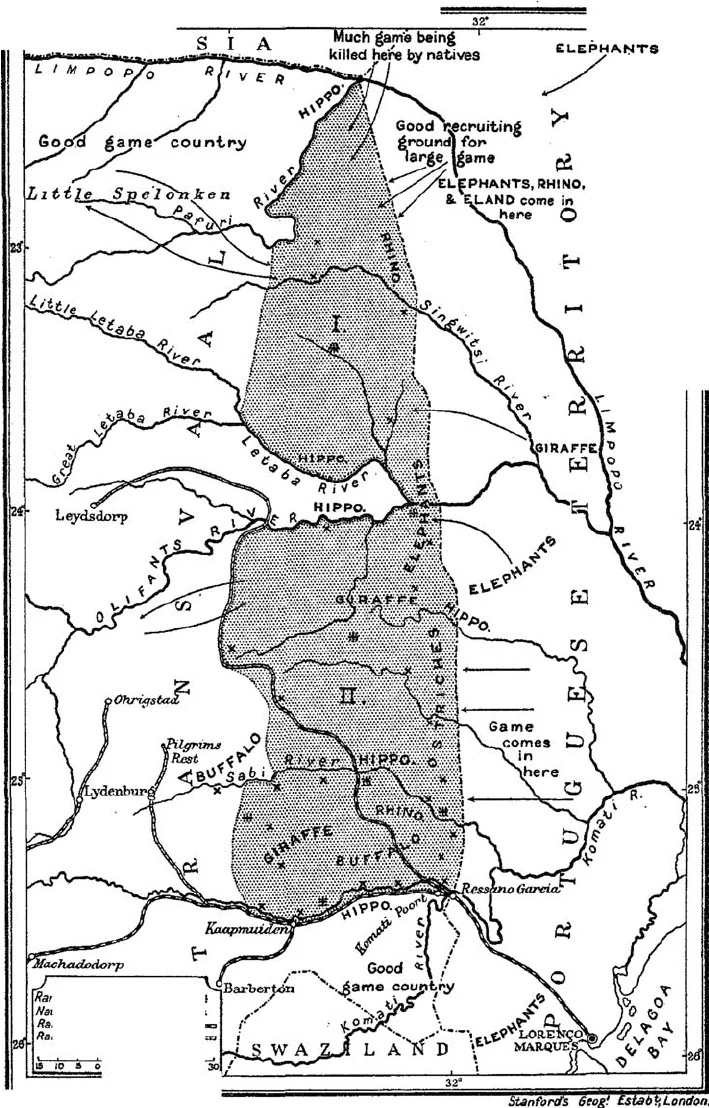
Journal of the Society for the Preservation of the Wild Fauna of the Empire V (1909).
Following the formation of the Union of South Africa in 1910, which brought the four colonies together, the question of wildlife protection acquired new political significance. The growing international movement to establish national parks, along with increasing interest among South Africans in the preservation of their natural heritage, provided fresh impetus to the cause. At the same time, however, the lowveld faced mounting pressure from agricultural and mining interests, which wanted the game reserves abolished and the region opened up for development. Game Protection Societies and a growing number of concerned members of the public argued vigorously against this prospect. They believed that the wildlife and landscapes of the lowveld represented an asset of national importance that should be preserved.
In response to these competing pressures, the Transvaal provincial authorities appointed a Game Reserve Commission in 1918 to investigate the future of the reserves. The commissioners generally favoured their retention but went further by suggesting that the two reserves might eventually be brought together as a national park, protected by an Act of Parliament. This was an important development. It shifted the debate beyond the preservation of existing game reserves towards the creation of a much larger, nationally protected conservation area.
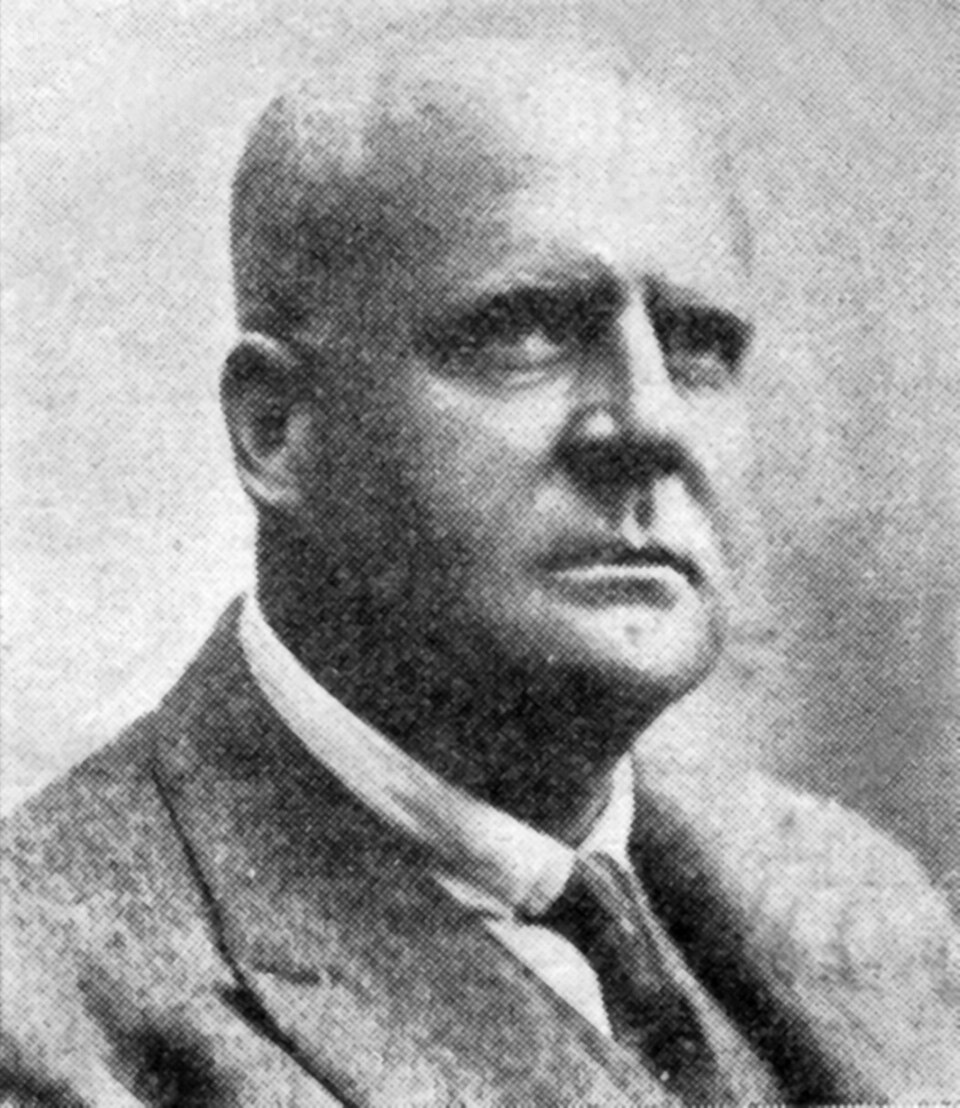
The proposal attracted support from wildlife protectionists and, increasingly, from the national government. One particularly influential champion was Deneys Reitz, then Minister of Lands, who took an active interest in advancing the project. But enthusiasm for a national park did not make the practical and political obstacles disappear. The greatest challenge was the question of how to deal with the privately owned and state land between the two existing reserves. Much of it belonged to land speculation companies, particularly the Transvaal Consolidated Land and Exploration Company (TCL). There were also competing claims and interests to reconcile: African rights to land and settlement, the agricultural and mining potential of the region, private property interests and the opposition of sections of the Transvaal farming community. The proposed park was therefore as much a question of land ownership and political power as it was of wildlife conservation.
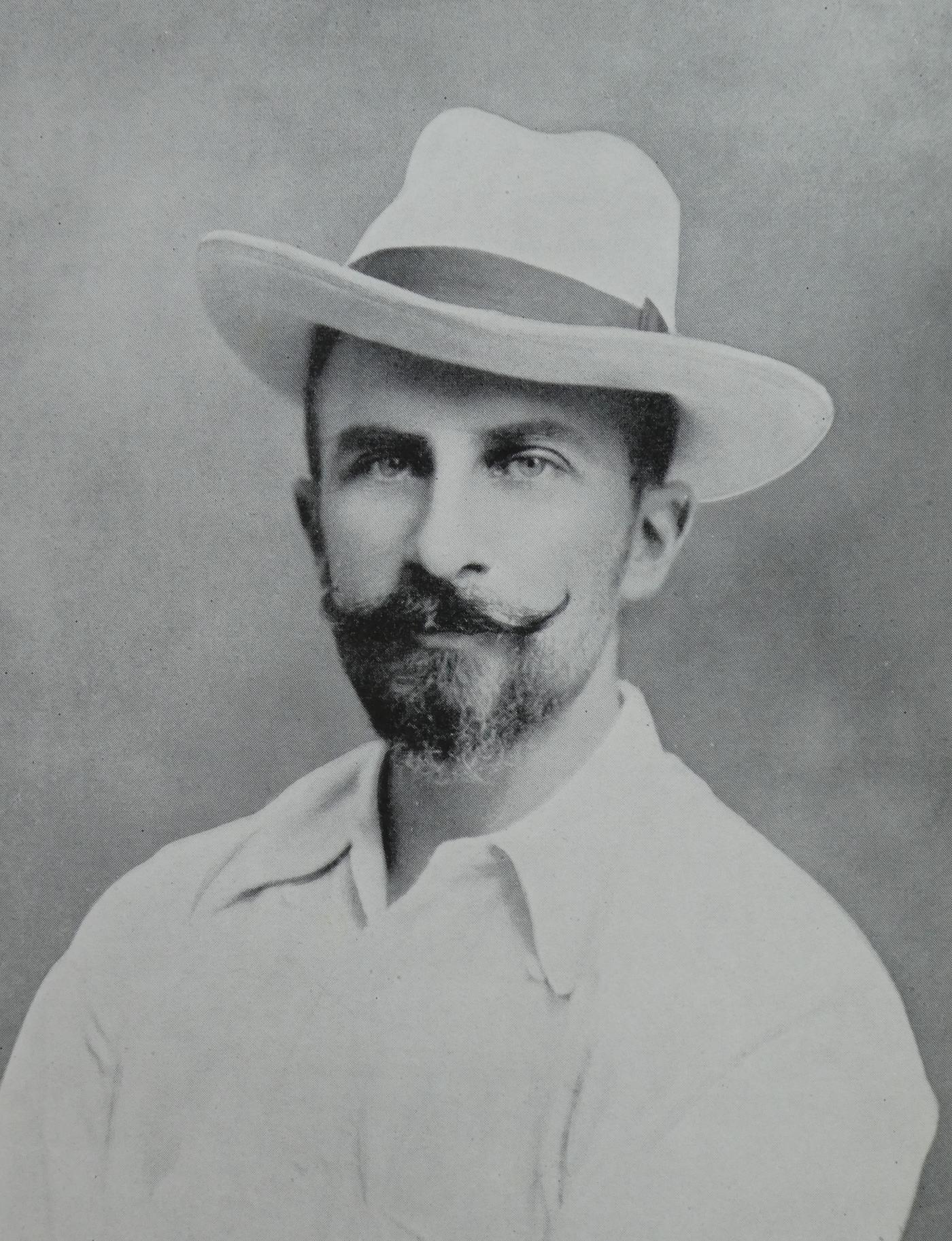
Once the national park proposal became public, wildlife enthusiasts launched an energetic campaign to secure support. Newspapers and other publications became important vehicles for promoting the cause. Game protection societies and individuals across the country argued not only for the preservation of wildlife, but also for responsible management, scientific conservation and the wider national value of protecting the lowveld. They were quick to recognise that a national park could bring substantial economic benefits through tourism. The artist Harry Stratford (Strat) Caldecott contributed evocative images to the publicity campaign, helping to bring the idea of a national park to a wider audience. Meanwhile, James Stevenson-Hamilton, the highly experienced warden of the Sabi and Singwitsi Game Reserves, worked behind the scenes to promote the project and to protect both the existing reserves and much of the TCL land. As a Transvaal civil servant, however, he was unable to campaign openly for the national park.
In 1921, Reitz convened a conference to bring the various interested parties together. Reaching agreement proved difficult, and the negotiations involved considerable discussion and compromise. Eventually, the government agreed to acquire approximately seventy privately owned farms scattered between the Olifants and Crocodile rivers. In return for surrendering some 550 km² of land for incorporation into the proposed park, the owners received compensation in the form of state land elsewhere along the proposed western boundary, as well as financial recompense. The Department of Native Affairs, meanwhile, insisted that African settlements should neither be incorporated into the Park nor forcibly removed as part of this particular land-acquisition process. Instead, their land was to be excised from the proposed conservation area. By 1923, the complicated process of negotiation and land acquisition was nearing completion, and the proposal appeared ready to be submitted to Parliament for debate and approval.
Then politics intervened. The general election of 1924 unexpectedly brought down the government of Jan Smuts and ushered in the Pact government, a coalition of the National Party and the Labour Party. J.B.M. Hertzog, leader of the National Party, became Prime Minister. The new government was broadly sympathetic to the national park proposal, which had by then been carefully developed. Nevertheless, there was concern that it might encounter strong opposition from the Afrikaans-speaking farming community and its representatives in Parliament.
This was where Piet Grobler, the new Minister of Lands and grandnephew of Paul Kruger, played a decisive role. He recognised the political opportunities offered by the growing Afrikaner nationalism of the 1920s and used them to secure support for the project. Rather than presenting the proposed park simply as a conservation initiative, he framed it as an expression of Afrikaner culture, history and national heritage. The choice of name was central to this strategy. The designation Kruger National Park (Nasionale Krugerwildtuin), rather than a more general title such as South African National Park, was politically significant. Paul Kruger was an immensely important figure in Afrikaner national history, and associating his name with the proposed Park helped to secure the unanimous parliamentary support that Grobler sought.
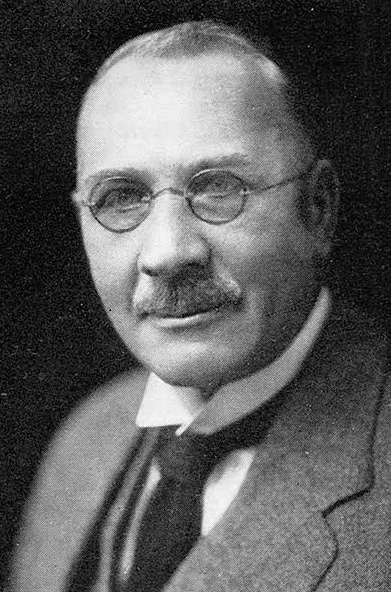
This political association had consequences extending well beyond the parliamentary debate of 1926. Subsequent National Party governments developed and promoted the connection between Paul Kruger and the Park, and a powerful historical myth gradually took hold: that the enormous national park that exists today was essentially Kruger's own achievement. In reality, its establishment was the product of a much more complex history involving conservationists, politicians, civil servants, landowners and competing public interests over several decades.
The passing of Act 56 of 1926 formally established the Kruger National Park, but it did not immediately produce the Park as we know it today. Its subsequent development, until 1946 under Warden Stevenson-Hamilton, required new administrative arrangements, the provision of tourist facilities and the gradual evolution of scientific approaches to wildlife conservation and management. Nevertheless, the Act represented a major milestone. It brought wildlife conservation into the mainstream of national government policy and established a legislative foundation on which one of the world's most celebrated national parks could be built.
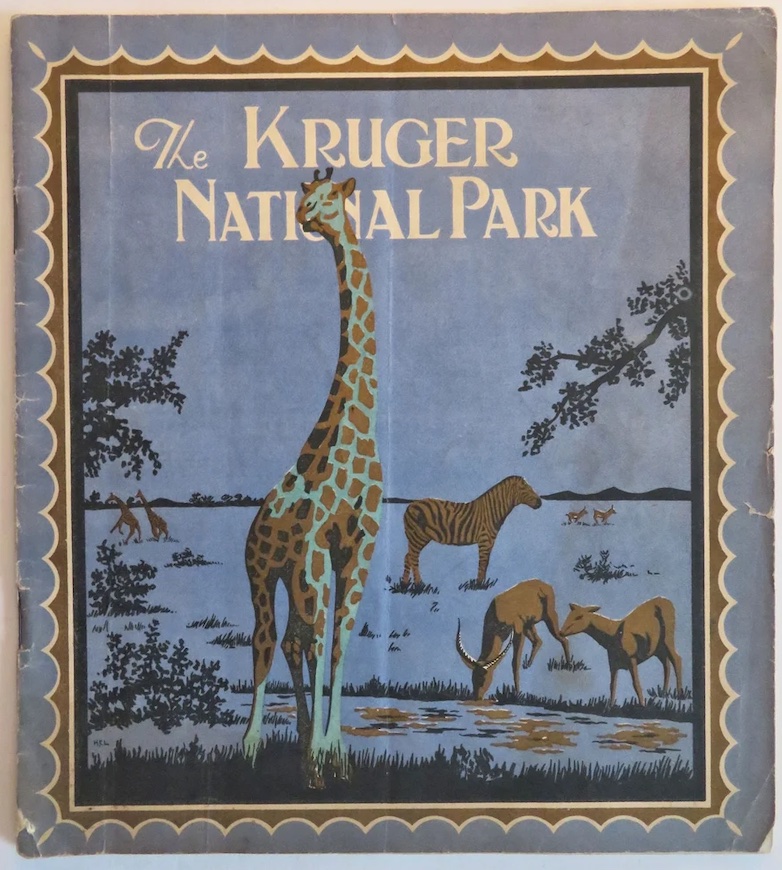
There is, however, another side to this achievement. The creation of the Park involved the exclusion of African people from extensive areas of land and natural resources that they had previously occupied and used. Over time, communities experienced displacement, restrictions on access and the loss of opportunities to benefit from the land that had become a national conservation asset. They were also denied the recreational and educational opportunities that the Park offered to other South Africans. The creation of a national heritage was therefore also an exercise in determining who was entitled to claim that heritage, who could enjoy it and who would bear the costs of its preservation.
Over the past century, ideas about the cultural, social and heritage value of the Kruger National Park have changed considerably. Conservation is no longer understood simply as the protection of wildlife within fenced boundaries. The involvement and inclusion of communities disadvantaged by the Park's establishment have become increasingly important priorities for SANParks. This changing philosophy was also evident at the Fifth World Parks Congress of the International Union for Conservation of Nature (IUCN), held in Durban in 2003, whose theme was 'Benefits Beyond Boundaries'. The theme reflected a growing recognition that protected areas must contribute to the wellbeing of people as well as the preservation of nature.
The history of the Kruger National Park is thus more than the story of the creation of a wildlife reserve. It is a story of conservation ambition, political negotiation, economic interests, nationalism and changing ideas about land, people and nature. Its establishment in 1926 was a remarkable achievement, bringing together English-speaking and Afrikaans-speaking South Africans around a common national project. Yet it also reflected the unequal power relationships of its time and the exclusion of the African communities whose histories were deeply embedded in the landscape.
As the Park enters its second century, this more complicated history deserves recognition alongside its extraordinary conservation achievements. National parks are never simply areas of land set aside to protect wildlife. They are also political, social and cultural institutions, shaped by the values, interests and power relationships of the societies that create them. Understanding that history does not diminish the achievement of 1926. Rather, it gives us a fuller appreciation of what the Kruger National Park has become, what it has meant to different South Africans, and what responsibilities its future entails.
Jane Carruthers is Professor Emeritus at the University of South Africa, elected Fellow of the Royal Society of South Africa and Member of the Academy of Science of South Africa. She has been awarded many international visiting research Fellowships, including at Cambridge University, the Australian National University and others. She is a former President of the International Consortium of Environmental History Organizations, the Southern African Historical Society, Chair of the Academic Board of the Rachel Carson Centre Ludwig Maximilian University, Munich, Editor-in-Chief of the South African Journal of Science, and recipient of the Distinguished Scholar Award from the American Society for Environmental History. She pioneered the discipline of environmental history in South Africa and her book, The Kruger National Park: A Social and Political History (1995) has become a standard reference worldwide. Her research interests are broad, and include environment history, national parks, the history of science, land reform, colonial art, and comparative Australian-South African history. She is the author of numerous books, as well as many book chapters and articles in scholarly journals.
Sources
- Carruthers, E.J. Game Protection in the Transvaal, 1846 to 1926. Archives Year Book for South African History, no. 58, 1995.
- Carruthers, Jane. The Kruger National Park: A Social and Political History. Pietermaritzburg: University of Natal Press, 1995, especially pp. 47–66.
- Carruthers, Jane. Wildlife and Warfare: The Life of James Stevenson-Hamilton. Pietermaritzburg: University of Natal Press, 2001.
- Carruthers, Jane. National Park Science: A Century of Research in South Africa. Cambridge: Cambridge University Press, 2017.
- Carruthers, Jane. 'Creating a National Park, 1910 to 1926'. Journal of Southern African Studies 15, no. 2 (1989): 188–216.
- Carruthers, Jane. 'Dissecting the Myth: Paul Kruger and the Kruger National Park'. Journal of Southern African Studies 20, no. 2 (1994): 263–283.