
Len Deighton (1929-2026), who passed away on the 15th March of this year, was a famous novelist, his first book being “The Ipcress File”, published in 1962 and its success begot the film version which was first screened in 1965, starring Michael Caine (real name Maurice Micklewhite). Both men were born and bred working class lads from London and they were brought up during the 1930s depression years prior to the Second World War (1939-1945). It could well be said that “The Ipcress File” gave both men a “leg up” the ladder of success, one as an author and other as an actor.

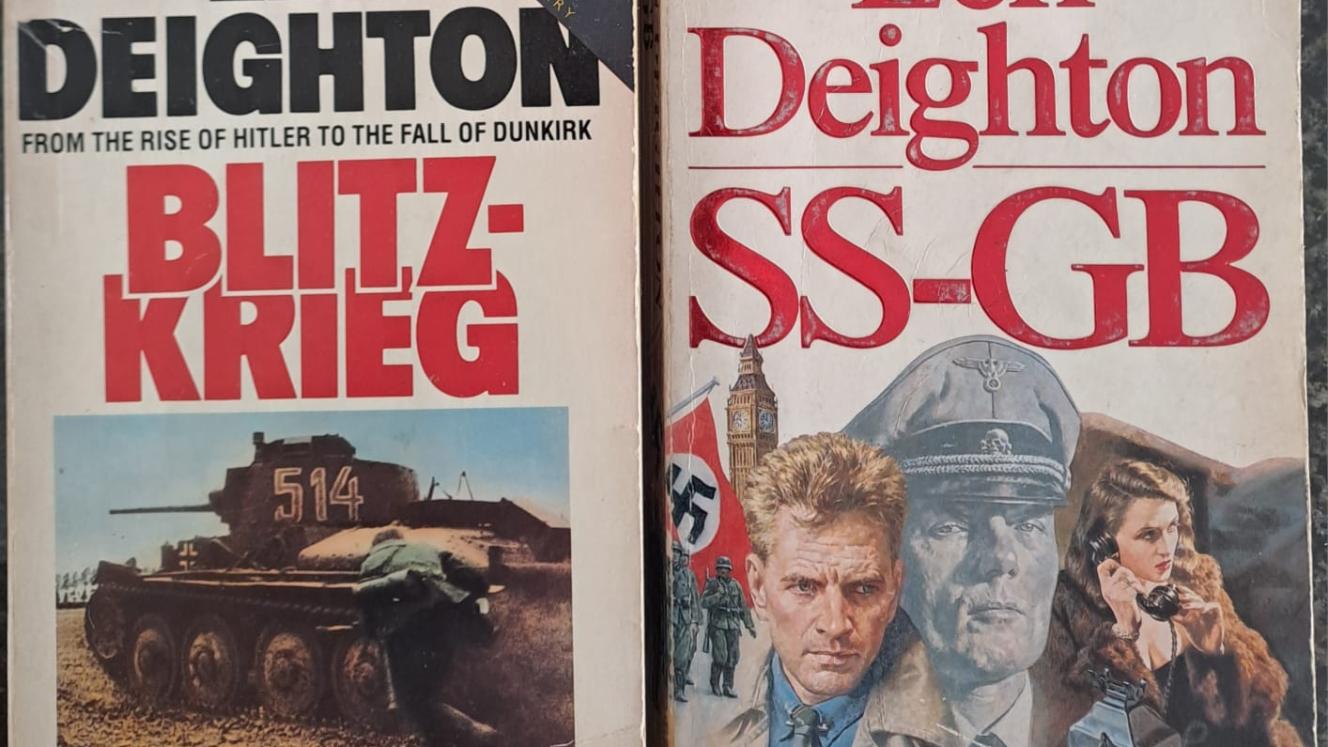
Len Deighton’s genre, which made him a famous writer, was the Cold War spy thriller, but he also wrote non-fiction war books with alacrity. There are two books of his, one fact and the other fiction, which have a continuity for the reader, the first is “Blitzkrieg” and the second is “SS-GB”. The former is a factual historical record of the rise of Adolf Hitler until the fall of Dunkirk – the period between 1918 and 1940 and the latter is a fictional account of life in Britain under German occupation in 1941, after the Battle of Britain was lost and the Germans successfully invaded the British Isles (Operation Sea Lion).
In reality and with the benefit of hindsight the Germans could never have crossed the English Channel, in September 1940, with flat bottomed Rhine barges towed by tugs, while they did not have command of the skies. However, at the time the threat was only too real and had anybody other than Winston Churchill been the Prime Minister, Britain would have likely buckled and sued for peace, on terms favourable to the Nazis.
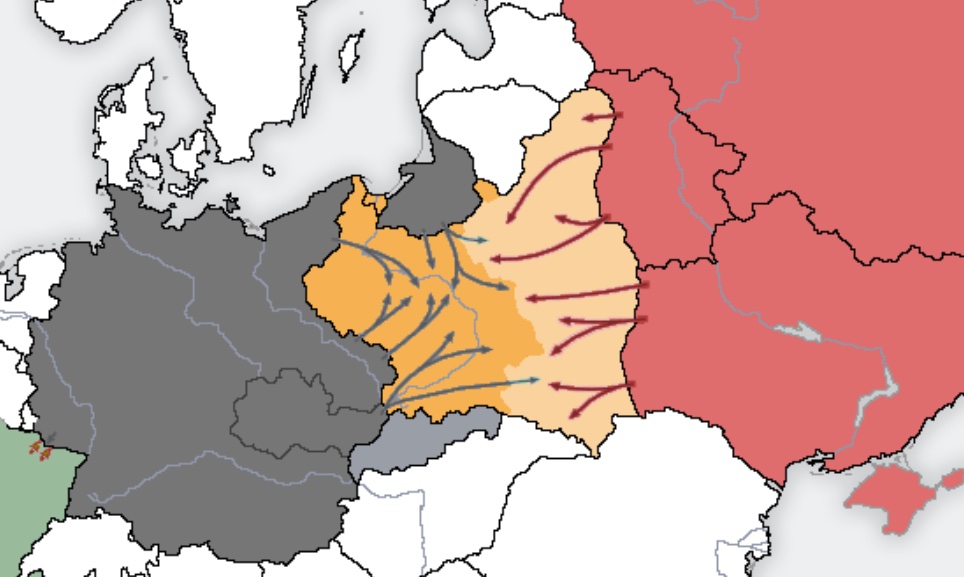
The Second World War began on the 1st September 1939, when Germany attacked Poland. Britain and France were obligated to come to Poland’s aid and both countries declared War on Germany on the 3rd September. However, both did little to provoke Germany on its western border (West Wall or Siegfried Line) and a period, during the winter of 1939 into 1940, of inactivity known as the Phoney War (or Sitzkrieg) ensued. Poland would be overrun by the Germans (in its west) and the Russians (in its east) by early October and although no formal surrender was concluded the Poles were under occupation.
The Germans did not wish to be bogged down once again in a war of attrition, as had been the case on the Western Front during the Great War (1914 to 1918). Therefore they developed military tactics that combined the operations of its Luftwaffe (Air Force) and its Wehrmacht (Army), that could overwhelm an enemy in short order. This became known as Blitzkrieg (Lightning War).
By the Spring of 1940 Norway and Denmark were occupied and by early summer the Low Countries (Belgium and Netherlands) had surrendered and France had fallen with the French signing an Armistice on 22nd June 1940. Britain thus was left to fight on alone against Nazi tyranny.
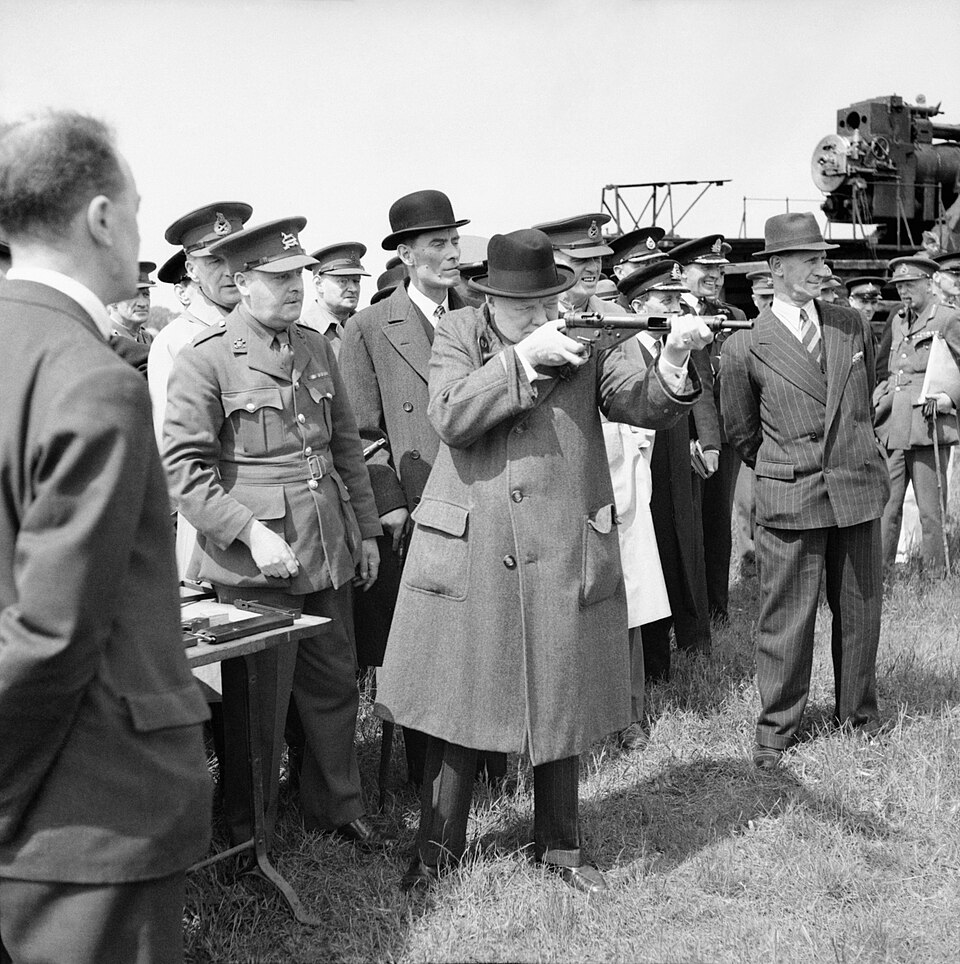
At the end of June 1940, no one knew how the European War would progress, as after the Fall of France, Nazi Germany seemed to be unstoppable but Cometh the Hour, Cometh the Man. Winston Churchill rose to become the Prime Minister of Britain on 10th May 1940, on the very day Hitler invaded France and the Low Countries. His fortitude strengthened the resolve of the British people to continue the fight and ultimately win victory on VE Day, the 8th May 1945.
But let us delve into the realms of fantasy and suggest an alternative history, whereby the German military juggernaut kept rolling on and Britain became subjugated under German military rule. Such a scenario was envisaged by Len Deighton in his book “SS-GB”, and it is chilling to think how the world would have changed had such a state of affairs occurred, with a dystopian human existence predicated by the pseudo science of eugenics that made Aryans, those with blond hair and blue eyes, the master race. Not that Hitler himself fitted the bill.
The setting of “SS-GB” is London in November 1941, 9 months after the Nazis have taken occupation. The brief European War is over and what was the Second World War never happened. Russia and Germany still remain bound by the Molotov-Ribbentrop Pact (a mutual non-aggression treaty) and America is keeping staunchly isolationist and neutral. The plot involves a Scotland Yard detective superintendent, Douglas Archer, who is investigating a murder of a man, who turns out to be a nuclear scientist. He tries vainly to stay aloof of any political entanglement by focusing on finding the murderer, whilst working closely with Dr Oskar Huth of the Schutzstaffel (SS), sent from Berlin. However, like it or not, he finds himself embroiled in the intrigues of the SS, the Wehrmacht and the British Resistance. Suffice to say that the story ends with the Americans attacking an atomic research laboratory at Bringle Sands, Devon in order to obtain nuclear secrets and to spirit away scientists working on an atom bomb and then to successfully destroy the facility, to deny the Nazis any chance of winning the race to be the first to explode the A-Bomb.
Both in fact and fiction the Americans took over the British nuclear weapons research and development programme (Code Name: Tube Alloys) to create the Manhattan Project that would culminate in the dropping of the first Atomic Bomb on Hiroshima on 6th August 1945.
Len Deighton opined that the RAF, by not letting the Luftwaffe control the skies over the English Channel in the Battle of Britain (1940), paved the way for the eventual victory against Adolf Hitler (1945), just as Nelson winning the Battle of Trafalgar (1805) gave final victory to the Duke of Wellington against Napoleon Bonaparte at Waterloo (1815). Britain was never invaded thus it could fight on.
References and Further Reading:
- “Blitzkrieg – From the Rise of Hitler to the Fall of Dunkirk” by Len Deighton, first published by Jonathan Cape Ltd, 1979.
- “SS-GB” by Len Deighton, first published by Jonathan Cape Ltd, 1978.
- “Fighter: the True Story of the Battle of Britain” by Len Deighton, first published by Jonathan Cape Ltd, 1977.
- “Blood, Tears and Folly – an Objective Look at World War II” by Len Deighton, first published by Jonathan Cape Ltd, 1993.