
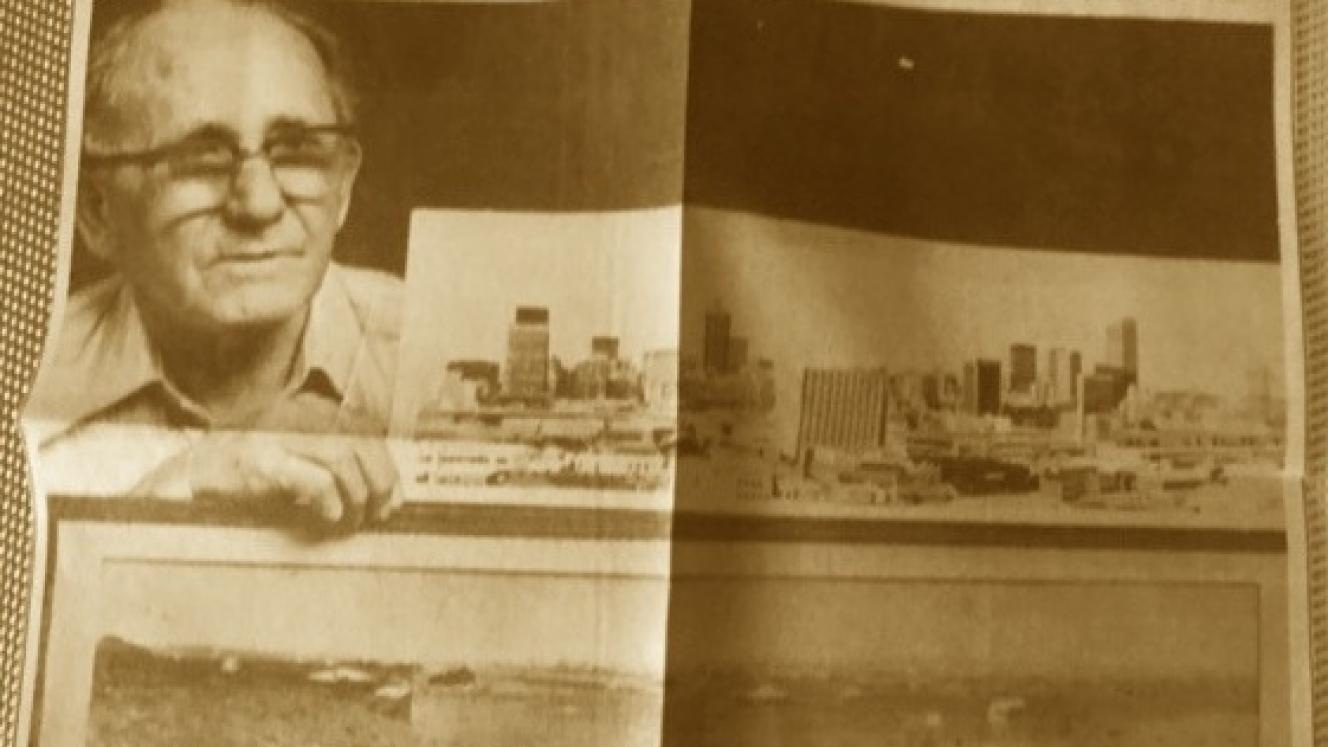
On 11 April 2026, a gathering convened by the Johannesburg Heritage Foundation brought together historians, collectors, archivists, and friends to celebrate the lives and work of Dr Oscar Norwich (1910–1994) and Rose Norwich (1921–2024)—two individuals whose combined efforts have left an enduring mark on the recording and understanding of Johannesburg’s past.
The event, held at Northwards and hosted by curator Neil Viljoen, followed the passing of Rose Norwich in 2024 at the remarkable age of 103. In the months thereafter, executor David Nathan facilitated the donation of selected materials from the Norwich archive to Johannesburg Heritage, ensuring that their work continues to inform and inspire.
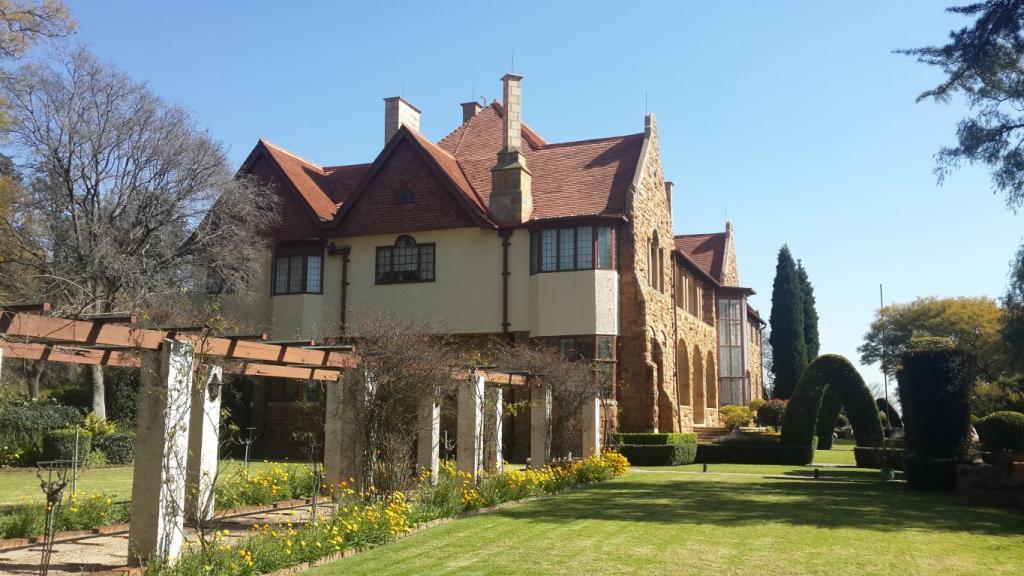
Northwards (The Heritage Portal)
The donation includes photographs, early pamphlets, Johannesburg art prints (including works by Arthur Cantrell), sketches, research papers, and a working consolidated copy of the 1906 Goad Insurance Plan of Johannesburg. These now join Rose Norwich’s important architectural study, Synagogues on the Witwatersrand before 1930, already held in the collection.
The Norwich postcard collection—one of the most evocative visual records of the city—has been deposited with the Wits University Historical Papers. Meanwhile, Oscar Norwich’s significant African map collection, assembled over decades, was acquired during his lifetime by Stanford University and is now widely accessible through the David Rumsey Map Collection.
A Life of Collecting, Researching, and Sharing
Oscar Norwich, a Johannesburg surgeon by profession, became an internationally recognised authority on African cartography. His landmark work, Maps of Africa: An Illustrated and Annotated Carto-bibliography, remains a standard reference, while A Johannesburg Album (published in 1986 for the city’s centenary) used postcards to trace the visual development of the city and its suburbs.
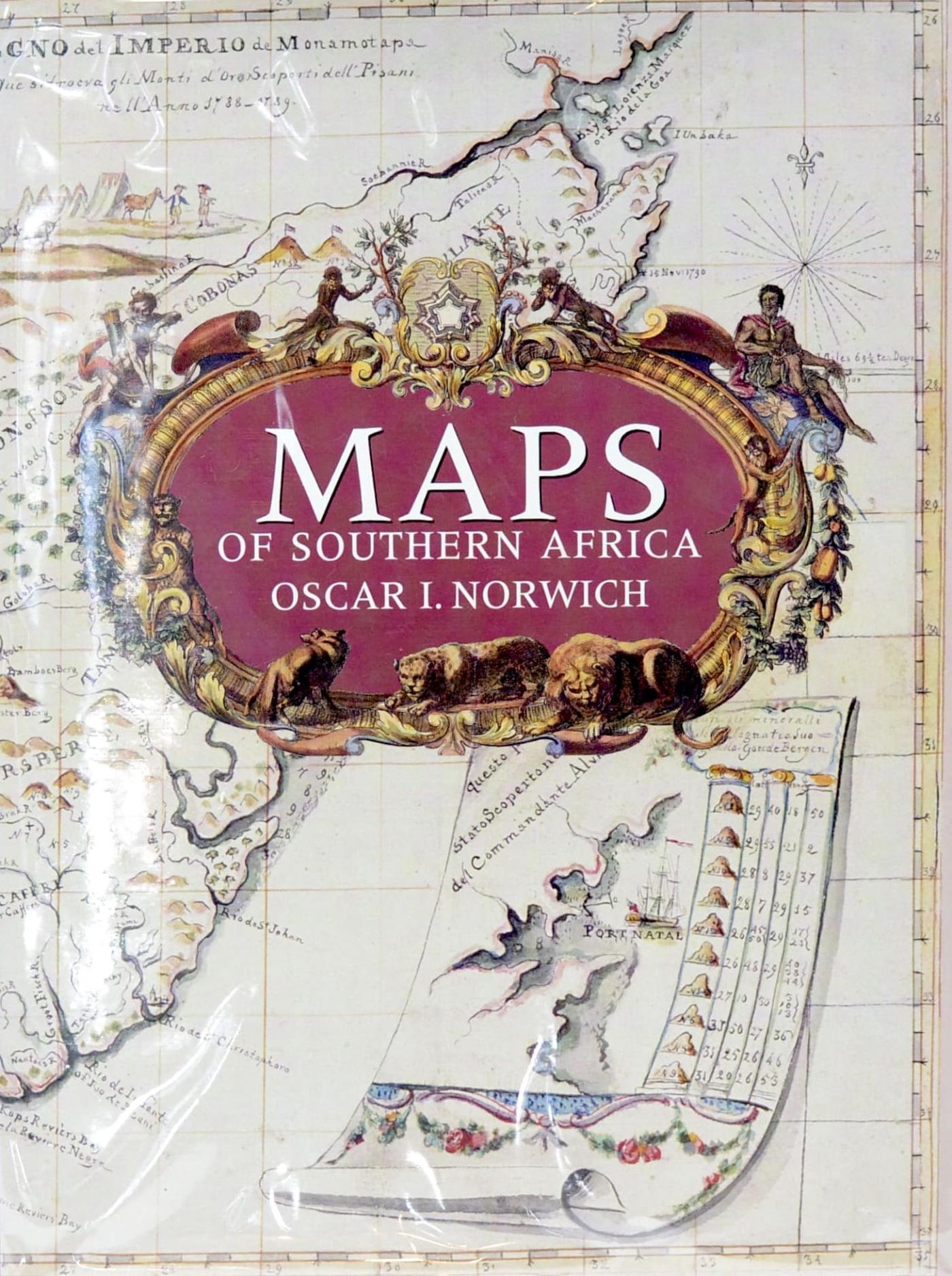
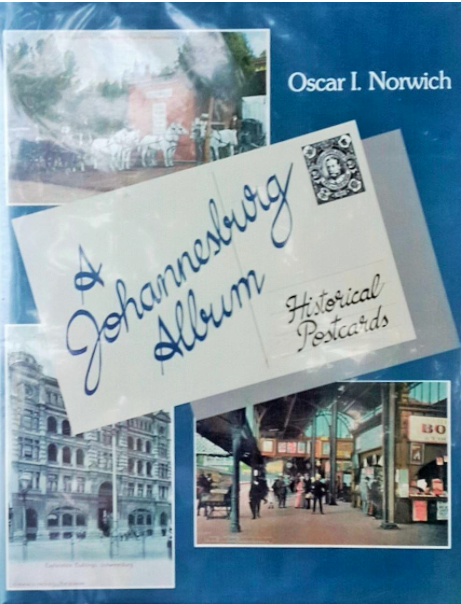
Norwich was a prolific map and postcard collector and published these notable titles
He was also the founding chairperson of the Johannesburg Historical Foundation (established in 1970), a leader of heritage tours, and a driving force behind the journal Between the Chains (19 issues published between 1978 and 1997). Through these efforts, he helped shape a culture of engaged, public-facing history in Johannesburg.
Rose Norwich, an architect with a Master’s degree from the University of the Witwatersrand, made an equally significant contribution. Her thesis on Johannesburg’s synagogues remains a foundational work—meticulously documenting 43 buildings, often through painstaking archival and field research. Her work revealed not only architectural form, but also patterns of migration, belief, and adaptation within the Jewish community.

Old Postcard of the Doornfontein or Lions Synagogue
Beyond architecture, Rose played a leading role in documenting Jewish life across South Africa. She helped curate a major exhibition on South African Jewry at the Museum of the Jewish Diaspora in Tel Aviv in 1983, seen by over 60,000 visitors, and later co-led the publication of a six-volume series on Jewish life in South African country communities—an extraordinary record of more than 1,500 settlements.
Together, Oscar and Rose Norwich embodied a rare combination of intellectual rigour, curiosity, and public generosity.
Themes from the Discussion
The panel, chaired by David Fleminger, with Kathy Munro, Gabi Mohale, Mark Inman and Carol Hardijzer, explored themes central to heritage practice:
- The power of collections—and the distinction between collecting and hoarding
- The movement from private collections to public archives
- The role of the built environment in shaping memory and identity
- The relationship between passion and scholarship
Postcards emerged as particularly rich historical sources—layered documents combining image, message, and social context. Carol Hardijzer emphasised their interpretive depth, while Mark Inman provided insights into early postal systems, including the role of the RMS Titanic as a mail ship and the scale of correspondence lost with its sinking.
Kathy Munro reflected on antique African maps as records of expanding European knowledge—tracking coastal navigation and later colonial penetration—while also noting their aesthetic value as objects of display within libraries.
A key theme was accessibility. While digitisation—particularly of the postcard collection—was widely supported, Gabi Mohale reminded the audience that no digital surrogate can replace the experience of handling an original document: the texture of paper, the weight of a photograph, the immediacy of a handwritten note.
Publication, Participation, and Legacy
The importance of publication was strongly emphasised. The Between the Chains series remains a rich and under-recognised resource for Johannesburg history. Special acknowledgement was given to James Ball of the Heritage Portal for republishing Oscar Norwich’s writings and bringing them to a new generation of readers.
Audience participation added warmth and depth, with contributions from those who had known the Norwichs, attended Oscar’s tours, or contributed to the journal—including Lana Bronstein, Ruth Coggan, Flo Bird, and Mary Boyease.
The discussion concluded with a shared understanding that the preservation of heritage depends not only on collecting, but on active engagement: researching, archiving, curating, writing, publishing, and above all, making collections accessible.
The session closed with the traditional Jewish phrase, “May their memory be a blessing”—a fitting reflection on lives that continue to inspire through knowledge, generosity, and commitment.
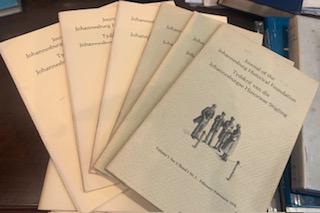
Between the Chains Journals
Continuing the Record
Acknowledgement was also made of Mark Straw, whose filming and recording of the event will itself form part of the evolving archival record.
In remembering Oscar and Rose Norwich, we are reminded that the history of a city is not only preserved in institutions. It is first recognised, assembled, and interpreted by individuals—driven by curiosity, discipline, and a deep attachment to place.
Kathy Munro is an Honorary Associate Professor in the School of Architecture and Planning at the University of the Witwatersrand. She enjoyed a long career as an academic and in management at Wits University. She trained as an economic historian. She is an enthusiastic book person and has built her own somewhat eclectic book collection over 40 years. Her interests cover Africana, Johannesburg history, history, art history, travel, business and banking histories. She researches and writes on historical architecture and heritage matters. She is a member of the Board of the Johannesburg Heritage Foundation and is a docent at the Wits Arts Museum. She is currently working on a couple of projects on Johannesburg architects and is researching South African architects, war cemeteries and memorials. Kathy is a member of the online book community the Library thing and recommends this cataloging website and worldwide network as a book lover's haven. She is also a previous Chairperson of HASA.