
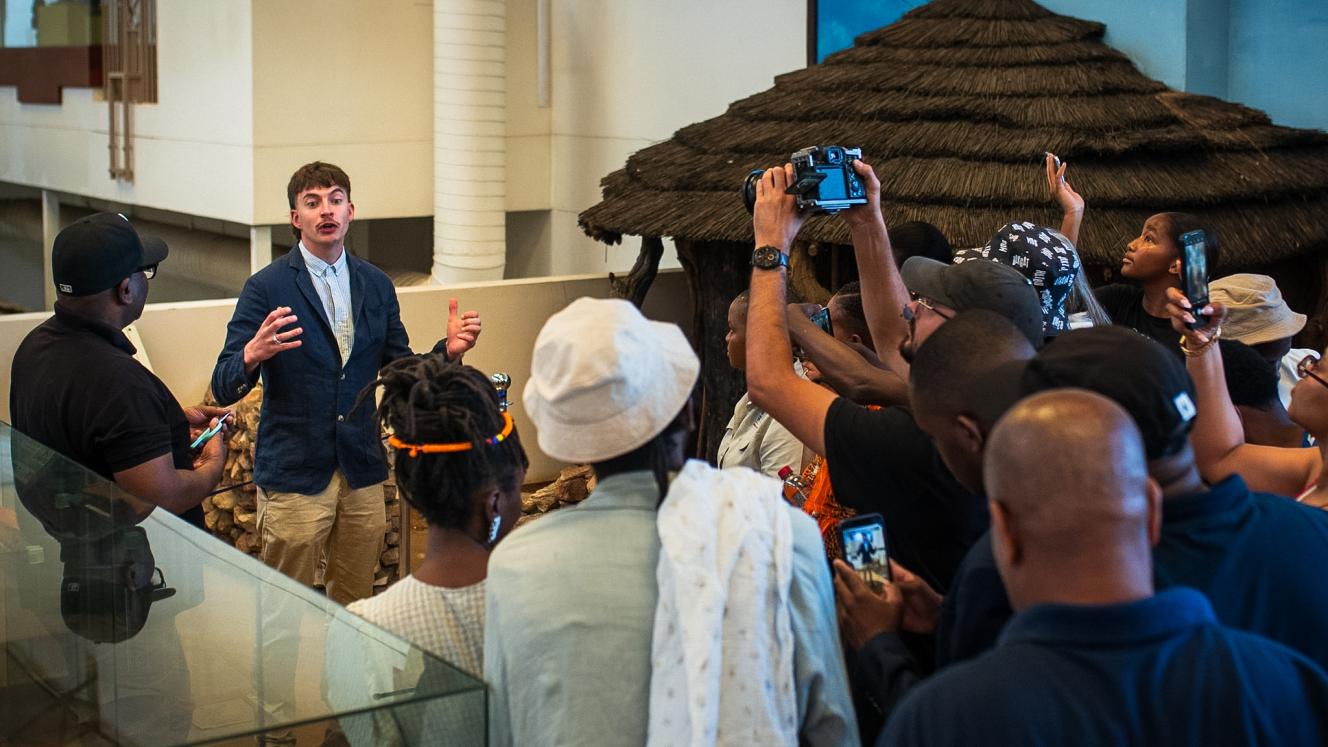
On Heritage Day 2026, the Iron Age furnace that Revil Mason excavated on Melville Koppies in 1963 went on permanent display at Museum Africa in Newtown, rebuilt in augmented reality by the University of Johannesburg's Metaverse Research Unit. Aubrey Moloto, a Koppies volunteer, committee member and founder of Snaps On Seventh, the company behind the Melville Untold newsletter, tells the story of the smelter, the launch, and the people who kept the site alive for six decades. A shorter version of this piece first appeared in Melville Untold on 25 September 2026 (click here to view to view).
In 1948, a young Revil Mason picked up a Stone Age handaxe on Melville Koppies, then still grazing land, and handed it to the Melville Koppies Committee. Fifteen years later, the committee asked him to come back and look for more. "I went there and found the prehistoric furnace," he told Lucille Davie, in a piece this site republished as Revil Mason's Melville Koppies (click here to view). "The upper part was faintly visible as a ring. Lots of visitors had walked over it, not realising it was there."
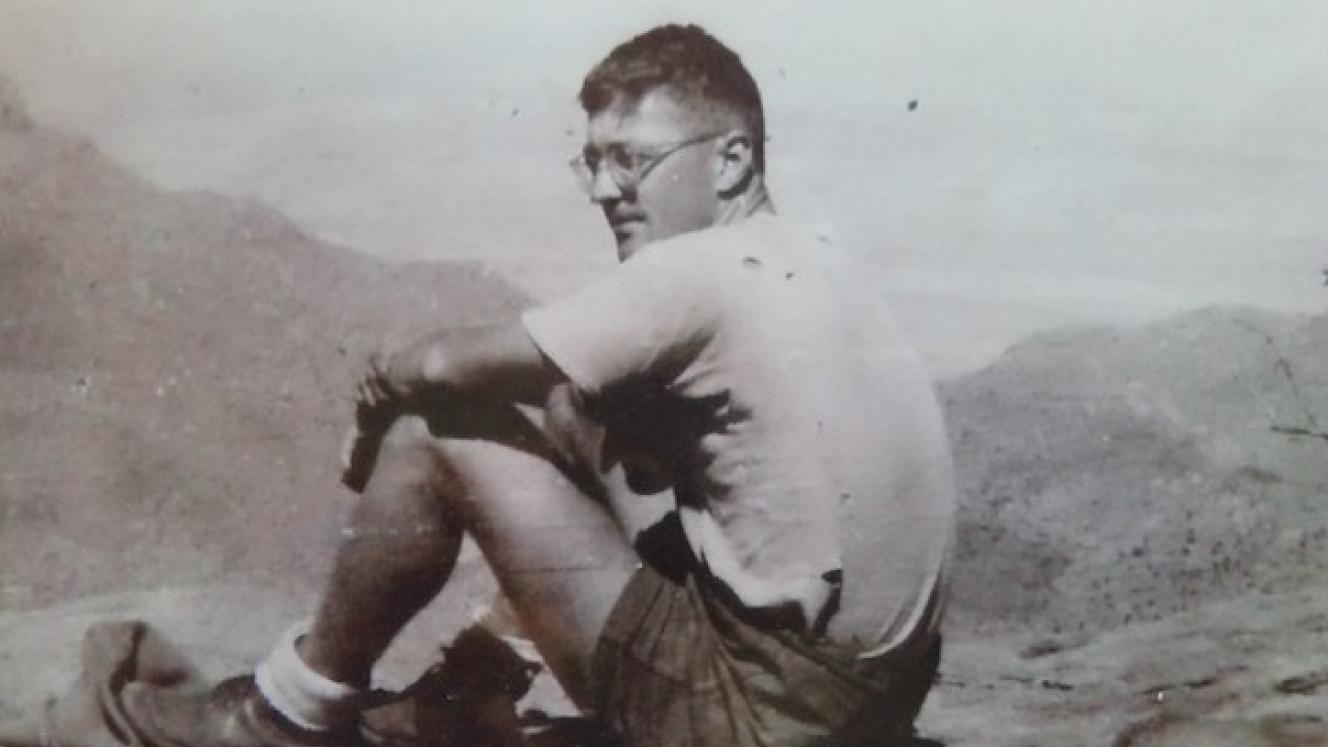
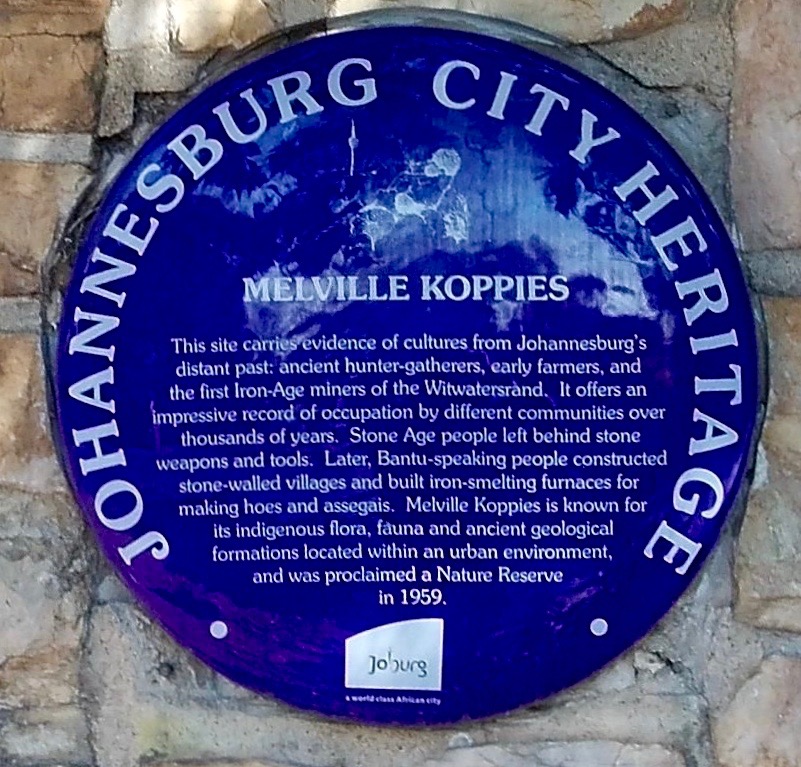
Carbon dating later placed the furnace's use somewhere between 1060 and 1580 AD. Its builders were Sotho-Tswana iron workers, farming and smelting on the ridge centuries before the 1886 gold rush. Mason's excavation led to the koppies being proclaimed a national monument in 1963, and the furnace has stayed where he found it, under a glass cover on Koppies Central, looked after by the Friends of Melville Koppies ever since.
Walking over it
I was one of those visitors for about 30 years. As a child, I learnt to ride a bike on Melville Koppies West, caught crabs in the stream, and collected the bullet casings the Brixton police left on the ridge while they trained for the "civil war" they expected after Mandela's release. Later, the lookout bench on Koppies East became the meeting room where I built my business.
I was over 30, and already a volunteer, before I learnt that the smelter on Koppies Central had been built by Sotho-Tswana iron workers. I speak Sepedi, a Sotho language. The evidence of my own people's industry had been a few hundred metres from where I grew up, and I hadn't a clue.
That gap between the site and the people to whom the history belongs is what the project described below set out to close.
The furnace in augmented reality
On Workers' Day, 1 May 2026, the University of Johannesburg and the Melville Koppies Management Committee launched an augmented reality (AR) reconstruction of the smelter on the koppie itself. A visitor holds up a phone at the site, and the furnace rebuilds itself on screen, then explains how it worked, narrated in Setswana, isiZulu, Afrikaans or English. There's no app to install.
The reconstruction was built by Dr Izak Potgieter of UJ's Metaverse Research Unit, a Melville resident whose PhD rebuilt Sophiatown in virtual reality. "I don't think anyone really knew what I was trying to do when I proposed this project," he told me.
The committee took some convincing. An AR layer on a proclaimed heritage site isn't an obvious fit for a volunteer body that has spent six decades protecting the real thing. Preservation is part of it. The AR holds the furnace in a form weather can't reach. The bigger cause is who it reaches: a new crowd on the hill, people who would never otherwise make the climb or read an interpretation board, and the history carried into the fifth industrial revolution.
In 2026, visitor numbers on the koppies have gone up. Children enjoy the visuals; older visitors listen to the story. At the May launch, an older woman went through the experience in Setswana and said: "I've been living in Johannesburg my whole life. I never knew that we were part of the story." I've heard many versions of that on the Koppies.
"These are histories which haven't been given the light of day," Dr Potgieter says. "I don't think we can be a successful country if we don't do that."
Why Museum Africa
After Mason's excavation, a model of the furnace went on display at Museum Africa, and some of today's Koppies committee members worked on that original exhibit. "It seems quite poetic to retrace the steps of history," Dr Potgieter says.
The second reason is access. The walk up to the furnace on Koppies Central takes about ten minutes, and not everyone can manage it. The museum has lifts and ramps. "It's important to make sure that there's universal accessibility to our public history," Dr Potgieter says.
Museum Africa saw the project as a start rather than a one-off. "This one is very exciting because this is going to be modernising our smelting area," said Zola Mtshiza of Museum Africa. "This is the beginning actually of many projects that are still to come."
Iron Memory II, 24 September 2026
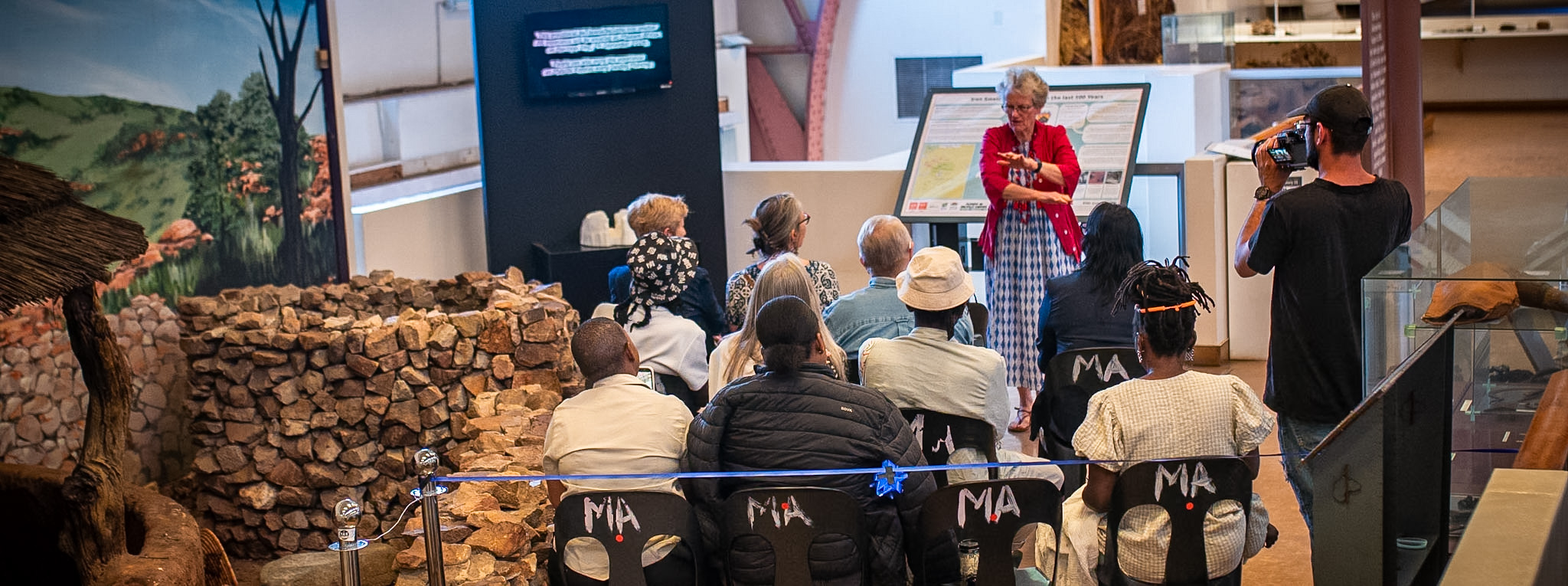
The launch, titled Iron Memory II, ran on Heritage Day from 09:30 to 11:30 in the museum's pre-colonial gallery. The programme included talks from UJ and the museum, a short documentary on how the project came together with the committee and the neighbourhood, and the AR experience itself. Dr Potgieter and Mtshiza cut the ribbon together to open it.
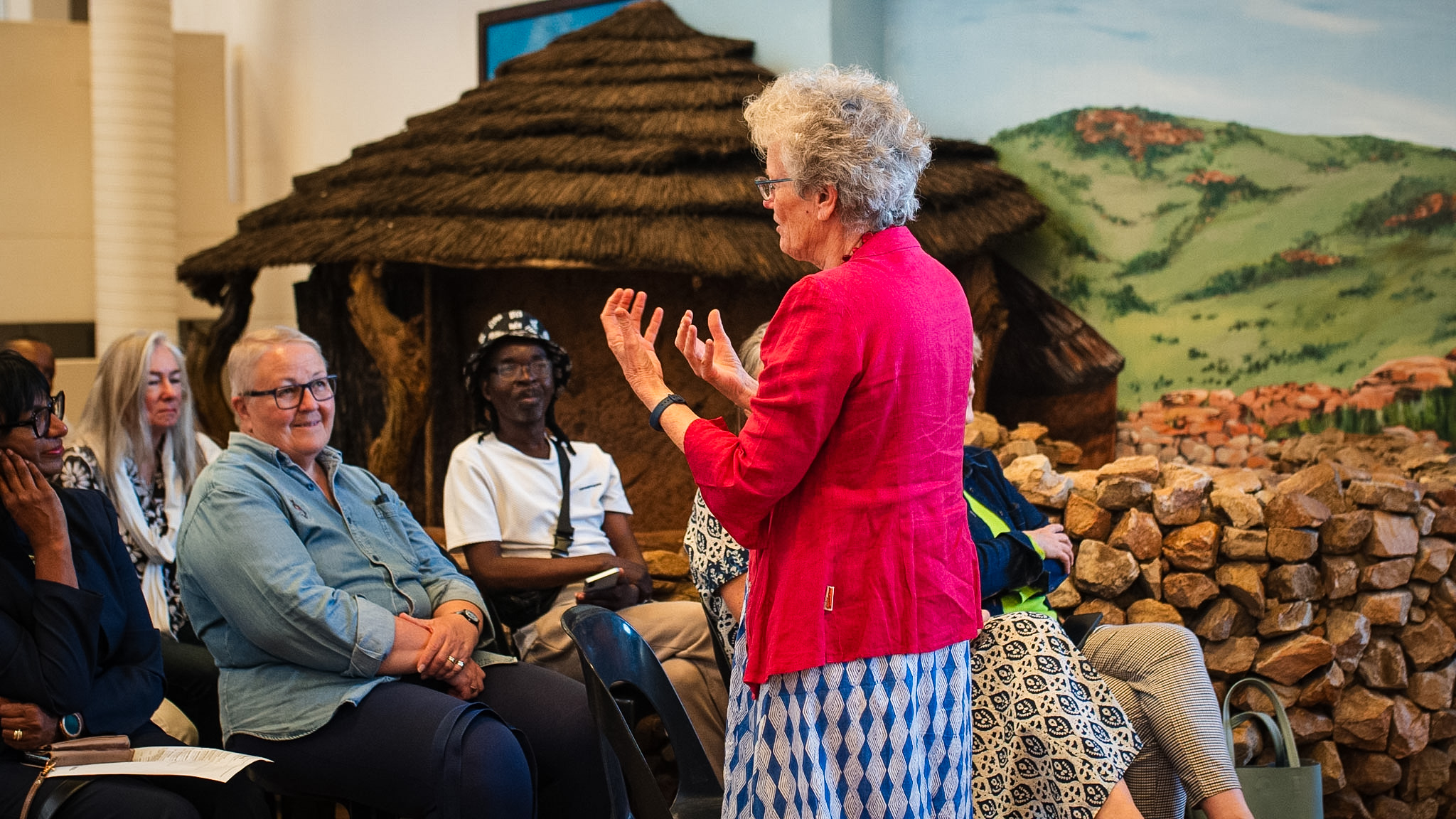
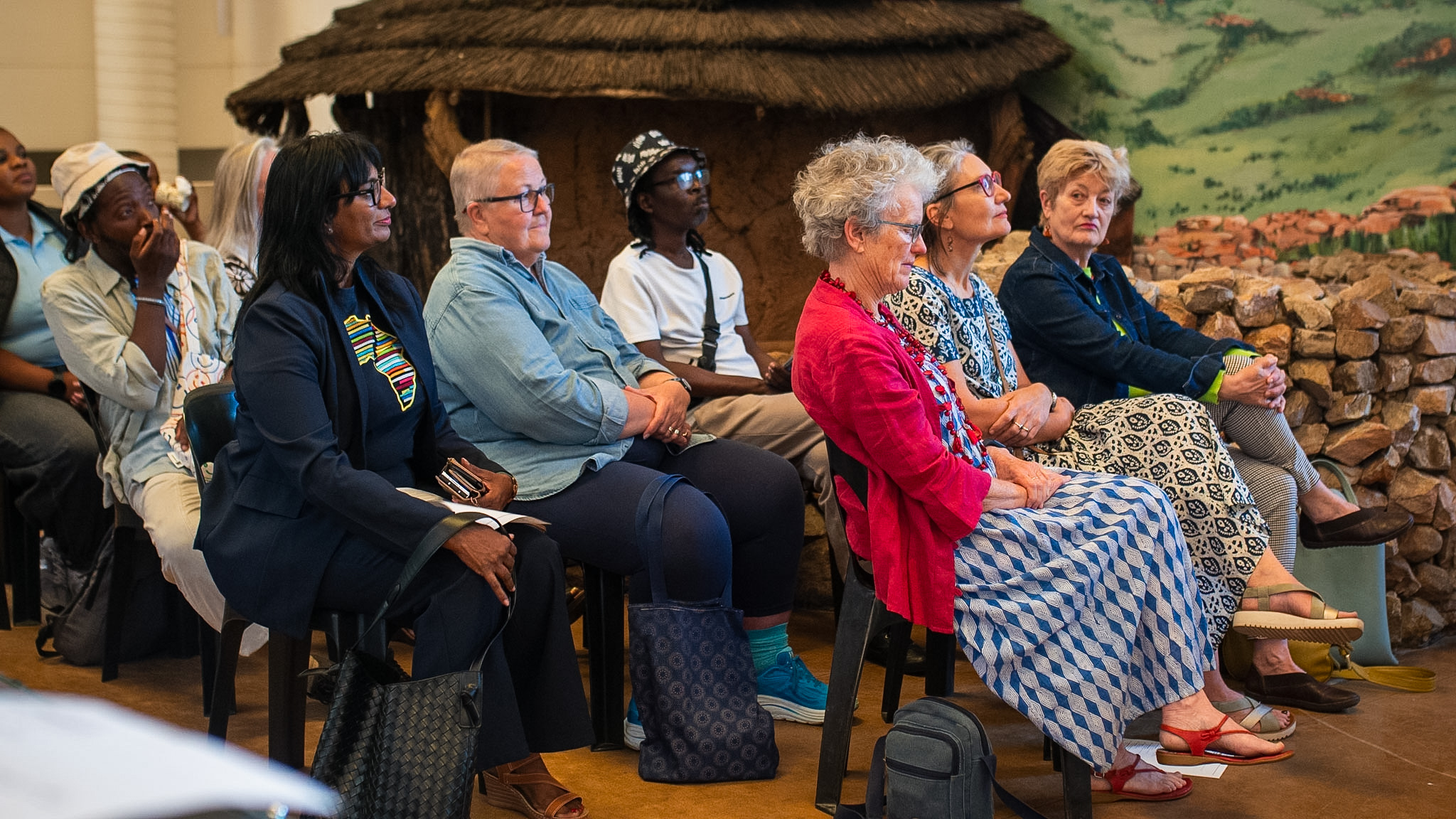
It was planned as a small, invitation-only morning, and by the time the talks began, people were filing in at the back. Dr Gillian Drennan of the Wits School of Geosciences, who chairs the Museum Africa committee, attended. Jenny Moodley, head of public relations at Johannesburg City Parks, spoke about how much of the city's heritage sits inside its parks and public open spaces, and both mentioned building stronger working channels between institutions like Wits, UJ, the Parks and the museum.
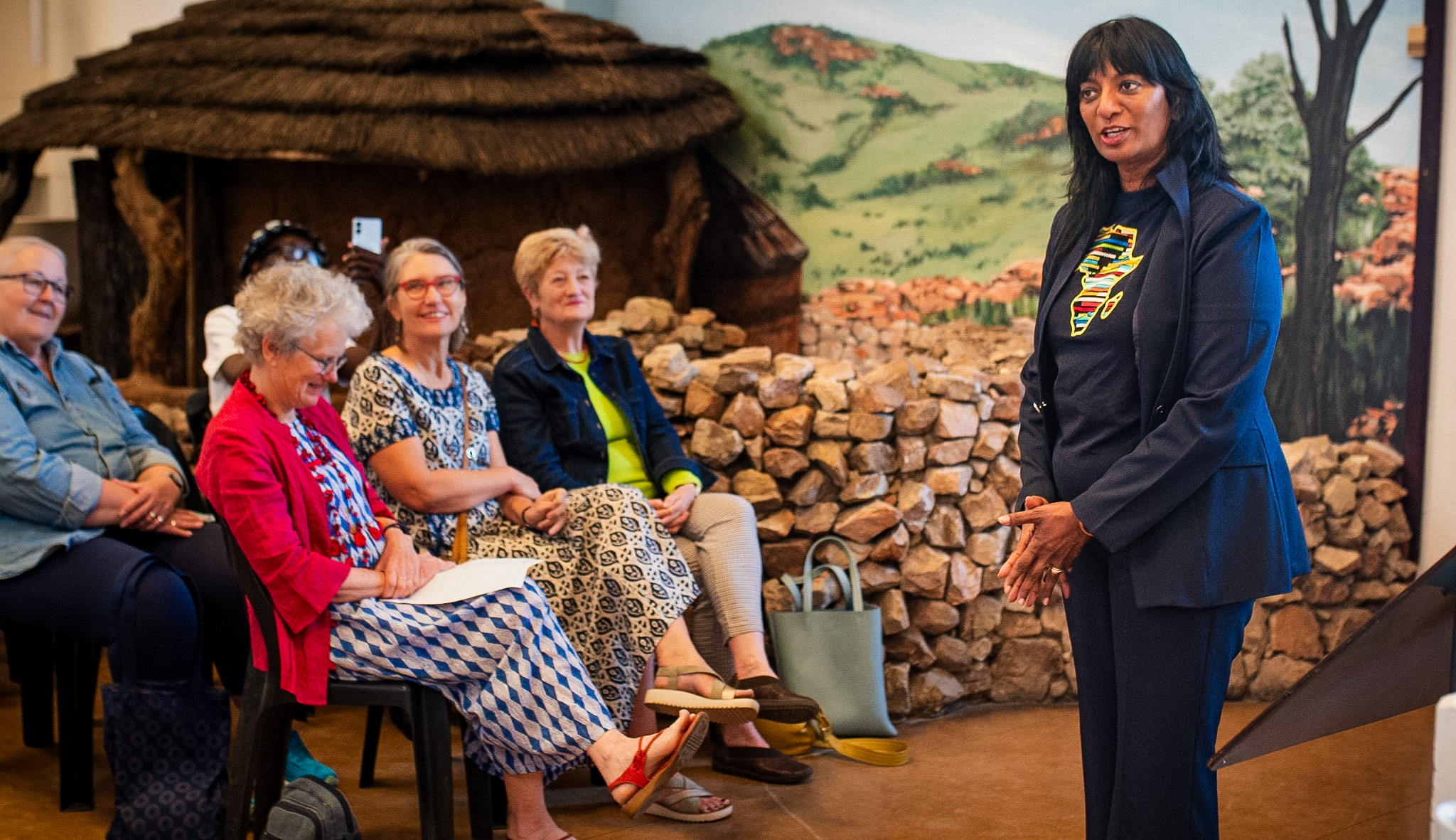
Jenny Grice, the new chairperson of the Melville Koppies Management Committee, spoke about the distance the project had travelled since the AR first went up on the hill: from a hard sell to a cautious committee, to a permanent pointer in the city centre that sends visitors back to the koppies. Her view of why it matters:
"We are excited by the opening of the new augmented reality smelter experience at Museum Africa. As Joburg celebrates 140 years of its gold heritage, the smelter experience reminds us that Joburg's history is more than gold. Hundreds of years before the 1880s, there were many farmer settlements dotted across what is now Joburg: Melville Koppies, Bruma, Klipriviersberg and more. The inhabitants were the ancestors of people who had migrated from further north in Africa, bringing with them metalworking skills. At Melville Koppies, evidence also shows that going back even further in time, the Koppies' beautiful ridges and grasslands were home to San hunter-gatherers and early man, thousands of years before. The smelter experience will go a long way in enriching our understanding of Joburg's past."
The morning closed with a quiz on the smelter. Prizes included tickets to the Fak'ugesi African Digital Innovation Festival and passes to visit the real furnace on the koppies; exactly the journey the whole project is designed to encourage.
The only one that survived
Grice's point about Bruma and Klipriviersberg is worth dwelling on. Mason himself went on to find 14 more prehistoric iron furnaces in Northcliff, Lonehill, Panorama and Bruma, and 110 Sotho-Tswana villages in what is now the Klipriviersberg Nature Reserve. Iron smelting was common across the highveld ridges that became Johannesburg.
"Smelters like this existed all over," Dr Potgieter says. "But this is the only one that was actively preserved over decades of hard work. It's been passed down from person to person, and it's just passionate individuals. That's Melville."
Everywhere else, they were built over. On Melville Koppies, the committee, the Friends and a long line of volunteers kept the site intact through a period when official history had little room for African industry, and a proclamation in 1963 gave that work legal backing. Mason put his own motive plainly to Davie: "South Africa needed a better history."
Seeing it for yourself
The AR smelter is now a permanent part of Museum Africa's pre-colonial exhibit. Take the ramp above the main entrance up to the gallery and scan the QR codes with your phone. Museum Africa is at 121 Lilian Ngoyi Street, Newtown, with secure parking at Newtown Junction.
The furnace itself is on Koppies Central, reached on the Friends of Melville Koppies' guided walks. The AR works on site too. The Melville Koppies Nature Reserve is open every Sunday morning from 8 am to 11.30 am. Secure parking at Marks Park on Judith Road, opposite the Koppies Central entrance.
Dr Izak Potgieter's hope is that a tourist who meets the smelter in Newtown reads that it lives in Melville, then comes to find the real one and stays for lunch. "This is a very special gem that Melville has in its crown," he says. "Perhaps it hasn't been polished in a while, but we've been polishing it now."
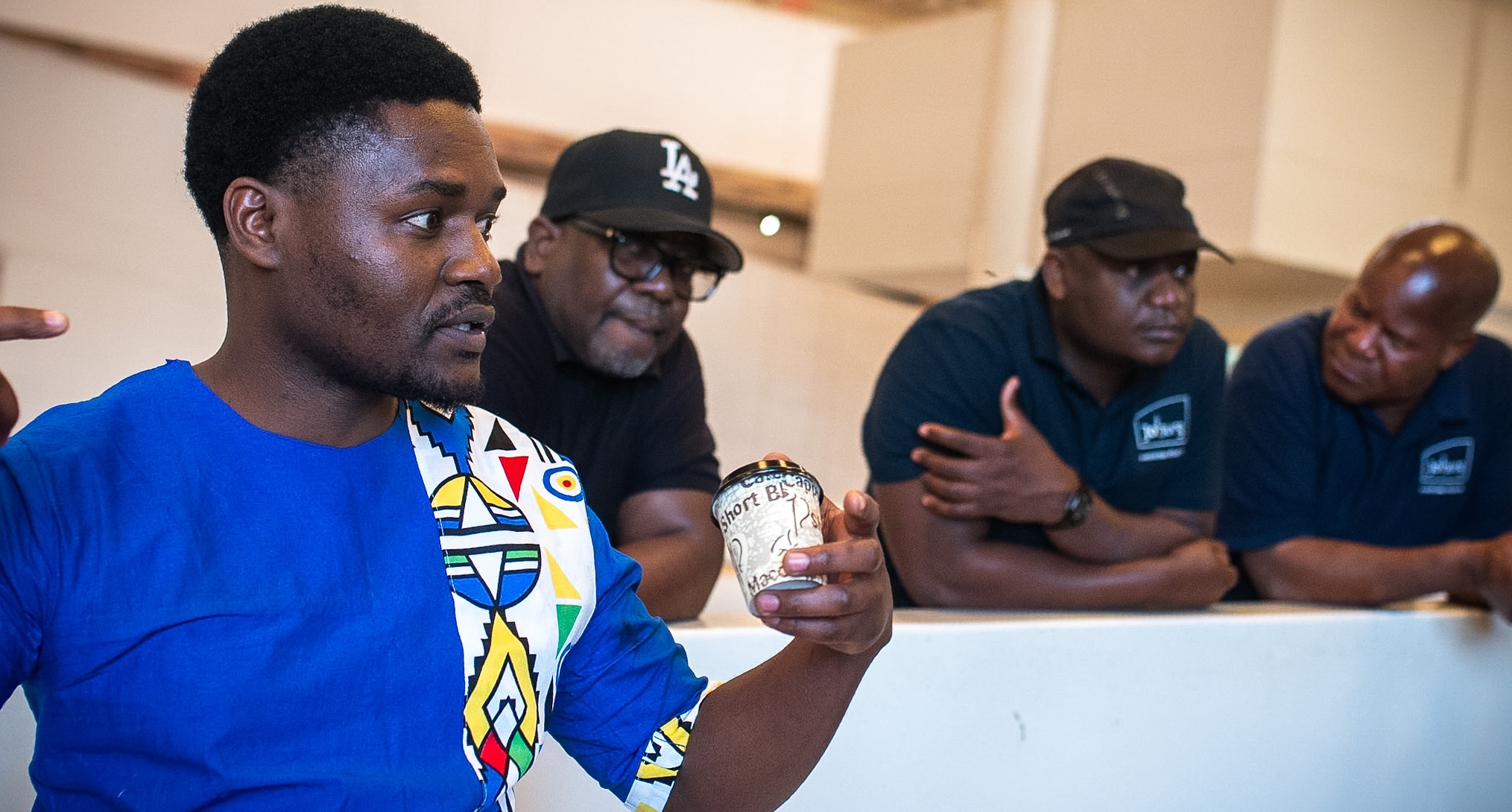
Aubrey Moloto grew up in Melville and is a volunteer with the Friends of Melville Koppies. He is the founder of Snaps On Seventh, a Melville-based digital media and content agency, and edits Melville Untold (https://untold.snapson7th.co.za), a weekly newsletter about the suburb. He also runs the Melville Art Mile (https://www.melvilleartmile.co.za), held on the first Thursday of every month.
Main image: Dr Izak Potgieter of UJ's Metaverse Research Unit introduces the AR smelter in Museum Africa's pre-colonial gallery, 24 September 2026 (Snaps On Seventh)