
Disclaimer: Any views expressed by individuals and organisations are their own and do not in any way represent the views of The Heritage Portal. If you find any mistakes or historical inaccuracies, please contact the editor.
The Great War of 1914 to 1918 was said to be “The War to End All Wars” and it symbolically ended with the signing of the Armistice (a truce), which gave the time and the date of when hostilities would cease – the 11th hour of the 11th day of the 11th month 1918. However, the War only ended when all the treaties were signed and those signatures ranged between 1919 and 1923. The War began on the 1st August 1914 and was fought between two Alliances, the first being the Empires of Germany, Austria-Hungary and the Ottomans (the Central Powers) and the second being that of the Empires of France, Russia and Great Britain (known as the “Triple Entente”) and both sides truly believed that the War would be over by Christmas and it could well have been. The Germans were within a whisker of emulating the Prussian victory over the French of 1870, but they were checked, at the Battle of the Marne in September 1914 and going forward there would be four more wretched years of trench warfare.
The British Expeditionary Force (BEF), of six divisions (the “Old Contemptibles”), was sent, in mid August 1914, to France, in support of the French Army, to counter the German threat and between then and the end of the War each side would try and annihilate the other. The film “Oh! What a Lovely War” and the TV series “Blackadder Goes Forth” showed with satire and pathos the utter lunacy of the conflict, where men “Went over the top” into “No Man’s Land” to be slaughtered. The First World War, as it later became known, was fought on an industrial scale with both sides expending vast amounts of ammunition (shells and bullets) with the soldiers on both sides becoming “Cannon Fodder”. The stalemate was only overcome when the Americans entered the War in 1917 and tilted the balance against the Germans. I consider myself lucky that my own grandfather, Jack Ross, who fought in the trenches as a teenager, survived the War and was able to go on to raise a family.
Behind the Lines on both sides there were organised supply columns re-stocking the troops in the trenches at the Front and the artillery batteries some way behind them. Railways, both standard gauge (i.e. full size) and 600mm narrow gauge (half size) were vital for both sides and it could be said, “No railways no war”, however railways were the cornerstone of strategic and operational planning and were thought out long before hostilities began.
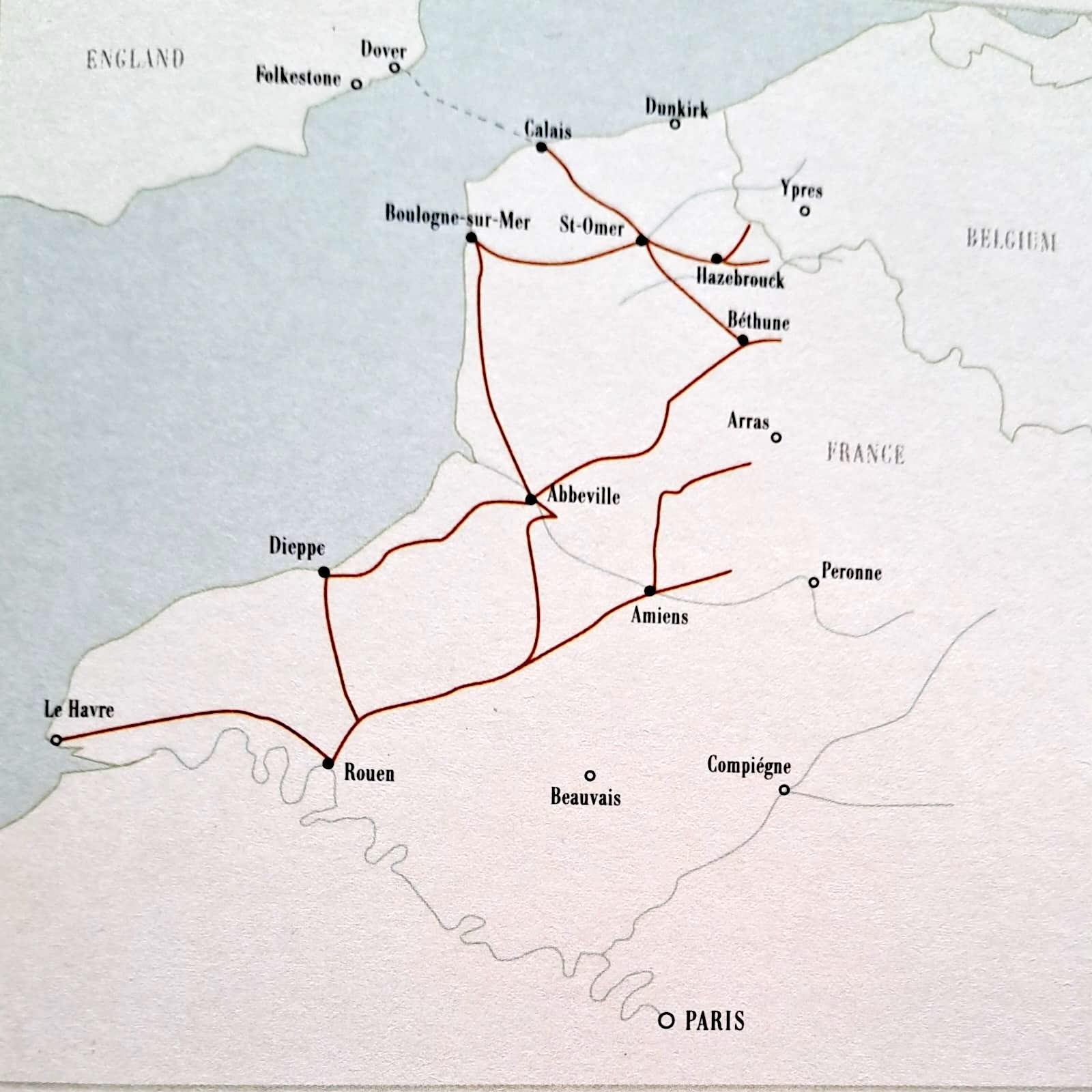
Railway lines to the Western Front
There were always going to be logistical problems supplying the forward positions during wartime and in the northern sector of the Western Front held by the British Army it became a major difficulty especially after the Battle of the Somme (1st July to 17th November 1916). The British had relied on French and Belgian steam engines as well as some superannuated locomotives taken from the home mainline railways and the operation and maintenance of this stud fell to the Railway Operating Division (R.O.D.) of the Royal Engineers. The war was attritional and many engines were being lost to enemy action or were out of service awaiting repairs and this was having an adverse effect on the capability of R.O.D.
Dean Goods Engine on the Western Front (Locomotives Illustrated)
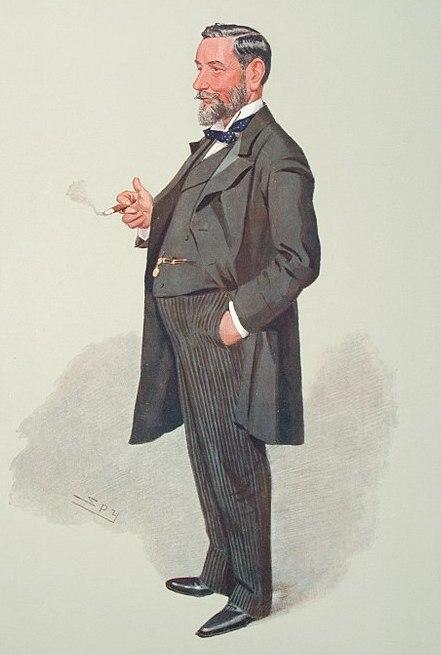
At the beginning of 1917 Sir Sam Fay, the renowned General Manager of the Great Central Railway (GCR) took over the post of Director of Movements at the War Office, having previously been a member of the Railway Executive Committee. He was known to be a man who got things done and he placed an order with the North British Locomotive Co. to have built a standard heavy goods engine of the 2-8-0 wheel arrangement based on the GCR’s Class 8K (of 1911), as designed by John G. Robinson, which had proven its worth on heavy coal trains from the Nottinghamshire coalfields to London. Of the initial order for 325 locos, 311 were shipped, brand new, to France to haul military supply and troop trains.
Caricature of Samuel Fay (Wikipedia)
The R.O.D. 2-8-0 engines were very successful and when they became surplus, at war’s end, many were bought second hand by three of the four newly grouped railways of Britain – the GWR, LMS and LNER, during the mid-1920's. Many of those worked for another 40 years, ending their years of service, in the mid 1960’s, in the unlined black livery of British Railways and even a few ended up as far away as Australia!
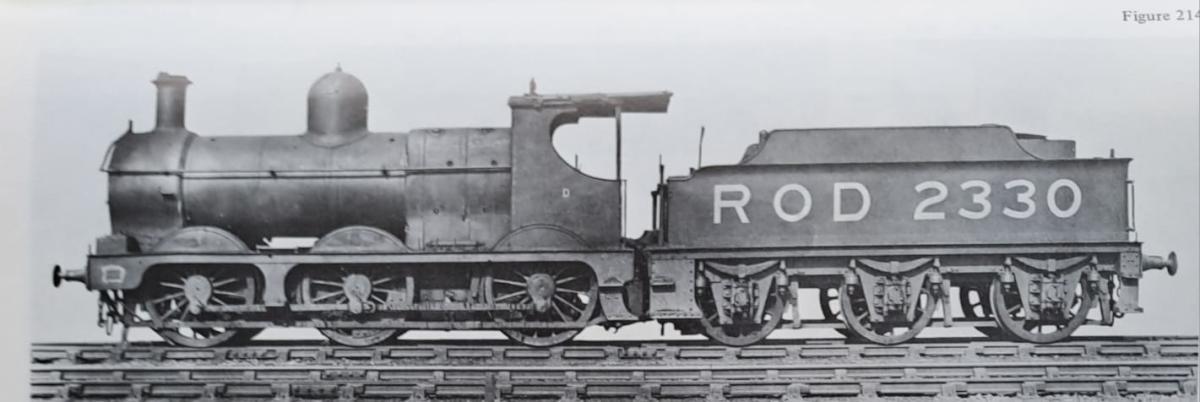
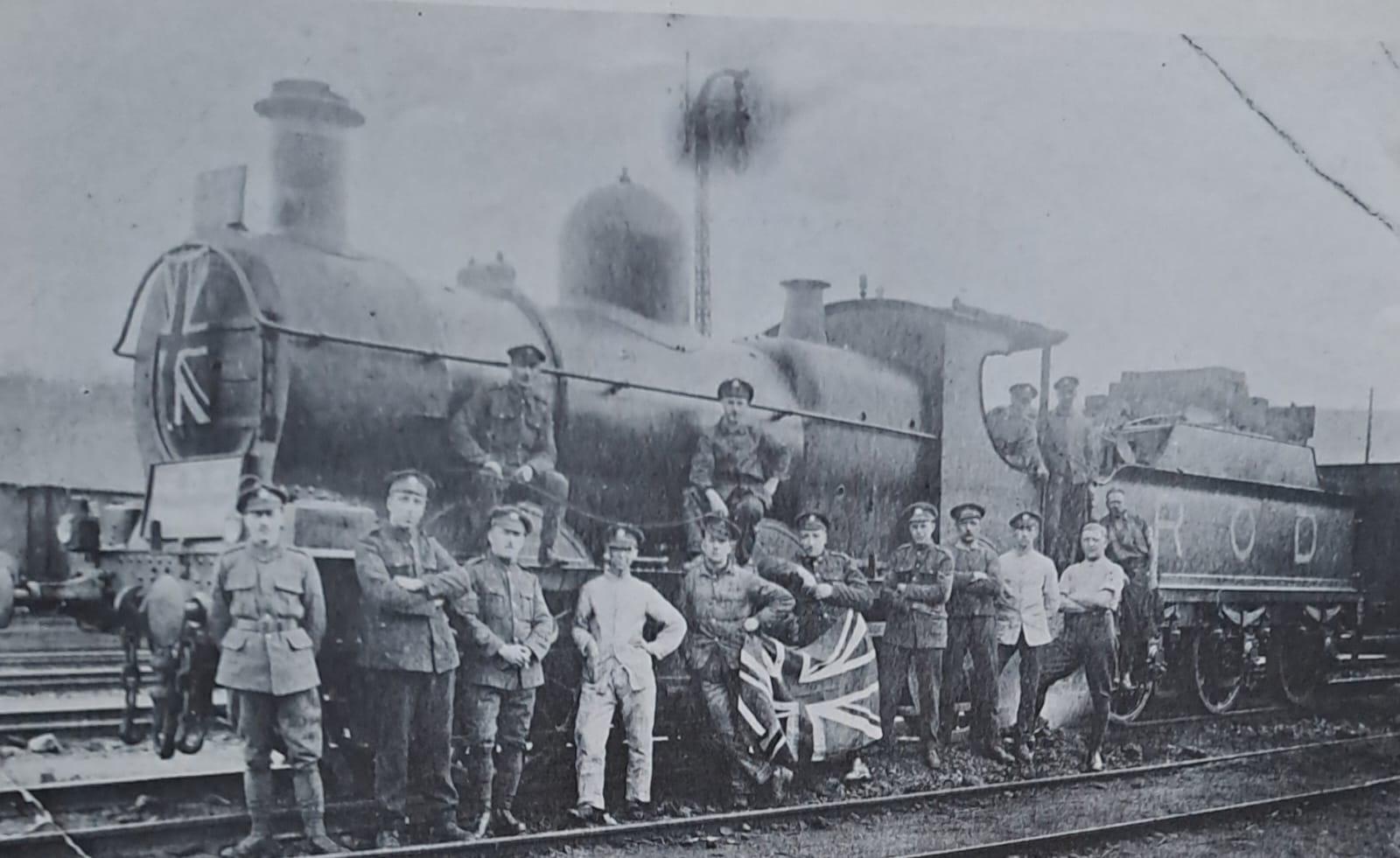
A most unlikely steam engine was “conscripted” in 1917 for military service to work behind the Front Lines in a variety of roles from shunting (switching in American parlance) to hauling supply trains from the French ports to the railheads several miles behind the trenches and pulling ambulance trains away from the conflict. The locomotive in question was the antiquated-looking Great Western (GWR) 0-6-0 tender engine of the 2301 Class Standard Goods, better known as the “Dean Goods” and in all 62 were sent across the Channel, the youngest being 20 years old. These engines were painted black (or dark grey) and most of them returned to the UK after the Armistice and resumed service in the Brunswick Green of the GWR.
At first sight the Dean Goods engines looked “pint-sized”, but its small size belied its strength and it did yeoman work and was known as the “backbone of the R.O.D.”. Its versatility was based on it being easy to drive, easy to maintain, having good pulling power and being lightweight, having a low axle load of 13 long tons, which allowed the loco to traverse lightly laid track.
It could be argued the Second World War (1939-1945) was a continuation of the First, with a 20 year truce in between. The BEF was once again sent to France to join forces with the French. At the outbreak of war the War Department (WD), knowing their worth, would “Call Up” 100 of the Dean Goods, some of which had been on the “Scrap Siding”. They earned a reprieve and were sent through the Swindon works for overhaul before being sent into “action”. Of the 100 locomotives 79 would be sent across the channel, with 24 of them doing a second tour of duty!
When Nazi Germany unleashed its “Blitzkrieg” against France and the Low Countries in May 1940 the BEF were forced to retreat to the beaches of Dunkirk, from where 338,000 British and French troops were safely evacuated back to England (Operation Dynamo), to live to fight another day. However, all the BEF’s heavy military equipment was left behind, which included the Dean Goods and although many were destroyed a good few fell intact into enemy hands and were used in Occupied France until recaptured as the Allies swept across France in the summer of 1944. The few engines that were repatriated back to England, at the end of the War, were so worn out that they were scrapped immediately on their return.
The Dean Goods was so called after the GWR’s Locomotive, Carriage and Wagon Superintendent, William Dean, who held the post between 1877 and 1902. He was preceded by Joseph Armstrong (from 1864-1877) and was succeeded by George Jackson Churchward (from 1902-1921). The mention of their names emphasises the continuity of engineering practice at Swindon Works which was seamless as Dean was at first a pupil and then principal assistant to Armstrong and Churchward was principal assistant to Dean; a clear case of succession planning if ever there was.
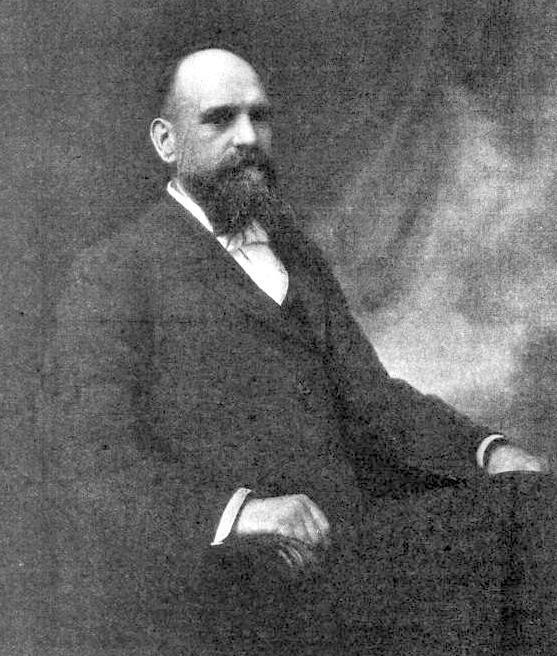
William Dean (Wikipedia)
Dean’s term in office coincided with the closing chapter of the Broad Gauge (7ft-0¼ in) which finally ended on the 20th May 1892, after 55 years in operation. He was intimately involved in planning and carrying out the conversion to Standard (formerly Narrow) Gauge from Broad Gauge which entailed producing engines that would run temporarily on the Broad Gauge and then would be easily converted to run on the Standard Gauge (of 4ft-8½ in), the so called “Convertables”. When he took office, the Standard Goods engine was the 388 Class as designed by his predecessor Joseph Armstrong which was a 0-6-0 tender engine with double frames, ie. inner and outer plate frames, with the driving wheels placed between them.
Dean determined to improve the breed and in 1883 he produced the first of his eponymous goods engines (Class 2301), which comprised a batch (lot) of 20 0-6-0 tender engines (Nos. 2301-2320); the class initially having a domeless parallel boiler with a round topped firebox and was more remarkable for having inside frames. They must have been considered a success as they continued to be built regularly in batches of 20 to 30 at a time until 1899 when they totalled 280 units, numbered. 2301-2580 inclusive; noting that 2361-2380 (20 No.) differed by having double frames and therefore, in some quarters, they have been construed as a separate class. During their long working lives they had improved boilers fitted, to better their performance, with the boiler pressure being raised from the initial 140 psi to 180 psi in their final condition; their last boiler (type B4) being fitted with a Superheater and a Belpaire firebox.
Between the years of 1907 and 1910 Nos. 2491-2510 (20 No.) were re-built as Tank Engines to form the 3901 Class (Nos. 3901-3920), but not as one would suppose, as a 0-6-0T of the saddle or pannier type, but instead, rather oddly, as a 2-6-2T with side tanks and with a domeless tapered boiler replacing the original domed parallel boiler. The work was carried out under the supervision of G.J. Churchward, for the purpose of providing motive power for the suburban trains running out of Snow Hill, Birmingham.
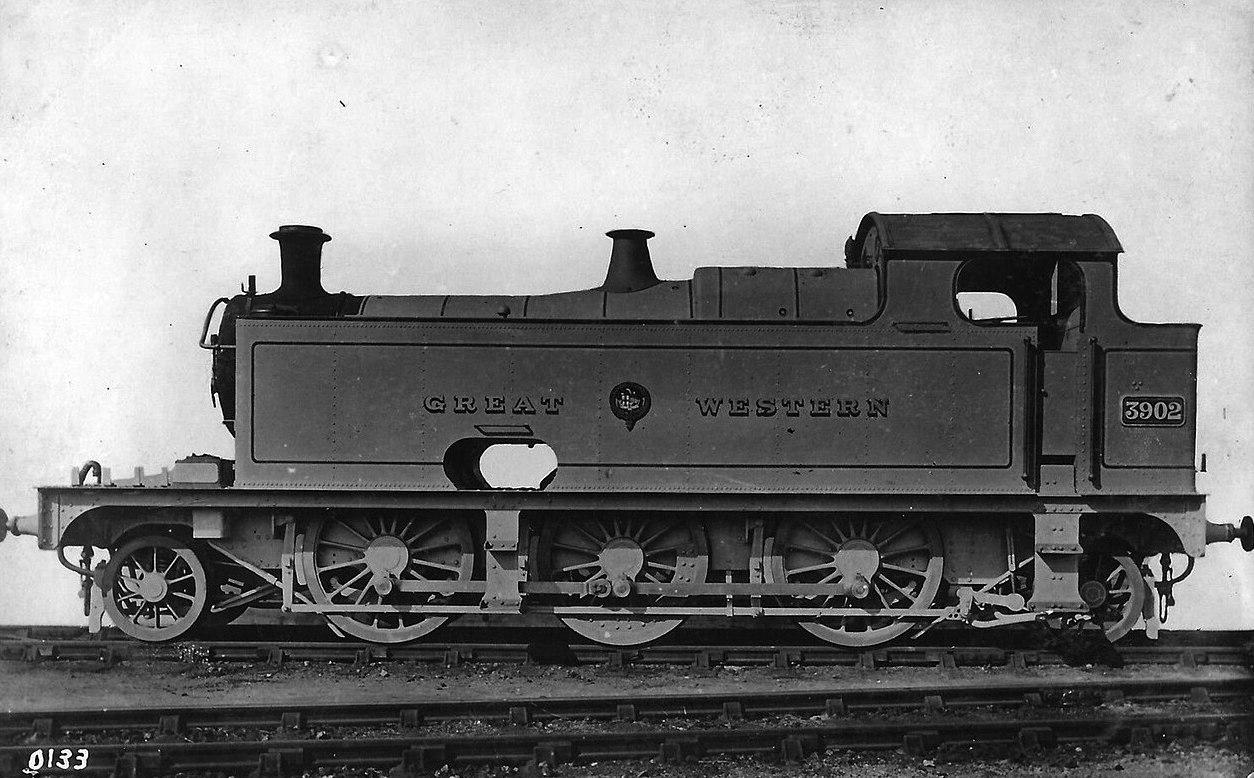
GWR 3901 Class No 3902 (Wikipedia)
By 1930 the venerable Dean Goods was showing its age and the incumbent Chief Mechanical Engineer (CME) - Charles B. Collett, introduced its replacement, the Collett 0-6-0 Class 2251, which had similar proportions to its legendary predecessor, but was more powerful at the expense of becoming heavier by 6 tons, putting it into the Yellow route availability category, i.e. having an axle load under 16 tons. The Dean Goods had free reign to go anywhere on the GWR system as its axle load was only 13 tons, which was under 14 tons and thus was unrestricted, whereas the Collett version had restrictions which meant that on certain lightly laid tracks, mostly in rural Mid-Wales, it was prohibited from using them.
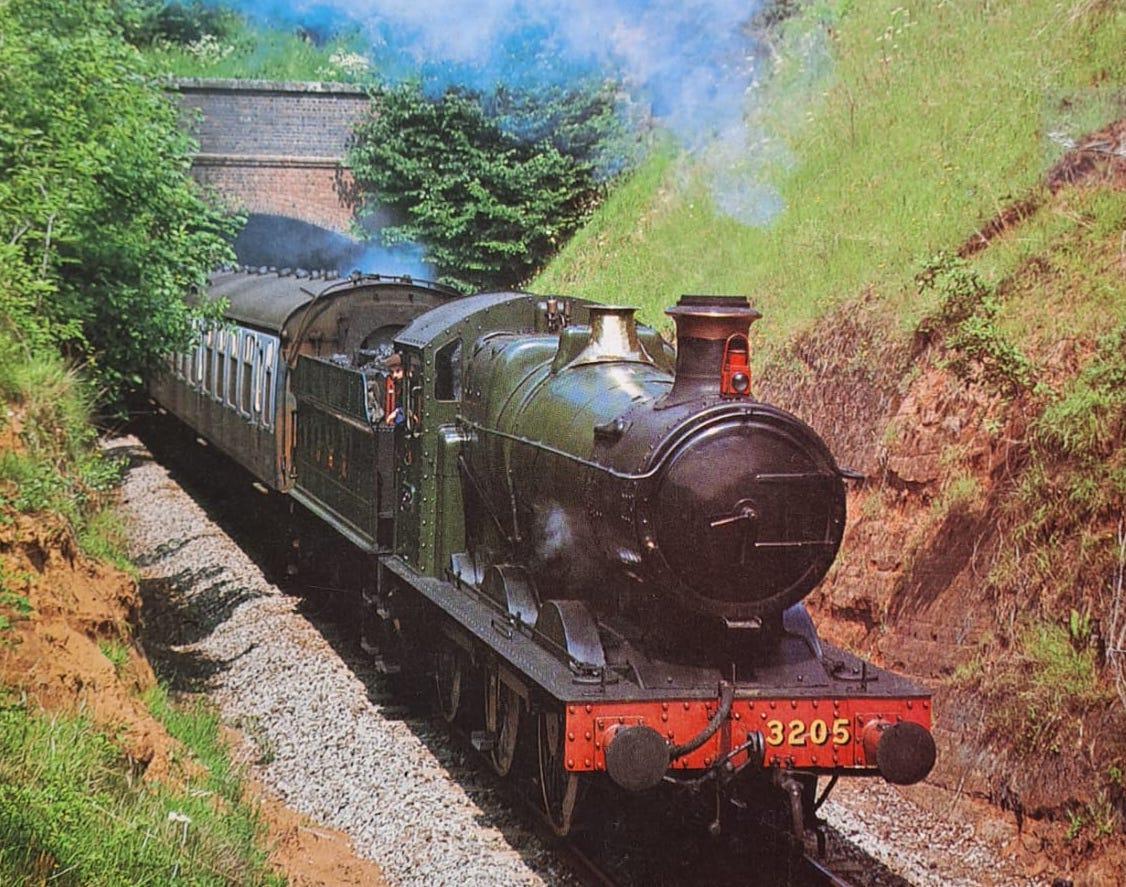
Preserved Collett 2251 Class No. 3205 (Locomotives Illustrated)
The Dean Goods continued working alongside its replacement for many years on goods and secondary passenger services and by the time of the Nationalisation of the Railways on the 1st January 1948, when the GWR became the Western Region of British Railways (BR), there were still 54 of the class in service. Their numbers would dwindle until the last, No. 2538, was withdrawn in May 1957 and scrapped. Fortunately No. 2516 (built 1897) was saved for preservation and can be seen on static display at “STEAM”- the Museum of the Great Western Railway, Swindon.
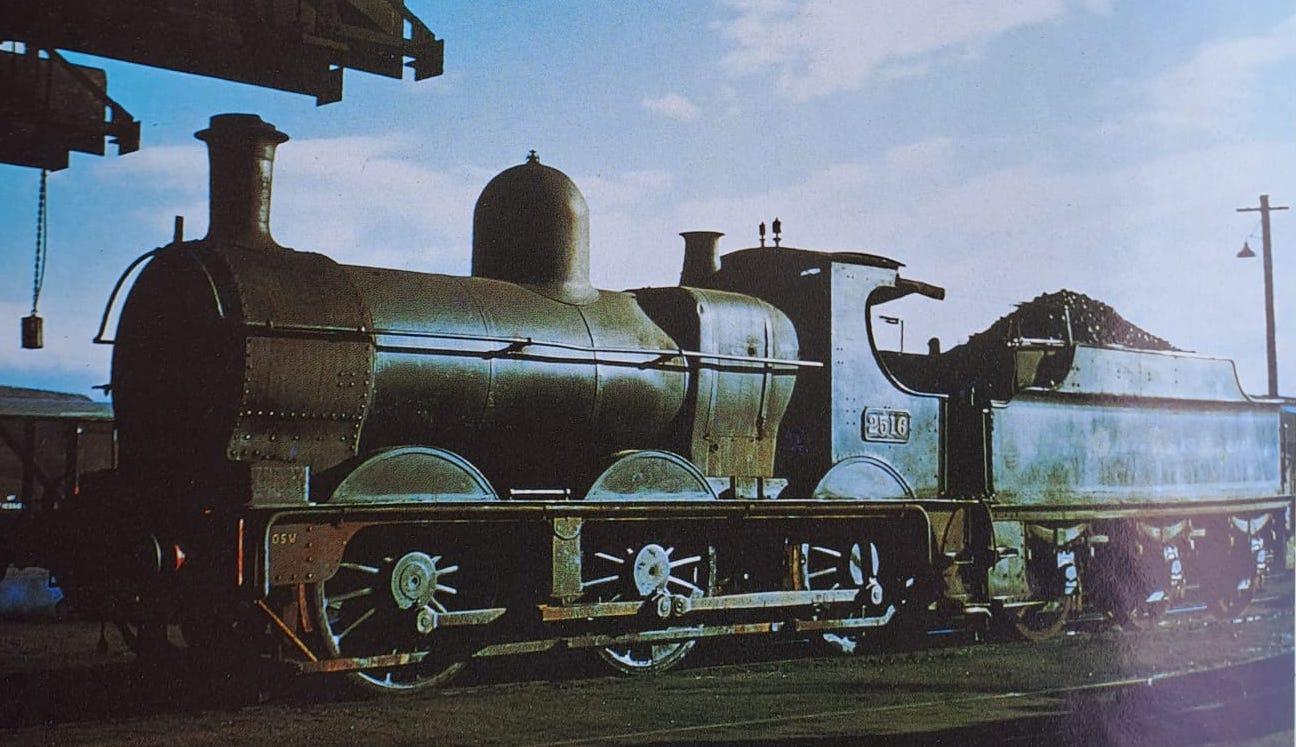
Preserved Dean Goods 2516
There was one Last Hurrah when in 1948 a new London Midland Region, Ivatt 2MT 2-6-0, No. 46419 was borrowed for trial against a Dean Goods. Engine drivers, at first, reported that the Ivatt was no better than a Dean. They went further to complain that the 2-6-0 could not keep to time on train workings. Inspectors were summoned from Swindon and the Dynamometer Coach was coupled up to measure the power output of the loco and they confirmed what the drivers had to say. The next step was to put that same Ivatt 2-6-0 on the Testing Plant at Swindon Works, where it was given a thorough test.
A newly overhauled “Dean Goods”, No. 2579, was given the same test and the information gathered proved that the Dean engine was the better of the two! However, the tests uncovered that the Ivatt’s performance could be greatly enhanced by improving its draughting (chimney) arrangements and once that was achieved, Swindon built, in 1952, 25 Ivatt’s (Nos. 46503-46527) for use on the ex Cambrian lines in Wales, displacing the Dean Goods from its last stronghold. The Ivatt 2MT would outlast the Dean by only 10 years as BR’s Modernisation Plan of 1955 envisaged a future where steam engines would be phased out and replaced by diesel and electric motive power and BR would affect a Steam Ban on 12th August 1968, after the last steam-hauled train – the “Fifteen Guinea Special” was run on the previous day.
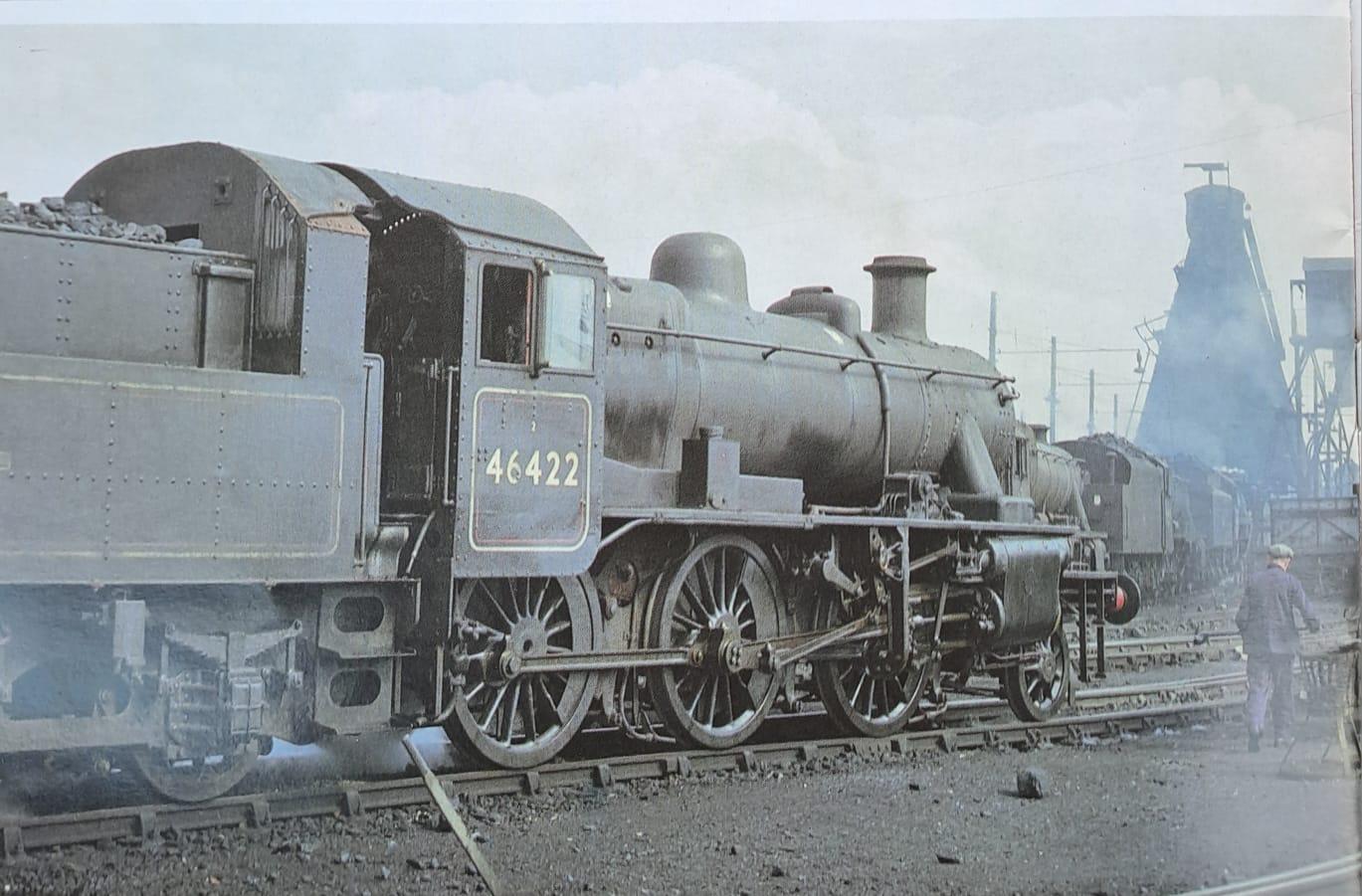
Ivatt 2MT 2-6-0 nicknamed a 'Mickey Mouse' (Locomotives Illustrated)
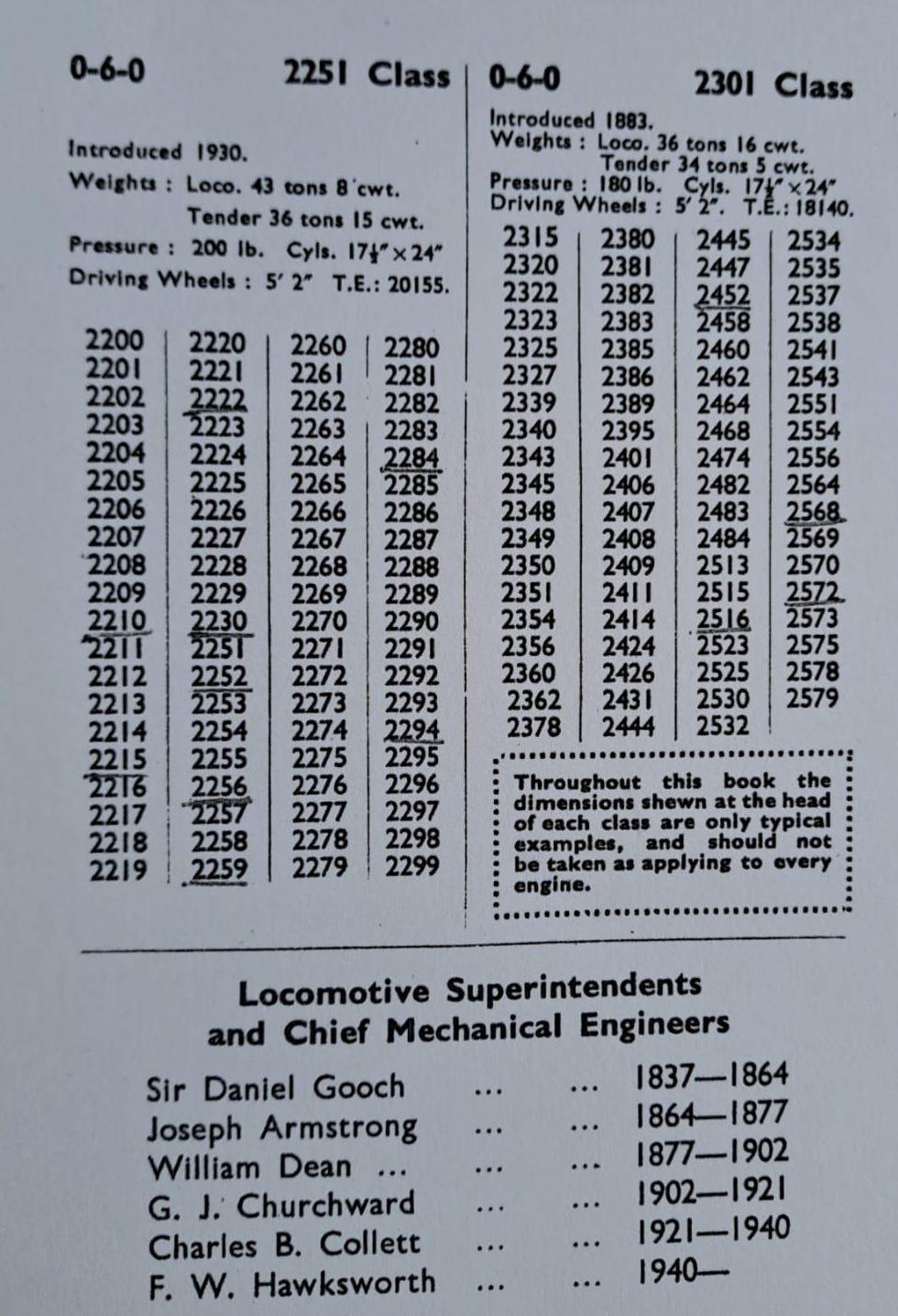
ABC of GWR Locomotives (Ian Alan, 1943)
References and Further Reading
- “In Memoriam – Remembering the Great War” by Robin Cross, published by Ebury Press, 2008, ISBN 978-0-09-192530-7.
- “Locomotive Engineers of the GWR” by Dennis Griffiths, Guild Publishing, 1988.
- “The Historic Locomotive Pocketbook” by H.C. Casserley, published by B.T. Batsford Ltd. 1960.
- “Locomotives I have known” by J.N. Maskelyne, published by Percival Marshall, 1959.
- “Locomotives Illustrated No. 55 – GWR Dean & Collett 0-6-0’s”, September-October 1987, published by Ian Allan.
- “A Pictorial Record of Great Western Engines” Volumes 1 & 2, by J.H. Russell, Oxford Publishing, 1975.
Comments will load below. If for any reason none appear click here for some troubleshooting tips. If you would like to post a comment and need instructions click here.