

Disclaimer: Any views expressed by individuals and organisations are their own and do not in any way represent the views of The Heritage Portal. If you find any mistakes or historical inaccuracies, please contact the editor.
In the article below, Oscar Norwich, Johannesburg historian and collector, explores the life of Johannesburg pioneer, Theodore Reunert. He also unpacks the history of Windybrow, the mansion Reunert built in Doornfontein. The piece first appeared in the 1989 edition of the old Johannesburg Historical Foundation's journal 'Between the Chains'. Thank you to the Norwich family for their kind permission to publish this article.
Windybrow is the last remaining example of the stately mansions built in Doornfontein during the last decade of the previous century. Although it is not actually situated in Doornfontein, Windybrow is nevertheless closely associated with this suburb’s early history. Doornfontein became the city of gold’s first millionaires’ row for it was here that the mining magnates built their first houses on spacious erven set in a rural atmosphere. However when Parktown was laid out the Randlords, as the magnates were called, moved to the new suburb and after 1910 Doornfontein and its early environs gradually deteriorated.
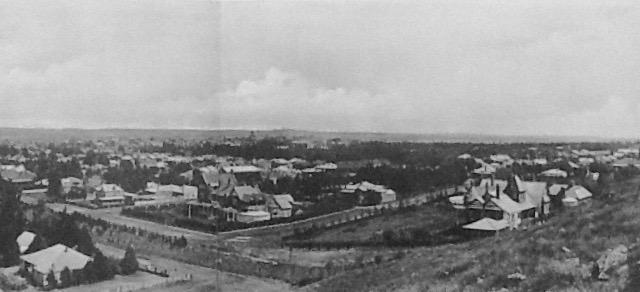
View over Doornfontein with Windybrow at the base of Pullingers Kop (Barnett's Views of Johannesburg and Suburbs)
Theodore Reunert was one of the early Johannesburg pioneers who built his home in the Doornfontein area. He was born in Leeds in 1856, qualified as an engineer and came to Kimberley in 1879. There he met Otto Lenz and in 1887 they established the engineering firm of Reunert and Lenz in Johannesburg which still exists today under a different mantle. Reunert settled in Johannesburg in 1889 and became one of Johannesburg’s most esteemed citizens. He was public-spirited and played a major role in educational and other matters.
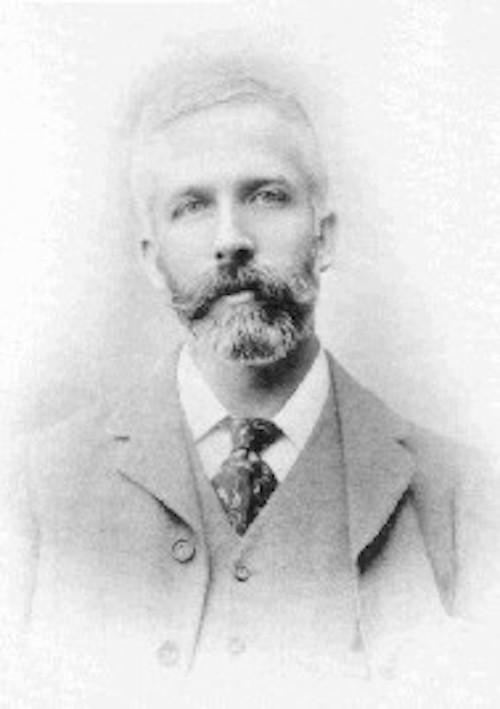
Theodore Reunert (Southern Africa Association for the Advancement of Science)
Looking for a plot of land on which he could have his new house built, Reunert decided on the southern slope of Nugget Hill, where there was no likelihood of being built in and having his view obstructed. William Leck was appointed as architect and he designed the house in pseudo-Tudor style. Reunert called it Windybrow after the home of one of his best loved poets, Robert Southey, whose house was similarly named and built on the edge of Lake Windermere.
A billiard room, schoolrooms, nurseries and a drawing room with a wooden dance floor sprung on rubber washers were incorporated into the big mansion which was decorated in what Reunert called an Anglo-Moorish style. Wooden panels were used extensively and the entrance hall with its wooden staircase is especially noteworthy in this regard. The formal garden contained a tennis court and one of the first privately owned swimming pools in Johannesburg.
The Reunerts moved into Windybrow in 1896 and lived there for twenty-five years. Its historical significance did not however end there for in 1945 the Johannesburg Hospital Board acquired the property to form part of the BG Alexander College, the first Nursing College in South Africa. Thus the building was officially taken over by the Transvaal Provincial Administration and is still in their possession today.
Reunert was one of eight children whose father taught German at a school in Leeds and he had an English mother. During his stay in Johannesburg he served on the Governor-General’s Fund to raise money for the 1914-1918 War effort, was a founder of the Witwatersrand Council of Education and the Technical College. He played a role in establishing schools such as Jeppe High School for Boys, King Edward VII School and the Johannesburg High School for Girls, and helped to expand such schools as Roedean, St Andrews School for Girls, St John's College, Marist Brothers and others.
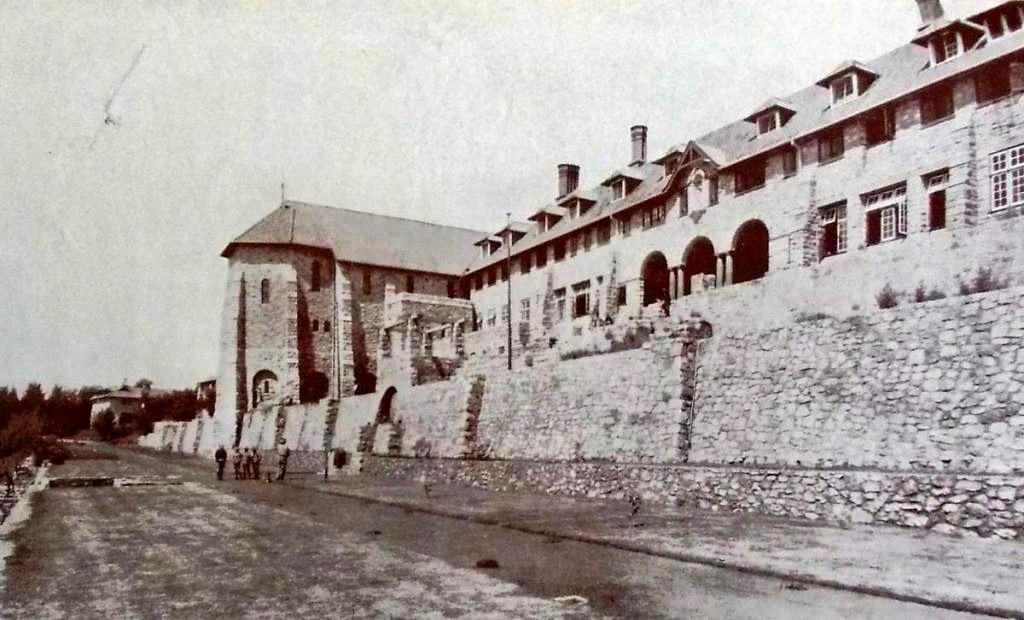
Old photo of St John's College (SA Builder Magazine)
He was Chairman of the Johannesburg Public Library for several years, and was one of the people responsible for having the Observatory established in Johannesburg as he was a member of a deputation which waited on Lord Milner, the British High Commissioner for the Transvaal, to suggest that an Observatory be established in the Transvaal. He was one of the main promoters of the South African Association for the Advancement of Science in 1902 and was its President in 1905. He was a founder member of the South African Society of Engineers. He died in 1941, aged 85.
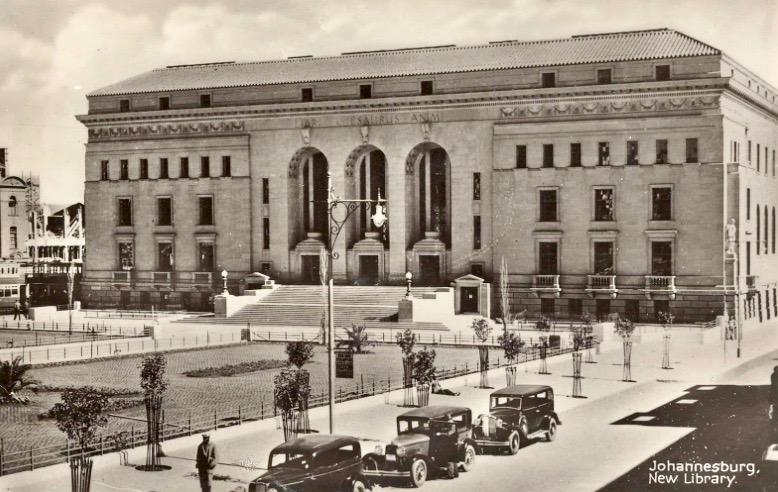
Johannesburg Public Library
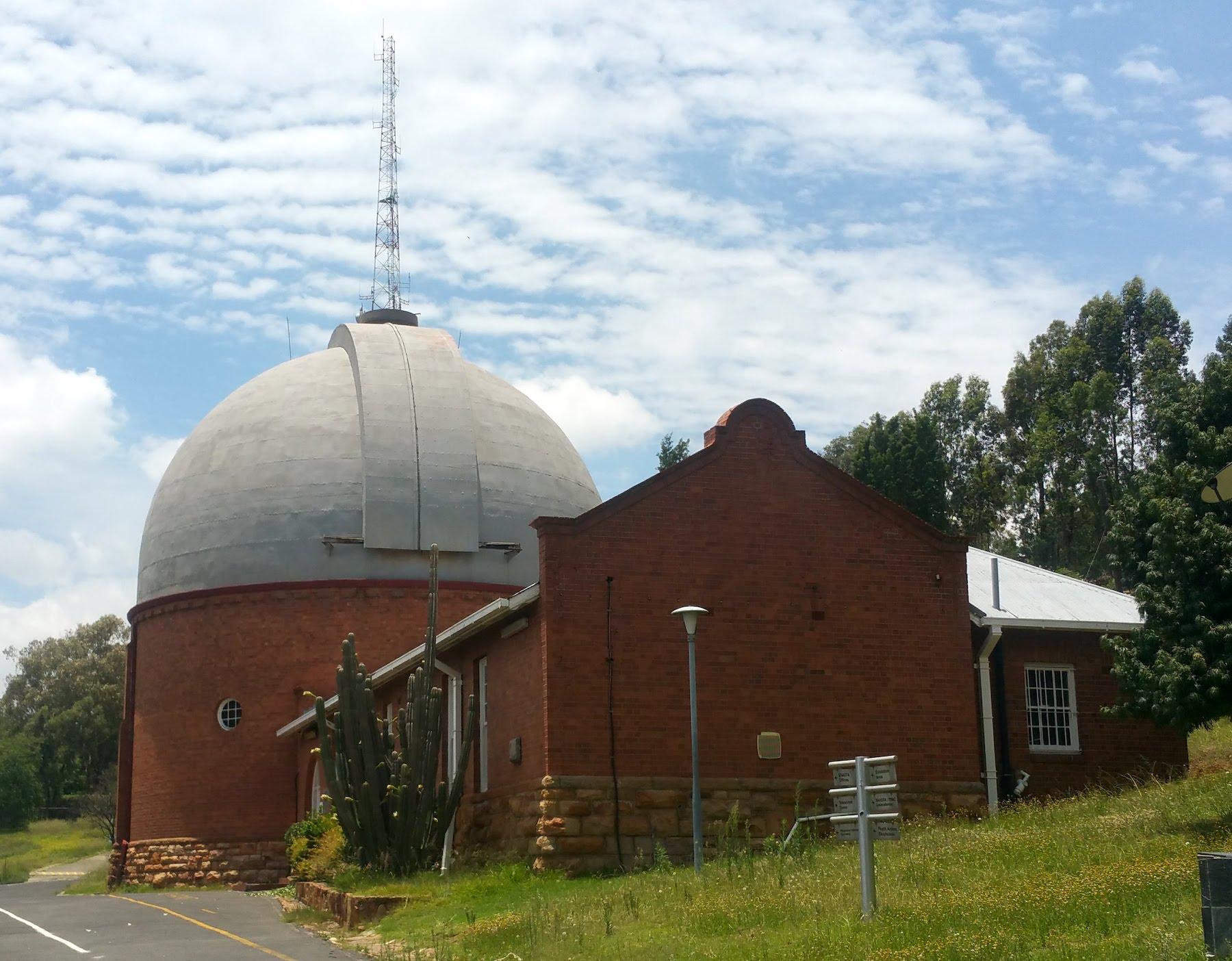
Johannesburg Observatory (The Heritage Portal)
Based on this history of the house and the man, the Johannesburg Historical Society, as it was called then, decided to create Windybrow as a National Monument. All reports and the requirements of the National Monuments Council were submitted with accompanying photographs and in 1974 the Society received a letter stating "I wish to inform you that the Transvaal regional committee of the National Monuments Council unanimously decided to recommend to the full Council that Windybrow be considered for declaration as a National Monument". It was finally proclaimed in 1975.
The Transvaal Province thus took possession of this mansion after it had been vacated by the boarding-house which had occupied it since Reunert and his family left. Unfortunately the Province did not take sufficient care of this empty building and although many attempts were made to house various projects in it, none materialised. The mansion was therefore empty for a long period during which time insufficient protection failed to stop severe damage by vagrants.
The deterioration was so great that many months later the Province Authorities wrote to the National Monuments Council suggesting that this mansion be deproclaimed as a National Monument. The Historical Society was contacted by the Historical Monuments Council and a very firm decision was taken to refuse deproclamation. After many months of letters and telephone calls the danger of deproclamation was finally averted. Everybody concerned was very pleased to learn that the Province had decided to renovate and restore it as the headquarters of the Performing Arts Council of the Transvaal, (PACT). As all will know it has been restored to its former glory.
In October 1922 at the University of the Witwatersrand Reunert received an Honorary Doctorate of Literature - a well-earned and well-deserved reward for all his famous achievements. It is interesting to note that at the same graduation another important South African, General J C Smuts, also received his Doctorate.
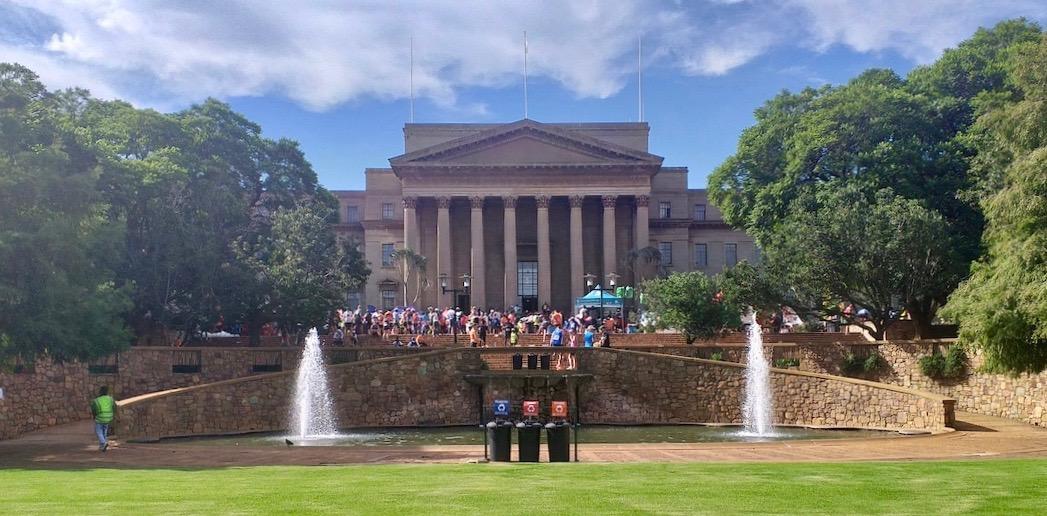
Great Hall at Wits University (The Heritage Portal)
About the author: Dr. Oscar Norwich was a medical doctor and passionate collector who focused on African maps and Johannesburg history. As founder of the Johannesburg Historical Foundation, he led city tours and tirelessly sought rare historical items related to Johannesburg. In 1986, he published a large folio-sized book of his Johannesburg postcard collection to commemorate the city's centenary. Norwich also authored several books on African and Southern African maps. His significant map collection was eventually acquired by Stanford University in the USA, though it remains accessible to scholars online.
Comments will load below. If for any reason none appear click here for some troubleshooting tips. If you would like to post a comment and need instructions click here.