
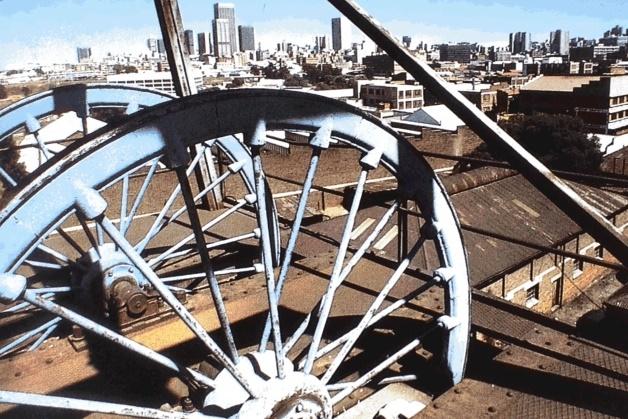
This modest yet highly significant guidebook remains one of the most authoritative introductions to the geological foundations of Johannesburg and the gold-mining swathe of the Central Witwatersrand. Published to coincide with the city’s centenary, it explains with clarity and precision why Johannesburg exists at all: a city founded in 1886 on the discovery of gold along the Main Reef, drawing fortune-seekers, prospectors, engineers, and capital from across the world.
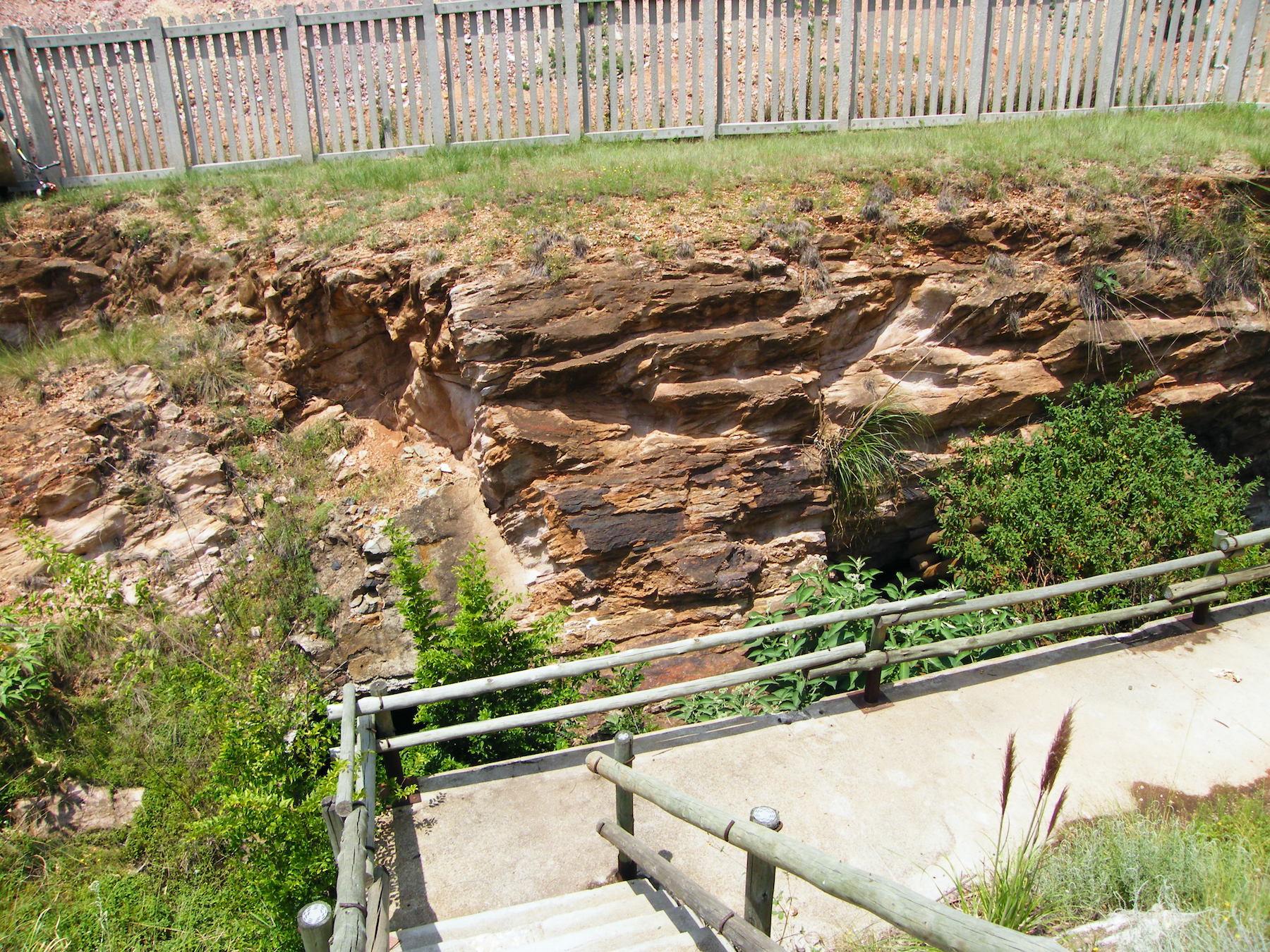
The Discovery Site at George Harrison Park (Gavin Whitfield)
The guide situates gold mining within its broader economic and social context. Early individual claims quickly gave way to company mining, share flotation, and the emergence of a fully fledged capitalist mining industry. As surface outcrops were exhausted, mining shifted to deep-level extraction, fundamentally shaping patterns of settlement, infrastructure, labour, and wealth. Johannesburg’s rapid growth and distinctive urban character are shown to be inseparable from this geological and industrial evolution.
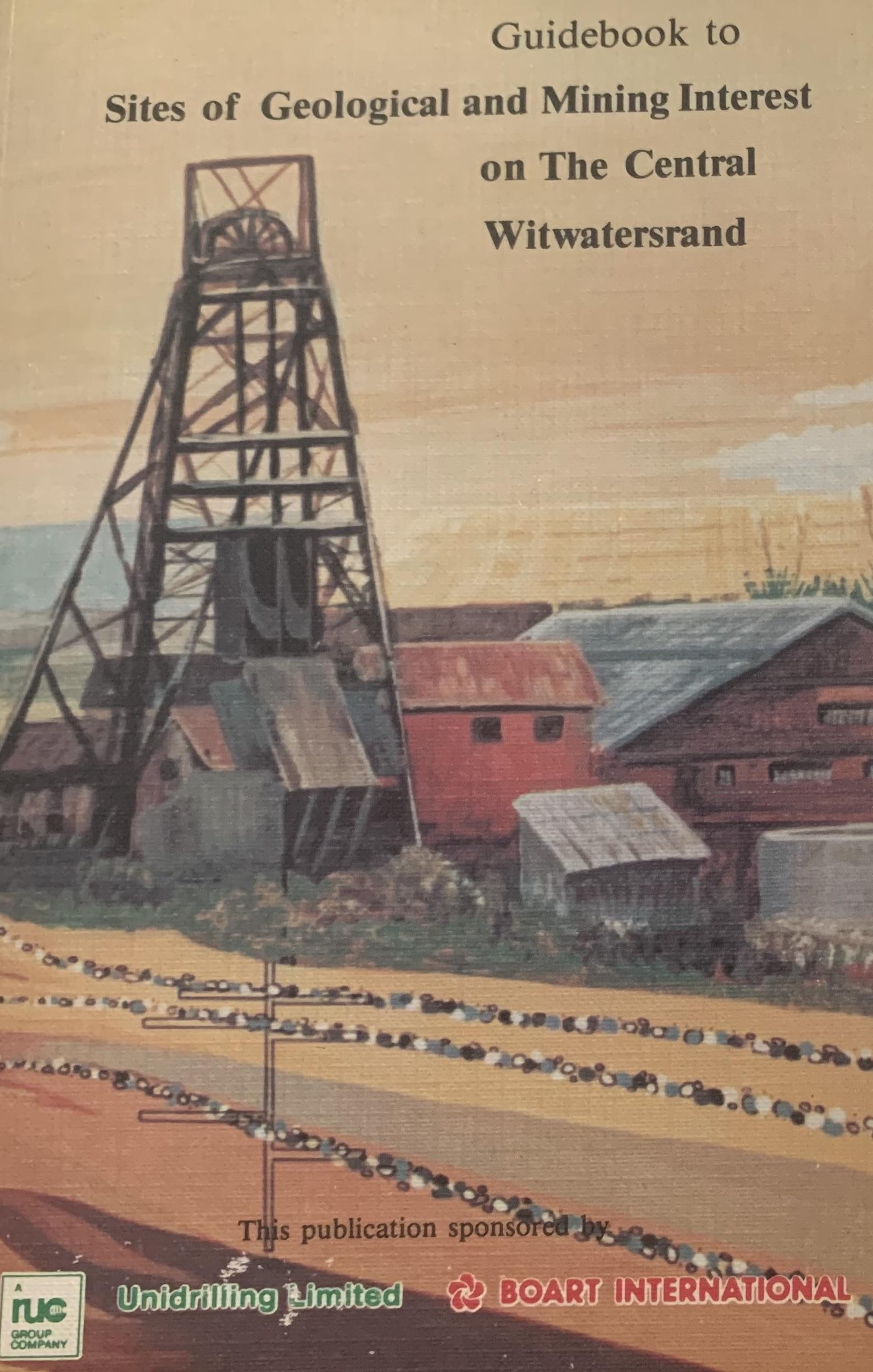
Guidebook Cover
Central to the book is its focus on the influence of geology and mining on the location, history, and nature of Johannesburg and its surrounding reef towns. It provides a succinct geological history of the Witwatersrand Basin and a lucid explanation of the rock formations underpinning the city. To mark the centenary, sixty-two sites of geological significance were identified and commemorated with blue plaques, each carefully described and illustrated with diagrams and photographs. These entries guide the curious visitor beyond surface impressions to a deeper understanding of place, process, and time.
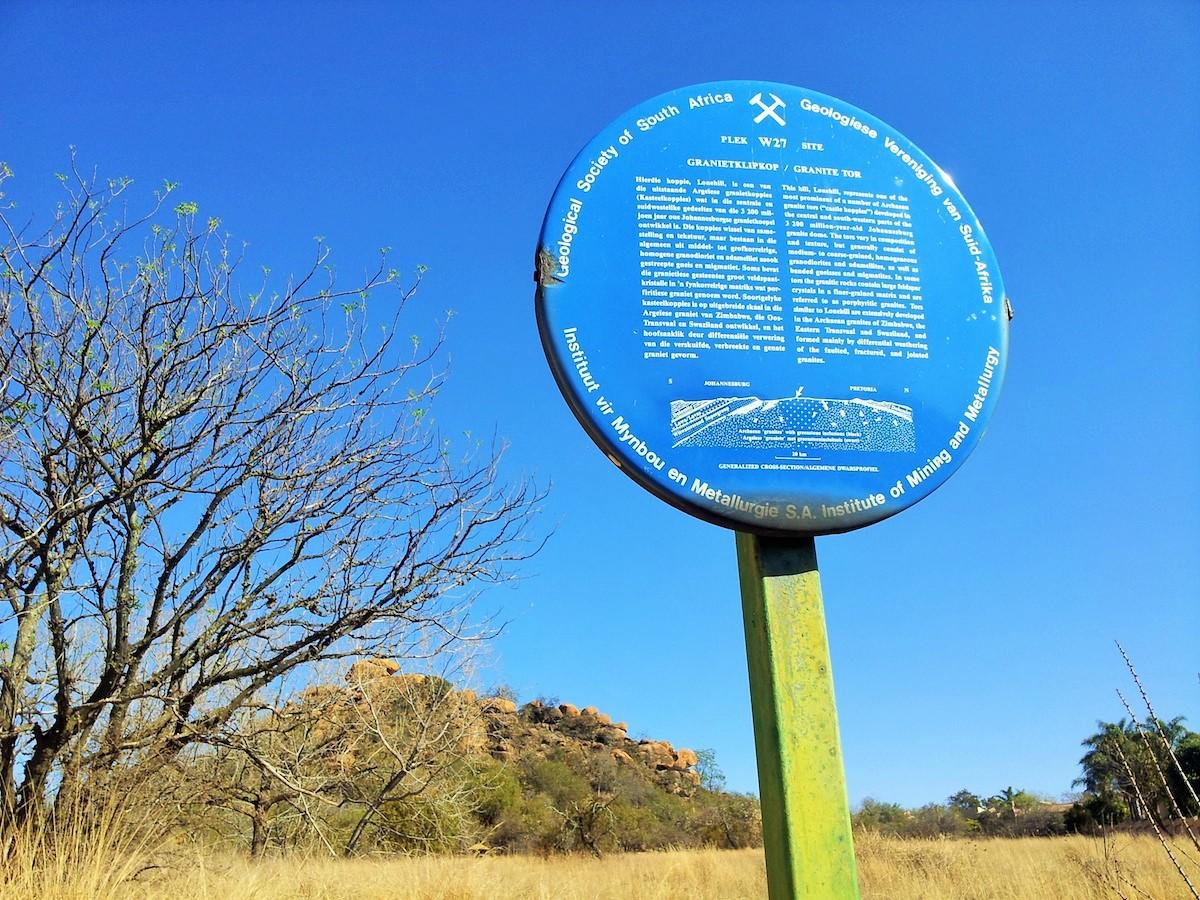
Blue Plaque at Lonehill north of Johannesburg (The Heritage Portal)
The book does not shy away from the consequences of mining. Today’s landscape—scarred by abandoned shafts, open pits, slimes dams, and mine dumps—is presented as a complex legacy: an industry that created immense wealth and opportunity while leaving enduring environmental challenges.
In parallel, the Johannesburg 100 Committee identified one hundred places of outstanding cultural, historical, architectural, and natural interest, marked by bilingual blue plaques that recorded the city’s broader social legacy. These are all listed.
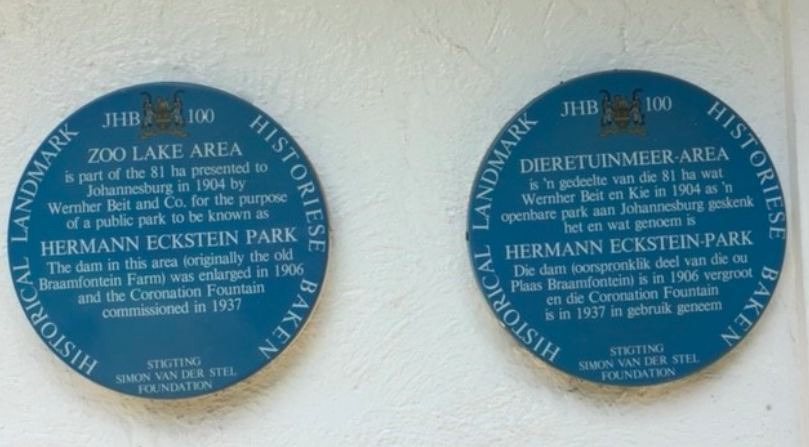
Joburg 100 Blue Plaques (Kathy Munro)
Accompanied by a large fold-out street map of the Central Witwatersrand (Johannesburg) showing sites of geological and mining interest, the publication gains an additional dimension. Nearly forty years later, this map has become a collectible artefact of the centenary, and together with the guidebook forms an essential reference for understanding the city’s geological DNA.
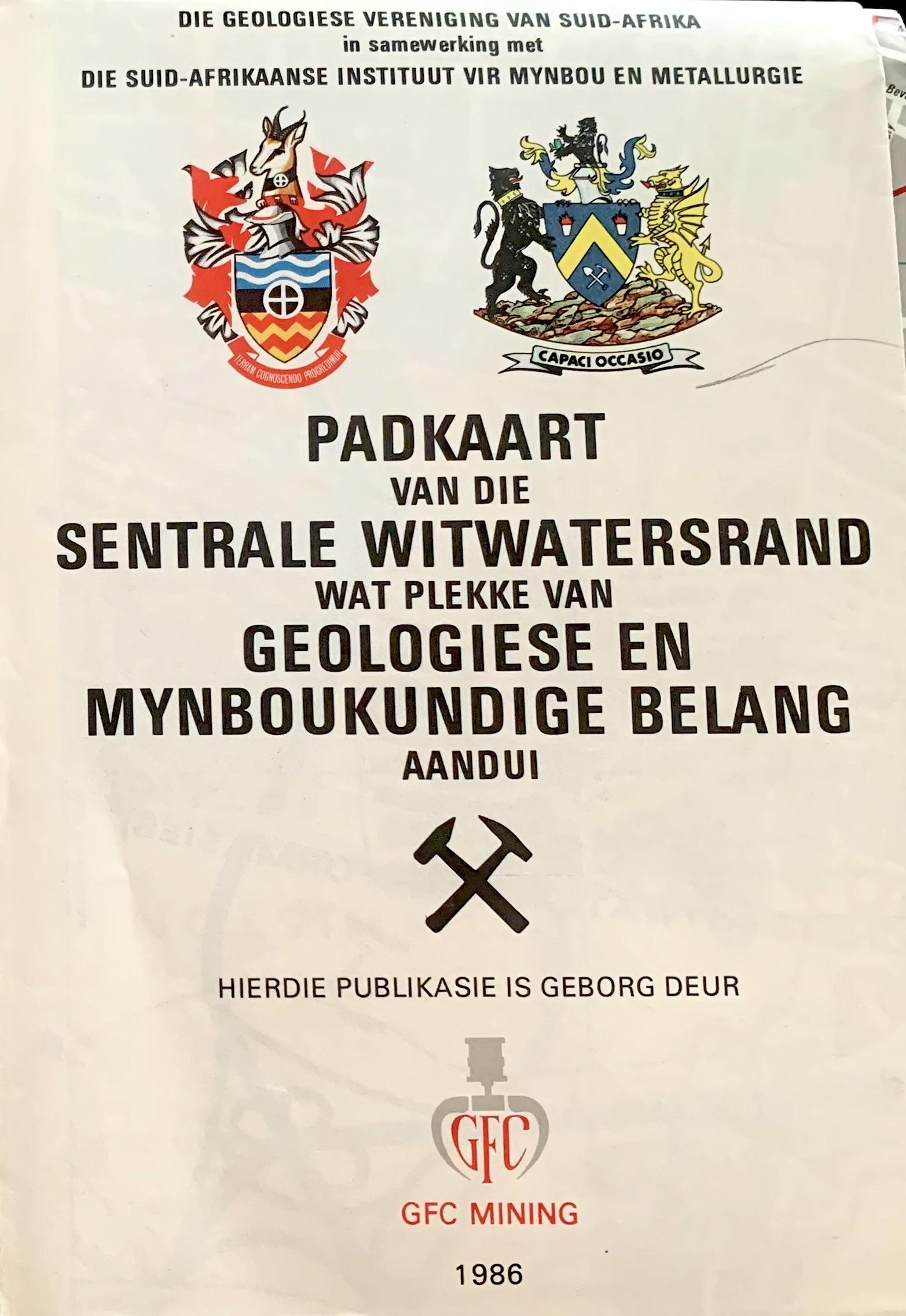
Cover of the fold out map
Johannesburg remains a unique metropolis: a city of some ten million people, perched 6,000 feet above sea level, its origins buried deep in ancient rock. This guidebook reminds every resident and visitor that beneath the modern city lies a powerful geological story. In that sense, Johannesburg is still a city of treasure hunters—driven by ambition, imagination, and the enduring promise of what lies below the surface.
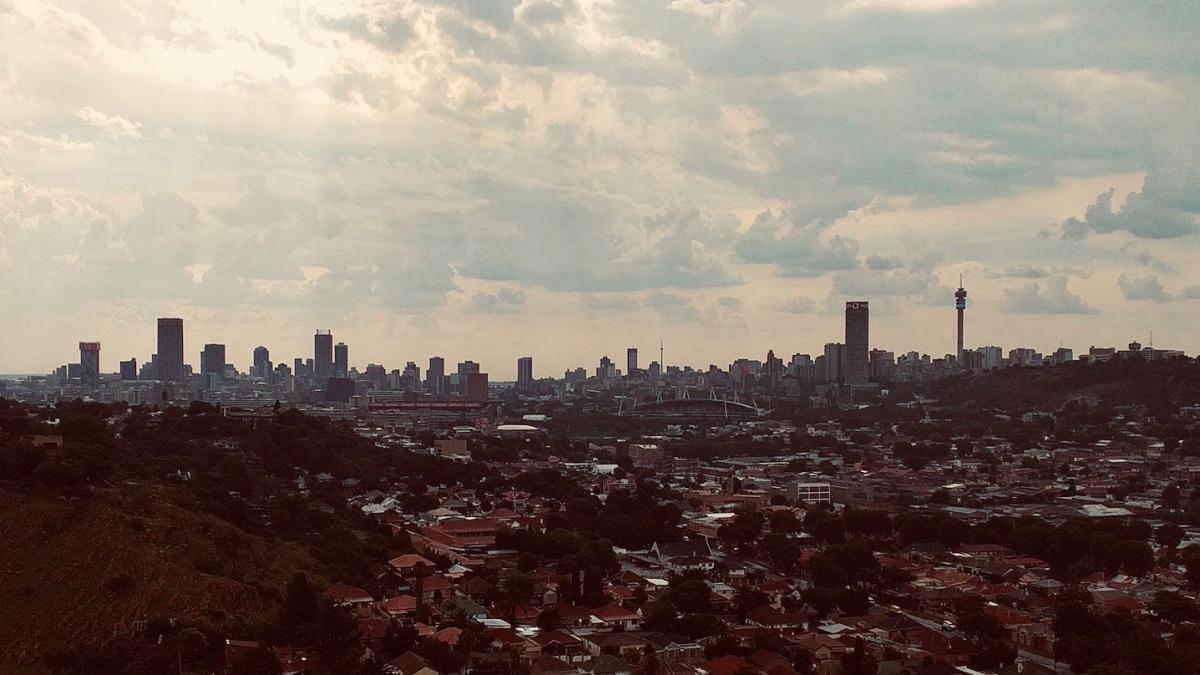
A City Built on Gold
The guidebook was edited by F. Mendelssohn and C. T. Potgieter and published in 1986 by the Geological Society of South Africa in association with the South African Institute of Mining and Metallurgy.
Kathy Munro is an Honorary Associate Professor in the School of Architecture and Planning at the University of the Witwatersrand. She enjoyed a long career as an academic and in management at Wits University. She trained as an economic historian. She is an enthusiastic book person and has built her own somewhat eclectic book collection over 40 years. Her interests cover Africana, Johannesburg history, history, art history, travel, business and banking histories. She researches and writes on historical architecture and heritage matters. She is a member of the Board of the Johannesburg Heritage Foundation and is a docent at the Wits Arts Museum. She is currently working on a couple of projects on Johannesburg architects and is researching South African architects, war cemeteries and memorials. Kathy is a member of the online book community the Library thing and recommends this cataloging website and worldwide network as a book lover's haven. She is also the Chairperson of HASA.