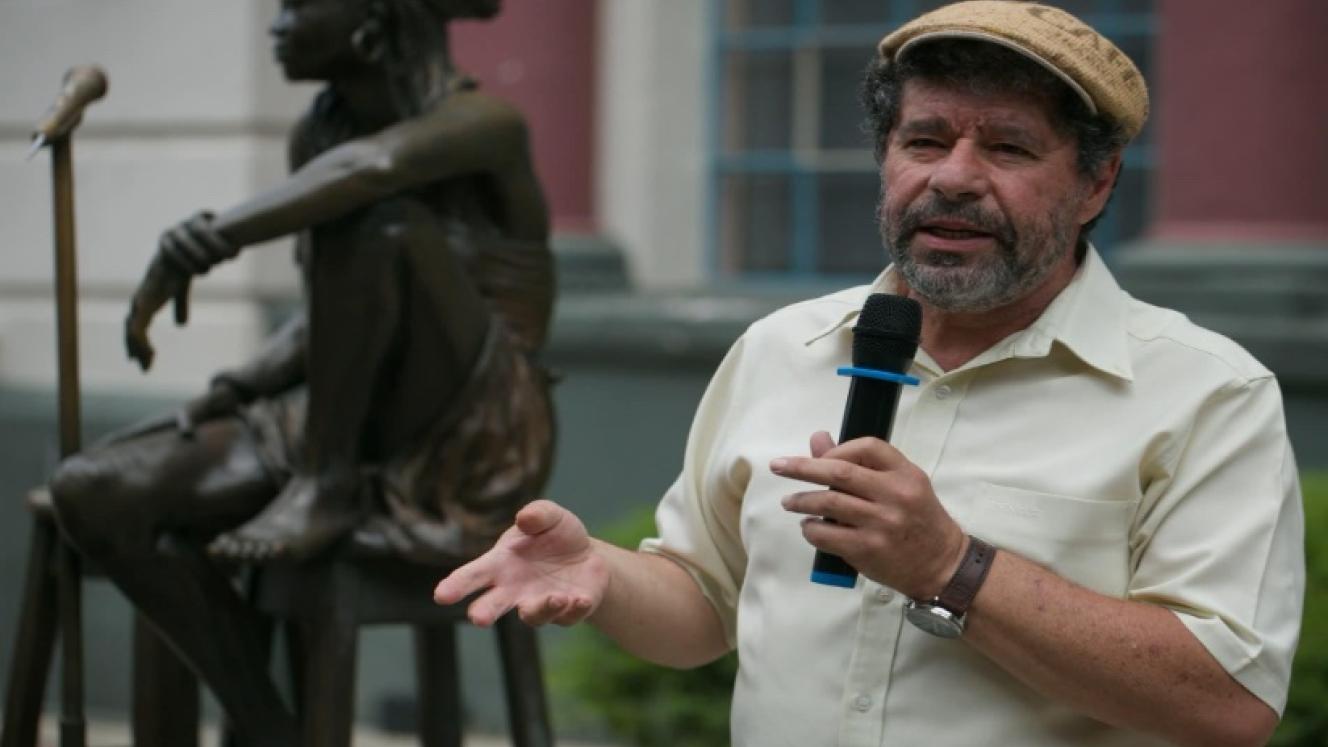
Eric Itzkin is a historian, author, cultural activist and heritage specialist involved in documenting, preserving and promoting historical sites in Johannesburg. Widely regarded by peers as an expert on Johannesburg’s rich and complex history, Itzkin has spent decades preserving, documenting, and shaping the public memory of the city.
Over the course of a long career within the City’s cultural services, he has worked as a research librarian, museum curator and heritage manager.
Born in Johannesburg in 1961, he grew up around the high-rise flats of Hillbrow and neighbouring Berea. Following studies at Wits University, he evaded conscription into the apartheid military, spending a period in period in exile in Zimbabwe, working as a school-teacher in Harare.
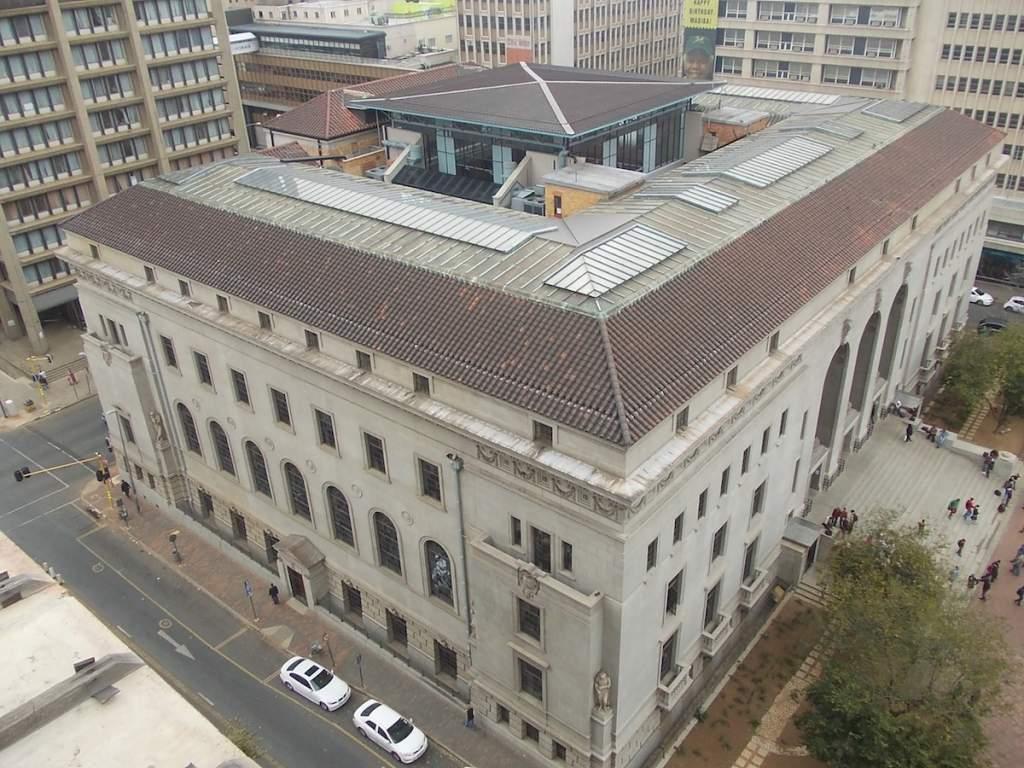
His first job back in South Africa was as a librarian at the Joburg Central Library, a grand heritage building in Beyers Naude Square, packed with specialist collections. Assigned to the Harold Strange Library of African Studies, he spent the early 1990s immersed in the wealth of material on Southern African culture and Joburg history, often burrowing in the underground stacks.
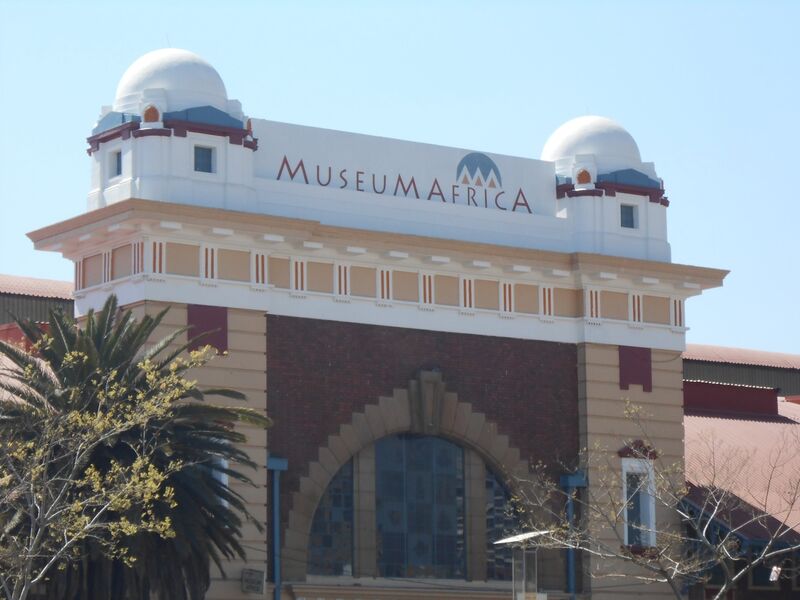
A move to the Library’s sister institution, Museum-Africa, followed in the late 1990s, where Itzkin took up the post of Curator Cultural History. While expanding his research, drawing on the rich collections of the museum, he moved into the fields of collection management and exhibition development.
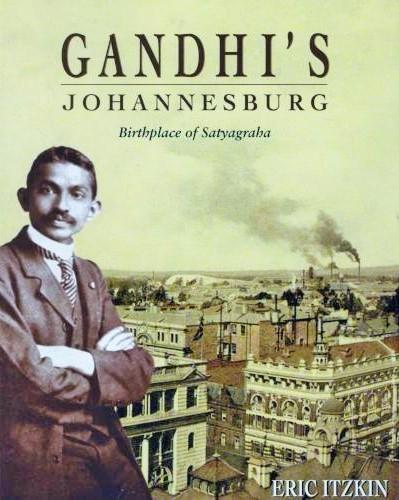
Drawing on a wealth of materials from the Library and Museum, he wrote Gandhi’s Johannesburg: Birthplace of Satyagraha, first published in 2000. The book documents Mohandas Gandhi’s formative years in Johannesburg during the early 1900s. Itzkin traces how the early, crowded mining town served as the crucible where Gandhi formulated and tested his philosophy of Satyagraha (soul force or passive resistance) before deploying it on a global scale.
Known for an accessible, deeply passionate approach to history, he treats the city itself as a living museum. As a researcher, Itzkin focuses on uncovering and preserving narratives that have often been marginalised or excluded from mainstream public memory. His work covers diverse areas across the metro, bridging the gaps between the city's mining-era foundations, its painful apartheid history, resistance movements, and post-apartheid aspirations.
By the early 2000s, Itzkin moved over to his present role, overseeing the identification, protection, and promotion of Johannesburg’s historical architecture, landmarks, and public art installations. As Deputy Director: Immovable Heritage (also called Head of Heritage) for the Directorate of Arts, Culture and Heritage, he is responsible for managing monuments, heritage sites, public art, as well as the naming of streets and public places.
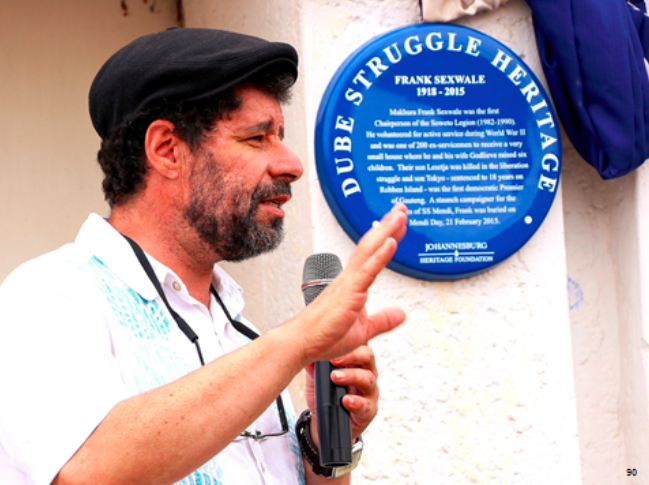
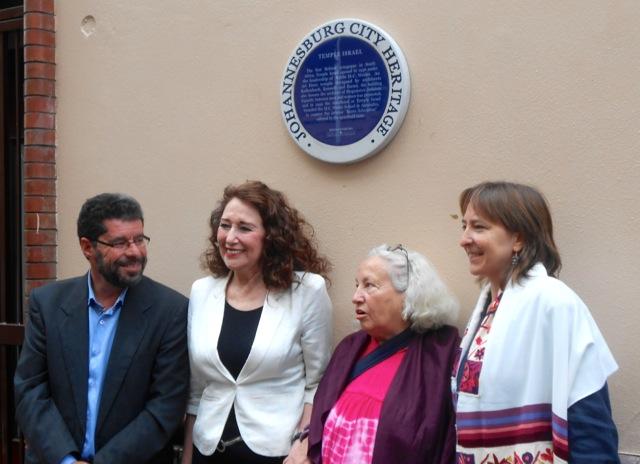
For over 20 years, Itzkin has championed the City’s blue plaques programme, which awards City heritage plaques to recognise structures and sites of historical importance. At the last count, close to 250 heritage plaques with City branding have been placed at a variety of sites, spanning much of the city. An internationally recognised heritage symbol, the plaques carry short inscriptions to enrich peoples’ experience of heritage sites. Many of the City's blue heritage plaques were developed as part of a long-running collaboration with the Johannesburg Heritage Foundation (JHF).
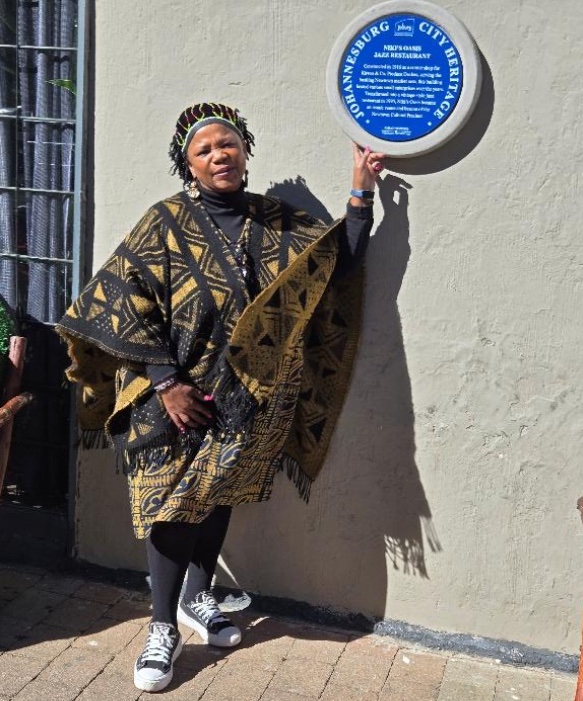
Year-by-year, the collection continues to grow, and requests for plaques keep coming. Recent additions include Niki’s Oasis Jazz Restaurant, and a plaque for composer and musician Todd Matshikiza, erected in Sophiatown.
Itzkin has been at the forefront of Joburg's long-running public art programme, guiding how art installations are utilized to enrich urban spaces while fostering dialogue around historical memory. More recently, online catalogues have been developed to make the city's outstanding collection of public art accessible to the general public.
Going back to 2006, a Public Art Policy was adopted by the City, setting out the economic, social and aesthetic benefits of public art. A funding mechanism of a Percent for Art, was adopted, whereby up to 1% of the budget for large infrastructure projects in the City could go to public art. The Joburg Development Agency backed the initiative, partnering with the Directorate: Arts, Culture & Heritage, leading to the creation of a whole host of public artworks, many of them on heritage themes.
“Public artworks,” says Itzkin, “should go beyond the beautification of the urban environment. At its best, public art can help create meaningful and inclusive spaces where a diverse public can interact, bridge historical divides, and promote urban renewal”.
While budgets for new art commissions have sadly declined in recent years, some exciting new public artworks have been ushered in nonetheless, supported by the Directorate: Arts, Culture and Heritage.
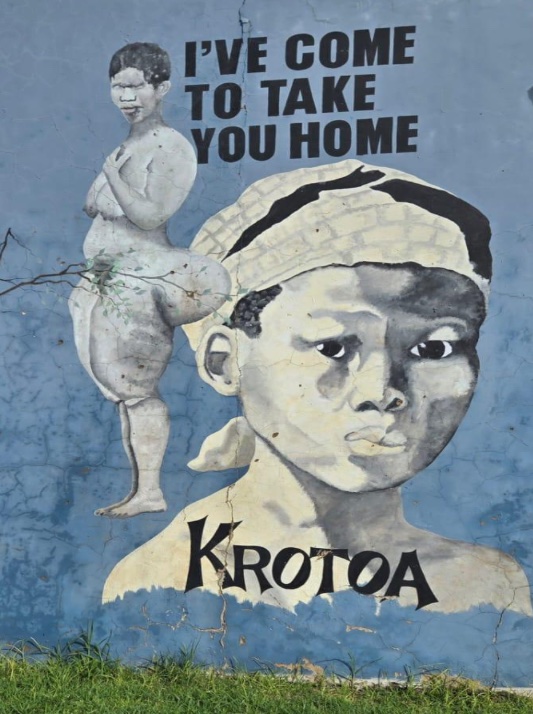
In 2026, a series of Khoisan themed murals were commissioned in Eldorado Park as part of a community-driven initiative, the Go-Green Go Clean Public Walkway. By reclaiming what was previously a wasteland, the project developed a corridor of murals to extend usable public space and support cultural tourism.
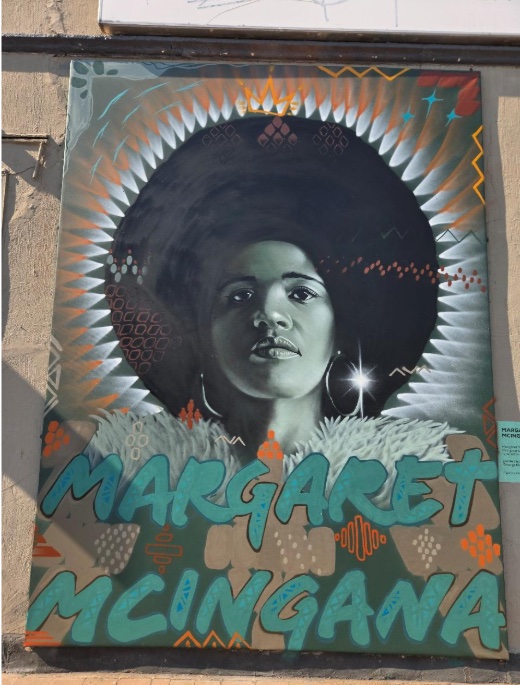
Around the same time, the Newtown Cultural Precinct was boosted by a new billboard canvas celebrating songstress Margaret Mcingana, created by Dbongz, a leading mural artist known for vibrant, hyper-realistic portraits and large-scale public artworks that celebrate African icons, identity and people.
The fruits of much research by the City Heritage Unit can be found online, on the website for CoJ Arts, Culture and Heritage:
- The Online Catalogue of Public Art, a digital chronicle of over 70 prominent public artworks, was launched in 2024. The public art catalogue can be found here.
- The City’s Online Catalogue of Heritage Sites, with in-depth information on over 100 sites, followed in 2025. The Heritage Catalogue can be found here.
- The Blue Plaques Catalogue, an inventory of 250 City heritage plaques is in preparation, and will be live in late 2026.
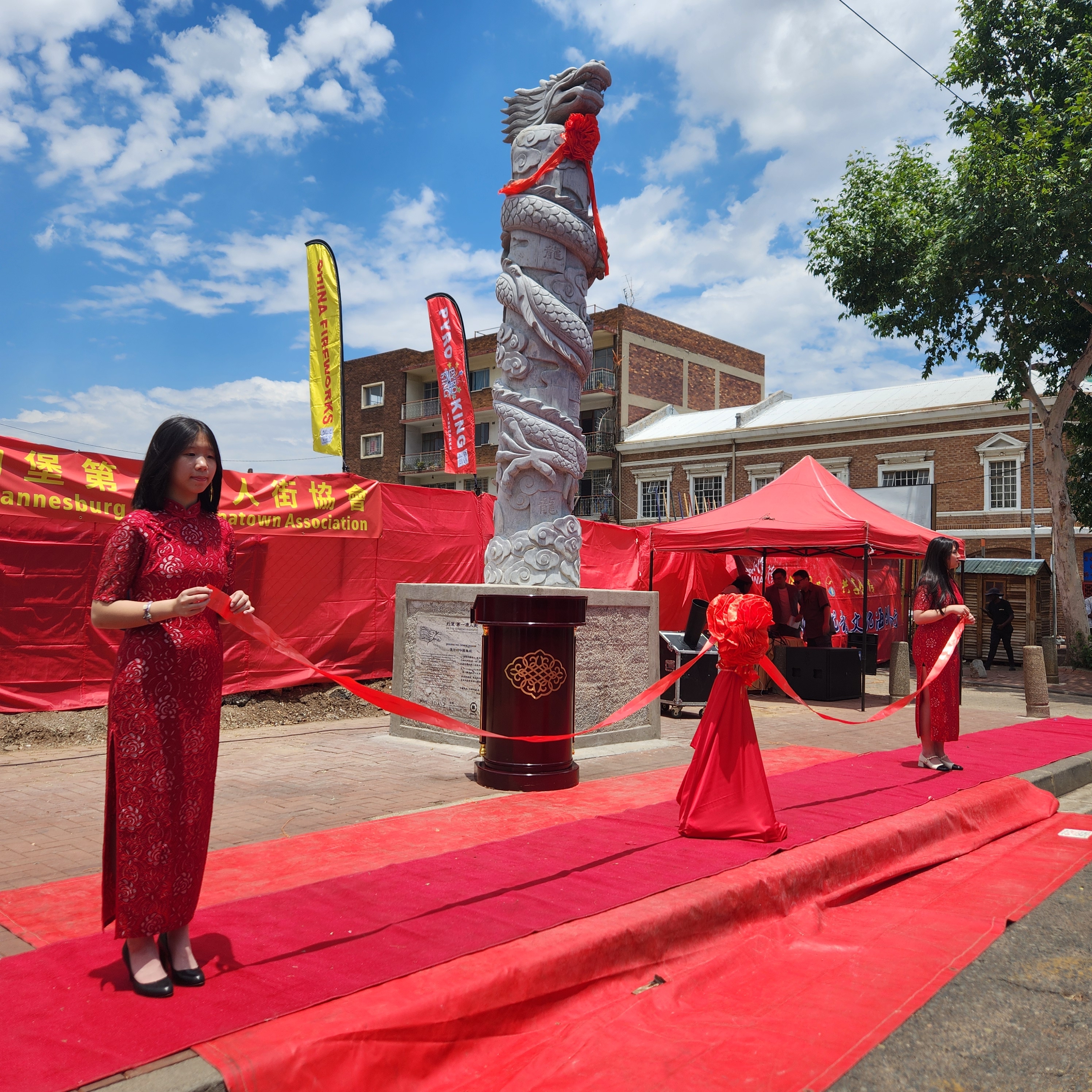
Over the years, Itzkin has overseen the restoration of numerous heritage structures, monuments, sculptures and artworks, utilising specialist teams of artisans, craftsmen, artists and architects. Perhaps the most remarkable of these restorations was the resurrection of the dragon pillar in downtown Johannesburg’s First Chinatown.
In 2011 a pair of carved dragon columns, imported from China, were erected on Commissioner Street, at the entrance to the old Chinatown in Ferreirastown. But disaster struck in 2020 when one of the columns was smashed to pieces by a runaway Rea Vaya Bus, and the head of the dragon was decapitated.
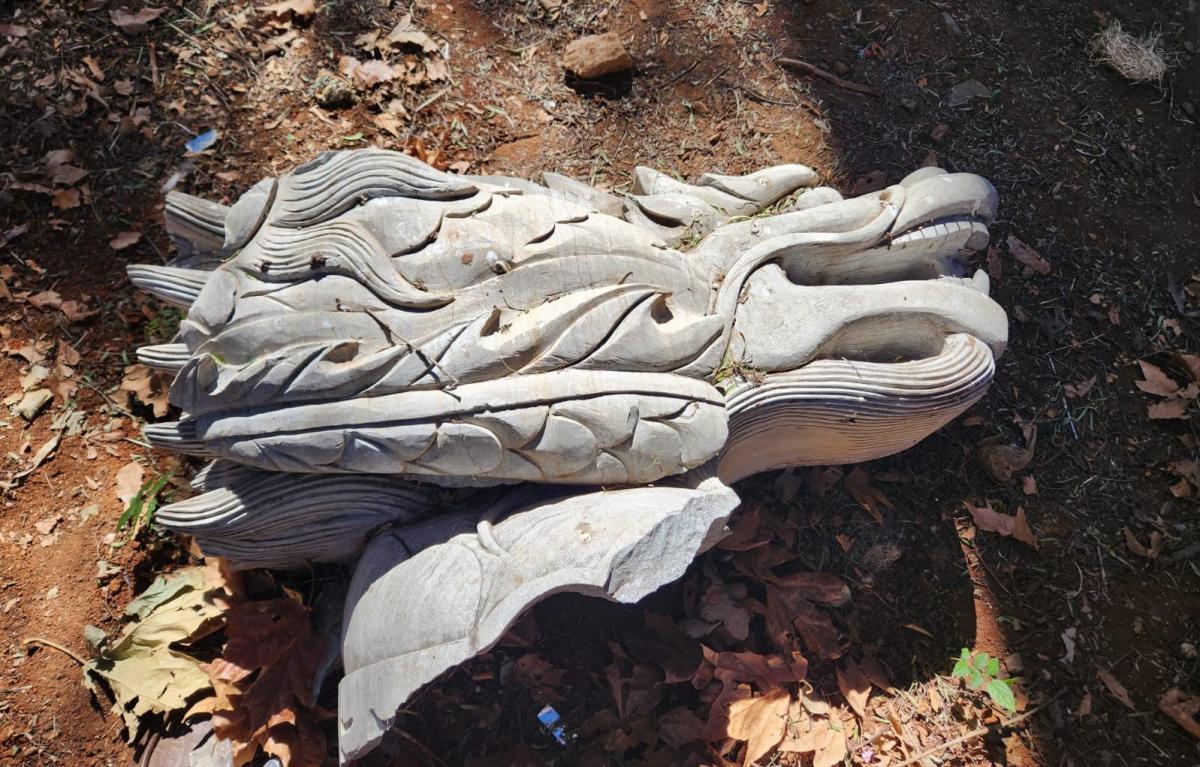
A few years later the granite pieces were painstakingly re-assembled by a skilled team, including a stone restoration specialist and a structural engineer. By 2024, the reconstructed dragon column rose again, reconstructed and majestic. Click here to read Itzkin's speech at the re-launch of the Chinese Dragon Pillar.
Developing policy has been a big part of Itzkin’s role, involving drafting policies for consideration by Council. He was instrumental in drafting The Policy on the Naming of Streets and Public Places (4th revision) which was adopted by the City in 2017.
The need for meaningful consultation and public participation is a cornerstone of the Policy. As stated in the Policy, “the process of naming or re-naming must be undertaken in a consultative manner, and this must be clearly demonstrated before a final decision can be taken by Council”.
After 35 years of dedicated service with the City of Joburg, Eric Itzkin will be retiring in August 2026, leaving with a rich store of institutional historical knowledge, stories and memories. More positively, he has left a mark etched at many of the streets, heritage sites and cultural spaces of the city he loves.