
Some books are intended to be treasured. Others are designed to be thrown away.
Telephone directories, newspapers, auction catalogues and railway timetables belong to that second category. Their usefulness lasted only until the next edition appeared. They were folded, thumbed, scribbled in, carried on journeys and eventually discarded. That is precisely why surviving copies are so uncommon.
Recently, a copy of the South African Railways Official Time-Table, issued on 1 December 1930, came into my hands. Printed on lightweight, inexpensive paper little different from a newspaper, it has somehow survived almost a century. It is now being offered for sale in aid of the Johannesburg Heritage Foundation.
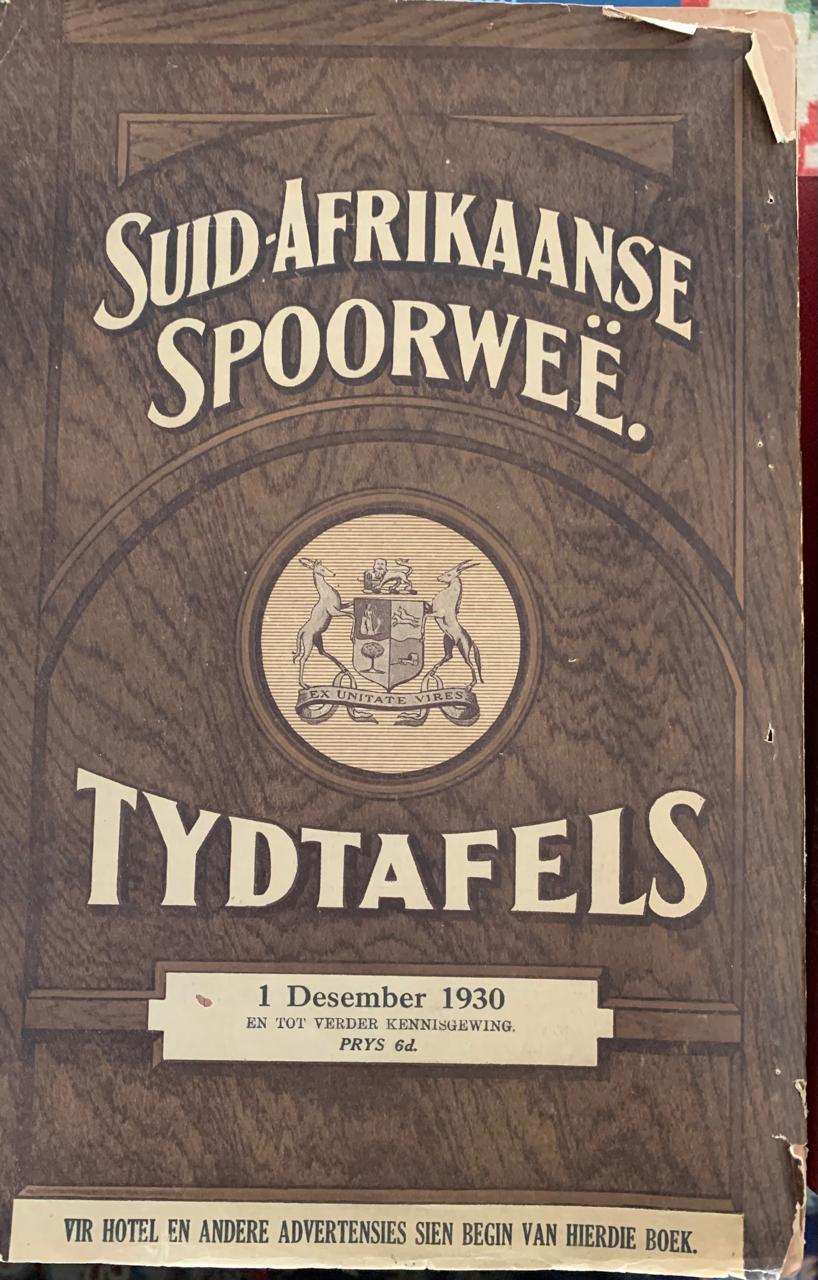
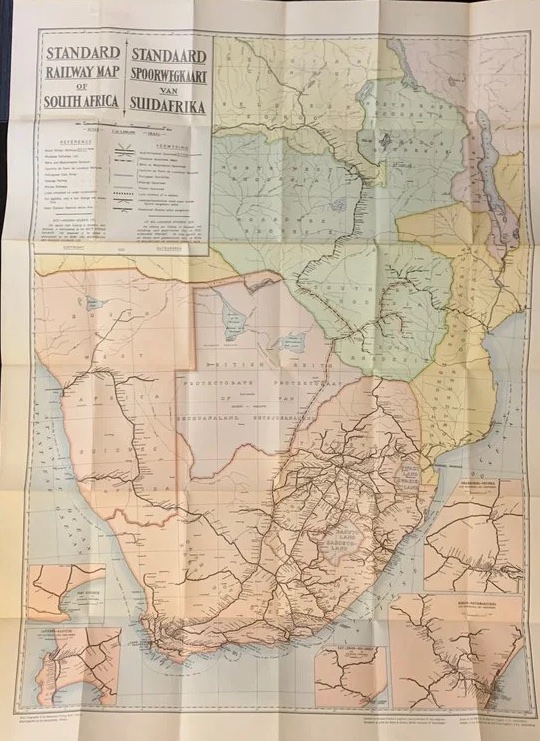
At first glance it is an unassuming publication. It has no illustrations, no glossy photographs and, rather surprisingly, no railway map. Yet within its 174 densely printed pages lies one of the most complete snapshots imaginable of South Africa on the move.
For the traveller of 1930, this modest A4 size volume answered almost every practical question. Did a particular town have a railway station? How did one get there? Where did trains connect? How much did the journey cost? Where could meals be obtained along the way? The answers were all here, carefully organised in neat columns of times, fares and stations.
Today we instinctively reach for Google Maps or a journey-planning app. In 1930, travellers reached for this timetable. In many ways, it was the Google Maps of its day.
The Google Maps of 1930
If you wanted to know whether a town existed, where it lay on the railway network, how often trains stopped there, how much the journey would cost, or where you needed to change trains, this was the book you consulted. Long before digital maps and journey planners, the South African Railways Official Time-Table answered every practical question a traveller might ask.
The alphabetical index alone is a remarkable achievement. It lists every station, halt and siding across the Union of South Africa and South West Africa, directing the reader to the appropriate timetable pages. Many of these names survive today only in publications such as this. Their stations have long since closed, their platforms are crumbling, and their sidings have disappeared beneath grass and weeds. In 1930, however, they were vital links in one of the world's great railway systems.
The timetable records far more than departure and arrival times. It provides fares for journeys between hundreds of destinations, identifies where passengers must change trains, and enables travellers to plan connections across an astonishingly extensive network. Every page reveals how carefully the system was organised, allowing passengers to travel from major cities to the smallest country stations with confidence.
Naturally, the emphasis is on the great trunk routes linking Cape Town, Johannesburg, Durban, Port Elizabeth, East London and Bloemfontein. Yet it is the branch lines that are perhaps the greatest revelation. They spread like veins across the country, reaching farming districts, mining settlements and isolated rural communities that depended on the railway for their connection with the wider world.
Taken together, these trunk routes, branch lines, stations and sidings formed a remarkably integrated transport network. They were the transport backbone of the Union of South Africa.
How South Africans Travelled
By 1930 the railway was the principal means of long-distance travel in South Africa. Families travelled by train. Businessmen travelled by train. Tourists travelled by train. Commercial travellers journeyed from town to town by train, while holidaymakers relied on the railway to reach the coast, the mountains or the countryside. For most South Africans who could afford to travel, the railway was simply the accepted way of getting from one place to another.
Train travel was not merely a means of reaching a destination; it was an experience in itself. People dressed smartly for the journey, often treating it as an occasion. Friends and relatives came to the station to say farewell, sometimes remaining on the platform until the train disappeared from sight. A journey began not with the turn of a car key or the click of an airline boarding pass, but beneath the great station clock.
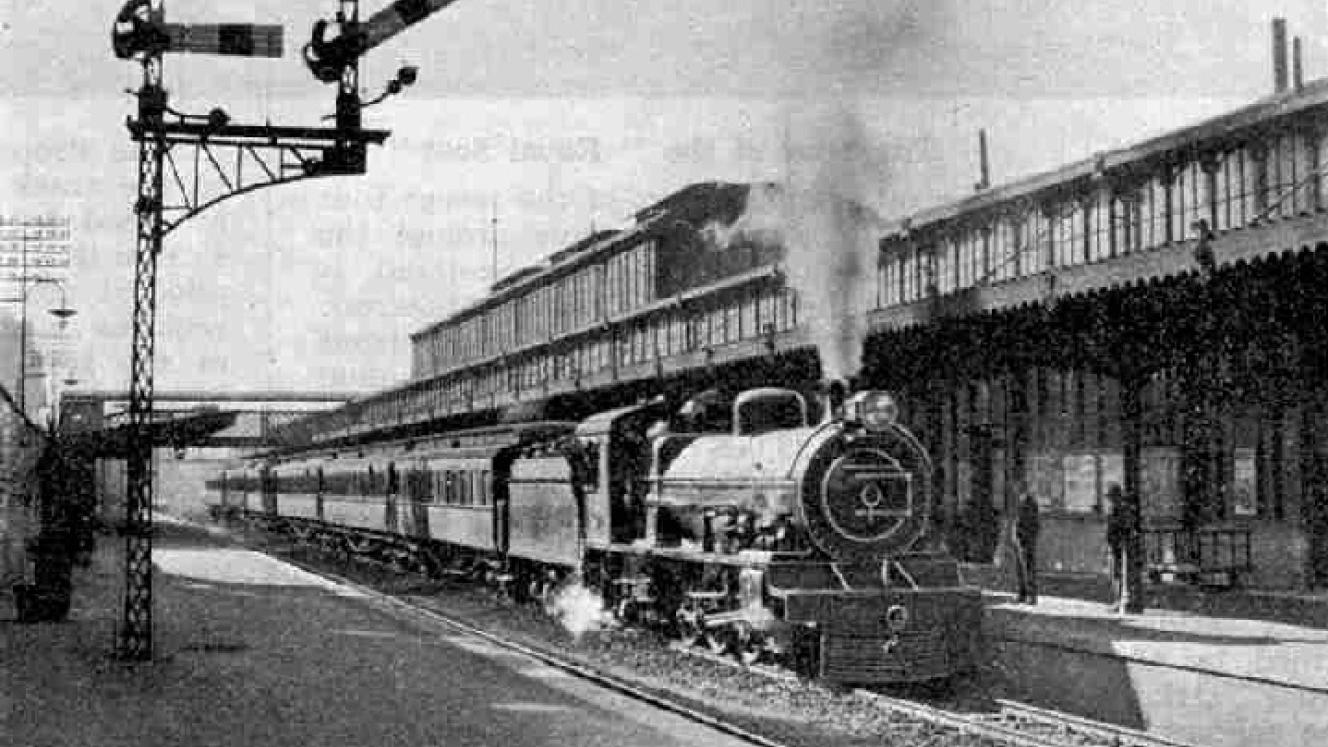
The stations themselves were places of bustle and anticipation. Steam locomotives hissed beneath lofty platform roofs while clouds of steam drifted across the tracks. Porters hurried along the platforms with luggage trolleys piled high with trunks, suitcases and hatboxes. Travellers consulted the latest timetable, purchased newspapers and magazines, and waited for the guard's whistle and the wave of the green flag that signalled departure.
Unlike today's hurried travel, long-distance rail journeys unfolded at a gentler pace. Meals became part of the rhythm of the day. The timetable lists railway Refreshment Rooms at stations throughout the country where passengers could stop for breakfast, luncheon or dinner, with prices carefully set out for each establishment. For those who preferred to remain on the train, luncheon baskets could be ordered in advance and collected en route. These small details reveal that travel was about far more than simply getting from one place to another.
The timetable was the indispensable handbook for this entire world of railway travel. It guided passengers on everything from local branch-line services to the country's most prestigious express trains. Whether travelling in the luxury of the Union Limited, visiting relatives in a country town, conducting business in another city or setting off on a family holiday, every journey began by opening this modest sixpenny booklet. Here is the Vade Mecum of South African Travel.
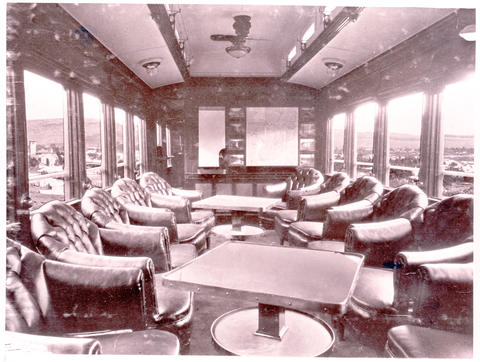
Planning a Journey to Cape Town
Let us imagine that it is December 1930, and we wish to travel from Johannesburg to Cape Town.
There is no internet, no smartphone, no Google Maps and no online booking system. The first thing we reach for is this formidable South African Railways Official Time-Table. The second is a magnifying glass, for the type is tiny and every inch of the page is packed with information.
Our questions are simple enough. When can we travel? Which train should we catch? How long will the journey take? How much will the fare be? Should we travel First Class or Second Class? Do we wish to enjoy the luxury of the famous Union Limited, or would an ordinary express suit our needs just as well? The timetable provides every answer.
The main line begins in Pretoria before reaching Johannesburg and then heads south-west through Potchefstroom, Klerksdorp, Kimberley, De Aar, Beaufort West and Worcester before finally arriving in Cape Town. Along the way it serves or passes through some forty stations. Every station is listed with meticulous precision, together with its altitude above sea level and its distance from the point of departure. The total distance between Johannesburg and Cape Town is given as 1,001 miles.
The train departs daily and the journey takes approximately two days—a reminder of the immense distances that railway passengers routinely travelled and of a time when the journey itself was as important as the destination.
The fares are equally revealing. A return ticket from Johannesburg to Cape Town cost 249 shillings and sixpence in First Class or 166 shillings and sixpence in Second Class. Every conceivable destination has its corresponding fare carefully calculated. No matter how obscure the station, halt or siding, the cost of travelling there is recorded.
Passengers were entitled to 100 pounds of free luggage, a generous allowance by modern standards and a reminder that travellers often journeyed with substantial trunks, suitcases and hatboxes rather than lightweight overnight bags. Long-distance travel was an undertaking, not a weekend escape.
What impresses me most is the extraordinary precision of the publication. Every train, every station, every connection, every fare and every mileage has been carefully checked and typeset. Presented in both English and Afrikaans, the timetable reflects the meticulous administrative standards of the South African Railways.
It is difficult to leaf through these pages without imagining oneself planning the journey. The timetable transforms an apparently complicated expedition into an orderly sequence of trains, stations and connections. Nearly a century later, it still enables us to plan a journey across South Africa exactly as a traveller would have done in December 1930.
The Union Limited – South Africa's Premier Train
For travellers seeking the very best that the South African Railways could offer, there was one obvious choice: the Union Limited. In the 1920s and 1930s it represented the pinnacle of railway travel in South Africa and was the direct predecessor of today's famous Blue Train.
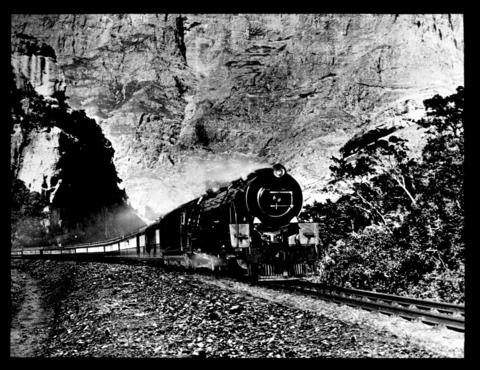
The service was introduced in 1923 as one of a pair of luxury expresses linking Johannesburg and Cape Town. Travelling south from Johannesburg it was known as the Union Limited; travelling north from Cape Town it became the Union Express. After the Second World War, in 1946, both services were renamed the Blue Train, a title that has since become synonymous with luxury rail travel in South Africa.
The Union Limited was designed for affluent travellers, senior businessmen, politicians and overseas visitors. It was the flagship of the South African Railways, the train that visitors from Britain expected to board after stepping ashore from a Union-Castle mail ship in Cape Town. Together the railway and the mail ships formed one of the great travel experiences of the British Empire.
Unlike ordinary passenger services, the Union Limited made only limited stops at the principal stations between Johannesburg and Cape Town, enabling it to complete the journey more quickly. Initially it was a first-class-only train, reinforcing its exclusive character. Passengers enjoyed comfortable sleeping cars, elegant dining facilities and attentive personal service, while every effort was made to ensure that the long journey was as comfortable as possible. In later years the train received new all-steel, air-conditioned coaches, confirming its reputation as one of the most luxurious railway services in the Empire.
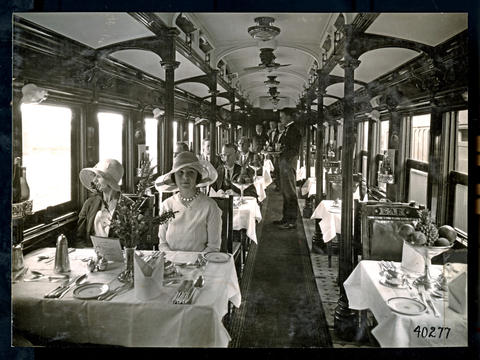
The timetable reveals that a return First Class ticket between Johannesburg and Cape Town cost 249 shillings and sixpence (£12 9s 6d), while a Second Class return fare on the ordinary services cost 166 shillings and sixpence (£8 6s 6d). At the time this represented a considerable expense. A skilled artisan or railway employee might earn between £20 and £30 a month, while an office clerk often earned rather less. A journey on the Union Limited was therefore a significant financial commitment and, for many South Africans, an occasional luxury rather than an everyday experience.
The journey itself took approximately two days. Today we think little of a two-hour flight between Johannesburg and Cape Town. In 1930 the journey was an integral part of the experience. Passengers expected to spend two days and two nights on the train, dining in the restaurant car, sleeping in comfortable compartments, conversing with fellow travellers and watching the changing landscapes of South Africa unfold beyond the carriage windows.
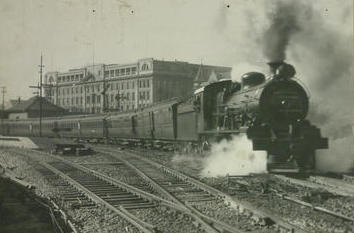
The locomotives hauling these premier trains were equally impressive. During the 1920s the South African Railways introduced the powerful Class 16D and later the Class 16DA Pacific locomotives specifically for the Union Limited and Union Express. They were among the finest steam locomotives ever built for Cape gauge and symbolised the engineering confidence of the South African Railways. In 1935 they were joined by the magnificent Class 16E, designed expressly for these prestigious services.
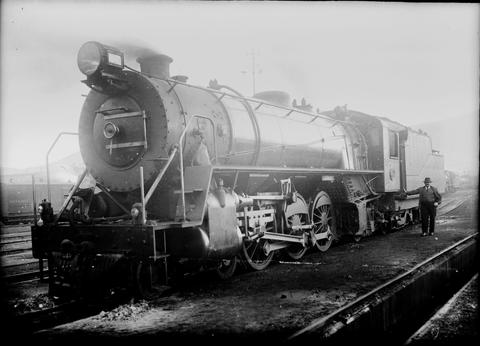
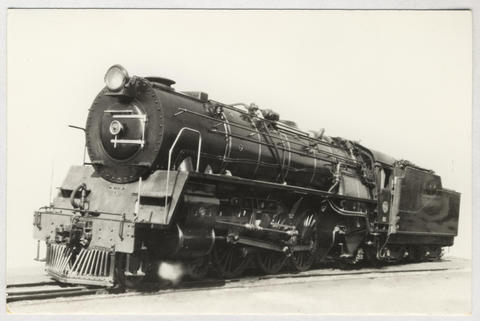
For the traveller consulting the 1930 timetable, the Union Limited represented far more than a convenient means of travelling between Johannesburg and Cape Town. It embodied the confidence, efficiency and ambition of a railway system that ranked among the finest in the world. Just as the Blue Train has become an icon of South African rail travel today, so the Union Limited occupied that place in the imagination of travellers nearly a century ago.
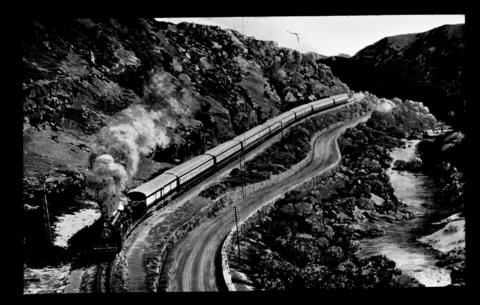
Road, Rail and Sea – An Integrated Transport System
One of the most fascinating aspects of the 1930 timetable is that it reveals a transport system extending far beyond the railway itself. The South African Railways was already thinking in terms of an integrated network in which trains, motor buses and ocean-going mail ships worked together to move passengers across southern Africa and beyond.
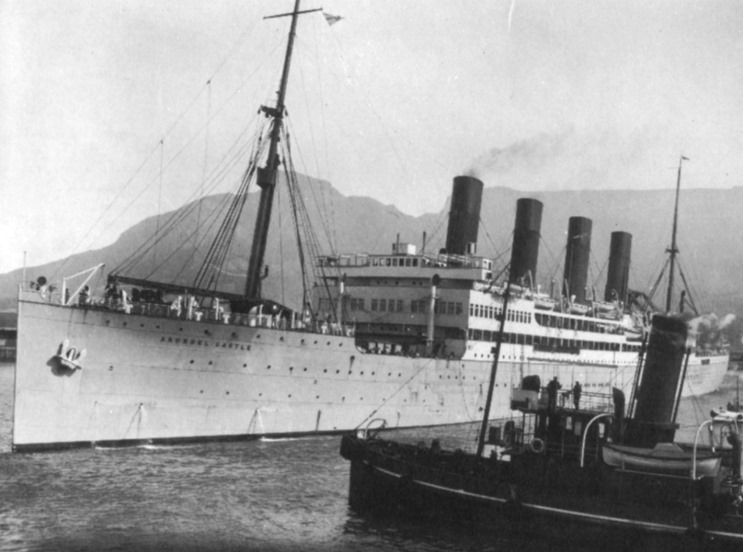
The final pages of the timetable provide a glimpse of this wider world. A striking advertisement for the Union-Castle Line lists the Royal Mail sailings between Southampton and South Africa from December 1930 to May 1931. The famous mail ships—Arundel Castle, Windsor Castle, Edinburgh Castle, Balmoral Castle and others—maintained a regular, dependable service between Britain and South Africa. At a time when commercial aviation was still in its infancy, these ocean-going liners were the principal means by which travellers reached Europe.
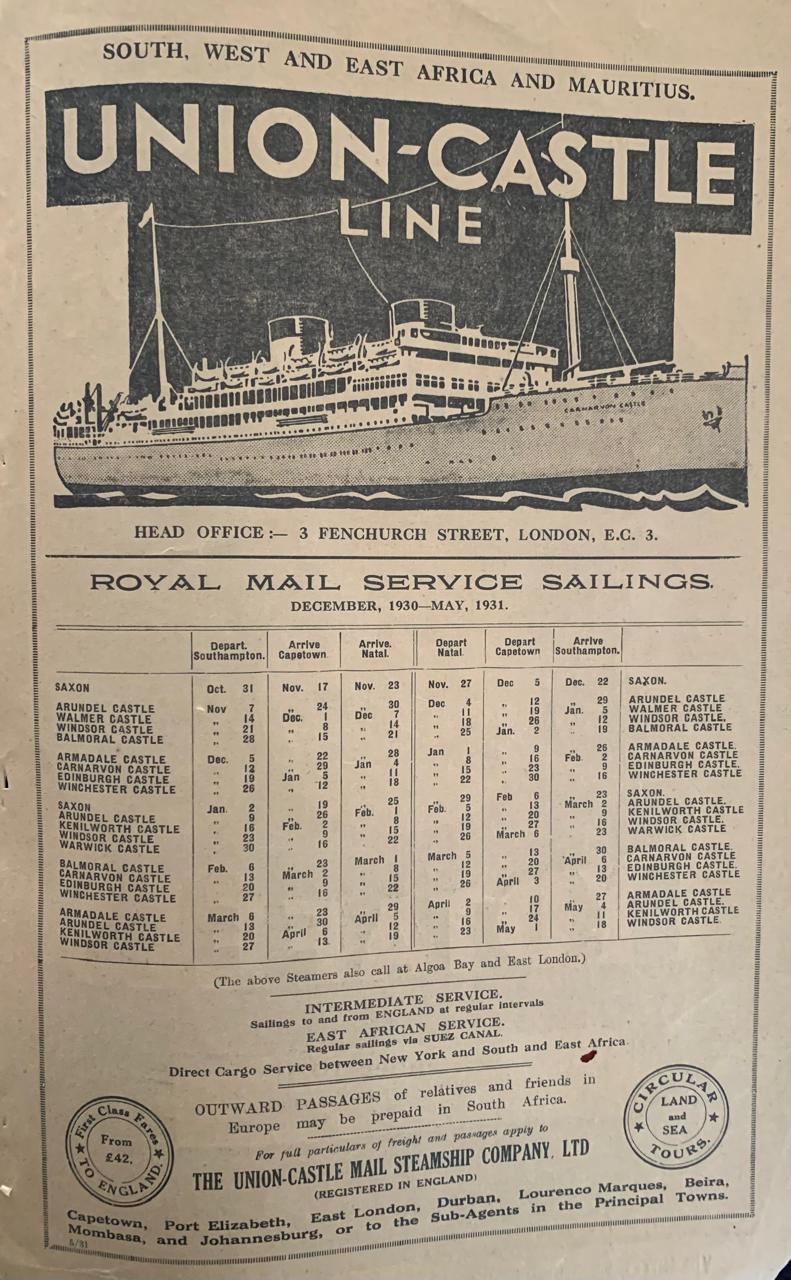
The railway and the mail ships operated in close harmony. A traveller from Johannesburg could board the Union Limited, travel comfortably to Cape Town, and transfer directly to a Union-Castle mail ship bound for Southampton. Similar connections were available through Durban. The railway timetable and the sailing schedules complemented one another, creating an almost seamless journey from the Witwatersrand to Britain. Union-Castle maintained booking offices not only in Cape Town and Durban but also in Johannesburg, making it possible to arrange an entire rail-and-sea journey from a single office.
The close relationship between rail and sea transport is reinforced by the 1935 South and East African Year Book and Guide, published by the Union-Castle Line. Together with the railway timetable, it presents a remarkably coordinated vision of travel. The Guide discusses railway regulations, lists supplementary charges for the luxurious articulated and air-conditioned saloons on the Union Express and Union Limited, and demonstrates how the railways, mail ships and even the emerging civil aviation services were increasingly viewed as parts of a single transport system.
The Union-Castle mail service was renowned for its punctuality. For decades its ships sailed on fixed weekly schedules, giving travellers and businesses confidence that rail connections in South Africa and ocean voyages to Britain could be planned with remarkable precision.
The timetable also reveals another important development. By 1930 the South African Railways had begun operating Road Motor Services to reach communities lying beyond the railway lines. These motor services were not intended to compete with the trains. Instead, they acted as feeders, carrying passengers and freight from smaller towns and rural districts to the nearest railway station. The railway remained the backbone of the national transport network, while motor buses extended its reach into areas where branch lines would have been uneconomic.
Looking back from the twenty-first century, it is tempting to assume that the motor car had already begun to replace the railway. In reality, this transition was only beginning. South Africa possessed relatively few all-weather roads, motor cars were still beyond the reach of many families, and long-distance motoring remained slow, unreliable and often adventurous. For most travellers, the railway remained the natural choice for journeys across the country, while the Union-Castle mail ships provided the dependable link between South Africa and Britain.
Seen in this light, the 1930 timetable was much more than a railway publication. It was the operating manual for an integrated transport system that linked branch-line trains with express services, railway stations with road motor coaches, and the ports of Cape Town and Durban with the great Royal Mail ships sailing regularly to Southampton. It captures a remarkable moment when rail, road and sea combined to create one of the most comprehensive transport networks in the southern hemisphere.
A Railway Looking to the Future
Although the 1930 timetable evokes an age of steam locomotives, drifting smoke and cinders, the South African Railways was already looking towards a new technological era. Beneath its familiar world of steam lay a railway system investing in electrification and adapting to the growing importance of motor transport.
The first main-line electrification in South Africa had been introduced only four years earlier, in 1926, on the demanding Natal route between Glencoe and Pietermaritzburg. Climbing the steep gradients of the escarpment placed enormous demands on steam locomotives, and electric traction proved more powerful, more economical and better suited to hauling the heavy coal and freight trains that were vital to the country's economy.
Electrification soon spread to the Witwatersrand, where dense suburban passenger traffic and intensive mineral freight made electric traction particularly attractive. During the 1930s the electrified network steadily expanded, and by the outbreak of the Second World War South Africa had become one of the world's leading users of electric locomotives on Cape gauge. The process had only just begun when this timetable was published, but the direction of travel was already clear.
Yet for the ordinary traveller, steam remained the unmistakable face of the railway. The great expresses, including the Union Limited, were hauled by magnificent steam locomotives, while branch lines across the country continued to echo to the sound of whistles and exhaust beats for many decades. The atmosphere of the railway station—the clouds of steam, the smell of coal smoke, the hiss of escaping vapour and the rhythmic beat of the locomotive—was still very much the world experienced by passengers consulting this timetable.
The timetable also hints at another technological change. Its Road Motor Services supplement shows that the South African Railways had begun to use buses to extend the reach of the railway into districts where branch lines were impractical or uneconomic. These road services were not intended to replace the railways; they complemented them, carrying passengers and freight to the nearest station and strengthening the national transport network.
Competition from the private motor car was only just beginning to appear on the horizon. As mentioned, South Africa possessed relatively few all-weather roads, long-distance motoring was slow and often unreliable, and private cars remained beyond the means of many families. The great national highway network lay decades in the future. In 1930 the railway still reigned supreme, but the seeds of change had already been sown.
The 1930 timetable therefore captures South African transport at a pivotal moment. It records a railway system at the height of its confidence, still powered overwhelmingly by steam, yet already embracing electric traction and cautiously integrating road transport into its operations. It preserves the moment when the old world of steam and the new world of modern transport briefly overlapped.
The Railway's Hidden Story
One question kept occurring to me as I turned the pages of this remarkable timetable. Who was it written for?
The answer seems clear enough. It was intended for the railway passenger travelling for business, pleasure or family reasons. It assumed that the traveller would consult timetables, compare fares, reserve sleeping berths, dine in refreshment rooms, perhaps stay in a hotel and, if travelling overseas, continue the journey on a Union-Castle mail ship. The advertisements—for hotels, banks, health resorts and seaside accommodation—reinforce this impression. The intended reader was overwhelmingly the literate, English- or Afrikaans-speaking, middle- and upper-income traveller.
Yet there was another railway story that scarcely appears in these pages.
Not every passenger travelling between Johannesburg and Cape Town travelled on the Union Limited or consulted a printed timetable before beginning a journey. Every year hundreds of thousands of African migrant workers travelled by train from rural South Africa and neighbouring territories to the gold mines of the Witwatersrand. They came from the Transkei, Zululand, Basutoland (Lesotho), Bechuanaland (Botswana), Swaziland, Portuguese East Africa (Mozambique), Southern Rhodesia (Zimbabwe), South West Africa (Namibia) and even Nyasaland (Malawi). The railway was the essential link that brought this labour force to Johannesburg and carried the men home again when their contracts ended.
The scale of this movement was immense. In 1933 the gold mines employed more than 261,000 African workers, the overwhelming majority recruited from rural districts and neighbouring territories. Their journeys, organised through the mine recruiting system and undertaken in special trains and segregated accommodation, were every bit as important to the operation of the South African Railways as the comfortable first-class expresses described elsewhere in this timetable.
The publication itself provides another reminder of the society in which it was produced. Alongside the familiar First Class and Second Class fares appear separate entries for "Natives"—a stark indication that racial segregation was already embedded in public transport long before apartheid became official government policy in 1948. The timetable records these arrangements without comment. Today they have become part of its historical significance.
In many respects, the South African Railways served two very different worlds. One was the world recorded in this timetable: businessmen, tourists, families and overseas visitors planning journeys with fares, timetables, sleeping cars and hotel reservations. The other was the world of migrant labour, where trains carried hundreds of thousands of men to the mines that underpinned the country's economy. Their journeys were organised for them; they had little need to purchase a railway timetable or consult the advertisements for hotels and holiday resorts.
The same steel rails carried both worlds. One travelled by choice, the other largely by economic necessity. Together they remind us that the history of South Africa's railways is not simply a story of locomotives, stations and timetables. It is also the story of the people whose journeys helped shape the country.
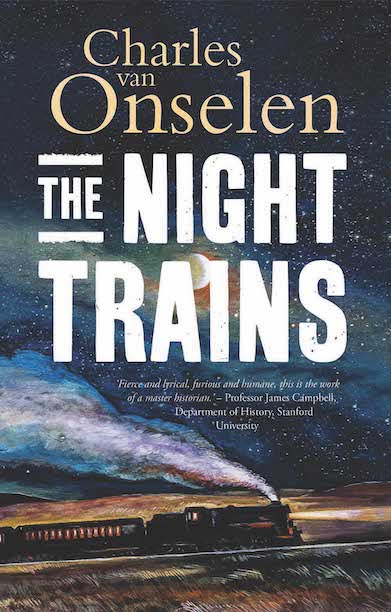
The Great Railway Stations – Cathedrals of Travel
The great railway stations of South Africa were never intended to be merely functional buildings. They were among the largest public buildings erected in their cities, representing an enormous investment in bricks and mortar. Like town halls, law courts and post offices, they proclaimed confidence, permanence and civic pride. They were monuments to a railway system that was helping to build a modern nation.
The railway station was the public face of the South African Railways. Every arriving passenger judged the efficiency, confidence and prestige of the railway system by the building through which they entered the city."
If airports are the gateways to cities today, then railway stations fulfilled that role during the first half of the twentieth century. Yet there was one important difference. Unlike many modern airports, which often seem anonymous and interchangeable, the great railway stations possessed a distinctive architectural presence. They were carefully designed civic monuments, intended not merely to process passengers but to impress them.
Every important city sought to create a station worthy of its status. Pretoria Station, designed by Sir Herbert Baker and completed in 1908, established an architectural standard for the new Union of South Africa. Cape Town Station presented an equally dignified face to the Mother City, while Durban's station reflected the importance of the port and its links with the Indian Ocean. Port Elizabeth welcomed visitors arriving by rail at one of South Africa's principal harbours. Together these stations projected an image of efficiency, stability and permanence.
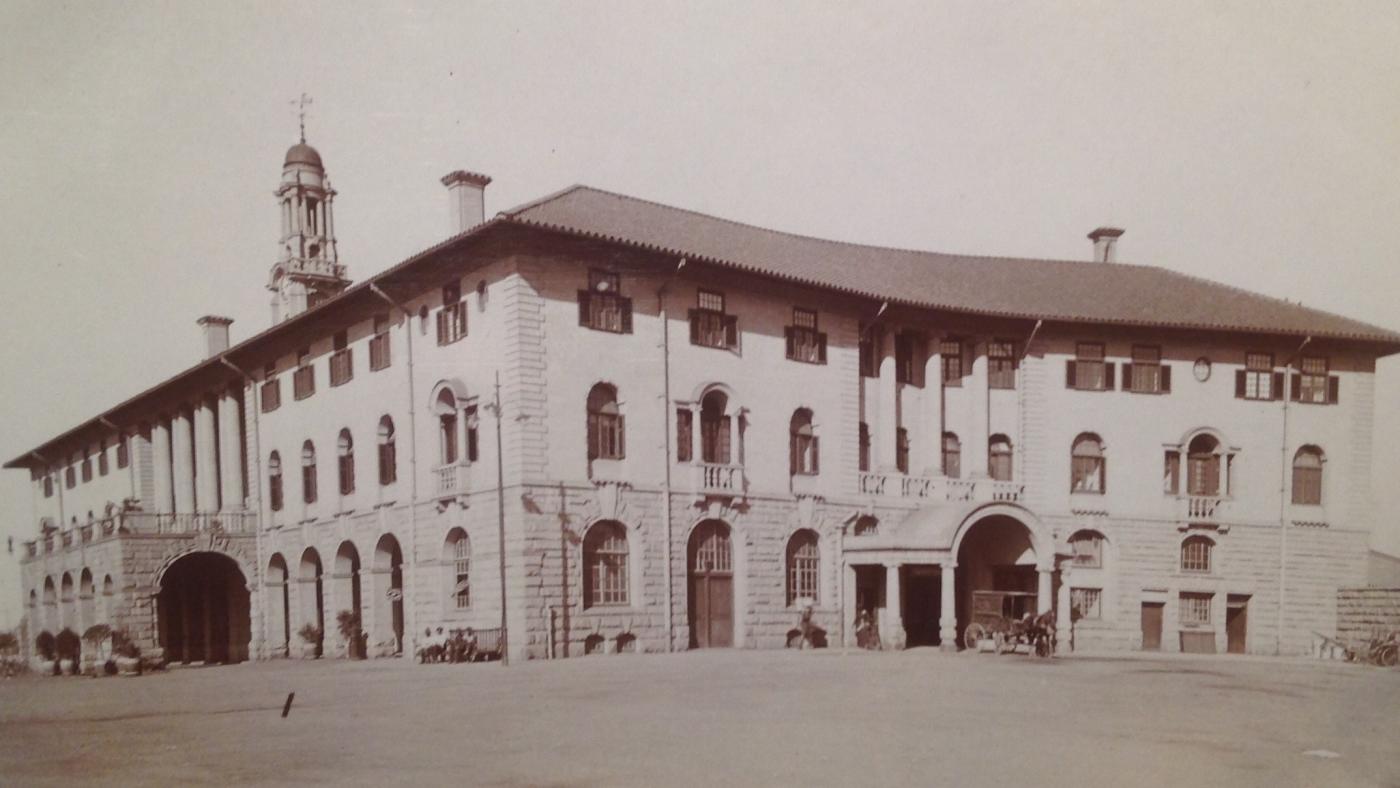
They were also carefully planned buildings. Their imposing façades opened into lofty booking halls, spacious concourses, elegant waiting rooms, refreshment rooms, restaurants, luggage offices and broad platforms sheltered beneath soaring roofs. The simple act of catching a train became an occasion. Railway stations transformed departure and arrival into a public ceremony.
The masterpiece of South African railway architecture was undoubtedly the new Johannesburg Park Station, completed in 1932 after its foundation stone was laid in 1928. Although rooted in classical planning, its vast sunken concourse, reinforced concrete engineering and integration of architecture, sculpture and art made it one of the most ambitious public buildings erected in South Africa during the inter-war years.
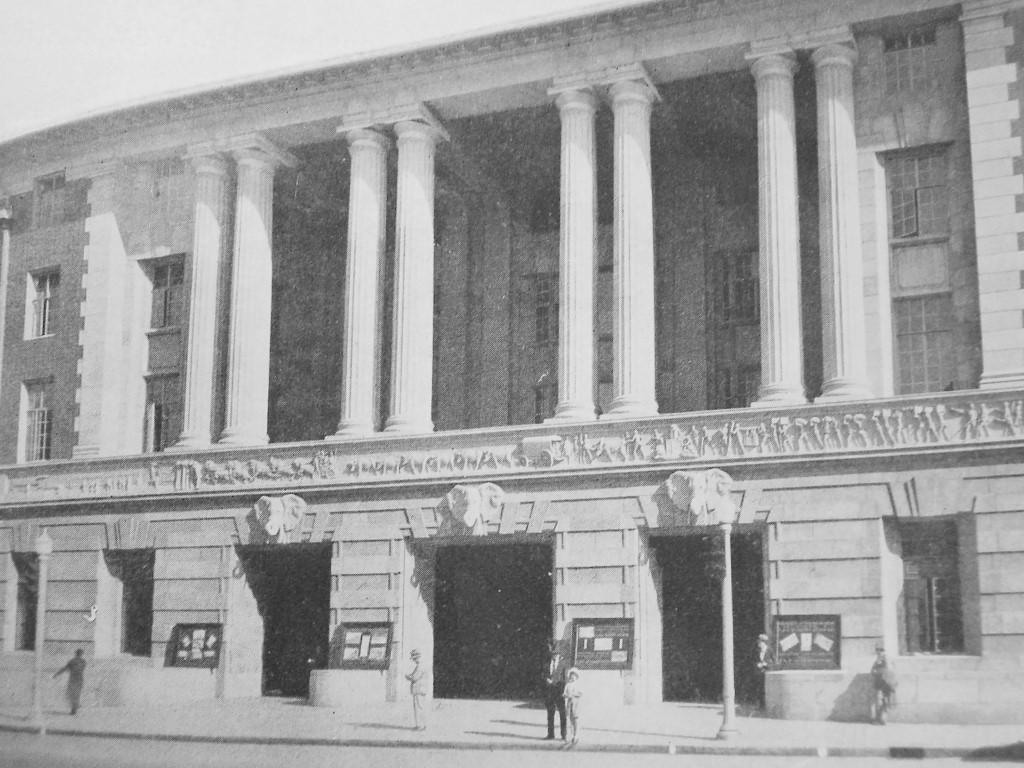
The station was designed by Gordon Leith in association with Gerrit Moerdijk and Railway Architect David McCubbin, while the remarkable reinforced-concrete concourse was engineered by Sayle & Rossack. Descending the grand staircase from De Villiers Street, travellers entered a magnificent public space of intersecting vaulted ceilings, marble columns, bronze detailing and generous natural light. The concourse was enriched by J. H. Pierneef's celebrated mural panels depicting the landscapes and towns of South Africa, while restaurants, tearooms and booking offices created an atmosphere that was as much social as practical. Today those Pierneef panels are preserved in a purpose-built gallery at the Rupert Museum in Stellenbosch, a reminder of the artistic ambition invested in the station.
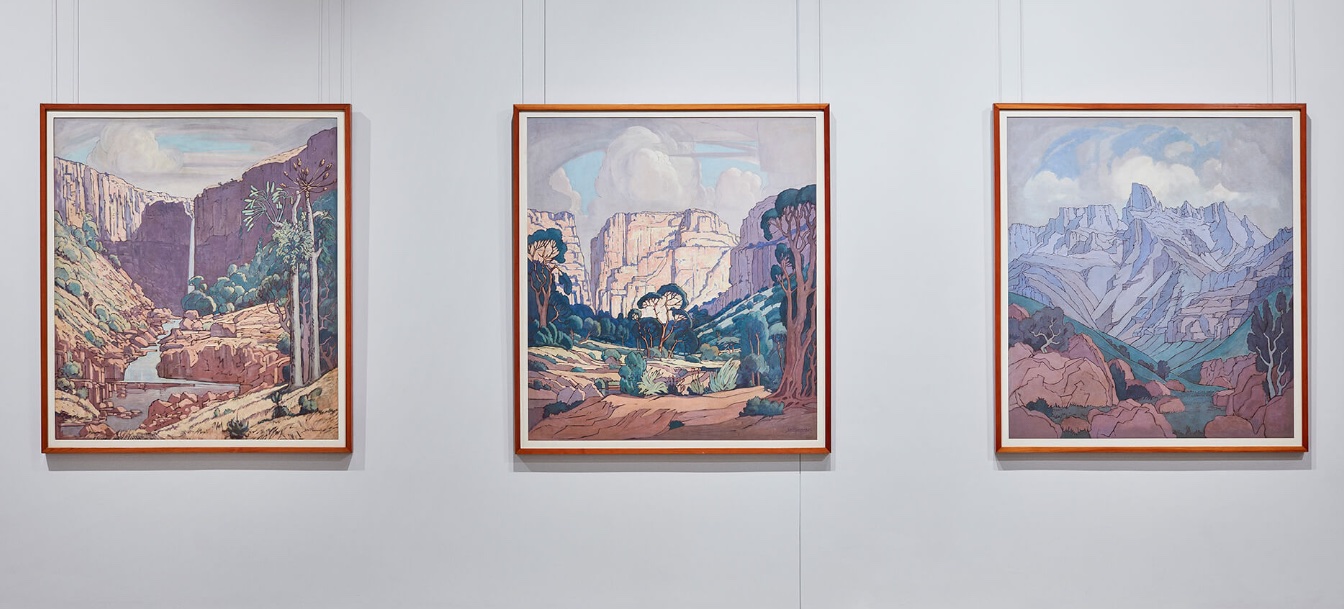
As Clive Chipkin observed in Johannesburg Style, Park Station gave Johannesburg a new metropolitan confidence. It was far more than a transport interchange. For decades it served as the symbolic gateway to the Witwatersrand, welcoming visitors arriving from every corner of South Africa and beyond.
Park Station of the 1930s remained in place until the 1950s when a newer Johannesburg station was built - more modern, modelled on and inspired by the Milan station, its concourse was a temple of light and glass.
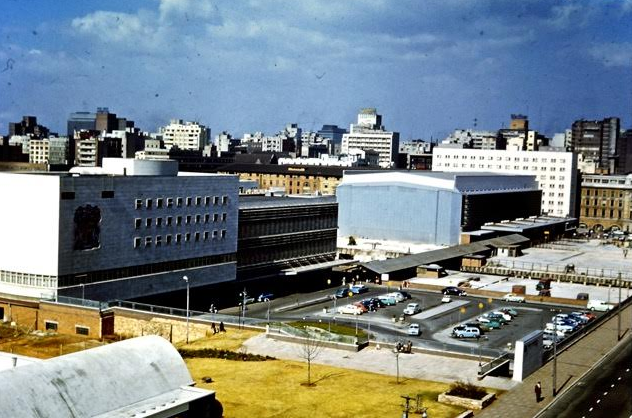
Yet, like so much of South African history, these magnificent buildings also reflected the contradictions of their age. Their architecture expressed optimism and progress, while their operation reflected a society that was already deeply segregated. The stations themselves, no less than the trains they served, formed part of the wider social history of twentieth-century South Africa.
Today many of these great stations have lost the prominence they once enjoyed. Yet they remain among the finest public buildings of their generation. They remind us that there was a time when a railway station was not simply a place to catch a train, but one of the architectural and civic landmarks of every important South African town and city.
A Personal Reflection
My own memories of Park Station belong to the 1950s. Although officially known as Johannesburg Station, to generations of Johannesburg children it was simply Park Station. It was a place of immense scale and quiet grandeur. I remember descending the broad staircases into the great concourse, with its lofty ceilings, marble finishes and sense of occasion. Parking nearby often meant walking through the station on the way to Eloff Street, and, to a child, it seemed one of the grandest public buildings in the city. Even its beautifully maintained public conveniences made an impression!
Yet my fascination with railways began long before I understood their architectural or historical significance. Looking back, I realise that trains also shaped my own family's story.
My mother grew up in Springfontein, a small town in the southern Free State where the railway station and the railway line to Bloemfontein or De Aar was part of everyday life. Like so many ambitious young South Africans of her generation, the railway became her pathway into adulthood. It carried her first to Bloemfontein, where she studied, found employment and began to establish herself through determination and hard work. From there she made the much greater leap to Johannesburg, then the country's great metropolis.
In Johannesburg she became what was then proudly described as a career girl. She worked as a cost accountant for J. W. Jagger, had her own flat near Joubert Park, dressed smartly, enjoyed the city's social life and embraced the opportunities that Johannesburg offered an independent young woman. The railway also made leisure and family travel possible. She could take the train to Durban for a seaside holiday or travel to Port Elizabeth to visit her sister and later spend a period working there for Firestone.
When I look through this 1930 timetable today, I therefore see much more than train times and fares. I see the world that shaped my mother's generation—a world in which the railway represented opportunity, independence and adventure. For many South Africans it was the road to a new life.
Perhaps that is why this humble timetable speaks so eloquently across the decades. It reminds me that every line in its pages represents not merely a railway route but thousands of individual journeys, each with its own hopes, ambitions and memories.
Why This Timetable Matters
Who would want to own such an unwieldy, densely printed volume today? The obvious answer is a railway enthusiast. Yet that would be to underestimate its appeal.
This timetable is far more than a collector's curiosity. It is one of those rare primary sources that opens a window onto an entire society. Every page tells us something about how South Africa functioned in 1930: how people travelled, what they paid, how long journeys took, where they changed trains, where they ate, how goods and people moved across the country, and how a vast railway network bound together cities, towns, villages, sidings and ports.
For the genealogist, it may explain how an ancestor reached a remote district or travelled to a new place of work. For the local historian, it preserves the names of stations, halts and branch lines that have long since disappeared. For the railway historian and enthusiast, it documents one of the finest railway systems in the world at the height of its development. For the railway modeller, it provides a wealth of authentic operational detail. For the novelist and historical researcher, it offers the small but telling details that bring another age convincingly to life.
As I have worked my way through its pages, I have come to appreciate that this modest publication is much more than a timetable. It is a gazetteer, a directory of towns and stations, a travel guide, a fare table, a record of transport technology and, above all, an extraordinarily rich historical document. It captures South Africa at a particular moment in time, recording not only its railway system but also its geography, economy and patterns of everyday life.
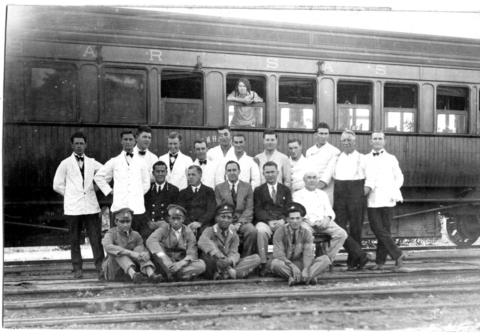
Perhaps that is the greatest value of ephemeral publications. Because they were never intended to survive, they often preserve aspects of ordinary life that more formal histories overlook. Books are written to interpret the past; documents such as this simply record it. Nearly a century later, that makes them invaluable.
Today many of the stations listed in this timetable are silent. Their platforms stand empty; weeds grow between flagstones; the buildings have disappeared and their branch lines have been lifted or abandoned. Yet within these fragile pages survives the blueprint of an extraordinary transport system and a remarkable record of the South Africa that it served.
This timetable captures South Africa at that moment when the railway still defined the country. The network was complete, the express trains were at their height, magnificent stations proclaimed confidence and permanence, electrification was beginning to transform the system, and road transport was only starting to challenge the supremacy of the railways. Within its pages survives a remarkably complete picture of how a nation travelled, traded, worked and connected with the wider world.
Kathy Munro is an Honorary Associate Professor in the School of Architecture and Planning at the University of the Witwatersrand. She enjoyed a long career as an academic and in management at Wits University. She trained as an economic historian. She is an enthusiastic book person and has built her own somewhat eclectic book collection over 40 years. Her interests cover Africana, Johannesburg history, history, art history, travel, business and banking histories. She researches and writes on historical architecture and heritage matters. She is a member of the Board of the Johannesburg Heritage Foundation and is a docent at the Wits Arts Museum. She is currently working on a couple of projects on Johannesburg architects and is researching South African architects, war cemeteries and memorials. Kathy is a member of the online book community the Library thing and recommends this cataloging website and worldwide network as a book lover's haven. She is also a previous Chairperson of HASA.
Bibliography
- Chipkin, Clive. Johannesburg Style: Architecture and Society 1880s–1960s. Cape Town: David Philip, 1993.
- South African Railways and Harbours Official Time-Table. No. 192. Effective 1 December 1930. Johannesburg: South African Railways and Harbours Administration, 1930.
- The South and East African Year Book and Guide. London: George Philip & Son Ltd., 1935.