
There are moments when an object suddenly becomes much more than an object. I had one of those moments last weekend at the Origins Centre at the University of the Witwatersrand.
I was David Russo's guest at the wonderful evening organised by the Wits School of Geosciences as part of Jozi 140, the celebration of 140 years of Johannesburg. David is a postgraduate geology student with a passionate interest in the history of South African gold mining and in collecting old books and memorabilia on the subject.
It was an event in the rich and fascinating weekend, bringing together the geological and human history of the Witwatersrand — its rocks and mines, historic maps and photographs, landscapes and buildings, and the remarkable scientific institutions that have grown up around them.
The Origins Centre event itself brought many of these strands together. The keynote address was delivered by Professor Bruce Cairncross of the University of Johannesburg, who spoke about the complicated and sometimes contorted history of gold mining on the Witwatersrand. His account also opened up another dimension of the geological story: the extraordinary multiplicity of minerals associated with the Witwatersrand, reminding us that the history of the Reef cannot be reduced simply to the search for gold.
It was a fitting introduction to an evening in which geological time, mining history, human history and scientific discovery came together. But for me the highlight came on Saturday evening at the Origins Centre.
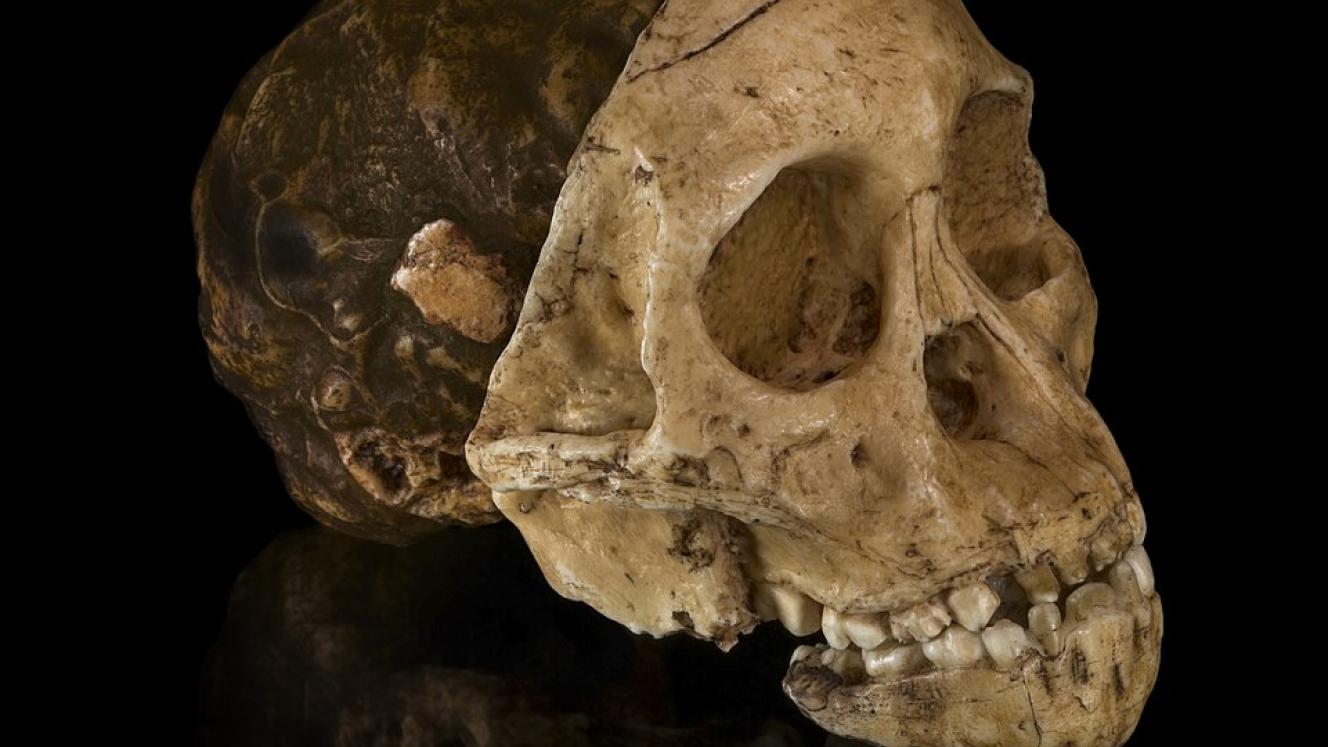
There, for one night only, was an exhibition of historic Witwatersrand gold-mining maps, photographs and artefacts assembled by David and the Geosciences team. At its centre was something immensely older than Johannesburg… The Taung Child.
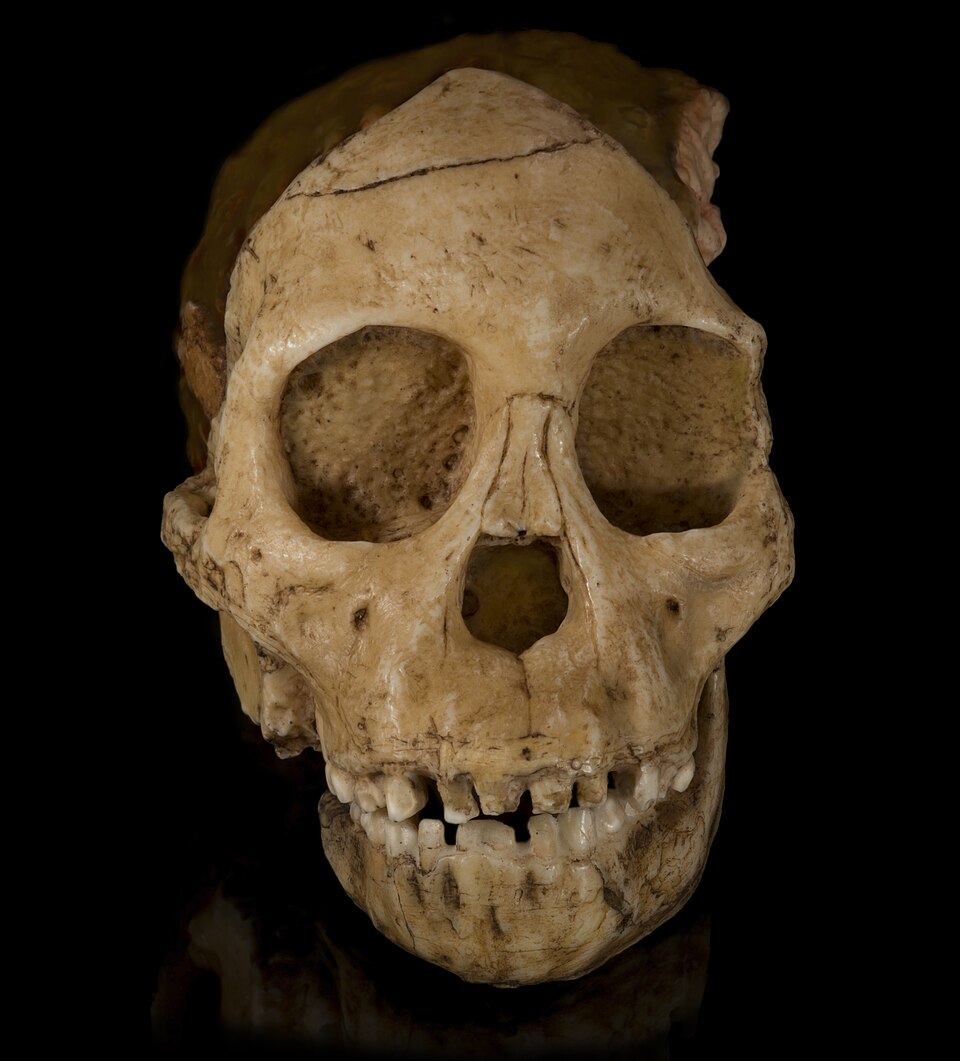
I knew the story. I had seen photographs and casts of the famous fossil many times. But seeing the actual fossil was something quite different. It was a goose-bump moment.
Here was one of the great scientific treasures of South Africa — a tiny fossilised skull that had changed the way the world thought about human origins. Suddenly, standing in front of it, I realised that I had been connected with this story for much longer than I had imagined.
A story that goes back to 1959
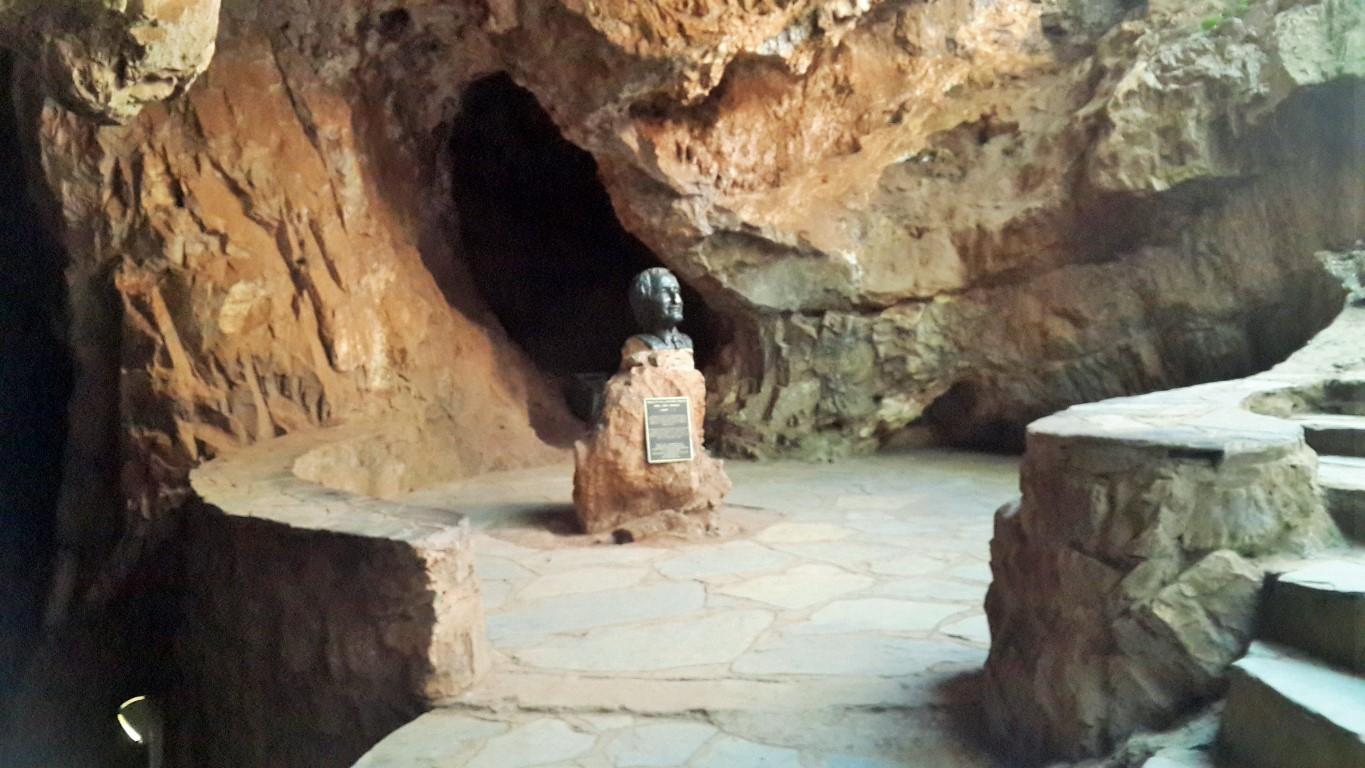
I have always been fascinated by the story of human origins in the landscape around Johannesburg. My first visit to the Sterkfontein Caves was in 1959.
It was a very different experience from visiting the Cradle of Humankind today. There was no sophisticated visitor centre, museum, pathways or a carefully illuminated and curated underground experience. We entered the limestone caves with carbide lamps, trying to see the stalactites and stalagmites in the depths of the caves.
I could hardly have understood then how important that landscape would become in the history of human evolution.
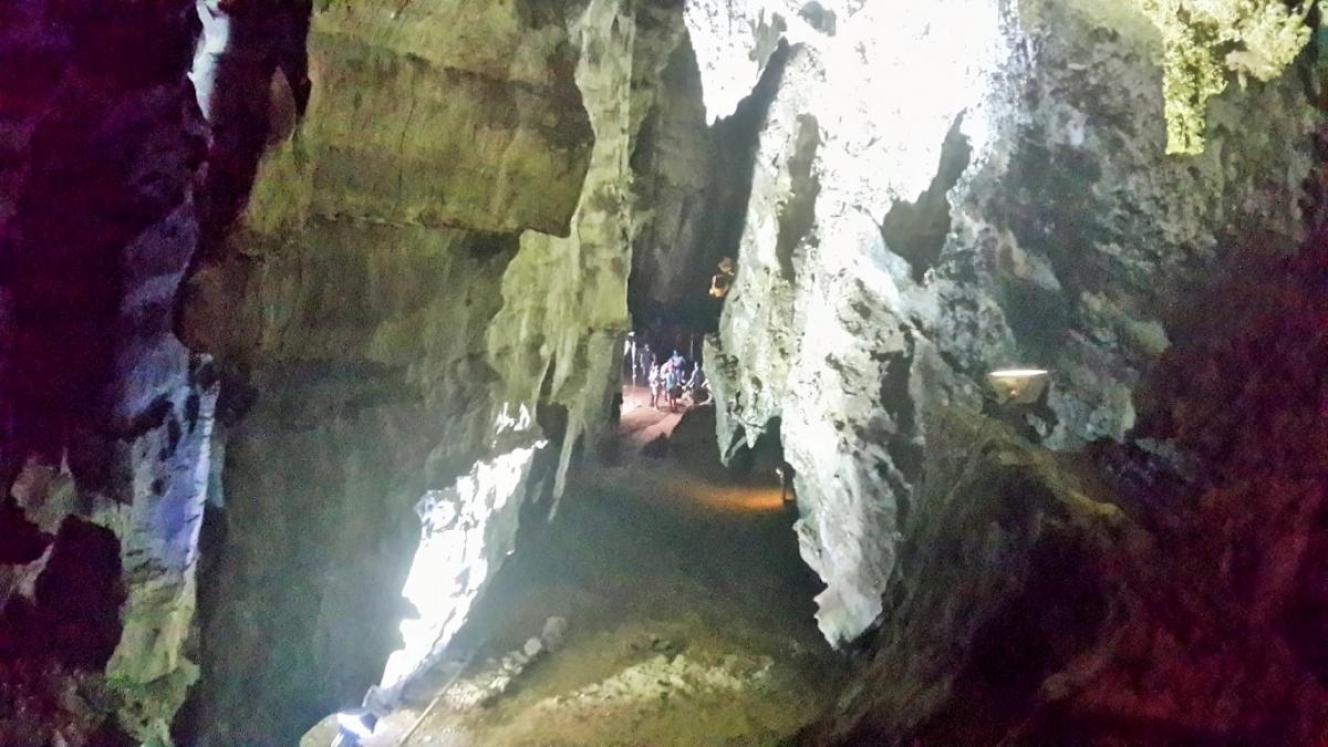
Sterkfontein was already famous, however. Robert Broom had discovered an adult Australopithecus africanus there in 1936, following Dart's discovery at Taung. The famous specimen subsequently known as Mrs Ples was discovered there in 1947.
I had another, rather more embarrassing, encounter with Mrs Ples some years later.
I remember a first-year Geology field trip to Sterkfontein when Phillip Tobias was our guide. He took our student group to the archaeological excavation above the caves. We sat precariously on rocks, leaning against the limestone outcrops as he explained what we were looking at.
Then, with the wonderful dramatic instinct that was so much part of Phillip Tobias's teaching, he pointed directly at where I was sitting.
"The lady there," he announced, "has positioned herself and her skull exactly where Robert Broom found Mrs Ples."
He went on to explain how a hominid skull had been embedded in the deposits at precisely such a position.
I wanted the ground to open up and swallow me. Instead, I sat there dying of embarrassment, wishing desperately that the ghost of Mrs Ples would envelop me and somehow make me disappear.
It is a memory that has stayed with me, partly because it was so characteristic of Phillip Tobias. He could turn a geological outcrop into a stage and a fossil discovery into theatre. Years later, when I knew him as a colleague, I came to appreciate even more the extraordinary combination of scholarship, enthusiasm and showmanship that made him such a memorable teacher.
The Taung Child had therefore set in motion a chain of discoveries that would eventually make the region around Johannesburg one of the world's great centres for the study of human origins.
The connection between Taung and Sterkfontein is fundamental. The little skull from Taung helped send palaeoanthropologists looking for more evidence in the caves of the Transvaal.
Raymond Dart and the world of Anatomy
There is another personal memory that makes this story especially poignant for me.
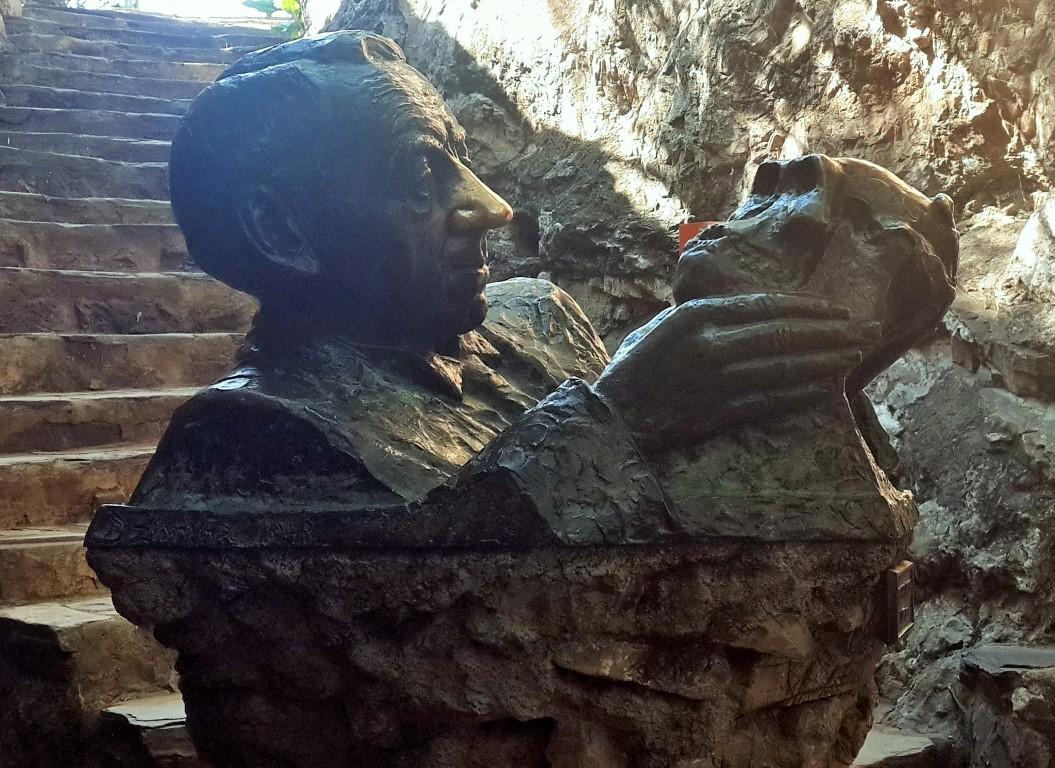
I met Raymond Dart at Wits. I was a young lecturer in the early 1970s and attended a special lecture and tribute occasion at the university. Dart was then an elderly and very frail gentleman. But what I remember is the sparkle in his eyes and the sharpness of his mind.
I did not then appreciate quite how extraordinary it was to be in the presence of the man whose discovery, nearly half a century earlier, had challenged the scientific establishment's ideas about where humanity had come from.
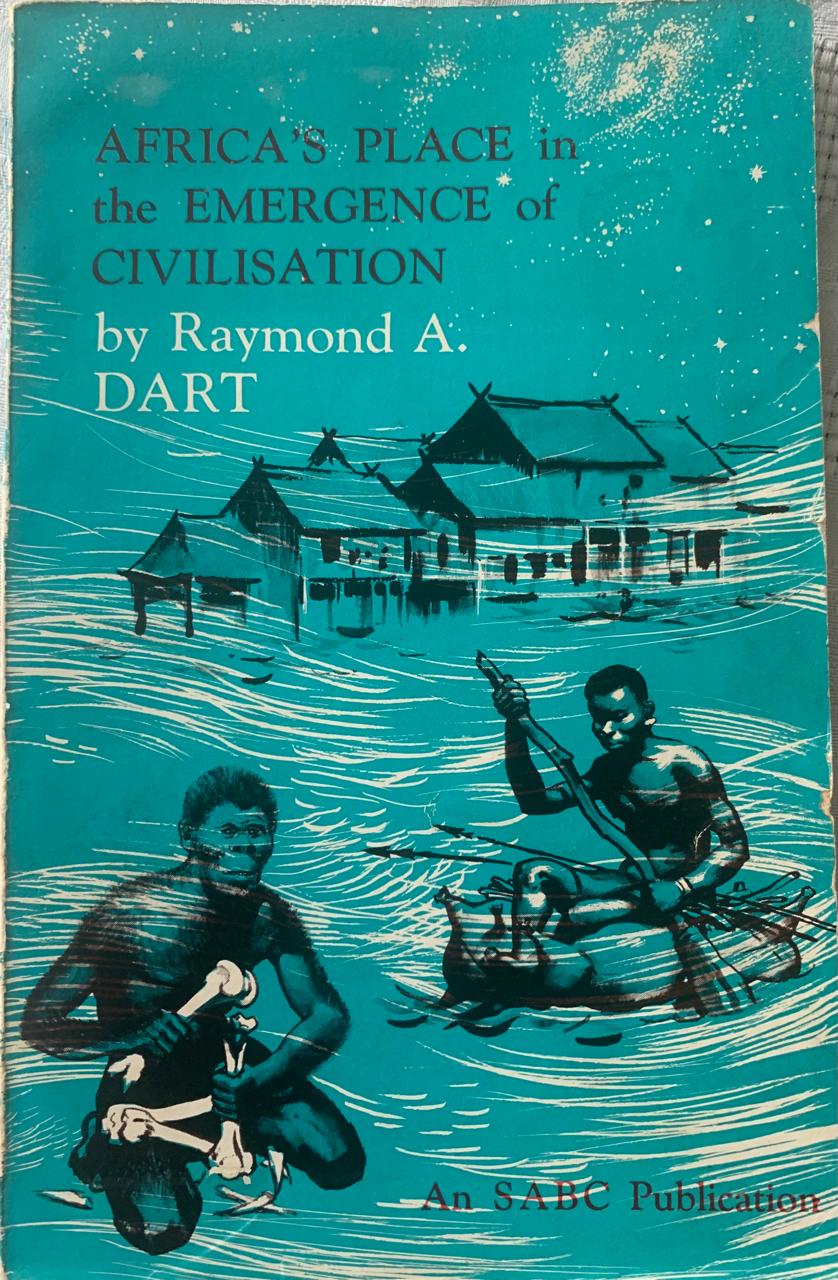
Dart had arrived in Johannesburg in 1923, aged only 30, to become Professor of Anatomy at the newly founded University of the Witwatersrand. He was an anatomist, not a geologist, and it was through Anatomy that the Taung fossil entered the intellectual life of Wits.
The fossil emerged in 1924 from a lime quarry at Taung, in what is now the North West Province. It was not the result of a carefully planned palaeoanthropological expedition. Fossil material was brought from the quarry to Dart, and among the material was the extraordinary little skull.
There were several people involved in the chain of discovery, including quarry workers, geologist Robert Burns Young and Dart's anatomy student Josephine Salmons. The traditional story of the brilliant individual scientist making an isolated discovery has consequently been modified by later historical research. But it was Dart who recognised the extraordinary significance of what had arrived at Wits.
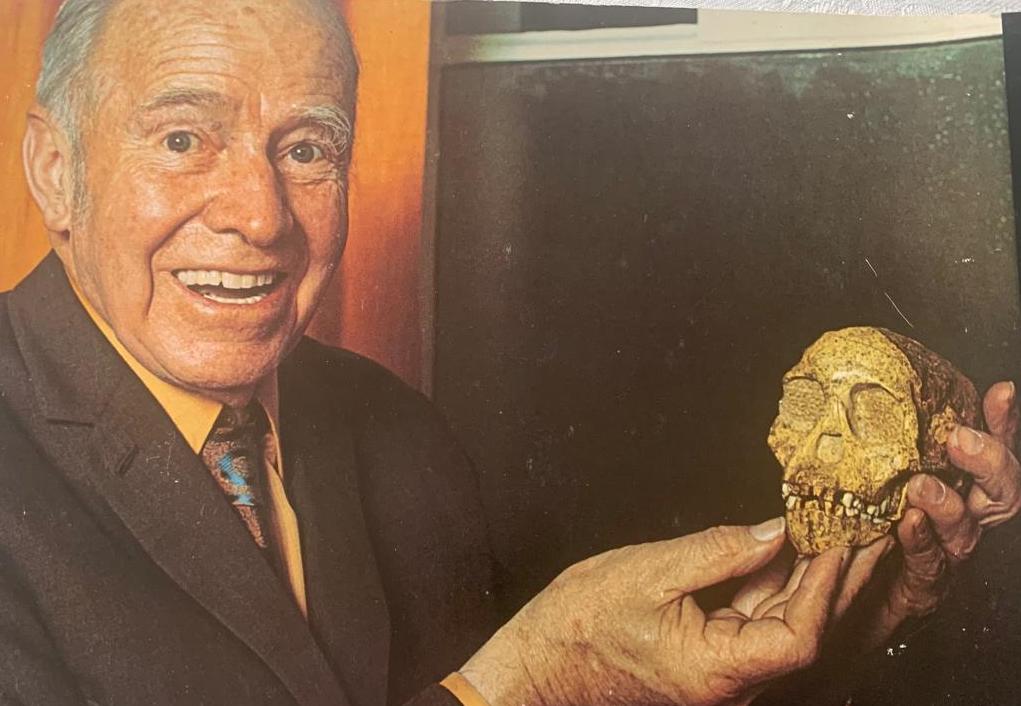
The skull belonged to a young child. Its face, teeth, skull base and, particularly, the position of the foramen magnum suggested something of profound importance: this creature had been capable of walking upright. Inside the skull was an equally remarkable feature — a natural endocast (a fossilised impression of the brain).
Dart concluded that he was looking at something new and named it Australopithecus africanus — essentially, the southern ape of Africa. He published his description in Nature on 7 February 1925. Modern research places the Taung Child at approximately 2.6 million years ago, although the dating of South African hominin fossils has been the subject of continuing research and debate.
Africa? Surely not
It is difficult today to appreciate how radical Dart's interpretation was. The scientific search for human origins was dominated by discoveries and assumptions from Europe and Asia. The discovery of Piltdown Man in England in 1912 had reinforced the idea of an early human with a relatively large brain. The prevailing expectation was that increased brain size was the defining characteristic of humanity's earliest ancestors. Of course the fact that the Piltdown Man was a scientific fraud was not known at the time!
Then Dart appeared with an African fossil… a skull of a being whose brain was small but whose anatomy suggested upright walking. He argued, in effect, that an important stage in human evolution had taken place in Africa. There was considerable scepticism.
Arthur Keith, one of the leading British anatomists of the day, wrote in Nature in July 1925 that many scientists remained doubtful about the status of the Taung skull and wanted to examine the fossil or accurate casts for themselves.
His letter contains a wonderfully revealing detail. Because casts were not readily available, scientists wanting to examine the specimen had to go to Wembley, London and peer at it in a glass case in the South African Pavilion at the much promoted Empire Exhibition, first opened in 1924 and by 1925 in its second year. Dart announced his discovery and went to London with his casts of the Taung skull in 1925. (Incidentally, research into the early photographs of the Taung Child has since produced another intriguing discovery: photographs long associated with the Wembley material appear, on close examination, to depict the original fossil rather than a cast.)
The early history of the specimen remains full of such fascinating details. Indeed, it took decades and many more African discoveries before the importance of Taung was fully recognised. The later discovery of additional Australopithecus fossils in South Africa and East Africa, together with the exposure of Piltdown Man as a hoax, profoundly changed the balance of evidence.
But Dart had challenged the orthodoxy and he had done so from Johannesburg.
Anatomy, palaeontology and institutional continuity
My own memories of Wits give another perspective on this story. I remember visiting the Department of Anatomy at the Medical School in Parktown and being astonished by the extraordinary diversity, range and age of its skull collections in the Hunterian museum, almost a hidden treasure at Wits Parktown campus on York Road. These were not museum curiosities. They were the everyday tools of Anatomy — objects used for teaching, comparison, research and study.
Seen in that context, the Taung Child makes particular sense. Dart was an anatomist. He approached the fossil with the knowledge of comparative anatomy, looking at the relationship between the skull, teeth, face, brain and the base of the skull.
The subsequent history of palaeoanthropology at Wits also reveals an interesting institutional story.
Anatomy and palaeontology developed as strong traditions within the university, sometimes with different institutional homes and different approaches to the fossil record. The Bernard Price Institute for Palaeontological Research, established in the 1940s, developed a major palaeontological collection and research tradition alongside the anatomical study of hominins.
There were tensions between these academic worlds, and at times they could be quite strong. I observed some of this as an interested outsider rather than as a participant.
What is more interesting is the underlying institutional divide. The fossils themselves did not recognise departmental boundaries.
To understand human origins required anatomy, geology, palaeontology, archaeology, stratigraphy and increasingly many other disciplines.
Eventually those institutional boundaries became less rigid, leading into the sophisticated modern era of research represented by figures such as Bruce Rubidge, whose decades of foundational work on Karoo palaeontology, stratigraphy and the evolutionary history of mammals have helped anchor South African palaeontology on the global stage.
Through institutions such as the Evolutionary Studies Institute, Wits's great fossil collections have continued to evolve as part of a collective scientific enterprise.
Phillip Tobias and the Dart tradition
I knew Phillip Tobias as a colleague and a feisty defender of academic freedom. I remember him as that small figure in a striking red gown standing proud at the symbolic protests at the Wits entrance on Jan Smuts Avenue. I remember him thundering a passionate point on the Senate Room floor.
He was a remarkable man — immensely learned, intellectually formidable and deeply committed to Wits and to the study of human origins. He was also very accessible.
He inherited the Dart tradition at Wits and became one of the great figures in twentieth-century palaeoanthropology. Under his leadership, the university's contribution to the study of human origins became even more substantial.
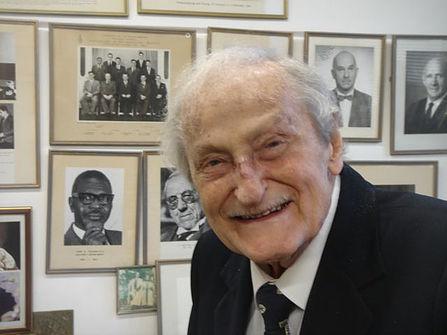
Looking back, it is fascinating to realise that I encountered both men: Dart when he was already an elderly man with that extraordinary sparkle still evident, and Tobias during my own academic life. Now decades later, I was standing in front of the fossil that had linked them.
One small object, vast journeys
That is why I think the Taung Child deserves to be regarded as much more than a scientific specimen.
It is a national heritage treasure. But it is also an essential research source for scientists. One small object reveals an almost unimaginably large story. It is part of the Johannesburg story. It takes us back some 2.6 million years, long before Johannesburg existed, long before gold was discovered, long before written history and long before universities. Yet the story of that ancient child became intertwined with the modern city.
It came into the hands of Raymond Dart at Wits; it helped establish the young university as a centre for research into human origins; it challenged the scientific assumptions of its time; and it became part of an extraordinary research tradition that subsequently included Phillip Tobias, Ron Clarke, Lee Berger, Bruce Rubidge, James Kitching, Tim Partridge and many others.
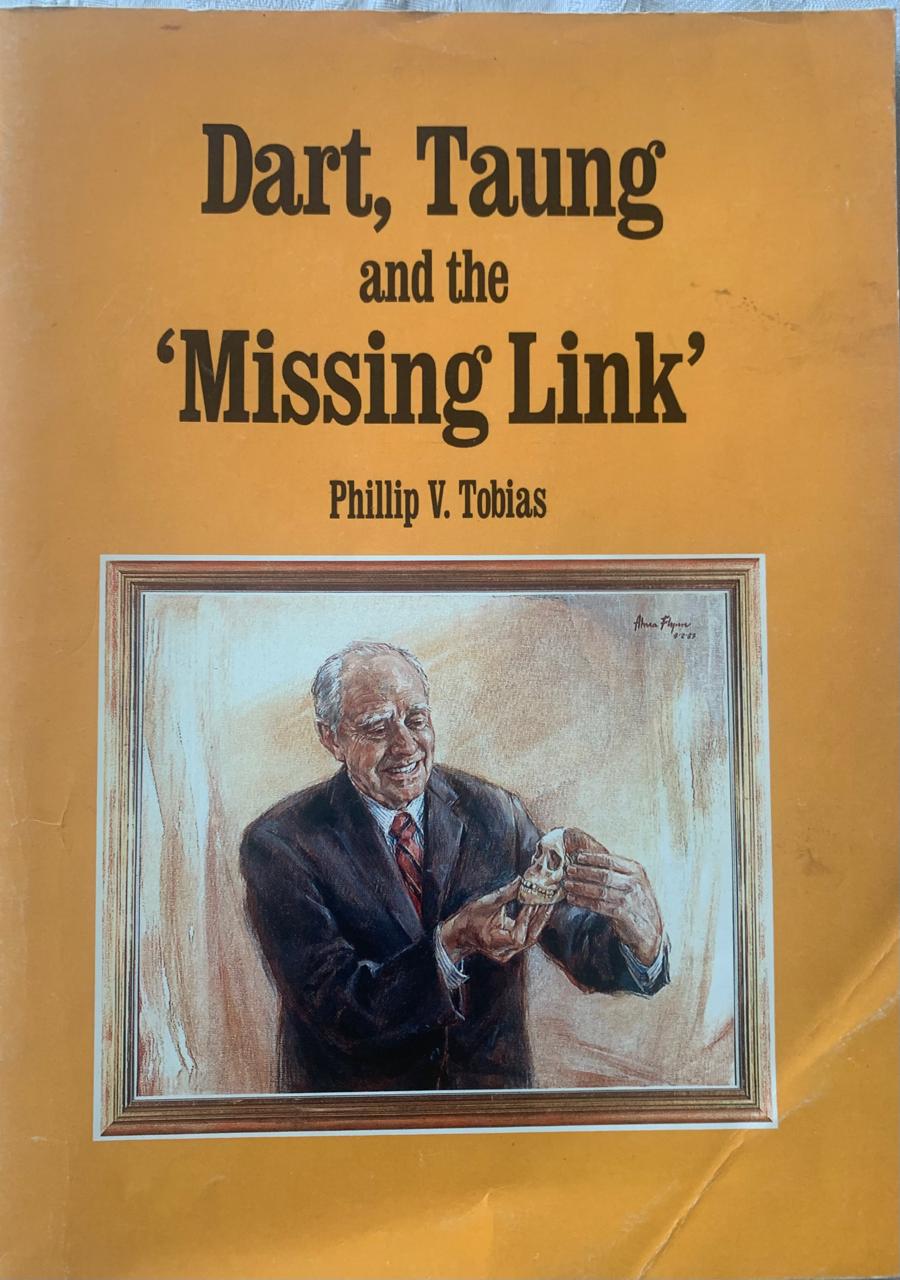
Today Wits's human-origins collections form part of a much larger scientific enterprise, while the Taung Child itself is kept under stringent security in the University's Fossil Vault. How different from Dart's day, when the famous skull could be brought out and shown to distinguished visitors.
This is why the decision to exhibit the Taung Child at the Origins Centre for this special event seemed so fitting.
The Origins Centre exists to tell the story of human origins in Africa, and the Taung Child belongs at the beginning of that story.
Troy, Moscow — and Johannesburg
As I stood looking through the glass at the little skull, I found myself thinking about the strange geographic odysseys that famous historical objects can undertake.
I have actually stood at Troy, in Turkey, looking at layers of excavations and across that extraordinary landscape and thinking about Heinrich Schliemann and the ancient city he believed he had found.
I have also been to Moscow to see the Gold of Troy — the extraordinary collection of objects excavated by Schliemann and taken to Berlin, before being carried off to Moscow after the Second World War. There they remained largely hidden from public view for decades before being displayed again.
The journey of those objects — from Troy to Berlin, from Berlin to Moscow, and eventually into public view again — has always seemed to me a remarkable reminder that the history of an object does not end when it is excavated. Objects acquire new histories as they move through institutions, countries, wars and generations. Standing at the Origins Centre last weekend, I experienced something of that same emotion regarding the migration of history across time and space.
Except that this time the object before me was not thousands of years old. It was millions of years old. It was not in Moscow. It was here in Johannesburg. A little fossilised child's skull, a child who lived more than two million years ago. A young professor who recognised its significance. But a scientific establishment that initially doubted him.
It was a discovery that helped change the geographical story of human evolution. A new university and a city became part of that extraordinary story.
Reflecting on all of this in a matter of seconds was emotionally moving.
Remembering Raymond Dart in Johannesburg
Finally, there is another part of this story that belongs firmly in Johannesburg's heritage landscape.
For some time, the Johannesburg Heritage Foundation has wanted to honour Raymond Dart with a Blue Plaque at the site of the original Wits Medical School on Hospital Street in Hillbrow, where he established and developed the Department of Anatomy after taking up his post in 1923. I hope that this eventually happens. A blue plaque there would do more than commemorate a distinguished scientist, it would connect a person with a place, and a place with a discovery that changed the world's understanding of human origins. A blue plaque would tell the story of Dart and Taung, of Wits and Sterkfontein, of Anatomy and Palaeontology, and of the generations of scientists who followed.
The city's heritage includes ideas, discoveries, collections, laboratories, universities and the people who transformed them into places of international significance. The Taung Child belongs to the history of human evolution. Raymond Dart belongs to the history of Johannesburg, and together they remind us that the heritage of this city is not confined to its buildings, streets and mines.
Sometimes Johannesburg's most important heritage is found in a very small object. … one small skull — and the history of humanity on Earth.
Kathy Munro is an Honorary Associate Professor in the School of Architecture and Planning at the University of the Witwatersrand. She enjoyed a long career as an academic and in management at Wits University. She trained as an economic historian. She is an enthusiastic book person and has built her own somewhat eclectic book collection over 40 years. Her interests cover Africana, Johannesburg history, history, art history, travel, business and banking histories. She researches and writes on historical architecture and heritage matters. She is a member of the Board of the Johannesburg Heritage Foundation and is a docent at the Wits Arts Museum. She is currently working on a couple of projects on Johannesburg architects and is researching South African architects, war cemeteries and memorials. Kathy is a member of the online book community the Library thing and recommends this cataloging website and worldwide network as a book lover's haven. She is also a previous Chairperson of HASA.