
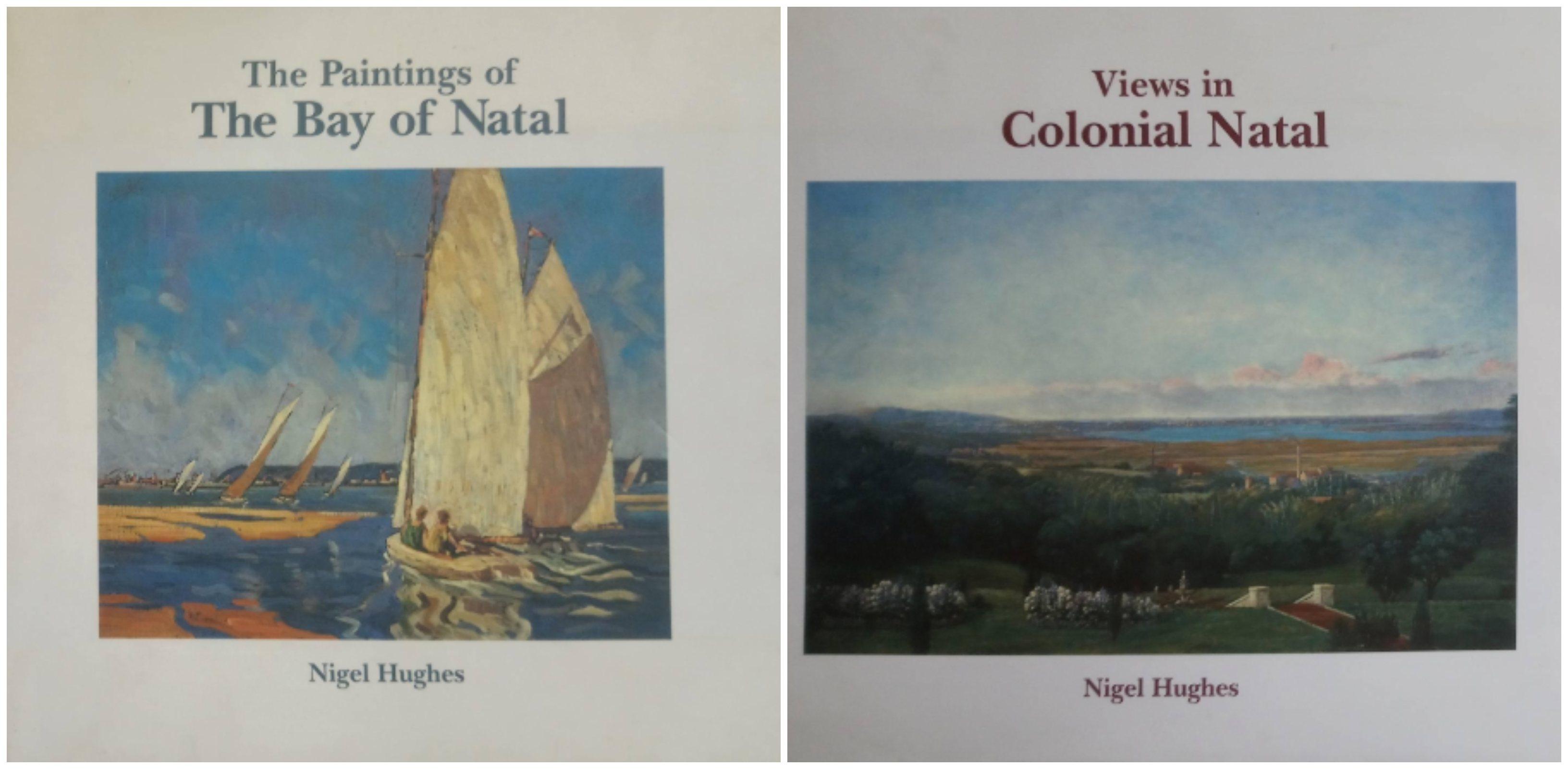
Nigel Hughes’s two privately published, large-format limited editions—The Paintings of the Bay of Natal (2001) and Views in Colonial Natal (2005)—form a complementary and pioneering contribution to the study of Natal’s colonial visual record. Together, they combine meticulous scholarship, aesthetic sensitivity, and exceptional standards of book production to recover aspects of South Africa’s nineteenth and early twentieth-century landscape history that have long remained under-examined.
The Paintings of the Bay of Natal: A Selection of Works Dating from 1845 to 1982 (2001)
The earlier of the two volumes was the first of Nigel Hughes’s finely produced, de luxe limited editions. Issued in only 150 numbered copies, it was bound by the late master craftsman Peter Carstens in half blue goatskin with stone-patterned marbled endpapers. The book is both sumptuous and scholarly, immediately signalling the seriousness of its intent.
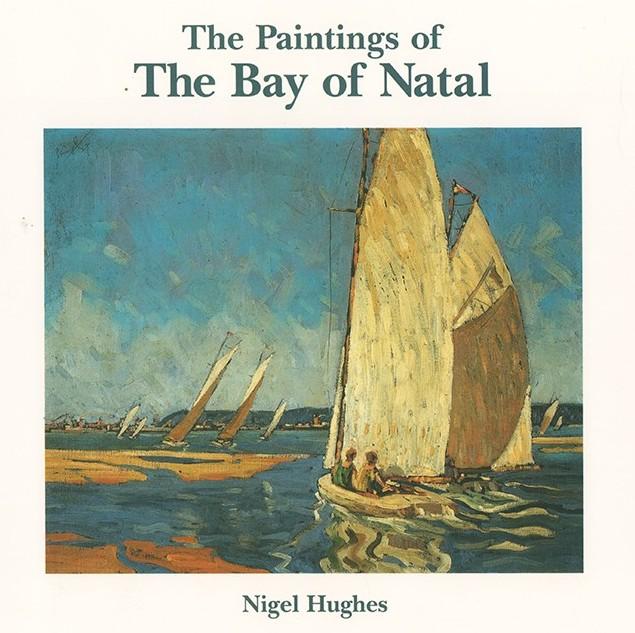
Book Cover
This volume undertakes a unique visual study of the Bay of Natal, tracing its transformation from a precarious natural lagoon into one of the great Indian Ocean entrepôts of southern Africa—now vital to the national economy. Hughes presents paintings of Durban harbour from the earliest depictions circa 1845 through to 1982, offering a continuous pictorial narrative of a specific place across more than a century.
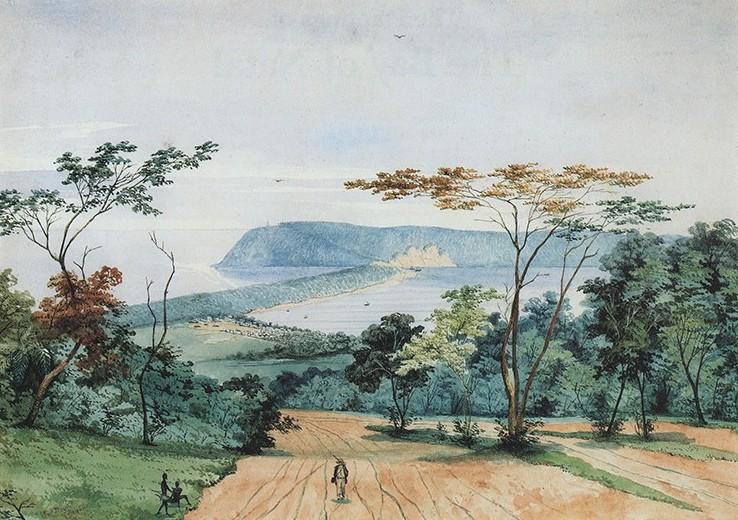
Durban Bay from the Maritzburg Road circa 1856 (James Lloyd)
The book opens with seventeen British Admiralty charts dating from 1856, diagrammatically recording the slow and determined engineering of a viable harbour from swampland, bush, river deltas, and a treacherous sand bar. Land reclamation, dredging, lighthouses, and breakwaters mark the long evolution of Durban as a port city. These charts provide an essential technical and historical framework for the painted views that follow.
The seventy-two plates reproduce works by artists including Thomas Bowler, Thomas Baines, Cathcart William Methven, and later figures such as Rowena Bush and John Simpson. Together they reveal shifting artistic sensibilities alongside changing harbour technologies—sailing ships yielding to steamers and ocean liners, tranquil coastal views alternating with scenes of intense maritime labour.
Seen collectively, the paintings constitute a visual documentary of port city, harbour, and subtropical landscape—history observed through the eyes of artists rather than asserted through ideology. It is an exquisite and authoritative addition to Durban’s recorded history.
Views in Colonial Natal: A Select Catalogue Raisonné of the Southern African Paintings of Cathcart William Methven (2005)
Hughes’s second volume narrows its focus to a single, now little-known colonial artist, producing what is arguably the definitive study of Cathcart William Methven. Published in 2005 as a de luxe limited edition of 150 numbered copies, the book is again bound by Peter Carstens, this time in half goatskin with hand-marbled paper boards.
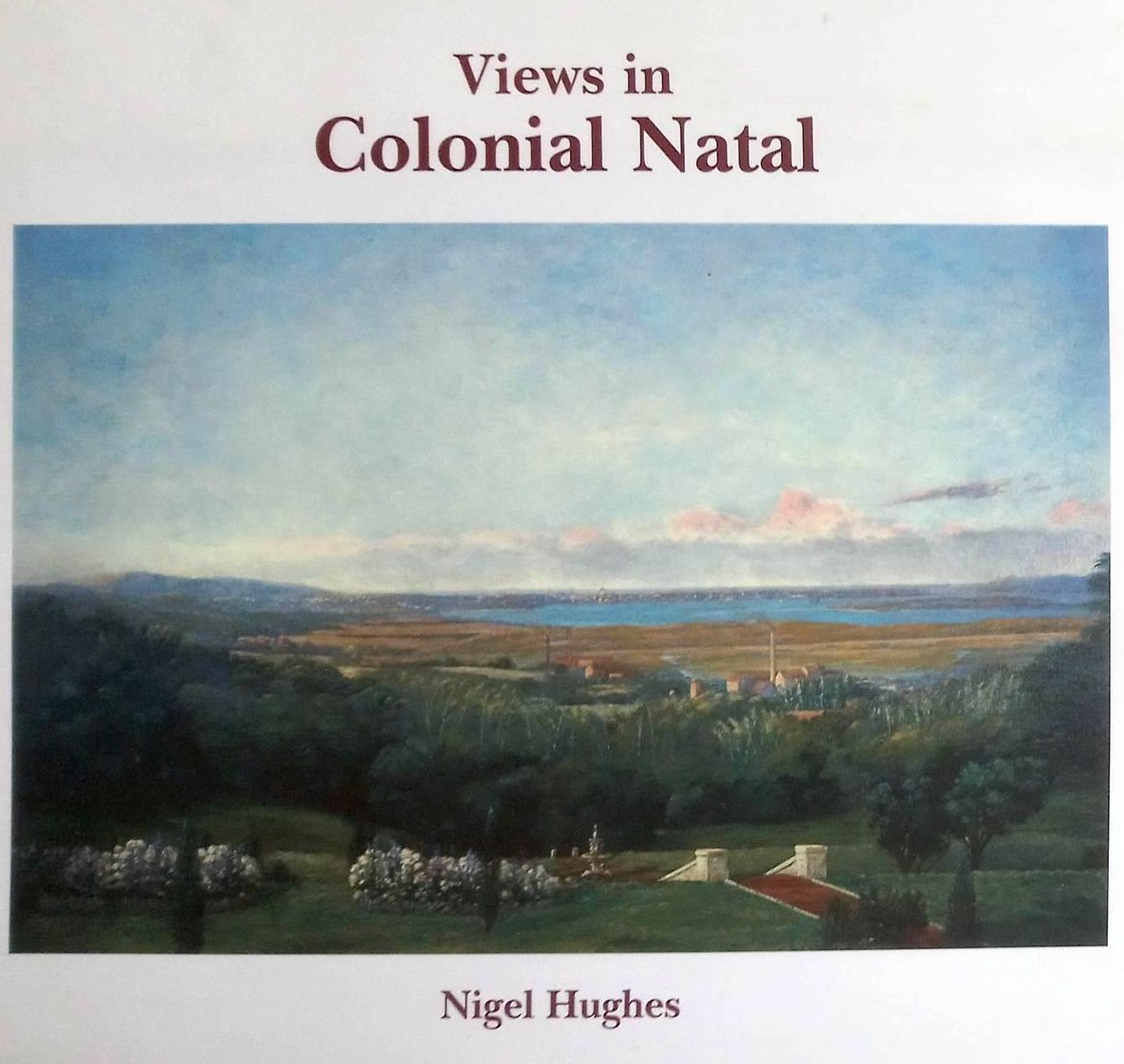
Book Cover
Methven was Scottish-born and spent most of his working life in Natal. A man of wide accomplishment, he served briefly as Chief Harbour Engineer of Port Natal before his career was curtailed following a principled disagreement with Harry Escombe over how best to address the harbour’s sand bar. Thereafter he practised as a consulting civil and marine engineer, worked as an architect, and became a founder member of the Natal Institute of Architects. He was also an organist, trout fisherman, and a highly accomplished self-taught artist.
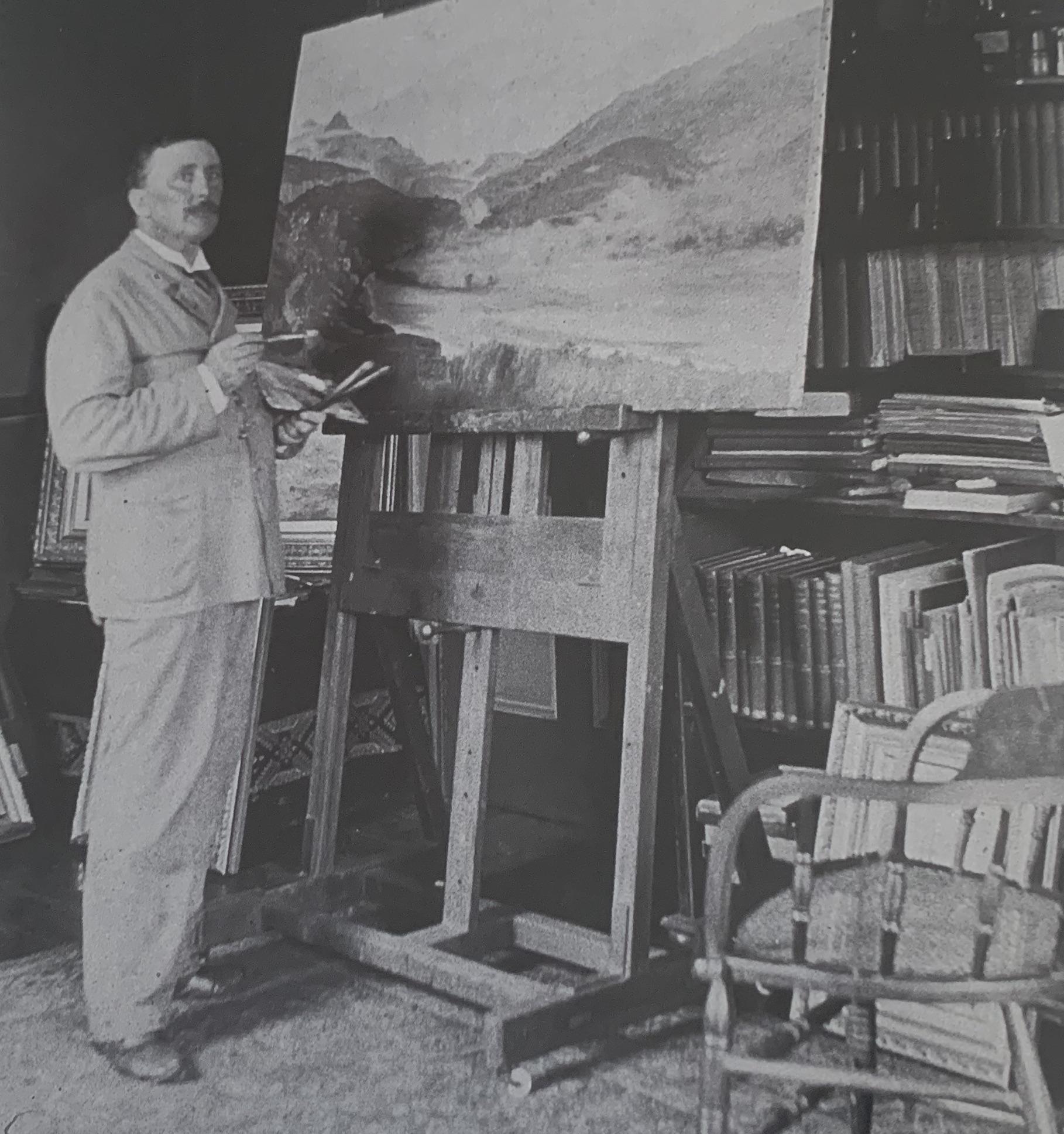
The artist in his studio circa 1900
From the 1880s to the 1920s Methven produced a substantial body of oil paintings and watercolours that record Natal’s landscapes with sensitivity and restraint. Hughes presents forty-six full-page colour reproductions, supported by a catalogue of 144 known works and a substantial bibliography. His approach is forensic and descriptive, allowing the paintings to be understood both aesthetically and historically.
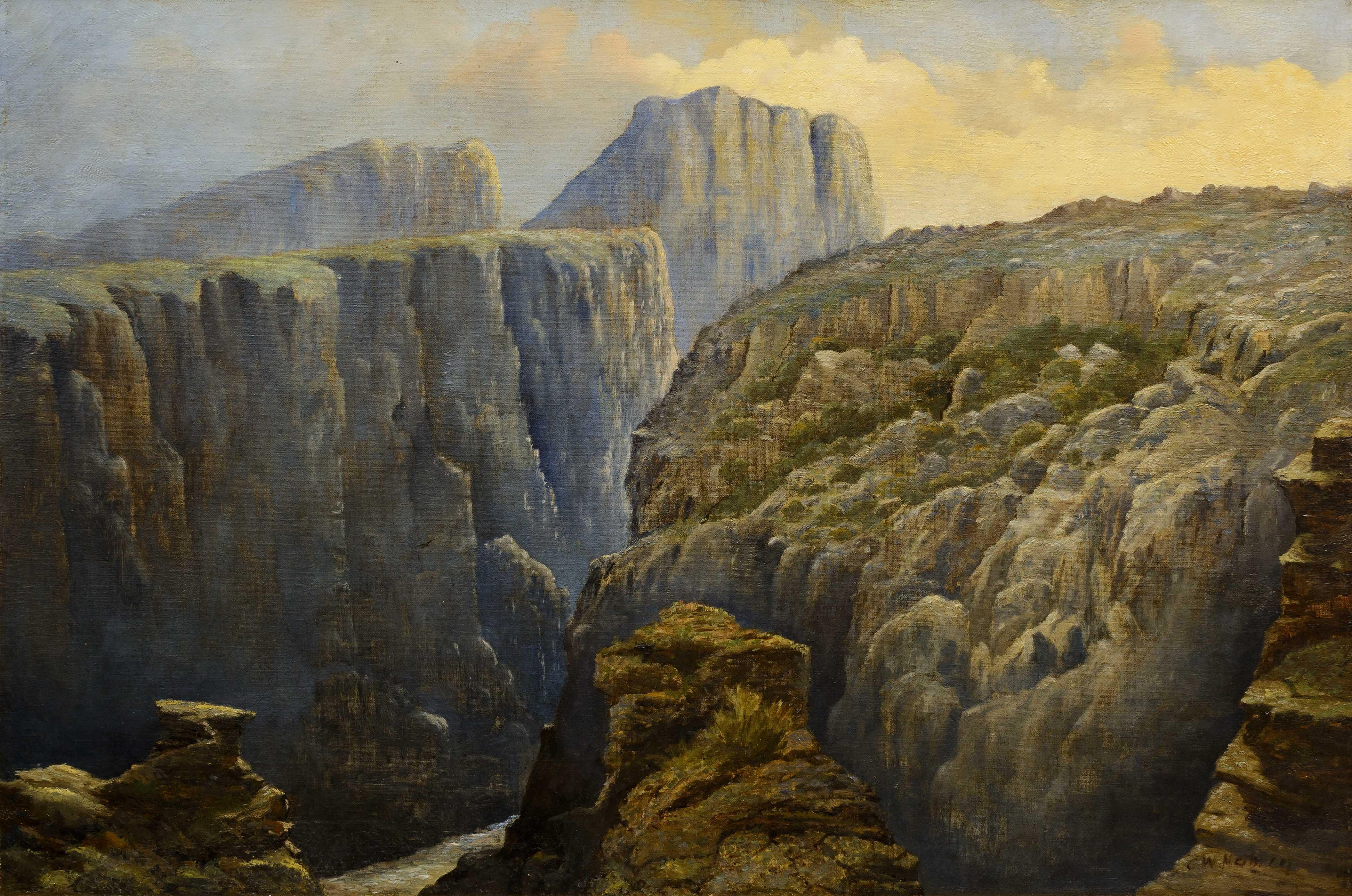
The Gate in the Hills - Source of the Tugela
The foreword by Antony Wiley rightly describes the book as pioneering and definitive. It significantly enlarges our understanding of a marginalised colonial artist and, by extension, of a British colonial period that has often been dismissed rather than examined. Importantly, the book invites the reader simply to enjoy early twentieth-century landscape painting on its own terms.
Conclusion
Taken together, these two volumes establish Nigel Hughes as a scholar-publisher of exceptional discernment. The Paintings of the Bay of Natal provides the broad maritime and urban context, while Views in Colonial Natal offers an intimate and deeply researched study of one artist working within that world. Both books combine fine craftsmanship with rigorous scholarship, and both make lasting contributions to South Africa’s visual and historical record.
Copies of these books are now available from the Johannesburg Heritage Foundation - mail@joburgheritage.org.za or 060 813 3239.
Kathy Munro is an Honorary Associate Professor in the School of Architecture and Planning at the University of the Witwatersrand. She enjoyed a long career as an academic and in management at Wits University. She trained as an economic historian. She is an enthusiastic book person and has built her own somewhat eclectic book collection over 40 years. Her interests cover Africana, Johannesburg history, history, art history, travel, business and banking histories. She researches and writes on historical architecture and heritage matters. She is a member of the Board of the Johannesburg Heritage Foundation and is a docent at the Wits Arts Museum. She is currently working on a couple of projects on Johannesburg architects and is researching South African architects, war cemeteries and memorials. Kathy is a member of the online book community the Library thing and recommends this cataloging website and worldwide network as a book lover's haven. She is also the Chairperson of HASA.