
Disclaimer: Any views expressed by individuals and organisations are their own and do not in any way represent the views of The Heritage Portal. If you find any mistakes or historical inaccuracies, please contact the editor.
We often say that water is a critical, finite and essential resource. That much is uncontroversial. What is less often acknowledged is that water does not exist on its own. It comes "packaged" in ecosystems - rivers, wetlands, aquifers and catchments - and its condition is inseparable from the condition of those systems. Yet there is a further, often overlooked inversion that deserves attention, particularly in South Africa's constitutional context. While ecosystems depend on water, the condition of water itself is framed by the condition of the ecosystem through which it moves. Water does not merely sustain ecosystems; it reflects them.
A river, for example, is not simply a channel conveying water from one point to another. It is a living expression of the waterscape and landscape in which it lies. Its flow regime records land-use decisions upstream. Its chemistry and clarity mirror the integrity or erosion of wetlands, riparian zones, soils and vegetation. Its seasonal rhythms speak to ecological resilience, buffering capacity and memory. When a river is polluted, simplified or erratic, it is telling a story about cumulative choices made across space and time. In this sense, rivers function as mirrors. They reveal what has been done to the land.
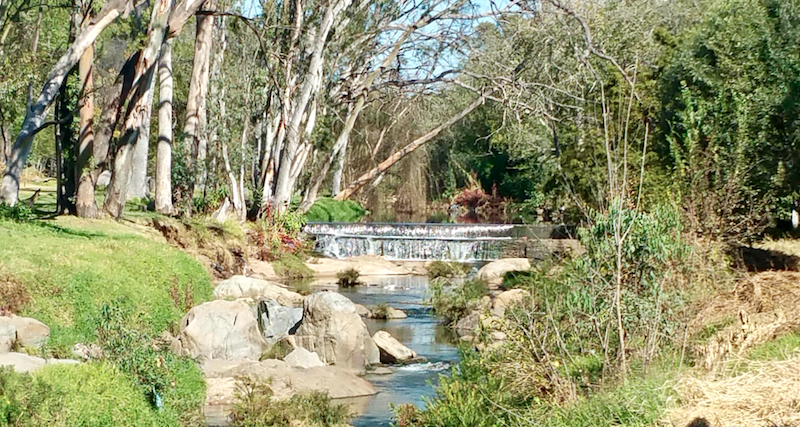
Braamfontein Spruit, Johannesburg (The Heritage Portal)
This is where the heritage nuance becomes both useful and precise. Heritage is often misunderstood as being concerned only with old buildings or historic artefacts. In truth, heritage is about what carries meaning over time, what is inherited by successive generations, and what, once lost, cannot readily be replaced. Rivers and water systems fit this description uncomfortably well. They are shaped by long natural histories, layered with human intervention, and they embody accumulated ecological and social memory. Human heritage itself developed in close proximity to water. The earliest settlements, systems of cultivation, trade routes and places of ritual clustered around rivers, wetlands and reliable springs. Access to water shaped patterns of habitation, social organisation and cultural memory long before formal law existed to regulate it. In this sense, water systems are not merely the setting for heritage; they are among its original conditions of possibility.
Seen this way, water is not only a resource to be used; it is a form of natural heritage. It carries the imprint of past decisions and transmits their consequences forward. This understanding aligns closely with section 24 of the Constitution of the Republic of South Africa. The environmental right is not confined to preventing immediate harm to human health. It guarantees an environment that is not harmful to health or well-being, and it requires the state to protect the environment for the benefit of present and future generations. Time, inheritance and custodianship are written directly into the constitutional text.
Once water is recognised as both ecosystem-conditioned and heritage-bearing, constitutional analysis shifts. Harm to water cannot be reduced to a technical exceedance, a temporary disturbance or a narrowly defined site impact. Degraded water signals degraded stewardship of the wider landscape. It reflects cumulative effects, fragmented governance and the slow erosion of ecological thresholds that future generations will inherit - not as policy documents or authorisations, but as altered rivers and diminished systems.
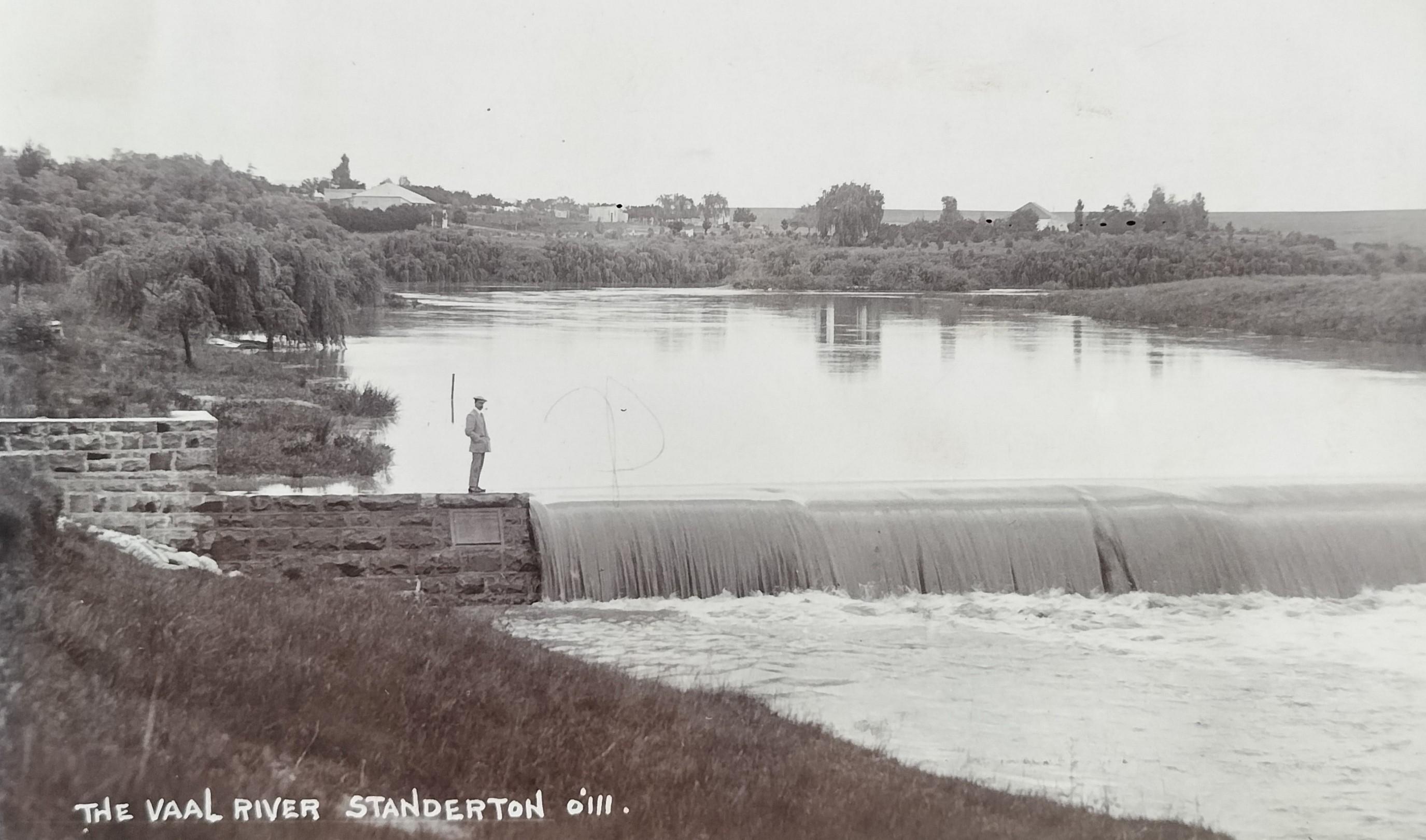
Old postcard of the Vaal River
Framing water as heritage does not imply that development must cease, nor that every river is frozen in time. What it does demand is a thicker standard of decision-making. Heritage logic, like section 24 itself, is concerned with irreversibility. Where loss cannot realistically be undone, process matters more, foresight matters more, and precaution matters more. Decisions that risk permanently altering river systems therefore engage constitutional duties of care, justification and intergenerational equity at their highest intensity.
Future generations will not assess us by the sophistication of our regulatory frameworks or the efficiency of our approvals. They will inherit rivers that either still function - ecologically, socially and culturally - or do not. In that sense, water is a living archive of our environmental choices. If we are serious about our constitutional commitment to protect the environment for those who come after us, we should begin to treat water not only as a scarce resource, but as part of our shared natural heritage and listen more carefully to what our rivers are already telling us.
Bill Harding has professional experience in water law and environmental governance. He is currently exploring the conceptual and legal connections between water and heritage at the intersection of South Africa’s statutory protection regimes.
Comments will load below. If for any reason none appear click here for some troubleshooting tips. If you would like to post a comment and need instructions click here.