
My own fascination with South Africa's historic hot springs first drew me to the architectural and cultural symbolism of water. From the celebrated baths of Caledon and Montagu to the more remote settings of Badplaas, Natal Spa, Aliwal North, Tshipise and Citrusdal, these landscapes demonstrate how architecture often follows water. Buildings, gardens and settlements emerge around springs because water is abundant and life-giving.
It is therefore striking that in Kimberley—a town defined not by abundance but by scarcity—Cecil John Rhodes should have conceived a monument whose sole purpose was the display and celebration of water.
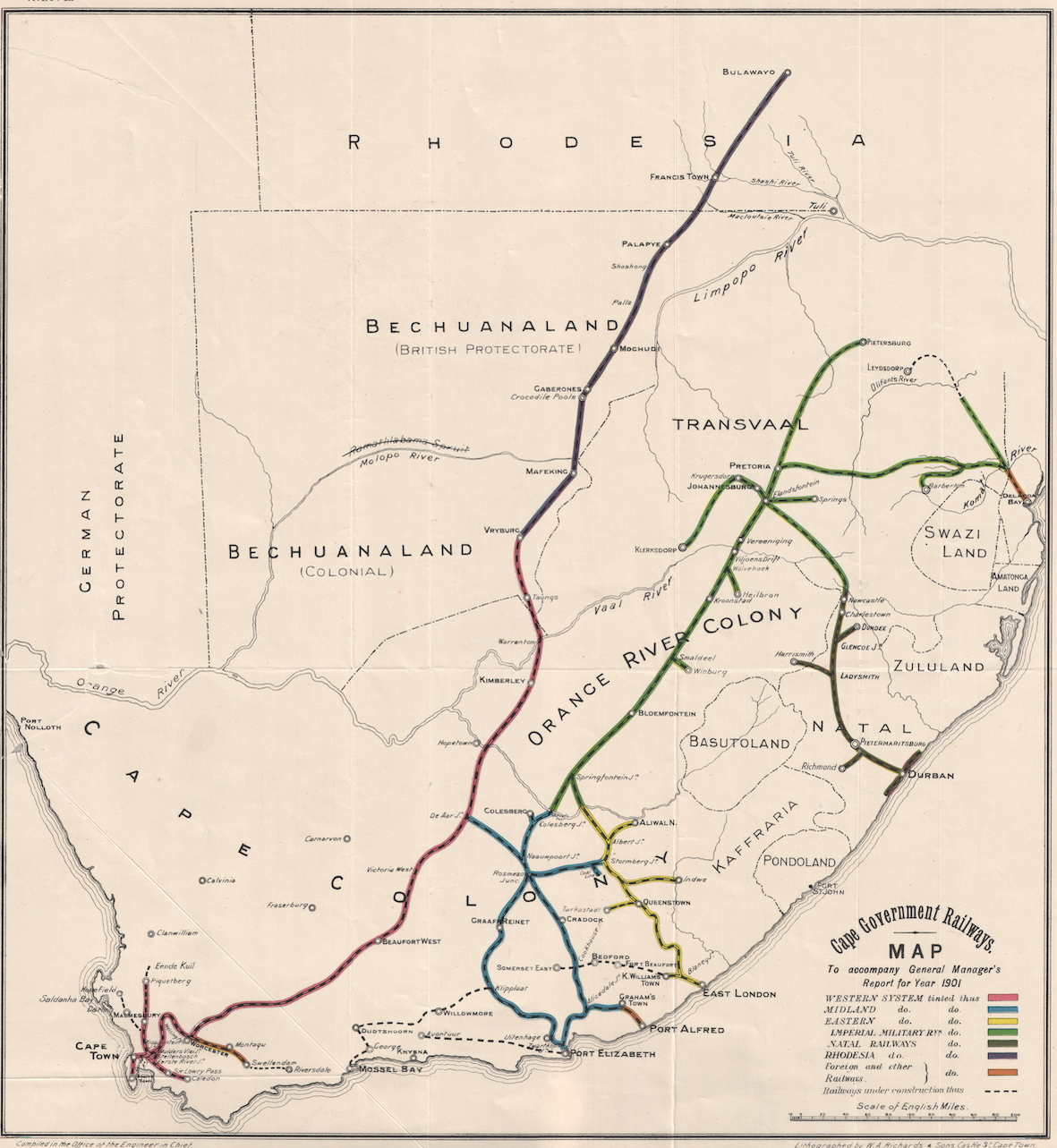
Situated on the arid plateau of the Northern Cape, some 500 kilometres south-west of Johannesburg and 800 kilometres inland from Cape Town, Kimberley was, by 1901, already well integrated into the colonial transport network. Linked by rail to Cape Town since 1885, it was a substantial urban centre of between 40,000 and 50,000 inhabitants. Its size reflected both the scale of the diamond industry and its status as one of the principal cities of the South African interior.
The population was sharply stratified. A relatively small European settler community occupied the civic and commercial heart of the town, while a much larger African labour force lived in segregated compounds and locations. This dual reality underpinned the mining economy and shaped the spatial and political character of Kimberley.
By the turn of the twentieth century Kimberley had become, in effect, a company town. Its economy, civic institutions and urban development were dominated by De Beers Consolidated Mines. Having survived the ordeal of the Siege of Kimberley during the Anglo-Boer War, the town remained closely bound to the structures of mining capital. Unlike Johannesburg, which was rapidly diversifying into a major metropolitan centre, Kimberley's future remained constrained by the controlled nature of diamond production. De Beers regulated supply with extraordinary discipline, effectively determining the pace of local economic growth.
The economic and civic life of the town revolved around the decisions of a remarkably small group of men, above all Cecil Rhodes. Yet the most significant constraint upon Rhodes's ambitions lay not in Kimberley or Cape Town, but in London. There, financial oversight was exercised through the De Beers board by Sir Carl Meyer, representative of the Rothschild banking interests. It was at this intersection between imperial vision and financial discipline that the projected Kimberley nymphaeum ultimately foundered.
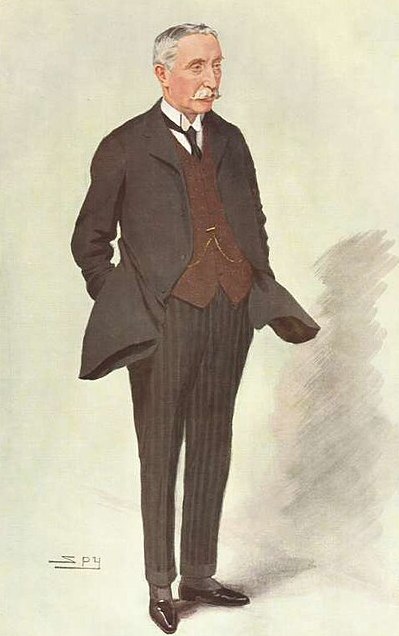
To understand Meyer's opposition, one must appreciate the wider relationship between Rhodes and the Rothschild interests. The Rothschild banking house had played a critical role in financing and consolidating De Beers, but its priorities differed fundamentally from Rhodes's own. For the financiers of New Court, De Beers existed primarily to generate profits through the extraction and controlled marketing of diamonds. Rhodes, by contrast, routinely viewed corporate wealth as a means of pursuing political, territorial and civilisational objectives.
The significance of the Kimberley nymphaeum lies not merely in the fact that it was never built. It matters because it formed part of the genesis of the monument that ultimately did arise in Kimberley. The Memorial to the Honoured Dead, designed by Herbert Baker and unveiled in 1904, has rightly attracted the attention of historians as one of South Africa's most important war memorials.
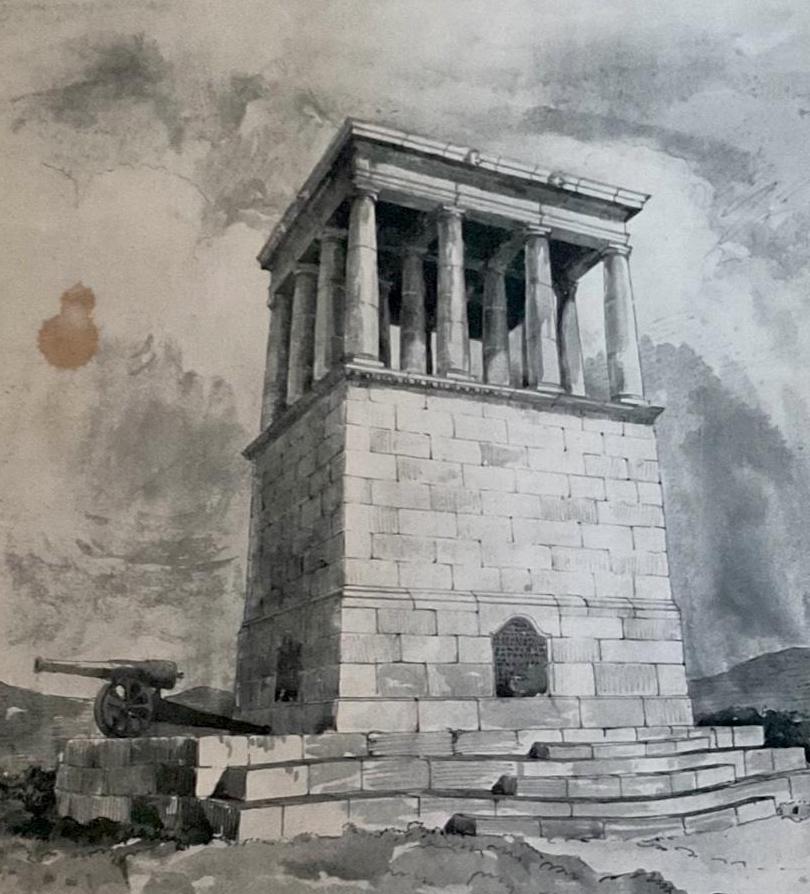
Yet Baker's celebrated monument was not the first solution envisaged by either architect or patron. Before the sandstone memorial came an altogether different proposal: a classical nymphaeum conceived by Rhodes during the siege and developed by Baker as an ambitious architectural setting for remembrance. The history of the Memorial to the Honoured Dead therefore begins not with the monument that was built, but with the monument that was rejected.
The proposed nymphaeum therefore represented far more than an eccentric architectural extravagance. It exposed a fundamental disagreement concerning the purpose of capital in the age of empire. For Rhodes, wealth existed to reshape landscapes, peoples and history itself. For Meyer and the Rothschild interests, wealth existed to generate returns for shareholders. The fate of the Kimberley nymphaeum marked a revealing moment when commercial discipline successfully checked imperial imagination.
A Vision Formed Under Siege
The idea emerged during one of the most dramatic episodes in Kimberley's history. During the Siege of Kimberley between October 1899 and February 1900, the town endured prolonged isolation, shelling and uncertainty. Rhodes remained in Kimberley throughout much of the siege and, characteristically, was never content merely to observe events. Frequently clashing with military authorities, he deployed De Beers resources with remarkable independence, often behaving as though the company constituted a parallel government.
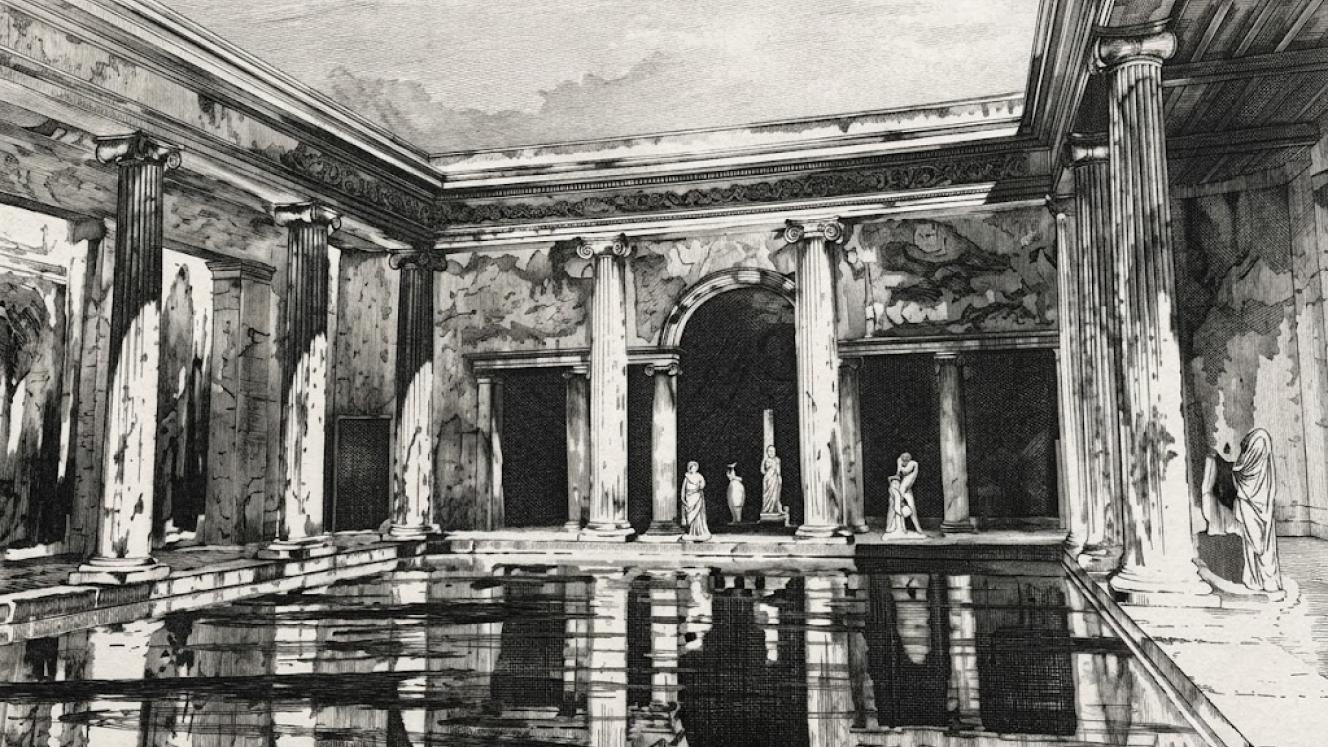
It was under these conditions that Rhodes conceived not merely a memorial but an entire environment: a "bath" or "fountain temple" intended to transform Kimberley's harsh, sun-baked landscape into a sanctuary of water, shade and classical order.
The scheme is more accurately described as a nymphaeum. In the classical world, nymphaea were not public bathing establishments but sophisticated architectural compositions in which water was framed, displayed and endowed with symbolic meaning. Combining the functions of fountain, shrine and civic gathering place, they often marked the termini of aqueducts, transforming engineering into architecture and utility into spectacle.
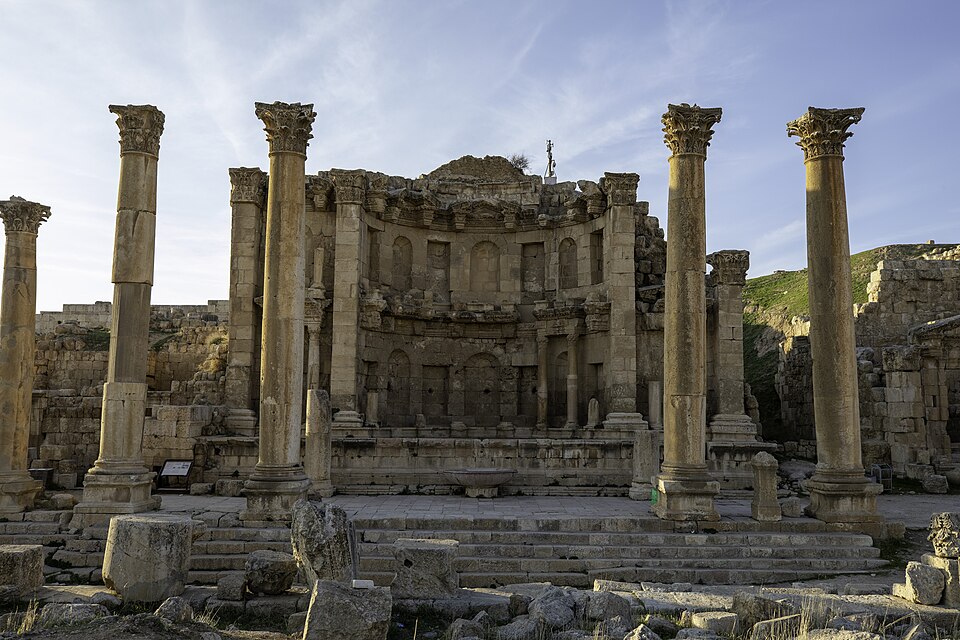
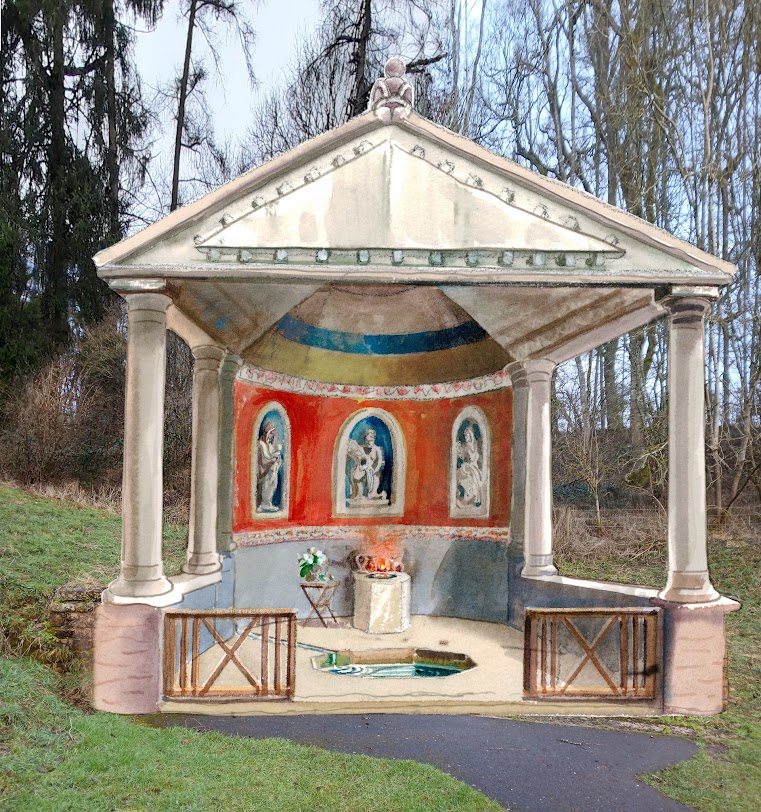
Authentic Roman examples survive throughout Europe, while the concept was enthusiastically revived during the Renaissance and again in the eighteenth century. Across Italy, Germany and Spain, aristocratic estates incorporated elaborate nymphaea into their gardens as theatrical compositions of fountains, grottoes, sculpture and aquatic planting. These spaces celebrated leisure, culture and the mastery of nature.
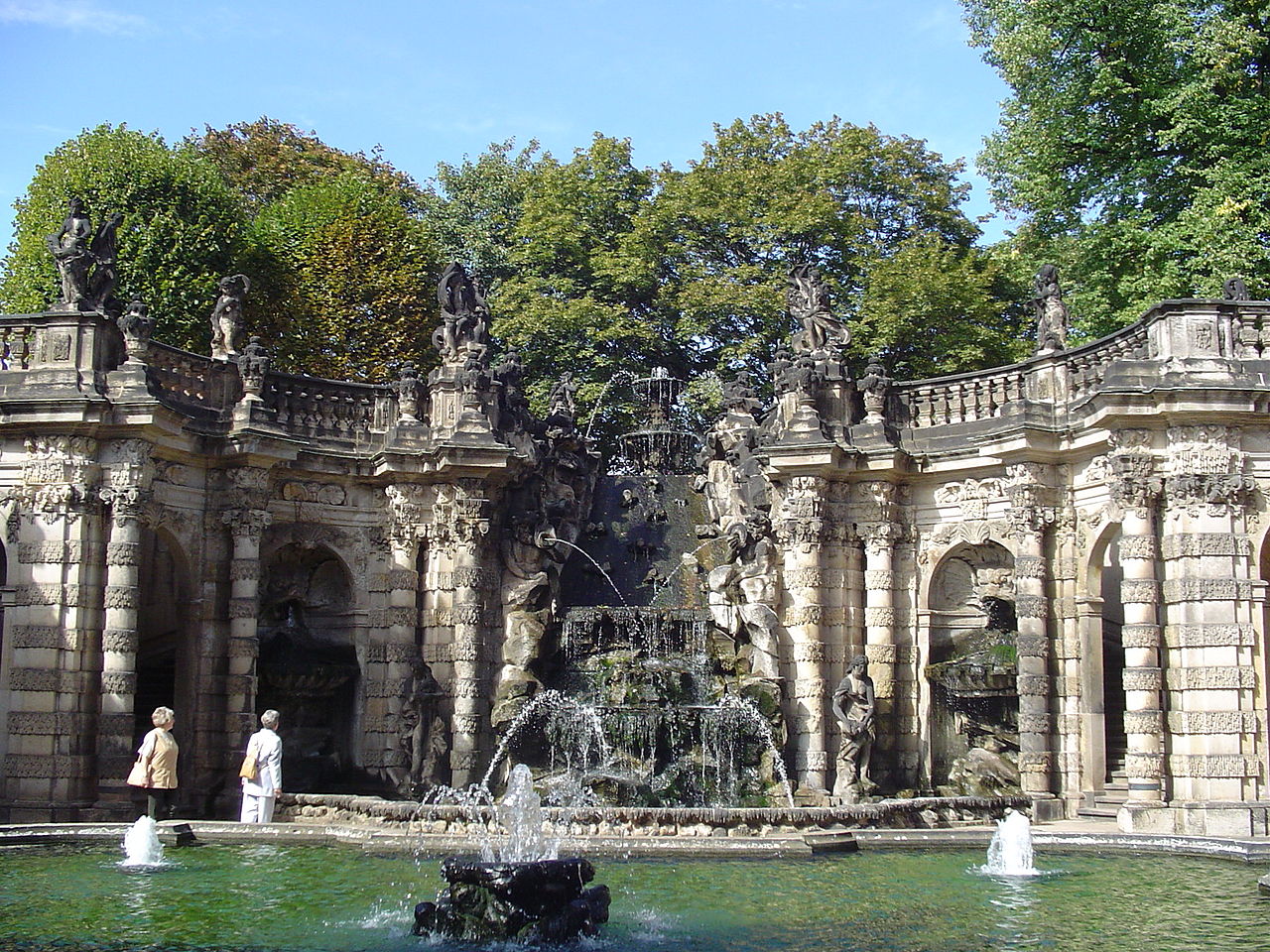
Rhodes's projected Kimberley scheme belongs firmly within this romantic tradition. He sought to transplant classical symbolism to the diamond fields, creating a space not for physical immersion but for contemplation. Water would become an architectural medium through which memory, beauty and civic identity might be expressed.
On the surface, the proposal appears startlingly incongruous. Here was a Roman-inspired fountain temple intended to commemorate lives lost in a modern industrial war, situated in an arid mining town defined by a vast dry crater. Yet Rhodes possessed an extraordinary capacity for audacious ideas. What appears absurd to later observers often appeared entirely plausible to him.
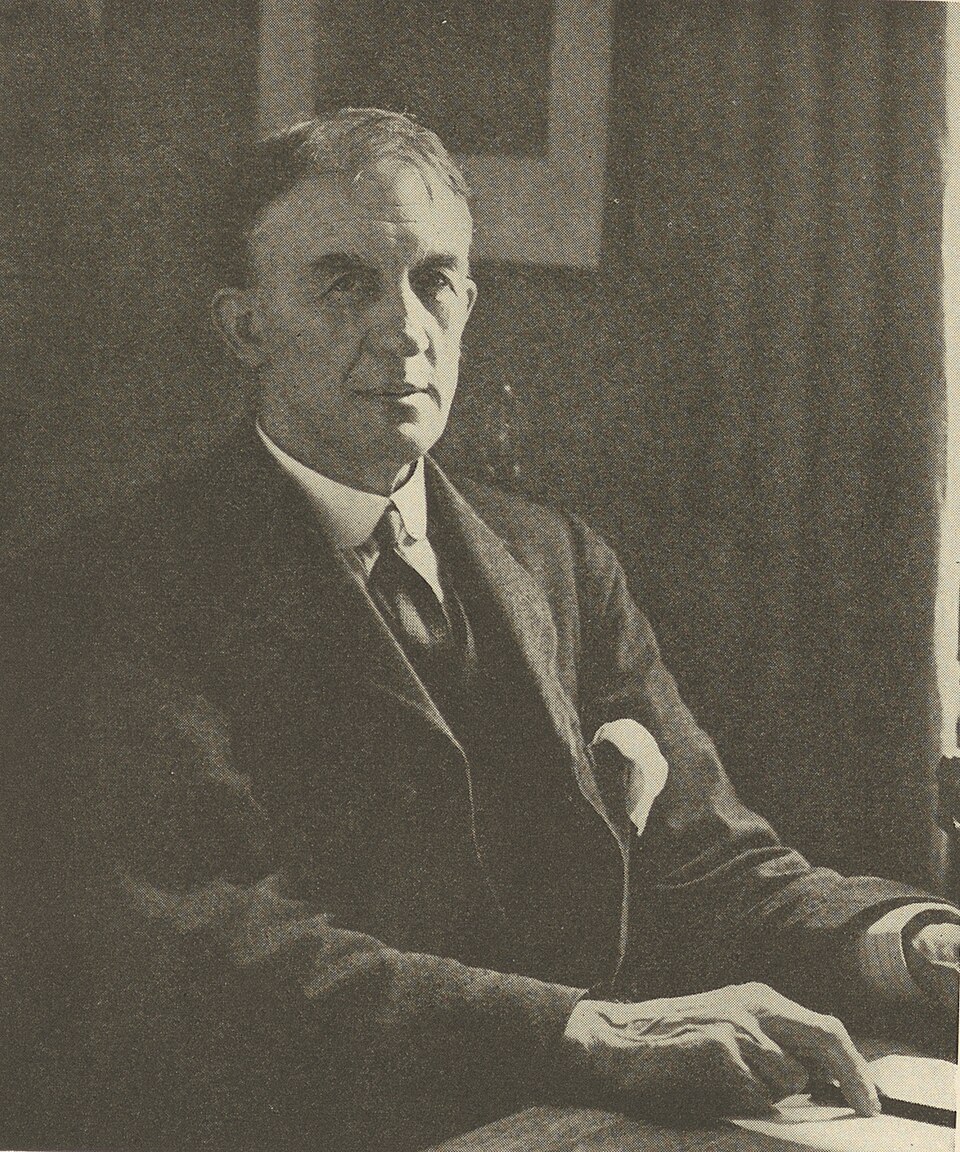
To give form to the project he turned to his preferred architect, Sir Herbert Baker, whose enthusiasm for monumental architecture matched Rhodes's own ambition.
Baker's Architectural Translation
Entrusted with the design, Baker translated Rhodes's vision into a formal fountain temple centred upon a large reflecting pool enclosed by a classical colonnade. A surviving archival sketch reproduced in Doreen Greig's seminal study Herbert Baker in South Africa reveals a highly disciplined axial composition. The arrangement bears a closer resemblance to a Roman frigidarium or ceremonial court than to a practical public bath.
The design reflects Baker's characteristic synthesis of classical precedent and Mediterranean influences, developed through extensive travels encouraged and financed by Rhodes. Water was treated not as a utility but as an architectural material—reflective, controlled and central to the experience of the space.
The project was far more than a passing whim. Drawings were prepared and a physical model was constructed. In 1925, Baker's partner Francis Kendall recorded in correspondence that the model remained on display in Cape Town City Hall, although the original technical drawings had already disappeared. The scheme had clearly reached a high level of architectural development.
Yet more than a century later the documentary record remains frustratingly incomplete.
Searches undertaken in the architectural collections of the University of Cape Town, including the Baker archive, have failed to locate the original drawings or establish their provenance. The source from which Greig obtained her reproduced illustration remains unknown. What survives today consists of little more than a single published sketch, scattered references in correspondence and memoirs, and the tantalising memory of a lost model.
Whether that model was discarded, destroyed, or survives unidentified within a private or institutional collection remains unknown. The nymphaeum itself has become an archaeological object of historical imagination, reconstructed from fragments and absences as much as from surviving evidence.
Finance, Water and the Limits of Vision
The reasons for the project's abandonment are encapsulated in Rhodes's own famously terse explanation: "Meyer."
The comparison with the memorial that was ultimately built is revealing. The Memorial to the Honoured Dead was completed for approximately £10,000, a figure readily approved by the De Beers board. The nymphaeum, by contrast, would almost certainly have required an expenditure of between £15,000 and £30,000, together with continuing maintenance costs and a permanent water supply.
Such sums were hardly beyond the means of De Beers. Annual profits at the time were measured in millions rather than thousands of pounds. The obstacle was not affordability but principle.
The De Beers directors were not being asked to approve an isolated architectural embellishment. They were being asked to approve Rhodes's preferred form of war memorial for Kimberley. The surviving sketch, the construction of a model and Rhodes's own later references demonstrate that the proposal had advanced well beyond the stage of casual speculation. The scheme was sufficiently developed to be considered at board level before being halted. Only after the rejection of the nymphaeum did the commemorative programme evolve toward the more conventional Memorial to the Honoured Dead.
The conventional memorial represented a finite and politically defensible expenditure. The nymphaeum represented an open-ended commitment. It would have required a continuous investment of water, labour and maintenance in a town where water was scarce and expensive. More significantly, it would have established a precedent for deploying shareholder capital in pursuit of civic beautification rather than commercial return.
The disagreement therefore extended beyond architecture. The nymphaeum became a small but revealing episode within a much larger debate concerning the role of wealth in the imperial age. Rhodes regarded capital as an instrument of civilisation and transformation. Meyer regarded it as a fiduciary responsibility.
Architectural historian Roger Fisher has offered an incisive assessment: "A nymphaeum in Kimberley would have been a disaster in terms of both water need and management. I know of not a single architectural water feature away from a natural continuous source that has persisted, so perhaps Meyer did Baker's legacy a favour."
Fisher's observation highlights a deeper irony. The project may have failed not merely because of financial caution but because it was fundamentally unsuited to its environment. In preventing its construction, Meyer may inadvertently have preserved Baker's reputation from a monument destined to become an engineering burden.
The Bath That Was Built
The practical solution eventually adopted could hardly have been more different.
On 23 October 1907 a public De Beers swimming bath opened in Kimberley. Unlike the imagined nymphaeum, this was a utilitarian facility supplied through engineered municipal infrastructure and integrated into the recreational life of the town's white population.
The contrast is instructive. Rhodes had envisioned an aristocratic theatre of contemplation where architecture elevated water into symbol and spectacle. What emerged instead was a practical facility devoted to hygiene, recreation and organised sport.
Reality had triumphed over vision.
In some respects the outcome mirrors Baker's own career. His architecture flourished in South Africa, where powerful patrons such as Rhodes afforded him unusual opportunities to shape landscapes and institutions. In Britain he encountered a more crowded architectural world and a more restrained culture of patronage. The Kimberley nymphaeum therefore stands as an emblem of Baker's South African career: ambitious, imaginative and dependent upon the support of extraordinary patrons.
Conclusion: The Idea of the Unfinished
Ultimately, the story of the Kimberley nymphaeum reflects the restless incompleteness of Rhodes himself.
By the beginning of the twentieth century he was already a man conscious of declining health. Worn down by years of political struggle, business pressures and the Anglo-Boer War, he suffered from severe heart disease and died at Muizenberg on 26 March 1902 at the age of only forty-eight. Many of his grandest schemes—including the dream of a Cape-to-Cairo railway—remained unfinished.
His celebrated final words, "So much to do, so little done," seem uncannily appropriate to the fate of the nymphaeum.
Conceived as a monument of perpetual water and classical permanence, it might have become the ultimate expression of Rhodes's belief that wealth could transform landscape and society. Instead, the dream evaporated. Kimberley commemorated him not through flowing water but through more conventional monuments of bronze and stone.
The unbuilt nymphaeum and the completed Memorial to the Honoured Dead represent two fundamentally different traditions of remembrance. The nymphaeum belonged to the Hellenistic tradition of civic benefaction, celebrating survival through the creation of public beauty. The memorial belongs to the funerary tradition of antiquity, commemorating sacrifice through permanence and solemnity.
In one, the medium was dynamic water; in the other, static sandstone.
The monument that was ultimately built was the one that finance, environment and public sentiment could realistically sustain. The nymphaeum survives only as an evocative ghost—a moment when imagination briefly outran the imperial world's capacity to realise it.
Its disappearance reminds us that not every imperial vision failed because it lacked ambition. Some failed because the institutions that financed empire ultimately demanded prudence rather than dreams.
Seen in this light, the nymphaeum and the Memorial to the Honoured Dead should not be understood as separate episodes in Kimberley's history. They were rival solutions to the same commemorative challenge. One celebrated life, water and civic renewal; the other commemorated sacrifice, death and military duty. One was fluid, theatrical and optimistic; the other austere, monumental and permanent.
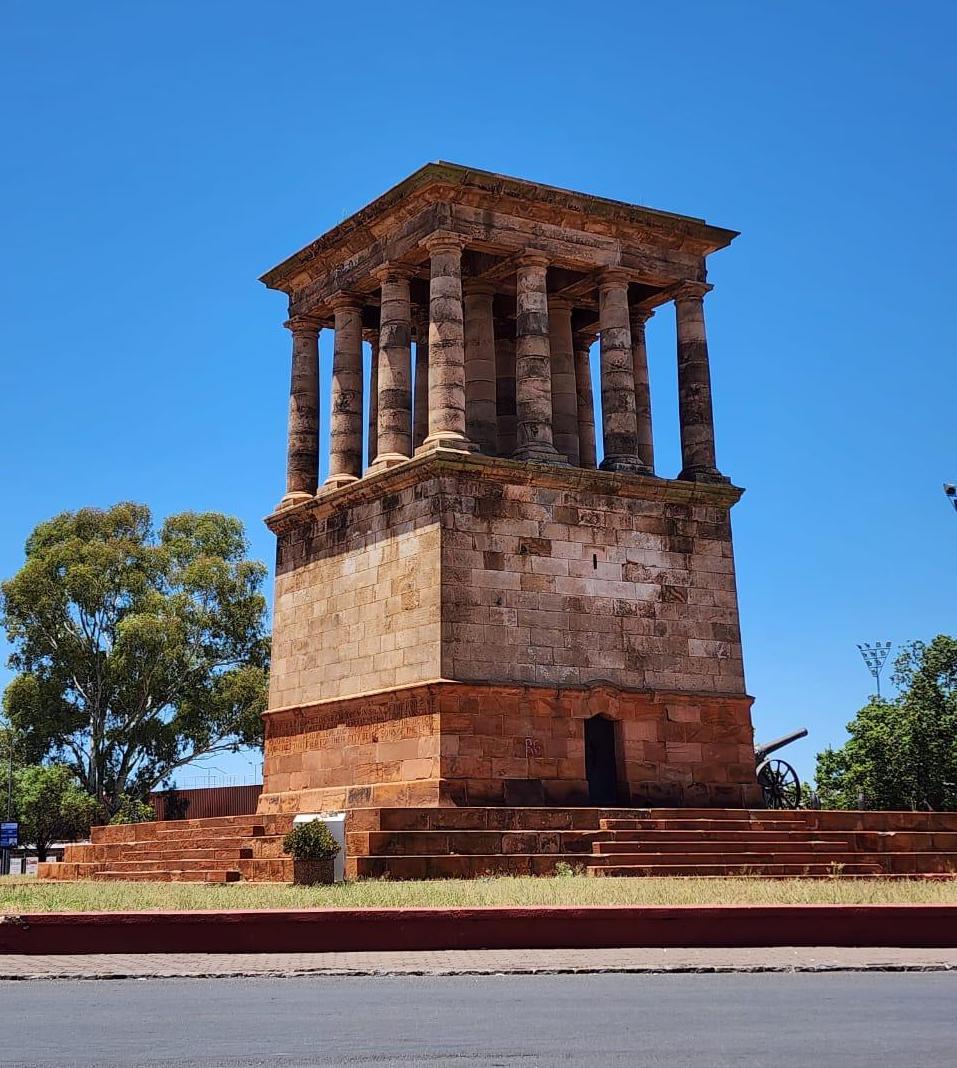
The rejection of the nymphaeum shaped not only what Kimberley remembered, but how it remembered.
For historians, this is what makes the unbuilt project so intriguing. The Memorial to the Honoured Dead has become so familiar a feature of Kimberley's landscape that its existence can appear inevitable. Yet the evidence suggests otherwise. Kimberley might easily have acquired a monumental water garden, colonnade and reflecting basin rather than Baker's great sandstone memorial. The city that emerged was only one of several futures once imagined.
The monument that was ultimately built was the one that finance, environment and public sentiment could realistically sustain. The nymphaeum survives only as an evocative ghost—a moment when imagination briefly outran the imperial world's capacity to realise it. Its disappearance reminds us that not every imperial vision failed because it lacked ambition. Some failed because the institutions that financed empire ultimately demanded prudence rather than dreams.
Kathy Munro is an Honorary Associate Professor in the School of Architecture and Planning at the University of the Witwatersrand. She enjoyed a long career as an academic and in management at Wits University. She trained as an economic historian. She is an enthusiastic book person and has built her own somewhat eclectic book collection over 40 years. Her interests cover Africana, Johannesburg history, history, art history, travel, business and banking histories. She researches and writes on historical architecture and heritage matters. She is a member of the Board of the Johannesburg Heritage Foundation and is a docent at the Wits Arts Museum. She is currently working on a couple of projects on Johannesburg architects and is researching South African architects, war cemeteries and memorials. Kathy is a member of the online book community the Library thing and recommends this cataloging website and worldwide network as a book lover's haven. She is also a previous Chairperson of HASA.
References
- Records of the Cape Government Railways and late nineteenth-century railway histories.
- Brian Roberts, Kimberley: Turbulent City (Cape Town: David Philip, 1976);
- Colin Newbury, The Diamond Ring: Business, Politics and Precious Stones in South Africa, 1867–1947 (Oxford: Clarendon Press, 1989).
- Hadley Chilvers, The Story of De Beers (London: Cassell, 1939).
- Sir Herbert Baker, Cecil Rhodes by His Architect (London: Oxford University Press, 1934);
- Sir Herbert Baker Architecture and Personalities (London: Country Life, 1944).
- Standard works on Greek and Roman nymphaea and hydraulic architecture.
- Doreen Greig, Herbert Baker in South Africa (Cape Town: Purnell, 1970), Plate 36.
- Francis Kendall, letter to Professor Pearse, 1925, University of Pretoria Archives.
- Niall Ferguson, The House of Rothschild: The World’s Banker, 1849–1998 (London: Penguin, 1998).
- Steve Lunderstedt, “Warren Street Swimming Pool,” Kimberley Calls and Recalls.
- Basil Williams, Cecil Rhodes (London: Constable, 1921);.
- Doreen Greig, Herbert Baker in South Africa (Cape Town: Purnell, 1970), Plate 36;
- R. W. Davis, The English Rothschilds (London: Collins, 1983);
- Derek Wilson, Rothschild: A Story of Wealth and Power (London: Weidenfeld & Nicolson, 1988);
Acknowledgements
- Cape Town University archival research undertaken by Cayde Bricknell, May 2026
- Roger Fisher, personal communication/commentary to the author, Mobile phone conversation May 2026. Roger is Emeritus Professor of Architecture, University of Pretoria.
- Herbert Baker Bust by Lawrence Chair at Northwards, Johannesburg (photo K Munro 2025)
- Spy Cartoon of Mr Carl Meyer in Vanity Fair 1909. Wikipedia Commons.
- Portrait of Rhodes circa 1900 - Source Wikimedia Commons