
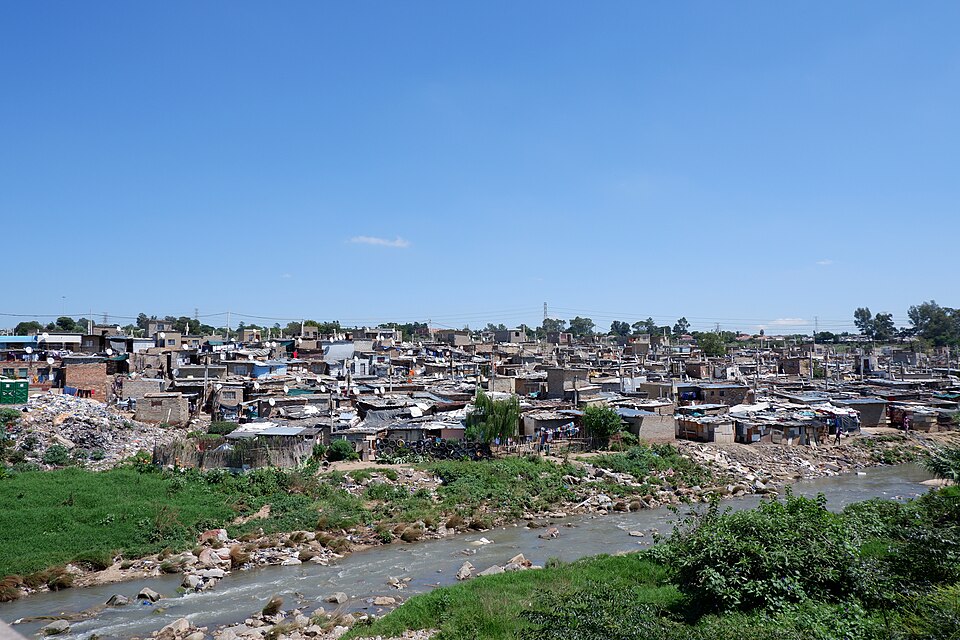
Johannesburg from the Riverbanks: Navigating the Jukskei is an ambitious and timely contribution to Johannesburg studies. Bringing together twenty-one chapters by twenty-six contributors, the volume emerged largely from the 2023 Riparian Urbanism project and seeks to reposition the Jukskei River at the centre of discussions about the city's environmental history, social inequalities, urban futures, and ecological challenges. In doing so, it assembles an unusually diverse group of voices, including artists, activists, historians, anthropologists, planners, scientists, hydrologists, policymakers, and social commentators.
The concept of "Riparian Urbanism" provides the intellectual framework for the collection. In essence, it refers to the study of the relationship between rivers and cities, exploring how waterways shape urban environments and how urban societies in turn transform, manage, neglect, or restore river systems. In the Johannesburg context, it invites readers to reconsider the Jukskei not merely as drainage infrastructure, but as a living environmental and cultural feature of the metropolis.
Every serious book on Johannesburg enlarges our understanding of the city, and this collection is no exception. Its greatest achievement is to insist that the Jukskei matters. It is a river that needs to be studied and documented not merely as an historical narrative, but as a project in resurrection, hope, and forward planning. Long neglected, polluted, canalised, and often hidden from view, the Jukskei is revealed here as a significant thread running through the cultural, environmental, and social fabric of Johannesburg. The interdisciplinary nature of the volume encourages readers to think about the river from multiple perspectives and to recognise that urban waterways are sites of memory, identity, conflict, and imagination.
Structure and Highlights
One of the book's practical strengths is its structure. The editors provide concise introductions to every chapter—a valuable navigational aid in such a large and varied collection. These summaries allow readers to move easily through the volume and identify themes of particular interest.
Some chapters stand out:
- Social Marginality: Sarah Charlton's contribution on people living along the riverbanks offers a poignant and nuanced account of homelessness, personal agency, and the difficult choices faced by those occupying marginal urban spaces.
- Scientific Rigour: In the scientific section, the chapter by Hoorzook and Singh on bacterial contamination in the Jukskei is a particularly rigorous piece of research, demonstrating the value of evidence-based environmental investigation and highlighting the urgent public health implications of river pollution.
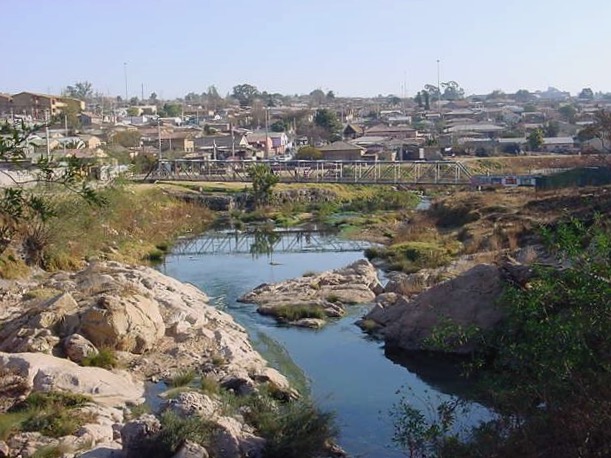
The scientific and environmental chapters are generally among the strongest in the collection. Contributors working directly with hydrology, ecology, pollution studies, and river management bring a depth of specialist knowledge that anchors the broader, more abstract discussions. These chapters demonstrate clearly that the condition of the Jukskei is not merely a symbolic issue, but an urgent environmental crisis confronting contemporary Johannesburg.
The Pitfalls of Breadth
Yet, the book's breadth is also its principal weakness. Like many conference-derived collections, the chapters are uneven in intellectual weight, methodology, and analytical depth. The volume often feels less like a coherent study and more like a series of parallel conversations. The attempt to combine artistic reflection, grassroots activism, environmental science, social commentary, and historical interpretation is admirable, but the result is sometimes fragmented. Readers searching for a sustained, linear historical narrative of the Jukskei may find themselves disappointed.
The most significant limitation, however, lies in the volume's treatment of earlier scholarship. The collection would have benefited from a much stronger engagement with those researchers who first documented Johannesburg's river systems and recognised their environmental importance decades ago.
The pioneering work of Wendy Bodmin, undertaken in the late 1970s and early 1980s, deserves particular attention. Bodmin explored the Jukskei and its tributaries extensively and was among the earliest environmental advocates to appreciate the ecological significance of Johannesburg's rivers. Together with James Clarke, she promoted the vision of an interconnected river park system along the Braamfontein Spruit (a major tributary of the Jukskei). Many of the problems she identified—pollution, littering, flooding, erosion, and the pressures of rapid urban growth—remain central concerns today. A volume published some forty years later might reasonably have asked how conditions have changed and whether the city's response has matched the scale of the challenge.
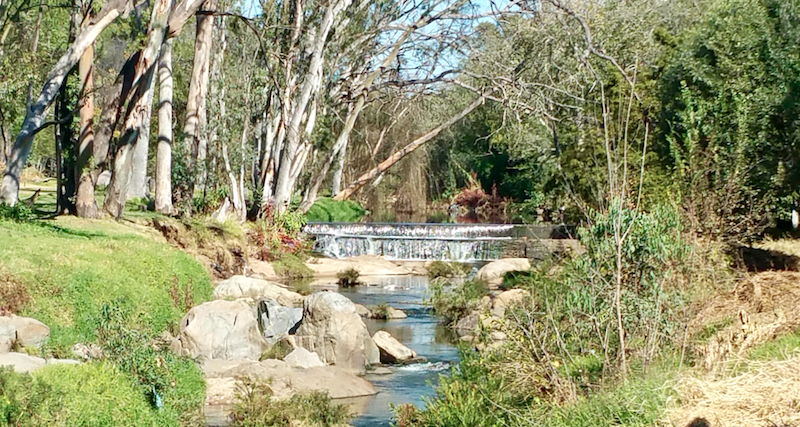
Equally important is the work of Marian P. Laserson. Her 2018 report, Renovation of the Jukskei River Canal in Bertrams, Lorentzville, Judith's Paarl to Bezuidenhout Valley, remains one of the most valuable historical studies of Johannesburg's waterways. Drawing on municipal records, engineering reports, and planning archives, Laserson demonstrated how natural streams and spruits were progressively transformed into canals, culverts, and stormwater systems. She showed how twentieth-century sanitation programmes and urban engineering projects rendered large sections of the river invisible beneath streets, industrial areas, and suburbs. Her work explains not only the physical transformation of the river, but also the changing public perception of waterways as little more than plumbing.
What makes the limited attention paid to Laserson particularly surprising is that her work was clearly known to contributors associated with the project. Co-editor Mehita Iqani's online essay, "Background to the Jukskei" (published through the Water for the Future initiative), draws extensively on the Laserson archive and gives full acknowledgement to her research. Readers interested in the historical evolution of the river would do well to consult that essay alongside this book. Yet, within the volume itself, Laserson receives only passing mention, and her major report is not given the prominence it deserves. The same can be said of Bodmin's pioneering environmental scholarship, which appears largely absent.
A Missing Regional Lens
The book would also have benefited from a broader regional environmental perspective. The story of the Jukskei cannot be separated from the wider geography of the Witwatersrand, the Crocodile River catchment, Hartbeespoort Dam, and the Magaliesberg biosphere. Here, the work of Vincent Carruthers provides crucial context. The Jukskei is not simply an urban river flowing through Johannesburg; it is part of a larger, interconnected environmental system shaped by geology, topography, climate, biodiversity, and human intervention downstream.
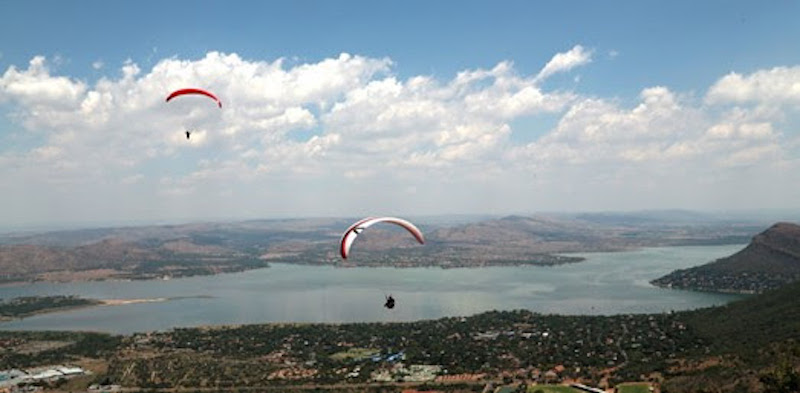
Johannesburg itself emerged because of the discovery of gold, not because of the presence of a river, harbour, or reliable natural water supply. Indeed, the city's potable water depends on vast engineered systems like the Lesotho Highlands Water Project. The environmental story of the Jukskei therefore forms part of a much larger history of water management and ecological transformation across the province.
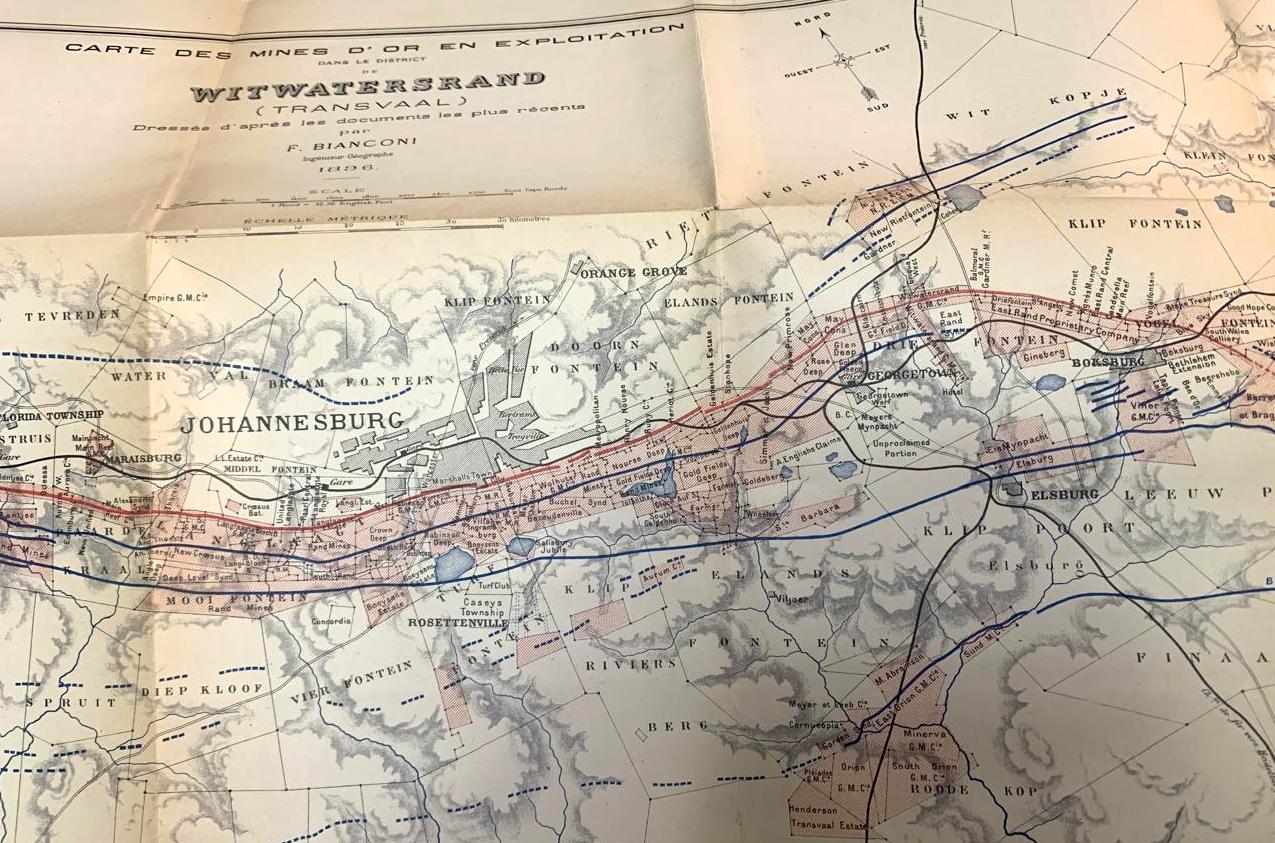
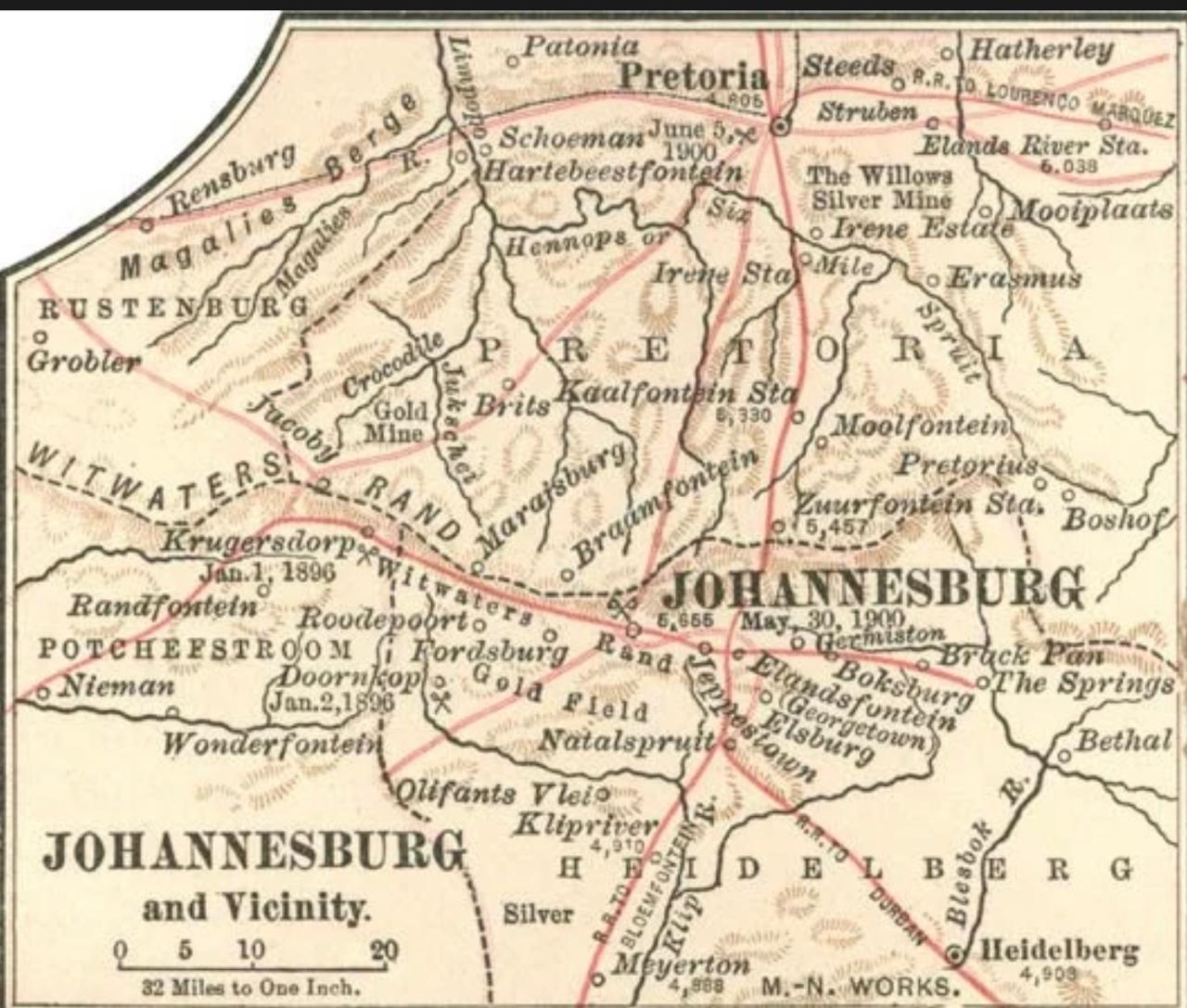
The historical dimensions of the river deserve deeper exploration than they receive here. The collection raises intriguing questions about the documentary and cartographic history of the Jukskei. The river appears on F. Bianconi's 1896 map of the Witwatersrand goldfields and on early twentieth-century maps published in the Encyclopaedia Britannica, demonstrating that it was recognised as a significant geographical feature from the earliest years of the town. Such cartographic evidence reminds us that the Jukskei was once a visible element of the landscape before canalisation and urban development concealed it. The recovery of that lost environmental history remains an important task for future researchers.
Design and Aesthetics
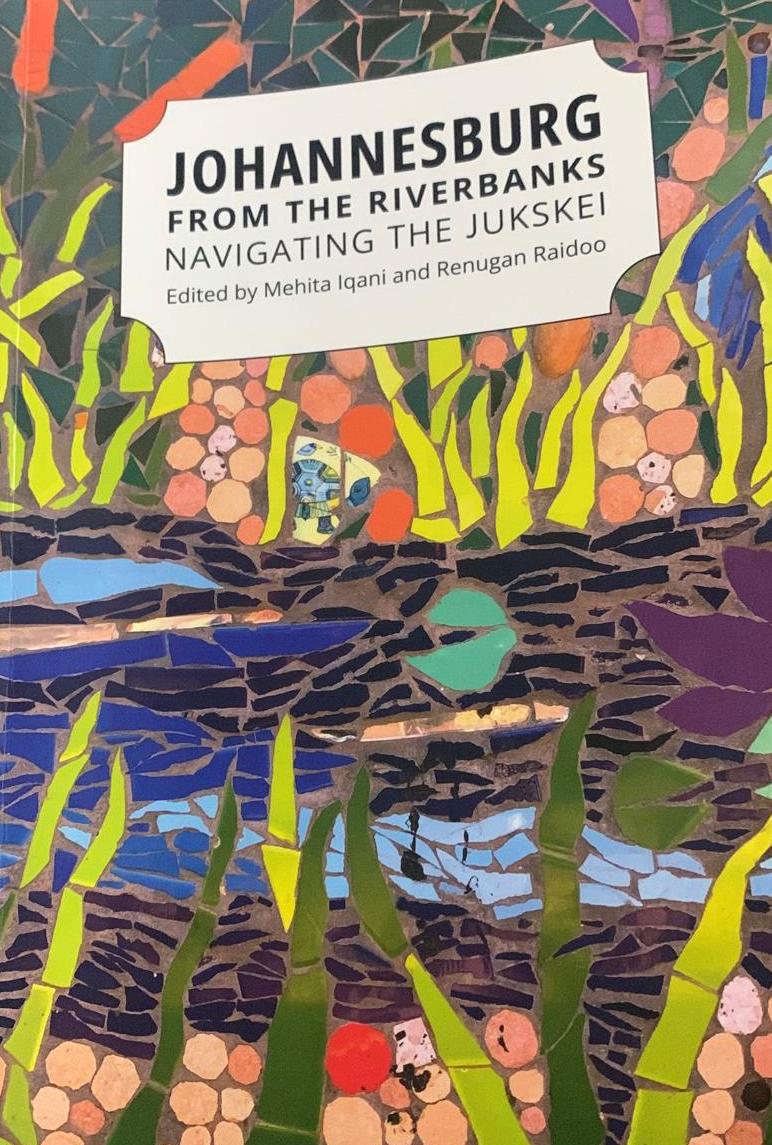
The production elements are a mix of successful design and far less successful mapping. The mosaic-style cover is striking and evocative, but the black-and-white internal illustrations do not fully convey either the richness of the river landscape or the visual impact of the artistic contributions.
Furthermore, the map of the Jukskei included in the volume appears more expressive than analytical, functioning as an artistic interpretation rather than a serious cartographic resource. On the positive side, the volume is carefully footnoted and indexed, although the absence of a consolidated bibliography is unfortunate in a work intended to encourage further research.
Conclusion
Published by the HSRC Press, Johannesburg from the Riverbanks: Navigating the Jukskei is a significant contribution to Johannesburg and environmental studies.
Modestly priced at around R300, it deserves a readership beyond the academic conference circuit from which it emerged.
Yet, this raises an important question: who is the intended audience? The subject matter has broad public appeal, but stronger illustrations and more effective cartography would have helped the book reach a wider popular readership. The striking mosaic cover contrasts too sharply with the relatively limited visual material within. There is perhaps a lesson here from the late nineteenth- and early twentieth-century mining maps of the Witwatersrand, where cartographers such as F. Bianconi combined technical precision with visual clarity.
Ultimately, the book reminds us of two broader truths:
- Johannesburg's Unique Geography: The city occupies a strange place among the world's great urban centres. It was not founded on a major river, harbour, or coastline, yet its springs, wetlands, streams, and rivers have played a vital, hidden role in shaping the landscape of the Witwatersrand.
- The Deep Roots of Activism: Concern for the Jukskei is not new. For decades, scholars, planners, environmental scientists, and civic activists have argued that the river should be recognised as an ecological asset, a recreational corridor, and a green lung for the city. The work of Wendy Bodmin, James Clarke, Marian Laserson, Paul Fairall, and many others reminds us that today's debates have deep historical roots.
In this respect, Johannesburg from the Riverbanks performs an important service. It draws attention to a river that has long existed at the margins of Johannesburg's consciousness and demonstrates the value of interdisciplinary engagement. If the collection occasionally sacrifices coherence for inclusivity and contemporary perspectives for historical depth, it nevertheless succeeds in encouraging readers to see the Jukskei once again—not as hidden infrastructure beneath the city, but as a living feature of the Witwatersrand landscape.
The future of the river will depend not only on new research and policy interventions, but also on remembering and building upon the efforts of earlier generations.
Ultimately, the most interesting question raised by this book is not simply how the Jukskei can be rehabilitated, but how a city that was never founded on a river might finally rediscover the rivers that were always there.
Additional Reading & Resources
- Argent, Sally and Green, Nola. The Mervyn King Ridge Trail from Landscape to Townscape: A City and its Origins. Johannesburg: Johannesburg City Council, 1986.
- Bodmin, Wendy. The North-Flowing Rivers of the Central Witwatersrand. Johannesburg: Central Witwatersrand Metropolitan Chamber of Industries, 1981. (This study remains one of the pioneering environmental investigations of the region's river systems and helped stimulate early public awareness).
- Carruthers, Vincent. The Illustrated History of Hartbeespoort Dam. Johannesburg, 2022. (Valuable for placing the Jukskei within the larger hydrological and ecological systems of northern Gauteng and the Magaliesberg region).
- Clarke, James (ed.). Braamfontein Spruit Trail. Compiled by COCCOS, sponsored by AECI Limited, 1981.
- Iqani, Mehita. "Background to the Jukskei." Water for the Future. Available online via the Water for the Future initiative. (An online essay making substantial use of the Laserson archive).
- Laserson, Marian P. Renovation of the Jukskei River Canal in Bertrams, Lorentzville, Judith's Paarl to Bezuidenhout Valley. Research Report, April 2018. (Draws extensively on Johannesburg City Council records and engineering archives to reconstruct the engineered transformation of the river).
Historical Maps Referenced
- Bianconi, F. Carte des Mines d'Or en Exploitation dans le District du Witwatersrand (Transvaal) (1896). (An early mining map identifying the Jukskei within the broader goldfields landscape).
- Encyclopaedia Britannica, 10th ed. (c. 1902–1903). Map of "Johannesburg and Vicinity." (Demonstrates that the river was recognised as a significant geographical feature internationally from the city's infancy).
Kathy Munro is an Honorary Associate Professor in the School of Architecture and Planning at the University of the Witwatersrand. She enjoyed a long career as an academic and in management at Wits University. She trained as an economic historian. She is an enthusiastic book person and has built her own somewhat eclectic book collection over 40 years. Her interests cover Africana, Johannesburg history, history, art history, travel, business and banking histories. She researches and writes on historical architecture and heritage matters. She is a member of the Board of the Johannesburg Heritage Foundation and is a docent at the Wits Arts Museum. She is currently working on a couple of projects on Johannesburg architects and is researching South African architects, war cemeteries and memorials. Kathy is a member of the online book community the Library thing and recommends this cataloging website and worldwide network as a book lover's haven. She is also a previous Chairperson of HASA.