
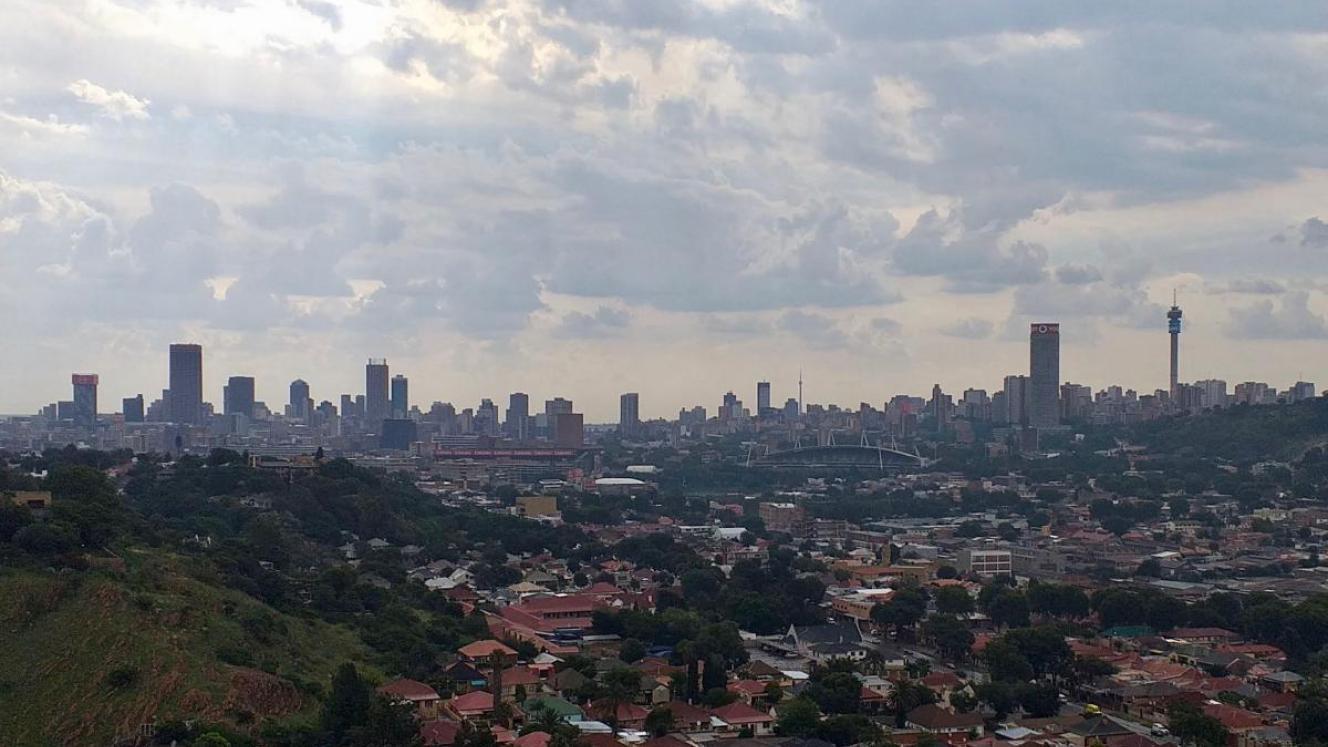
Johannesburg is 140 years old. But when, exactly, was it born? And what does it mean to celebrate the birthday of a city?
Johannesburg has many names—Jo'burg, Jozi, Egoli, the City of Gold—each reflecting different generations, languages, histories, and ways of seeing the place. As the city reaches its 140th year, we are forced to ask a simple question: why 140?
Professor Phil Harrison of Wits, in a recent presentation, makes the point that there is no single moment that can comfortably be called the city's birthday.
- In February 1886, George Harrison is credited with discovering the Main Reef.
- On 8 September 1886, President Paul Kruger issued the proclamation establishing the dates on which the Witwatersrand farms would be opened as public diggings.
- On 20 September, Mining Commissioner Carl von Brandis read the proclamation aloud, and the first farms officially opened.
- Then came 4 October 1886: the proclamation came into effect on Randjeslaagte—the triangular piece of surplus government land (uitvalgrond) on which Johannesburg was to be established.
- By 4 November, an official report recorded that a town of 748 stands had been laid out.
- On 8 December 1886, the first auction of those stands took place.
Which of these is the true birthday? Like many of its residents, Johannesburg has several.
Yet 4 October 1886 provides the most useful marker: it records the formal establishment of a permanent settlement on Randjeslaagte. It is the anchor date from which Johannesburg can reasonably count its 140 years.
There is, however, another intriguing milestone. Johannesburg did not acquire formal city status until 5 September 1928. If we measured its life from that designation, Johannesburg would be turning just 98. [This means we have another landmark date to celebrate with a centenary in two years time!]
The distinction matters. Johannesburg began life as a sprawling mining camp, and it took more than four decades to earn the title of a city. That trajectory tells us something fundamental about the place: it is a remarkably young city. As an aside all of the principal Australian cities with the exception of Canberra were established much earlier in the 19th century.
From "Masculine Encampment" to Cultural Capital
Johannesburg began as mining camp for men. The characteristic icon is the prospector and Settlers' Park at Eastgate has George Harrison memorialised in the giant gateway figure by sculptor Tienie Pritchard. Of course even there there is keen debate about who really found the gold of Johannesburg… was it George Harrison, George Walker or George Honeyball? Or should we be punting for the Struben brothers as the real gold discoverers? But let's leave this question for another discussion.
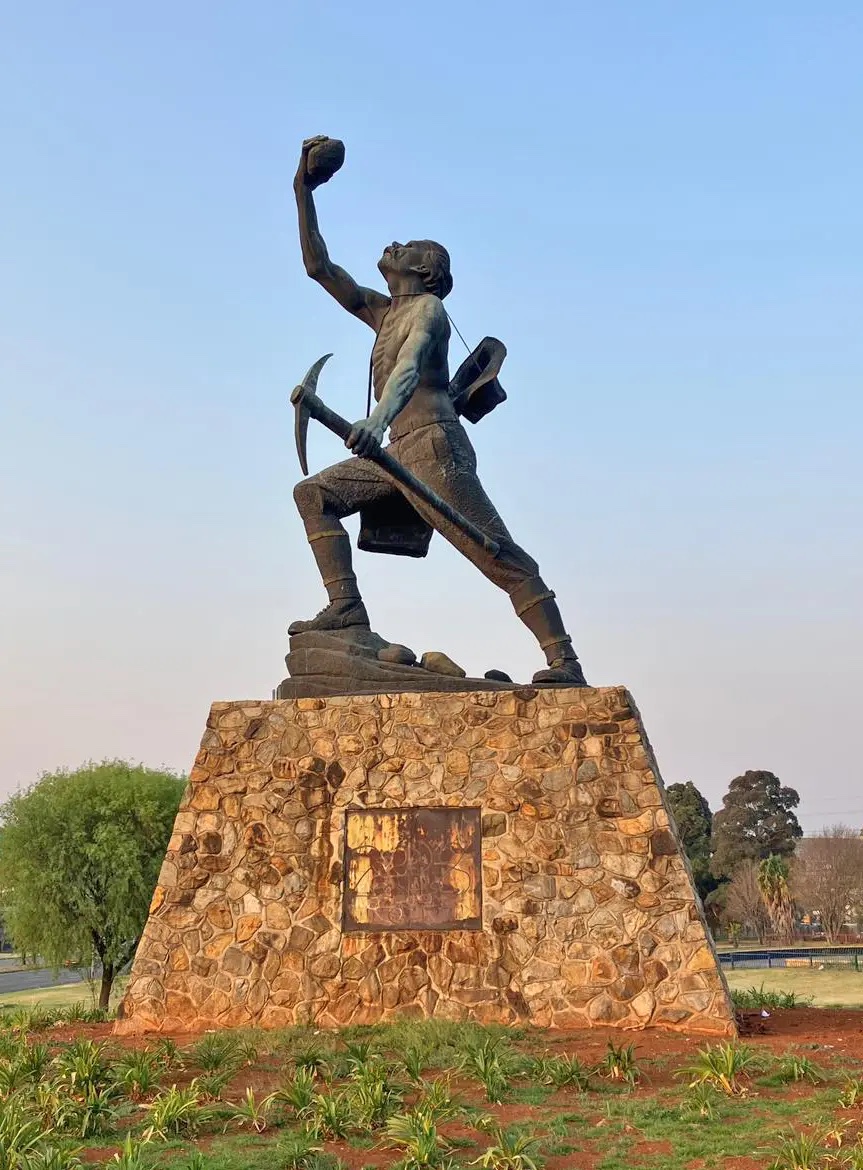
Johannesburg, in its early days, was not a city of families, gardens, and schools, but a rough mining camp created almost overnight by the discovery of gold. The early Johannesburg of 1886 was a place of diggers, prospectors, speculators, mine officials, transport riders, and labourers. It was transient, migrant, ambitious, improvised, and overwhelmingly masculine—a city in which the immediate needs of the thirsty miner, whether in compound or in the town, were far more pressing than those of the future citizen. The Rand Pioneers were a tough lot... they were men who were investors, speculators, gamblers, and entrepreneurs. Mining companies flourished as new prospects to find the gold conglomerate on the main reef feverishly generated share manias.
For decades, the popular image of Johannesburg remained the bar on every corner, the mine dump, the compound, the boarding house, and the dusty commercial street. Nobody knew that this tented settlement would endure. Indeed, the University of the Witwatersrand's own history describes early Johannesburg as a "masculine, gold mining, tent encampment" whose future as a metropolis could not yet have been imagined.
Yet something remarkable happened: Johannesburg acquired a civic soul.
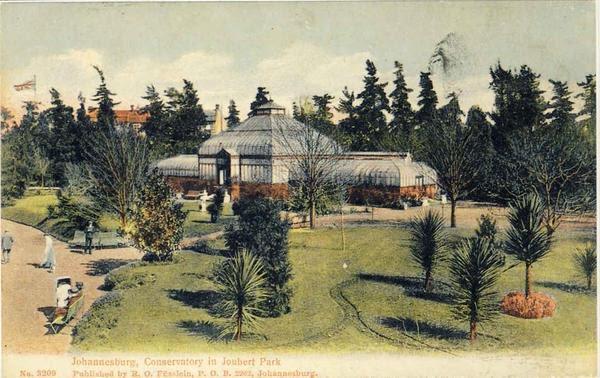
The mining camp began to take on the characteristics of a permanent city. Parks and public gardens were laid out. Joubert Park fed the soul, the Wanderers club nurtured sport. The schools appeared. Churches—and eventually cathedrals—gave the growing population institutions and places of worship. Families arrived and settled; brick houses replaced tents. The city developed theatres, clubs, libraries, and newspapers.
In 1910, when Johannesburg was barely 24 years old, the Duke of Connaught remarked on the astonishing transformation from bare veld into a substantial town. On the occasion of laying the foundation stone of the new Town Hall, he also inaugurated, in temporary premises, Johannesburg's emerging art collection. The Johannesburg Art Gallery, opened in 1915, soon provided the city with a world-class cultural institution.
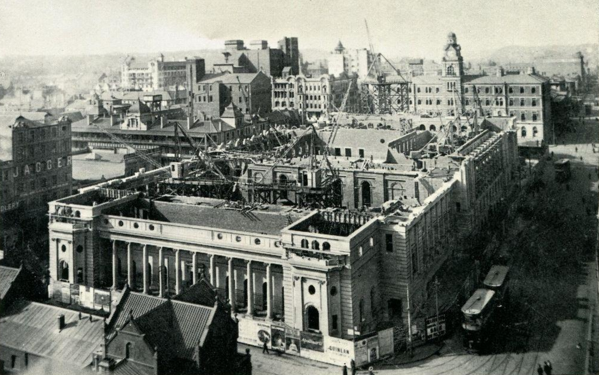
When the foundation stone of the Town Hall was laid in 1910, Johannesburg possessed neither a university nor a cathedral—an extraordinary measure of how fast the young town was asserting its ambition before its institutional foundations were fully laid.
Then came the university. The institution that became the University of the Witwatersrand had begun as the South African School of Mines in Kimberley in 1896, transferring to Johannesburg in 1904. It became University College, Johannesburg, in 1920 and achieved full university status in 1922. It was a university for the entire Witwatersrand and supported by all the reef mining towns. It was not an accidental addition; its origins were intimately tied to the mining economy and technical skills required by an industrialising region. Yet it grew into a major centre for medicine, science, arts, architecture, law, and political debate.
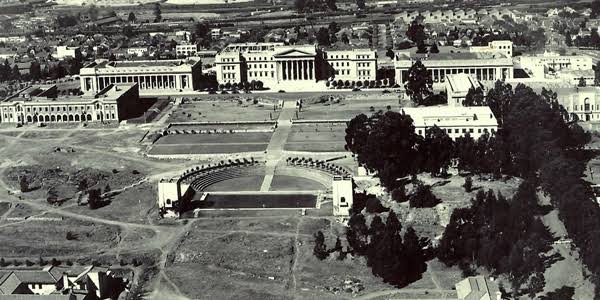
The mine dumps and headgear remained part of the landscape, but alongside them stood galleries, theatres, schools, hospitals and an academic campus. The city was no longer just a place where gold was extracted—it was a place where life was lived, families flourished and careers made.
From Mining Settlement to Provincial Capital
There is another transformation that belongs in this 140th birthday story. Johannesburg is no longer simply Johannesburg: in 1995 it become the capital of Gauteng, the political and economic heart of South Africa's most populous province.
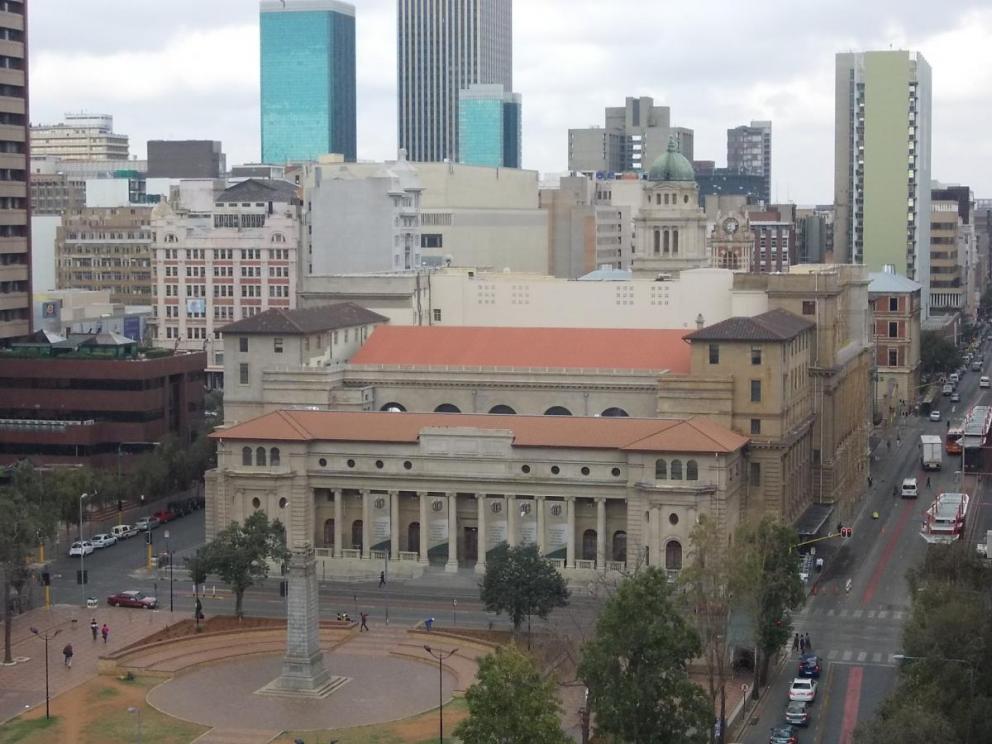
There is a deep historical resonance in where the Gauteng Provincial Legislature sits today: inside the old Johannesburg City Hall.
Designed by the Cape Town architectural firm Hawke & McKinlay, the foundation stone was laid in 1910, completed in 1914, and officially opened on 7 April 1915. When it was built, Johannesburg was still officially a town; it would not gain formal city status for another fourteen years. The Town Hall was an assertion of civic permanence written in stone.
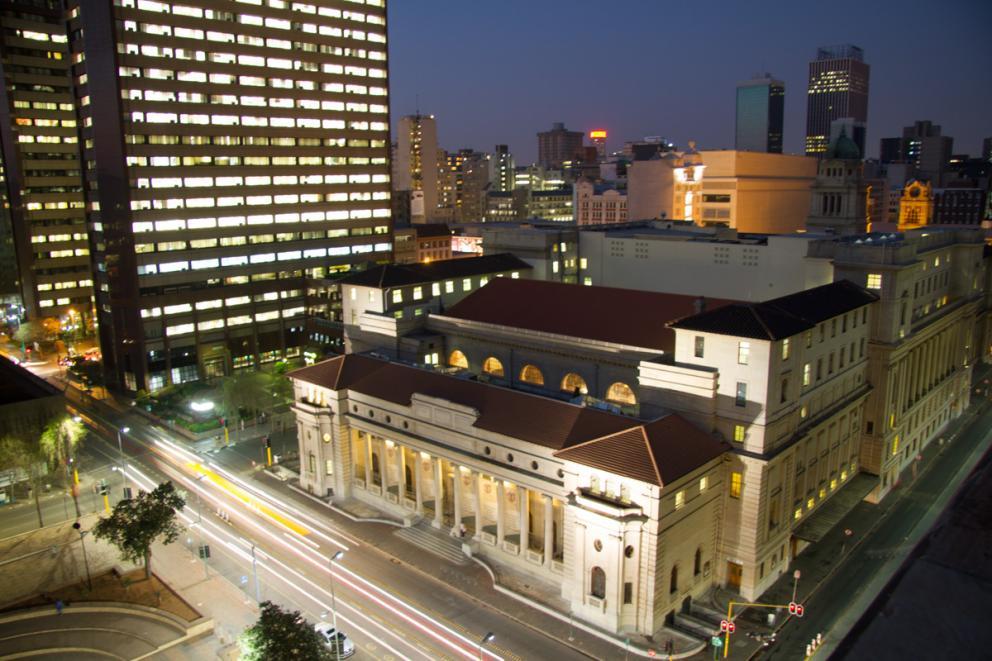
When Pretoria ceased to be the provincial capital and this tier of government moved to Johannesburg, the building has housed the Gauteng Provincial Legislature. A historical circle was completed: the building that marked Johannesburg's emergence as a permanent civic community now serves as the democratic heart of the province. That is heritage not as static preservation, but as living continuity through change.
The Uncomfortable Centenary: Memories of 1986
By its centenary in 1986, Johannesburg was an economic powerhouse, but it was also a city at war with itself under apartheid. White Johannesburg occupied the political and economic center, while Black Johannesburg was pushed to the periphery in Soweto, townships, and worker hostels. The wealth of the city rested on a migrant labor system that fractured families. Standing in 1986 under a state of emergency, the centenary was an anxious, deeply contradictory milestone.
Yet history is not only written in broad political strokes; it is lived in the everyday choices of its citizens.
In 1986, I had a young family. My nine-year-old son was set a school project to mark "Johannesburg 100." Together, we set out to document the city, diligently photographing its heritage sites. Those amateur black-and-white snapshots, pasted into a scrapbook, with the 1986 Joburg telephone Director cover decorating the cover, alongside gathered snippets of local history, remain in our family archives - a quiet record of a child trying to make sense of his city's past.
That same year, however, I found myself engaged in a very different kind of civic project with mayoral recognition. I led an initiative to establish the first employer provided, multiracial child-care centre and crèche for toddlers of university staff and students. We established the Aletta Sutton Child Care Centre in 1982. By 1986, it was well established, creating a space where children of all races could play, learn, and grow together. It also meant breaking the law.
Yet political change was heavy in the air, a sense of quiet anticipation that could not be contained by the statutes of the era. When the Mayor of Johannesburg, Harold Rudolph, paid our crèche / nursery school a visit, bestowing an official blessing on an illegal, non-racial, now city blessed child care facility for 90 children, it felt like more than just a gesture. It felt like laying a small, vital brick in the foundation of an entirely new city. I chaired the enterprise for 5 years while being a full time academic and a mother with a busy life.
While my son captured the frozen, stone heritage of the first hundred years in his scrapbook, that little crèche was an investment in the living heritage of the next.
The City Today: Transformation, Dispersal and a "re-mined" city
Four decades after that tense centenary, Johannesburg is a vastly different place. Soweto, Orange Farm, Enderdale, Kyalami, Fourways and sprawling post-1994 developments form part of a single metropolitan municipality. The social fabric of the city is far more integrated, even as spatial inequalities persist. But it all began with that first Randjeslaagte proclamation, the first market square, the first government offices, the first commercial buildings and the declaration of those early townships and suburbs of the first decade.
It has always astonished me that the mines start just a few short city blocks from the market square heart of the city. The names are redolent of the early days... Village Main, Ferreira's, Wemmer, Salisbury's, City and Suburban, Meyer and Charlton, Wolhuter, Geo Goch. These names are quintessentially Johannesburg.
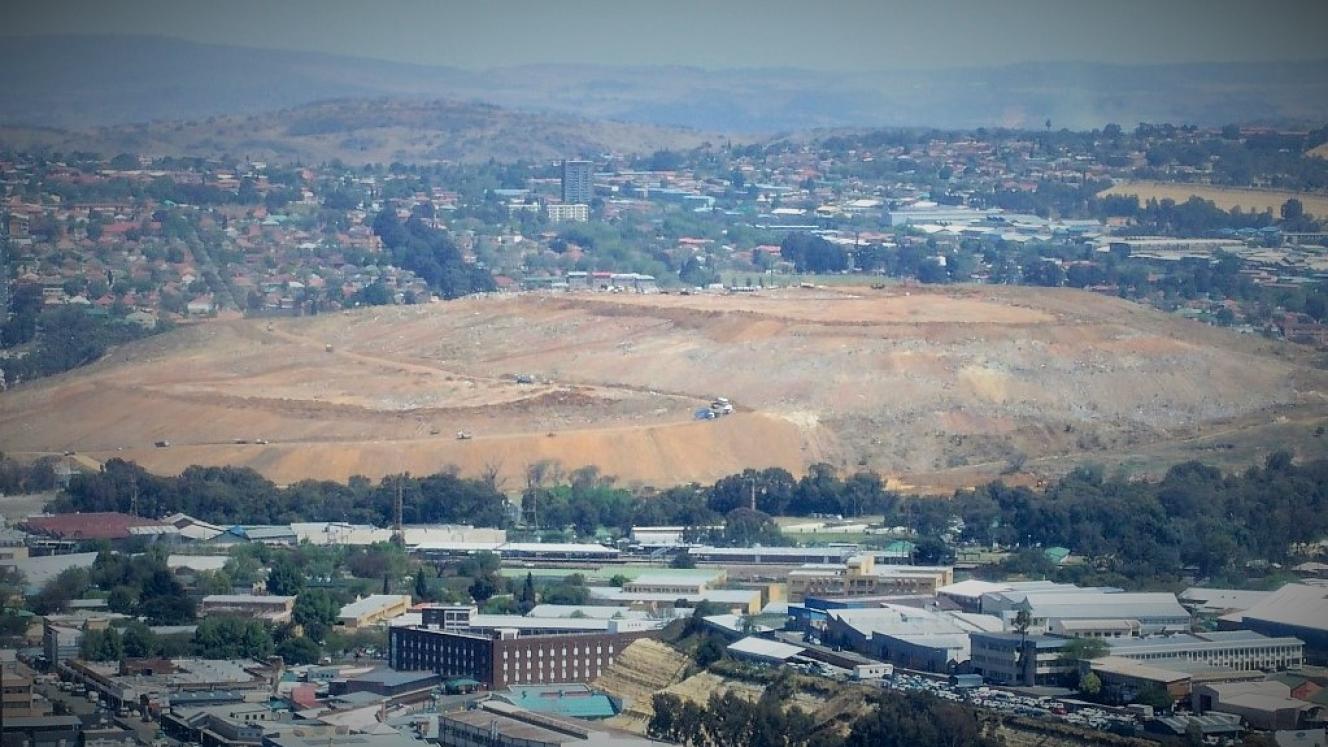
Today a motor way rings the city (the M1). It was a motorway of the sixties that spun us in and out of the crowded, dense CBD. It's a motor way built on mine tailings, and it has recently been discovered that informal miners (the zama zama) of our city are taking a chance trying to find gold in these foundation pillars and supports. The Wemmer Pan Road has been undermined to a state of collapse by informal mining that tracks over those very early gold mines and their tailings dumps. It is an extraordinary story that is unfolding and a time to pause and think about how far Johannesburg has come.
Perhaps it is also worth recording that South Africa as a gold mining country has lost status and position in the league tables . Production peaked in about 1970 and today South Africa is one of the lowest producing gold countries. Professor Bruce Cairncross, professor of Geology at the University of Johannesburg, presented these sobering statistics at a recent lecture celebrating Jozi 140 at the Origins centre. Informal mining may add another 10 per cent to total output. Johannesburg was a city built on gold but as we celebrate the 140th birthday, we need to face the reality of a much diminished gold mining industry.
The urban centre has shifted dynamically. Alongside that historic CBD, Sandton emerged as a premier economic centre, its skyline marked by Sandton City, the Convention centre, The Michelangelo and The Leonardo. Johannesburg no longer relies on a single central business district; it functions as a polycentric region. Sandton once the suburbs of the "mink and manure set" is now the thrusting bustling remade city.
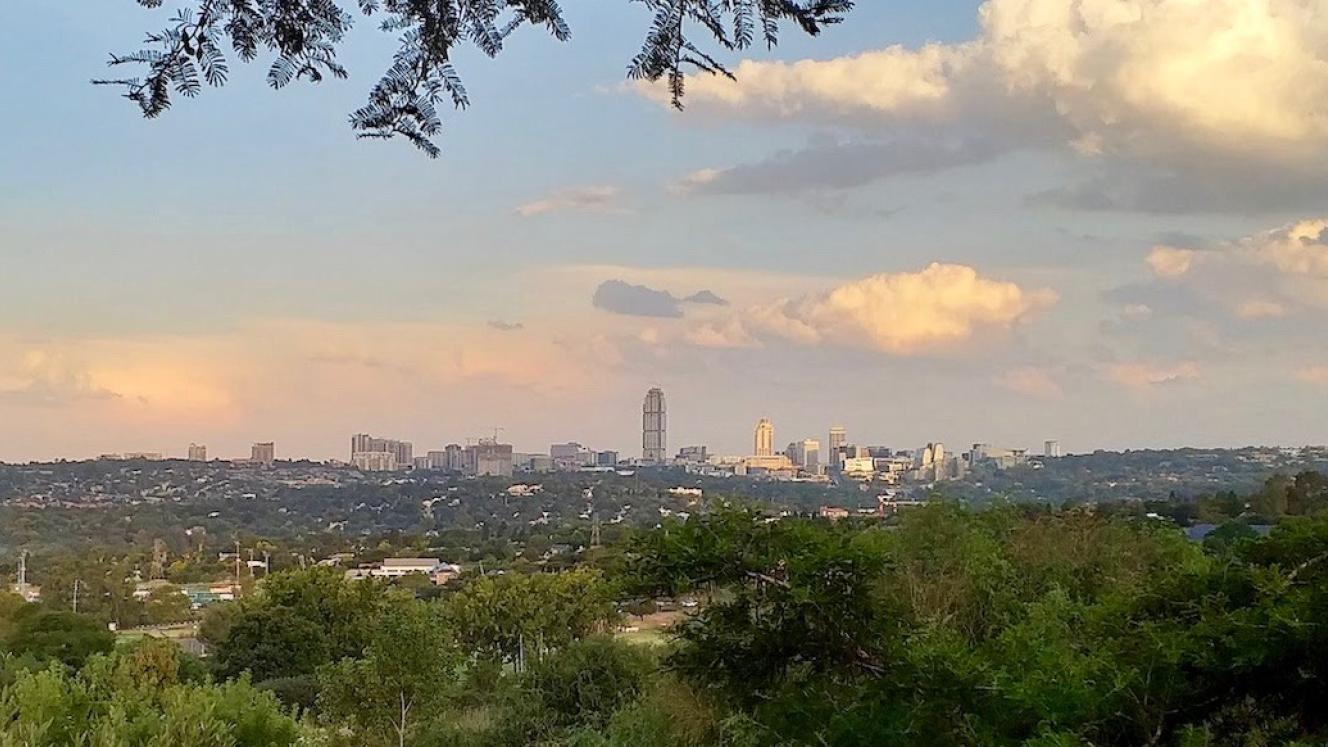
We have to admit as we celebrate the 140 birthday Joburg has some massive problems... power outages, ageing infrastructure, burst pipes, neglected public spaces, housing shortages, overcrowding, pot holes. Yet, where formal systems and municipal infrastructure falter, the city's people continue to step in, just as they did in 1986. Civic groups, heritage organisations, resident associations, and young entrepreneurs reactivate streets, preserve archives, and maintain parks. And there are many city officials who care and give their heart and souls.
That capacity for improvisation, quiet defiance, and grit is as much a part of Johannesburg's inheritance as its granite edifices.
Two Plaques to celebrate a birthday?
If Johannesburg at 140 deserves a birthday gift what should it be? My thoughts run to a blue plaque. Where could a city birthday plaque be positioned?
I would like to propose a 140 blue plaque birthday gift to be positioned on Market Square in front of the old City Hall, now the Gauteng legislature. It is an August edifice that represents civic ambition, permanence, and democratic governance. It witnessed the declaration of city status in 1928, survived the political turmoil of the 20th century, and now serves the province.
Of course we can argue that Johannesburg's history is too complicated for a single plaque. Directly across Market Square stands the now abandoned Rissik Street Post Office.
Built in 1897 and designed by ZAR government architect Sytze Wierda, it was once the tallest building in town. A fourth storey and clock tower were added in 1905, and it was declared a national monument in 1978. It is one of the city's oldest and most significant public buildings.
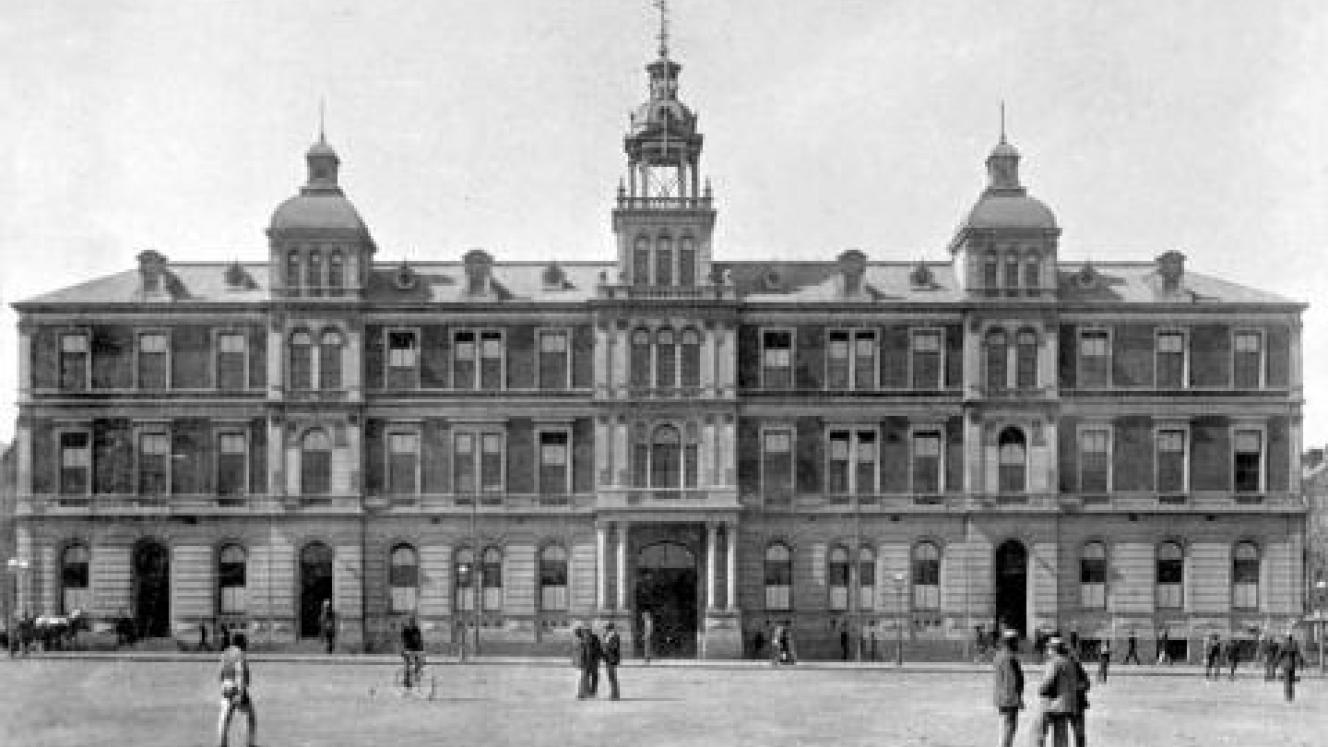
Yet today, it stands as a monument to neglect. Vacated in 1996, it has suffered decades of vandalism, illegal occupation, and severe fire damage—most notably in the catastrophic 2009 blaze. The view across Market Square presents an unbearable symbolism: on one side stands City Hall, representing civic pride, permanence, and government; on the other stands the Rissik Street Post Office, representing what happens when a city fails to care for its inheritance.
It is a landmark of early Johannesburg that also deserves a blue plaque. But perhaps this plaque could be one of warning and reckoning. It would certainly be a first .
A Challenge as Much as a Celebration
Between these two plaques across Market Square stands Johannesburg itself—a city born of gold, shaped by migrants and workers, transformed by families and institutions, enriched by universities and culture, scarred by segregation, and repeatedly reinvented by the resilience of its people.
The first plaque would be a birthday greeting while the second would be a warning. Together, they articulate the true nature of urban heritage: that heritage is not merely a comfortable celebration of the past, but an active responsibility to the future.
At 140, Johannesburg does not need hollow nostalgia or an uncritical tribute, nor does it need a birthday that devolves into an inventory of current complaints. A birthday is an act of hope.
The truest wish for Johannesburg at 140 is that the extraordinary intelligence, energy, and resourcefulness that built a metropolis on the open Highveld—and the quiet courage of those who built non-racial stepping stones within it—can be mobilised once again. To repair its infrastructure, protect its historic treasures, narrow its inequalities, and offer its young people a future.
Johannesburg remains a young city, and its story is far from finished. That is reason enough to pause, acknowledge what has been achieved, mourn what has been lost, repair what can be saved—and wish this difficult, vibrant, resilient city another 140 years.
Kathy Munro is an Honorary Associate Professor in the School of Architecture and Planning at the University of the Witwatersrand. She enjoyed a long career as an academic and in management at Wits University. She trained as an economic historian. She is an enthusiastic book person and has built her own somewhat eclectic book collection over 40 years. Her interests cover Africana, Johannesburg history, history, art history, travel, business and banking histories. She researches and writes on historical architecture and heritage matters. She is a member of the Board of the Johannesburg Heritage Foundation and is a docent at the Wits Arts Museum. She is currently working on a couple of projects on Johannesburg architects and is researching South African architects, war cemeteries and memorials. Kathy is a member of the online book community the Library thing and recommends this cataloging website and worldwide network as a book lover's haven. She is also a previous Chairperson of HASA.