
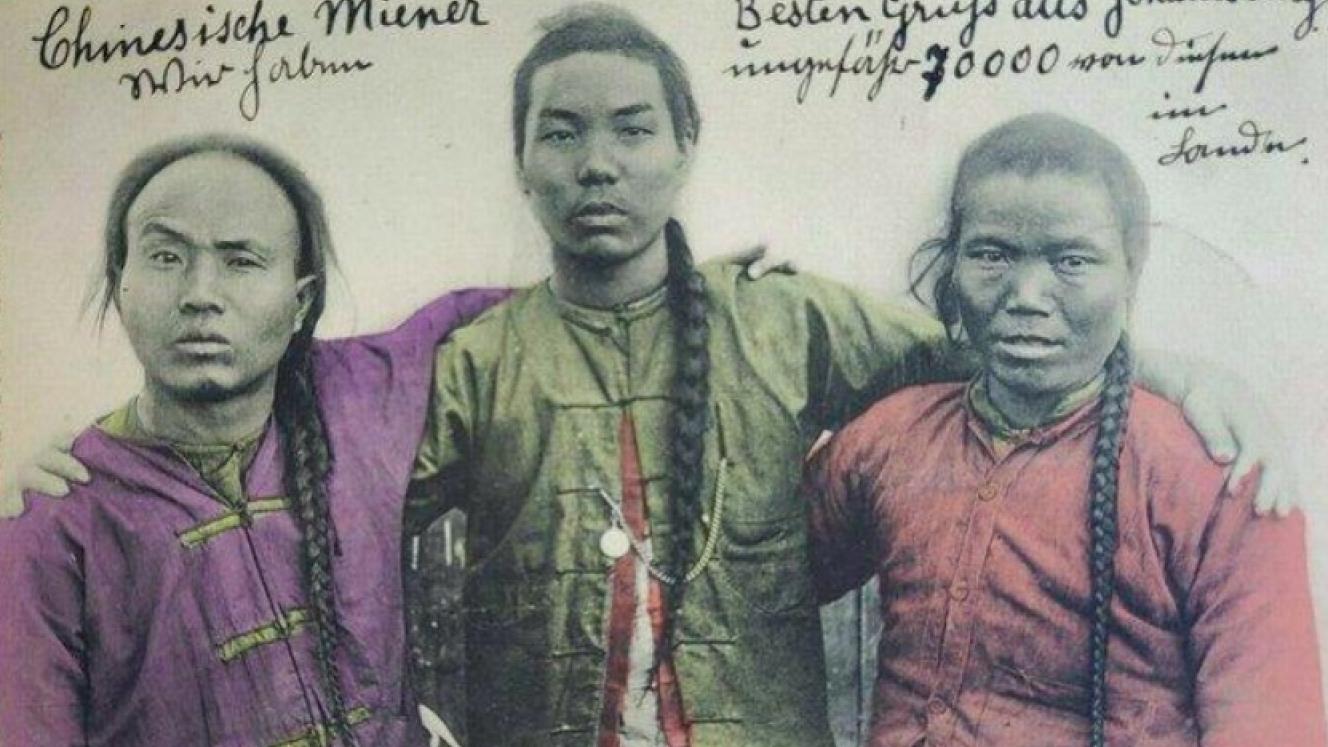
Heritage is not only what happened. It is what remains and what does not.
"Neither Eastern nor Western, not Asian, not African, classified non-White in the old South Africa but not deemed previously disadvantaged in the new, we live in perpetual bifurcation." (Darryl Accone)
These words capture a condition that has persisted for three centuries. At various points, the same community has been classified as Coloured, granted privileges approaching those of White citizens and ruled by a High Court to be legally Black. No other group has travelled that arc. The community numbered fewer than 10,000 people and most South Africans could not name a single one of them.
The assumption that "Chinese" is a coherent category is false. The communities that arrived over three centuries speak different languages, observe different customs, practise different faiths and originate from provinces as culturally distinct as Guangdong, Fujian and Taiwan. This internal diversity, expressed institutionally in Cape Town's 17 registered Chinese associations and Johannesburg's more than 100, has meant that the single word "Chinese" fails to capture a layered community.
South Africa's Chinese presence comprises at least four waves of migration spanning more than three centuries: from Dutch colonial exiles in the 17th century to post-apartheid entrepreneurs from Fujian Province. The waves were shaped by slavery, indentured labour, racial classification and diplomatic realignment. This article maps those four waves and the continuities that connect them across time.
1: Exiles, Convicts and the First Free Chinese (1654–1903)
The earliest documented Chinese presence in southern Africa is inseparable from the Dutch colonial project. The VOC regularly exiled political prisoners from Batavia, now Jakarta, to the Cape. By the 1680s, records confirm a Chinese political prisoner held on Robben Island. Throughout the 17th and 18th centuries, a modest stream of Chinese convicts and slaves arrived from Dutch colonies in Asia.
Thisgingnio came from Indonesia, arriving in Cape Town on 9 April 1747. She is the only documented Chinese woman prisoner at the Cape. After her release she formed a relationship with Ongkonko, who had arrived that same year, convicted of high treason in Batavia. Ongkonko became the most prosperous Chinese man in Cape Town. When he died, contemporary accounts recorded that Thisgingnio died of grief. The historical record does not tell us what she thought or felt.

By 1772, the Swedish botanist Carl Peter Thunberg witnessed and described the first documented Chinese burial on African soil, most likely at what is now the Chinese Burial Ground in Bo-Kaap on Signal Hill.
From the 1870s onward, Hakka-speaking traders from Guangdong Province's Meixian region arrived independently at Gqeberha (formerly Port Elizabeth) and other eastern ports, settling in mixed suburbs and operating grocery stores. These free traders became the ancestors of most of South Africa's "old Chinese" families, the Lao Qiao, now in their fourth or fifth generation and numbering approximately 10,000.
2: Indentured Labour, 63,695 Men and the Mines (1904–1910)
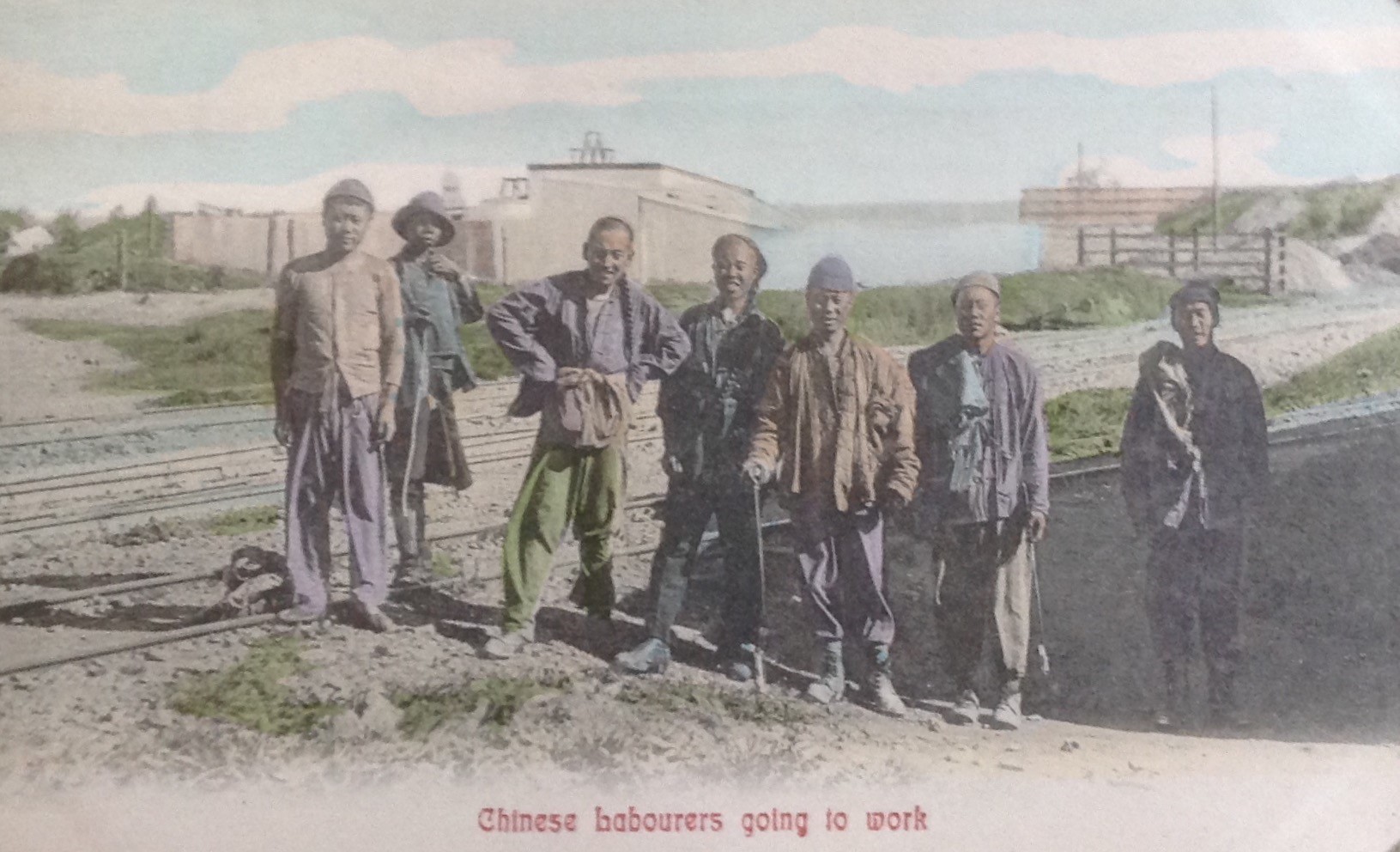
The largest numerical influx of Chinese people into South Africa before 1998 was also the most brutalised. Between 1904 and 1910, exactly 63,695 Chinese indentured labourers were imported under the Transvaal Labour Importation Ordinance. Recruited mainly from the northern provinces of Zhili, Shandong and Henan, the men were contracted for three years, paid below the rate of Black workers, quarantined from the local population and prohibited from bringing families.
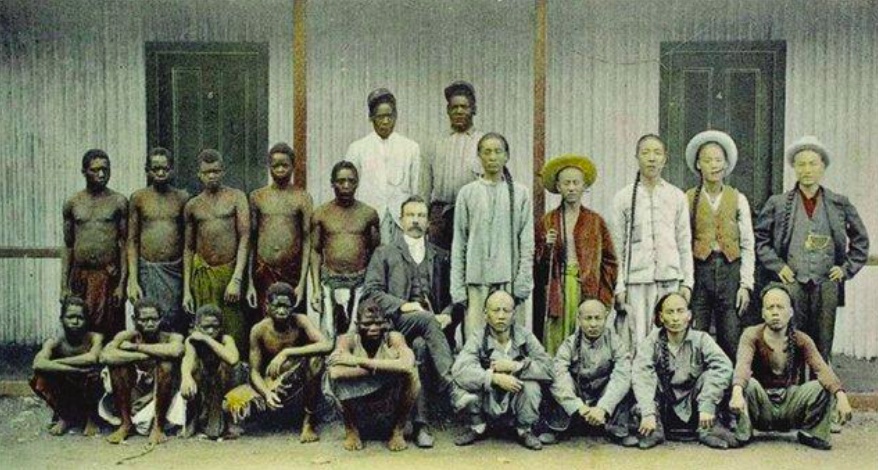
From 2012–2015, bioarchaeologists analysing the remains of 36 miners exhumed from unmarked Witwatersrand graves identified as Chinese through burial context and compound records found perimortem fractures consistent with deep-level mining accidents, alongside evidence of childhood malnutrition. The skeletal evidence is stark: men who had survived impoverished childhoods in China, only to die violently in the deepest mines in the world.
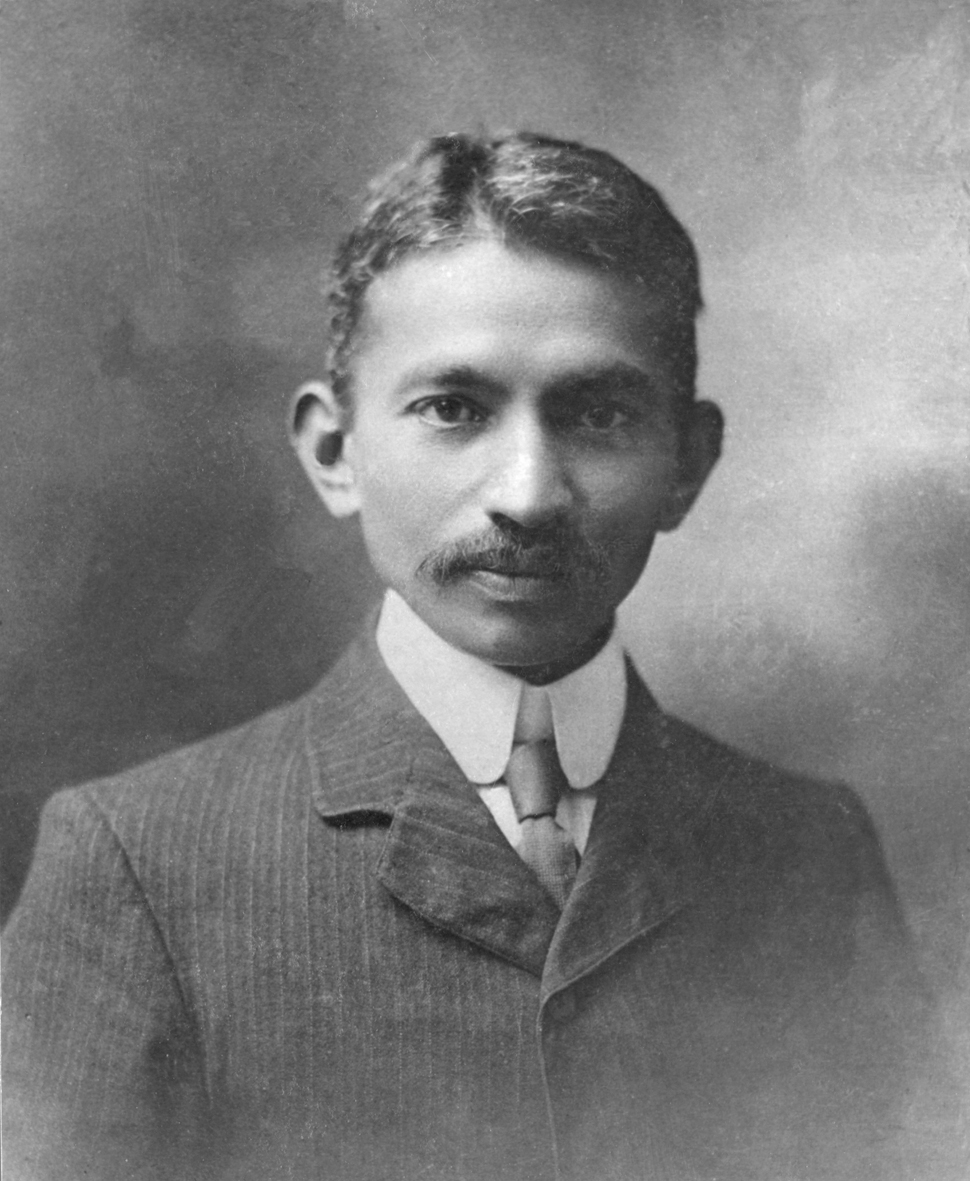
When the colonial government introduced the Asiatic Law Amendment Ordinance of 1906, known as the "Black Act," requiring all Asians to carry identity certificates, Gandhi contacted Leung Quinn, chairman of the Transvaal Chinese Association, to discuss joint resistance. On 11 September 1906, thousands of Indians and Chinese filled the Empire Theatre in Johannesburg and swore a collective oath of refusal marking the founding moment of Satyagraha, a form of non-violent resistance that would reshape global politics. Two years later, when resisters reached a negotiated settlement, Quinn was a co-signatory alongside Gandhi, a measure of how central Chinese participation had become to a movement still remembered as an almost entirely Indian one.
Apartheid, Between Worlds (1948–1994)
The Lao Qiao families, with roots going back to the 1870s, were classified first as "Coloured," and then formally reassigned as "Chinese" under the Population Registration Act of 1950. The community occupied a position the state struggled to categorise.
The Group Areas Act produced forced removals across the country. Chinese families were evicted from Sophiatown and Gqeberha's South End. Of the 899 Chinese families earmarked for eviction from Whites-only areas, only 64 were actually evicted. The exception was Kabega Park in Gqeberha, the only suburb formally proclaimed as a Chinese Group Area.
A 1966 SAIRR report concluded: "No group is treated so inconsistently under South Africa's race legislation." Historian Karen L. Harris has argued that the Chinese occupied a "no-man's land" from their first arrival in the Cape Colony, a position perpetuated into the post-1994 dispensation. The apartheid state's inconsistencies were continuations of a longer pattern of legal exclusion that had begun in the 17th century. This bifurcation, belonging nowhere fully while being unmistakably present, would define the community's condition across three centuries.
3: The Taiwanese Wave and the "Honorary White" Anomaly (1970s–1994)
A structurally distinct migration began in the late 1970s, driven by diplomatic ties between apartheid South Africa and the Republic of China (Taiwan). Taiwanese industrialists were recruited with relocation subsidies, subsidised wages and housing loans, establishing manufacturing operations in the former homelands. Their legal status differed sharply from the Lao Qiao. Taiwanese nationals were exempted from many apartheid laws and granted privileges approaching "honorary white" status, a classification originally devised for Japanese business partners. The anomaly was stark: families with roots in South Africa since the 1870s remained classified as Coloured or Asiatic, while Tai Qiao newcomers enjoyed rights approaching those of White citizens. At its peak in the mid-1990s, approximately 30,000 Taiwanese lived in South Africa.
Hong Kong Chinese also arrived in significant numbers during the 1980s and 1990s, as the 1997 handover approached. Cantonese-speaking British colonial subjects, they were shaped by a distinct commercial formation.
The Struggle for Legal Recognition (1994–2008)
Constitutional democracy produced a new category of exclusion for the Lao Qiao. The Employment Equity Act of 1998 and the B-BBEE Act of 2003 defined "Black people" as Africans, Coloureds and Indians. Chinese South Africans were absent. Government officials were dismissive. Some financial institutions classified Chinese applicants as "Black"; others refused. No consistent interpretation existed. For a community classified as Coloured under apartheid, subjected to the same discriminatory laws and removed from the same suburbs, the omission was both legally anomalous and politically resonant.
In 2007, the Chinese Association of South Africa (CASA) brought a High Court application. The legal team included George Bizos, who had defended Nelson Mandela at the Rivonia Trial. On 18 June 2008, Judge Cynthia Pretorius ruled that Chinese South Africans who had been citizens before 1994 and their descendants, fell within the statutory definition of "Black people."
The reception was institutionally hostile. Former Labour Minister Membathisi Mdladlana stated publicly that he believed ‘the Chinese who brought forward the application were targeting the benefits of BEE’, prompting a Human Rights Commission investigation. He left office in 2010 without retracting his remarks. Yet the community chose to celebrate. In June 2009, the Pretoria Chinese Association organised "Dignity Day" to commemorate the first anniversary of their High Court victory.
4: Contemporary South Africa, the Xin Qiao Wave (1994–present)
The end of apartheid opened South Africa's borders to a new and numerically dominant wave of migration from the People's Republic of China. By the 2010s, the total Chinese-origin population reached an estimated 300,000 to 350,000, with the Lao Qiao numbering fewer than 10,000; less than three per cent. The commercial centre shifted from historic Johannesburg Chinatown to Cyrildene, the primary hub of Xin Qiao life.
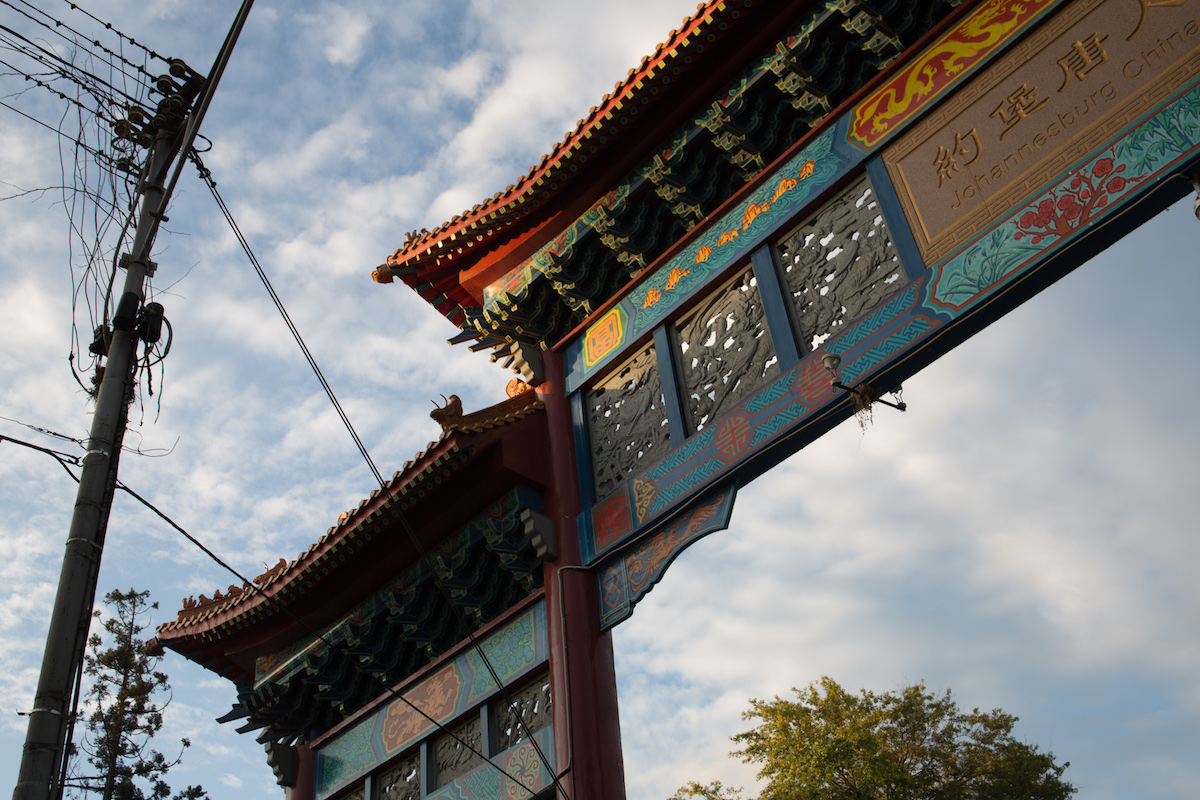
These migrants, predominantly traders and importers from Fujian Province, did not experience apartheid and are not covered by the 2008 BEE ruling. Their relationship with the Lao Qiao is characterised by linguistic distance. Most Xin Qiao speak Mandarin or Hokkien; many Lao Qiao are English-dominant.
The Xin Qiao have built an extensive organisational infrastructure. More than 100 Chinese associations and business chambers now operate in South Africa, serving primarily as cultural and social support networks for recent migrants. Leadership positions, often tied to recognition from the Chinese Embassy, create what scholar Xunqian Liu terms “Confucian prestige logics”, a transactional symbiosis that underscores homeland ties reinforcing the perception of Chinese migrants as ‘’forever foreigners”.
Following South Africa's diplomatic recognition of the People's Republic of China in 1998, the Taiwanese community contracted from approximately 30,000 to around 6,000 today.
The gap between the two Chinese South Africas is rupture, not gradual divergence. Over 150 years, from the 1870s to the 2020s, the Lao Qiao grew to roughly 10,000 descendants through slow natural increase under apartheid’s active suppression including racial quotas, family separation and legal exclusion. Over just 20 years, from 1994 to the 2010s, the Xin Qiao reached an estimated 300,000 to 350,000. The scale reflects timing: apartheid’s barriers fell precisely as China liberalised migration after 1978. Where the Lao Qiao arrived as labourers and small traders, the Xin Qiao wave has been overwhelmingly commercial, following China's emergence as one of South Africa's largest trading partners.
The Other Direction: Departure and Erasure (Fifth Wave)
Any diaspora that counts only arrivals is incomplete. The 63,695 indentured miners of 1904–1910 were not settlers but sojourners; almost all survivors were repatriated to China carrying with them an unrecorded history, except for the 36 remains found in the 21st century. Out-migration progressed to Canada and Australia for Lao Qiao families who saw no future under apartheid. The returnees and emigrants left no monuments, but their absence shaped the community as surely as any arrival did.
Heritage in Fragments: What Remains, What Vanished
Vanished: Gqeberha's South End, where Hakka traders built shops and homes, was declared a White area under the Group Areas Act. Bulldozers erased the street grid. The Empire Theatre in Johannesburg, where thousands swore the Satyagraha oath, is gone.
Erased: The Peranakan Chinese lost their surnames to assimilation; some Cape Malay families today carry Chinese ancestry they have yet to trace. The voices of women documented only in records of suffering or not at all.
Remaining: The Chinese Burial Ground in Bo-Kaap holds a tomb from the 1770s. No inscription identifies the deceased.
Preserved: The Chinese Association of South Africa maintains a small archive. Darryl Accone's “All Under Heaven” is a literary monument where no stone exists. Yoon Jung Park's “A Matter of Honour” preserved oral histories before the oldest Lao Qiao generation passed. The heritage is not in buildings. It is in cemetery registers, court judgments and the stories of descendants who still answer, "Where are you from?" with an account that takes three centuries to tell. In South Africa, heritage is usually written in stone. For the Lao Qiao, it is written in the margins of census forms and the contested space of a court ruling.
Conclusion
The Chinese diaspora in South Africa resists easy summary. It is not one migration but four, separated by time, geography, language and legal status.
What connects these waves is a shared structural experience: being categorised by others. By colonial administrators, race theorists, mining ordinances, apartheid bureaucrats and post-apartheid legislators in ways that consistently failed to capture the complexity of Chinese identity. That bifurcation, belonging nowhere fully while being unmistakeably present, threads through all four waves: the first Chinese prisoner on Robben Island in the 1680s, the unnamed miners of the Witwatersrand, the free traders of the Eastern Cape, the legally anomalous families of the apartheid years and the Xin Qiao navigating a democratic dispensation not designed for them.
What persists is the condition of being Chinese in South Africa. That position has been exile, slave, free trader, indentured labourer, "honorary white," legally reclassified as Black, and unmistakeably South African. Through all of it, the community has remained. Not as a monument. As a living presence, still negotiating the categories others assign.
Saaliegah Zardad is a heritage researcher and practitioner whose work focuses on the heritage of erasure: the communities, histories and material traces that have been systematically excluded from South Africa’s monumental landscape. Her research engages with heritage impact assessments, intangible cultural heritage. Her research areas include the Oude Molen Precinct challenge, Nelson Mandela’s contested belongings as well as Cuban and Nordic solidarity in Southern African liberation. She is currently working on the Chinese Burial Ground in Bo-Kaap adjacent to the Muslim Burial Ground of Tana Baru.