A poor education, broken family structures and little hope of the life they wished for themselves and their families are what colonization and apartheid bestowed upon South Africa's black population in the late nineteenth century and into the twentieth century.
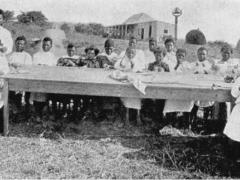
Nonetheless, there were pockets of excellence which offered black students the kind of education comparable to that which white students received – the education offered by missionary schools. It was this polished and quality education which offered black students the opportunity to explore and acquire knowledge, and it was this education which empowered them in their struggle against racial injustice in South Africa.
Men and women educated at mission education schools were logically in the forefront of the struggle for freedom in South Africa. They were first to pioneer the call for an equal franchise and racial equality for all of South Africa's citizens at the turn of the twentieth century. They were the first to realize the abuse of the colonial system, and to take a stand to reverse the infringements on the human rights of black South Africans.
This is evident in the early religious leadership of Rev John Tengu Jabavu, Rev Tiyo Soga and Rev Charles Palma, and it is embodied in the early education of the political leadership of Nelson Mandela, Robert Sobukwe, Oliver Tambo, Govan Mbeki, Ruth Mompati, Charllotte Maxeke, ZK Matthews, Dr AB Xuma and many of their compatriots.
It can also be traced to the next generation of struggle heroes and heroines including amongst others...