In the article below, journalist and heritage enthusiast Lucille Davie reveals the fascinating story behind the Prestwich Memorial in Cape Town. The article was first published on the Media Club South Africa website on 30 September 2013. Click here to view more of Davie's work.
Sometimes new developments can lead to more than just creating fresh spaces. During excavations for a new residential block in Cape Town, old bones were uncovered, the unmarked graves of slaves dating from the 17th and 18th centuries.
The modern story goes back to 2003, when construction began for a new luxury apartment block in Prestwich Street, Green Point. The bulldozers soon unearthed the bones, and excavation was halted. Archaeologists from the University of Cape Town were called in, as prescribed by the National Heritage Resources Act.
The remains were exhumed and taken to the mortuary at the Woodstock Day Hospital. Decisions had to be made regarding what would be done with them, as human remains are always a sensitive issue. Descendants need to be consulted, and reburial is sometimes a contentious point.
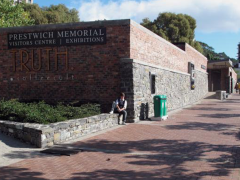
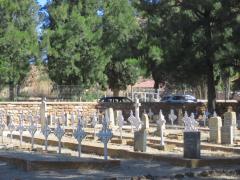
This story ended with the opening of the Prestwich Memorial, on the corner of Buitengracht Street and Somerset Road, in 2008. The single-storey building is finished in grey Robben Island slate. It makes a striking statement, built next to the first Presbyterian Church in the country, completed in 1828. It was the first church to allow freed slaves through its doors, after slavery was abolished in 1838 in South Africa.
[[{"fid":"5048","view_mode":"media_adaptive","fields":{"format":"media_adaptive","field_file_image_alt_text[und][0][value]":false,"field_file_image_title_text[und][0][value]":"St Andrews Presbyterian...