
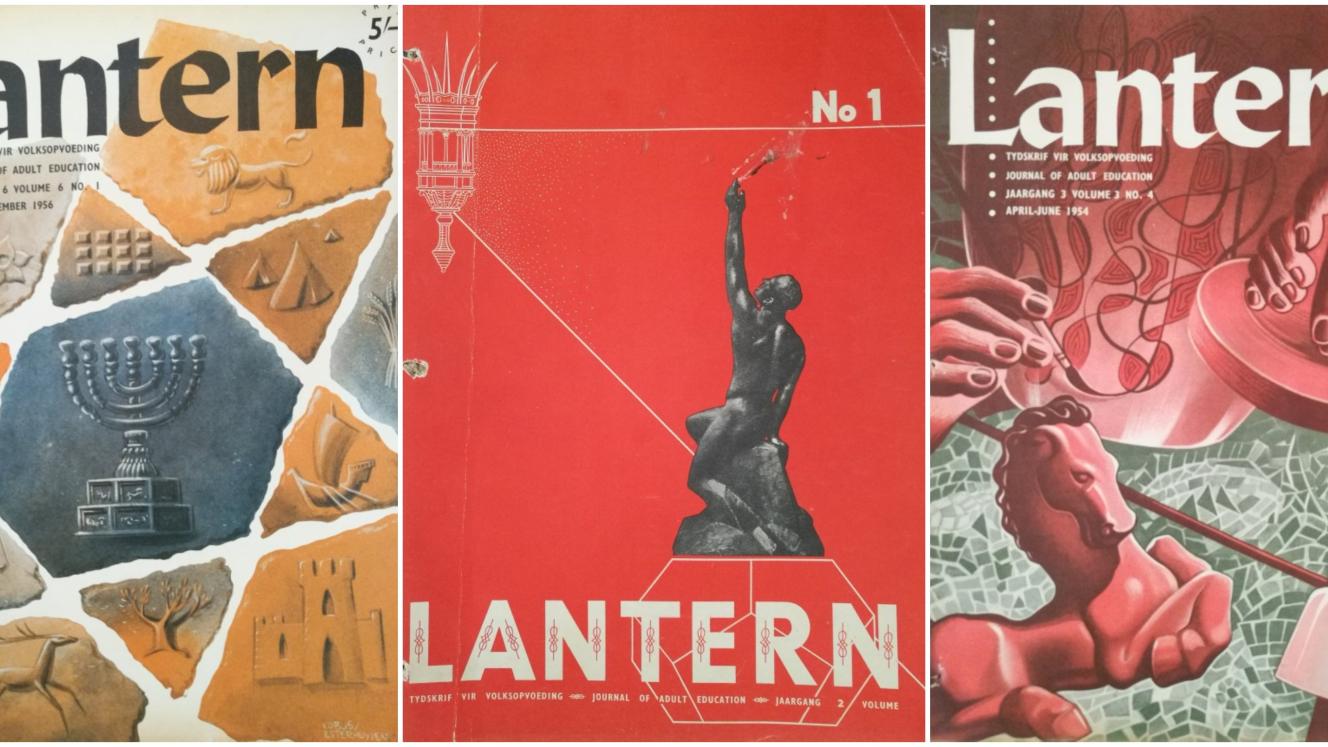
The South African journal Lantern / Lantern: Journal of Knowledge and Culture / Tydskrif vir Volksopleiding was one of the more substantial cultural and educational periodicals of the apartheid era. It occupied an interesting position somewhere between a literary review, an adult education journal and a cultural magazine, carrying essays on history, archaeology, classics, literature, architecture, music, art history and the performing arts. It was bilingual in English and Afrikaans with English summaries included at the rear for the Afrikaans articles. Many South African scholars and public intellectuals published in its pages.
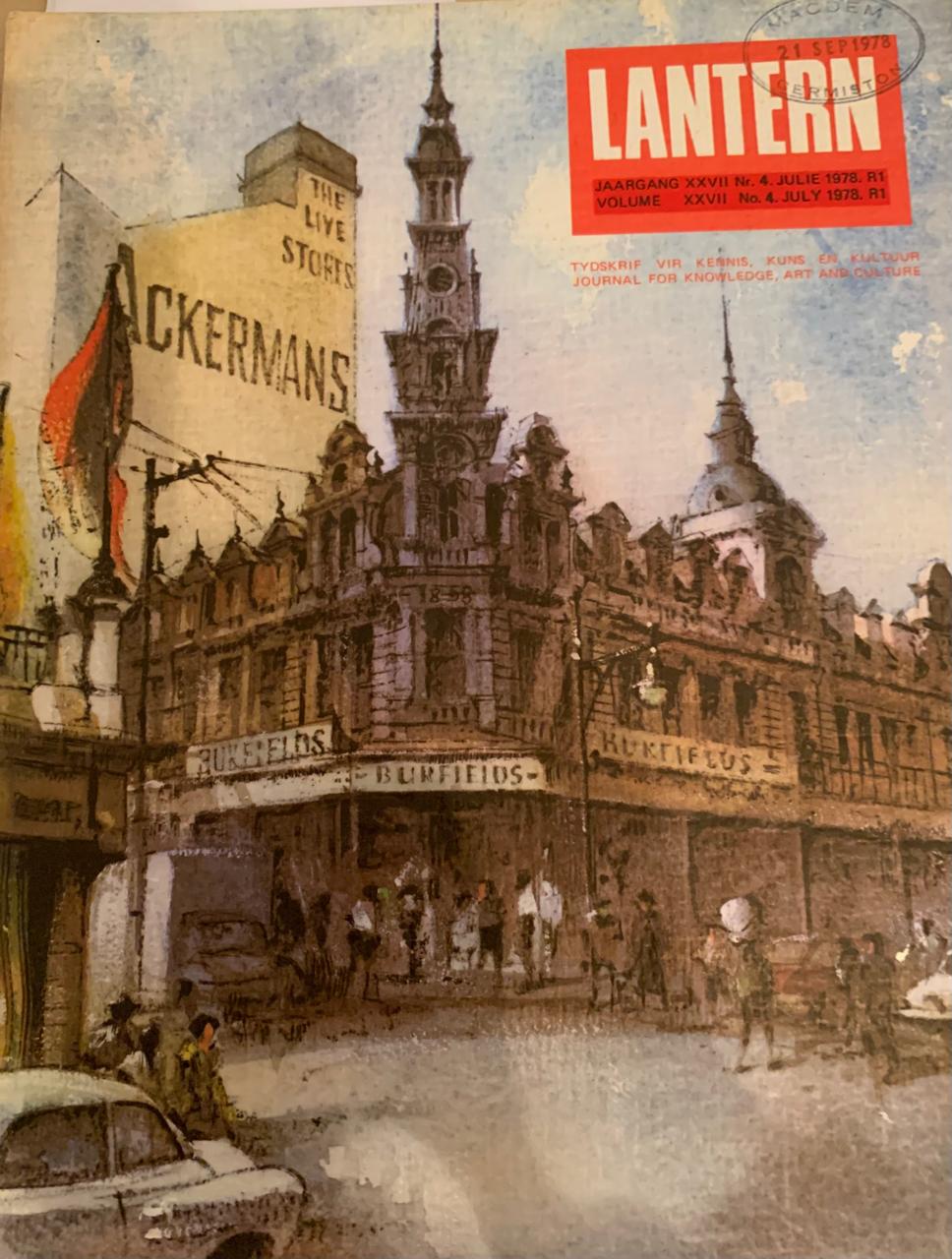
It was initiated in 1949 when the then Department of Education, Arts and Science produced the first issue on the recommendation of Dr A. J. van Zyl, who served as Chief Organiser of Adult Education.
When there proved to be insufficient funds for its continuation, a group of benefactors under the leadership of Dr S. H. Pellissier, chairman of the South African Adult Education Council, established a private company and continued the publication of Lantern.
Among those involved in the early years were Mrs E. Conradie, Administrator of the Cape Province; Dr Charles te Water, former High Commissioner in London; P. P. Breytenbach, head of FASA and later TRUK; and Dr A. J. van Zyl himself, all sharing the ideal of promoting adult education in South Africa.
There seems to be some slippage in the account of the history of Lantern as whilst Van Zyl talks about a private company there is also mention of a Foundation. It seems there were probably two related but distinct entities:
- A private company or publishing vehicle established in the early years to take over the practical business of publishing Lantern when direct government funding from the Department of Education, Arts and Science proved inadequate.
- A foundation or educational trust structure — eventually associated with the Foundation for Education, Science and Technology (FEST) — which provided the broader institutional umbrella, governance and educational mission for the publication in later decades.
Lantern appears to have been widely distributed to schools, universities and libraries and was also sold to the public. It quickly became one of South Africa's leading cultural journals, carrying articles on history, architecture, literature, archaeology, science, art and music.
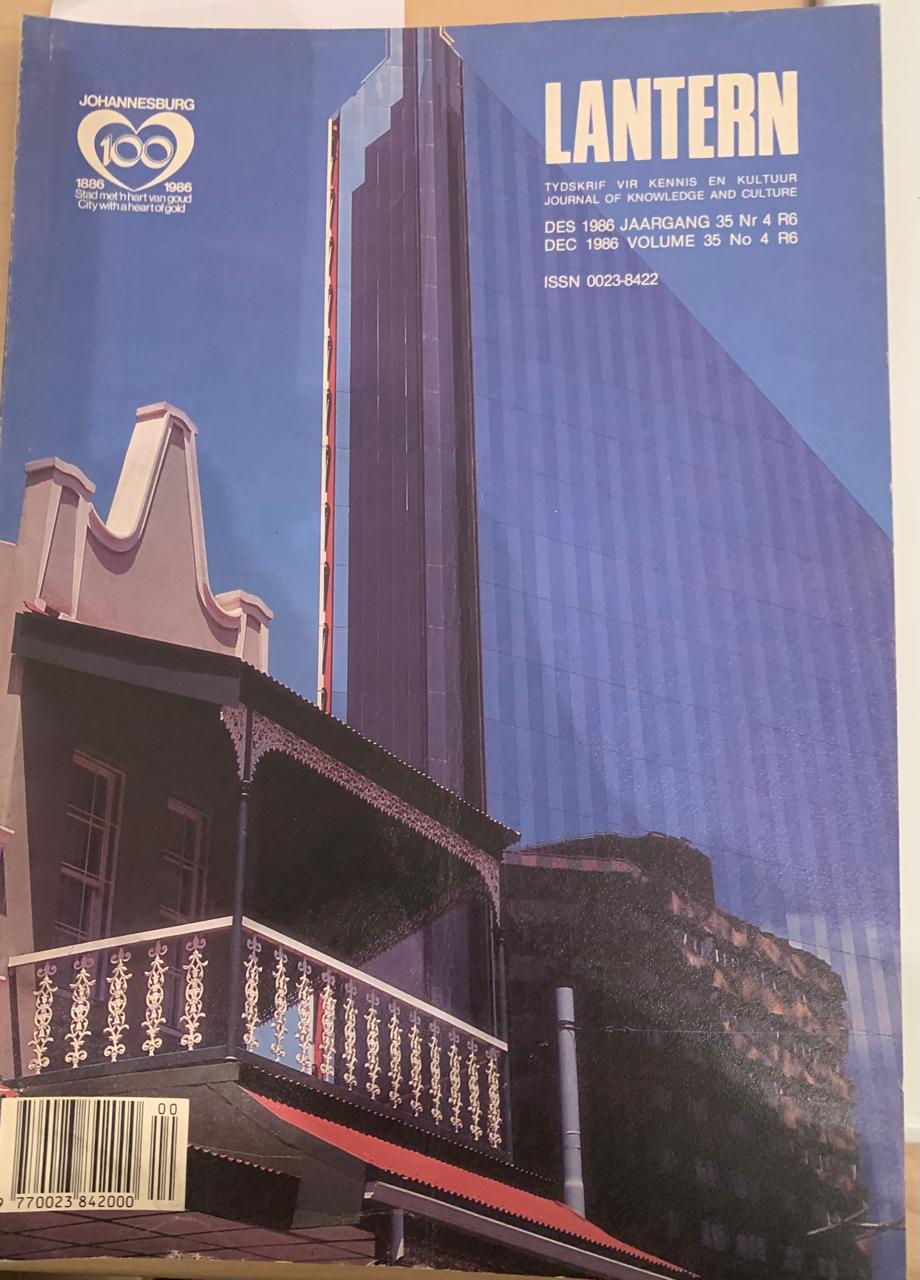
I always knew Lantern as a cultural magazine but somehow found it insufficiently discipline-based for my own immediate interests. Nevertheless, if one happened upon the right topic, it could be wonderfully readable. Looking back, one can see that Lantern also served as a form of soft political influence, promoting the cultural objectives of the National Party government that remained firmly in power from 1948 until 1994.
The lifespan of the magazine closely mirrored that political era. Lantern began in 1949 and ceased publication in 1995, only a year after South Africa's first democratic election.
And here lies one of history's little ironies. Today I find myself eagerly searching for back issues in second-hand bookshops and at book fairs. The Lantern has become collectable. I was never one of those readers who faithfully built a collection while the journal was appearing quarter by quarter. Yet these days I am enough of a bibliophile to want to assemble such a collection myself. Perhaps I have left it a little late in the day.
The Origins of the Lantern
The first experimental issue appeared in August 1949 and was then counted as Volume 1 Number 1. Issues were published approximately quarterly until 1995 - with the last issue to appear being no 3 in that year. Hence there were 44 volumes with a name change over the last few years to Lantern -Young Academic. My estimation is that there were 183 issues assuming that the journal was published 4 times a year. Some of the issues were special numbers.
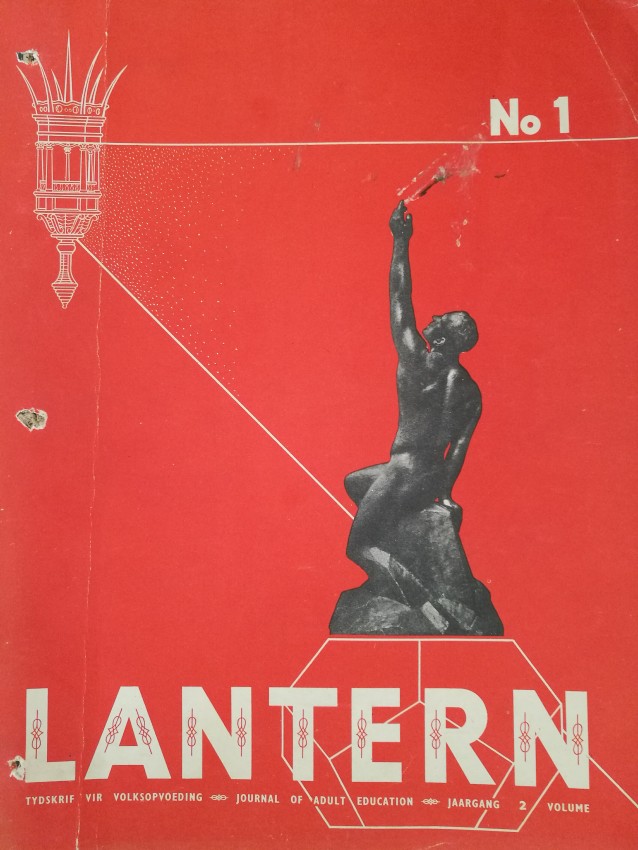
The journal was founded by the national State Department of Education Arts and Science with the intention being to promote a journal for adult education. But it seems that insufficient funding led a private group of public spired individuals to form a company to make this publication possible under the umbrella of the South African Association for Adult Education.
Vivian C. Wood was the managing editor in the founding period. Other editors included:
- F. J. Wagener
- Rinie Stead
- H. W. Toreien
- Riena van Graan
- Johan van Rooyen
For the English-language articles, Eldred Green ensured impeccable English. Other notable early players included:
- Kobus Esterhuyzen — art director during the formative years.
- Theodorus Haarhoff — general editor by 1959 and associated with its strong classical and humanities orientation.
- A.J. van Zyl — who wrote a summary article on the history of the Journal for the final 1995 issue and served on the Council of the South African Foundation for Adult Education from 1950 to 1984, including as a period as vice-chairman.
Lantern occupied a somewhat unusual position in South African intellectual life. Critics and historians have viewed it as:
- an important vehicle for adult education;
- a platform for humanities scholarship written for an educated general readership;
- part of the state's broader cultural project during the National Party period;
- a publication that nevertheless provided space for serious scholarship and cultural writing of lasting value.
Wikipedia comments: “Many historians regard it as one of the significant South African cultural journals alongside publications such as Standpunte and Tydskrif vir Letterkunde, although its political positioning and institutional sponsorship distinguish it from those journals.”
Current values
A complete or nearly complete run has greater research than commercial value and would probably attract interest from university libraries, Africana collectors and heritage researchers rather than general book collectors. Auction records show higher prices realised for the earlier volumes of the 1950s; collectors are keener on substantial runs rather than isolated numbers.
Unlike literary "little magazines", Lantern was produced in relatively large print runs and survives in many institutional collections such as university, government and city libraries. Individual issues are generally not scarce. Estimated values run from R30 to R100 for an issue; and a near complete run would have a value of approximately R5,000 to R8,000; complete sets are uncommon.
Rediscovering Lantern
Lantern is one of those periodicals that deserves rediscovery. It published pieces by historians, architects, classicists and archaeologists who often wrote for an educated lay readership rather than purely academic audiences.
Its contents were usually divided into sections dealing with art, economics, education, science, industry, architecture, health, horticulture, history, domestic science, agriculture and animal husbandry.
Readers could enjoy richly illustrated articles such as:
- Coert Steynberg, sculptor
- What is Op Art about?
- George Bernard Shaw: Irish deserter?
- Can we afford "false erotica"?
The science section linked Africa together.
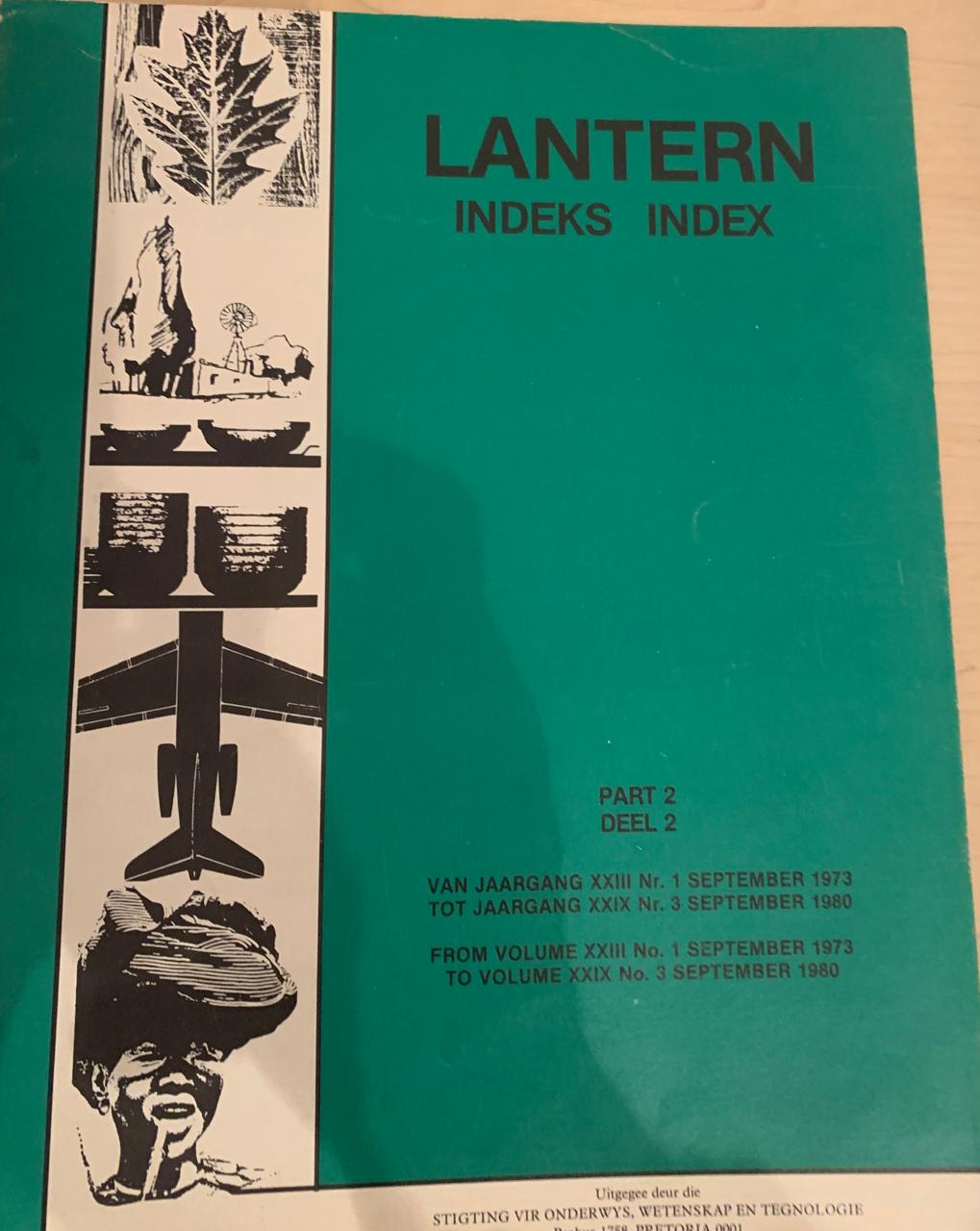
Two indexes, professionally prepared according to authors and article titles, made information easier to trace.
Special Issues
One of the delights of rediscovering Lantern is the extraordinary ambition of some of its special issues. These were not simply magazines but deeply immersive explorations of subjects, countries and historical themes.
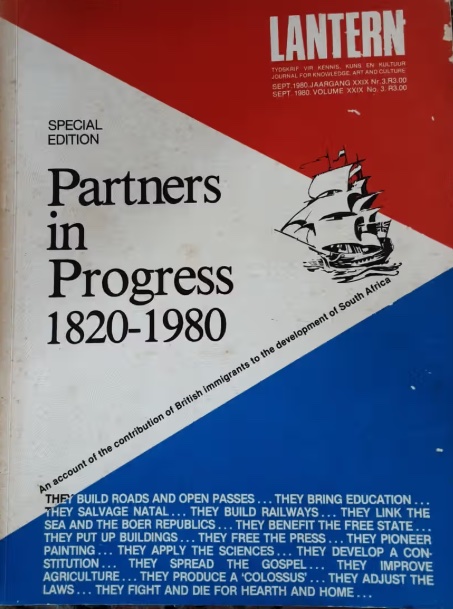
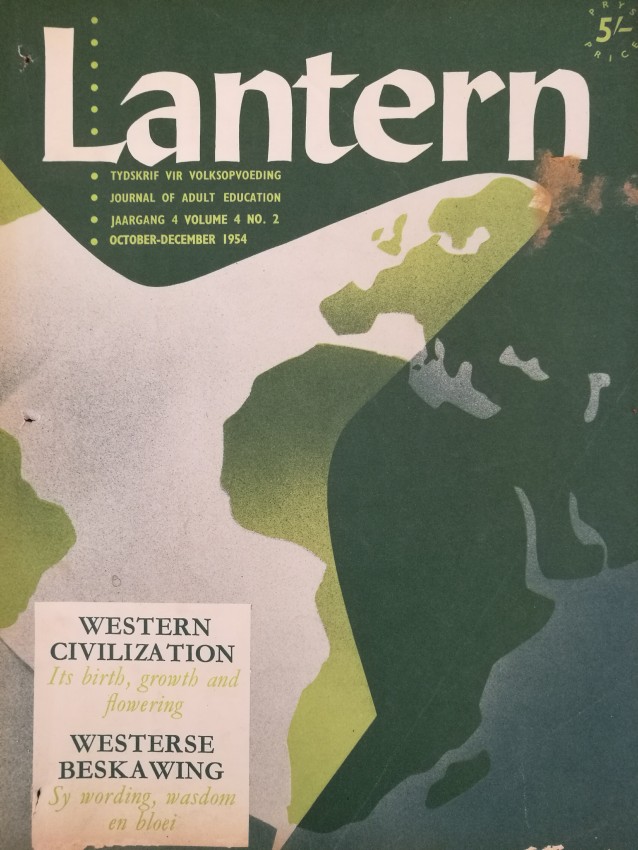
There were special issues devoted to the 1820 Settlers, Paul Kruger, the Great Trek, Western Civilisation, Afrikaans language and culture and South African birdlife.
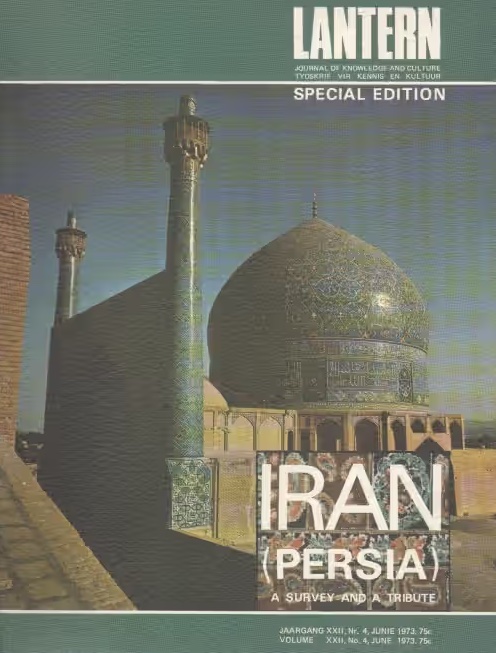
Others transported readers far beyond South Africa's borders to Spain, Portugal, Germany, Austria, Taiwan and, perhaps most intriguingly in today's geopolitical context, Iran.
Looking back, one wonders what these international issues represented. Were they intellectual travelogues for a readership that travelled little internationally during the years of sanctions and isolation? Were they attempts to identify friendly nations and cultural allies for South Africa during increasingly difficult political times? Were they exercises in cultural diplomacy and soft power? Or were they expressions of a wider historical and civilisational curiosity that sought to place South Africa within a larger international story? Perhaps they were all these things.
There were 31 themed special issues of Lantern. Through them virtually the entire cultural field was covered, including:
- Our Classical Heritage
- Our Ancestors the Dutch
- The People and the Land of the Bible
- Western Civilization: its birth, growth and flowering
- The Genis Issue
- The Stellenbosch Jubilee Issue
- Bird-life in South Africa
- Save our Soil
- The Great Trek Commemoration Issue
- The 1820 Settlers
- Afrikaans: its origin, wisdom and flowering
- Partners in Progress
Other special issues introduced readers to foreign countries from a historical perspective:
- Austria
- Taiwan
- Iran (Persia)
- Portugal
- Spain
- Germany
The Austria, Germany, Portugal and Spain issues seem to fit naturally into a narrative of European cultural inheritance and Western civilisation.
The 1820 Settlers and Paul Kruger issues reinforced competing but ultimately complementary strands of white South African identity — British settler and Afrikaner nationalist traditions.
The Taiwan issue almost certainly reflected diplomatic and political realities. During the apartheid years South Africa and Taiwan maintained unusually close relations as both found themselves diplomatically isolated.
The Iran (Persia) issue is perhaps the most fascinating of all. Before the 1979 revolution, Iran under the Shah was regarded internationally as a modernising, pro-Western state and an important strategic ally in the developing world. South Africa maintained cordial relations with Iran during that period, including significant oil connections. An issue on Persia may therefore have combined historical fascination with ancient civilisation, contemporary diplomacy and an interest in international partnerships outside the traditional British-European orbit.
So perhaps these special issues were never simply travel writing. They also had a message of political significance.
Names behind the Lantern
The Foundation for Education, Science and Technology was fortunate in having distinguished people on its council who generously gave their time and energy without financial reward, receiving neither dividends nor attendance fees. Many names deserve mention, among them:
- Dr S. H. Pellissier
- S. Meiring Naudé
- Etienne Malherbe
- Dirk Meter
- Prof. V. Pretorius
- Dr A. Strasheim
- J. G. Garbers
- G. Heymann
- P. J. Kruger
- Prof. L. Strauss
- Dr E. S. Jacobsen
- Prof. Kristo Pienaar
Art History of an era
The journal was also a remarkably important record of South African art history. One encounters an astonishing roll call:
- Jacob Hendrik Pierneef
- Irma Stern
- Walter Battiss
- Alexis Preller
- Edoardo Villa
- Cecil Skotnes
- Judith Mason
- Sydney Kumalo
- Ezrom Legae
- Cyprian Shilakoe
- Lucky Sibiya
- Maggie Laubser
- Frans Claerhout
- Gregoire Boonzaier
Many of these artists now occupy the very highest levels of the South African art market.
The list also complicates any simplistic reading of Lantern as merely a vehicle for white cultural expression. The journal certainly reflected the assumptions and hierarchies of its era, but it also featured black artists, black art schools and African artistic traditions:
articles on contemporary African art;
- coverage of the Rorke's Drift Art Centre;
- discussion of the Ndaleni Art School;
- articles on urban black art in South Africa;
- studies of Zimbabwean stone sculpture;
- essays by art historians such as Esmé Berman and E. J. de Jager.
These subjects were often framed through the intellectual conventions of the time and through white curatorial and scholarly voices, but they were nevertheless documented and disseminated. From a heritage perspective that matters enormously. A researcher studying the reception of black South African art in the 1970s and 1980s might find Lantern indispensable precisely because it records how these artists and movements were presented to an educated mainstream readership of the period.
Similarly, the special issues on the Johannesburg centenary, Oliewenhuis Art Museum, the William Humphreys Art Gallery and the South African National Gallery are themselves now valuable documentary sources.
An Apartheid Era Journal?
Lantern did not simply happen to begin in 1949 and end in 1995. Those dates almost perfectly bracket the era of National Party rule from 1948 to 1994. In that sense the life of the journal mirrored the life cycle of a particular South African political and cultural project.
The original purpose of Lantern was not overtly political propaganda. It emerged from the adult education movement and, as mentioned, carried articles on science, architecture, history, literature, archaeology and music. Yet it was embedded within a state-supported network of cultural institutions which sought to educate and cultivate citizens according to a particular conception of South Africa.
That conception had several strands:
- the promotion of Afrikaans language and culture;
- the assertion that Afrikaners were heirs to Western civilisation;
- the placing of South Africa within a European intellectual tradition;
- the belief in upliftment through education and culture;
- the construction of a shared white South African identity, albeit one in which Afrikaner leadership was increasingly central.
Thus, one finds special issues on the Dutch inheritance, the Bible lands, Western civilisation, the Great Trek, Afrikaans language and the 1820 Settlers. The themes themselves reveal the cultural project.
Yet Lantern was always broader than narrow nationalism. It included architecture, conservation, natural history, archaeology and international themes. Many English-speaking South Africans read it with pleasure and contributed to it. It represented a kind of liberal-humanist ideal of public education that sat alongside, and sometimes transcended, its ideological setting.
Why did Lantern Survive and Flourish for over Four Decades?
This is a deeper historical question. Perhaps Lantern survived for so long because it answered a very specific historical need.
The National Party period saw the construction of an extensive Afrikaner civil society:
- publishing houses,
- universities,
- cultural organisations,
- youth movements,
- museums,
- heritage bodies,
- journals and magazines.
These institutions did not merely reflect political power; they helped create and sustain a cultural world and an educated readership that saw itself as participating in a national project.
When the political project ended, some institutions adapted successfully, some transformed themselves, and some disappeared because the social ecosystem that had supported them no longer existed.
The fate of Restorica and, perhaps, Lantern/Vuka belongs to this larger story. Was Lantern the cultural journal of apartheid South Africa, or was it the cultural journal of a generation of educated South Africans whose institutional world happened to coincide with apartheid? The answer is probably both.
Many contributors were writing with no overt political agenda. Yet the framework that enabled and financed that intellectual project was inseparable from the institutions of the period.
Few cultural institutions have life spans that align so closely with a political era. That alone makes Lantern worthy of study as a historical artefact as much as a magazine. Lantern captured something of the official cultural pulse of South Africa during the second half of the twentieth century. Its pages reveal not only what South Africans read and admired, but what cultural leaders believed educated citizens ought to know about the world and about themselves.
For historians, heritage practitioners and bibliophiles, this makes the journal an invaluable resource and one that deserves digitisation and preservation.
Who paid for Lantern and why did that funding model cease to exist?
The evidence points to a layered funding history.
- State origin (1949). As A. J. van Zyl himself explains, Lantern began as a project of the then Department of Education, Arts and Science, as part of the adult education movement. It was therefore initially a government-funded publication, conceived as a public educational resource rather than a commercial magazine.
- Rescue by a private educational foundation. Van Zyl records that when government funds proved inadequate, a group of prominent educational and public figures led by Dr S. H. Pellissier established a private company or foundation structure to continue publication. This appears to have evolved into the body later known as the Foundation for Education, Science and Technology (FEST). The publication thereafter carried the imprint of FEST in Pretoria. This suggests that Lantern occupied a middle ground: not quite a government publication, not quite a commercial magazine, not quite an academic journal. It appears to have been a semi-state publication.
- Cross-subsidisation and institutional subscription. In all probability the economics of Lantern relied on four income streams: institutional subscriptions from schools, universities and libraries; individual subscriptions; government or quasi-government grants; support from FEST and associated educational bodies. The fact that copies appear regularly in former school libraries and university collections strongly suggests institutional purchasing formed an important part of its circulation.
The magazine probably never needed to make a commercial profit in the way that Fair Lady or Huisgenoot did.
Why did Lantern come to an end?
The answer lies less in editorial failure and more in institutional restructuring. The early and mid-1990s saw:
- the dismantling of many apartheid-era educational structures;
- reallocation of public funding priorities;
- restructuring of science and educational agencies;
- the eventual creation of new bodies culminating in the National Research Foundation and later the South African Agency for Science and Technology Advancement (SAASTA).
A magazine devoted to broad cultural education no longer sat naturally within a science-and-technology advancement agenda. One can almost imagine the question asked by Treasury officials or restructuring committees in the mid-1990s: Why is a science and technology foundation publishing articles on Paul Kruger, Austrian culture, Spanish art and stained-glass windows?
Under the old order that made perfect sense because "education", "culture", "science" and "civilisation" were seen as part of a single national educational mission. By the late 1990s these functions were being separated:
- universities conducted research;
- museums curated culture;
- heritage agencies preserved history;
- science agencies promoted STEM;
- magazines survived commercially or disappeared.
Lantern belonged to an older, more holistic conception of public education. By the late 1980s and early 1990s that world was changing rapidly. The younger generation was less interested in grand narratives of civilisation and national destiny. Television had arrived. Universities were changing. New cultural voices emerged. International sanctions and intellectual isolation were ending. The old state-sponsored cultural infrastructure no longer seemed self-evidently relevant.
Lantern Young Academic was, in retrospect, an attempt at reinvention. The brighter design, greater emphasis on the arts and younger readership suggest an awareness that the old model no longer appealed. The editors sensed that the audience which had sustained Lantern for forty years was ageing and shrinking. Lantern ended in 1995.
Lantern was not the whole of South African culture, nor did it claim to be. But it was a significant part of the cultural conversation of its time and remains an important source for understanding how educated South Africans encountered art, history, architecture and ideas during the second half of the twentieth century.
A New Journal
Several new names for a new journal were proposed such as LASER, and VIVA SA, but the new name selected was VUKA. Sadly, it lasted just one issue and this makes that new journal collectable. Van Zyl wrote not of a death but of a transition: as Lantern ended, he hoped its spirit of public education and cultural enrichment would continue In retrospect, Lantern itself has probably outlasted its successor in the memory of collectors and historians.
The decision to rename Lantern VIVA SA in 1995 (or as it appeared, Vuka - or (wake up) was itself symbolic. Lantern evoked guidance, enlightenment and perhaps a Victorian or European image of carrying light into darkness. VIVA SA/ VUKA was celebratory, youthful, democratic and forward-looking. It belonged to the rhetoric of the new South Africa.
Yet perhaps the new cultural moment no longer needed or wanted a state-sponsored general cultural review of this type. The fragmentation of audiences, the rise of specialised magazines, television, radio and later the internet meant that the old model of the broad cultural quarterly was already under pressure internationally.
There is another interesting comparison with the Simon van der Stel journal Restorica which also ended its run in the 1990s. The older conservation movement associated with the Simon van der Stel Foundation in heritage conservation, also belonged largely to an educated white middle-class constituency concerned with architectural conservation, Cape Dutch heritage and historic buildings. By the mid-1990s it too passed on after 30 annual issues. It is now a collectable journal for its period.
Perhaps the larger question is not why these journals died, but whether they had fulfilled their historical mission.
One could almost draw a timeline:
- 1948 — National Party comes to power.
- 1949 — Lantern founded.
- 1956 — Simon van der Stel Foundation established.
- 1960s–1980s — Expansion of Afrikaner cultural institutions and civil society organisations.
- 1990 — Political transition begins.
- 1994 — Democratic elections.
- 1995 — Lantern ends and becomes Vuka – but lasts a single issue.
- Mid-1990s onward — emergence of new cultural leaders, institutions and narratives.
The story is not simply one of decline. It is also one of succession. As Van Zyl titled his farewell article: "Die koning is dood ... lewe die koning! The king is dead ... long live the king!"
The difficulty, perhaps, is that the successor kingdoms turned out to be smaller, more fragmented and less confident about speaking for an entire national culture than Lantern had once been.
Lantern suggested illumination, learning, guidance and culture — a rather paternal, educational image entirely in keeping with the adult education ideals of the late 1940s. Vuka — "Wake up!" — belonged to the vocabulary of the new South Africa: awakening, participation, energy, inclusion and transformation. It was a call to action rather than an invitation to contemplation.
Vuka Failed?
Why Vuka, the successor to Lantern, survived for only a single issue remains uncertain, but the reasons were probably multiple rather than singular. The journal lost the institutional ecosystem that had sustained Lantern for nearly half a century — a network of adult education bodies, libraries, schools, universities and government-linked cultural organisations that had provided subscriptions, funding and readership. In the new South Africa, public priorities shifted understandably towards literacy, school reform, housing, health and reconstruction rather than a cultural quarterly aimed at educated readers. At the same time, Vuka faced the difficult task of being too different for long-standing Lantern subscribers while remaining too closely associated with the old order to attract younger audiences. Advertising and sponsorship for serious cultural magazines were becoming increasingly difficult to secure as attention moved towards newspapers, television and glossy monthly publications. The democratic transition also released a proliferation of new media voices, community publications and cultural organisations, reducing the need for a single national cultural review. In truth, Vuka may have fallen victim not only to South African political change but also to an international trend: across the Western world during the 1990s, broad intellectual quarterlies struggled as readers increasingly turned towards specialist publications and more fragmented forms of cultural engagement.
Digitising Lantern
I would like to see Lantern digitised. Restorica has been digitized by the University of Pretoria. There is also a case for preserving and digitising Lantern as a record of another, more complicated and less comfortable, strand of our shared past.
Many of the journals that historians routinely consult today survive because someone, often decades ago, recognised that they were more than ephemeral reading matter. Lantern may have been a magazine of its moment, but that is precisely what makes it valuable as a historical source.
What future researchers would find in a digitised Lantern is not simply "white culture", but a record of how an important segment of South African society understood itself, its history, its international connections and its place in the world during the second half of the twentieth century.
That includes:
- architecture and conservation;
- art and literature;
- archaeology and natural history;
- biographies and local history;
- changing educational ideals;
- international outlooks and alliances;
- and, inevitably, the assumptions and silences of the period itself.
Historians are often as interested in what a society chose not to discuss as in what it celebrated.
Lantern reflected the cultural priorities and intellectual assumptions of the educated white South African establishment during much of the second half of the twentieth century, while gradually broadening its scope as South Africa itself changed. It was a journal that acted as a bridge between specialist scholarship and the educated general reader. A short Lantern article on archaeology, vernacular architecture, town planning or conservation may well have been the first introduction many readers had to those subjects.
In some cases, those articles may preserve:
- photographs that no longer exist elsewhere;
- summaries of research that was never subsequently published in book form;
- contemporary interpretations that are themselves now historical artefacts.
Digitising Lantern is not an exercise in nostalgia; it is the preservation of a primary source for the study of South African cultural history between 1949 and 1995.
Could the Department of Sport, Arts and Culture produce a Lantern magazine today?
The modern department certainly funds arts festivals, museums, heritage institutions, language projects, community arts initiatives, public art, cultural events and performances. But it does not appear to fund a national equivalent of Lantern — a broadly based, intellectually ambitious cultural quarterly aimed at the educated general public.
The department publishes reports, handbooks and educational materials, but not a flagship cultural review in the old sense. That may reflect several changes: the decline of print culture, the rise of digital media; a reluctance for governments to be seen to sponsor intellectual or cultural agendas; and the fragmentation of audiences into specialist communities.
If one asked today: “What is the equivalent of Lantern in contemporary South Africa?”, there is no obvious answer.
There are important literary journals, arts magazines and online platforms, but no single publication attempting to speak simultaneously about architecture, history, archaeology, art, science, literature and international affairs to a broad educated readership.
Perhaps the nearest analogue is not a magazine at all but the ecosystem of websites, podcasts, online journals and social media discussions that together perform some of the functions once carried by a quarterly cultural review.
That may be one reason why Lantern now seems so unusual. It belonged to an era when governments and cultural elites believed that cultivating an informed citizenry through accessible essays on history, art and science was a legitimate public good worthy of institutional support.
Whether one agrees with the politics of the period or not, the ambition itself was considerable.
Conclusions
The lantern may have gone out in 1995, but its light still reaches us. What is beyond dispute is that Lantern captured something of the official cultural pulse of South Africa during the second half of the twentieth century. Its pages reveal not only what South Africans read and admired, but what cultural leaders believed educated citizens ought to know about the world and about themselves. They map South Africa's imagined cultural geography — the countries and civilisations with which the editors believed South Africans should feel some intellectual or historical connection.
That alone makes Lantern worthy of serious study as a source for understanding twentieth-century South African cultural history.
Ironically, if Lantern were proposed today as a digitisation project it might fit very comfortably within contemporary NRF or SAASTA objectives:
- science communication,
- public scholarship,
- heritage preservation,
- open access knowledge,
- digital humanities.
The institution that once indirectly inherited FEST's functions may now be a natural home for preserving FEST's greatest publishing legacy.
Lantern was one of South Africa's most important vehicles for public education and cultural communication during the second half of the twentieth century. Its digitisation would preserve a unique record of how knowledge, science, art and culture were communicated to the South African public over almost half a century.
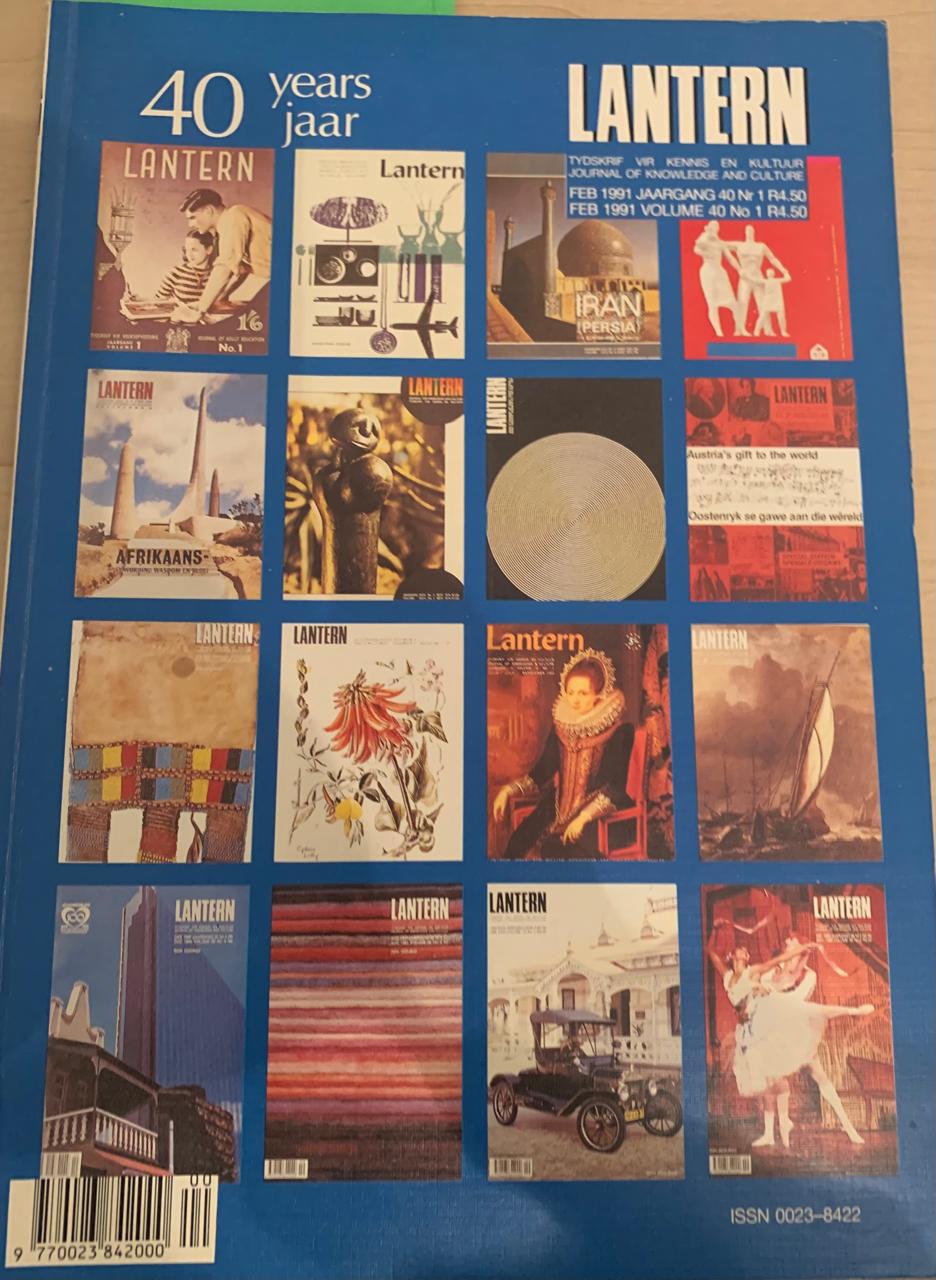
The journal began because government withdrew funding in 1949 and private citizens stepped forward to save it. Its digital rebirth may depend upon private citizens stepping forward once again. In other words, Lantern was probably supported by what one might call a parastatal cultural ecosystem.
That ecosystem included:
- universities,
- the adult education movement,
- museums and galleries,
- the educational bureaucracy,
- the broadcasting system,
- Afrikaner cultural organisations,
- and foundations operating close to government but not directly within government.
The distinction matters because Lantern was never simply a state propaganda organ, but neither was it a purely market-driven commercial publication such as Fair Lady or Huisgenoot. It occupied a middle ground that perhaps no longer exists.
Lantern was, of course, only one of a wider constellation of South African magazines and journals that reflected the interests and reading habits of the twentieth century. Publications as diverse as Africana Notes and News, Restorica, Drum, Huisgenoot, Fair Lady and Country Life offered windows into different communities, cultural interests and aspirations within South African society. Some were scholarly, others popular and some frankly frivolous, but together they provide an invaluable record of what people read, collected, debated and valued in their own time.
Many of these publications disappeared, transformed themselves or migrated online as the internet revolution altered reading habits and publishing economics in the early twenty-first century. Their survival today increasingly depends upon collectors, libraries and digitisation projects willing to preserve what earlier generations took for granted.
Collecting issues of Lantern today
My own collecting project continues. After years of passing Lantern by on second-hand bookshop shelves, I now find myself enthusiastically searching for missing issues and rescuing duplicates from obscurity. Such are the ironies of book collecting.
At present I am still searching for the final few issues needed to complete my own run, while at the same time accumulating some sixty duplicate copies. Having unexpectedly acquired eighteen early bound volumes overnight, my own quest to complete my collection of Lanterns is elusive but realisable. I also have many duplicate copies available for exchange. I would be delighted to hear from readers who may have spare copies, duplicate issues or knowledge of collections in private hands. If the day comes when the final missing issue is located in a cupboard in Bloemfontein, on a farm in the Karoo or on a shelf in a retired school principal's study, that will be a heritage story in itself. The search for completeness often becomes part of the history of the collection.
If any Heritage Portal readers have spare issues lurking on shelves or in garages or know of complete or partial collections in private hands, universities or institutions, I would be delighted to hear from them.
Kathy Munro is an Honorary Associate Professor in the School of Architecture and Planning at the University of the Witwatersrand. She enjoyed a long career as an academic and in management at Wits University. She trained as an economic historian. She is an enthusiastic book person and has built her own somewhat eclectic book collection over 40 years. Her interests cover Africana, Johannesburg history, history, art history, travel, business and banking histories. She researches and writes on historical architecture and heritage matters. She is a member of the Board of the Johannesburg Heritage Foundation and is a docent at the Wits Arts Museum. She is currently working on a couple of projects on Johannesburg architects and is researching South African architects, war cemeteries and memorials. Kathy is a member of the online book community the Library thing and recommends this cataloging website and worldwide network as a book lover's haven. She is also a previous Chairperson of HASA.