
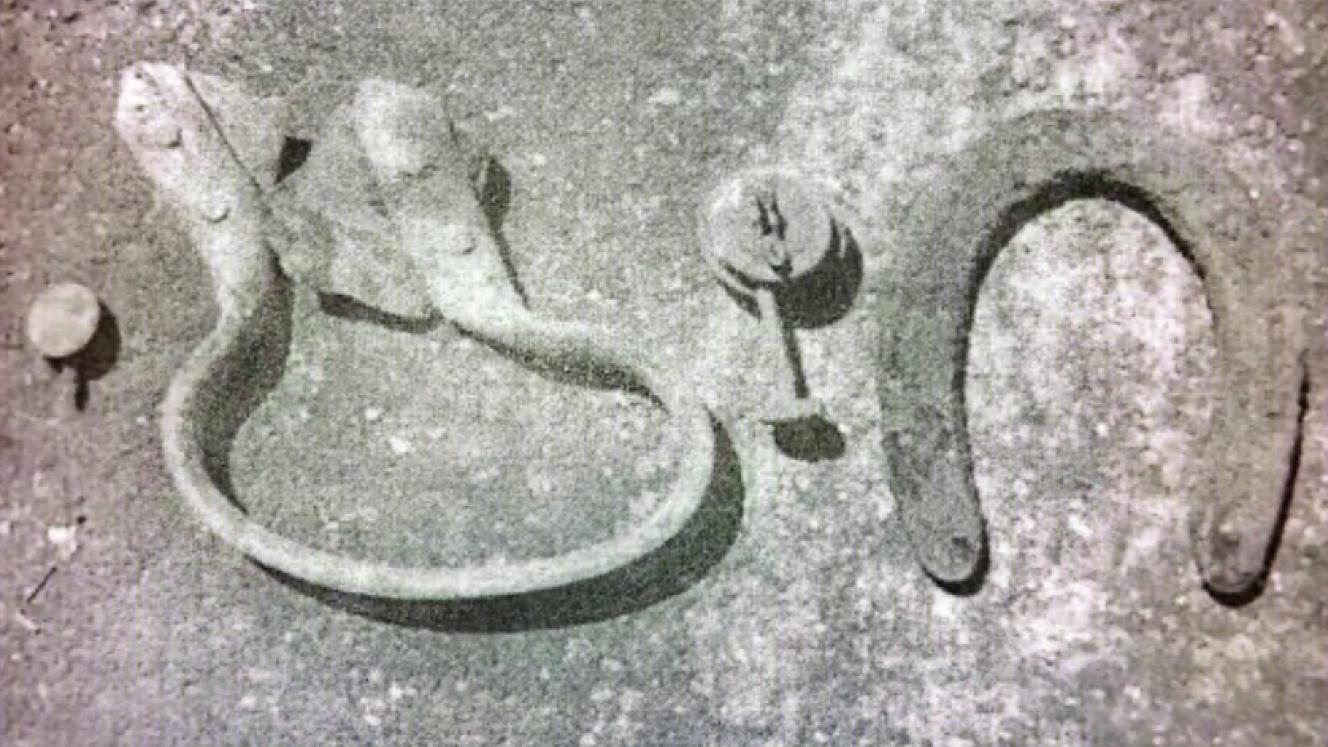
Hidden beneath the grounds of the Presidential Estate lies a remarkable chapter of Arcadia’s history. Archaeological excavations uncovered a refuse midden that led researchers to the long-lost site of the Meintjieskop Refugee Camp, offering a rare glimpse into life during the final years of the Anglo-Boer War. The article first appeared in the July 2026 edition of the Arcadian.
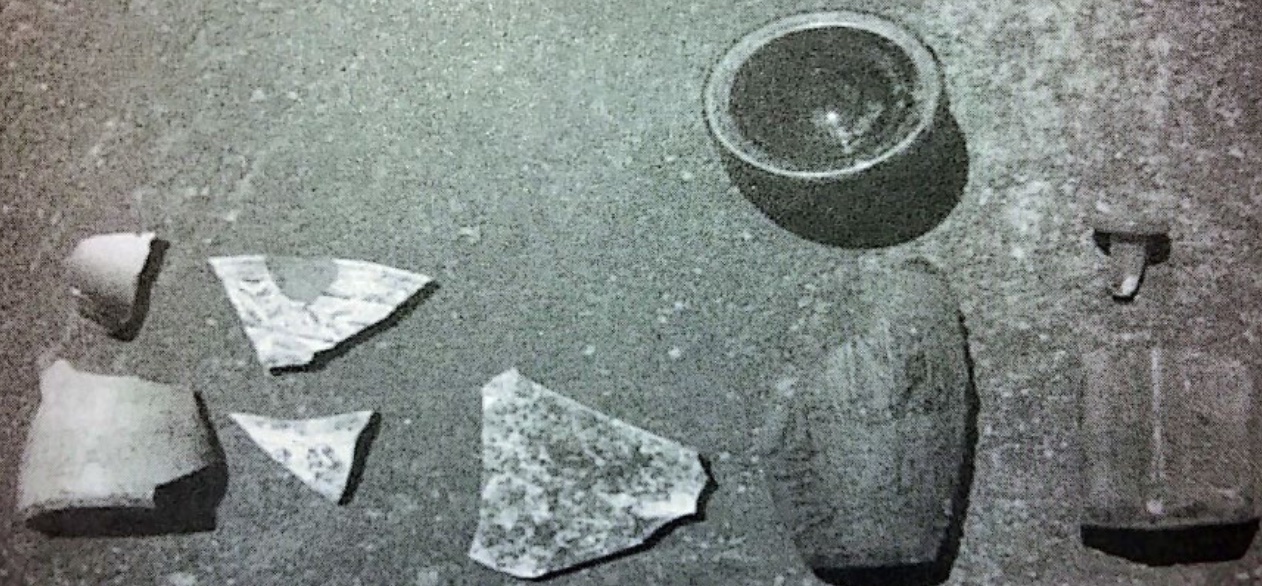
The construction work to erect a fence at the Presidential Estate in Bryntirion, a few years ago, led to the discovery of a refuse midden. Subsequent archaeological research done, indicates that the cultural artefacts from the midden mostly date to the late 19th and early 20th century. More recent artefacts were also found, but these seem to be from the recent use of the midden.
From the investigation it was clear that it was a historical midden dating back to the Anglo-Boer War (1899-1902). Historical research further sheds light and links it to a refugee camp which was established on Meintjieskop in 1902. A blockhouse, the Johnston Redoubt, was also erected on the mountain close to the midden during the war.
Apart from defending Pretoria, the aim of the blockhouse was probably to protect these refugees from the Boers as the refugees were regarded as traitors. Because of this the British had no other option than to protect them and their families by placing them in camps.
It is known that on 1 August 1900 it was decided to open refugee camps for surrendered Boers and their families. Some of the refugees even took their livestock with them to these camps. This may explain the origin of some of the faunal material found during the excavations. In some cases, refugee men were employed by the British to do some work in these camps.
Refugee camps should not be confused with the concentration camps or prisoner-of-war camps. The first mentioned were only for the families of the Boers who kept on fighting against the British and the latter for the Boers who were captured during military action. Although many of the camps started as refugee camps, many gradually became concentration camps. At the end of the war there was only one real refugee camp in South Africa, namely this one on Meintjieskop.
This camp was established specifically to host the families of National Scouts, which were Boers who actively participated in the war against their kin. The historian J Ploeger tried to establish the exact location of this camp, but he was unsuccessful. Therefore, this midden is an important historical find as it provides the location.
In January 1902 the camp, which at this stage was at another location, was under supervision of MJ Stucki. On 1 January 1902 the inhabitants of the camp included 33 men, 83 women and 96 children. It was only on 11 January 1902 that the camp was moved to the site under investigation. All people that had no association with either the National or Canadian Scouts were removed to other camps. This left 11 men, 21 women and 37 children in the camp. The person responsible for deciding on the specific site to be used for this camp was a Major Hoskins.
On this date, Major AM Lloyd took control of the camp. During February the site was cleared, and tents were erected to house the inhabitants. This was a very difficult task as there were only 5 or 6 National Scouts (this probably means men capable of assisting with the work). Later Corporal Standers brought 20 African workers from Rietfontein to assist with this task. One of the biggest problems they encountered was that the tents were frequently blown over by storm winds.
More refugees arrived at the camp and in February the inhabitants counted 46 men, 95 women and 106 children. Later in February there were 326 people in the camp. On 11 February General Maxwell, the military governor for Pretoria, inspected the camp and the construction activities there. Lord Kitchener also visited the camp.
On 28 February 1902 the staff of the camp consisted of the following:
- Superintendent – Major AM Lloyd Storekeeper – AA Hayloch
- Accountant – JM O’Shea
- Supervisor – MJ Stucki
- Assistant-Supervisor – Corporal Trollope
- Camp doctor – Dr T Moffat
- Pharmacist – GE Waters
- Matron – E Bolton
- Nurses – Miss White and Miss Konig
In the same month, tenders were approved for the building of certain buildings, including storerooms, offices, toilets, washing rooms and bathrooms as well as for the laying of water pipes at the site. Apparently, there was also a hospital on the site but this is not indicated in the mentioned tender, and one must therefore assume that it was only built later.
In March 1902 the inhabitants of the camp consisted of 427 people and in April 1902 there were 458 people in the camp. It is also known that the camp had a school. Miss Lucy Plumb was appointed as headmistress of the Meintjieskop Camp School in the place of Mrs O’Shea on 9 May 1902.
It is unknown when this camp was closed. An archival document indicates that Eloff’s plantation was already established at this location in 1904, but this does not necessarily mean that the camp was no longer in operation.
By 1910 certain areas on Meintjieskop were being laid out as townships. The Union Buildings on Meintjieskop, just west of the area where the midden was found, was completed in 1913.
Professor Anton C van Vollenhoven is a prominent South African archaeologist, cultural historian, and heritage management specialist with dual doctorates in Archaeology (University of Pretoria) and History (University of Stellenbosch). An Extraordinary Professor of History at North-West University and Director of Archaetnos Culture & Cultural Resource Consultants, he has conducted hundreds of archaeological assessments and published extensively on South African military history, fortifications, and cultural resource management.