Since South Africa’s first professional photographer, Julius Leger, established himself in Port Elizabeth during 1846, both local and international photographers who foresaw commercial opportunities in this newly established art form, as well as missionaries, anthropologists, soldiers, explorers and traders have contributed to the spread of photography into the interior of South Africa.
It is unknown as to how many missionary photographers have been active in South Africa since the commercialisation of photography around the 1850’s. Unlike commercial photographers that made a living from photography and made their work identifiable by applying their names to the carte-de-visite or cabinet card format images, photographic work produced by missionary photographers has largely gone unnoticed as most of their work cannot always be linked to a particular photographer with certainty.
What is certain, is that missionaries who were natural visual recorders of their surroundings, contributed vastly to the visual history of South Africa.
Occasionally images produced by missionaries still surface today. The author, for example, acquired two separate accumulations of such photographic images. These acquisitions led to this article.
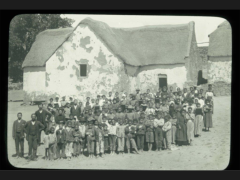
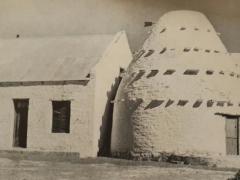
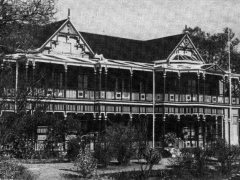
Of particular interest amongst these photographic images are magic lantern slides produced by a missionary based in the Kamiesberg area in the Namaqualand, Northern Cape around late 1910, early 1920’s. This missionary was seemingly attached to the Methodist Church. It has been suggested that Methodism was introduced into South Africa as early as 1806.
A magic lantern slide is a small rectangular piece of glass which contains an image with either art work, such as etchings, or...