Death, or more specifically images of the dead, remind us of our own mortality. During the mid 1800’s to early 1900’s, photography played a vital role in capturing images of loved ones, not only whilst alive, but also at the time of their death.
Where citizens could not afford a painted portrait of a loved one, photography was a cheaper and quicker alternative, providing the middle class with a photographic image in memory of a loved one who had passed away.
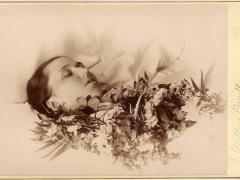
Postmortem photography (meaning after death), also referred to as bereavement or Momento Mori (Remember you are mortal) photography, was an integral part of the mourning and memorializing process during a time when death played a more visible role in the population’s day-to-day life.
These photographs were especially common for infants and young children as Victorian/Edwardian childhood mortality rates were high.
Postmortem photographs of young children were common
Although the words postmortem and memorial photography are used interchangeably when referring to photos of the dead, postmortem photographs relates to images taken of individuals after they have passed away, whereas memorial photographs are reproductions of photographs taken of the remembered from when they were still alive (see image below of four young people who drowned in the Witte River during 1895...