
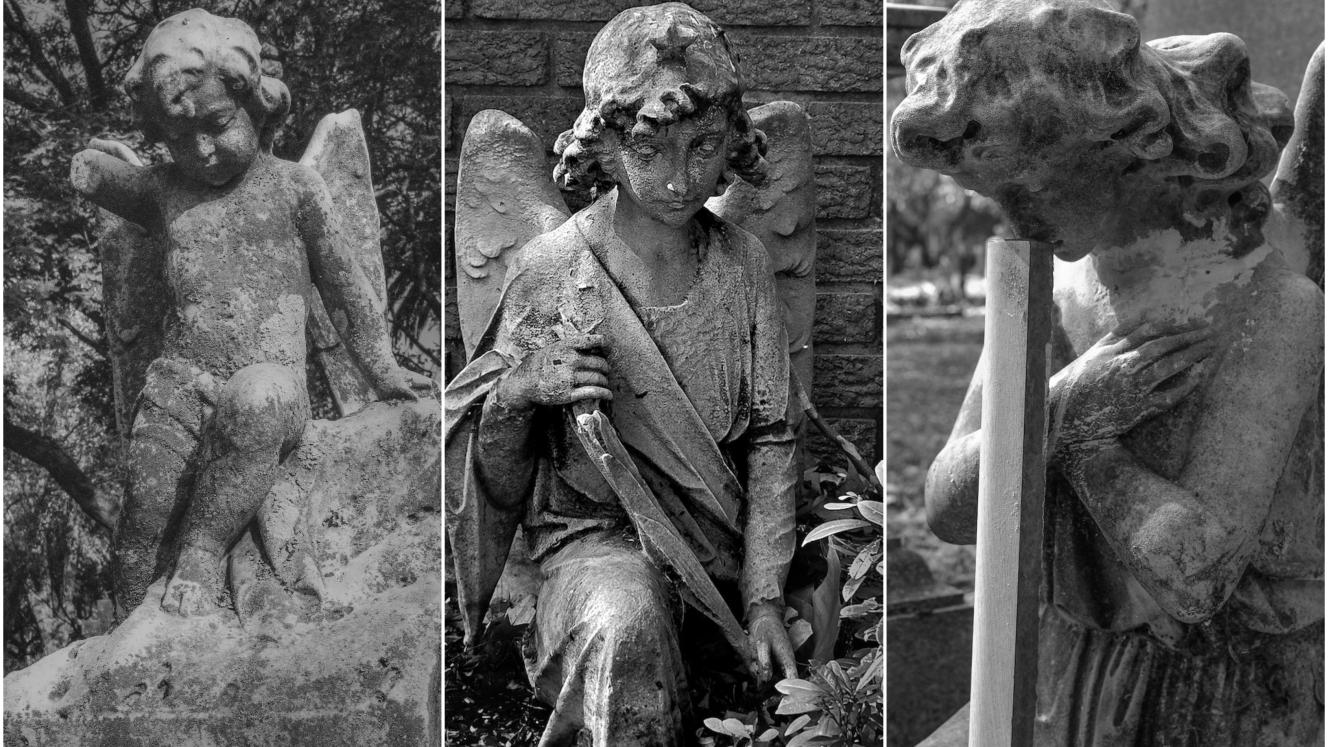
In recent years, the historic cemetery of Braamfontein has been in the news and on social media for all the wrong reasons, namely, years of neglect and extensive vandalism.
In 2024, Johannesburg City Parks and Zoo increased security and pruned trees and vegetation. The volunteer organisation Friends of Johannesburg Cemeteries (under the auspices of the Johannesburg Heritage Foundation) has also made considerable contributions to the improvement of the cemetery. In agreement with City Parks and Zoo, the Friends research and clean gravestones and statues, repair vandalism, garden and pick up litter, and organise informative tours. Perhaps the prospects of Braamfontein cemetery are improving.
These photographs of angel statues in Braamfontein (except for Photograph 7) were captured by the author during Friends of Johannesburg Cemeteries (FoJC) volunteer days. For the purposes of this photo essay, ‘he’ and ‘his’ are used in reference to angels.
Photograph 1
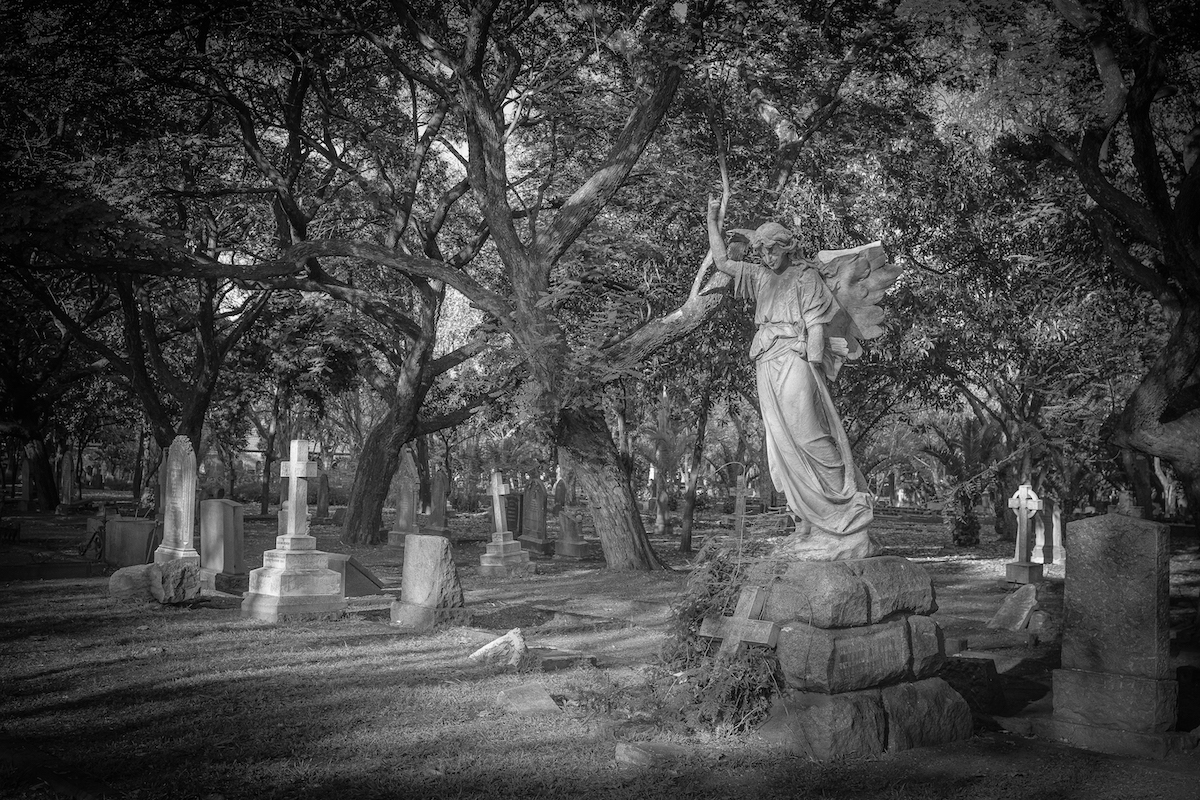
This striking life-size angel marks the graves of Susan Goch (first wife of Johannesburg mayor, George Goch) who was killed in a motor car accident in 1904, and their daughter, Constance Southey. George Goch is buried in Pietersburg where he died.
The mourning angel features widespread wings, a lowered gaze and a hand pointing towards heaven. The statue was likely imported since Johannesburg did not have skilled stonemasons at the time, and it would have been installed one year after Susan’s death to allow the ground to settle after her burial.
In 2025, a felled branch severely damaged one of the wings and arms. The marble is too fragile for conventional repairs, so FoJC are investigating 3D printing to recreate the damaged parts.
Photograph 2
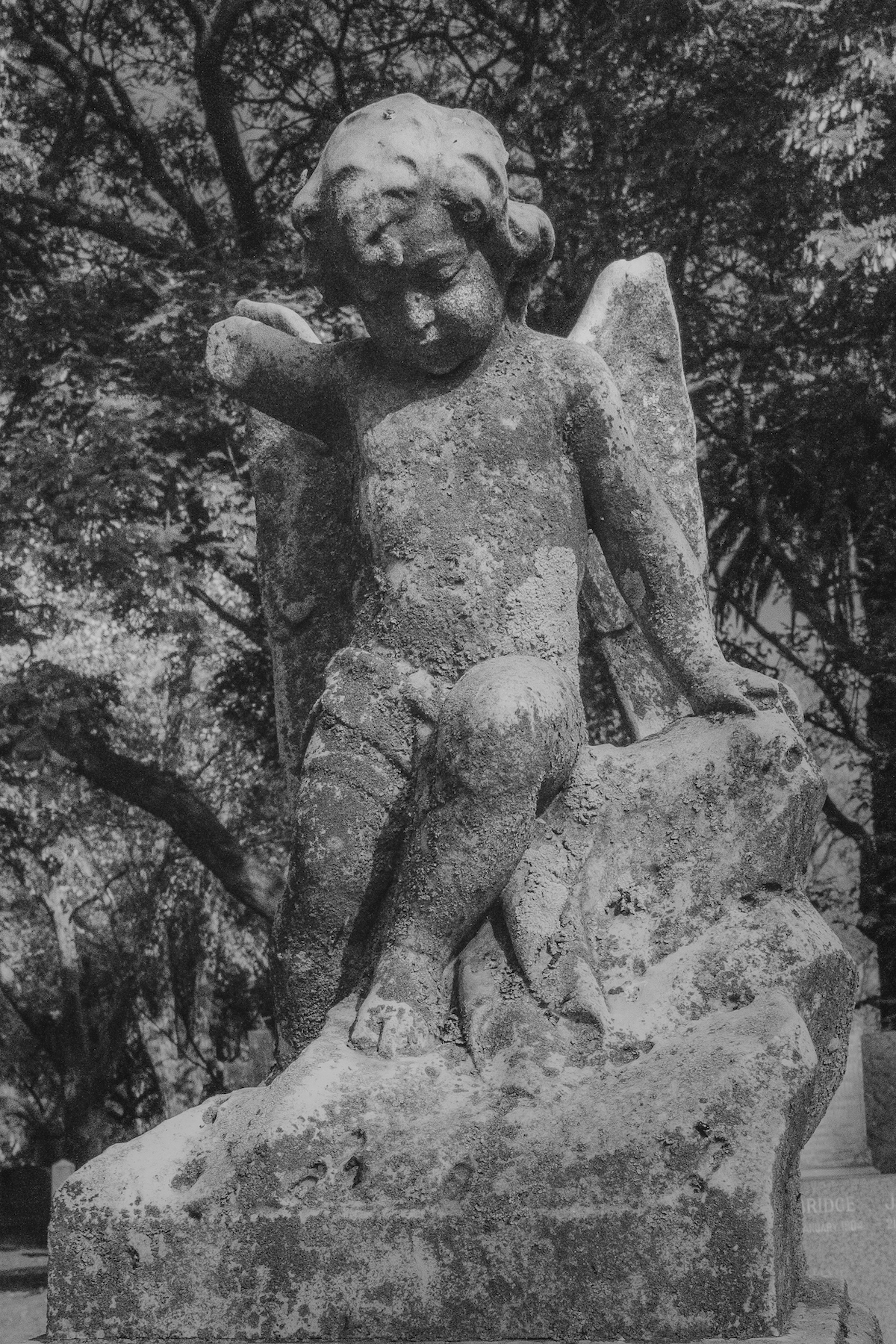
During the Victorian period, cherubs were a popular sentimental choice for an infant’s grave. A cherub marks the grave of Ellen Thrupp (‘Ella’ on her baptism certificate) who tragically died at 18 months in 1902 after less than a week of suffering from streptococcal enteritis and meningitis. One of her siblings, Charles, is also buried here; he died in 1928 at 22 years from haemorrhagic scarlet fever and septicaemia.
Ellen and Charles’s parents were Charles Henry and Marie Thrupp from the United Kingdom. Charles Thrupp snr opened his first Thrupps grocery store in 1892 on Eloff Street, Johannesburg. Except for a few years during the Boer War, Thrupps’ doors have remained open, but the store is no longer in Johannesburg CBD having moved to Rosebank and then, in the 1990s, to the Thrupps Centre in Illovo, Sandton.
Photograph 3
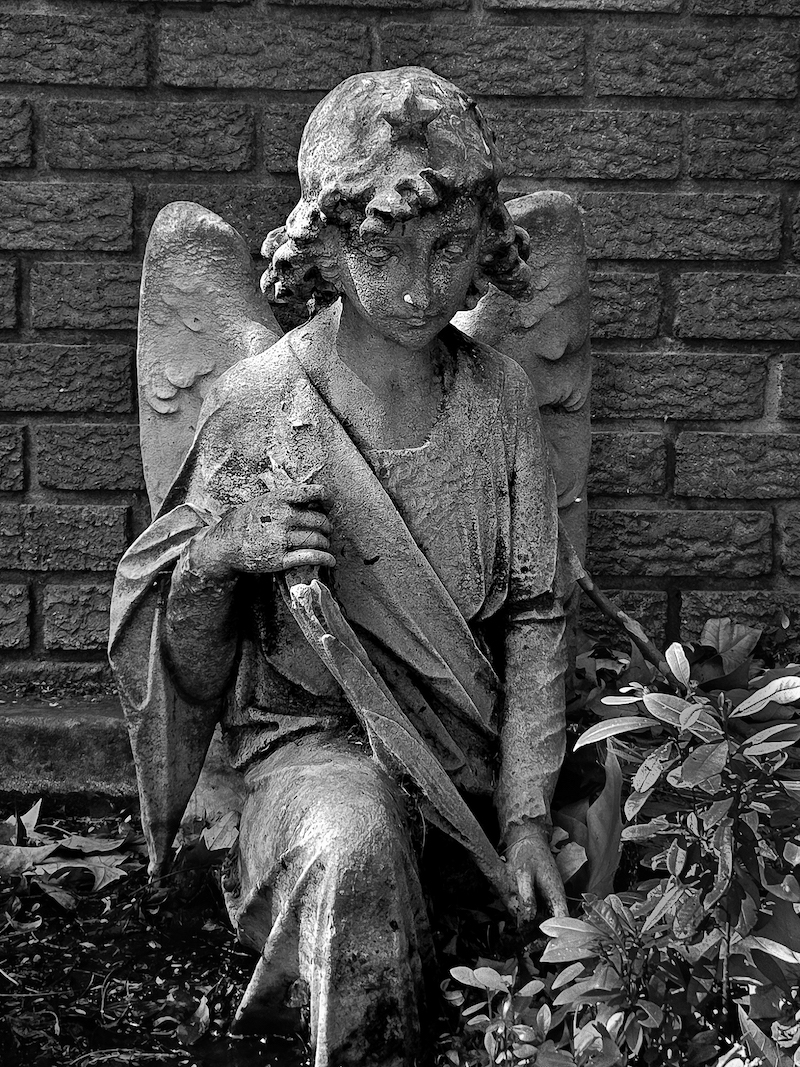
Few visitors see the mourning angel sitting beside a pond near the Graf Street gate (now permanently closed). The angel’s symbolism would have comforted mourners as they passed by the pond on their way to the crematorium. The little star in his hair shows he is a divine messenger ready to guide their loved one into the afterlife, and the lily stems he holds symbolise death and remembrance. The marble angel’s surface is heavily eroded. This is called “sugaring” and it is common among statues in the cemetery and is irreversible, so FoJC volunteers gently clean statues and gravestones with clean water and soft brushes.
Photograph 4
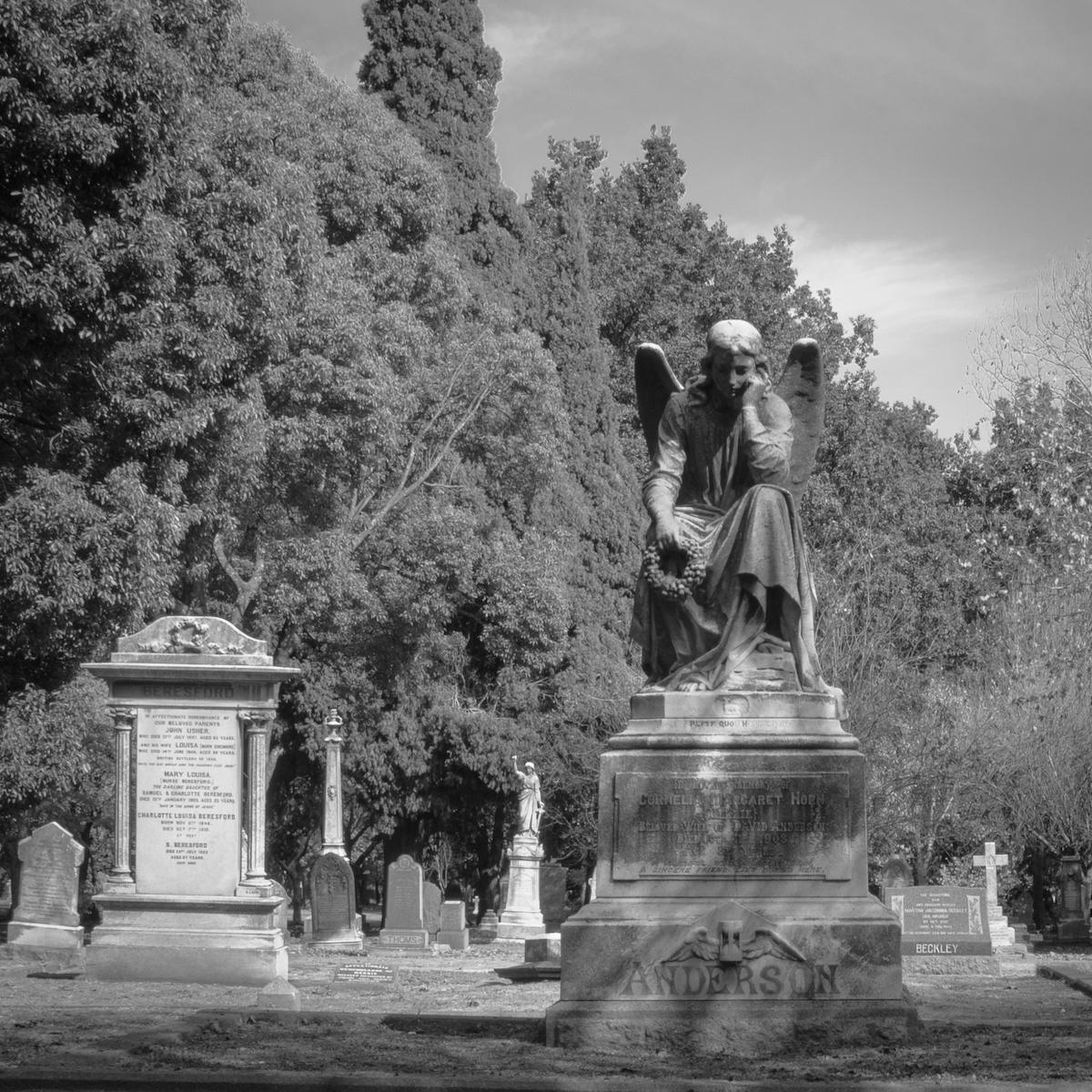
This angel marks the plot belonging to the Anderson family. On its base David Milner Anderson's name is prominently engraved. He was a Johannesburg contractor, councillor and mayor who died in 1949; his wife Cornelia died 46 years earlier. Upon David's death, this angel statue may have replaced a smaller gravestone originally placed on Cornelia’s grave, and given its considerable weight and size, installation would have needed mechanical assistance. (There are no records of gravestone installations.) Many visitors notice the angel's reflective pose resembles "The Thinker” by the French sculptor Rodin.
Photograph 5
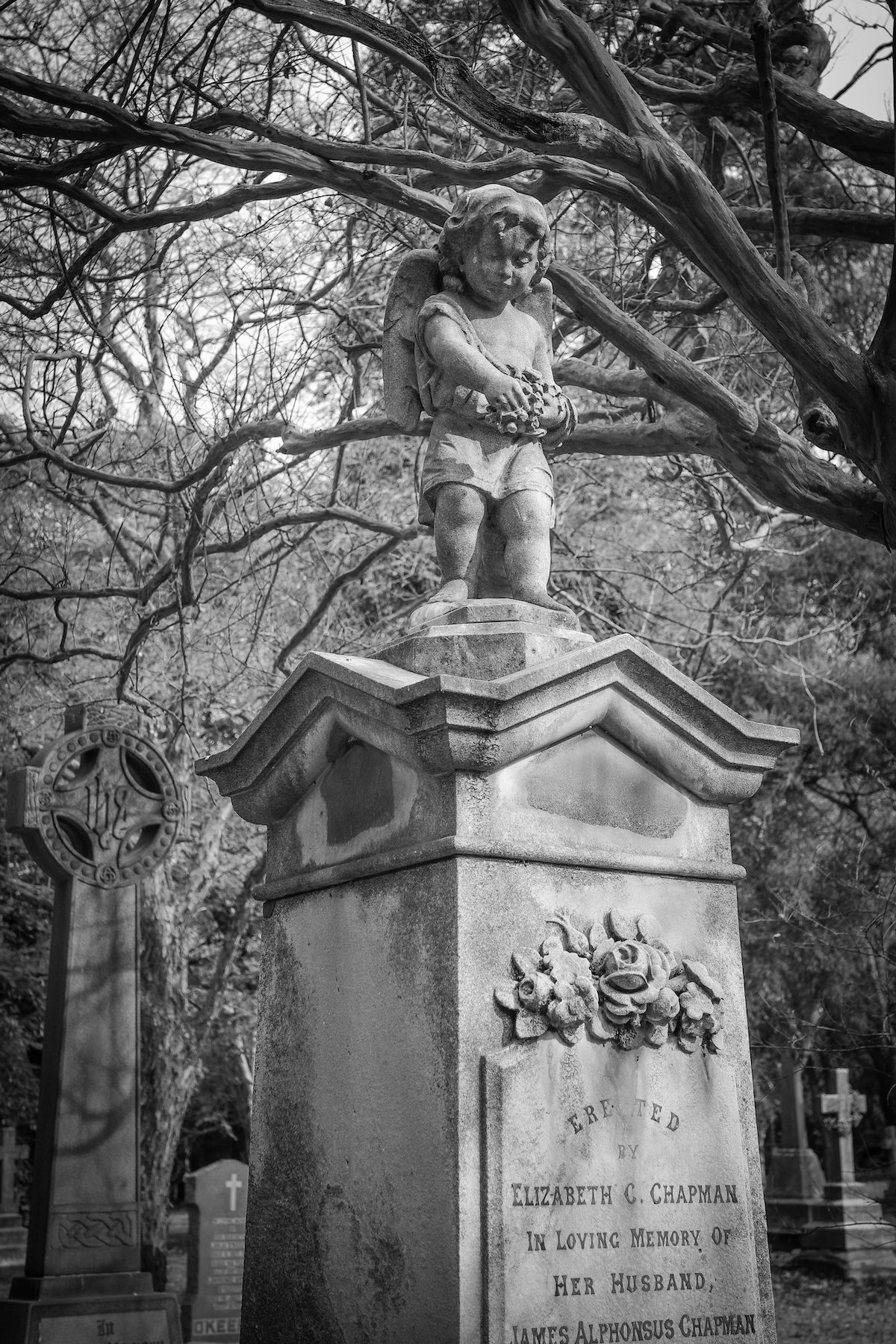
People often imagine cherubs are reserved for gravestones of babies and children, but that isn’t always true. Alphonus Chapman, an engineer at the Nigel Deep Gold Mining Company, died in 1897, and his wife Elizabeth likely arranged for this cherub to be installed on his grave. Perhaps she selected it from a display of imported statues readily available at a local stonemason’s yard such as LA Cawsey Transvaal Monumental & General Stoneworks in Braamfontein, or she ordered it from a catalogue of memorial statues sculpted overseas and it was transported by sea and rail to the highveld, arriving in time for installation one year after James’s burial.
Photograph 6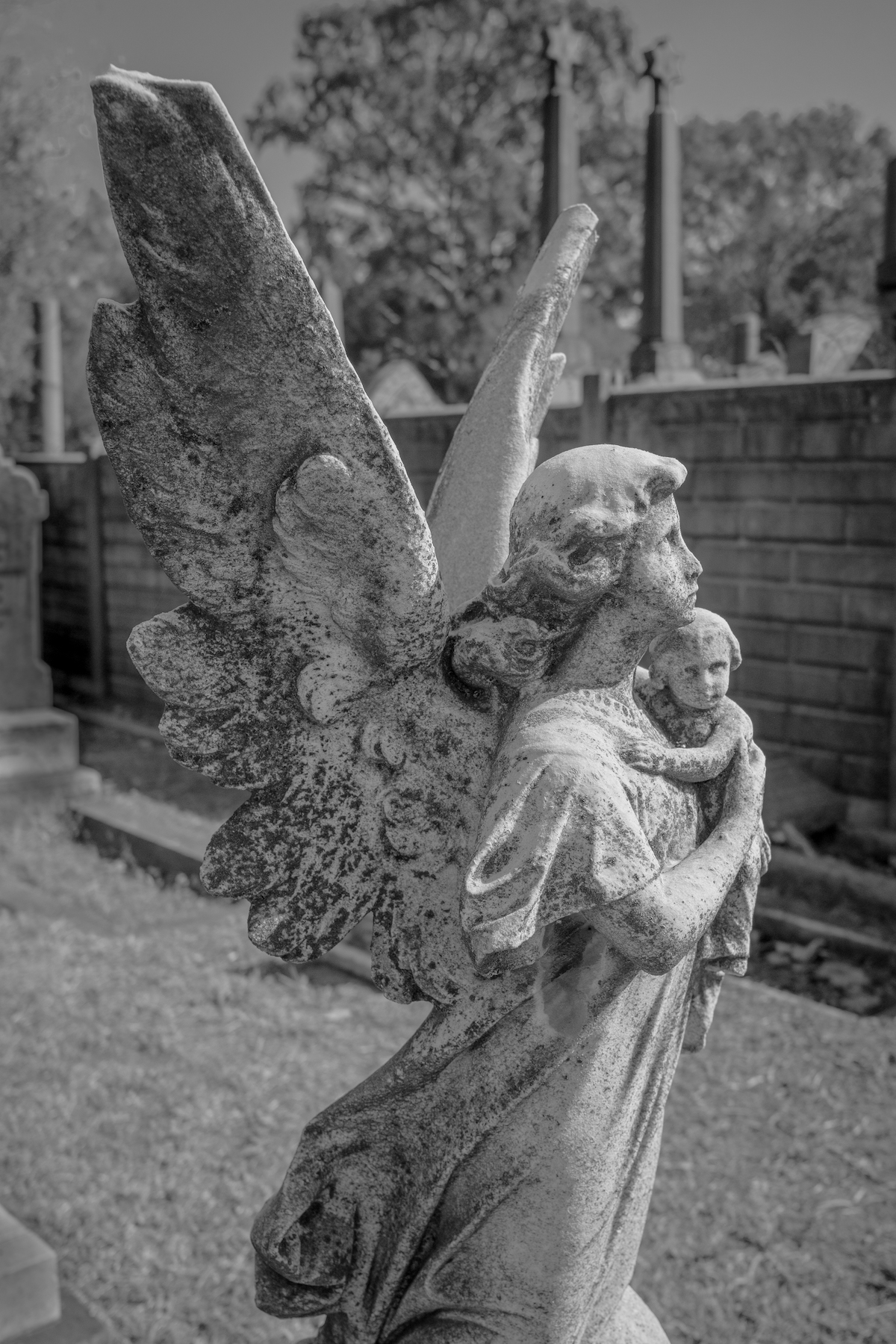
In the small Parsee section between the Jewish and Christian areas, an angel statue marks the grave of Dosibai and Nadirshah Cama’s young son who died in 1907. In 1895, Nadirshah Cama travelled from India to South Africa where he played a prominent role in MK Gandhi’s passive resistance movement.
While angels and burials are not part of their beliefs, the Parsee diaspora adapted rituals and practices to accommodate local South African laws and Christian traditions. Parsee burials were mostly entered into the European burial registers where they were identified as Persian.
Photograph 7
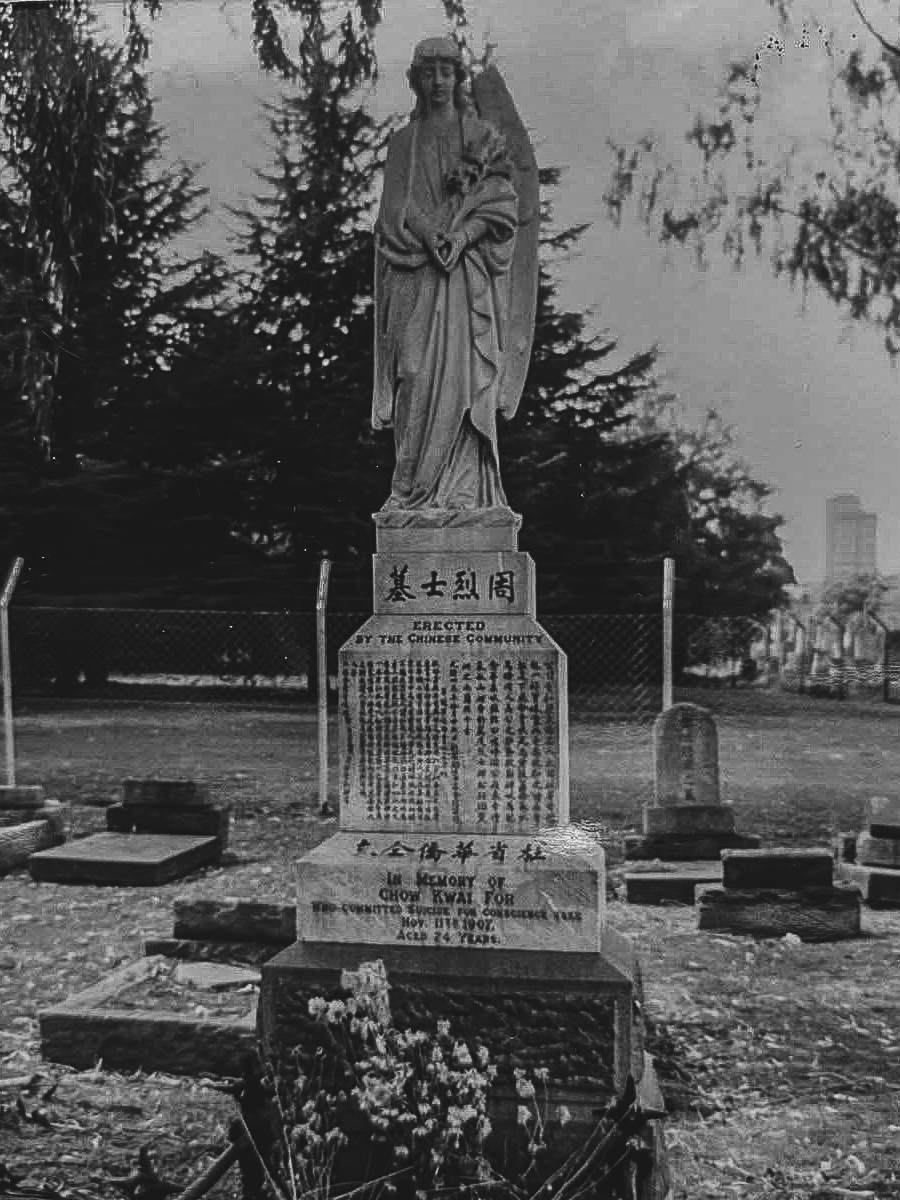
Chow Kwai For was a young Chinese immigrant who committed suicide in 1907 after being “angered and ashamed by the unjust law of the Transvaal” (words taken from the memorial inscription). After Chow’s death, the Chinese community erected a tombstone with an angel. In 1984, the memorial was restored but the angel was vandalised a few years later, and again in 2001 when it was removed from its plinth. Even so, at the time the Times Metro described the memorial as “the most beautiful of the cemetery’s resistance memorials”. No records of the whereabouts of this angel exist in 2026.
This photo was taken in 1971 (photographer unknown; photo supplied by Johannesburg Heritage Foundation).
Photograph 8
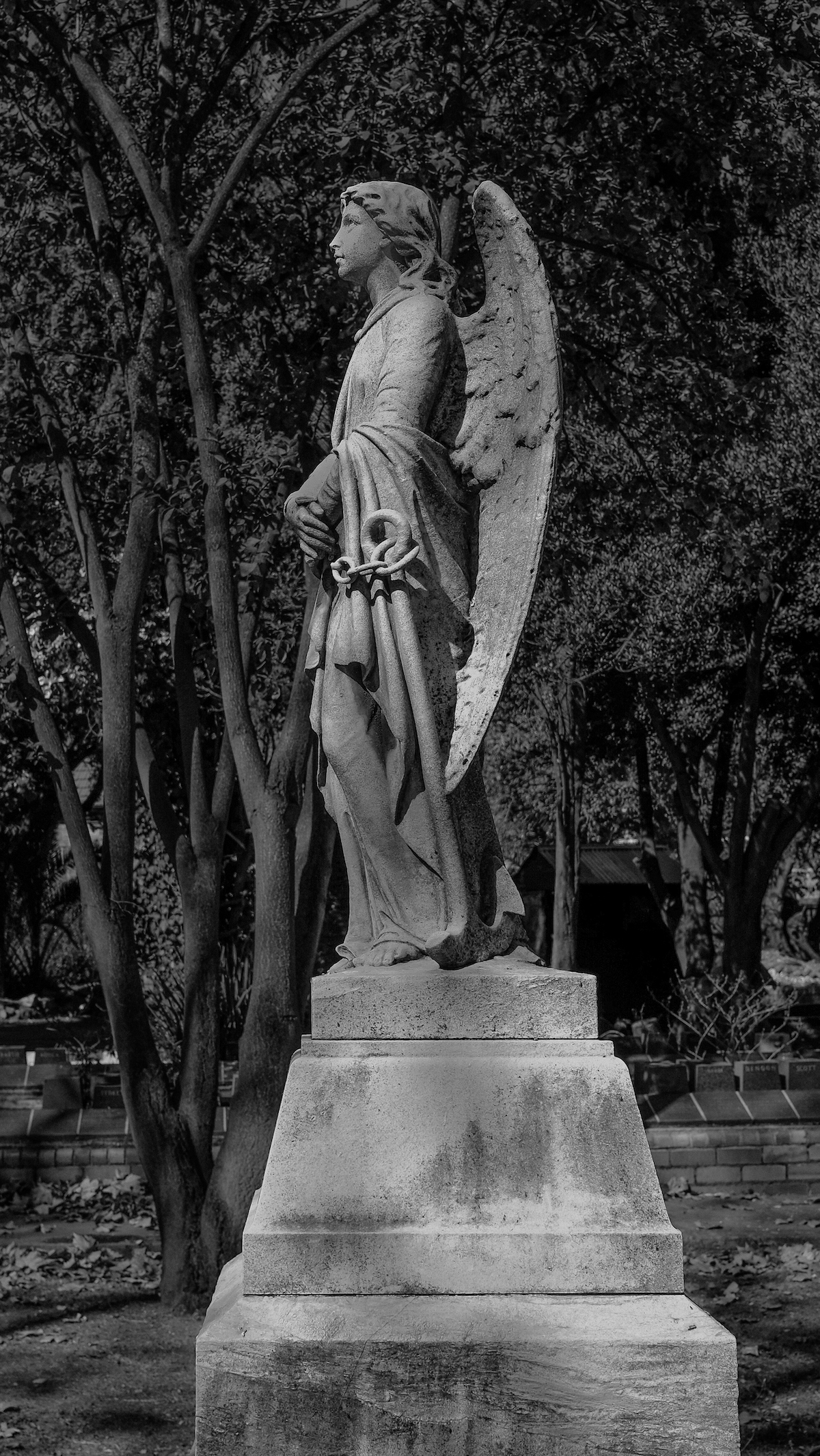
The angel on the grave of Anne Gwylin Bevan (d. 1895) is rich in Victorian funereal symbolism. His heavenward gaze symbolises Anne’s spiritual journey and the crossed hands sorrow and mourning, while the chain attached to an anchor at one end and the angel’s robes at the other, signifies the unbroken connection between a true Christian and God. The angel stands near the crematorium overlooking a garden where the public, by arrangement with City Parks and Zoo, can plant trees in memory of loved ones.
Photograph 9
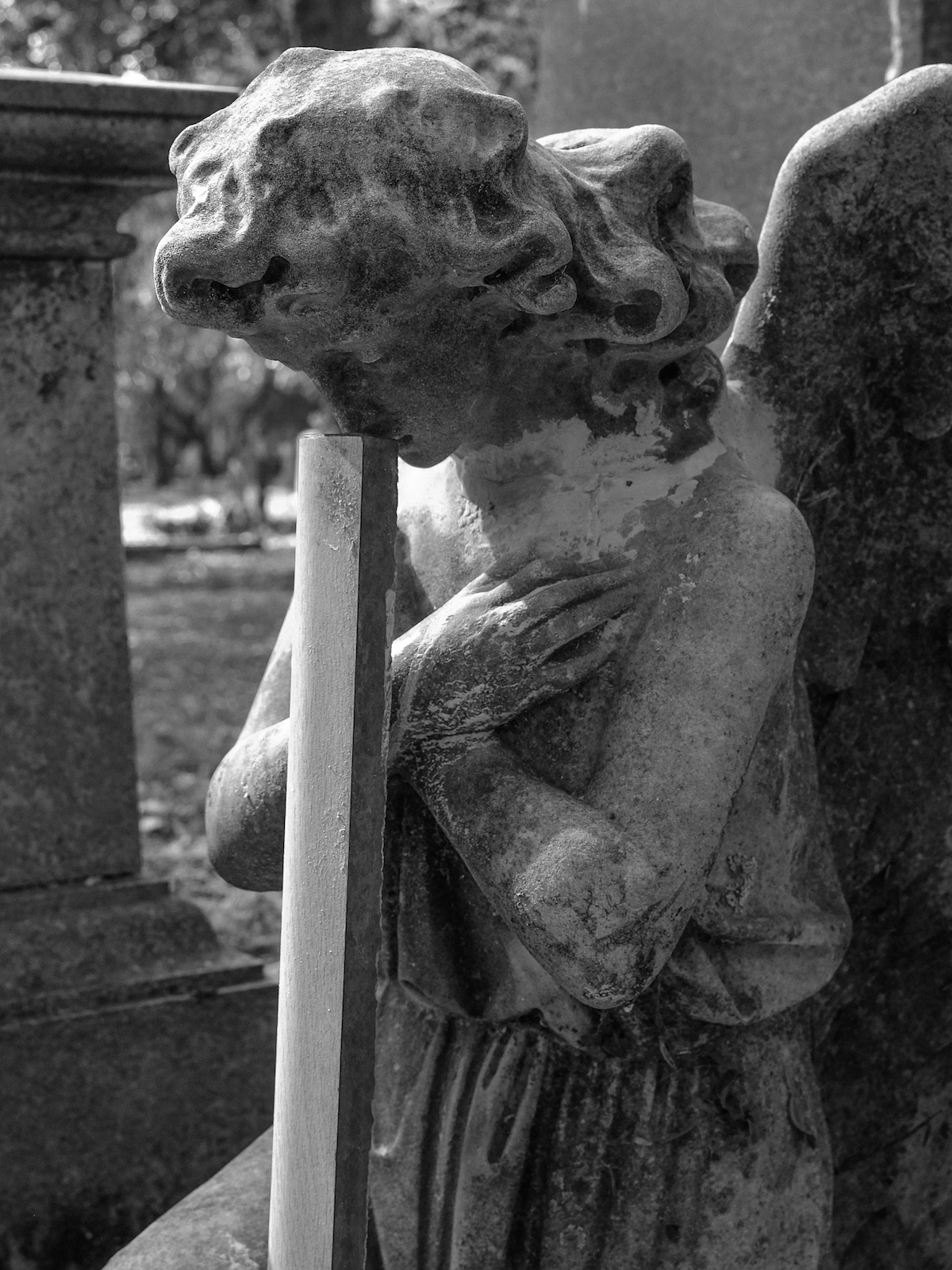
Since 2018, FoJC volunteers have met at Braamfontein and Brixton cemeteries to clean headstones and statues, cut back overgrown and invasive vegetation, and lift fallen headstones so inscriptions can be read and researched. Occasionally, FoJC use donations to fund repairs to broken headstones and statues and install new headstones. Recently, a small group of volunteers began careful repairs to the angel originally on the grave of Anna Dill who died in 1906 from uterine cancer. The statue had been knocked off its plinth and broken during a storm.
Photograph 10
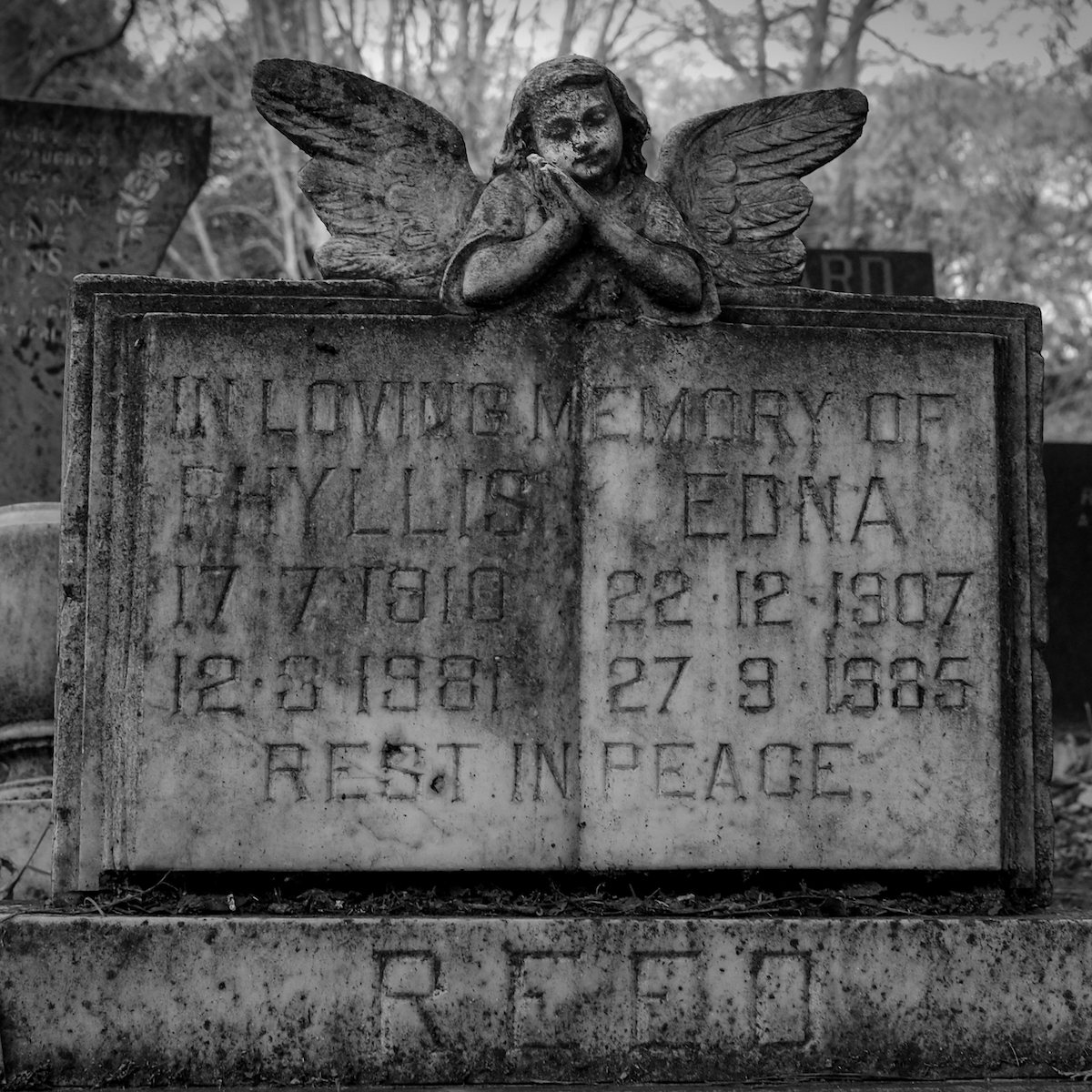
The names ‘Phyllis’ and ‘Edna’ are not as common as they were during the late 19th century and first half of the 20th. Walking through the cemetery, you will notice other once-fashionable names on graves and memorials, such as Florence, Winifred, Walter, Charles, Alfred and Ethel. Meanwhile, the symbols of angels and cherubs expressing sorrow and mourning, as well as the spiritual link between man’s earthly existence and the afterlife, have endured. A quick online search shows marble angel memorials, like the one originally placed on Phyllis and Edna’s graves, can still be ordered from South African stonemasons.
Liz Haines is a volunteer with Friends of Johannesburg Cemeteries