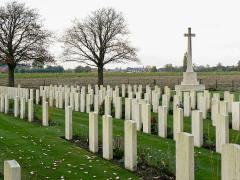
Remembrance tourism is all about visiting battlefields, fortifications, war cemeteries, memorials, etc., and is fast becoming a popular pastime.
During the last few years, Lorraine and I engaged in this type of tourism by viewing some Anglo Boer War sites and memorials at Colesberg, Noupoort, Middelburg, Aberdeen, Nieu Bethesda, Willowmore and Uniondale.
We omitted Graaff-Reinet because to view its historical sites would have added considerably to an already hectic travelling schedule.
Colesberg, Aliwal North, Burgersdorp and Stormberg were about as far south-east as the Boer forces advanced during their 1st invasion of the Cape Colony, upon the outbreak of war. During this buoyant early period, possibly misled by Republican hubris that the war would soon be over, 10 000 Cape Rebels enthusiastically joined up. But despite victories at Colesberg and Stormberg, by early 1900 the Republican forces were retreating across the Orange River to try and stem the advance of the powerful Imperial army along the railway line to Kimberley and from there to Bloemfontein. Abandoned by the retreating Boer commandos, many Cape Rebels quietly returned to their farms.
From October 1900, captured Cape Colonial Rebels were charged under the Special Tribunal’s Act. Rebels sentenced by these Special Courts were treated so leniently that it bordered on amnesty. Unfortunately, these lenient sentences encouraged rather than prevented Cape Rebels from joining the fray once the war proved far from over.
To the British, the war appeared to be won once they had captured Bloemfontein and Pretoria. So much so, that following the...