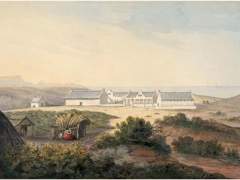
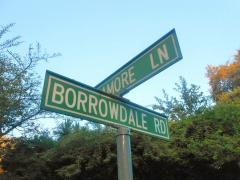
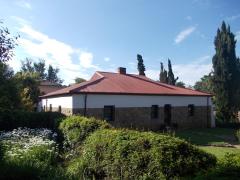
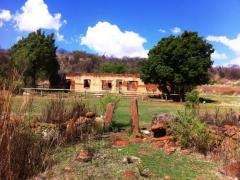
[Originally published in 2014] This wonderful article, written by Malcolm Wilson, describes the journeys of early hunters, settlers and prospectors as well as the development of Driefontein Farm on land which is now just a few kilometres from 'Africa's richest square mile'.
Early Settlers and Prospectors
The history of Panners Lane and Driefontein Farm is connected to the arrival of the earliest hunters, settlers and prospectors who crossed the Vaal River in the 1830s and 1840s.
In 1834 Carel Krige, a hunter, is said to have discovered alluvial gold in the Jukskei River near the confluence of the Crocodile River. This was technically the first discovery of alluvial gold on the Witwatersrand.
In the 1840s ownership of farms was undocumented and rudimentary allocations were made by the initial South African Republic the capital of which was Potchefstroom.
Amongst the allocated farms was Driefontein Farm owned by LP van Vuuren and Zandfontein Farm owned by Pieter Nel and later JC Esterhuizen.
In 1852, gold was found on the Witwatersrand by the Welsh geologist John Henry Davis on the farm Paardekraal (Krugersdorp). The find was kept secret by the government to avoid a possible influx of prospectors and Davis was deported from the boer republic.
In 1853 a prospector Pieter Jacobus Marais travelling between Potchefstroom and what is now Pretoria, found traces of alluvial gold at the confluence of the Crocodile and Jukskei Rivers. Later the same year, he stopped to pan for gold in the Klein Jukskei River today the Braamfontein Spruit...