Corrugated iron was developed and patented in Britain around 1830 and has travelled the world. Born during the industrial revolution it travelled to the expanding colonies of the Empire, notably to Australia, India & South Africa; it also found popularity on the frontiers of the Americas and wherever it went it transformed the landscape.
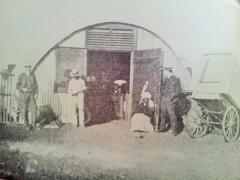
The gold rushes of the nineteenth century were a spur to the migration of thousands of people to the far corners of the globe, where there was little infrastructure. Victorian Britain was the workshop of world and saw export opportunities for corrugated iron on the goldfields of California, Australia and South Africa. The nature of corrugated iron, being light, easy to stack, and portable, made it an ideal building material to export to places such as Kalgoorlie or Pilgrim’s Rest, which were at the back of beyond.
What is corrugated iron? Corrugated comes from the Latin word “Ruga” which means to wrinkle or crease, thus to corrugate a thin metal sheet, the sheet has to pass through a set of rolls in order to fashion it into a series of sinusoidal waves which gives it greater strength and stiffness (in direction of span). Originally made from wrought iron, but since the 1890’s made from mild steel, it is often supplied with a hot-dip galvanised finish to prevent rusting. Its merit over traditional building materials, i.e. masonry or timber, is that it is cheap, durable, lightweight, strong, re-usable and easily transported; such versatility is the key to its...