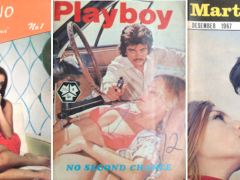
Recently the author was in Port Elizabeth searching for photographic material at book dealers, used goods and antique shops in town. At one of these stores he posed his standard question to a dealer: “Do you have any old photo-stories”? With the dealer not understanding the question, the author then explained what they were. To which the dealer responded: “Oh, you are referring to Café Bibles!”.
This cynical naming convention probably came about due to paternalistic figures of old that would have preferred biblical text to be read with the same vigour as this “evil” literature. Read by mainly the teenage generation, this literature was freely available at their main distribution points, namely the “Corner Café”.
Although the name Café Bibles may potentially be offensive to some, another descriptor in Afrikaans is an even more offensive naming convention. A word that not many of us would want to see on The Heritage Portal. This name probably came about due to one or two top selling photo-story titles containing fighting, kicking and shooting female government agents dressed only in their bikinis. For this reason, these titles can also be considered as “mini” Scopes (a male magazine at the time).
Other descriptors in Afrikaans are fotoverhale, foto-boekies or foto-roman, whilst in English they have typically been referred to as picture-stories, photo-stories, look-books, photo-books, photo-novels, spoken-word booklets or even the lesser known Italian words – fotoromanzo or fumetti, the latter literally meaning “little cloud of smoke” – with reference to the speech bubbles used in photo-stories.
...