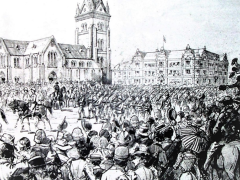
In May 1900, Lord Roberts of Kandahar, Commander-in-Chief of the British Forces, was poised to culminate his illustrious military career by marching triumphantly into his enemy’s capital city and concluding the South African War. But it was a charade. There could be no victory without a vanquished foe and the Boer leaders were still at large with a fighting remnant of their army. Another two bitter years of warfare lay ahead.
Lord Roberts (National Library of Ireland)
In the city, rumours were rife and the people awaiting the British advance lacked information and were desperately worried and afraid. Morale was at its lowest. Bessie Collins, a loyal republican despite her English surname, kept a daily letter-diary addressed to her friend in Port Elizabeth. On 6 May: “We all feel that we are very near the end. One more stand and all will be over. Our hearts are heavy. We fear the worst. The men are so weary and faint hearted that we do not even know whether their officers will get them to make a last stand.” Her concerns were probably echoed by many in the town when a week later she recorded: “I cannot see the use of shedding more blood and only long for this awful war to cease. It is getting unendurable to...