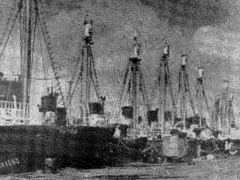
Below is a short but fascinating history of the whaling industry in South Africa. It was compiled by C De Jong and first published in the 1976 edition of Restorica, the journal of the Simon van der Stel Foundation (today the Heritage Association of South Africa). Thank you to the University of Pretoria (copyright holders) for giving us permission to publish.
Since times immemorial right whales visit the bays of the Cape Province during winter to give birth to their calves in shallow and safe water and to suckle them. They gave their name to Walvis Bay and after 1790 attracted whalers from many nations who anchored in the bays to provision and to hunt whales with their rowing boats. Leendert Jansen and Jan van Riebeeck proposed to the Dutch East Indian Company to kill not only seals but also whales off South Africa, but as whaling needed specialized personnel and equipment and many casks it was not practised before 1792. Between 1792 and 1850 several land stations on the Cape coast participated in the hunt until the whales became scarce and the stations had to close down.
The foreign ships used the bays also as bases to pursue another kind of whale, the sperm whale in the open sea out of sight of the coast. For many decades after 1800 North Americans operated from Delagoa Bay and Madagascar to catch sperms. Those were the days of sailing ships, hand harpoons, open cooking pots on ship's decks and Moby Dick adventures...